THE MUSICAL MUSE
Blog dedicated to music education, practice tips, health
&
wellness, and geeking out.
How to Warm Up at the Piano
Not sure exactly how to warm up before practicing piano? Check out Robert Estrin's video and my series of musician stretches.
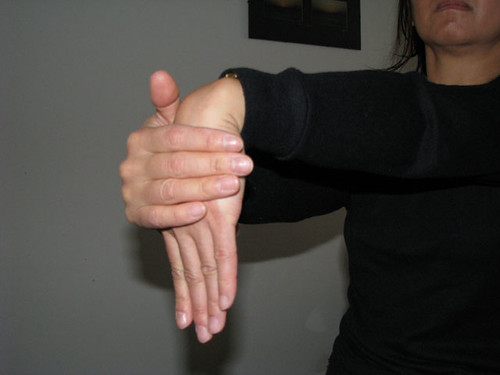
My colleague Robert Estrin of Living Pianos recently posted a great video tutorial on how to warm up at the piano. There are some great tips for all musicians!
He talks about staying healthy and taking breaks. He also mentions the importance of stretching.
Here is is clip on how to warm up at the piano:
Here are some keyboard warm-ups, courtesy of my colleague Irina Gorin. These are geared towards beginner piano students:
Finally, check out my series on musician stretches:
6 Steps to Self-Regulated Practicing
According to super-cool professor Dr. John Picone, there are six steps to self-regulated practicing. Master these and you will learn your music quickly and efficiently.
Last month, I attended a national music teachers' convention. It was my first time as an attendee (versus when I was a organizing committee member). One session that really resonated with me was Dr. John Picone's Steps to Parnassus: Guiding Young Musicians to Self-Regulated Practicing.
He was such a dynamic presenter and had wonderful ideas. I hope that one day, the Alberta Registered Music Teachers' Association or the Alberta Piano Teachers' Association could bring him out here to do a session for music teachers AND music students.
He shared a lot of information and examples with us. I will just highlight six main points for you try to incorporate into your at-home practicing. They are, what Dr. Picone referred to as "Six Dimensions of Self-Regulated Learning":
Take charge of your environment: Is your pet pestering you when you practice? Does your little sister come and bash on the keys while you are at your instrument? Or is your practice area in the same room as the television? You need to, perhaps with some help from your parents, create a practice space in which you can actually get some quality practice time in. Get rid of those distractions!
Manage your Time and Setting Goals: This past year, I introduced my students to the concept of "speed learning". To force them to think about time management, I used the countdown timer. If you only have 10 minutes, then you need to have a solid plan of attack. Pick a chunk of music that's do-able in 10 minutes. How much can you learn in 10 minutes? Or fix? The clearer you are with your plan, the more productive your practice will be.
Record and Review: Record and Review is something I encourage my students to do regularly. I think some do but not all. There's a lot going on when we play a piece or technical exercise. How else are you going to know if you're making any progress at home unless you listen to what you just did? If your iPod records, then use it. Or a tablet, computer, phone or other recording device.
Seek out resources on your own: Can't remember what "subito" means? You know technology more than your parents and teachers do. Google it! Or get a music dictionary app.
You have a repertoire of strategies and you know how to use them: One drill I grew up on was "Drill this 10 times". I'd get tired by five. My students have some more creative practice drills in their arsenal (e.g. Smarties Drill, the Every Other Bar Drill and the Fill in the Blanks Drill for starters). Regardless of what practice drills you have been taught, you have to know when to use them and how to use them. Now that would require you to read your music notebook, wouldn't it?
Motivation: There's external motivation (e.g. you have a music exam next week and you don't want to fail) and internal motivation (you simply want to do well). It doesn't matter how often your teacher asks you to practice more or how often your parents yell at you to practice - if you don't want to do it, it's not going to happen as well as it should. However, you need to really think hard about whether you don't want to practice because you've hit a snag or because you really hate music, but that's a separate topic.
The video that Dr. Picone showed us was of a seven-year old boy. He didn't really play much in the practice clip, but he didn't need to. He spent about a minute asking his mother to take the family dog into another room. Then, he spent a couple of minutes planning out what he was going to practice.
Once he selected a piece, he took another minute to skim through it. His finger traced over the notes. He stopped and looked at a tricky rhythm. After a moment's thought, he pulled out his music notebook to read his teacher's practice suggestions for that rhythm. Then, he remembered that he had a recording of that part of his lesson, so he listened to it. He checked his clock. Then, the clapped out the rhythm a few times. Checked his time again and then did a run-through at the piano - slowly. He tried it a few times before running through the whole piece.
If a seven-year old can master self-regulated, or organized practicing, you can too.
Music Practicing Tip - The Random Spot Drill
How well do you know your pieces? Try the Random Spot Drill to check.
For many music students around the world, this is a really tense time. There are only weeks before their music exam.
If you're preparing for a music exam, chances are your parents and your music teacher are telling you that you need to practice more, etc. etc.
This month, I'm checking to see how secure my students' repertoire is by using the Random Spot Drill. Really, it's as it sounds. You walk by the piano, sit down and try to play one of your pieces from anywhere. Well, from any memory station, that is.
If you're in the middle of your practice, try it for about a minute. Try playing the intro of one piece, the middle of another and the end of a third piece. OK, that's not really random, but you can make it random by trying any of the following:
Scribble out bar numbers onto slips of paper and put them in a jar or hat. Then number your pieces. Draw one slip to choose a piece and another to tell you which bar to start from.
Ask a family member in another room to pick a number from 1 and X (the last bar of your piece).
Get a random number generator app and have it choose your bar numbers.
Close your eyes and move a finger randomly on the score. When it stops, that's where you start.
Roll dice
Spin the Bottle
The idea behind the drill is to see how quickly you can get into the groove of that piece. After all, you never know when a distraction will occur. It could cause a blip. To keep you and your audience on track, you need to get back into the groove with as few missed beats as possible.

Using the Circle of Fifths to Practice Technique
This popped into my head while I was teaching a lesson last week. I asked my student to play her Grade 8 piano technique by going through the Circle of Fifths.
This popped into my head while I was teaching a lesson last week. I asked my student to play her Grade 8 piano technique by going through the Circle of Fifths. Not only was it quickly evident that my student needs to review her key signatures, but it also was clear that she was used to practicing her technique in a certain order. However, during a music examination, you have no clue which of the required technical elements you will be asked to play. It is important to mix things up regularly.
In this piano lesson tutorial, I demonstrate what how my student practiced her piano technique using the Circle of Fifths approach.

White-Out on Music? Why Not?
This is a nifty tip I learned from my colleague, RCM examiner Colleen Athparia: If you keep coming to a dead halt at the barline, get rid of the barlines!
This is a nifty tip I learned from my colleague, RCM examiner Colleen Athparia: If you keep coming to a dead halt at the barline, get rid of the barlines!
I've tried this with a few students recently with songs in triple meter, or in the above case, in 6/8 time. It works like a charm!
Of course, you want to make sure that you know your rhythms and time signature well. This is best used when you are trying to get the music flowing.
Social Media Links
archives
- #YYCArts 32
- #YYCEvents 39
- Collaborative Music 25
- Community 11
- Composing & Arranging 6
- Entertainment 139
- Entrepreneurship 53
- Freebies 3
- Gardening 1
- Geeking Out 65
- Health & Wellness 120
- Improvisation 25
- Interviews 28
- Learning Music 188
- Martial Arts 13
- Memorization 7
- Music 230
- Music Careers 9
- Music Education 196
- Music Examinations 7
- Music Exploration 55
- Music Gigs 14
- Music Lessons 6
- Music Performance 32
- Music Theory 13
- Musical Instruments 12
- Musician Health 19
- Pets 57
- Piano Technique 12
- Practicing Music 120
- Productivity 20
- Professional Development 11
- Recommendations & Reviews 93
- Recreation 71
- Social Media 6
- Spirituality 10
- Studio Management 33
- Studio Technology 50
- Teaching Music 146
FOLLOW THE STUDIO on Instagram

Affiliate Links
As a Sheetmusicplus and CD Japan affiliate, I earn from qualifying purchases. The earnings help fund the Studio’s blog and YouTube channels. Your support is greatly appreciated.


FOLLOW Budo no Tabi on Instagram