THE MUSICAL MUSE
Blog dedicated to music education, practice tips, health
&
wellness, and geeking out.
On Freedom Overdose and Overwork
After reading through How to Beat the Self-Employment Blues, I was able to put labels to what I've been doing: freedom overdose and overwork. My workdays and weeks have been stretched out, simply because I could. Just like the author of the article said, “Wow, I can go to Starbucks anytime I want”. I can log into Facebook anytime I want, because I can (well, except when I'm teaching).
Recently, I needed to do an emergency file back-up before one of my hard drives crashed. I had a lot of time to think about where I'm at while waiting for the files to be transferred. In fact, I wound up with a lot of time between file transfers. The conclusion: I haven't been managing my time very well. In Twitter speak, that would be: #entrepreneurshipfail .As much as it pains me to admit it, I hadn't cleaned my laundry room in years. It was cathartic to clear out garbage and reorganize the room so that it actually worked. That weekend, three closets and my bedroom received the same treatment. How did things get so bad? The way I see it, I put a higher priority on running my business than caring for my home. More specifically, I spent more time on the "fun", "cool" aspects of being your own boss. That meant that I have been binging on fun times, without any real sense of balance.
After reading through How to Beat the Self-Employment Blues, I was able to put labels to what I've been doing: freedom overdose and overwork. My workdays and weeks have been stretched out, simply because I could. Just like the author of the article said, “Wow, I can go to Starbucks anytime I want”. I can log into Facebook anytime I want, because I can (well, except when I'm teaching).
There has been no real sense of urgency. No limitations. In short, I made my workdays longer than they needed to be - because I could.
I shudder to think about how much time I have wasted.
While forcing myself to declutter my home, I accepted that the status quo must end. Now. In addition to running my music studio, I am marketing a new practice aid called Maestro's Music Tricks. I'm also picking up more presentation gigs, helping not-so-tech-savvy music teachers incorporate technology into their lessons and studio operations. More work means I need to be very careful with my time and energy.
And hey, I want a normal social life too.
In order to have all that, this cycle of freedom overdose and overwork needs to stop. So, what's the answer? I only have to look at my students and recall my school days for the answer: I need a timetable. Not just any, because I've had several in the past. I need one that works.
I haven't figured it all out yet, but I can share with you what I've learned so far with regards to managing my time:
Keep your daily To Do List managable
Structure your day in a way that works with your body clock
Turn off all mobile devices when winding down for the night.
Use a countdown timer
Stop procrastinating
Fellow entrepreneurs, do you have any suggestions on how to effectively manage your time and keep a healthy work-life balance? Inquiring minds want to know.
Reviewing My Student Incentives
This year, I modified my incentive program slightly to incorporate "musician survival skills". These are the areas that we as teachers and performing musicians know are necessary: aural skills, sight-reading, chording, transposition, improvising, technical skills, and practice frequency. They are also the areas that most students either gloss over or ignore.
Throughout the years, I've tried several kinds of student incentive programs. The one that has been the most successful is Maestro's Top Dogs. This year, I modified my incentive program slightly to incorporate "musician survival skills". These are the areas that we as teachers and performing musicians know are necessary: aural skills, sight-reading, chording, transposition, improvising, technical skills, and practice frequency. They are also the areas that most students either gloss over or ignore.
We began the year with aural, note-reading, sight-reading, rhythm, and technical skills. Most of my students enjoyed the speed note-reading challenge using Music Tutor Sight Read and NoteWorks. Some students made it their goal to beat my score. None have, but a couple have come close.
All of my students learned all 24 major and minor pentascales by Halloween. Most are sight-reading two to three levels below their current playing level.
Now that we are in month three, the challenges are more personalized. I got the idea of personalizing the challenges from Michiko Yurko, creator of Music Mind Games.
For instance, a student who doesn't normally practise his or her technical exercises will find that they will earn $10 Maestro Bucks each day that they do. Another student, who isn't as strong with his note-reading (and happens to dislike the note-reading apps) now earns $10 (or is it $15) each time he prepares for the sight-reading challenge.
Is the new student incentive program working? It's working more than the Top Dogs program did on its own. Now, with the two programs combined, a hard working student can walk out of a lesson with over $342 Maestro Bucks, while a less inspired student can still earn approximately $15.
My students get to spend their Maestro Bucks at Maestro's Market. Speaking of which, I'm due for a shopping trip to stock up on their student incentives.
Now, the moment you have been waiting for: freebies! Here are free handouts of the sheets I created for Maestro's Top Dogs and the Musician Survival Skills Challenges.
Maestro's Top Dogs & Musician Survival Skills Challenge Information Sheet
Survival Skill Challenge: Stage 1 (used in September)
Survival Skill Challenge: Stage 2 (used in October)
Survival Skill Challenge: Stage 3 (used from now until the end of the school year)
Teachers, if you would like a pdf of the Maestro Bucks to use for these student incentive programs, please contact me. I'd rather not tempt my students by making the document available online where they could find it.
Past versions:
Using Music Practice Plans
The bottom line is that it’s not how much time you practise on your instrument for, but how you manage your practice time, and how often. You can save a lot of time in the long run if you have a practice plan and goals, and if you have ideas on how to reach them.

It seems like my junior and senior high school students are becoming busier and busier. Last month, I dedicated an entire week to developing and experimenting with various practice plans for my students, depending upon their learning style and their schedule. These are two practice plans that my students and I developed to help them practice more efficiently:
Practice Plan #1: Rotating Practice Plans
Some students needed the more visually appealling list, while others were fine with a scribbled down list. The gist is that you divide your music assignment list into three different practice plans.
This is Emily's practice plan from last month:
Here is Claire's practice plan from last month:
This is a trick I learned at university: pair up a more difficult piece (or assignment) with an easier one. If you lump all the “not-so-fun” tasks into one day, that makes for a not-so-enjoyable and therefore, “I’m-not-going-to-practise-very-well” kind of day.
Most of my students alternate between Plans A and B. Plan C is usually is the “I don’t have a lot of time” list.
Practice Plan #2: Practice Ideas Based on How Much Time You Have
This is meant to show students that you can have an extremely productive and focussed practice in under five-minutes. You simply adjust your Practice Plan based on the amount of time you have.
This is Wendy's practice plan from last month:
Note that that these are presented as "practice ideas". This particular group wanted the freedom to pick and choose what they were going to work on, choosing from this list:
My students and I have timed how quickly they can fix a trouble spot using some of the drills and drill combos from Maestro's Music Tricks, a gamer-inspired practice aid that they inspired me to create. The average seems to be three minutes, but some have been able to fix a trouble spot in under two.
The bottom line is that it’s not how much time you practise on your instrument for, but how you manage your practice time, and how often. You can save a lot of time in the long run if you have a practice plan and goals, and if you have ideas on how to reach them.
Introducing the Maestro Mobile Dog Stroller
After attending the Heritage Day festivities offered by the City of Calgary this past summer, I caved and ordered Maestro a dog stroller from Amazon. You try carrying an arthritic dog who can only walk a few feet before wanting a break. And when he wants a break, he’ll just park it wherever he stops. He doesn't care if he’s in the way.

Maestro sucked up to all the ladies at the car dealership, showing off his new wheels. Photo by R-M Arca.
After attending the Heritage Day festivities offered by the City of Calgary this past summer, I caved and ordered Maestro a dog stroller from Amazon. You try carrying an arthritic dog who can only walk a few feet before wanting a break. And when he wants a break, he’ll just park it wherever he stops. He doesn't care if he’s in the way.
Not only that, but he has perfected how to sink his entire weight into your arms. Suddenly, 18 pounds feels so much heavier after walking a few blocks.

"This is fun," says Maestro. Photo by R-M Arca.
He loves his Pet Gear dog stroller. Just like his Halloween costume, he looks so smug when he’s riding his Maestro Mobile.
As for the comments, some people make snide remarks - out loud - about how backwards it is for the human to be pushing a stroller and not walking the dog. I know, I used to be one of those people. But now, after meeting so many pets with injuries or, like Maestro, has canine arthritis and a degenerative disease, I get it.
Sometimes, I get frustrated when I hear the comments. I reach a point where I can’t let it slide. That’s when I pull him out of his stroller and say, “All right, Old Man, are you up for walking a bit?” Then he dutifully waddles in front of the person who made the snide remark.
Suddenly, their tune changes, “Oh! He’s hurt! That’s why he’s in a stroller.”
You know, I think we are quick to jump to conclusions and judge others. We don’t think (or in some cases, don’t care) that what we are saying hurts others. Or, we don’t even try to see something from another perspective.
Reserving judgment, and exercising a little patience and understanding can go a long way. This is what having an elderly pet, and relatives who are getting older has taught me.
Maestro has grown up going out for adventures. Just because he can’t walk as far as he used to, doesn’t mean that he doesn’t want them. Besides, how can you say no to this face?

Watching the sailboats. Photo by R-M Arca.

“Mommy, I want this drum.” Photo by R-M Arca
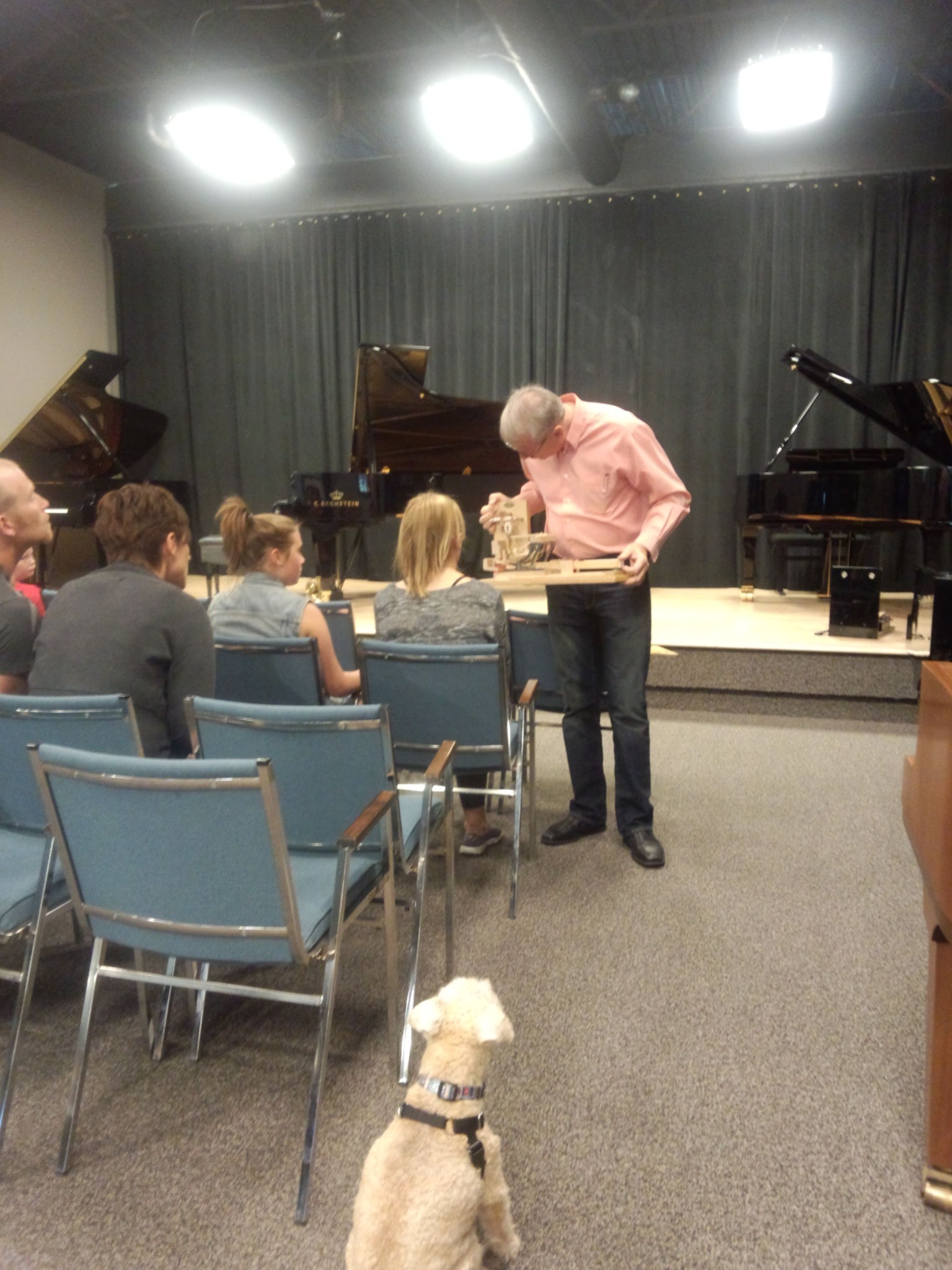
Maestro watches Registered Piano Technician Michael Lipnicki with showing off piano parts. Photo by R-M Arca.
Where to the the Pet Gear Stroller
Check your local pet store. or online at Amazon:


My Foray into Sword Repair
Watkin-sensei brought a san shaku for me to use. It 's been well used and has good energy when I hold it. It just needed some TLC
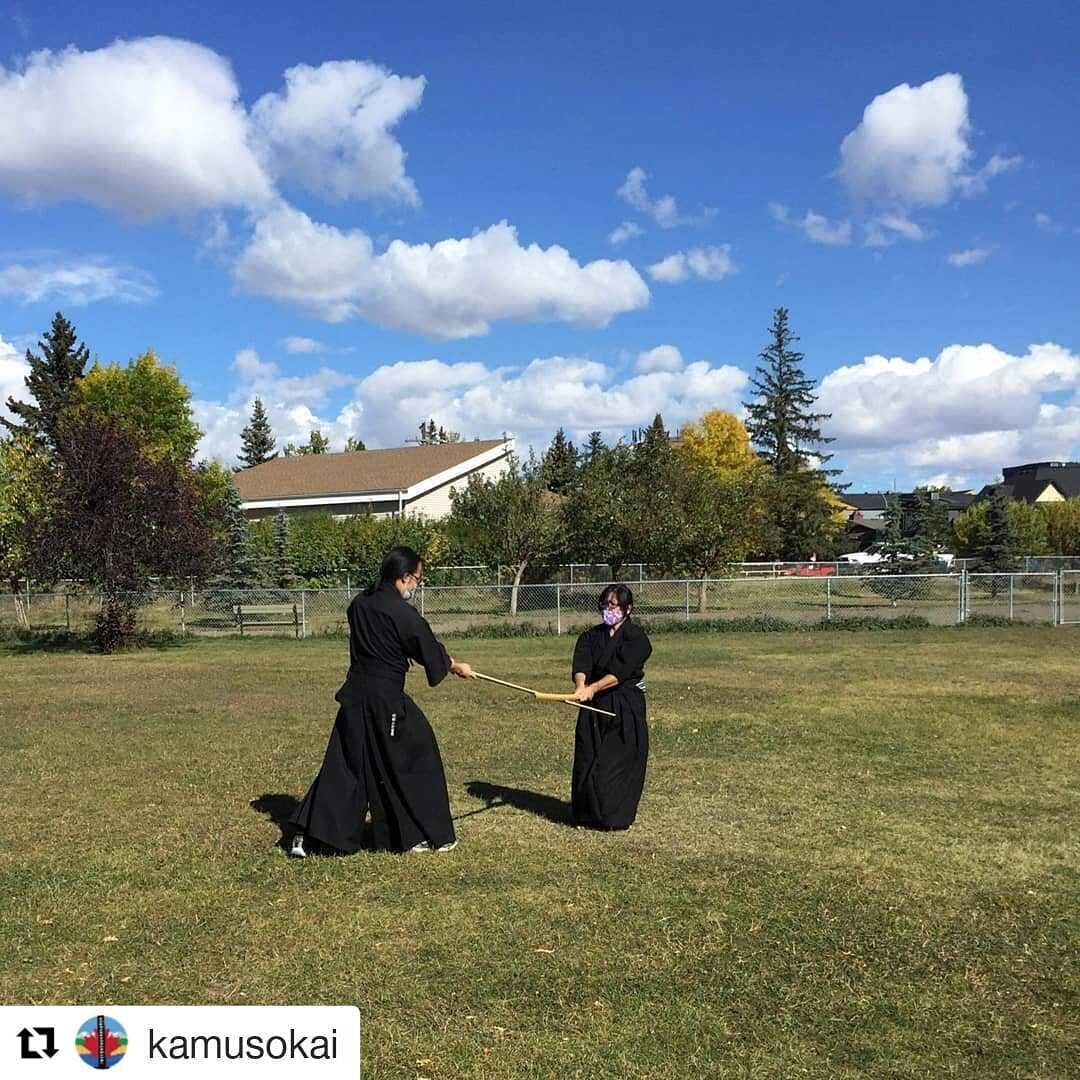
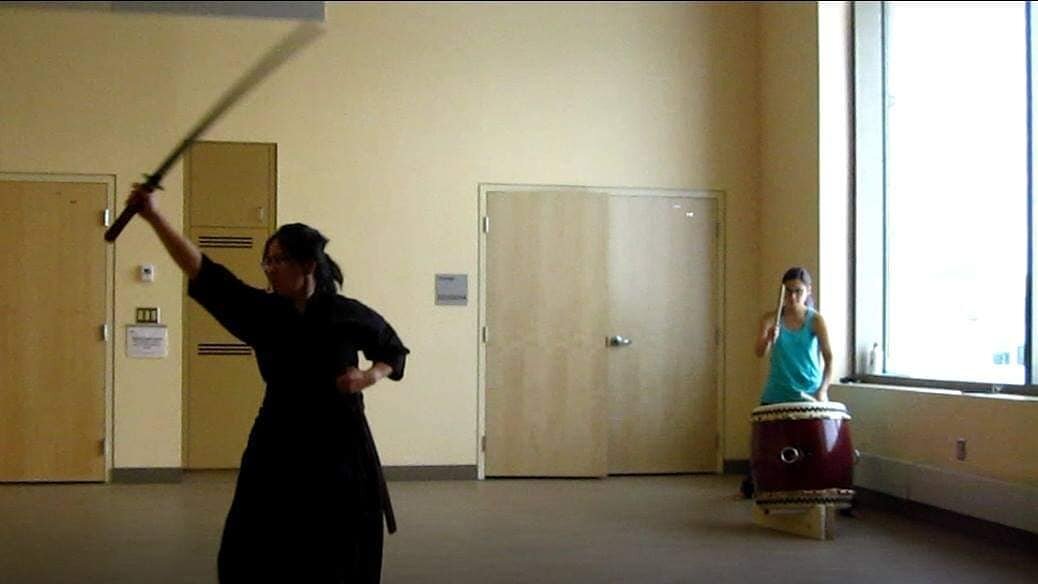
In the summer, Ka Muso Kai hosted Colin Watkin sensei. He came from the Philippines to give a seminar on Kage Ryu and Hyoho Niten Ichi Ryu. Kage Ryu is the art of using the Japanese long sword. Normally, it is practised with a choken. However, you can see that I have a bit of a challenge with the choken.
Watkin-sensei brought a san shaku for me to use. It 's been well used and has good energy when I hold it. It just needed some TLC:
I named it "Raijin" or "Thunder God."
You can check out some photos taken from our summer seminars on Ka Muso Kai's Facebook Page.
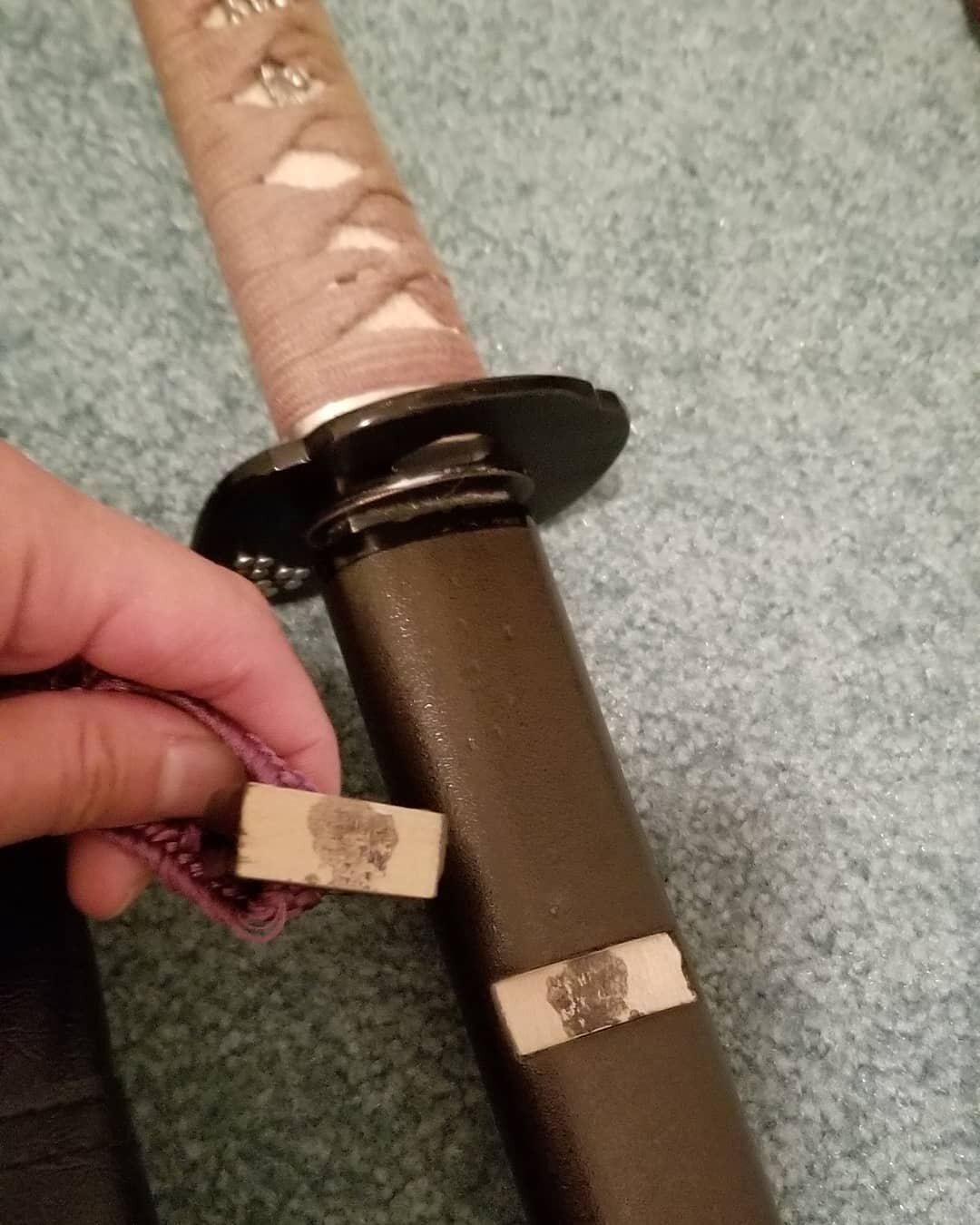
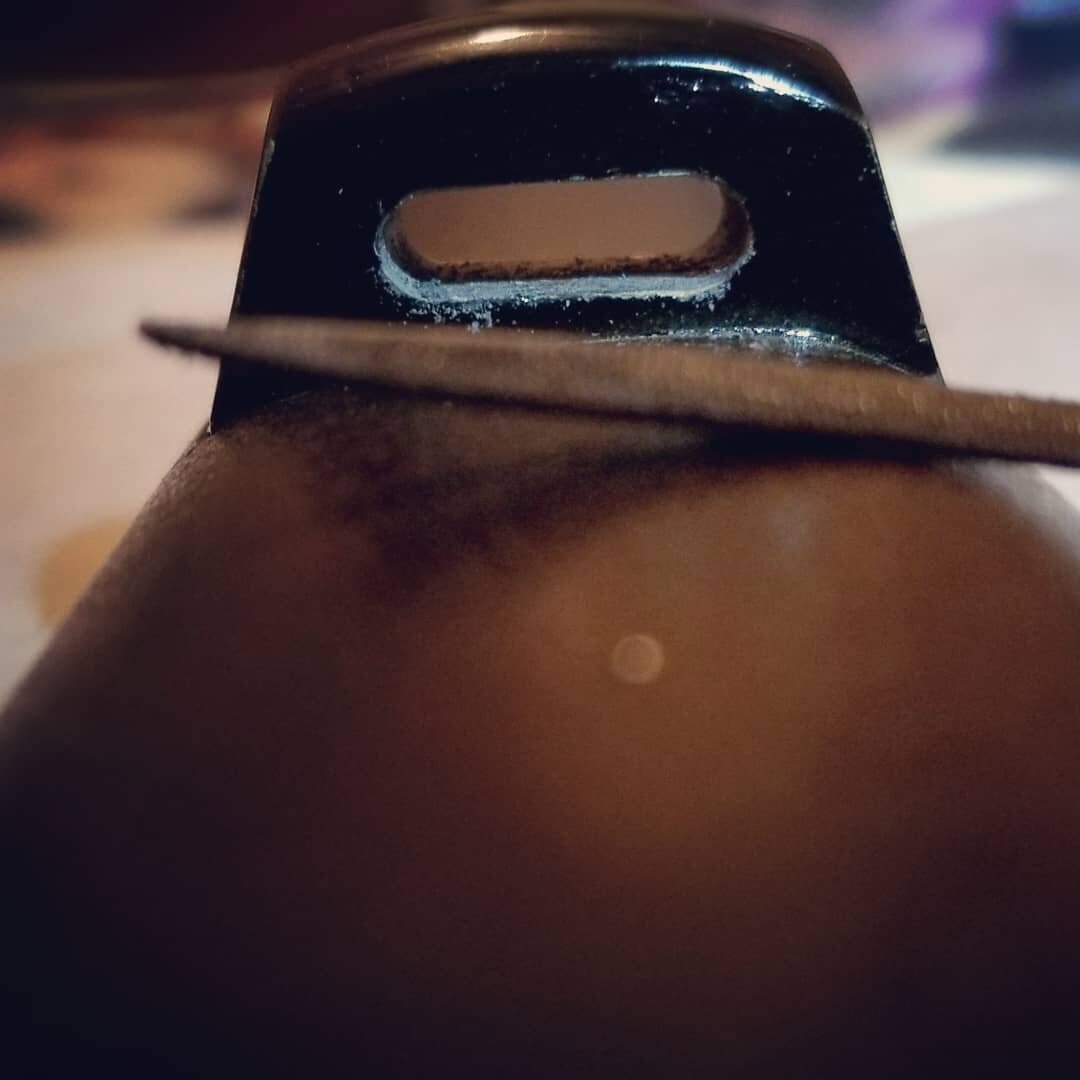
I finally got around to fixing up, thanks to some guidance from a clerk at Home Depot. Here's my journey:
Step 1: Sand off the old finish and smooth out the knicks.
Step 2: Apply the wood filler and let it dry. Sand everything down so it's nice and smooth.
Step 3: Apply the satin finish.
Step 3a: Repeat steps because I noticed a few spots that weren't filled in completely.
Step 4: Touch ups
Drum roll please...
Now, I have to stretch, stretch and stretch some more so that I can draw Raijin properly and consistently! Time to dust off my old yoga stretches.
Social Media Links
archives
- #YYCArts 32
- #YYCEvents 39
- Collaborative Music 25
- Community 11
- Composing & Arranging 6
- Entertainment 139
- Entrepreneurship 53
- Freebies 3
- Gardening 1
- Geeking Out 65
- Health & Wellness 120
- Improvisation 25
- Interviews 28
- Learning Music 188
- Martial Arts 13
- Memorization 7
- Music 230
- Music Careers 9
- Music Education 196
- Music Examinations 7
- Music Exploration 55
- Music Gigs 14
- Music Lessons 6
- Music Performance 32
- Music Theory 13
- Musical Instruments 12
- Musician Health 19
- Pets 57
- Piano Technique 12
- Practicing Music 120
- Productivity 20
- Professional Development 11
- Recommendations & Reviews 93
- Recreation 71
- Social Media 6
- Spirituality 10
- Studio Management 33
- Studio Technology 50
- Teaching Music 146
FOLLOW THE STUDIO on Instagram




Affiliate Links
As a Sheetmusicplus and CD Japan affiliate, I earn from qualifying purchases. The earnings help fund the Studio’s blog and YouTube channels. Your support is greatly appreciated.


FOLLOW Budo no Tabi on Instagram