THE MUSICAL MUSE
Blog dedicated to music education, practice tips, health
&
wellness, and geeking out.
The Anime Music on Melodica Project
My latest otaku learning project - playing video game and anime theme songs on the melodica.
Last fall, I picked up a melodica, AKA, the wind piano. It's an odd little instrument. It kind of sounds like an accordion. At first, I thought it would be an easy instrument to learn, seeing as I've been singing and playing the piano for years. A portable instrument that you could toss in your car and bring to a party or an anime con and have people call out "Nodame! Rappushodi- i-n buru- kudasai!" or "Can you play anything from Sword Art Online?"

とても むずかしい です!Playing the melodica takes up more air power than I realized. Not to mention, it's very different to play on a keyboard sideways, where your visibility is limited.
After seeing this video of Jonathan Ong play Chopin's Fantasie-Impromptu on melodica, my おとうと and I realized just how much work we have ahead of us to master this piece of plastic:
Then, we watched Jonathan and his brother perform Mozart's Rondo alla Turk:
This gave us an idea. Why not take some of those funky JPop and video game songs that are impossible to play as a solo piano arrangement and play them as a melodica duet? In addition to some good ol' classics?
We have started working on some classic tunes from Azumanga Daioh, Tetris, Super Mario, Star Wars and Bleach. I've been working hard on saying, "Hai! Deskimashita!" just like Chiyo-chan in "Chiyo-chan no Tsukurimashou".
Feel free to send in requests. We can't promise we'll get to them right away (or that they are melodica friendly), but we'll certainly try!
Singer in a Band Workshop Musings
My vocal coach, Sherry Kennedy, convinced me to take the Singer in a Band workshop she ran last week. Shortly after the singing workshop began, I thought, "What on earth was I thinking? Why did I pick two songs I don't know very well? Why did I pick a song in Spanish?"
There is a proverb that says, "To teach is to learn." To grow, music teachers must find ways to further their own music education.
There are several professional development opportunities for music teachers. By exploring these options for continuing education, music educators can rejuvenate and develop their own musicianship.
As some of you know, I took singing lessons as my learning project for 2009/10. I've sung for years in choirs, but last spring was the first time I have ever sung a solo in public. It's a completely different ballgame. With piano, the performer faces his or her instrument. However, when singing, looking at the audience (or towards the audience) is critical to engaging them. If you cringe because of a missed note or lyrics, not only is it visible, but cringing affects tone.
My vocal coach, Sherry Kennedy, convinced me to take the Singer in a Band workshop she ran last week. Shortly after the singing workshop began, I thought, "What on earth was I thinking? Why did I pick two songs I don't know very well? Why did I pick a song in Spanish?"
Over three days, Sherry, along with my piano teacher Derek Stoll, worked with us eight adults taking the workshop. We had a such a diverse group, including two professional "shampoo bottle" singers and one singer who's had an up and down relationship with singing for several years. There were two piano teachers, myself and my friend and colleague Melodie Archer.
We went through breathing and stance ad nauseum. Many of us needed to "open up", so Sherry stuck foam rollers under our arms (those quickly became light sabers).
As a pianist, nay, as a VRK pianist, I found it especially challenging to have Derek play an intro and for me to just know how the correct notes should sound without me playing the note on the piano was difficult. Another challenge I faced was how to make each song my own so that I didn't sound like Consuelo Velasquez or Stevie Wonder.
Memorizing lyrics was a challenge for all of us however, we all pulled through. The nice thing about singing jazz is that if you forget the lyrics, you can simply scat your way out of a potential mess.
All things considering, it was a wonderful night. All eight of us delivered our best performances. Our success can be attributed to several factors:
supportive and encouraging instructors
the fact that we were all tired from running around from 9:30 AM until 10:00 PM that we were too mellow to be nervous and
the fantastic and supportive energy backstage
We cheered whenever the person performing cleared a "trouble spot" as if we were in a hockey game. You can check out my performances on my website.
Many thanks to Sherry and Derek for their hard work and guidance. Hats off as well to Dave Marshall, our serious-looking drummer and Dave Hamilton, our guitarist who can play many a cool lick.
So what lessons did I take away from this experience? Singing lessons and this workshop reinforced the importance of singing and sight singing to develop one's inner ear. You can't beat the rush from performing in an ensemble and singers take artistry onto a whole new level.
Would I do it again? Most definitely.
(c) 2010 by Musespeak(tm), Calgary, Alberta. All rights reserved.
Yawn, Puke, Sing - My First Singing Lesson
I had the pleasure of working with Sherry Kennedy at the Jazz Connection Workshop this summer. It was only a couple of sessions, but enough to make me realize that if I'm ever going to play and sing at a gig and give some intelligent pointers to my students who are trying the "playing and singing" thing, I need to have a solid foundation in my voice. Today, I had my first singing lesson today after many years.
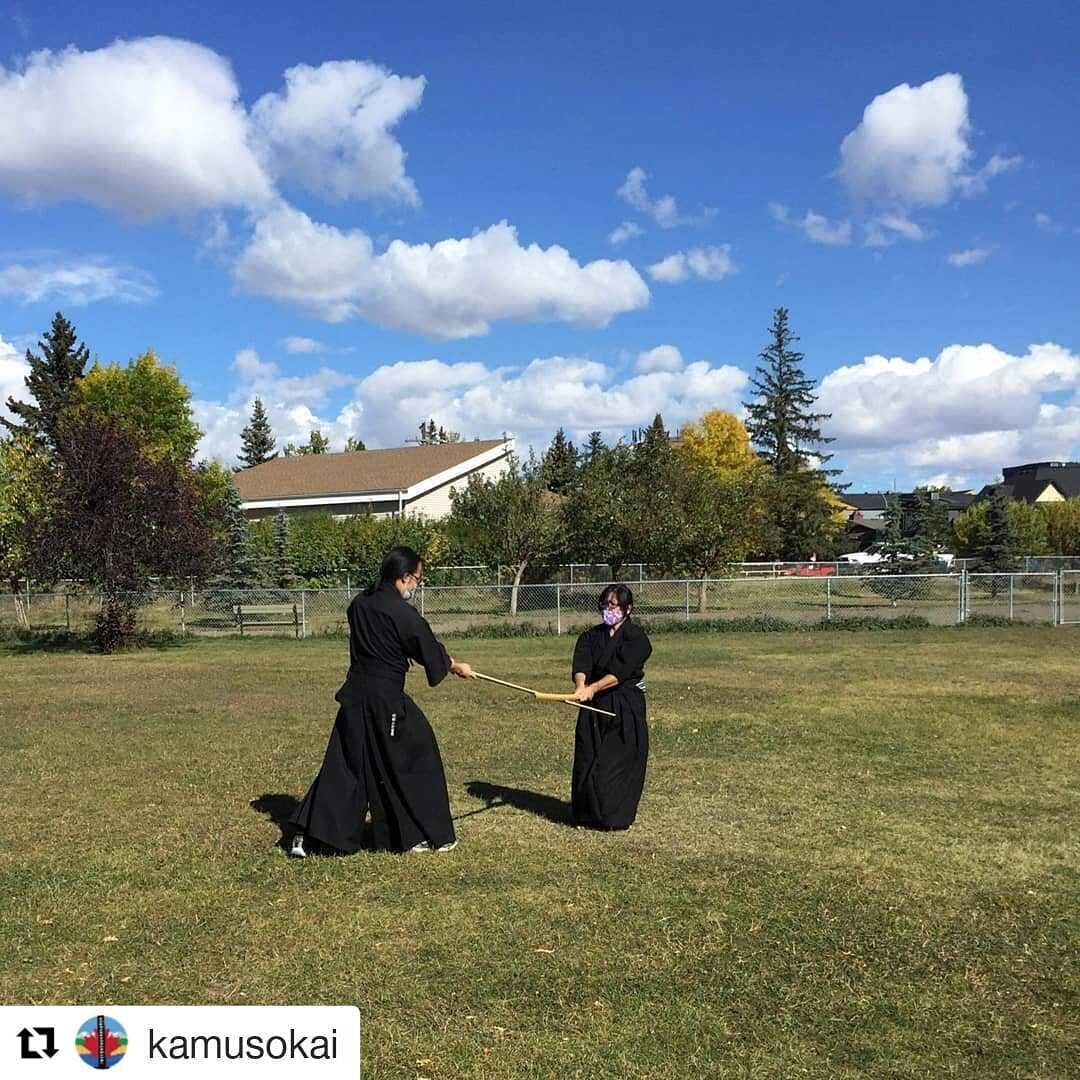
I had the pleasure of working with Sherry Kennedy at the Jazz Connection Workshop this summer. It was only a couple of sessions, but enough to make me realize that if I'm ever going to play and sing at a gig and give some intelligent pointers to my students who are trying the "playing and singing" thing, I need to have a solid foundation in my voice. Today, I had my first singing lesson today after many years. We spent a good chunk of it working on breathing and relaxation exercises. The singing stance reminded me of our "ready" stance in Iaido - feet shoulder width apart, no unnecessary tension. Try to relax and hit that state of zanshin.
Ha! I think I'll have to do practice more sword cuts.
I digress. Sherry had me visualize the air coming from the ground, through my feet and up to my boobs as I breathed in. The only way I could make it work was to imagine a white mist flowing upwards. At one point, I think it was blue but I don't think it really matters.
Then, she had me lay on the floor so I could feel my diaphragm expanding into the floor, WHILE concentrating on keeping my shoulders and chin level, WHILE focusing on the airflow going from my toes to my boobs, WHILE dropping my jaw and letting the lower jaw jut forwards (completely slack), WHILE keeping my tongue flat and soft palette open, WHILE imagining I had a straw in my mouth and that I was trying to make an imaginary leaf fly off the table and dance in the air.
Then, Sherry asked, "Are you relaxed yet?"
That's a joke, right?
I know with practice it will all become second nature. Just as I know that getting my muscles to relax will help my piano as much as my singing. It will help in overall posture and health too.
In the meantime, I know I'll be practicing puking and yawning motions in front of the mirror to get my tongue flat and lightly holding my jaw to check that it's slack and forward enough. So if you see someone doing this in the car at a red light, that's probably me.
Now I can't stop yawning.
(c) 2009 by Musespeak(tm), Calgary, AB, Canada. All rights reserved.
Piano Pedagogy & Studio Technology Musings
Paul shared with us the various techie toys and gadgets he uses in his studio, from PowerPoint to Home Concert Xtreme (click on the link for more info). He also touched upon audio recording, video recording and the use of webcams in lessons held with his students in another state. He also ran a couple of sessions on "Performance with Commentary", which I unfortunately was unable to attend.
I recently attended the Piano Pedagogy Workshop presented by the Calgary Arts Summer School Association, featuring Paul Sheftel, American composer, teacher and pedagogue and his wife, Dr. Sara Sheftel, Ph. D.
Paul shared with us the various techie toys and gadgets he uses in his studio, from PowerPoint to Home Concert Xtreme (click on the link for more info). He also touched upon audio recording, video recording and the use of webcams in lessons held with his students in another state. He also ran a couple of sessions on "Performance with Commentary", which I unfortunately was unable to attend.
Sara held open forums for teachers to discuss the challenges of keeping students motivated, handling teacher burnout and knowing when to let go of a student. Sara would add her comments and share her advice as we spoke. I would have liked to hear more of Sara's insights before going into an open forum set-up.
I walked away with two kernels that are percolating in the back of my mind:
Protect yourself. If you're too run down or your life is out of balance, it hampers your ability to teach and help to others.
Keep It Simple, Stupid (KISS). Make the most of the technology you currently have at your disposal first before adding a whole bunch of gadgets and programs you are unfamiliar with (and don't have the time to get familiar with).
Immediately after the workshop, I sat down to redesign Studio Central, the mircosite for my students. Gone are the pages they never looked at. It's now streamlined to house things to download.
The Dazzling Downloads page remains, containing handouts and studio forms. New is the online A/V Library I'm building. When complete, my students will be able to download funky grooves at various tempii and time signatures I've recorded from my drum machine, to use for improvising or as an alternative to the metronome. Scales will be more fun to play with a rock or funk groove, right?
On the video side of things, I'm recording a series of 12 Practicing 101 demos, so when my students forget how to do the Countdown Drill or drill their memory stations, they can watch the video.
Then the piece de resistance, the Student A/V Lesson Files pages. Gone are the days where we're fiddling with ProTools, exporting a .wav file and burning it to CD (only to find that they can't play the CD in their CD player). No more transferring of mp3 files from my audio recorder to the computer to a student's memory stick. I'm just going to upload the A/V snippets of their lessons to Studio Central for them download. Each student will have their own page, their personal A/V library collection.
Back to my point of just keeping things simple. I have Finale Notepad, Sibelius, ProTools, a stage piano and drum machine. I have yet to find the time to sit down and explore each to their fullest, or to explore their connectivity capabilities. A friend just told me about Audacity, a free audio recording and editing program. However, that will have to wait for another time. I have figured out how to connect my drum machine to my Mbox to record using ProTools and I already know how to transfer audio and video files taken by my portable audio recorder and camera; so that will do until I figure out the rest of the techie toys and invest in a really good video recorder.
Who knows? Maybe sometime in the not so distant future, music teachers will be holding an Open Chat Night once a week on one of the ISM programs or Skype for students to pop in and ask questions. Teacher PodCasts. Studio Parent Chat Nights. Virtual concert nights. The sky's the limit.
(c) 2009 by Musespeak(tm), Calgary, AB, Canada. All rights reserved.
Post-Examination musings
I had a terrible dream the other night that I got an 83% on my Conservatory Canada Level 7 Contemporary Idioms examination. Normally, I'd be happy with an 83, which is First Class Honors. However, having turned music into a profession, I was aiming for higher. I also wanted to beat my highest exam mark from my youth, an 88% on my Grade 8 RCM practical, which I got on my second attempt.

I had a terrible dream the other night that I got an 83% on my Conservatory Canada Level 7 Contemporary Idioms examination. Normally, I'd be happy with an 83, which is First Class Honors. However, having turned music into a profession, I was aiming for higher. I also wanted to beat my highest exam mark from my youth, an 88% on my Grade 8 RCM practical, which I got on my second attempt.
[Note to students: Get a good night's rest the night before an exam and don't spend it staying up all night to read a juicy novel or else you wind up botching your exam and need to re-take it.]
I digress. I was therefore delighted to log into ConCan's site and find that I scored 88.7% (on my one and only attempt). Now I'm itching to see my exam comments.
So, how was it, you ask?
What a surreal experience. It didn't feel like an examination at all. It was far more relaxed than my RCMexaminations in my youth.I vacillated from feeling calm, almost lackadaisical to thinking, "Oh my God! This is my exam. For real. Eek." It felt more like a lesson with a very relaxed examiner. As for the improvising section, I was just jamming along with another teacher.
I felt pretty confident in my technical elements, although my hands weren't completely in sync on my first mode (B Aeolian). Growing up, this was one of my weakest areas so I was determined to show that I've matured.
The same goes for ear, rhythm, sight-reading and keyboard harmony. Gone are the days when I was a panicking mess over two lines of sight reading, stumbling and pausing all the way through. It's amazing what a difference a slow, steady tempo makes, as well as counting out loud!
The repertoire went generally well. A few tiny slips in Gershwin's I Got Rhythm and a few more oddities in Vince Guaraldi's What Child is This? Hey, I was just glad my tempo was there for both. Mantecawent quite well as did Thriller Rag.
The examiner stumped me on one of the Viva Voce questions. I didn't research jazz waltz enough so I was winging it with my answer. When he asked about Dizzy Gillespie and Manteca. I said the first thing that popped into my head, "He had big cheeks...I heard him play a while back."
It didn't help that the room had many hard surfaces. I should have compensated more for it but the excitement of the moment kicked in. So, the examiner said I was a little percussive and not melodic enough. Too technical. I've never considered myself a technical player. I've been called "expressive" and "analytical" but never "technical". Until now.
I thought I had dynamics but if anything, I suspect he'll say I needed more contrast and shaping (it's something we always say to our students, why should this time be any different?).
I had a mini-lesson afterwards which was basically like a master class. This added to the "non-exam" feel of the experience.
I felt all right about the exam. I didn't feel terrible either. I simply felt that I could have done better. That is probably what fuelled my dream the other night.
One colleague asked whether I'll prepare for the Level 8 exam. I'd have to think about it. I'm too busy trying to incorporate all these new tricks I learned into my gig repertoire.
(c) 2009 by Musespeak(tm), Calgary, AB, Canada. All rights reserved.
Social Media Links
archives
- #YYCArts 32
- #YYCEvents 39
- Collaborative Music 25
- Community 11
- Composing & Arranging 6
- Entertainment 139
- Entrepreneurship 53
- Freebies 3
- Gardening 1
- Geeking Out 65
- Health & Wellness 120
- Improvisation 25
- Interviews 28
- Learning Music 188
- Martial Arts 13
- Memorization 7
- Music 230
- Music Careers 9
- Music Education 196
- Music Examinations 7
- Music Exploration 55
- Music Gigs 14
- Music Lessons 6
- Music Performance 32
- Music Theory 13
- Musical Instruments 12
- Musician Health 19
- Pets 57
- Piano Technique 12
- Practicing Music 120
- Productivity 20
- Professional Development 11
- Recommendations & Reviews 93
- Recreation 71
- Social Media 6
- Spirituality 10
- Studio Management 33
- Studio Technology 50
- Teaching Music 146
FOLLOW THE STUDIO on Instagram

Affiliate Links
As a Sheetmusicplus and CD Japan affiliate, I earn from qualifying purchases. The earnings help fund the Studio’s blog and YouTube channels. Your support is greatly appreciated.


FOLLOW Budo no Tabi on Instagram