THE MUSICAL MUSE
Blog dedicated to music education, practice tips, health
&
wellness, and geeking out.
My First Lenten Mission
This was my first Lenten Mission. Entitled “Nothing More Beautiful,” it was offered by my hometown parish. Father Clair Watrin gave four sessions this past weekend.
One of the spiritual goals I set for this year was to go on a spiritual retreat. In the past, I have attended silent weekend retreats at Mount St. Francis in Cochrane, AB.
These days, I have been too busy to go out of town to attend a retreat. I know, just looking at that in black and white looks like a lame excuse. However, I suppose that I can take comfort knowing that I am not alone. Lenten missions have emerged in recent years to appeal to the busy.
What is a Lenten Mission?
The purpose of a spiritual retreat is to get away from our daily distractions and reconnect with God. Without the noise, you can re-balance and re-prioritize as well.
As far as a Parish Mission goes, I will quote Deacon W. Gerard Gautrau from “Reinvigorate Your Faith at Lenten Missions” by Kyle Barrett: “I would say the Lenten mission is the retreat coming to the people rather than the people going to the retreat.” Deacon Gautrau serves at Sacred Heart of Jesus in Norco, LA. As to why it is a Lenten mission, that's because it takes place during Lent.
Over the course of several days, usually a weekend, a guest speaker comes to a parish and gives theme-based presentations and/or meditations. Sometimes, there is music. Whenever possible, free childcare is offered. Spiritual Directors are available for those seeking guidance, the Sacrament of Reconciliation is offered and Mass is celebrated.
My First Lenten Mission Experience
This was my first Lenten Mission. Entitled “Nothing More Beautiful,” it was offered by my hometown parish. Father Clair Watrin gave four sessions this past weekend. I attended the three for adults.
The first session really gripped me. Father Watrin spoke and presented several questions for us to reflect upon. At the heart of it was this: “What is most important?”
To help us, Father Clair asked us, “What do you spend the most time on?” and “What captures you?” What stood out to me is in the busyness of life, what is most important to us doesn't match what we spend the most time on.
Another point Father Clair brought up is that if we lead someone to sin, we are murdering their soul. By extension, you could say each time we sin, we murder our own soul. These were harsh words, but I think Father was trying to drive the importance of our spiritual well-being, and being mindful of the spiritual wellbeing of others.
The second session I attended focussed on love and practising “doing the right thing.” There are two parts to this.
With regards to love, Father Clair spoke of how we all love stories about “heroic love,” such as a complete stranger risking his or her life to save someone in danger. “True love,” he said, “is doing the right thing when you don’t feel like doing it.” Perhaps you are angry with your friend/significant other/spouse/co-worker/child. Doing something caring for that person, even when you don’t feel very loving at the moment is an example of this. “It takes courage to love when you don’t feel very loving,” he added.
On practising “doing the right thing,” Father Clair incorporated a bit of visualization to practise how to respond when faced with a crisis or temptation. The example I gave a friend was this: say you’re a teen and you’re going to a party where there is alcohol. You don’t want to drink, so you practise how to respond to people asking, cajoling or trying to force you to drink.
The final session was on prayer and truly living in the moment. This also spoke volumes to me.
“Every prayer makes a difference,” he said. “Prayer is the most powerful thing in the world.” The thing is, sometimes we just don’t see that our prayers are making a difference. Or sometimes, it takes time for us to see the results of our prayers.
“All there is to life is right now,” Father Clair said. We’re always in a hurry. Or, we’re too busy looking forward, or dwelling on the past.
“Every now moment is an opportunity to surrender to God,” he said. To get close to Him.
This last part truly resonated with me. Lately, I’ve been focussed on “After I get this done, I can [insert blank].” Or, “When I get this done, then I’ll be ready for [insert blank].” During the mission, I realized that things are getting dropped because of this mindset, and relationships with those around me are affected by my tunnel vision.
As I sat there in silence with the other parishioners during Adoration of the Blessed Sacrament, I mulled over this. Then, variations of the same phrase pop into my consciousness:
What can I do right now to help [So-and-So]?
What can I do right this minute to get out debt?
If I want to ______ what can I do right now to work towards that goal?
What can I do right here and right now to make the world a better place?
Lenten Mission: Closing Thoughts
I enjoyed my first Lenten Parish Mission. This was a great way for me to meet my goal of attending a spiritual retreat.
The biggest revelation that I came away with is that I need to realign so that what I truly find important matches what I spend most of my time. I need to learn how to manage my time more efficiently, so that I can spend more time on the things that matter and less time fretting over the other stuff.
An Introduction to Christian Retreat Centers in Alberta
Spiritual retreats provide an opportunity for spiritual rejuvenation. Learn about 5 Albertan Christian retreat centers that welcome people of all faiths.
Spiritual retreats provide an opportunity for spiritual rejuvenation. Learn about 5 Albertan Christian retreat centers that welcome people of all faiths.
There are several Christian spiritual retreats in Alberta for those seeking spiritual renewal, counseling and growth. Although rooted in the Christian faith, these facilities are ecumenical
,
welcoming people of all walks of life. This is an introduction to 5 Christian retreat centers in the province: The FCJ Christian Life Centre, Martha Retreat Centre, Mount St. Francis Retreat Centre, The Providence Renewal Centre and Sanctum Retreat.
The FCJ Christian Life Centre in Calgary, Alberta, Canada

The Faithful Companions of Jesus at Sacred Heart Convent began their ministry in 1885 by running an all-girls’ boarding school. In 1980, after extensive renovations, the FCJ Christian Life Centre opened its retreat and conference centre. In addition to retreats and sabbaticals, the Centre offers ecumenical spiritual counseling, workshops, parish outreach and specialized programs for lay ministry.
The Centre has accommodation for 52 overnight guests with complimentary laundry facilities. There are also 3 conference rooms, 3 dining rooms, a library, seasonal labyrinth, chapel, grotto and a mediation garden.
Visitors can take advantage of the holistic services available, including massage, reflexology, healing touch and Reiki. Membership to the Centre is $10/year, which grants members access to the extensive library. Costs for workshops and retreats are listed on the FCJ Centre’s website.
Martha Retreat Centre in Lethbridge, Alberta, Canada
The Martha Retreat Centre is operated by the Sisters of St. Martha. The Marthas offer four types of programs: A Time to Pray, A Time to Reflect, A Time to Be Companion on the Journey (spiritual coaching) and Retreats.
There are four opportunities for prayer at the Centre. There is daily prayer, weekly centering prayer, monthly Taize prayer and monthly Eucharistic Adoration.
The Centre offers Oasis Days, workshops on prayer, spirituality, health, wellness and healing. There are two programs dedicated to men’s spirituality.
Three types of retreats are offered at the Martha Retreat Centre: private retreats, weekend retreats tied to the liturgical year and longer retreats (both silent and preached retreats). A list of current prices is available on the Martha Retreat Centre ’s website.
Mount St. Francis Retreat Centre in Cochrane, Alberta, Canada
The Mount was founded in 1949 and is run by the Order of the Franciscans. The facility lies on approximately 500 acres. Retreatants of all faiths can reflect outdoors, following the Stations of the Cross, sit and enjoy the breathtaking view of the Rocky Mountains, pray in the chapel or curl up and read a book from the lending library or bookstore.
The Centre offers three types of spiritual retreats. There are weekend retreats, midweek twilight retreats and individual silent retreats. Each year, the Centre chooses a retreat theme which is reflected in all its programming. For instance, the theme for 2010/11 is “Life’s Spiritual Journey”. Some of weekend retreats are geared towards specific groups, such as women’s retreats, couples retreats, men’s retreats, and clergy retreats.
There are single rooms with a shared bathroom in the main building. In 2009, the former convent was renovated. Renamed “St. Elizabeth Place” after the Sisters who resided there for 50 years, this building contains six bedrooms, a large meeting room and kitchenette.
For those who want a desert or private retreat, guests can book the Friar Paul Surette Hermitage. This log cabin is sparsely furnished with a bed, table, chair and wood-burning stove.
There is no set fee for retreats. However, a list of the Centre’s costs per person is listed on Mount St. Francis’ website. Guests are given a blank envelope to include their contribution. Those who can contribute above the listed cost receive a tax receipt. Their donations help cover the costs for those who cannot afford the full amount.
The Providence Renewal Centre in Edmonton, Alberta, Canada
The Providence Renewal Centre was founded in 1985. Built on 20 acres of land, retreatants can walk and reflect on the Centres various walkways or meditate in the fountain garden or seasonal labyrinth. Guests can attend day sessions or book a room for longer stays.
The Centre’s programming focuses on Christ-centered spirituality for individuals, groups and organizations. The programs fall into 6 general categories: prayer, liturgical seasons, weekends away, special interest, clubs and health and wellness.
The Centre offers weekly yoga classes and holistic services such as Reiki, therapeutic massage and acupressure. Providence also offers private retreats, sabbaticals and counseling with a spiritual director. There are 21 private suites (with ensuite bathroom) and 30 single rooms (with a shared bathroom).
The Centre requires at least 3 days’ prior notice for private retreat bookings with meals included. Current prices for workshops and retreats are listed on Providence Renewal Centre’s website. Guests can pay by credit card, cheque or cash. Costs for those who are in financial need are subsidized through donations..
The Centre has conference facilities for conventions, team building and special functions. Their meeting rooms and auditorium can accommodate groups from 6 to 325 people
Sanctum Retreat Centre in Caroline, Alberta, Canada
Founded by Catholic lay theologians Mariette and Kristoph Dobrowlski, the Sanctum Retreat Centre opened its doors in 2004. Although rooted in Catholic Christianity, people of all faiths are welcome.
They offer three types of retreats: silent spiritual retreats, silent weekend retreats and midweek retreats. Like Mount St. Francis, there are specialized retreats for specific groups, including couples, clergy, men and women.
Sanctum lies on 100 acres of land. Retreatants can borrow items from the lending library, relax in the outdoor spa, pray in the chapel or go hiking or fishing. The Stations of the Cross wind up the hill, while a series of four loops forge an outdoor Rosary path.
The facility has 33 private bedrooms with an en suite bath and three hermitage cabins. There is a solarium dining room as well as a common kitchen area.
Sanctum also has conference facilities and can be booked for team building and leadership workshops, professional development and lay ministry and formation meetings.
Like Mount St. Francis, there is no set fee for retreats at the Sanctum Retreat Centre. Donations above the basic cost go towards covering the cost of a retreatant who is in financial need.
For people who are seeking spiritual renewal and growth, spiritual retreats provide an opportunity for them to reflect and pray, seek spiritual direction and fill up their spiritual “gas tanks”. These Christian retreat centers highlighted are just a sampling of what is available for people of all faiths. From retreats to workshops, from massage to spiritual coaching and from conference facilities to walking paths, there is something for everyone who seeks to rest and recharge their body, mind and soul.
Originally published November 18, 2010 on Suite101.com. Updated on March 23, 2013. All rights reserved by Rhona-Mae Arca.
Pieta by Tom Kendzia
Wishing peace to all during Holy Week with Tom Kendzia's Pieta.
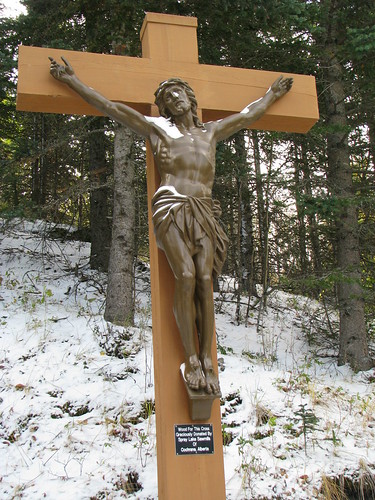
Today is Good Friday. Day 2 of Easter Triduum.
It's the holiest week for Christians. Catholics celebrate the Paschal Mystery by attending Mass and reflecting upon the Last Supper, Good Friday and Easter Vigil.
My parish usually sings this Tom Kendzia's Pietà at Good Friday Mass. It's such a heart-wrenching song. Many a teary eye:
Tom Kendzia is an American arranger, author, clinician, composer, producer, teacher and performer. Sheet music of his works are available on Oregon Catholic Press.

The Pietà is also available on the album, Through His Mother's Eyes. .

My First Passover Seder Meal
My reflections and the lessons I took away from attending my first Passover Seder Meal.

On Monday, I partook in the Passover Seder Meal. I walked away extremely full - physically, mentally and spiritually. Perhaps you, like Rabbi Matsuof are thinking, "Why are you so interested? What brings you here?" After all, I am a cradle Catholic, active in my parish and in my hometown one whenever I visit. I grew up in a small town comprised of Catholics, Protestants, Jehovah Witnesses and Mormons. No Jewish peoples. Naturally, at least for me, I'm curious and I want to learn.
I have been curious since university, only to get frustrated because Religious Studies 1000 - An Introduction to World Religions never seemed to fit into my timetable. I've been interested since 1993 when my boss at the time shared some matzo (or "matzah") with me and listened patiently to my questions about Judaism (e.g. "Why can't you work on certain days during Passover?" and "Why can you only eat matzo and not normal bread during Passover?"). That just heightened during my piano lessons with one of my piano teachers (her husband makes fantastic latkes during Hanukkah).
However, it's not enough for me to just read about Passover in a book. Or to watch The Ten Commandments on TV (again). For me to get a deeper sense of this ancient tradition, I need to experience it. This year, I was delighted to learn that Passover coincided with Spring Break. Finally, I could attend.
My companion for the evening was my father. He wants to visit the Holy Land someday, so I knew he'd be up for sharing the experience. I also learned that one of my piano classmates would also be attending.
We attended the 23rd Annual Community Seder hosted by the Chabad Lubavitch of Alberta. This year, things were a little different. The Seder usually takes place at nightfall. However, it's spring and nightfall didn't come until around 8 pm. It's a lengthy mitzvah (6:00 - 10:50 PM), so to ensure that everything was done properly, yet without us passing out, we were offered a "light" meal to start the evening.
I put "light" in quotations because it was a large, scrumptious meal. The first course was a delicate chicken soup with egg noodles and carrots. This was followed by roast chicken in orange and ginger sauce, accompanied by roasted vegetables, grilled potatoes and mushroom blintzes. The blintze was dry but everything else was flavourful.
Our dinner companions were an interesting mix. One gentleman was a cradle Catholic-turned-Protestant-converting to Judaism. His partner was Russian, so I'll presume that she's Russian Orthodox since she said she wasn't Jewish. There was a quiet man with his 17-year old son. Their family emigrated from Latvia. Then there was a Hungarian Levite who brought two co-workers (one Catholic, the other one seemed a little bored). I suspect on the promise of good food and lots of alcohol.
The other woman at my table and I soon learned that Levites don't speak to women, which immediately resulted in me asking the gentleman in the process of converting, "How does he work in an office if he can't talk to women?" (and to quote Chitanda from Hyouka: "Watsahi, kininarimasu!").
After dinner, the men left the room to pray, while the women lit the candles and prayed to welcome Pesach (AKA, Passover). We said this beautiful prayer (well, the other ladies said it, I listened and followed their hand gestures).
Next, we were to set the Seder Plate. Well, the Levi gentleman at our table took over that task. Here's what the plate looks like before anything was placed on it:
Rabbi explained what each item signified. Rabbi Matsuof summed up that the plate represents mourning, bitterness, tears, what we can't have, charoset to represent mortar (used in the work of slaves). You'd think, "Who would want that if everything on the plate signifies something negative?"
"Freedom and slavery is what we make of it," he continued. The Seder plate represents the challenges we face now in the hopes of facing a better tomorrow. "Despite all that is in front of my face, I am free. I am true to myself. Tomorrow will be better," he added.
Next, it was time to recite the Haggadah, "The Telling". Even though I read up on it before attending, I was thankful that books were placed at each table (in English, Yiddish and Russian) for everyone to follow. The children sang the four questions at an impressive speed. Here are the four questions with a bit of an explanation:
Prayers are recited and songs of thanksgiving and praise to G-d are sung and the Hebrew's exodus from Egypt is retold as the Story of the Four Sons. That's the short version of what happens. Now, a bit more detail. There are fourteen parts to the Seder:
Kaddesh: Sanctification and prayer, followed by drinking the first glass of wine while leaning to the left (signifying freedom)
Urechatz: Ritual Washing
Karpas: Eating the vegetable dipped in salt water
Yachatz: Breaking of the middle matzo. Rabbi didn't trust us enough to not eat the matzo until the appointed time (probably learned from experience). He kept the three matzo at his table.
Maggid: The Passover Story as told by four sons asking four questions, after which, the second cup of wine is drunk.
Rachtzah: Ritual Washing in silence
Motzi Matzah: At this time, the matzo for all tables came out. After the blessing, we all ate our pieces in silence.
Maror: Bitter Herbs (horseradish)
Korech: a matzo sandwich of lettuce, horseradish and charoset are eaten
Shulchan Orech: Dinner and drinks
Tzafun: The hidden piece of matzo - the afrikomen - is eaten (leaning over)
Barech: Blessing after the Meal. The third cup of wine is drunk after the blessing.
Hallel: Songs. The fourth cup of wine is drunk.
Nirtzah: Closing. The opening of the door, the chair for Elijah and the recitation of "Next year in Jerusalem!"
The four glasses of wine symbolize G-d's four promises to the Hebrews (Exodus 6:6-7):
I will take you out of Egypt.
I will deliver you from Egyptian slavery.
I will redeem you with a demonstration of my power.
I will acquire you as a nation.
This is only a very brief explanation. This ancient tradition is rich in ritual and text. Please refer to this English translation of the Haggadah for a more complete picture.
People from every table had an opportunity to recite the Haggadah. Throughout, Rabbi would interpret the Passover, highlighting the lessons that are relevant today. These are some of the words of wisdom that I managed to scribble down:
"We need to make ourselves go out of our own Egypt. We are our own worst enemy."
"To be free in freedom - that is the challenge."
"True and honest sweetness is not what is sweet now, but what is sweet tomorrow."
"Bitter today, sweet tomorrow."
"Don't give up. Stand up for your rights."
"We are all united - in freedom - for a better tomorrow. We need to celebrate freedom. We need to celebrate the freedom in freedom."
Passover - a celebration of liberation - has lessons that anyone can take in.
To close, here's my favourite song that we sung at the Seder:
Happy Passover!
To learn more about Judaism, visit the Chabad website or check out some of the outreach programmes offered by your neighbourhood synagogue.
Happy Palm Sunday
A haunting song to share for Palm Sunday.
Several of my piano students came in last week, saying, "Our teachers say that Easter is more important than Christmas." The way they peek up at me after making this statement, looks like they are waiting for me to refute it. However, they are right. For Christians, Easter IS more important than Christmas. Whether you practice your faith or not, Jesus Christ's sacrifice is at its very core.
Now, after five-and-a-half weeks of Lent, Holy Week is upon us. It all begins with Palm Sunday, when we reflect upon when Jesus came to Jerusalem for the Last Supper. Then the Pascal Triduum begins on Thursday night with the Last Supper and the washing of the feet. Good Friday Mass on Friday and then Easter Vigil on Saturday night (candles, bells and baptisms - it's a great service). Easter Sunday is the coda to it all, but really, for Catholics, Easter begins at the Vigil.
Here's a nice two-minute crash course on Holy Week. Special thanks to Father Wilbert Chin Jon of St. Bonaventure's parish for sending this link out:
It took quite a bit of digging to find a performance of this song. It's one that we are working on for Palm Sunday Mass. I must say, g minor is the perfect key for this. It's melancholy and pulls at the heart strings. From a conductor's standpoint, however, I can't say I'm too thrilled about those offbeat entrances. The modal nature of the piece throws off my ear too. Yes, I know what that means: more practice required.
Without further ado, Carmen Scialla's O Crucified Messiah:
In the end, we changed this hymn to "We Take Up the Cross", another beautiful but challenging hymn.
Social Media Links
archives
- #YYCArts 32
- #YYCEvents 39
- Collaborative Music 25
- Community 11
- Composing & Arranging 6
- Entertainment 139
- Entrepreneurship 53
- Freebies 3
- Gardening 1
- Geeking Out 65
- Health & Wellness 120
- Improvisation 25
- Interviews 28
- Learning Music 188
- Martial Arts 13
- Memorization 7
- Music 230
- Music Careers 9
- Music Education 196
- Music Examinations 7
- Music Exploration 55
- Music Gigs 14
- Music Lessons 6
- Music Performance 32
- Music Theory 13
- Musical Instruments 12
- Musician Health 19
- Pets 57
- Piano Technique 12
- Practicing Music 120
- Productivity 20
- Professional Development 11
- Recommendations & Reviews 93
- Recreation 71
- Social Media 6
- Spirituality 10
- Studio Management 33
- Studio Technology 50
- Teaching Music 146
FOLLOW THE STUDIO on Instagram

Affiliate Links
As a Sheetmusicplus and CD Japan affiliate, I earn from qualifying purchases. The earnings help fund the Studio’s blog and YouTube channels. Your support is greatly appreciated.


FOLLOW Budo no Tabi on Instagram