THE MUSICAL MUSE
Blog dedicated to music education, practice tips, health
&
wellness, and geeking out.
On Muscle Memory and Sword Techniques
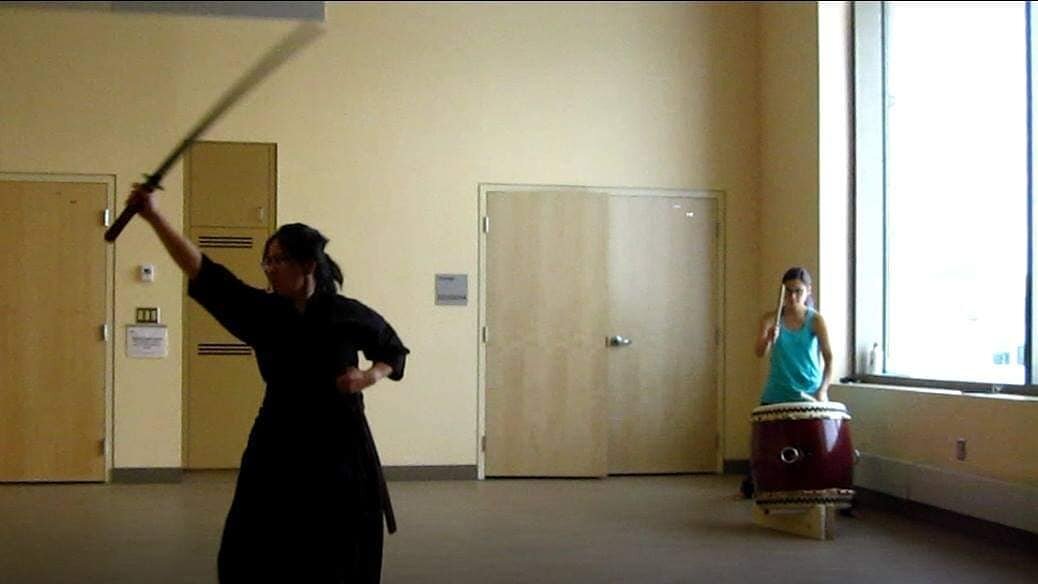
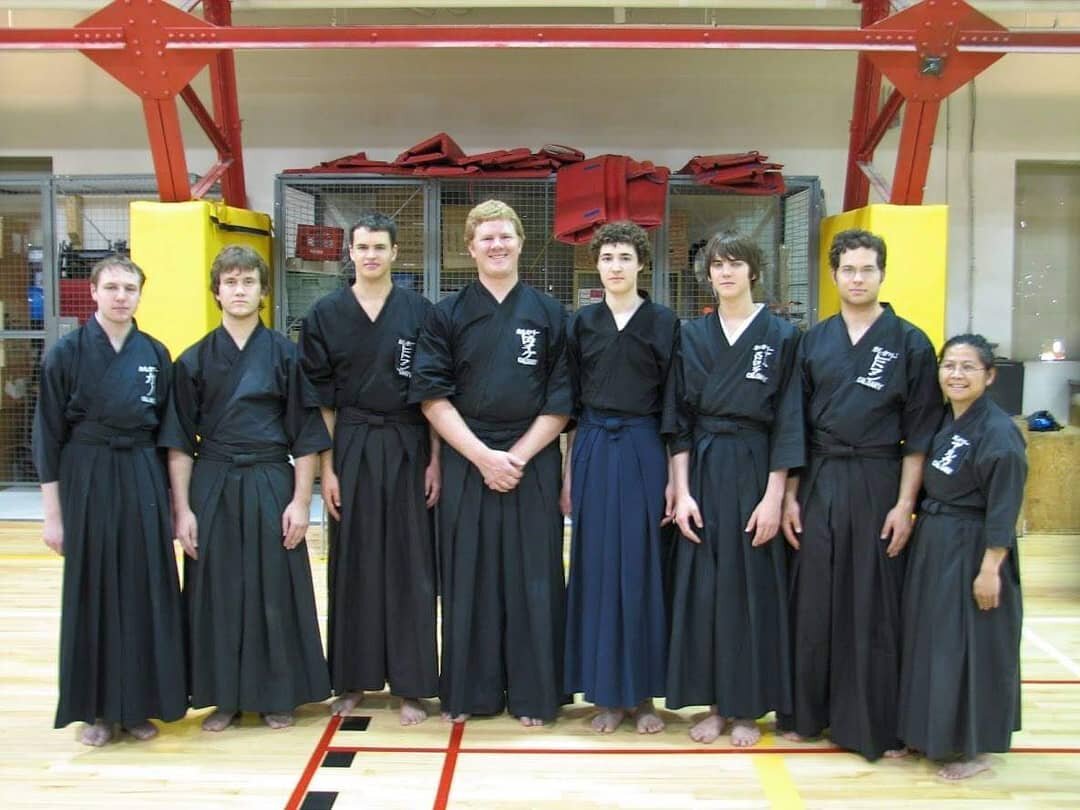
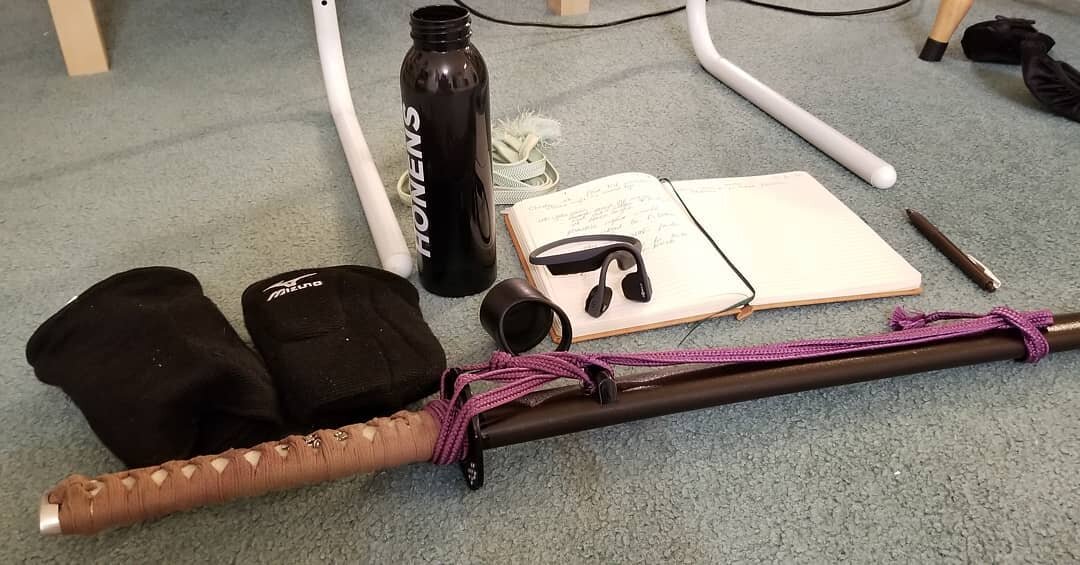
In January, I celebrated the one-year anniversary of my return to martial arts training. It has been quite the journey, relearning Iaido sword techniques along with Hyoho Niten Ichi Ryu waza. The past year has been an adventure in rediscovery and debugging. It has also been one of adventure as I began studying two additional martial arts: Jodo and Kage Ryu.
In January, I celebrated the one-year anniversary of my return to martial arts training. It has been quite the journey, relearning Iaido sword techniques along with Hyoho Niten Ichi Ryu waza. The past year has been an adventure in rediscovery and debugging. It has also been one of adventure as I began studying two additional martial arts: Jodo and Kage Ryu.
On Muscle Memory and Aging
It's amazing just how well muscle memory works. My body remembered quite a bit, in spite of my five-ish year hiatus. My mental memory? A bit more rusty.
Body and mind remembered the good habits as well as the bad. That's why this time around, I have been more focussed on debugging my troublespots.
One thing that has changed has been the degree of built-up body tension. I lost quite a bit of flexibility during my time off. Blame it on Father Time and an increased sedentary lifestyle during my hiatus. On the plus side, I am stretching more and taking better care of my elbow and knee joints.
My sword cuts have always been a bit wobbly. I knew this time, I needed to fix that - fast. My progress was slow at first, with my body remembering my old sword grip, and then spending months breaking that down to correct the amount of hand and arm tension.
It is as I say to my students: "Relax your arm until the point of impact." It applies to pressing down on a piano key just as well as it does imagining your iaito striking your imaginary target.
Exploring Local Martial Arts Seminars
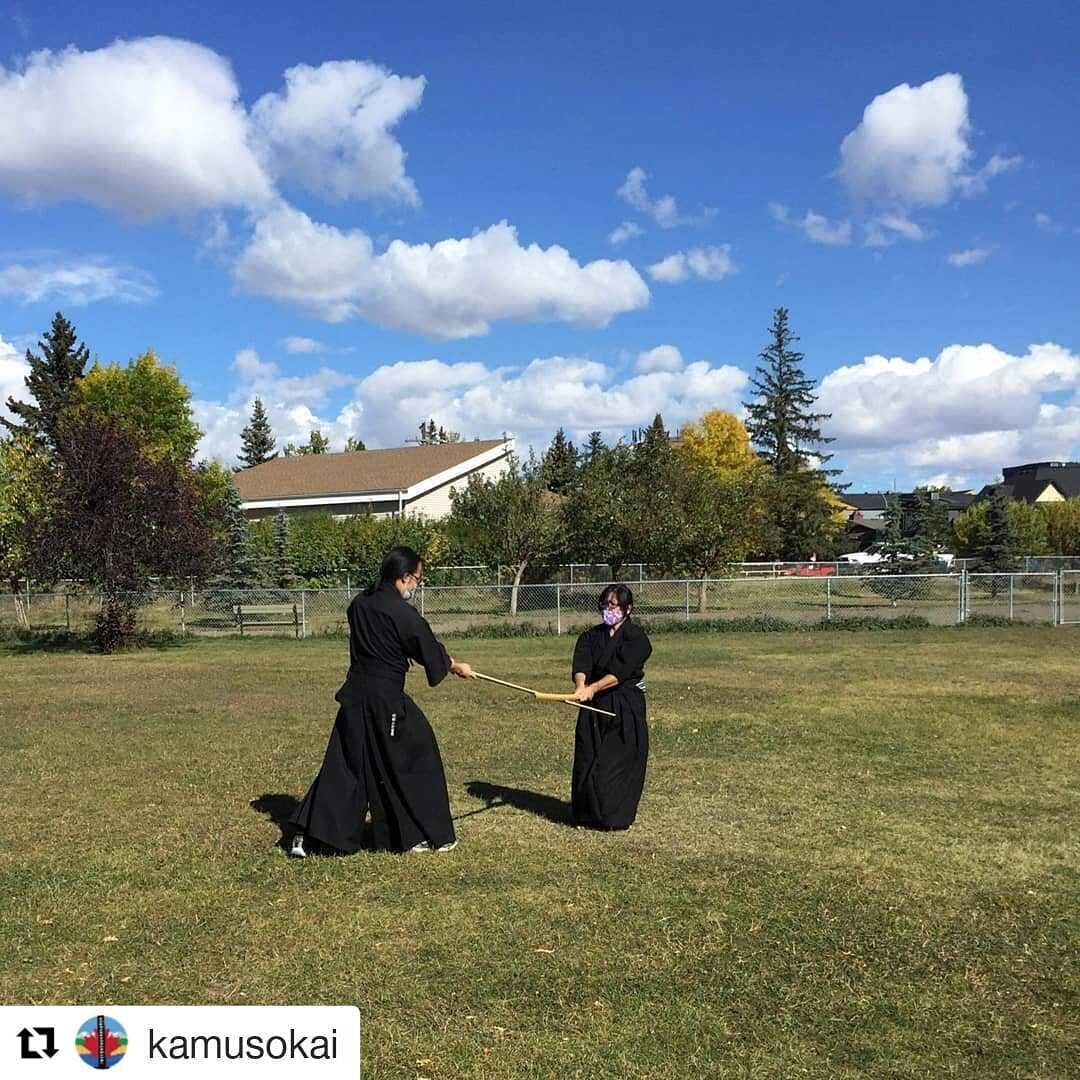
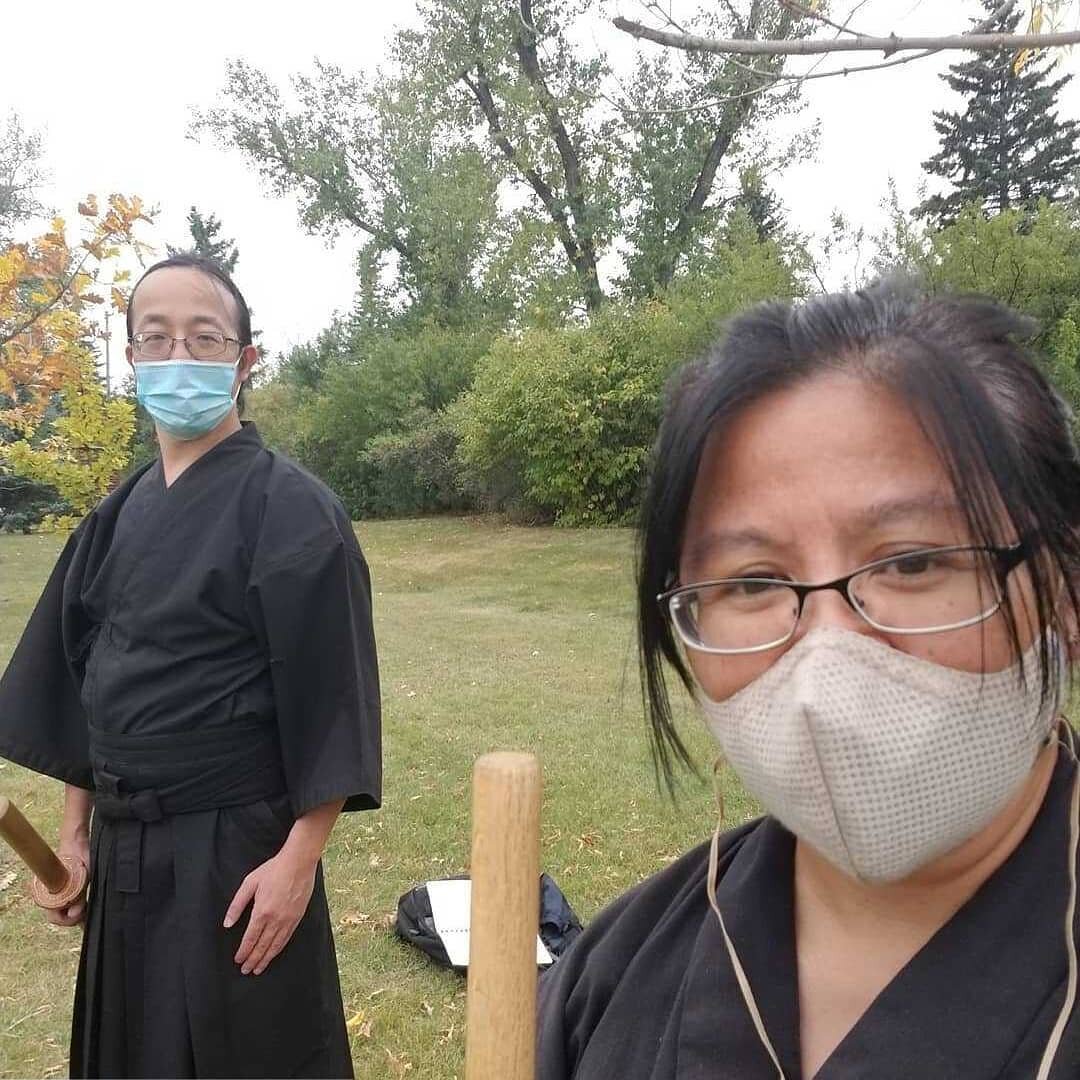
I attended three seminars last year, hosted by my club, Ka Muso Kai. The session in February 2014 with Kim Taylor sensei of Sei Do Kai provided a much needed crash course into Iaido kata and basic Iaido techniques. It also gave me a chance to try out Jodo.
Jodo is the Japanese martial art of the short staff. To this day, the Japanese police use the jo for crowd control. There are 12 basic jodo techniques and 12 two-person kata.
I discovered that I quite enjoy Jodo. I appreciate the practicality of being able to use a staff (or even more practical, a broomstick) for defense and containment.
More practice is needed, however. I am finding that learning something new takes a bit longer than it used to. That pesky memory!
In August, Ka Muso Kai Calgary hosted two weekend seminars: one on Iaido with Kim Taylor sensei. The following week, Colin Watkin sensei taught us Niten Ichi Ryu and Kage Ryu. He's one of the prominent sensei in the world for these two arts. Although most participants were from Calgary, our Edmonton branch, Saskatoon and Antagonish clubs were represented as well.
Hyoho Niten Ichi Ryu is a Japanese martial art that employs two-sword techniques, hence, "Ni" (two) "ten" (sword). It was developed by the samurai Miyamoto Mushashi (1584 - 1645) who is famous for his Book of Five Rings.
Kage Ryu is another old sword art. The waza employ the long sword and sometimes a smaller sword.
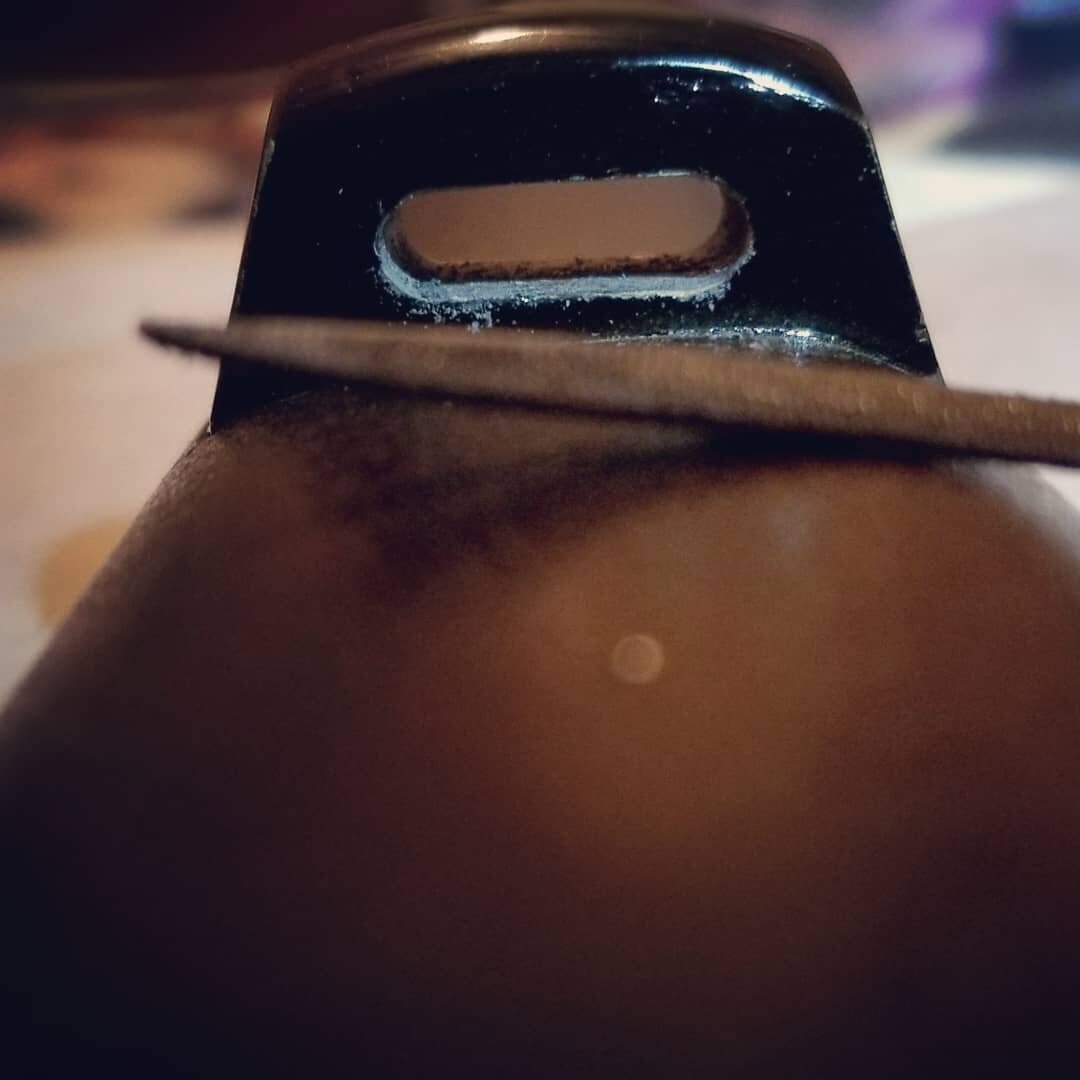
Traditionally, practitioners use a choken, but as you see, I have a bit of a challenge with that:
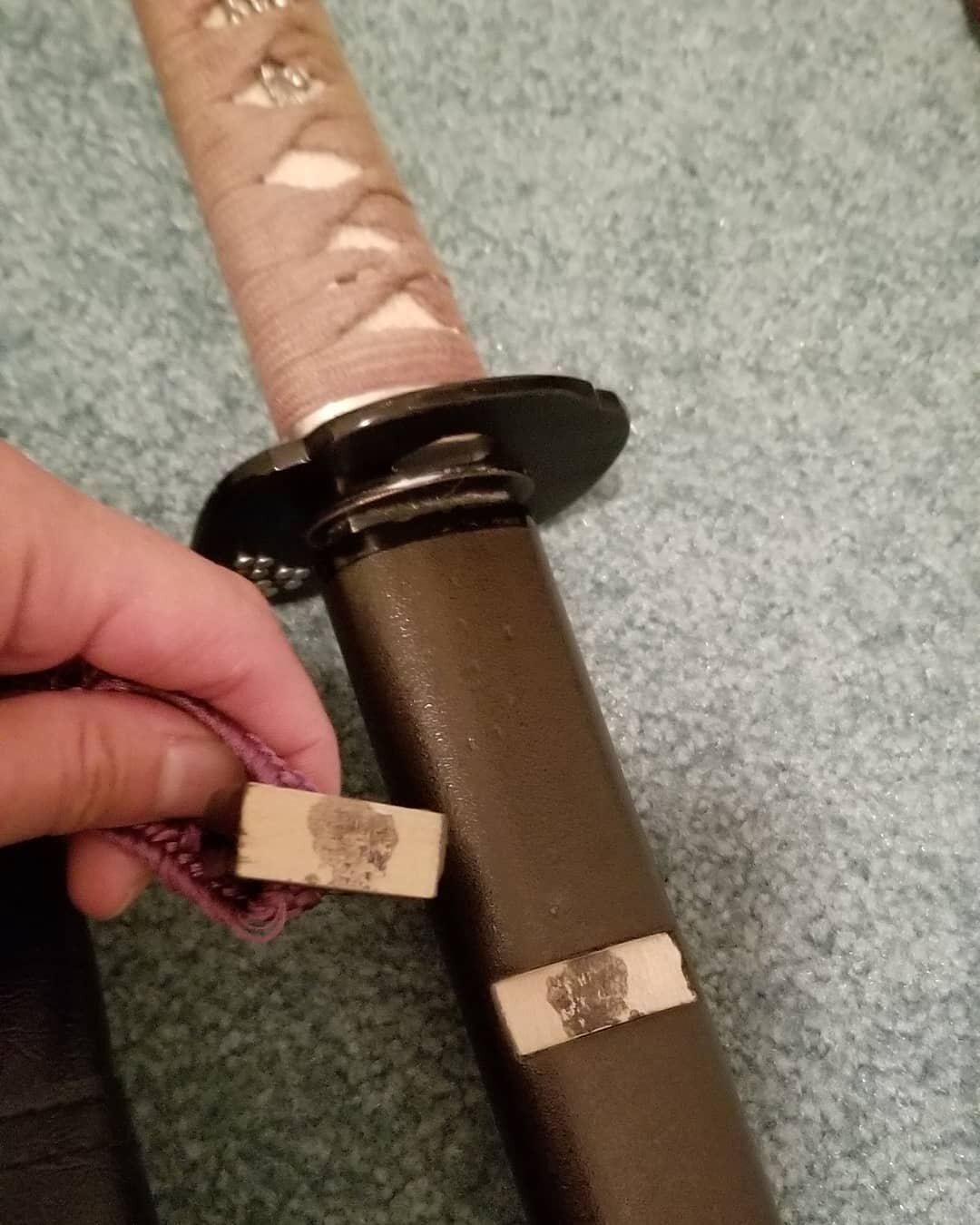
Watkin sensei brought over an old sanshaku bokuto for me to use. I just had to give it some TLC:
The Other Aspects of Martial Arts: Club Bonding Over Geekery, Cards, and...Pumpkins?
One thing we have noticed with our martial arts is that club members are huge geeks. Whether it's photography or anime, tabletop games or LEGO, we are geeks (and proud of it).
In the spring, our club attended the Calgary Expo as an exhibitor. It was such a cool experience. We are all looking forward to this year's Expo.
In October, we held our annual pumpkin cutting event. Our sword technique improved by leaps and bounds afterwards:
At our AGM and Christmas party, we played Seven-Card Samurai. Samurai-in-training beating each other up with samurai, ronin, bandits and ninjas and stealing rice from one another? Rice barrels of fun.
***
Which brings me to today. I'm serving on the Ka Muso Kai board for a second term. This year's project: revamping the website.
This month, I began working on the ninth Seitei Iaido kata: Soete zuki. Later this year, I plan to grade for my Shodan in Iaido and my Ikkyu in Jodo.
Now, 14 months in, I face the same challenge that I do as a multi-instrumentalist: how to practice all arts regularly with limited time. Thankfully, the sword arts share some common techniques, but quite often, I am limited to a few minutes here and there. My bokuto and jo are situated where I can grab them and review one technique or one kata between students' lessons.
I have even taken to practising footwork during downtimes in my volunteer shifts or ushering job. Lately, I have taken to practising enzen no metsuke when keeping my eyes peeled during a show or when driving.
That's all well and good. However, like music, I also came to a conclusion: it's best to have one primary art (or in music, instrument) that gets the bulk of your practice time. The others take a back seat and are practised on a rotating basis. It seems to be working for the most part, although I guess the true test is when I go for a grading.
Attempting to Improve My Memory
A lady I knew had an incredible knack for remembering the name of nearly every person she met. I'd like to improve my short-term memory so that I can remember names and things better. I try out a memory mapping exercise - and it works!

Have you ever been to a party or business function where you met a bunch of people, and forgot the name of the first person by the time you were introduced to the fourth? You're not alone, if my Google searches on the topic indicate.
I came across a neat article a few weeks ago on Buffer App's blog, entitled, "How to Never Forget the Name of Someone You Just Met: The Science of Memory". Like my students, I rely on writing something down "so I don't forget" or putting a reminder in my smartphone.
However, as the author Kevan Lee indicates, that's not really remembering. All we're doing is delegating the task of remembering to the object we inputted the information into.
Intrigued by some of the exercises to improve memory, I decided to try the memory mapping technique. On September 14, I chose my studio as the room to put everything/everyone in. On the first day, I used the technique to remember my errands of things to pick up : the cymbal was doing Jumping Jacks on the couch, the fridge was trying my new outfit and then put it inside itself, Maestro's vitamin powder was strewn all over my keyboard's keys, the Virgin Mary was praying the Rosary atop my wall screen (Miraculous Medal), the retro player ate my fruit salad, my frequent shopper cards were doing the conga at my computer station, the piano keys were replaced by tampons, the bookcase was playing with my cheques before taking them to the bank and my CD stand was trying on my jewelry. It's been over two weeks and I still remember that list of nine items because the images are simply ridiculous.
I'll keep using this technique as it appears that I did improve my short-term memory (to the point that it converted into a long-term memory!). I do hope to try some of the other exercises the next time I remember to read the article.
If you would like to improve your memory, check out these articles: Exercise Your Brain, Mental Exercises to Help Improve Your Memory and the Top 10 Ways to Improve Memory
Music Practicing Tip - The Random Spot Drill
How well do you know your pieces? Try the Random Spot Drill to check.
For many music students around the world, this is a really tense time. There are only weeks before their music exam.
If you're preparing for a music exam, chances are your parents and your music teacher are telling you that you need to practice more, etc. etc.
This month, I'm checking to see how secure my students' repertoire is by using the Random Spot Drill. Really, it's as it sounds. You walk by the piano, sit down and try to play one of your pieces from anywhere. Well, from any memory station, that is.
If you're in the middle of your practice, try it for about a minute. Try playing the intro of one piece, the middle of another and the end of a third piece. OK, that's not really random, but you can make it random by trying any of the following:
Scribble out bar numbers onto slips of paper and put them in a jar or hat. Then number your pieces. Draw one slip to choose a piece and another to tell you which bar to start from.
Ask a family member in another room to pick a number from 1 and X (the last bar of your piece).
Get a random number generator app and have it choose your bar numbers.
Close your eyes and move a finger randomly on the score. When it stops, that's where you start.
Roll dice
Spin the Bottle
The idea behind the drill is to see how quickly you can get into the groove of that piece. After all, you never know when a distraction will occur. It could cause a blip. To keep you and your audience on track, you need to get back into the groove with as few missed beats as possible.
Coping and Recovery Strategies
This month, my students are performing in our Winter Showcase. For some, this marks their debut performance. This week, we've been working on various coping and recovery strategies. As much as we would like to believe that we'll play everything cleanly, the reality is that nerves, distractions, physical and mental state, readiness and uncertainty can affect how our performance turns out.
This month, my students are performing in our Winter Showcase. For some, this marks their debut performance. This week, we've been working on various coping and recovery strategies. As much as we would like to believe that we'll play everything cleanly, the reality is that nerves, distractions, physical and mental state, readiness and uncertainty can affect how our performance turns out.
I'd like to highlight a couple of the strategies that I introduced to them last week. First - I had them drop a hand out for a phrase or two - just enough to get through a wobbly section. If you do it in phrases, then it sounds like you meant to do it that way. Just make sure that you don't drop the tune.
Another thing they tried was to simplify either the melody or the harmony (chords). A couple are playing solid chords instead of the funkier groove that is written. If you have to simplify the accompaniment to maintain the beat, so be it.
The third thing we've had to do this week is to shorten some of the pieces. I instructed them to play through until their ear "found" a logical stopping place (Those of us who have been in music for a while would call that a cadence). In one case, we added a tonic chord in as the next beat modulates to mark a new section.
For these to be automatic on stage, however, these strategies must be practiced at home. Not just once, but several times so that you commit it to muscle memory.
For when it comes down to it, no one really cares exactly what you play. They just care how you play it. So long as you don't miss a beat, the piece is recognizable and the tempo is close to the marked speed, you're set.
On Memorizing Music
However, for a piece to be truly memorized, musicians should incorporate more than one type of memorization.
Often, a piece of music becomes memorized after practicing it many times. However, for a piece to be truly memorized, musicians should incorporate more than one type of memorization. This is a great article on the different types of memory that music students can use, called "Music Memorization". Yes, it's similar to the VARK Learning Styles. Harmonic or analytical memory stems from read/write learning.
(c) 2011 by Musespeak(tm), Calgary, AB. All rights reserved.
Social Media Links
archives
- #YYCArts 32
- #YYCEvents 39
- Collaborative Music 25
- Community 11
- Composing & Arranging 6
- Entertainment 139
- Entrepreneurship 53
- Freebies 3
- Gardening 1
- Geeking Out 65
- Health & Wellness 120
- Improvisation 25
- Interviews 28
- Learning Music 188
- Martial Arts 13
- Memorization 7
- Music 230
- Music Careers 9
- Music Education 196
- Music Examinations 7
- Music Exploration 55
- Music Gigs 14
- Music Lessons 6
- Music Performance 32
- Music Theory 13
- Musical Instruments 12
- Musician Health 19
- Pets 57
- Piano Technique 12
- Practicing Music 120
- Productivity 20
- Professional Development 11
- Recommendations & Reviews 93
- Recreation 71
- Social Media 6
- Spirituality 10
- Studio Management 33
- Studio Technology 50
- Teaching Music 146
FOLLOW THE STUDIO on Instagram

Affiliate Links
As a Sheetmusicplus and CD Japan affiliate, I earn from qualifying purchases. The earnings help fund the Studio’s blog and YouTube channels. Your support is greatly appreciated.


FOLLOW Budo no Tabi on Instagram