THE MUSICAL MUSE
Blog dedicated to music education, practice tips, health
&
wellness, and geeking out.
Using Practicing Personalities in Music Lessons
This summer, I bought Practice Personalities: What's Your Type? by Thornton Cline in the hopes of gaining new information to help my music students practice more efficiently.


When I was at the CFMTA Convention this summer, I spied Practice Personalities: What's Your Type? by Thornton Cline in Long & McQuade's trade show booth. The idea of determining students' practice type and working with that sounded intriguing.
About Practice Personalities: What's Your Type?
Mr. Cline identifies nine practice personalities:
The Perfectionistic Type Student
The Not-So-Detailed Type Student
The Unmotivated Type Student
The Fragile, Easily Discouraged Type of Student
The Overscheduled Way-Too-Busy Type of Student
The Dramatic Type of Student
The Exucse Making, Blaming Type Student
The Over-Exhuberant, Highly Confident Type of Student
Build Your Own Personatily Type of Student
Cline introduces each type before going into more detail for each practice type. Next, he gives a brief (too brief!) chapter with some teaching suggestions for each type. Interspersed throughout the book are interviews with a variety of music educators.
He also dedicates a chapter to motivational rewards and prizes. There is even a chapter on motivational games. Finally, there is a CD in the back, which outlines some of the practice strategies Cline recommends. The back of the book has a handy assessment chart for music teachers to use.
Music Teaching with Practice Personalities
I actually didn't need a full month to complete my assessment. All of my students are a combination of two or more types. To help keep me organized my teaching approaches, I've kept track of how many students are in each group:
The Perfectionist Type Student: 36%
The Not-So-Detailed Type Student: 52%
The Unmotivated Type Student: 24%
The Fragile, Easily Discouraged Type of Student: 24%
The Overscheduled Way-Too-Busy Type of Student: 40%
The Dramatic Type of Student: 20%
The Exucse Making, Blaming Type Student: 16%
The Over-Exhuberant, Highly Confident Type of Student: 20%
I decided to tackle one strategy at a time.
First off: showing students various practice drills to help them fix trouble spots more quickly. To do that, I simply asked my students to pull out their Bag of Tricks and have them choose a couple of appropriate drills to use from their deck, based on what needed to be fixed.
Many of my students have commented that it's fun to pull out their Bag of Tricks that I made for them. I spent the first two to three weeks doing that just to help reinforce how to practice, but also to appeal to everyone's state of busy-ness. "You want to fix this as quickly as you can so you can move onto other stuff, right?" I'd ask.
With the majority of my students being some combination of the Not-So-Detailed, I decided to increase the frequency of doing Record & Review. You can read about that experience in my post on Active Listening.
This week, I'm employing another technique that's good for several practice types, but especially for the Dramatic and the Not-So-Detailed: roleplaying with a bit of dramatic exaggeration thrown in. This tests my aural memory, let me tell you!
I try to play back what they played incorrectly and ask them to tell me what I did wrong. A few students get it right away, "You didn't hold that note long enough," or "You sped up in that line." My reply is, "Well, that's what I heard you do. Now you show me that you can play it better than me."
The other thing I've launched this week is a Sight-Reading Challenge (more on that later). In addition to increasing my students' music literacy, it's also an exercise to challenge my Perfectionist students.
I'll give my students some time to get get used to these approaches. Then, I'll tackle the Excuse-Making and Blaming Students Fragile, Easily Discouraged ones.
It's a neat book. Mr. Cline is a strong writer and the CD is useful.
However, I was disappointed with how few strategies he offered. Let me re-phrase that: I was disappointed in how little new information I gleaned from it. The majority of the strategies are ones that I've already employed.
In short, I'd say that Practice Personalities: What's Your Type? is ideal for a music teacher just starting out. It would also be good for a teacher just looking for some fresh ideas, especially if they don't already use technology in the studio.
Mr. Cline's suggestions simply reinforced for me some of the strategies that I'm already using in my teaching. The main difference is that now that I know which practice type my students are, I can switch strategies more quickly. When combined with knowing my students' VARK learning preferences, it's a powerful combination.
Practice Personalities Publication Details
Author: Thornton Cline
Title: Practice Personalities: What's Your Type
Paperback: 88 pages
Publisher: Centerstream
Publication Date: July 1, 2012
ISBN-10: 1574242814
ISBN-13: 978-1574242812
Price Range: $16.62 - $27.95 CAD
I purchased my copy from Long & McQuade. You may need to special order this book through your local bookstore. Practice Personalies: What's Your Type? is also available online on Amazon, Alibris and Sheetmusicplus.
Making a Practice Schedule
Some times and links to help you organize your music practice schedule.
Hi gang! Sorry for the lack of updates. My Wordpress upgrade went wonky and everything was down for a while, but we're back with new practice tips and tricks. The key to making progress with any activity is frequency. That's why dance, sports and martial arts groups train three or more times a week.
As a musician, a lot of that training has to be done at home, mostly on your own. You need to manage your practice routine - an not just because you don't want your parents or your music teacher nagging you about it. You have to want to get better, which means that you need a practice plan and a practice schedule.
Here are some websites I've tracked down with some tips on setting up a practice routine, as well as some sites that have practice logs:
Establishing Good Practice Habits (FYI: He's right - practice your arpeggios!)
Making the Best Use of Limited Practice Time
Music Practice Schedule Template
The Power of a Practice Schedule
The Musician's Way - Downloads (I think I'm going to try out the Practice/Creativity Log)
Now if you're an aural learner, that is you learn by listening, then record your practices regularly and review them. If you're a visual learner, record a video of yourself. It's as easy as grabbing your smartphone, tablet, camera or iPod Touch.
A Rainbow of Handouts and Studio Incentives
A few tweaks and new bells and whistles make this year's student incentive program and practice aids a rainbow of colours and very much, game inspired.
Now that my website issues have been resolved (knock on wood), I can get back to the business of writing and teaching. You can read all about it here. I've wanted to share some of the tweaks I've made to my studio incentive program:

What's New:
First off, I changed the name from "Maestro's Musical Quest" to "Maestro's Top Dogs". It makes sense, since the Top Dogs in each category will party it up with Maestro at the Top Dog Party.
I also reformatted the Piano Progress Card. The booklet format was nice, but students misplaced it. Now, all the elements that were in the Progress Card are printed on 8-1/2 X 11" coloured sheets (lilac, pink, green and blue) and placed in their binders.
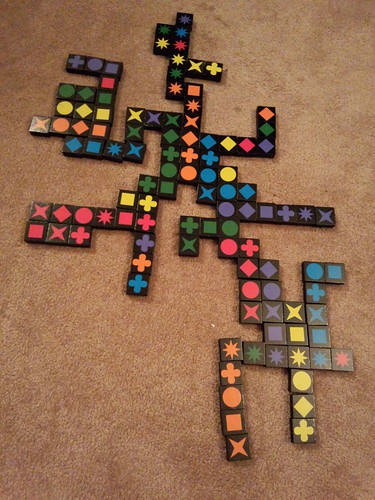
In the top LH corner in the photo above, you'll see two cards with shapes in a grid. That's the new technique challenge. Inspired by Qwirkle, a game created by MindWare, my students will work their way through the card, building Qwirkle-like rows ("Twirkles", perhaps?). Whenever they master six technical elements in a row, they collect $15 Maestro Bucks to spend at Maestro's Market. Students who complete the card (major minor keys) will be inducted into Maestro's Technique All-stars.
Upgraded Studio Incentives - Sticking to a Theme
One thing I noticed with last year's "Gig Card" is that some students either performed a lot or hardly at all. I suspect that some lost their steam for performing 20 times before seeing $100 Maestro Bucks. This year, they will earn $25 Maestro Bucks for each five performances.
That transferred over to the Music Moxie (formerly the "Music Maestro") and the Music Mastery cards. I decided to keep it simple and have $25 Maestro Bucks for five on all of them. The goals setting incentive remains the same as last year.
Handouts and a Bag of Tricks
This year, my students and I are going to explore practice strategies based upon their "practice personality". This is inspired by a book I bought at the CFMTA Convention, entitled Practice Personalities: What's Your Type?: Identifying and Understanding the Practice Personality Type in the Music Studentby Thornton Cline.
Instead of the Practicing 101 handouts of years past, I decide to repackage the info for my predominantly Visual and Visual-Kinesthetic learners. Once again, I drew inspiration from some of the tabletop games and video games I've played.
All students, young and young-at-heart, received a Bag of Tricks:

The original set contains 24 practice drills. One side of the card shows you how to do the drill. The reverse side tells you when to use the practice strategy and what it can be used to fix.

Some of my students were very excited when they read what the cards contained. Others looked skeptical, to which I'd say, "They're good for when you're stuck and you need to change up how you're working on something."
One of my fellow gamers enthusiastically read the cards out loud to his mother. When he got to the part where it said, "Repeat until you can play this spot cleanly five to seven times in a row," his mother said something like, "Well, duh!"
Then, one of my Grade 12 students looked at them and said, "Dude, that's a lot of work." Well, if more of my students improve because of them, then I'd say that it's worth it. At any rate, I hope that they have as much fun with their materials, practice aids and practice incentives as I had making them.
June 13, 2014 update:The musical bag of tricks has undergone significant testing and revisions, as well as a new name. I am pleased to announce that the Canadian product release of Maestro's Music Tricks (MMT) is June 30. There are 34 practice drills. MMT is currently available on pre-order. Stay tuned for details on the international product release.
MMT website: http://mmt.musespeak.com
MMT FB page: https://www.facebook.com/maestrosmusictricks
6 Steps to Self-Regulated Practicing
According to super-cool professor Dr. John Picone, there are six steps to self-regulated practicing. Master these and you will learn your music quickly and efficiently.
Last month, I attended a national music teachers' convention. It was my first time as an attendee (versus when I was a organizing committee member). One session that really resonated with me was Dr. John Picone's Steps to Parnassus: Guiding Young Musicians to Self-Regulated Practicing.
He was such a dynamic presenter and had wonderful ideas. I hope that one day, the Alberta Registered Music Teachers' Association or the Alberta Piano Teachers' Association could bring him out here to do a session for music teachers AND music students.
He shared a lot of information and examples with us. I will just highlight six main points for you try to incorporate into your at-home practicing. They are, what Dr. Picone referred to as "Six Dimensions of Self-Regulated Learning":
Take charge of your environment: Is your pet pestering you when you practice? Does your little sister come and bash on the keys while you are at your instrument? Or is your practice area in the same room as the television? You need to, perhaps with some help from your parents, create a practice space in which you can actually get some quality practice time in. Get rid of those distractions!
Manage your Time and Setting Goals: This past year, I introduced my students to the concept of "speed learning". To force them to think about time management, I used the countdown timer. If you only have 10 minutes, then you need to have a solid plan of attack. Pick a chunk of music that's do-able in 10 minutes. How much can you learn in 10 minutes? Or fix? The clearer you are with your plan, the more productive your practice will be.
Record and Review: Record and Review is something I encourage my students to do regularly. I think some do but not all. There's a lot going on when we play a piece or technical exercise. How else are you going to know if you're making any progress at home unless you listen to what you just did? If your iPod records, then use it. Or a tablet, computer, phone or other recording device.
Seek out resources on your own: Can't remember what "subito" means? You know technology more than your parents and teachers do. Google it! Or get a music dictionary app.
You have a repertoire of strategies and you know how to use them: One drill I grew up on was "Drill this 10 times". I'd get tired by five. My students have some more creative practice drills in their arsenal (e.g. Smarties Drill, the Every Other Bar Drill and the Fill in the Blanks Drill for starters). Regardless of what practice drills you have been taught, you have to know when to use them and how to use them. Now that would require you to read your music notebook, wouldn't it?
Motivation: There's external motivation (e.g. you have a music exam next week and you don't want to fail) and internal motivation (you simply want to do well). It doesn't matter how often your teacher asks you to practice more or how often your parents yell at you to practice - if you don't want to do it, it's not going to happen as well as it should. However, you need to really think hard about whether you don't want to practice because you've hit a snag or because you really hate music, but that's a separate topic.
The video that Dr. Picone showed us was of a seven-year old boy. He didn't really play much in the practice clip, but he didn't need to. He spent about a minute asking his mother to take the family dog into another room. Then, he spent a couple of minutes planning out what he was going to practice.
Once he selected a piece, he took another minute to skim through it. His finger traced over the notes. He stopped and looked at a tricky rhythm. After a moment's thought, he pulled out his music notebook to read his teacher's practice suggestions for that rhythm. Then, he remembered that he had a recording of that part of his lesson, so he listened to it. He checked his clock. Then, the clapped out the rhythm a few times. Checked his time again and then did a run-through at the piano - slowly. He tried it a few times before running through the whole piece.
If a seven-year old can master self-regulated, or organized practicing, you can too.
Redefining My Practicing Style
Rebooting how I practice piano to revolve around music genres versus specific repertoire.

My brother and I have our first paid piano/cajón gig coming up. I don't know about him, but I've had to rewire my brain in my approach to this type of gig.
Typically, for solo background music gigs, I would put together a set list to cover the time that I was hired to play. I'd carefully select which songs to group with each other. However, in recent gigs, I've found that sometimes, I have to throw that list out the window and fake it because I what I prepared doesn't match the rhythm and flow of the crowd.
This time, we have picked a bunch of songs, hours more than required. We both have a tendency to gravitate to the ballads (easy to fake). This time, our set list is jam packed with faster tunes. This has presented me with Challenge #1: finding the time to get these faster songs into my fingers - in between teaching, writing and trying to keep up with my studio operations.
We've agreed to earmark a few starting songs and then we'll choose what's next based upon the energy in the room. No problemo.
We are taking turns on the piano and cajón. That's been fun. By far, it's a lot easier to prepare the percussion part: learn a pop groove: CHECK! Learn a rock groove: CHECK! Learn a polka/klezmer groove: CHECK! Learn a tango/Latin groove: CHECK! Listen carefully and have fun.
As a soloist, we subconsciously take more time or speed up in tricky spots. We cheat with our timing. Pianists are as guilty as everyone else. As much as we teachers would like to say that we don't, we do. We all do.
However, when playing in an ensemble, it's much more critical to play in time. Not only that, but to play in the style of the piece. Therein lies Challenge #2 & #3 for me. I get hesitant when I'm not confident in the chords and/or melody. It's human nature. Nor do I have all these styles firmly in my fingertips like my friends who gig regularly do (I'll get there, though!).
To beat that out of me, I've been playing along to Youtube recordings of some of the songs and just hammering out the chord changes. Once those are secure, I start to improvise. Once that's not too shabby, I look at the melody. That's different from the standard, "Learn Part A hands separately then hands together," line we tell our students.
The other approach I've taken is to work on specific musical styles. I heard from a fellow musician that another colleague achieved great success in mastering swing by just practicing swing - and only swing - every day for hours.
Now the gig is just around the corner, so I don't have the time to fully explore this approach. I'll keep the basic boogie, Latin, pop and rock grooves already under my fingers (more or less). I did add a tango groove and klezmer rhythms as the client has asked specifically for these styles.
Once the gig is behind me though, I will explore this in full force. My plan is to spend X weeks on one style - for all the instruments I play (piano, cajón, voice, melodica and conducting). Once that's coming along, I'll add another, and another.
It's a different practice approach for one who is classically trained. It is something that my friends who gig regularly have already mastered. It's going to be a fun project.
Social Media Links
archives
- #YYCArts 32
- #YYCEvents 39
- Collaborative Music 25
- Community 11
- Composing & Arranging 6
- Entertainment 139
- Entrepreneurship 53
- Freebies 3
- Gardening 1
- Geeking Out 65
- Health & Wellness 120
- Improvisation 25
- Interviews 28
- Learning Music 188
- Martial Arts 13
- Memorization 7
- Music 230
- Music Careers 9
- Music Education 196
- Music Examinations 7
- Music Exploration 55
- Music Gigs 14
- Music Lessons 6
- Music Performance 32
- Music Theory 13
- Musical Instruments 12
- Musician Health 19
- Pets 57
- Piano Technique 12
- Practicing Music 120
- Productivity 20
- Professional Development 11
- Recommendations & Reviews 93
- Recreation 71
- Social Media 6
- Spirituality 10
- Studio Management 33
- Studio Technology 50
- Teaching Music 146
FOLLOW THE STUDIO on Instagram

Affiliate Links
As a Sheetmusicplus and CD Japan affiliate, I earn from qualifying purchases. The earnings help fund the Studio’s blog and YouTube channels. Your support is greatly appreciated.


FOLLOW Budo no Tabi on Instagram