THE MUSICAL MUSE
Blog dedicated to music education, practice tips, health
&
wellness, and geeking out.

Beats and Budo
Several months ago, one of my fellow iaidoka (AKA, “The Tiny Samurai”) posed a question to Kim Taylor sensei of Sei Do Kai with regards to beats and budo. Taylor sensei shared some of his thoughts here, then made a reference to me (AKA, “The Tinier Samurai”) to try tackling the question.
When I first began my Iai journey in the mid 2000s, I recognized immediately the many shared themes between music and martial arts. Beats and budo, now this is something that I have been grappling with since Day One.
Several months ago, one of my fellow iaidoka (AKA, “The Tiny Samurai”) posed a question to Kim Taylor sensei of Sei Do Kai with regards to beats and budo. Taylor sensei shared some of his thoughts here, then made a reference to me (AKA, “The Tinier Samurai”) to try tackling the question.
When I first began my Iai journey in the mid 2000s, I recognized immediately the many shared themes between music and martial arts. Beats and budo, now this is something that I have been grappling with since Day One. More on that later. First, I’ll touch upon some of Taylor sensei’s other points that resonated with me.
Music as a Metaphor for the Story
Taylor sensei said that music can be used to tell the riai, the story of a kata. That makes a lot of sense to me as a musician and an iaidoka. Whereas books tell stories through words, music tells stories through sound and silence. Of all the performing arts, kata is most like dance, as both tell a story through movement.
I recently stumbled upon a draft of some scores I wrote back in 2007 where I began to translate the kata into music. This is as far as I got.
In Mokuso, I used a major pentatonic scale and quartal harmonies to give an Oriental sound. I gradually slowed the rhythm down to show the progression from having jumbled thoughts to achieving mushin (“no mind”), where I am calm and alert.
In Mae, I used a Locrian mode. I find it the creepiest of all the old church modes. I used two voices. The high voice depicts the iaidoka, while the piano is the teki. Register depicts movement up and down, dissonance and dynamics indicate the sword’s movement, while rhythm represents jo ha kyu. You’ll notice in the score that I even scribbled down what was happening in the kata.
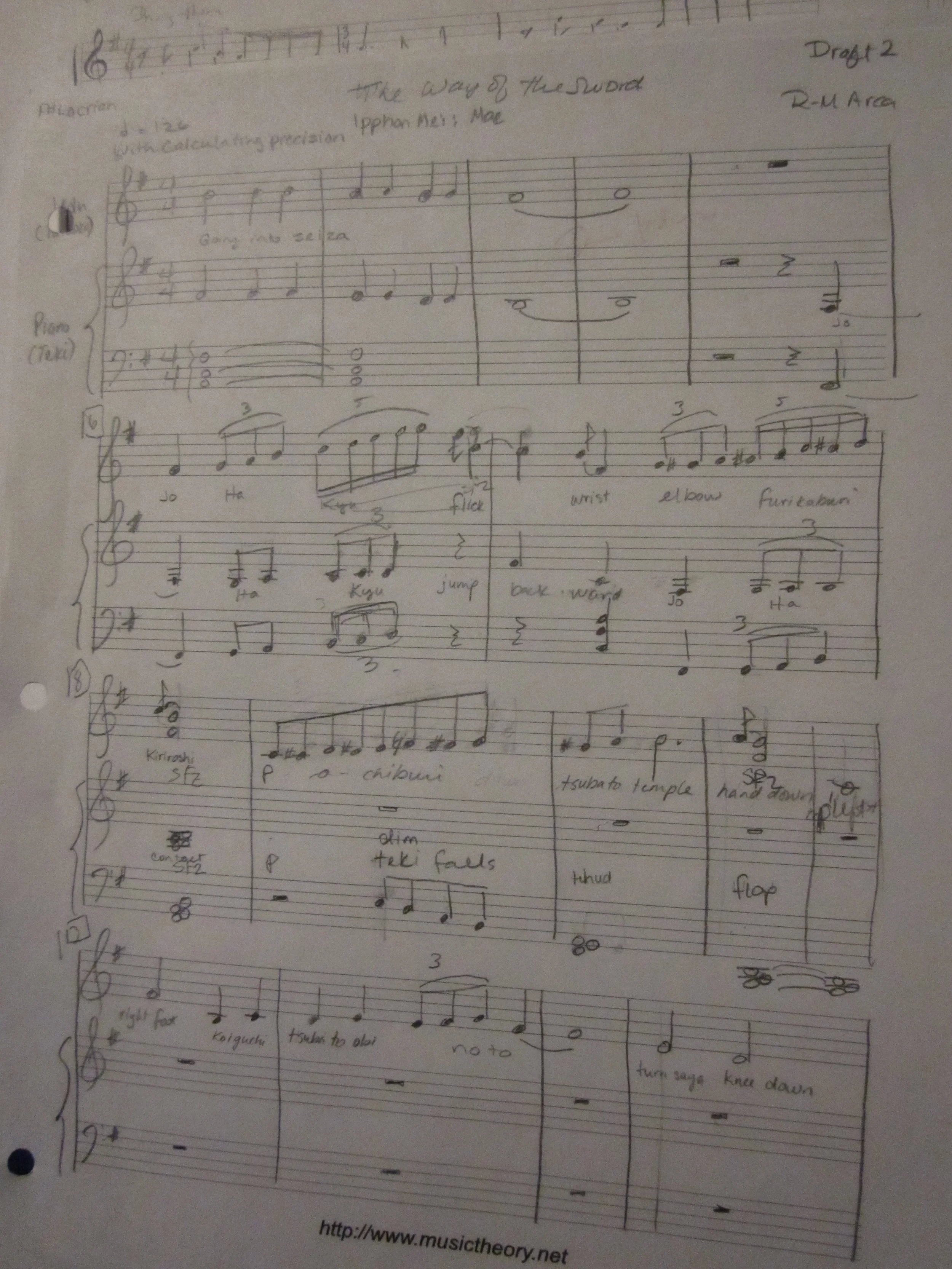
My early scribbles for setting Ippon Me Mae to music. The top staff is the iaidoka, while the bottom two represent teki. Credit: R-M Arca.
Add a training hiatus in the middle of my journey, age, increased knowledge and experience, and I have a slightly different perspective on my budo. These days, I’m really trying to refine my jo ha kyu timing. If I were to translate the kata now, I would take a different approach. Rhythm would play a much bigger role. It would most likely be non-metrical or polymeter. Plus, I’d use one of the Japanese scales I learned earlier this year.
Copying Another’s Performance to Achieve Mastery
In his post, Taylor sensei said that “A perfect copy of James Ehnes is going to be an actor playing the part.” Agreed. Does parroting a famous artist show that you truly understand what’s going on? No. Does it show that you understand the instrument? Nope. Does it show who you are? Not at all.
On a related note: Can a robot perform a piece better than a person? Can a machine completely capture the essence of a person’s performance? Technology can now recreate the performances of famous pianists. Check out the Steinway Spirio:
When I saw the Spirio in action at Steinway Pianos for the first time, my initial reaction was, “Creepy.” Sure, it was cool to see that we can do this, but it just felt like it was a shadow of Gershwin’s actual performance. I was drawn more to Gershwin’s recorded performance on the TV screen versus the piano’s recreation of it. It had more soul to me.
I could see George’s expression, the speed of his attack, his arm gestures, and his breathing. Those little things told me much more about the story and his playing than watching keys being pressed by mechanical means.
Music students who work through either the Royal Conservatory of Music or Conservatory Canada have a set list of repertoire to choose from. Some pieces are more popular than others, so sometimes, teachers, adjudicators, and examiners hear the same pieces countless times from multiple students. The notes are the same, but each student’s interpretation is unique. Not only that, each time they work with their own teacher or obtain feedback from an adjudicator or coach, it undergoes another metamorphosis.
One student make take a piece at the low end of the recommended tempo range, whereas the next may perform it at the opposite end. One may use a heavier touch. Another may use dramatic dynamic contrasts. One may choose to take extra time in Bar 8, while another may push the tempo in that same spot.
It doesn’t necessarily mean that one student has achieved a higher level of mastery than another. For that, one must ask if technical fluency was in evidence and whether the performer convincingly told us the story in a way that is in style with the form and the idiom.
To a practiced listener, it is possible to recognize a musician by their sound, or to recognize a musician’s lineage by how they play. Budo has that too. Although we strive to get our timing in line with “dojo timing,” each of us has a slightly different internal timing. Whenever we run through our Seitei Iaido kata as a club, the group timing differs ever so slightly, depending upon who is leading, who is there, and how focussed everyone is. Regardless, it should still be relatively close to sensei’s timing.
That’s the beauty of it. We don’t want to be carbon copies of someone else. The subtle differences provide some variety to the same story - and that’s what keeps things interesting.
The Same Art but Different Eras or Regions
Perhaps one day, I’ll get around to completing my musical set of Iaido kata. Unfortunately, that day isn’t anytime soon. Real life commitments have a tendency to cut into composing time.
Since The Tiny Samurai posed her question, I have also pondered Iaido kata on a structural and stylistic level. The seitei set reminds me of a Baroque suite of dances. Each dance represents a different country, e.g. a sarabande is Spanish, whereas a minuet is French.
Baroque dances have a set structure, binary or rounded binary. They also have a set order of steps. Some have telltale rhythms. The time signature changes depending upon the dance, but the tonic key remains the same. Very little markings are given in terms of dynamics and expression, leaving room for various interpretations of the same story.
I see the koyru iaido sets as being akin to character or mood music from the Romantic era. These are generally composed in ternary form, although other structures, like through-composed, crop up from time to time. Like certain pieces, e.g. polonaise or lieder, each koryu can represent a different region.
My mind wanders to Modest Mussorgsky’s Pictures at an Exhibition. Each piece depicts a different painting that two characters are viewing and sometimes, debating over:
Another way to describe this musically is to have two pieces with the same title and same overall structure. However, each are completely different:
Leitmotif in Budo
Merriam-Webster Dictionary defines leitmotif as “an associated melodic phrase or figure that accompanies the reappearance of an idea, person, or situation especially in a Wagnerian music drama.” John Williams made good use of it in the Star Wars movies with “Luke’s Theme,” the “Imperial March,” and so on. Taylor sensei also mentioned it in his beats and budo post.
I could see one leitmotif for Muso Shinden Ryu noto and a different one for Muso Jikiden Eishin Ryu. O-chiburi could be notated a little differently from yoko chiburi. Musically, that would provide unity and consistency.
Beats and Budo - Reprise
Beats and budo - Miyamoto Musashi called this rhythm-timing in the Go rin no sho. Ever since reading that, I’ve been playing around with beats. I came up with timing for the opening etiquette, which I waxed poetic on in The Iaido Journal. Here’s the link to the article, entitled Rhythm and Flow.
I’ve been experimenting with the following rhythms for jo ha kyu:
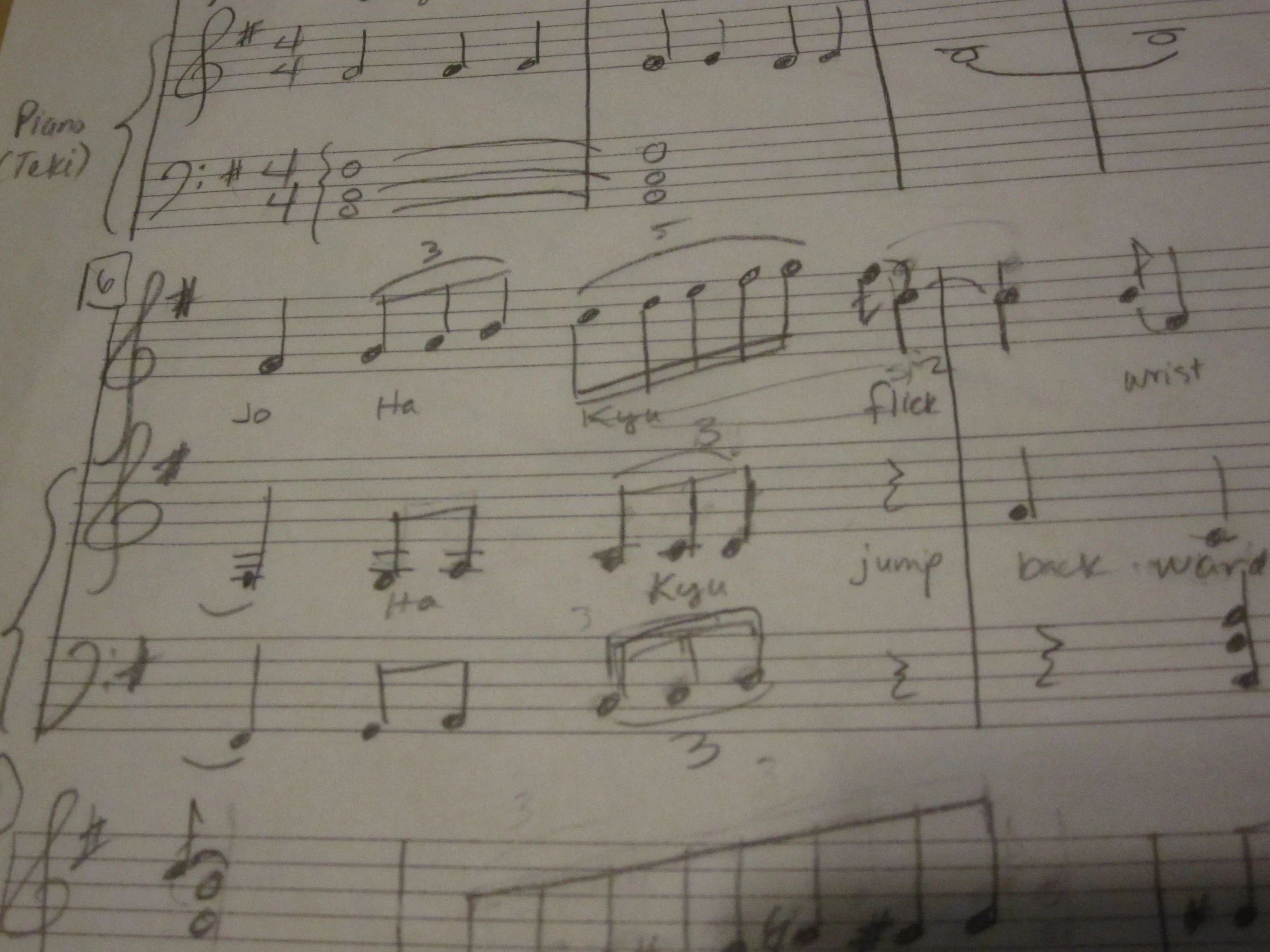
My rhythmic representation of jo ha kyu in 2007. Credit: R-M Arca.
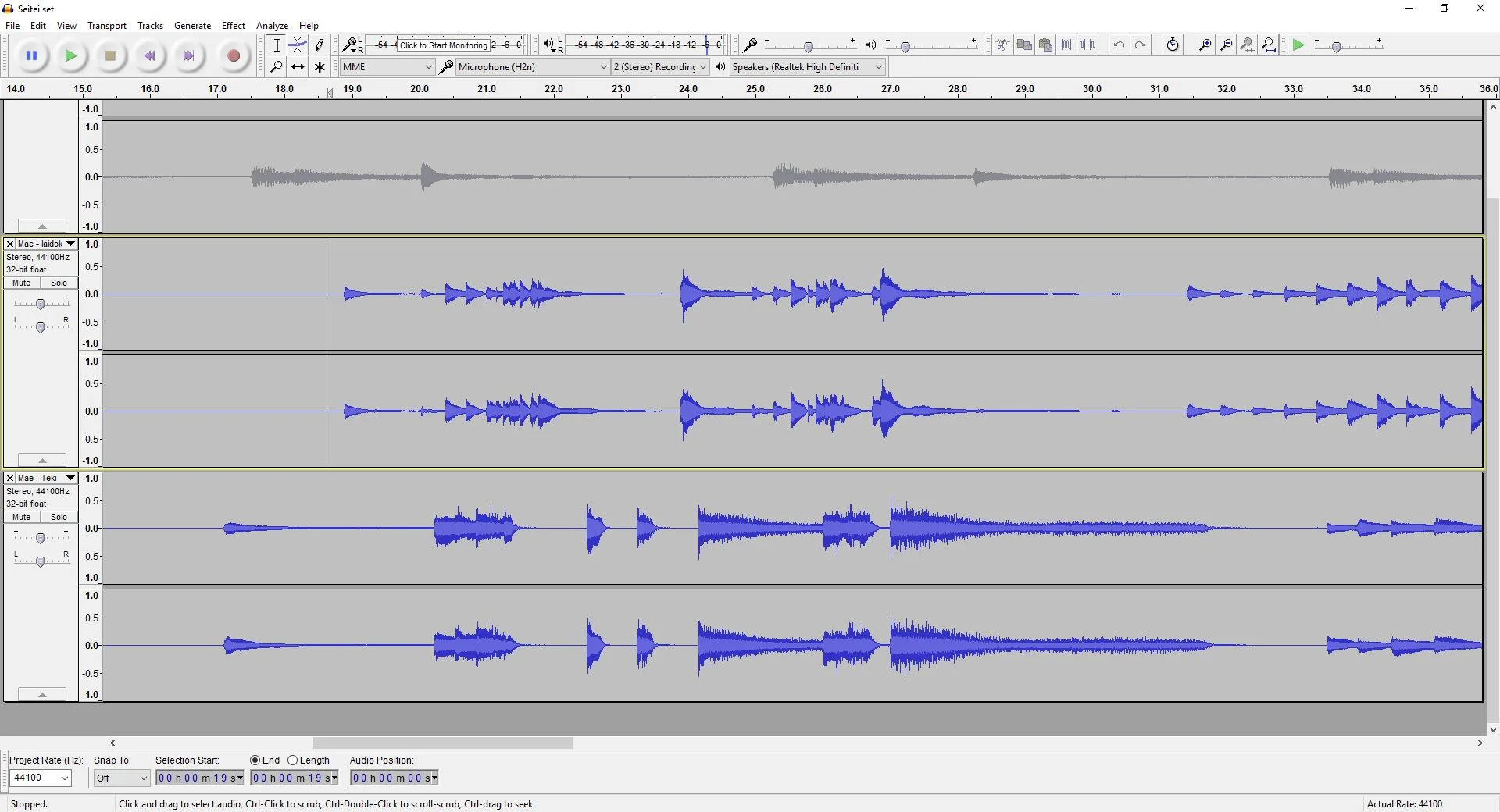
A screenshot revealing the waveforms for that same section of music. The iaidoka's jo starts just after the cursor. Credit: R-M Arca.
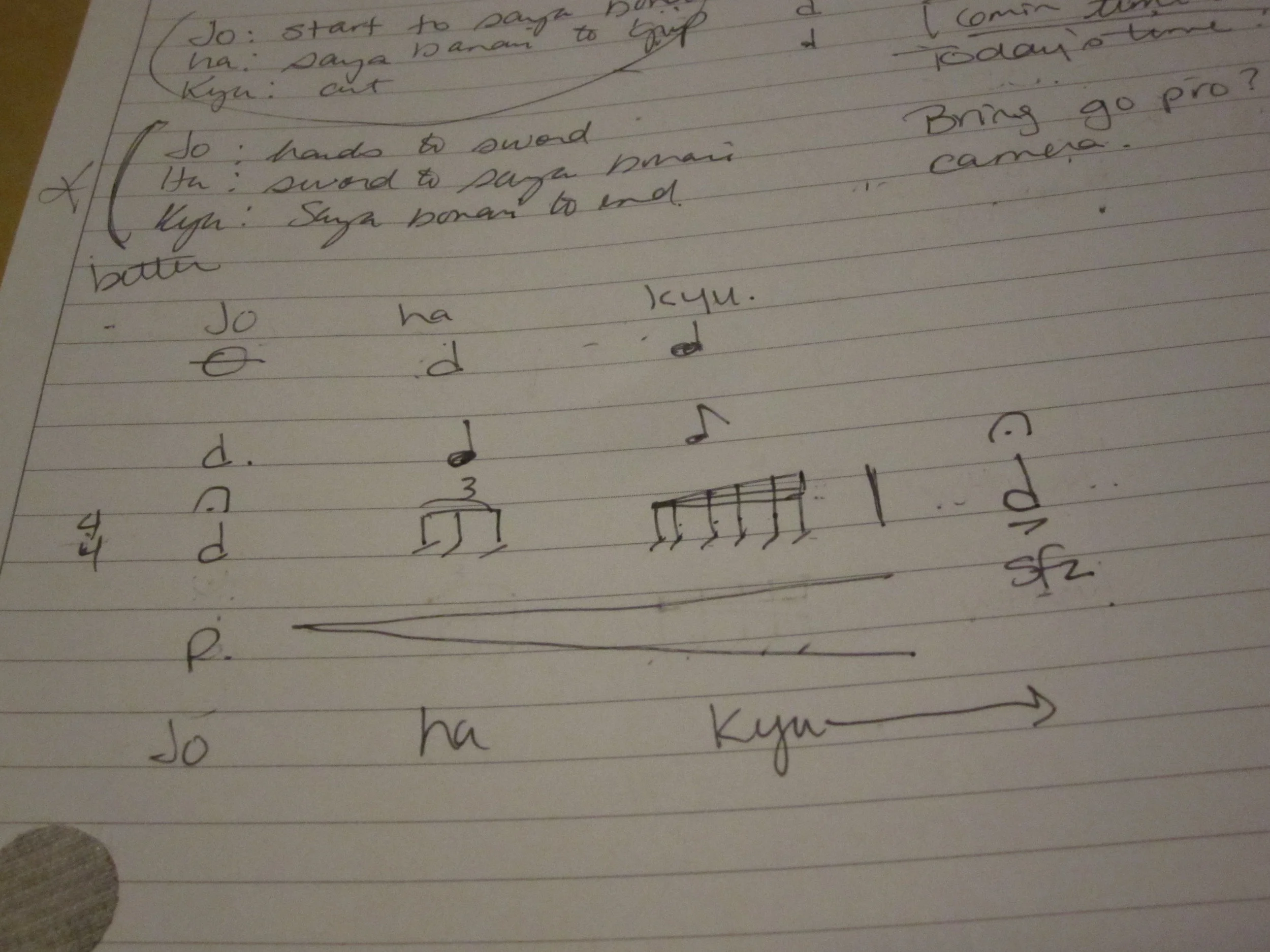
Jo Ha Kyu circa 2016. Credit: R-M Arca.
The last one is the one I’ve been playing around with. I don’t hear pitches. When I’m by myself, I’ll use a bit of singspiel, saying “Jo ha kyu”, in rhythm, from the moment my hands to go my tsuka to nukitsuke in Mae. I use dynamics for intensity.
Last night, I was studying a video of Alex Cook sensei practising Mae and improvising at the piano to it. I used the Hirajoshi scale and a lot of tone clusters. The result isn’t pretty sounding, but then, when you think about the riai for Mae, it’s not supposed to be:
Studying the waveforms made it easier to see how I need to have more ha not only in my iai but in my musical interpretation of the riai.
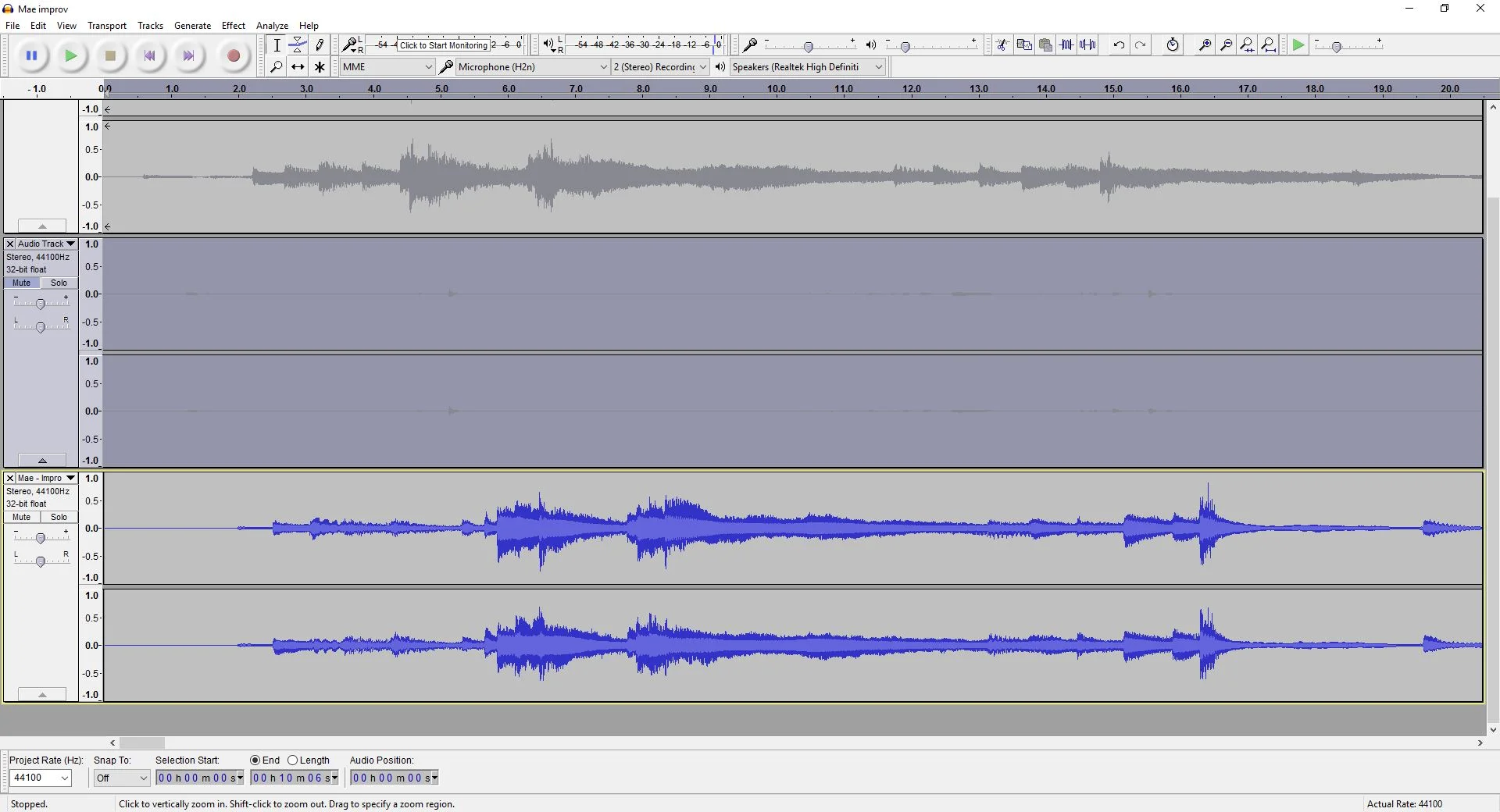
The waveforms reveal the quickening of sound during ha, yet still distinctly shows that there is a ha. This is what I must work on. Credit: R-M Arca.
I will do a bit of rhythmic dictation and attempt to notate sensei’s rhythm. I have a feeling that until I have the rhythm notated in a way that I can count the beats, I will be playing with jo ha kyu for a while longer yet.

On Becoming a Bulletproof Musician
The theme at last week’s group classes was becoming a bulletproof musician. The idea has been percolating in my mind ever since I discovered Dr. Noa Kageyama’s blog on performance anxiety and mindful practice, called The Bulletproof Musician.
The theme at last week’s group classes was becoming a bulletproof musician. The idea has been percolating in my mind ever since I discovered Dr. Noa Kageyama’s blog on performance anxiety and mindful practice, called The Bulletproof Musician.
Naming Our Fears
“Named must your fear be before banish it you can.” ~ Jedi Master Yoda
Each class had a different set of fears. I compiled everything that gives them performance anxiety below:
Everyone is watching
Making a mistake and everyone knowing it
Family teasing after making a mistake
Another student (known for giggling)
Messing up
Getting stuck
Stumbling and not being able to continue
Forgetting the music
Losing control
Not being ready (or able) to perform
People crowding too close to the piano
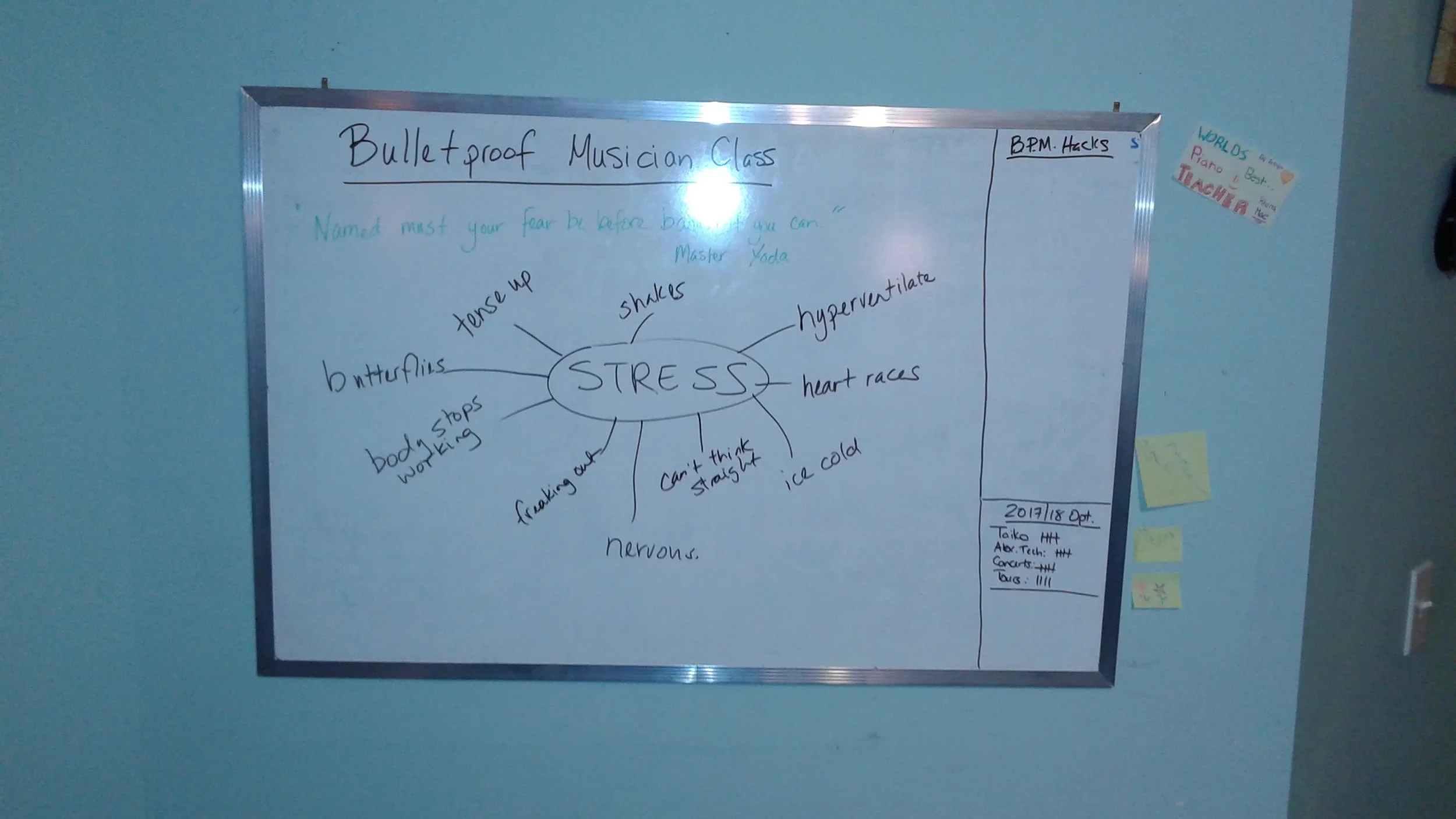
Most people share the same reactions when the body is under stress. Credit: Rhona-Mae Arca.
We discussed how our body reacts to performing under pressure or stress. To generate a paradigm shift, I showed my students this video by author and motivational speaker, Simon Sinek on performing under pressure:
It really comes down to convincing ourselves that yes, we really can do this. With a few practising and performing hacks, we can train ourselves to rush forwards to the stage with excitement rather than fear.
Creating the Ultimate Pre-Performance Routine
We all have our pre-performance routines. It could be lining up your pens, pencils, eraser, and ruler in a particular way before writing a test. Or wearing your lucky suit for a job interview. They’re little things, but they reduce our stage anxiety by helping us feel comfortable, grounded, and strong.
I read out professional tennis player Rafael Nadal’s 12-step pre-game routine. Most of my students giggled by the fifth (flicking the dirt of the hash mark with his left shoe). They were downright incredulous by the time I read out #10 (the order he wipes the sweat off his nose).
My students immediately poked holes in the routine: “What if both balls are fuzzy?...What if the ref tells him to hurry up?” I asked, “What if it’s raining?”
I then shared with them some of my pre-performance routines, starting with Mr. Buffalo. For most, it was the first time they heard about why there’s a photo of a buffalo sculpture above the piano.

Mr. Buffalo helped me ground myself before performing in master classes and recitals. Credit: Rhona-Mae Arca.
At my first piano lesson with Elinor Lawson at the University of Lethbridge, I was so nervous that I couldn’t focus. Elinor told me to take a deep breath, look out the window, and focus on a point. Standing stoically on the coulee, was the buffalo sculpture.
It got to the point where I either had to go outside before performing to commune with Mr. Buffalo, or just imagine him. Prior to my junior recital, one of my profs told me that I was too tightly strung up. He told me to go outside, scream, and shake it all out. That helped too.
Although I don’t need to do any of those stress busters these days, my photo of Mr. Buffalo just serves as that quick visual cue to ground myself. These days, my pre-performance routine includes: having a light practice the night before, eating one of my favourite meals for supper, doing something relaxing the night before, getting a good night’s sleep, picking out and testing a performing outfit that matches the mood of my piece(s) - and having a back-up, eating light prior to performing, stretching, and breathing exercises.
Then, it was their turn. Here are some of my student’s pre-performance ideas: jump, roll on grass, pack a lucky charm, sit in a sauna, swim, scorestudy, read a book, do something unrelated to the performance/test/presentation, keep your cool, sleep, watch TV, play video games, meditate, be at home and, be peaceful.
My students took a few minutes to come up with their own pre-performance routines and a mantra. Some notable mantras include:
Iz all gud.
I got this.
Nothing can stop me.
Calm down.
Play like you practiced!
I can do it.
What’s the worst that could happen?
Did I remember to turn off the stove?
Let’s go!
I am the captain of my own soul.
Let’s rock and roll!
Be aware of everything.
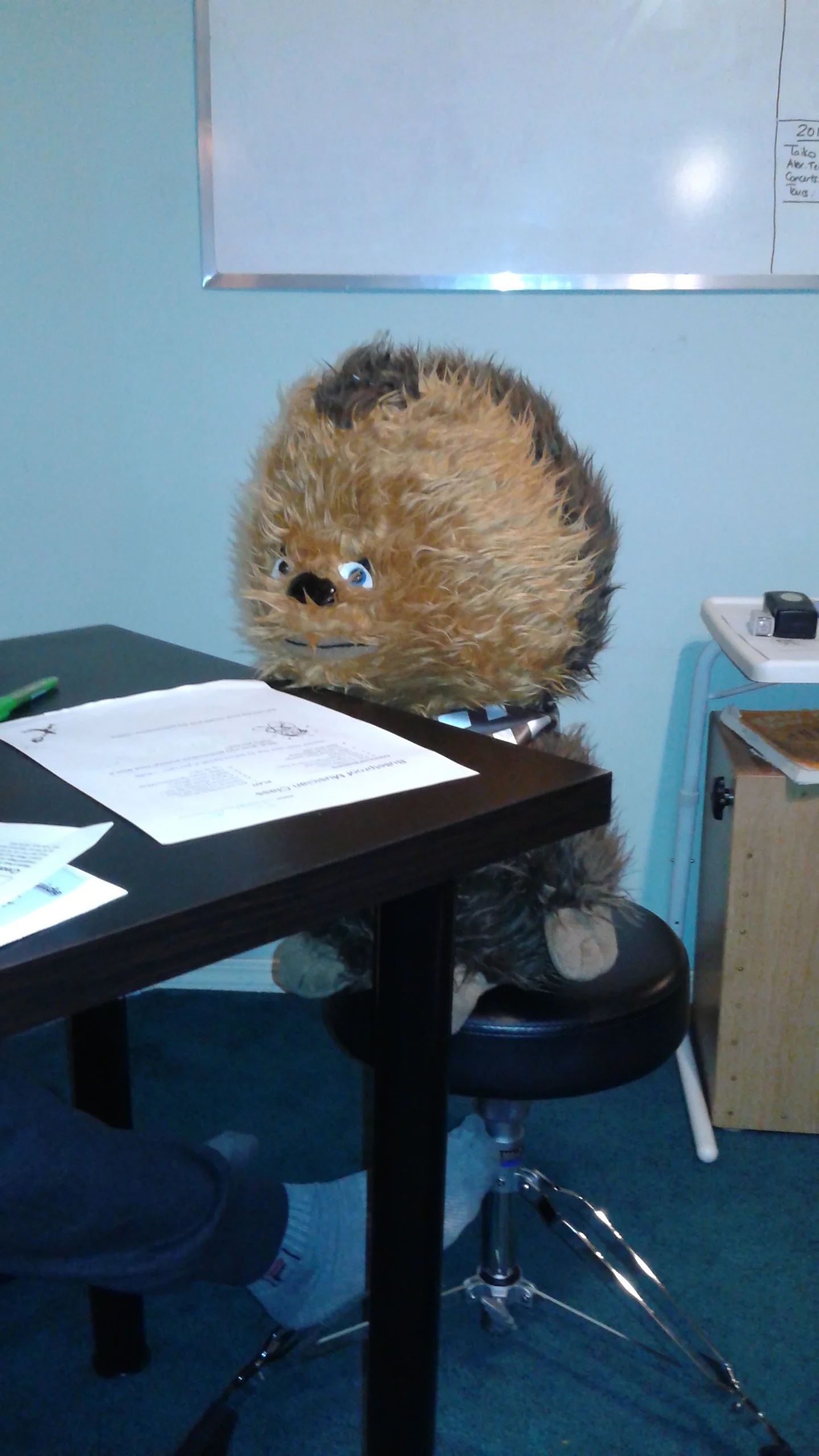
One of my younger students decided that Chewbacca had to participate in last week's group class. Credit: Rhona-Mae Arca.
Although some of my students are too young, I addressed the challenges of using drugs or alcohol to calm down nerves. Two teens looked at me, shocked. “But Miss Rhona! We’re not old enough.” I replied that I knew that, but that I also know that underage drinking does exist. There's always someone out there who just may try it.
Performance Savvyness
Next up, looking good on stage. We covered everything from showing up early enough to scope out the area and to find a place to relax. We discussed the pros and cons of being in the hall to hear the other students perform (depends upon the performance). Most importantly, we talked about owning the stage from the moment we get up from our seat until the moment we are off the stage, which covers: the walk, the bow, taking time to make adjustments (seat, music, bench), taking a few deep breaths, and approaching/leaving the keys in a way that matches the mood or character of your piece.
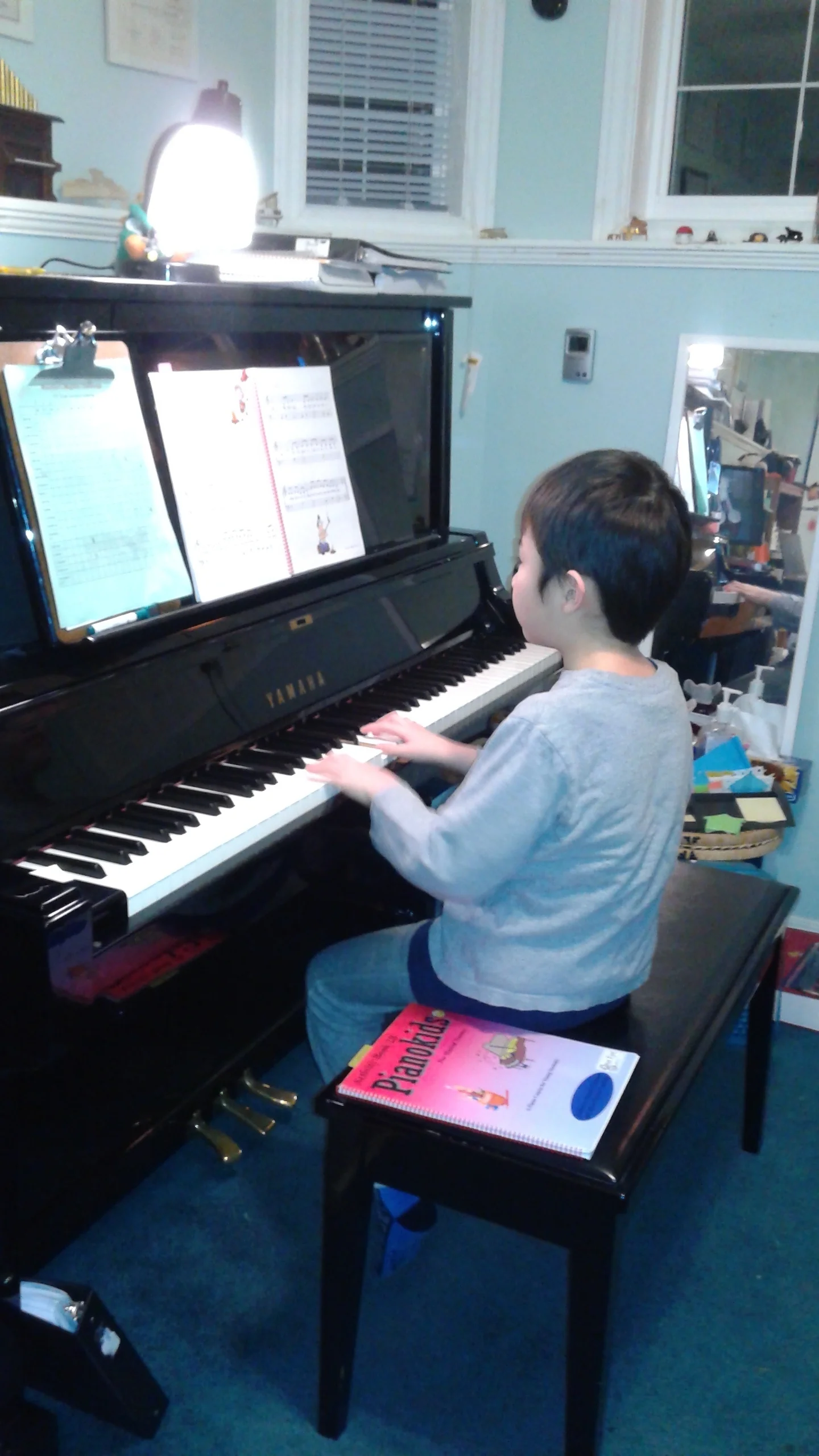
Telling a story through body language and sound. Credit: Rhona-Mae Arca.
Students came up, described their piece to the class and then played the opening. Their peers responded with how well their actions lined up with the piece. This turned out to be a fun exercise for all, trying to get the opening to look and sound epic or like little bunnies.
Exploring Practice & Performing Hacks
“The terror of performing never goes away. Instead, you get very, very comfortable being terrified.” ~ Eric Whitacre
We explored several performing hacks, which should alleviate some performance anxiety. One was an adrenaline drill. One student ran on the spot for approximately 40 seconds. Then, they had to quickly sit down and start playing. More often than not, the student had their hands in the wrong place. After taking a breath to clear their mind and recalling some of the performance savvyness aspects discussed earlier, they tried it again. Success.
Another performing hack we explored was a tempo drill. My students played a section of their piece at their desired tempo. Then, the others increased the metronome marking, bit by bit, while the one on the hot seat had to try playing at that tempo.
One student who has grappled with stage fright since day one, really connected with the visualization exercise. I asked her to engage all of her senses - imagine how the keys feel, how the room smells, what sound she wanted to create with her opening notes, etc. and then play.
In another class, a student shared this grounding exercise:
Think of:
Five things you can see,
Four things you can hear,
Three things you can feel or touch,
Two things you can smell, and
One thing you can taste.
One of the most popular exercises was the Roll the Dice Drill, which my students and I came up with when developing Maestro’s Music Tricks. As one student played, another would roll one of my polyhedral die and call out a bar number. The student on the hot seat had to quickly and smoothly transition to the new bar and carry on, not knowing when another student would call out another bar number.
Another popular exercise was the Play through Distractions Drill. Not only did that challenge the student performing to keep playing, but it challenged them to maintain his composure while the others flitted around, giggling and poking.
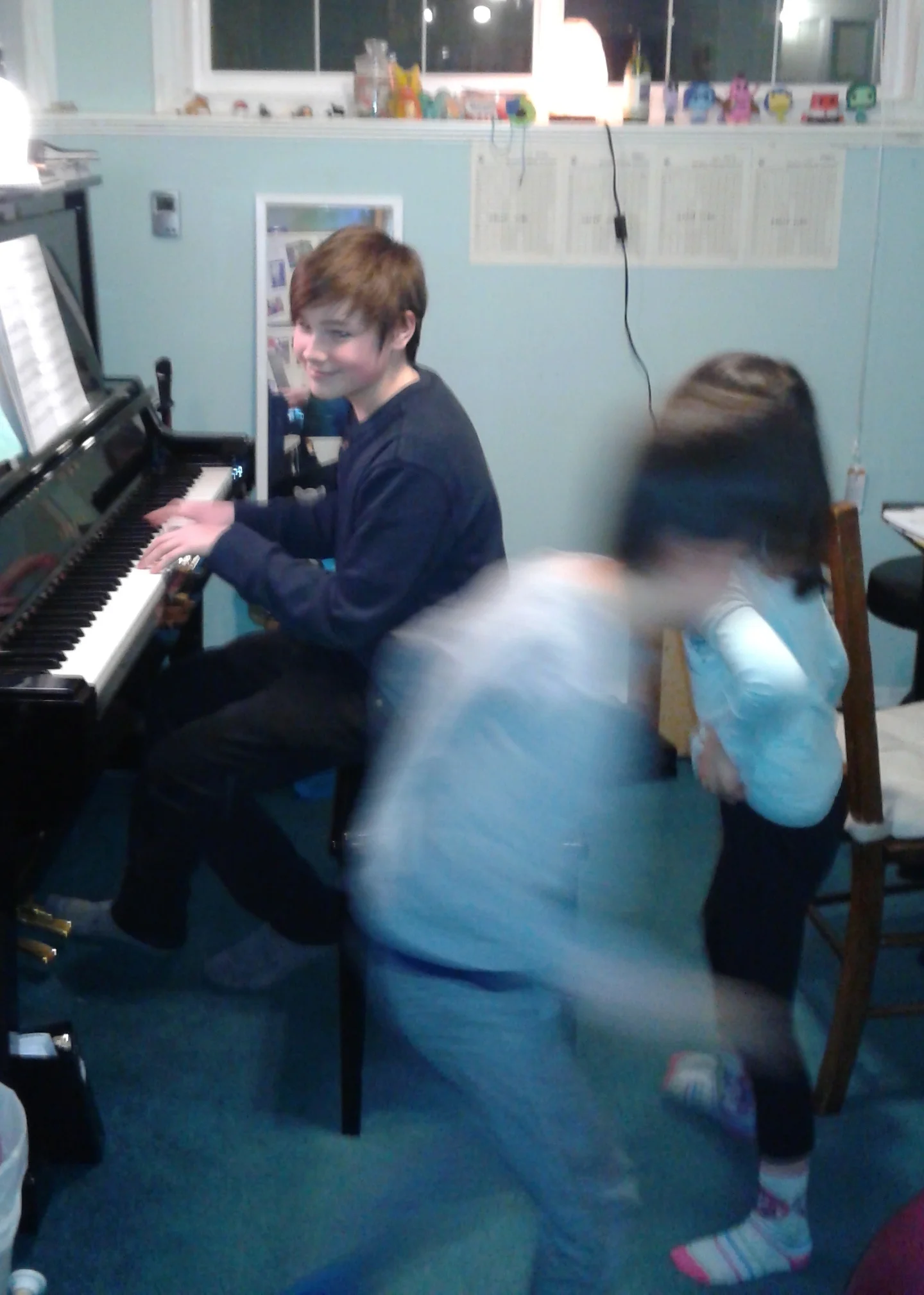
The Playing through Distractions Drill. Credit: Rhona-Mae Arca.
There were a couple of practice hacks that we quickly talked about, with the intent of working on it more in their piano lessons. One was studying the structure of their music, while the other was playing on a silent keyboard.
We wrapped up the class with my newest tabletop game, Cat Tower by IDW Games. It’s proving to be a popular game with my studio kids.
All in all, the kids found it a great class. It was comforting for my stage shy students to hear that they really aren’t alone with regards to performance anxiety. It was empowering to see them take charge and help each other level up their performance savvyness and bulletproof their music.
Now, if my students start performing a piece at the same speed as their on-stage heart rate, or someone’s phone rings in the middle of their piece, they should be able to “keep calm and carry on,” because they’ve prepared themselves for it through mindful practising, bulletproofing drills, and training their mind.

Word of the Year
This week, my fellow BuJoers on Facebook have been discussing the topic of setting a "word of the year" to place at the beginning of their Bullet Journal. Some have come up with fantastic words, such as "arise," "healing", "listen", and "focus."
Here we are in 2017. Happy New Year! Merry Orthodox Christmas!
As some of you know, I have been keeping a Bullet Journal in my ongoing efforts to increase productivity, improve memory, etc. Trust me, that blog post is coming. It has been percolating the back of my mind for a while.
This week, my fellow BuJoers on Facebook have been discussing the topic of setting a "word of the year" to place at the beginning of their Bullet Journal. Some have come up with fantastic words, such as "arise," "healing", "listen", and "focus."
Although, I do have several words floating around in my mind, I haven't been able to settle on just one that feels right.
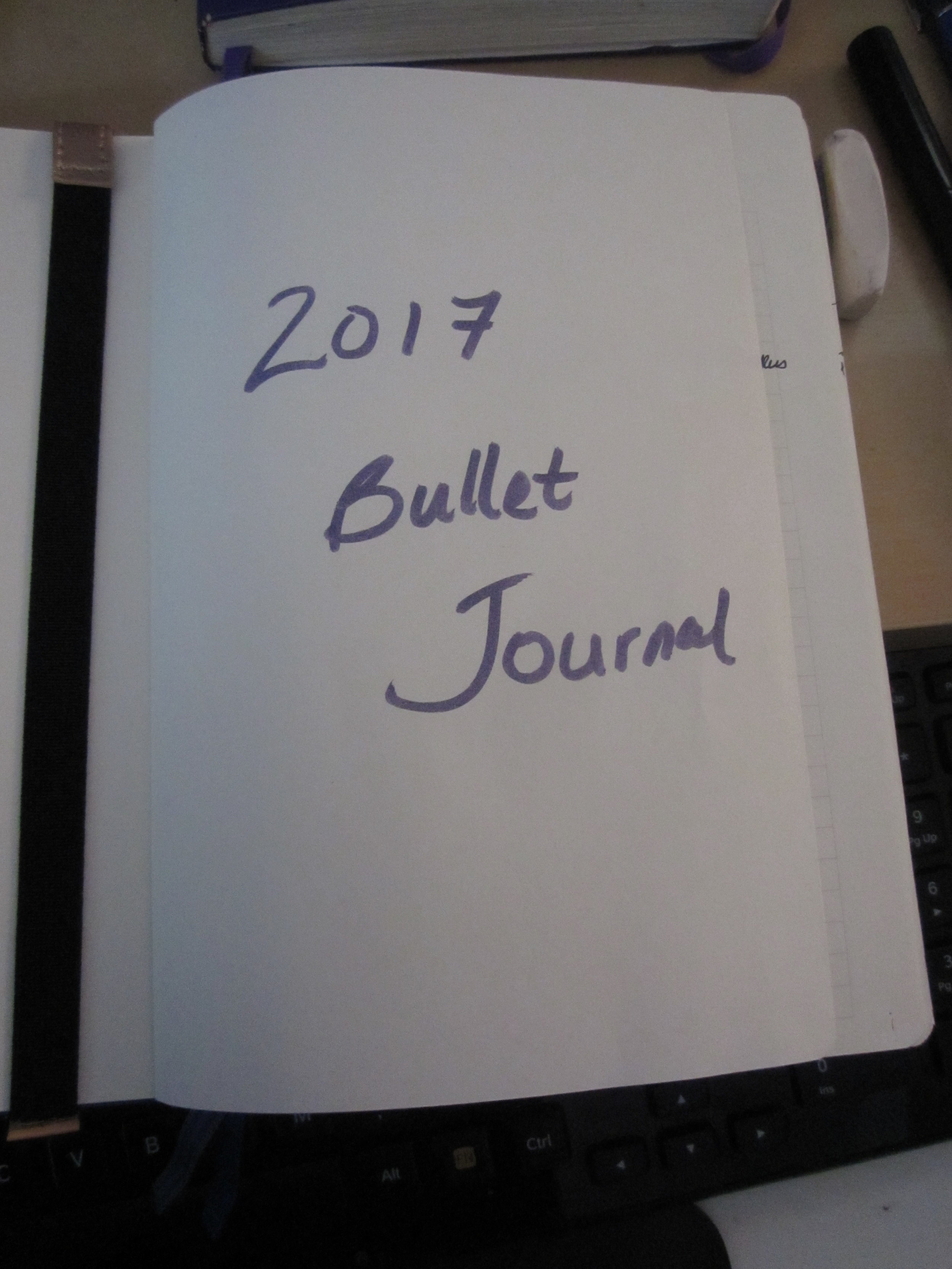
My Bullet Journal Cover Page so far. It's a start. Photo: R-M Arca.
What about you? Do you have a word of the year? Please share below.
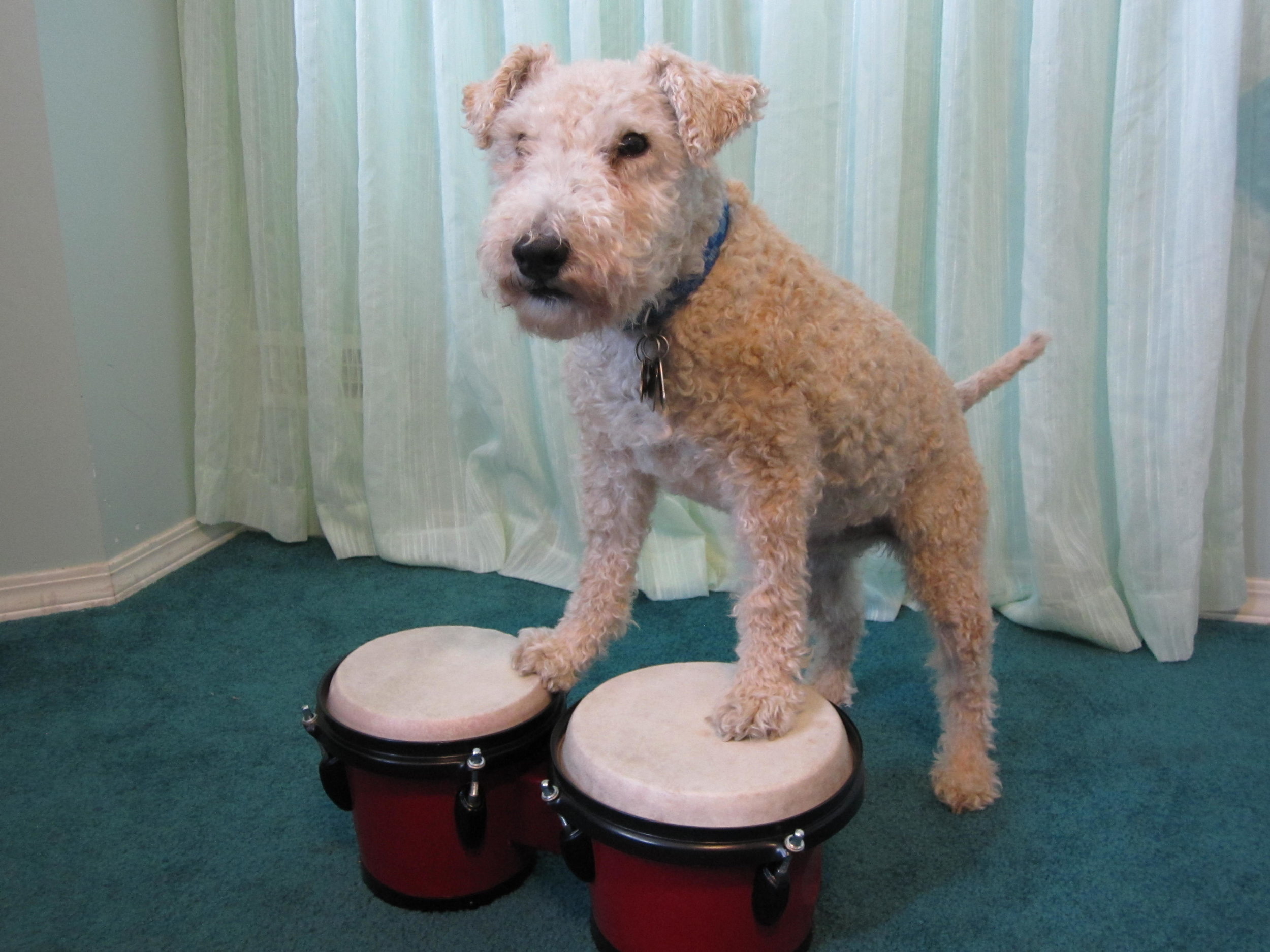
My Season of Firsts: The Grief Journey So Far
It is hard to believe that it has been seven months since Maestro crossed Rainbow Bridge. I decided that it would be cathartic to reflect upon my grief journey so far.
It is hard to believe that it has been seven months since Maestro crossed Rainbow Bridge. I decided that it would be cathartic to reflect upon my grief journey so far.
The First Summer: Keep Moving and Don't Think
Maestro and I usually packed in numerous day trips in the summertime. We did everything from attending outdoor concerts to cloud gazing in the park. He enjoyed trips to downtown Calgary just as much as jaunts to Turner Valley and Black Diamond.

Maestro does Waterton Park. Photo: R-M Arca.
I didn't feel ready to tackle any of those activities without my furkid, and with teaching and the concert season winding down for the summer, I had more pressing things to attend to. Enter special events.
I got a part-time casual job as Events Staff for a security company. All of the events were outdoor musical events and festivals. It seemed like a natural progression for a musician/usher/samurai-in-training.
It was also the perfect way for me to get out and have new adventures. Show up at the event, get briefed, and hit the ground running. Keep moving and don't think: #AchievementUnlocked .
Our dojo had its annual summer seminars, which also kept me busy. Swinging swords for days on end was active meditation at its best. It's amazing what active meditation does for one's heart and soul.
The First Fall: What Would Maestro Do?
The fall was incredibly busy. The events job wound down for the summer. However, I started a new part-time job in a school, so I am juggling two jobs plus teaching. The shock to my system was sorely needed. I had grown complacent in my routines. Now, I am forced to manage my time more effectively (but that's another series of posts). I think I'm just starting to get the hang of a routine that doesn't centre around Maestro's appointments, medication, and sleeping schedule.
R2-D2, Maestro's minion, has been helping out by greeting the studio families. He also chirps happily when someone plays well and swears when someone doesn't. Sounds suspiciously like some furball I know.
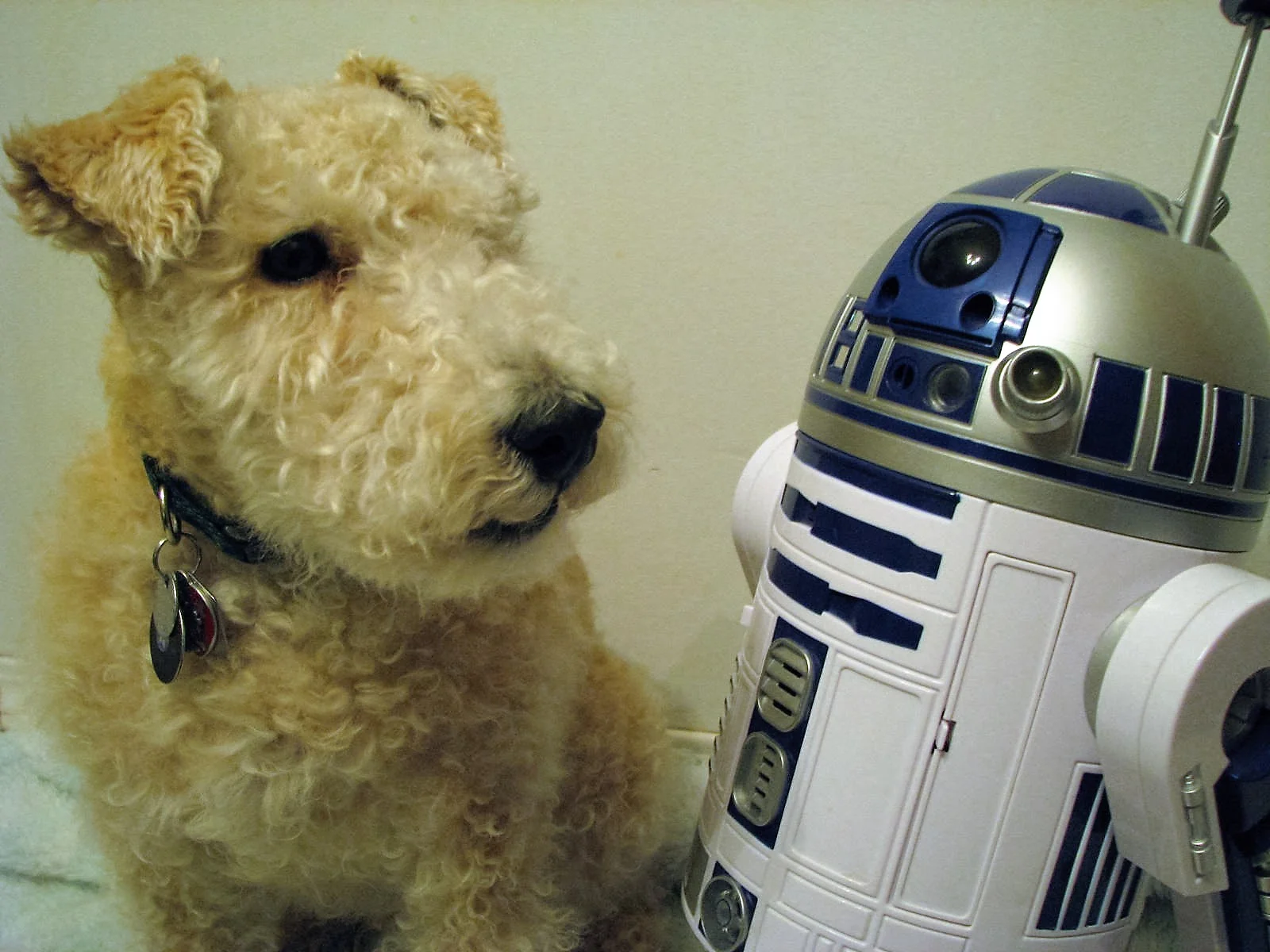
Maestro and R2-D2 were a unit when it came to waiting for students or demanding treats. Photo: R-M Arca.
This year, I welcomed two new piano students, one from a current studio family and one from a studio family from a few years ago. I was actually relieved to not go through the audition-interview process alone with a brand new family.
It hadn't really sunk in until that point just how much I relied on Maestro when interviewing prospective studio families. Looking back, I can tell you that I watched Maestro's eyes, ears, tail, and behaviour for cues. If he was comfortable with the family, then I knew that they would be a good fit for our studio.
"What would Maestro do?" has cropped up in lessons this year, along with "Would Maestro clear you on that arpeggio? I don't think he would, so I can't possibly clear you on it yet."
Sometimes, students and studio parents tap the percussion tree or one of Maestro's instruments for old time's sake. We share a wistful smile or a chuckle, recalling how Maestro would come stomping into the studio to say, "Hey! That's mine!"
One piano mom found it hard to come inside the studio for the first time after Maestro passed away. She teared up as she looked around at the various Maestro mementos and his pawprints. Maestro has clearly left his mark on his studio.
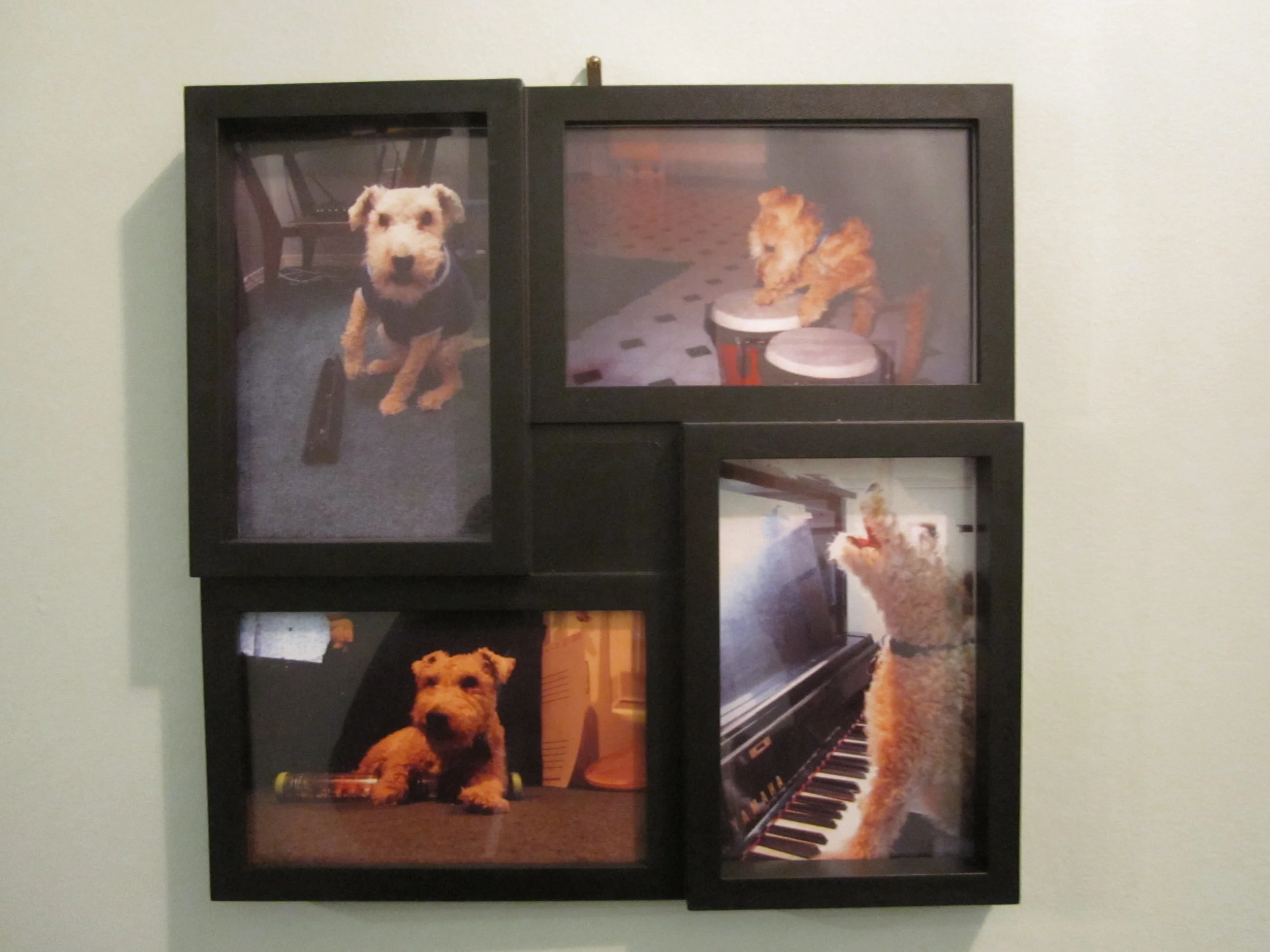
Maestro and his many instruments. Photo: R-M Arca.
The First Holidays: Have a Good Cry and Move On
Driving to my parents' for Thanksgiving was hard. At first, I was congratulating myself for not turning into a blubbering mess. Then, my CD player randomly switched to Dancing Queen. I started to belt out the lyrics, just as Maestro and I would on our car rides. That's when I lost it.
My family saw the tears, nodded, gave me a hug, and then we carried on with the weekend.
Even Halloween was teary. Maestro would get all decked out for our Halloween Piano Parties. He also looked forward to my dojo's pumpkin tameshigiri class in October. He was the primary beneficiary of pureed pumpkin, enthusiastically so. I automatically started to pack many pumpkins into my bags and containers after training, but then tearfully realized that I no longer need that much.
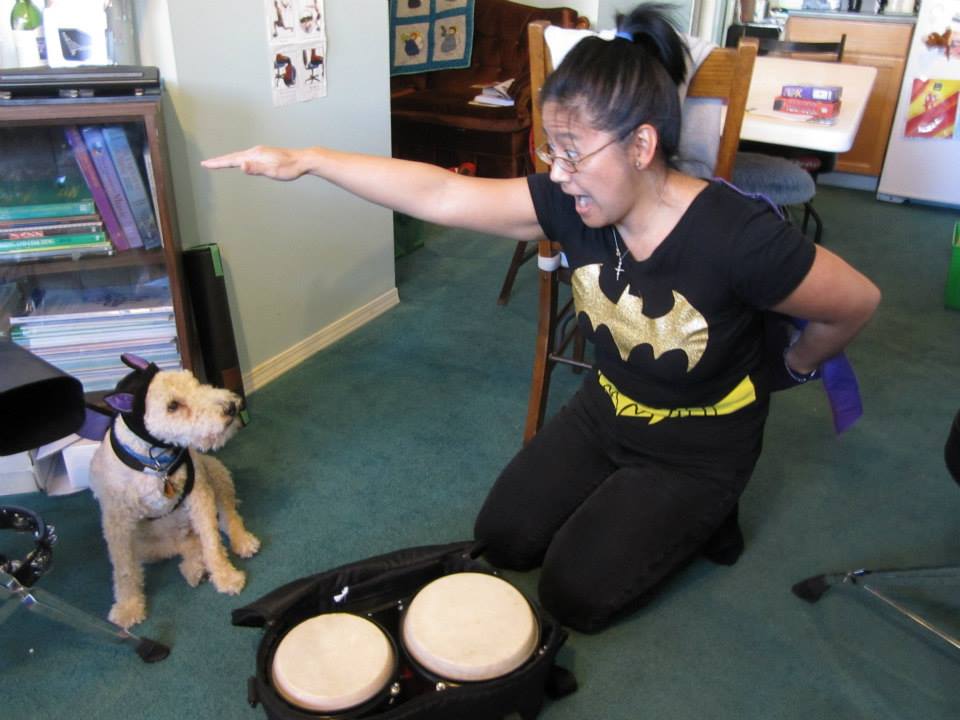
Batdog and Batgirl prepare for the Halloween Piano Party. Photo: C. Kohl.
Fast forward to Christmas. Part of me was dreading Christmas this year. Maestro loved Christmas so much. He got impatient because I could never put up the tree fast enough for his liking. Then, he would park himself in front of the tree to guard it, along with any presents that appeared. Ditto for the studio Christmas tree shown below:
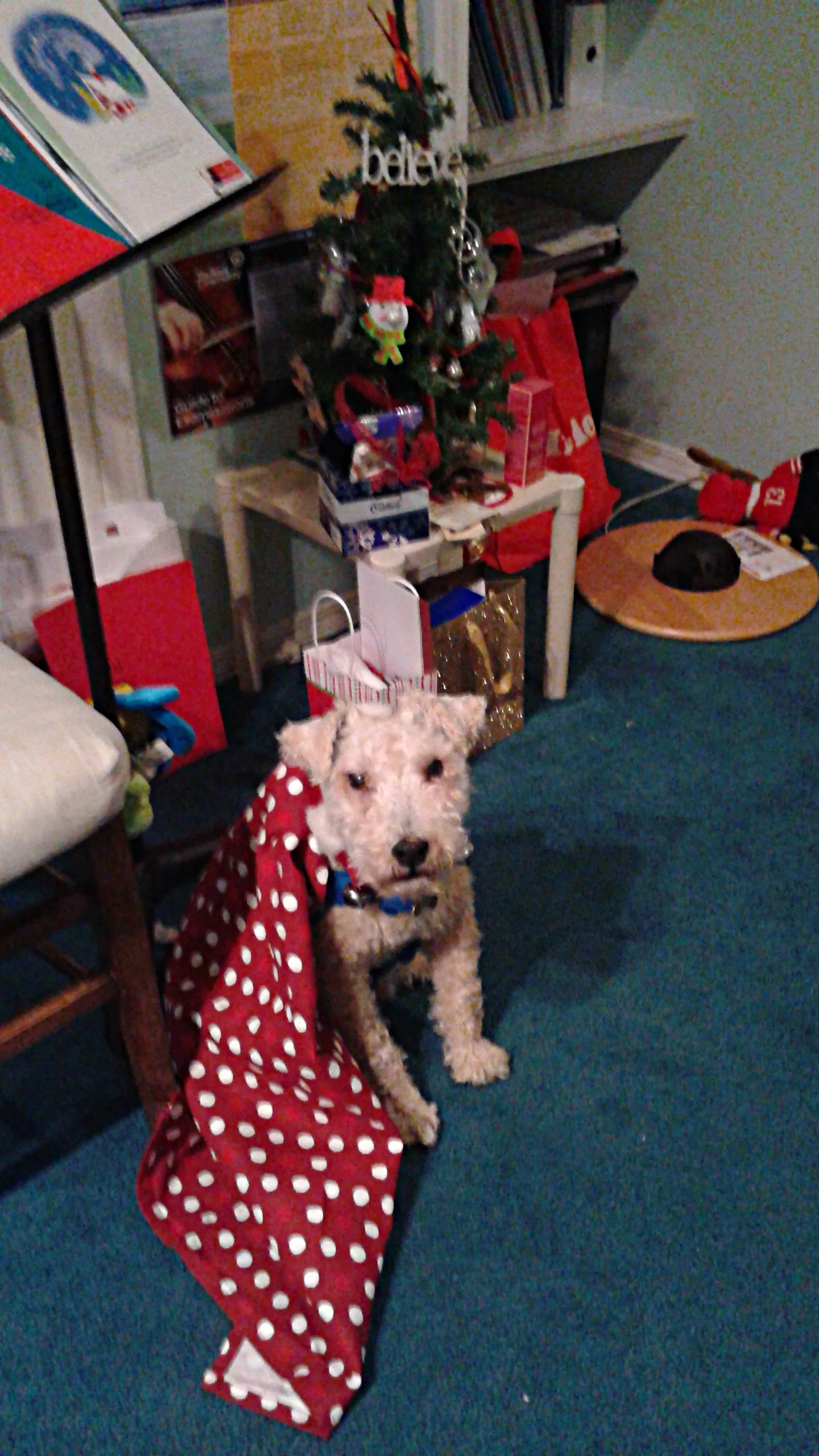
Gimme presents. Now. Photo: R-M Arca.
In fact, I was contemplating whether to decorate at all, knowing that it would hurt so much. I decided to decorate in the end as I figured that if I delay any of these firsts, it would only be harder next year. Besides, I could just picture Maestro standing on a heavenly cloud, barking angrily at me at the mere thought of not putting up his Christmas tree.
Dad was over when I put the tree up. Through tears, I told Dad what Maestro would do as we decorated. It felt good to get the tree and decorations up. Next year will be easier.
This Christmas, I made photo ornaments of all our furry family members, past and present for the family tree. It was a wonderful trip down memory lane.
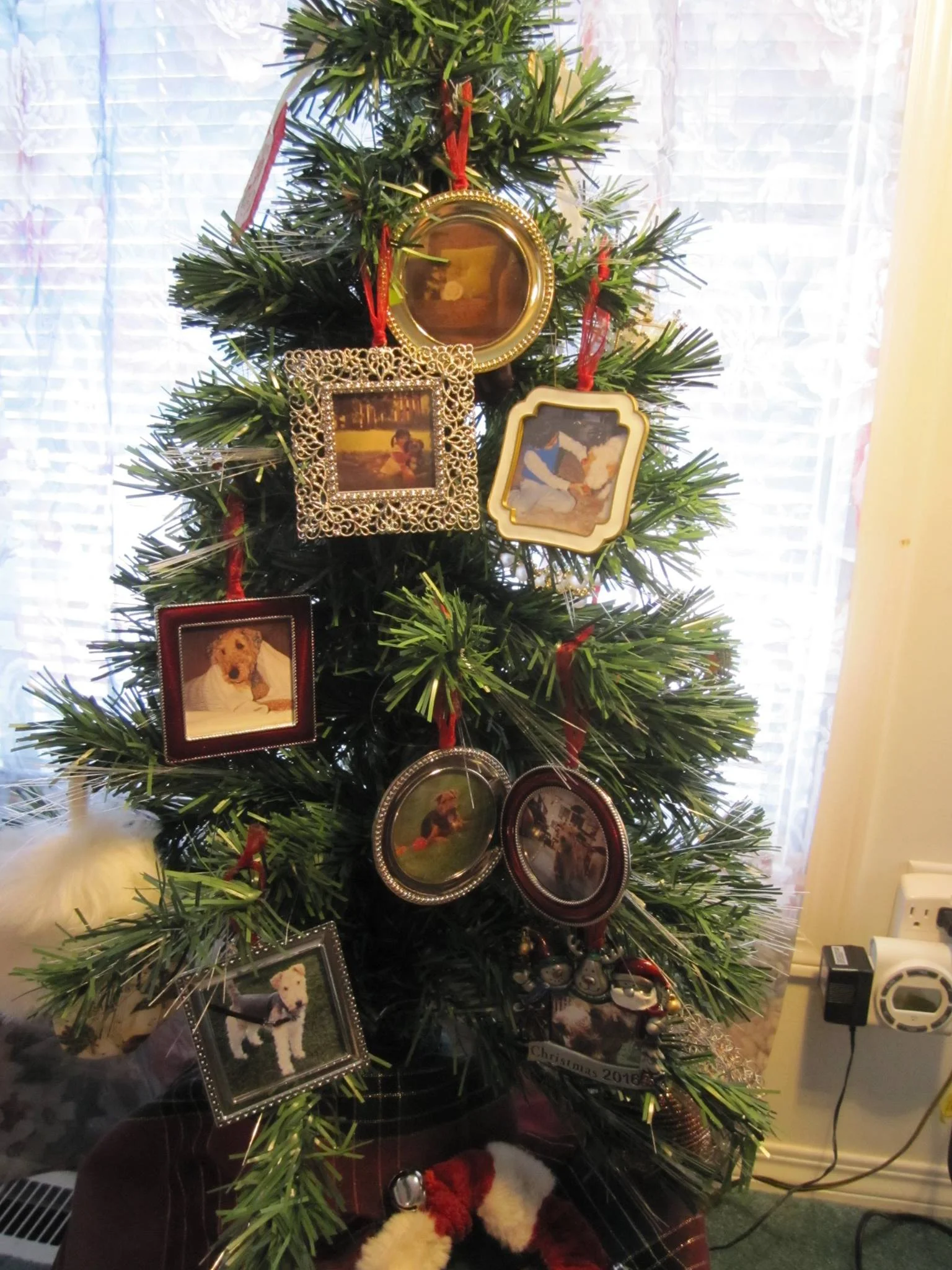
The Arca family dogs through the years, as shown on Maestro's tree. Photo: R-M Arca.
Christmas has come and gone. It wasn't as hard as I was expecting it to be. We shared funny stories about all of our furry family members. Mom even gave Angel Maestro a little stuffie to place beside his urn. I also was able to spend quality time with friends I haven't seen in quite a while.
Last week, we got a huge snow dump. I dug a maze in the backyard, for old time's sake. Maestro really liked his mazes:
Earlier this week, the Lakeland Terrier calendar that I ordered arrived. Maestro makes a posthumous appearance in March with the feature photo for this post. Sale proceeds go towards helping two terrier rescue groups. How apropos that he shares March with another Caliente Lakie.
Honour the Journey
Once, I told a student that with Maestro having played a huge part in my life on a personal as well as professional level, I've had to get to know myself as well as Musespeak all over again, and get used to this new dynamic.
As I adjust to the changes, I'm also dealing with a lot of crap. There are things that got postponed for far too long, as well as years of clutter that I'm dealing with. There's literal crap too. Perhaps I should put a tracker in my Bullet Journal to remind me to put enzymes in Maestro's Waste Manager Disposal System.
The waves of grief come farther apart now. Sometimes, it's like Christmas, where I have a quick cry and move on. Other times, it hits so unexpectedly. It's the little things that do it. There was the dull ache that lead to a dam bursting upon seeing a puppy pulling on his leash. He wanted to make his human cross the street more quickly.
There was the quick stab of emotion when I choked up while trying to sing Dancing Queen. I'll keep trying. One of these days, I'll be able to belt it out with a smile instead of tears.
If there's anything that I've learned, it's to respect the journey. If you feel sad, that's okay. Take the time to let it out. Ride the wave and have a good cry. It shows how much of an impact that person or pet has had on your life.
The other thing I've learned is to take time. All these little firsts take a lot of energy - physically, emotionally, mentally, and spiritually. I was exhausted after putting up the Christmas tree. That was a good reminder to not schedule anything other than rest after going through a big first.
More people are starting to ask me whether I'll be getting a new dog soon. My answer: Someday, but not yet. Let me get more crap out of the way, get through a couple more gradings, and maybe squeeze in a trip first. The journey continues.

Maestro's 2016/17 Studio Challenges - Part 1
This year, I made two big changes to Maestro's Challenges. The first is that I separated the Musician Survival Skills Challenges and the Music Moxie Challenges. The biggest change, however, is how my students and I are approaching technique. It's been a bit of a gamble, especially with the ones preparing for an exam, but it's paying off.
When Maestro crossed Rainbow Bridge, my students and I agreed that at least one challenge will forever be Maestro's, regardless of who the current Studio Assistant is (right now, it's R2-D2). Until a new canine studio assistant is brought in, all the challenges will remain in Maestro's name.
This year, I made two big changes to Maestro's Student Challenges. The first is that I separated the Musician Survival Skills Challenges and the Music Moxie Challenges. The biggest change, however, is how my students and I are approaching piano technique. It's been a bit of a gamble, especially with the ones preparing for an exam, but it's paying off.
2016/17 Challenge Theme: Focus
Last year, Maestro and I ran his Karate Belt Challenges to measure students' progress in piano technique, musician survival skills (e.g., ear training, sight-reading, rhythm work), and music moxie (performing, composing, etc.). My students had a fun time designing their avatars. Two had a little game of Hide & Seek going on where they'd hide each other's avatars.
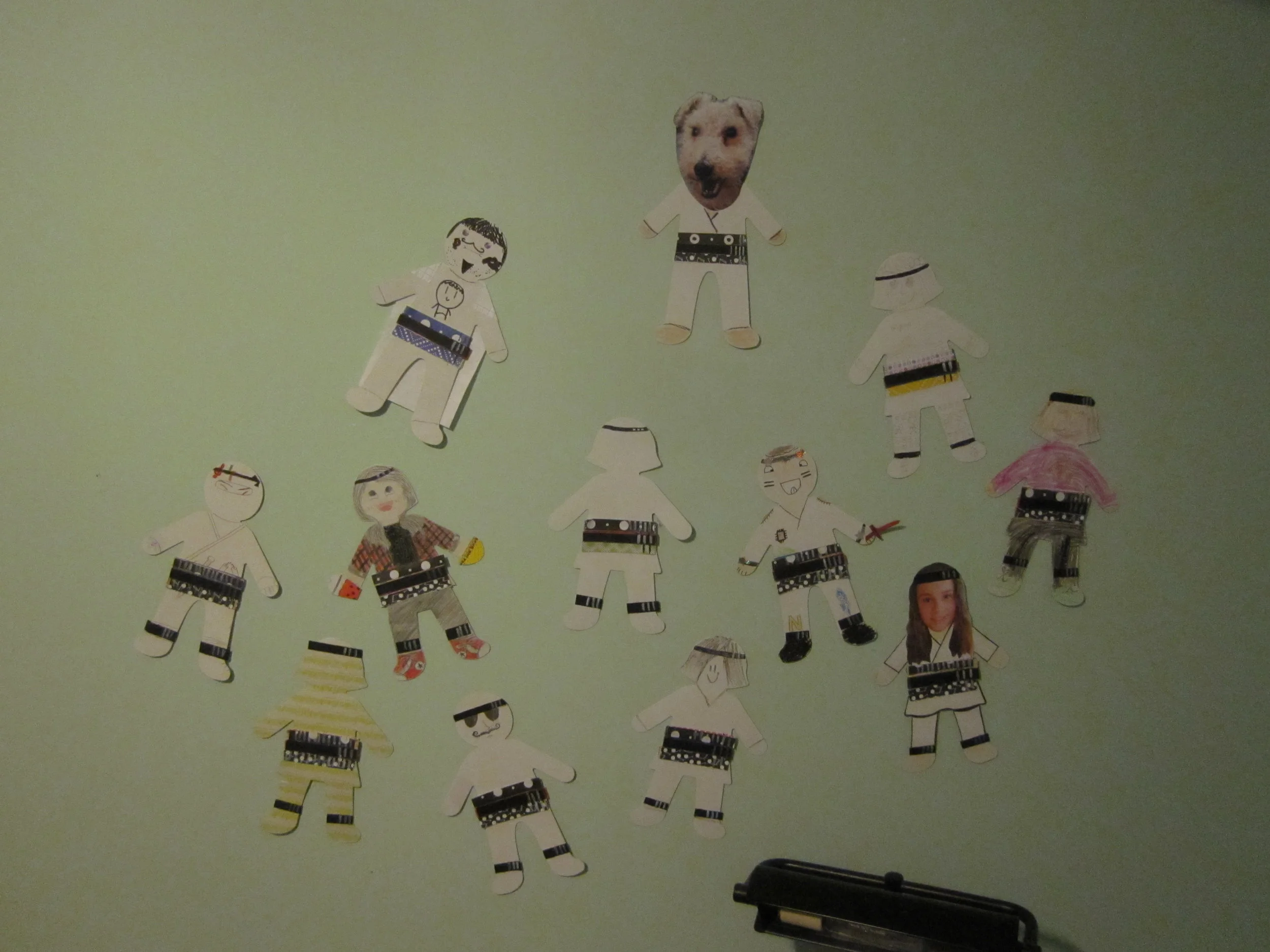
Some of the avatars that my students created last year for Maestro's Karate Belt Challenges. Photo: R-M Arca.
Looking back, there were a few drawbacks to this set-up. First, it was impossible to get through all of the weekly challenges, plus repertoire, and theory in a single lesson. Secondly, it took some students a really long time to get through their technique challenges.
This year, the students are only working on one or two challenges at any given time, most of the time. In September, is the Back Basics Challenge and the Technique Challenge.
The Back to Basics Challenge was pretty simple. The students had approximately five challenges a week, in which they demonstrated what they remembered about posture, articulation, tempo, and dynamics.
Piano Technique Challenge
One thing I wanted to do this year is make a clearer connection between those dreaded scales, chords, and arpeggios with keyboard theory (and then later, written theory). That way, could work on chording and faking with much earlier in the year.
For the first two months, we focussed on arpeggios and just arpeggios. We started with C Major and minor and travelled around the Circle of Fifths, playing the tonic major and minor arpeggios. We also worked on rhythm, sub-division, shaping, accents, and weight transfer ad nauseum.
My students began to string together several arpeggios. Most probably didn't realize that I was getting them to string the tonic, sub-dominant, and dominant chords together, but they did discover that if you pick keys close to each other on the Circle of Fifths, they string together rather nicely. Many powered through this fairly quickly.
Next came tonic major and minor triads. This is where most of my students are currently. Good enough for them to fake their way through Christmas songs if they are put on the spot this past Christmas Break.
Once they complete their trip around the Circle of Fifths, we'll go back to the top and work through the I-IV-V-I chord progression in earnest. That will be the first order of business after Christmas Break, followed by scales and modes. By that time, I hope that my students have started to make stronger connections between the technical elements in their music and between their technique and theory.
So far, one of my Grade 8 piano students has progressed to the scales portion of Maestro's Technique Challenge. She's enjoying it much more than in years past because she's also working on modes, the Hindu scale, blues, major pentatonic, and the Spanish/Jewish scale. That's standard fare for my Conservatory Canada Contemporary Idioms students, but she's in the Royal Conservatory. It's a whole new world of harmonies for her.
By the time all of my students complete the challenges for their level, they will know much more technique than what is listed in the conservatory syllabus for their playing level. That's fine. They will have enough tools in their "musician's toolbox" to be a versatile valued member in any ensemble.
For those who are interested in how I broke down the challenges, you may download the file here.
My students and I recently completed Maestro's Ear Training Challenge and are currently working through his Rhythm Challenge. More on those next time. Stay tuned!
Social Media Links
archives
- #YYCArts 32
- #YYCEvents 39
- Collaborative Music 25
- Community 11
- Composing & Arranging 6
- Entertainment 139
- Entrepreneurship 53
- Freebies 3
- Gardening 1
- Geeking Out 65
- Health & Wellness 120
- Improvisation 25
- Interviews 28
- Learning Music 188
- Martial Arts 13
- Memorization 7
- Music 230
- Music Careers 9
- Music Education 196
- Music Examinations 7
- Music Exploration 55
- Music Gigs 14
- Music Lessons 6
- Music Performance 32
- Music Theory 13
- Musical Instruments 12
- Musician Health 19
- Pets 57
- Piano Technique 12
- Practicing Music 120
- Productivity 20
- Professional Development 11
- Recommendations & Reviews 93
- Recreation 71
- Social Media 6
- Spirituality 10
- Studio Management 33
- Studio Technology 50
- Teaching Music 146
FOLLOW THE STUDIO on Instagram

Affiliate Links
As a Sheetmusicplus and CD Japan affiliate, I earn from qualifying purchases. The earnings help fund the Studio’s blog and YouTube channels. Your support is greatly appreciated.


FOLLOW Budo no Tabi on Instagram