THE MUSICAL MUSE
Blog dedicated to music education, practice tips, health
&
wellness, and geeking out.
The Practice of Practicing Performing
Whether you are preparing for a music examination, senior recital or audition, practice performing to help you get your performing chops up. Check out some of these ideas.
Music examinations start in two weeks. After months of slogging over pieces, technical exercises, ear, rhythm and sight-reading exercises, there is light at the end of the tunnel for music students, their parents and us, their music teachers.
In the meantime, how can students best use their time from now till D-day? In addition to tweaking, they should practice performing. Some glitches don't fully reveal themselves until you add the pressure of an audience. In the case of pianists, part of the challenge is learning to adjust to a "strange" piano on the fly. Here are some ideas to get your performing chops up:
Play for teachers and classmates at school.
Throw a short recital for your family, friends and neighbours (don't forget to add treats at the end!).
Play for family and friends on FaceTime, Skype or Google Talk.
See if you can book some time to run through your pieces at church when there isn't anything happening.
If your library or community centre has a piano/performing space, see if you can run through your pieces there.
Practicing performing is different from "just practicing". When you practice performing, you are trying to get into your "performance zone". You are trying to tell your musical story, without trying to correct anything that isn't in the score. You are practicing how to recover and adjust to what life throws at you when you are on stage.
It pretty much goes without saying that the more often you perform, the easier it gets. So, what are you waiting for?
Music Practicing Tip - The Random Spot Drill
How well do you know your pieces? Try the Random Spot Drill to check.
For many music students around the world, this is a really tense time. There are only weeks before their music exam.
If you're preparing for a music exam, chances are your parents and your music teacher are telling you that you need to practice more, etc. etc.
This month, I'm checking to see how secure my students' repertoire is by using the Random Spot Drill. Really, it's as it sounds. You walk by the piano, sit down and try to play one of your pieces from anywhere. Well, from any memory station, that is.
If you're in the middle of your practice, try it for about a minute. Try playing the intro of one piece, the middle of another and the end of a third piece. OK, that's not really random, but you can make it random by trying any of the following:
Scribble out bar numbers onto slips of paper and put them in a jar or hat. Then number your pieces. Draw one slip to choose a piece and another to tell you which bar to start from.
Ask a family member in another room to pick a number from 1 and X (the last bar of your piece).
Get a random number generator app and have it choose your bar numbers.
Close your eyes and move a finger randomly on the score. When it stops, that's where you start.
Roll dice
Spin the Bottle
The idea behind the drill is to see how quickly you can get into the groove of that piece. After all, you never know when a distraction will occur. It could cause a blip. To keep you and your audience on track, you need to get back into the groove with as few missed beats as possible.
Making Use of Music Festival Comments
So you survived the music festival? Don't throw that adjudication sheet into recycling yet!
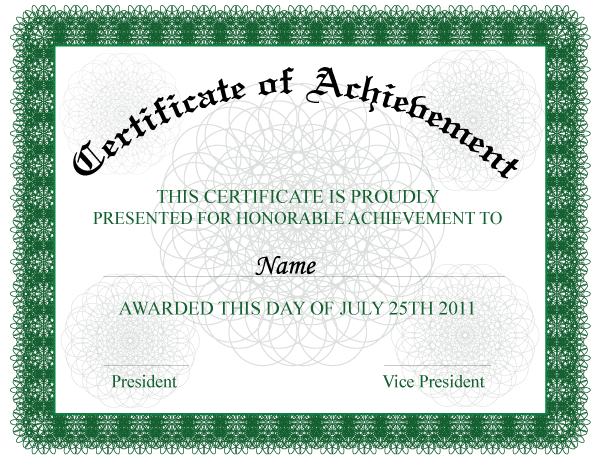
You have survived this season's run of music festivals and competitions. You have your certificate. Maybe you even earned an award.
Perhaps now you're asking yourself, "Now what?"
Please bring your written adjudication sheet(s) to your next music lesson. If your music teacher was unable to attend your music festival performance - and your parents recorded your performance - do bring the recording to your next music lesson to review with your teacher.
Your music teacher can help decipher the adjudicator's handwriting and discuss with you how to incorporate some of the ideas that you picked up at the music festival.
I put the word "some" in italics. Bear in mind that music is a personalized experience, not just for you but for the listener. Your adjudicator is giving comments based on their skills, experience and educated opinion based on your playing at that moment. You may agree with some comments, but not all. The same goes for your teacher.
Your music teacher, the adjudicator and the examiner have similar "hot buttons" that they listen for: rhythm, pedalling, fingering, balance, technical fluency, command of the style. In basic terms, they are listening for whether you know the piece and if you're telling us a story.
What will differ are some of the ideas that they each have for you to try. Each of your musical mentors have a different set of skills and experiences.
Take the ideas that each have to offer and try them. Give them a solid effort. Keep what works for what you're trying to say with the piece and file away the rest. Who knows? It may work with another piece better.
Tips on Project Management and Learning Music
For those of you doing a music exam or playing at the music festival, you're probably feeling the pressure from your music teacher and parents. After all, we're in exam and music festival season and the clock is ticking!
For those of you doing a music exam or playing at the music festival, you're probably feeling the pressure from your music teacher and parents. After all, we're in exam and music festival season and the clock is ticking!
To help keep my students on track, I've helped them come up with a Project Management Timeline for the areas that need work. When I first used this backwards project timeline, it was during my co-op term at CPO. I had to plan out when I needed to write my press releases for upcoming concerts at the Calgary Philharmonic Orchestra. Working backwards from the radio, TV and print media's submission deadlines, I was able to figure out when I needed to write the press releases for the spring concerts. It works well for music too:
D-day in this case is the week leading up to the APTA Festival. I had my students count out how many weeks they had till D-day. Then, I informed them that they needed to give themselves at least one month to let their memory settle and to polish their pieces. This is represented by the first two numbers on the LH side of the page.
From there, we calculated just how many weeks they had left to memorize "Piece X" and how many weeks they had to finish learning the piece.
Next, we looked at the RH side of the page; at the total number of lines in the piece, the number of lines learned already and finally, the number of lines left to learn. Then it was time to put the math hat on:
9 lines to learn DIVIDED by 3 weeks learning time = 3 lines to learn per week
18 lines to memorize DIVIDED by 7 weeks = 2.6 lines to memorize per week, give or take a bar or two, depending on phrasing
In this example, the student needs to spend some practices learning the rest of the piece and some practice time on memorizing a section.
With the formula, the music memorization deadline thus becomes the week of March 27. You can also use this formula to help figure out your practice milestones for the week.
Give it a try with your current pieces - good luck!
P.S. Now, the milestones will change, depending upon the level of difficulty of the piece and the student's work habits
Social Media Links
archives
- #YYCArts 32
- #YYCEvents 39
- Collaborative Music 25
- Community 11
- Composing & Arranging 6
- Entertainment 139
- Entrepreneurship 53
- Freebies 3
- Gardening 1
- Geeking Out 65
- Health & Wellness 120
- Improvisation 25
- Interviews 28
- Learning Music 188
- Martial Arts 13
- Memorization 7
- Music 230
- Music Careers 9
- Music Education 196
- Music Examinations 7
- Music Exploration 55
- Music Gigs 14
- Music Lessons 6
- Music Performance 32
- Music Theory 13
- Musical Instruments 12
- Musician Health 19
- Pets 57
- Piano Technique 12
- Practicing Music 120
- Productivity 20
- Professional Development 11
- Recommendations & Reviews 93
- Recreation 71
- Social Media 6
- Spirituality 10
- Studio Management 33
- Studio Technology 50
- Teaching Music 146
FOLLOW THE STUDIO on Instagram


Affiliate Links
As a Sheetmusicplus and CD Japan affiliate, I earn from qualifying purchases. The earnings help fund the Studio’s blog and YouTube channels. Your support is greatly appreciated.


FOLLOW Budo no Tabi on Instagram