THE MUSICAL MUSE
Blog dedicated to music education, practice tips, health
&
wellness, and geeking out.
Using Practicing Personalities in Music Lessons
This summer, I bought Practice Personalities: What's Your Type? by Thornton Cline in the hopes of gaining new information to help my music students practice more efficiently.


When I was at the CFMTA Convention this summer, I spied Practice Personalities: What's Your Type? by Thornton Cline in Long & McQuade's trade show booth. The idea of determining students' practice type and working with that sounded intriguing.
About Practice Personalities: What's Your Type?
Mr. Cline identifies nine practice personalities:
The Perfectionistic Type Student
The Not-So-Detailed Type Student
The Unmotivated Type Student
The Fragile, Easily Discouraged Type of Student
The Overscheduled Way-Too-Busy Type of Student
The Dramatic Type of Student
The Exucse Making, Blaming Type Student
The Over-Exhuberant, Highly Confident Type of Student
Build Your Own Personatily Type of Student
Cline introduces each type before going into more detail for each practice type. Next, he gives a brief (too brief!) chapter with some teaching suggestions for each type. Interspersed throughout the book are interviews with a variety of music educators.
He also dedicates a chapter to motivational rewards and prizes. There is even a chapter on motivational games. Finally, there is a CD in the back, which outlines some of the practice strategies Cline recommends. The back of the book has a handy assessment chart for music teachers to use.
Music Teaching with Practice Personalities
I actually didn't need a full month to complete my assessment. All of my students are a combination of two or more types. To help keep me organized my teaching approaches, I've kept track of how many students are in each group:
The Perfectionist Type Student: 36%
The Not-So-Detailed Type Student: 52%
The Unmotivated Type Student: 24%
The Fragile, Easily Discouraged Type of Student: 24%
The Overscheduled Way-Too-Busy Type of Student: 40%
The Dramatic Type of Student: 20%
The Exucse Making, Blaming Type Student: 16%
The Over-Exhuberant, Highly Confident Type of Student: 20%
I decided to tackle one strategy at a time.
First off: showing students various practice drills to help them fix trouble spots more quickly. To do that, I simply asked my students to pull out their Bag of Tricks and have them choose a couple of appropriate drills to use from their deck, based on what needed to be fixed.
Many of my students have commented that it's fun to pull out their Bag of Tricks that I made for them. I spent the first two to three weeks doing that just to help reinforce how to practice, but also to appeal to everyone's state of busy-ness. "You want to fix this as quickly as you can so you can move onto other stuff, right?" I'd ask.
With the majority of my students being some combination of the Not-So-Detailed, I decided to increase the frequency of doing Record & Review. You can read about that experience in my post on Active Listening.
This week, I'm employing another technique that's good for several practice types, but especially for the Dramatic and the Not-So-Detailed: roleplaying with a bit of dramatic exaggeration thrown in. This tests my aural memory, let me tell you!
I try to play back what they played incorrectly and ask them to tell me what I did wrong. A few students get it right away, "You didn't hold that note long enough," or "You sped up in that line." My reply is, "Well, that's what I heard you do. Now you show me that you can play it better than me."
The other thing I've launched this week is a Sight-Reading Challenge (more on that later). In addition to increasing my students' music literacy, it's also an exercise to challenge my Perfectionist students.
I'll give my students some time to get get used to these approaches. Then, I'll tackle the Excuse-Making and Blaming Students Fragile, Easily Discouraged ones.
It's a neat book. Mr. Cline is a strong writer and the CD is useful.
However, I was disappointed with how few strategies he offered. Let me re-phrase that: I was disappointed in how little new information I gleaned from it. The majority of the strategies are ones that I've already employed.
In short, I'd say that Practice Personalities: What's Your Type? is ideal for a music teacher just starting out. It would also be good for a teacher just looking for some fresh ideas, especially if they don't already use technology in the studio.
Mr. Cline's suggestions simply reinforced for me some of the strategies that I'm already using in my teaching. The main difference is that now that I know which practice type my students are, I can switch strategies more quickly. When combined with knowing my students' VARK learning preferences, it's a powerful combination.
Practice Personalities Publication Details
Author: Thornton Cline
Title: Practice Personalities: What's Your Type
Paperback: 88 pages
Publisher: Centerstream
Publication Date: July 1, 2012
ISBN-10: 1574242814
ISBN-13: 978-1574242812
Price Range: $16.62 - $27.95 CAD
I purchased my copy from Long & McQuade. You may need to special order this book through your local bookstore. Practice Personalies: What's Your Type? is also available online on Amazon, Alibris and Sheetmusicplus.
A Rainbow of Handouts and Studio Incentives
A few tweaks and new bells and whistles make this year's student incentive program and practice aids a rainbow of colours and very much, game inspired.
Now that my website issues have been resolved (knock on wood), I can get back to the business of writing and teaching. You can read all about it here. I've wanted to share some of the tweaks I've made to my studio incentive program:

What's New:
First off, I changed the name from "Maestro's Musical Quest" to "Maestro's Top Dogs". It makes sense, since the Top Dogs in each category will party it up with Maestro at the Top Dog Party.
I also reformatted the Piano Progress Card. The booklet format was nice, but students misplaced it. Now, all the elements that were in the Progress Card are printed on 8-1/2 X 11" coloured sheets (lilac, pink, green and blue) and placed in their binders.
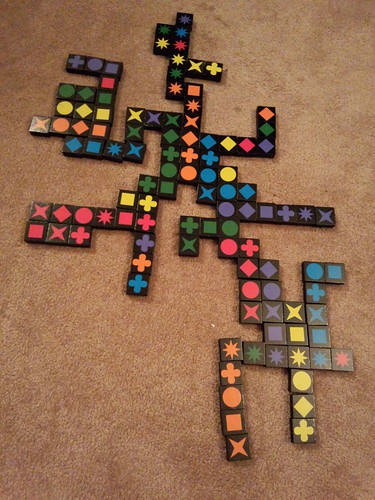
In the top LH corner in the photo above, you'll see two cards with shapes in a grid. That's the new technique challenge. Inspired by Qwirkle, a game created by MindWare, my students will work their way through the card, building Qwirkle-like rows ("Twirkles", perhaps?). Whenever they master six technical elements in a row, they collect $15 Maestro Bucks to spend at Maestro's Market. Students who complete the card (major minor keys) will be inducted into Maestro's Technique All-stars.
Upgraded Studio Incentives - Sticking to a Theme
One thing I noticed with last year's "Gig Card" is that some students either performed a lot or hardly at all. I suspect that some lost their steam for performing 20 times before seeing $100 Maestro Bucks. This year, they will earn $25 Maestro Bucks for each five performances.
That transferred over to the Music Moxie (formerly the "Music Maestro") and the Music Mastery cards. I decided to keep it simple and have $25 Maestro Bucks for five on all of them. The goals setting incentive remains the same as last year.
Handouts and a Bag of Tricks
This year, my students and I are going to explore practice strategies based upon their "practice personality". This is inspired by a book I bought at the CFMTA Convention, entitled Practice Personalities: What's Your Type?: Identifying and Understanding the Practice Personality Type in the Music Studentby Thornton Cline.
Instead of the Practicing 101 handouts of years past, I decide to repackage the info for my predominantly Visual and Visual-Kinesthetic learners. Once again, I drew inspiration from some of the tabletop games and video games I've played.
All students, young and young-at-heart, received a Bag of Tricks:

The original set contains 24 practice drills. One side of the card shows you how to do the drill. The reverse side tells you when to use the practice strategy and what it can be used to fix.

Some of my students were very excited when they read what the cards contained. Others looked skeptical, to which I'd say, "They're good for when you're stuck and you need to change up how you're working on something."
One of my fellow gamers enthusiastically read the cards out loud to his mother. When he got to the part where it said, "Repeat until you can play this spot cleanly five to seven times in a row," his mother said something like, "Well, duh!"
Then, one of my Grade 12 students looked at them and said, "Dude, that's a lot of work." Well, if more of my students improve because of them, then I'd say that it's worth it. At any rate, I hope that they have as much fun with their materials, practice aids and practice incentives as I had making them.
June 13, 2014 update:The musical bag of tricks has undergone significant testing and revisions, as well as a new name. I am pleased to announce that the Canadian product release of Maestro's Music Tricks (MMT) is June 30. There are 34 practice drills. MMT is currently available on pre-order. Stay tuned for details on the international product release.
MMT website: http://mmt.musespeak.com
MMT FB page: https://www.facebook.com/maestrosmusictricks
Using Multiple Cameras in a Music Lesson Demonstration
After reading "On Teaching Piano with Multiple Cameras", one of my readers had mused how wonderful it would be to see a demonstration of using multiple cameras in a music lesson. My student Dylan and I were happy to oblige.
After reading "On Teaching Piano with Multiple Cameras", one of my readers had mused how wonderful it would be to see a demonstration of using multiple cameras in a music lesson. My student Dylan and I were happy to oblige.
Here we are working on a short chord progression from U2's "Stuck in a Moment". I used the three claps at the beginning to synchronize the videos (à la Eric Whitacre's Virtual Choir).
We used the following cameras for this demonstration:
POV Camera on Dylan's head (Top Left): GoPro Hero 2
Profile Camera on the Studio Desk (Top Right): Microsoft HD LifeCam 3000
Pedal Camera (Bottom Right): Canon PowerShot 5S IS (I can't bring myself to retire it completely because it's still a good camera)
Overhead Camera (Bottom Left): Logitech HD Pro Webcam C910
I took a photographer friend's advice and turned off the auto-focus on the two webcams. Another thing I do is try to minimize the number of background programs running on the computer when recording video.
The profile view is essential for checking posture and hand position. The overhead view gives you the musician's peripheral of the keyboard geography. The pedal view is essential with students who are having issues with timing their pedal changes. As for the POV camera - isn't is just fun to see how another musician sees when they play? It's also good for checking where they are focusing.
I will probably swap the positions for the pedal and profile camera.
Now, when a student working on something new, I can show them various perspectives that they can review at their leisure at home. Or perhaps they'd like to show off a newly polished piece to their relatives across the country.
Students, "Record & Review" has never been so easy to do at home. Use any of your portable devices, such as a smart phone, iPod, tablet, netbook, laptop, camera. You can place them at various positions as we have here.
Find out more about how to incorporate webcams into your studio here.
* Special thanks to my student Dylan and his family for granting permission to record Dylan for this demo. *
Practice Tip: Playing along with a CD
I recently ordered Bleach the Best CD through amazon.com. A courier dropped it off during this morning's piano lessons. As soon as I ushered my day students out the door, I set the CD to Houki Boshi- the song I'm doing for the APTA Festival.
I recently ordered Bleach the Best CD through amazon.com. A courier dropped it off during this morning's piano lessons. As soon as I ushered my day students out the door, I set the CD to Houki Boshi- the song I'm doing for the APTA Festival and played along with it on the piano. This is a surefire way to force a musician to keep going no matter what as the CD doesn't stop for you to correct notes.It was an energizing experience, mainly because the song is supposed to be played at approximately 162 quarter notes per minute.
(c) 2007 by Musespeak(tm), Calgary, AB, Canada. All rights reserved.
Ear Training and Sight Reading Help
There are a multitude of online resources for students who need extra work in this area. Here are a few of them:
My weakest areas as a piano student were the aural and sight reading tests. One year when I was in high school, I “forgot” my Four Star Sight Reading and Ear Tests book for two months’ worth of lessons. Elizabeth Mahaffy, my teacher at the time, got so fed up that one day, she sent me home to get the book.
My students don’t get away with that since I’ve kept all my Four Star Sight Reading and Ear Tests. I bring them out for the forgetful students or sometimes, I have them pick out a song by ear and add the chords.
There are a multitude of online resources for students who need extra work in this area. Here are a few of them:
If you would like to purchase the Four Star book series, check out my affiliate links below:
 look inside
|
Four Star Sight Reading and Ear Tests Preparatory A Four Star Sight Reading and Ear Tests. Composed by Boris Berlin and Andrew Markow. Edited by Laura Beauchamp-Williamson. This edition: 2015 edition. Sight Reading. Four Star Sight Reading and Ear Tests. Book. The Frederick Harris Music Company #4S0A. Published by The Frederick Harris Music Company (FH.4S0A). |
 look inside
|
Four Star Sight Reading and Ear Tests Preparatory B Four Star Sight Reading and Ear Tests. Composed by Boris Berlin and Andrew Markow. Edited by Laura Beauchamp-Williamson. This edition: 2015 edition. Sight Reading. Four Star Sight Reading and Ear Tests. Book. The Frederick Harris Music Company #4S0B. Published by The Frederick Harris Music Company (FH.4S0B). |
 look inside
|
Four Star Sight Reading and Ear Tests Level 1 Four Star Sight Reading and Ear Tests. Composed by Boris Berlin and Andrew Markow. Edited by Laura Beauchamp-Williamson. This edition: 2015 edition. Sight Reading. Four Star Sight Reading and Ear Tests. Book. The Frederick Harris Music Company #4S01. Published by The Frederick Harris Music Company (FH.4S01). |
 look inside
|
Four Star Sight Reading and Ear Tests Level 2 Four Star Sight Reading and Ear Tests. Composed by Boris Berlin and Andrew Markow. Edited by Laura Beauchamp-Williamson. This edition: 2015 edition. Sight Reading. Four Star Sight Reading and Ear Tests. Book. The Frederick Harris Music Company #4S02. Published by The Frederick Harris Music Company (FH.4S02). |
 look inside
|
Four Star Sight Reading and Ear Tests Level 3 Four Star Sight Reading and Ear Tests. Composed by Boris Berlin and Andrew Markow. Edited by Laura Beauchamp-Williamson. This edition: 2015 edition. Sight Reading. Four Star Sight Reading and Ear Tests. Book. The Frederick Harris Music Company #4S03. Published by The Frederick Harris Music Company (FH.4S03). |
 look inside
|
Four Star Sight Reading and Ear Tests Level 4 Four Star Sight Reading and Ear Tests. Composed by Boris Berlin and Andrew Markow. Edited by Laura Beauchamp-Williamson. This edition: 2015 edition. Sight Reading. Four Star Sight Reading and Ear Tests. Book. The Frederick Harris Music Company #4S04. Published by The Frederick Harris Music Company (FH.4S04). |
 look inside
|
Four Star Sight Reading and Ear Tests Level 5 Four Star Sight Reading and Ear Tests. Composed by Boris Berlin and Andrew Markow. Edited by Laura Beauchamp-Williamson. This edition: 2015 edition. Sight Reading. Four Star Sight Reading and Ear Tests. Book. The Frederick Harris Music Company #4S05. Published by The Frederick Harris Music Company (FH.4S05). |
 look inside
|
Four Star Sight Reading and Ear Tests Level 6 Four Star Sight Reading and Ear Tests. Composed by Boris Berlin and Andrew Markow. Edited by Laura Beauchamp-Williamson. This edition: 2015 edition. Sight Reading. Four Star Sight Reading and Ear Tests. Book. The Frederick Harris Music Company #4S06. Published by The Frederick Harris Music Company (FH.4S06). |
 look inside
|
Four Star Sight Reading and Ear Tests Level 7 Four Star Sight Reading and Ear Tests. Composed by Boris Berlin and Andrew Markow. Edited by Laura Beauchamp-Williamson. This edition: 2015 edition. Sight Reading. Four Star Sight Reading and Ear Tests. Book. The Frederick Harris Music Company #4S07. Published by The Frederick Harris Music Company (FH.4S07). |
 look inside
|
Four Star Sight Reading and Ear Tests Level 8 Four Star Sight Reading and Ear Tests. Composed by Boris Berlin and Andrew Markow. Edited by Laura Beauchamp-Williamson. This edition: 2015 edition. Sight Reading. Four Star Sight Reading and Ear Tests. Book. The Frederick Harris Music Company #4S08. Published by The Frederick Harris Music Company (FH.4S08). |
 look inside
|
Four Star Sight Reading and Ear Tests Level 9 Four Star Sight Reading and Ear Tests. Composed by Boris Berlin and Andrew Markow. Edited by Laura Beauchamp-Williamson. This edition: 2015 edition. Sight Reading. Four Star Sight Reading and Ear Tests. Book. The Frederick Harris Music Company #4S09. Published by The Frederick Harris Music Company (FH.4S09). |
 look inside
|
Four Star Sight Reading and Ear Tests Level 10 Four Star Sight Reading and Ear Tests. Composed by Boris Berlin and Andrew Markow. Edited by Laura Beauchamp-Williamson. This edition: 2015 edition. Sight Reading. Four Star Sight Reading and Ear Tests. Book. The Frederick Harris Music Company #4S010. Published by The Frederick Harris Music Company (FH.4S010). |
Happy practicing!
© 2006, Musespeak™, Calgary, AB, Canada. All rights reserved.
Social Media Links
archives
- #YYCArts 32
- #YYCEvents 39
- Collaborative Music 25
- Community 11
- Composing & Arranging 6
- Entertainment 139
- Entrepreneurship 53
- Freebies 3
- Gardening 1
- Geeking Out 65
- Health & Wellness 120
- Improvisation 25
- Interviews 28
- Learning Music 188
- Martial Arts 13
- Memorization 7
- Music 230
- Music Careers 9
- Music Education 196
- Music Examinations 7
- Music Exploration 55
- Music Gigs 14
- Music Lessons 6
- Music Performance 32
- Music Theory 13
- Musical Instruments 12
- Musician Health 19
- Pets 57
- Piano Technique 12
- Practicing Music 120
- Productivity 20
- Professional Development 11
- Recommendations & Reviews 93
- Recreation 71
- Social Media 6
- Spirituality 10
- Studio Management 33
- Studio Technology 50
- Teaching Music 146
FOLLOW THE STUDIO on Instagram


Affiliate Links
As a Sheetmusicplus and CD Japan affiliate, I earn from qualifying purchases. The earnings help fund the Studio’s blog and YouTube channels. Your support is greatly appreciated.


FOLLOW Budo no Tabi on Instagram