THE MUSICAL MUSE
Blog dedicated to music education, practice tips, health
&
wellness, and geeking out.
Rock Groove to Help You Practice Improvising
Need a rockin' drum groove to practice improvising to? Download this simple yet fun rock groove I came up with on cajón. Enjoy!
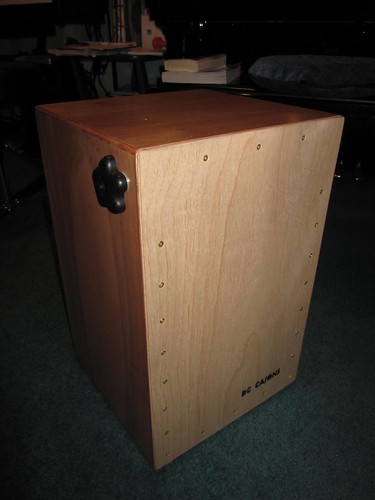
One of my students is improvising for his supplemental piece on his Grade 7 Conservatory Canada exam. You get two bonus marks if you play with accompaniment.
Here's a groove I created for him. You can use it to practice improvising too. It's 56 bars long and alternates between A and B patterns (8 bars each). Tempo is 126 beats per minute. Enjoy!
Jazz Music and Improvisation Guide Books
This is a list of the "How To" books that I use whenever I teach and play contemporary music (e.g. pop, rock, Latin, jazz, ragtime) that I shared with them:
As I mentioned earlier, I recently presented to the Piano Pedagogy Group. The piano teachers in this group are currently working on their Grade 10 or their Piano Pedagogy certification through Royal Conservatory of Music, Conservatory Canada or London College of Music . They are all classically trained (translation: improvisation, lead sheets and chord charts are scary). This is a list of the "How To" books that I use whenever I teach and play contemporary music (e.g. pop, rock, Latin, jazz, ragtime) that I shared with them:

By Blake Neely. For Guitar, Piano/Keyboard. Piano. Instructional. Instructional book. Standard notation and instructional text. 88 pages. Published by Hal Leonard (HL.220019)

By Ann Collins. For Piano. Piano Collection; Piano Supplemental. Early Advanced; Late Intermediate. Book. 80 pages. Published by Alfred Music Publishing (AP.199)


Volume 1 - How To Play Jazz & Improvise
By Jamey Aebersold. For any C, Eb, Bb, bass instrument or voice. Play-Along series with accompaniment CD. Jamey Aebersold Play-A-Long series. Beginner, intermediate. Book & CD. 104 pages. Published by Jamey Aebersold Jazz (JA.V01DS)

Volume 3 - The II/V7/I Progression
By Jamey Aebersold. For any C, Eb, Bb, bass instrument or voice. Play-Along series with accompaniment CD. Jamey Aebersold Play-A-Long series. Beginner, intermediate. Book & CD. 100 pages. Published by Jamey Aebersold Jazz (JA.V03DS)
(6)

Arranged by Frank Paparelli. For Piano/Keyboard. Keyboard Instruction. 48 pages. Published by Hal Leonard (HL.120517)
(2)
There are a few more in my "To Check Out" pile. I'll add them once I've had a chance to go through them a bit.
Practicing Piano Technique by the Root
This is more for the advanced students, music teachers and anyone who wants to learn jazz chords and scales. Instead of practicing your technical exercises by key, practice them by their shared root. For example, play through:
This is more for the advanced students, music teachers and anyone who wants to learn jazz chords and scales. Instead of practicing your technical exercises by key, practice them by their shared root. For example, play through:
C major Scale
C major Modes
C minor Scales (natural, harmonic, melodic, jazz minor)
C minor Modes
C Penatonic Scale
C Blues Scale
C Whole Tone Scale
C Octatonic Scale
C major tonic chord/triad
C minor tonic chord/triad
C7 (dominant 7th of F major)
Cm7 (ii7 of B-flat major)
Cm7(♭5) (viiø7 of D-flat major)
Cdim7, A.K.A. B#dim (viio7 of D-flat/c# minor)
and so on.
This was one of the first things I learned when I took jazz piano lessons with jazz pianist, clinician, adjudicator and examiner Derek Stoll.

On Scaring Classically Trained Music Teachers with Contemporary Idioms
Earlier this month, I presented improvisation and various elements of Conservatory Canada's Contemporary Idioms syllabus to The Piano Pedagogy Group. This was a group of bright yet frightened classically trained piano teachers.
Earlier this month, I presented improvisation and various elements of Conservatory Canada's Contemporary Idioms syllabus to The Piano Pedagogy Group. This was a group of bright yet frightened classically trained piano teachers. After years of being told "Play what's on the page," the sight of a chord chart or a lead sheet drew looks of puzzlement and various states of uncertainty. Conservatory Canada has recently updated their Contemporary Syllabus in such a way that makes it easier to crossover to the "fun zone". I myself haven't gone through all of the changes yet (You can find out all about the syllabus changes here). What I did touch upon was my experience delving into contemporary idioms on a deeper level. Much deeper than playing through popular arrangements by Dan Coates, Bill Boyd and Phillip Keveren.
I began by sharing my experiences taking jazz piano lessons with jazz pianist, adjudicator, clinician and examiner Derek Stoll. Then, I walked them through various elements of preparing for my Level 7 Contemporary Idioms piano exam.
The bulk of my presentation was on sharing the resources I commonly use when teaching contemporary music, in addition to my approaches to teaching technique, improvisation and learning music that isn't in standard notation. This is rather huge, I will go into each area in more detail in subsequent posts. Hopefully, this will open up a dialogue between music teachers and students who would like to delve into the "fun zone".
Music Group Class Round 1 Reflections
Well, students and teachers of Musespeak Studio and To the Wind Studio have survived the first round of music group classes with this new format. I learned three main lessons
Well, students and teachers of Musespeak Studio and To the Wind Studio have survived the first round of music group classes with this new format. I learned three main lessons:
I have gotten too complacent as far as teacher-student communications go. My students, their parents and I have an established rapport. I'm starting virtually from scratch with my brother's students. Sure, we've chatted at recitals, but a five-minute chat and teaching in 90-minute stretches are two totally different things.
It is important to over-plan and have several back-up activities up your sleeve. My pacing for one of the group classes was perfect. One was all right but could use a few more activities, while the other - well we raced through my lesson plan and I wound up flying by the seat of my pants for a very long time. I have Divine inspiration to thank for the "Let's Make Up a Story with Sound" exercise that I did with yesterday's students when improvising.
When teaching at another studio, have a studio contact list on hand in case you need to contact a parent in the case of an emergency or behavioural issue.
Overall, it was a positive experience. I've learned which students I need to be firm with and which ones I can recruit to take more of a mentoring role with the junior students.
I enjoyed teaching four lovely girls basic conducting gestures and beat patterns. They giggled a lot and had a great rapport with each other.
The "Get into The Groove" class challenged me the most. I will need to plan more rhythm exercises, especially ones where they split off into smaller groups. As for the stubborn ones - let's just say that I'm just as good, if not better at digging in my heels. "The Art of Practicing" also wound up being a great group of music students who were very engaged. In discussing how to practice music, we discussed stretching as well as their learning styles and practicing challenges (e.g. "When I Don't Feel Like Practicing"). The conversation also lead to areas I had not thought of incorporating into my presentation - and they should be. Thanks to them, talking about how to practice when injured and speed learning will be incorporated into my presentation. I look forward to the next round of music group classes.
Social Media Links
archives
- #YYCArts 32
- #YYCEvents 39
- Collaborative Music 25
- Community 11
- Composing & Arranging 6
- Entertainment 139
- Entrepreneurship 53
- Freebies 3
- Gardening 1
- Geeking Out 65
- Health & Wellness 120
- Improvisation 25
- Interviews 28
- Learning Music 188
- Martial Arts 13
- Memorization 7
- Music 230
- Music Careers 9
- Music Education 196
- Music Examinations 7
- Music Exploration 55
- Music Gigs 14
- Music Lessons 6
- Music Performance 32
- Music Theory 13
- Musical Instruments 12
- Musician Health 19
- Pets 57
- Piano Technique 12
- Practicing Music 120
- Productivity 20
- Professional Development 11
- Recommendations & Reviews 93
- Recreation 71
- Social Media 6
- Spirituality 10
- Studio Management 33
- Studio Technology 50
- Teaching Music 146
FOLLOW THE STUDIO on Instagram

Affiliate Links
As a Sheetmusicplus and CD Japan affiliate, I earn from qualifying purchases. The earnings help fund the Studio’s blog and YouTube channels. Your support is greatly appreciated.


FOLLOW Budo no Tabi on Instagram