THE MUSICAL MUSE
Blog dedicated to music education, practice tips, health
&
wellness, and geeking out.

On Becoming a Bulletproof Musician
The theme at last week’s group classes was becoming a bulletproof musician. The idea has been percolating in my mind ever since I discovered Dr. Noa Kageyama’s blog on performance anxiety and mindful practice, called The Bulletproof Musician.
The theme at last week’s group classes was becoming a bulletproof musician. The idea has been percolating in my mind ever since I discovered Dr. Noa Kageyama’s blog on performance anxiety and mindful practice, called The Bulletproof Musician.
Naming Our Fears
“Named must your fear be before banish it you can.” ~ Jedi Master Yoda
Each class had a different set of fears. I compiled everything that gives them performance anxiety below:
Everyone is watching
Making a mistake and everyone knowing it
Family teasing after making a mistake
Another student (known for giggling)
Messing up
Getting stuck
Stumbling and not being able to continue
Forgetting the music
Losing control
Not being ready (or able) to perform
People crowding too close to the piano
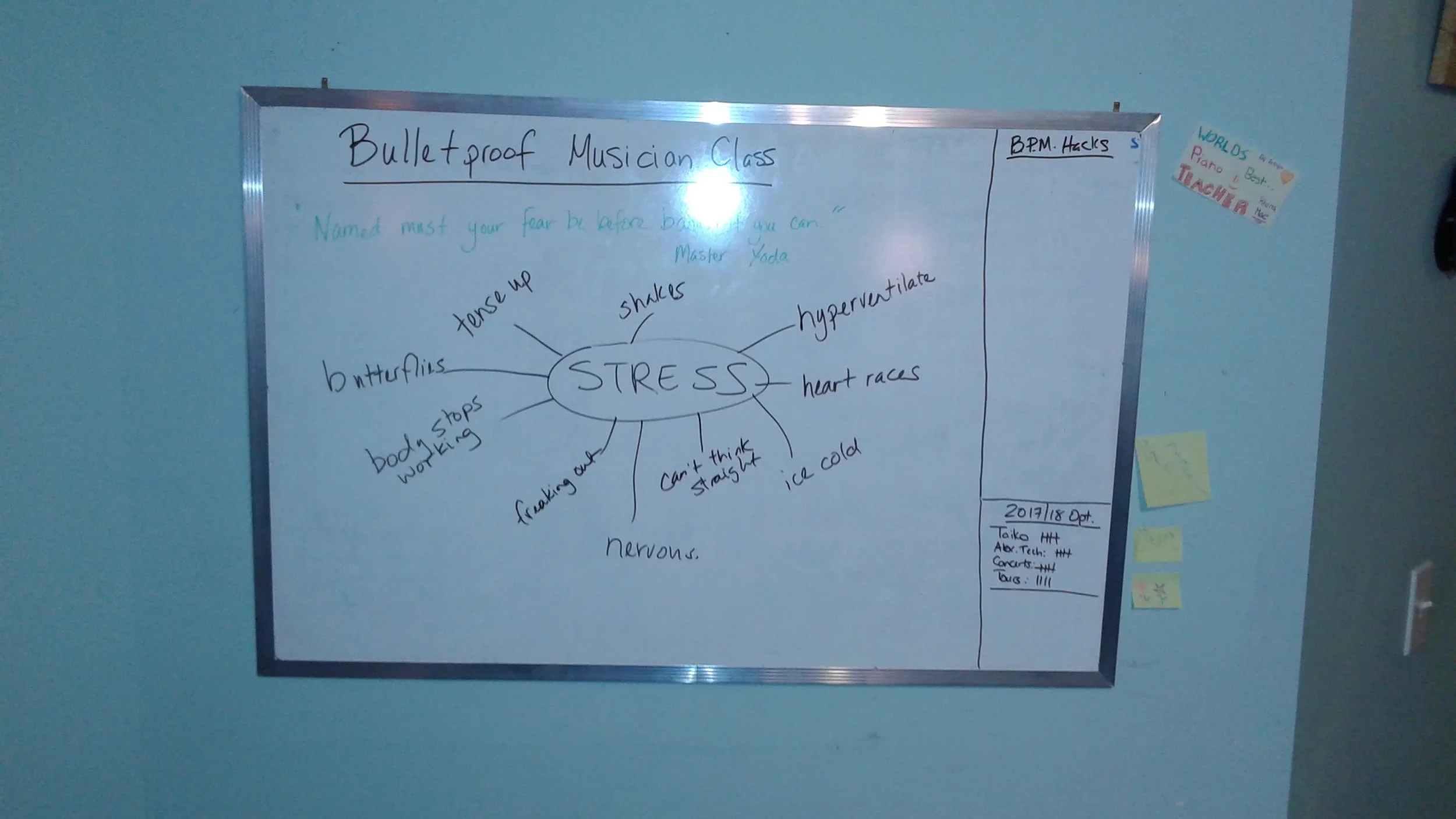
Most people share the same reactions when the body is under stress. Credit: Rhona-Mae Arca.
We discussed how our body reacts to performing under pressure or stress. To generate a paradigm shift, I showed my students this video by author and motivational speaker, Simon Sinek on performing under pressure:
It really comes down to convincing ourselves that yes, we really can do this. With a few practising and performing hacks, we can train ourselves to rush forwards to the stage with excitement rather than fear.
Creating the Ultimate Pre-Performance Routine
We all have our pre-performance routines. It could be lining up your pens, pencils, eraser, and ruler in a particular way before writing a test. Or wearing your lucky suit for a job interview. They’re little things, but they reduce our stage anxiety by helping us feel comfortable, grounded, and strong.
I read out professional tennis player Rafael Nadal’s 12-step pre-game routine. Most of my students giggled by the fifth (flicking the dirt of the hash mark with his left shoe). They were downright incredulous by the time I read out #10 (the order he wipes the sweat off his nose).
My students immediately poked holes in the routine: “What if both balls are fuzzy?...What if the ref tells him to hurry up?” I asked, “What if it’s raining?”
I then shared with them some of my pre-performance routines, starting with Mr. Buffalo. For most, it was the first time they heard about why there’s a photo of a buffalo sculpture above the piano.

Mr. Buffalo helped me ground myself before performing in master classes and recitals. Credit: Rhona-Mae Arca.
At my first piano lesson with Elinor Lawson at the University of Lethbridge, I was so nervous that I couldn’t focus. Elinor told me to take a deep breath, look out the window, and focus on a point. Standing stoically on the coulee, was the buffalo sculpture.
It got to the point where I either had to go outside before performing to commune with Mr. Buffalo, or just imagine him. Prior to my junior recital, one of my profs told me that I was too tightly strung up. He told me to go outside, scream, and shake it all out. That helped too.
Although I don’t need to do any of those stress busters these days, my photo of Mr. Buffalo just serves as that quick visual cue to ground myself. These days, my pre-performance routine includes: having a light practice the night before, eating one of my favourite meals for supper, doing something relaxing the night before, getting a good night’s sleep, picking out and testing a performing outfit that matches the mood of my piece(s) - and having a back-up, eating light prior to performing, stretching, and breathing exercises.
Then, it was their turn. Here are some of my student’s pre-performance ideas: jump, roll on grass, pack a lucky charm, sit in a sauna, swim, scorestudy, read a book, do something unrelated to the performance/test/presentation, keep your cool, sleep, watch TV, play video games, meditate, be at home and, be peaceful.
My students took a few minutes to come up with their own pre-performance routines and a mantra. Some notable mantras include:
Iz all gud.
I got this.
Nothing can stop me.
Calm down.
Play like you practiced!
I can do it.
What’s the worst that could happen?
Did I remember to turn off the stove?
Let’s go!
I am the captain of my own soul.
Let’s rock and roll!
Be aware of everything.
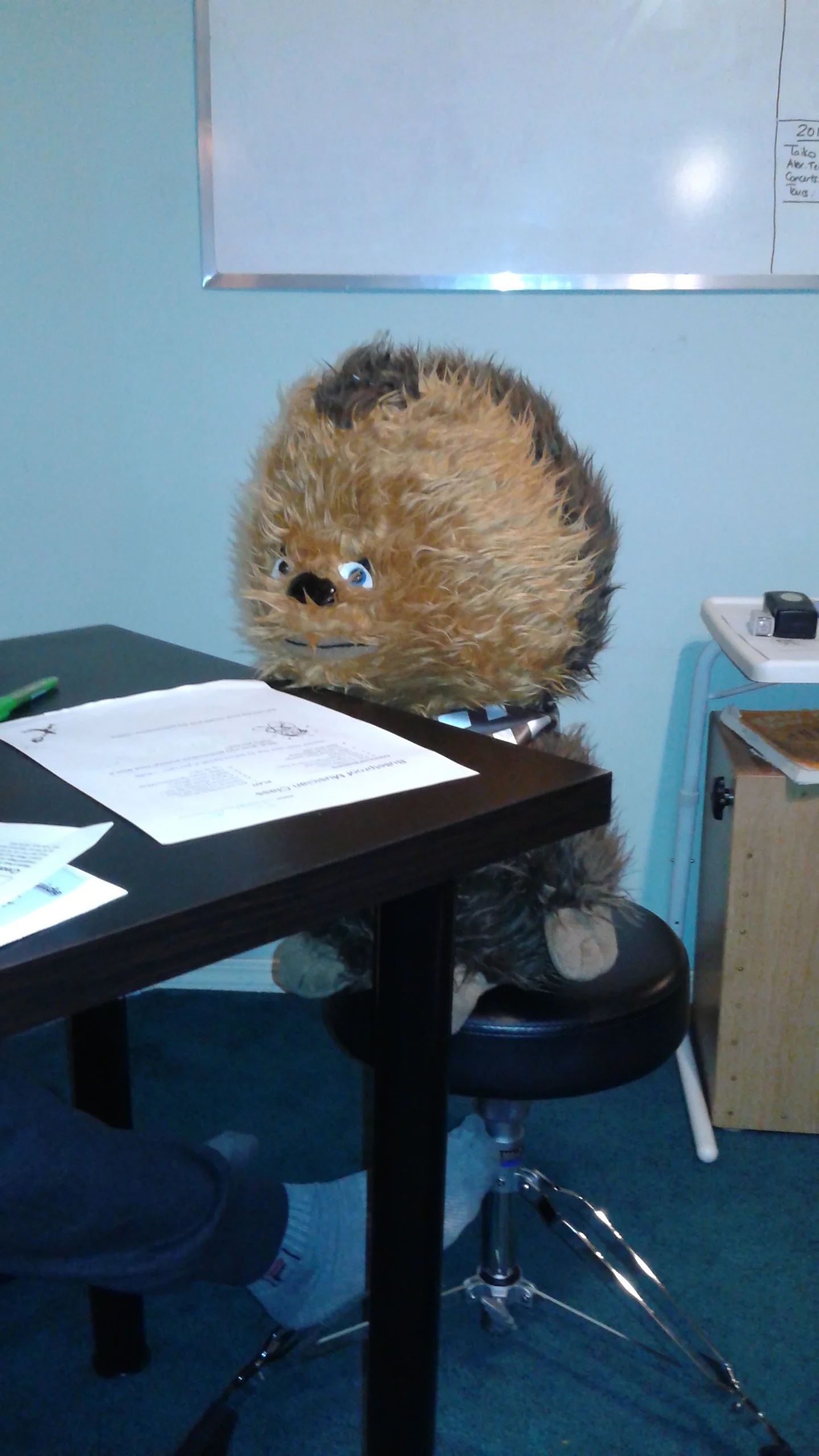
One of my younger students decided that Chewbacca had to participate in last week's group class. Credit: Rhona-Mae Arca.
Although some of my students are too young, I addressed the challenges of using drugs or alcohol to calm down nerves. Two teens looked at me, shocked. “But Miss Rhona! We’re not old enough.” I replied that I knew that, but that I also know that underage drinking does exist. There's always someone out there who just may try it.
Performance Savvyness
Next up, looking good on stage. We covered everything from showing up early enough to scope out the area and to find a place to relax. We discussed the pros and cons of being in the hall to hear the other students perform (depends upon the performance). Most importantly, we talked about owning the stage from the moment we get up from our seat until the moment we are off the stage, which covers: the walk, the bow, taking time to make adjustments (seat, music, bench), taking a few deep breaths, and approaching/leaving the keys in a way that matches the mood or character of your piece.
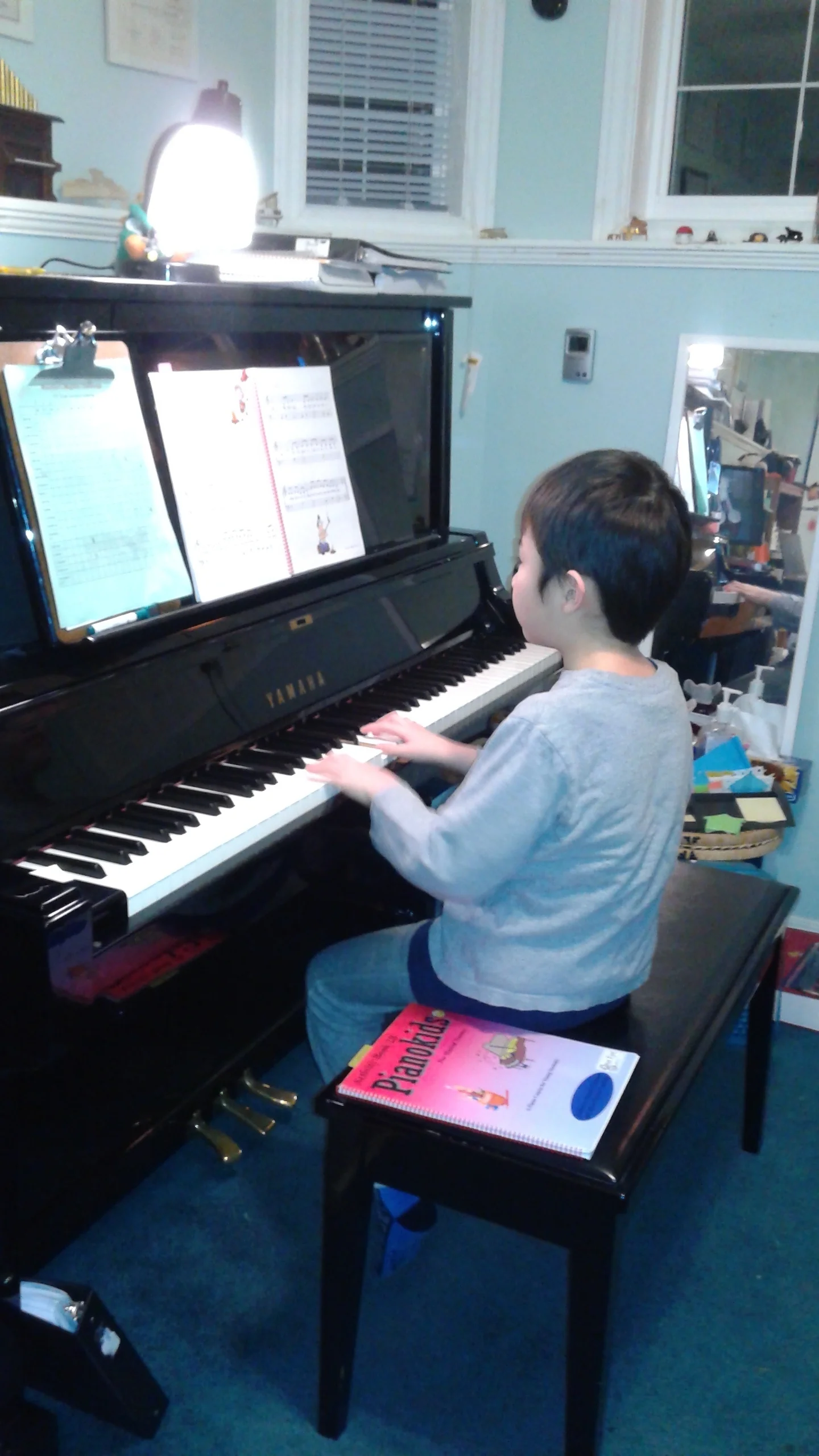
Telling a story through body language and sound. Credit: Rhona-Mae Arca.
Students came up, described their piece to the class and then played the opening. Their peers responded with how well their actions lined up with the piece. This turned out to be a fun exercise for all, trying to get the opening to look and sound epic or like little bunnies.
Exploring Practice & Performing Hacks
“The terror of performing never goes away. Instead, you get very, very comfortable being terrified.” ~ Eric Whitacre
We explored several performing hacks, which should alleviate some performance anxiety. One was an adrenaline drill. One student ran on the spot for approximately 40 seconds. Then, they had to quickly sit down and start playing. More often than not, the student had their hands in the wrong place. After taking a breath to clear their mind and recalling some of the performance savvyness aspects discussed earlier, they tried it again. Success.
Another performing hack we explored was a tempo drill. My students played a section of their piece at their desired tempo. Then, the others increased the metronome marking, bit by bit, while the one on the hot seat had to try playing at that tempo.
One student who has grappled with stage fright since day one, really connected with the visualization exercise. I asked her to engage all of her senses - imagine how the keys feel, how the room smells, what sound she wanted to create with her opening notes, etc. and then play.
In another class, a student shared this grounding exercise:
Think of:
Five things you can see,
Four things you can hear,
Three things you can feel or touch,
Two things you can smell, and
One thing you can taste.
One of the most popular exercises was the Roll the Dice Drill, which my students and I came up with when developing Maestro’s Music Tricks. As one student played, another would roll one of my polyhedral die and call out a bar number. The student on the hot seat had to quickly and smoothly transition to the new bar and carry on, not knowing when another student would call out another bar number.
Another popular exercise was the Play through Distractions Drill. Not only did that challenge the student performing to keep playing, but it challenged them to maintain his composure while the others flitted around, giggling and poking.
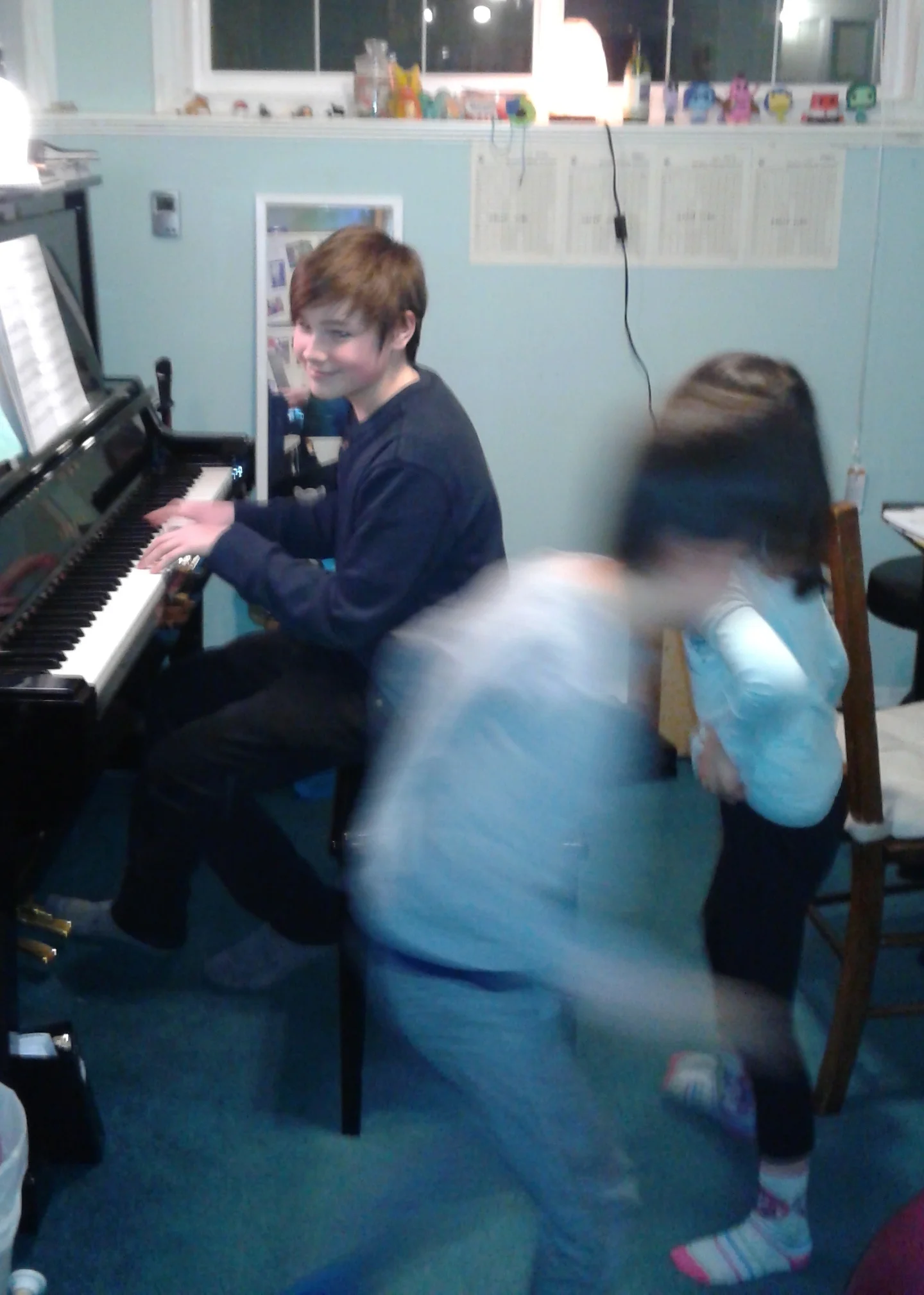
The Playing through Distractions Drill. Credit: Rhona-Mae Arca.
There were a couple of practice hacks that we quickly talked about, with the intent of working on it more in their piano lessons. One was studying the structure of their music, while the other was playing on a silent keyboard.
We wrapped up the class with my newest tabletop game, Cat Tower by IDW Games. It’s proving to be a popular game with my studio kids.
All in all, the kids found it a great class. It was comforting for my stage shy students to hear that they really aren’t alone with regards to performance anxiety. It was empowering to see them take charge and help each other level up their performance savvyness and bulletproof their music.
Now, if my students start performing a piece at the same speed as their on-stage heart rate, or someone’s phone rings in the middle of their piece, they should be able to “keep calm and carry on,” because they’ve prepared themselves for it through mindful practising, bulletproofing drills, and training their mind.

Maestro's 2016/17 Studio Challenges - Part 1
This year, I made two big changes to Maestro's Challenges. The first is that I separated the Musician Survival Skills Challenges and the Music Moxie Challenges. The biggest change, however, is how my students and I are approaching technique. It's been a bit of a gamble, especially with the ones preparing for an exam, but it's paying off.
When Maestro crossed Rainbow Bridge, my students and I agreed that at least one challenge will forever be Maestro's, regardless of who the current Studio Assistant is (right now, it's R2-D2). Until a new canine studio assistant is brought in, all the challenges will remain in Maestro's name.
This year, I made two big changes to Maestro's Student Challenges. The first is that I separated the Musician Survival Skills Challenges and the Music Moxie Challenges. The biggest change, however, is how my students and I are approaching piano technique. It's been a bit of a gamble, especially with the ones preparing for an exam, but it's paying off.
2016/17 Challenge Theme: Focus
Last year, Maestro and I ran his Karate Belt Challenges to measure students' progress in piano technique, musician survival skills (e.g., ear training, sight-reading, rhythm work), and music moxie (performing, composing, etc.). My students had a fun time designing their avatars. Two had a little game of Hide & Seek going on where they'd hide each other's avatars.
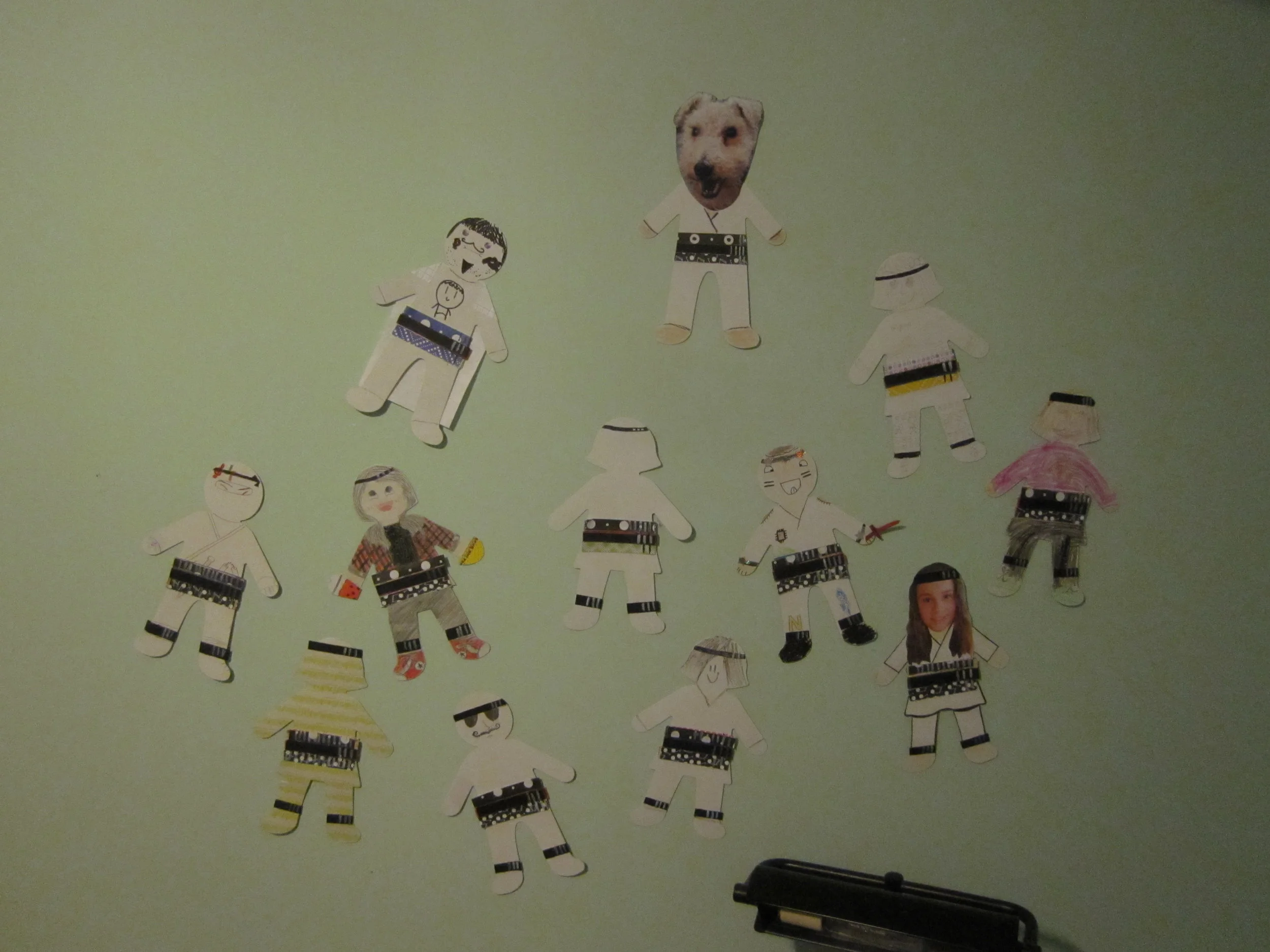
Some of the avatars that my students created last year for Maestro's Karate Belt Challenges. Photo: R-M Arca.
Looking back, there were a few drawbacks to this set-up. First, it was impossible to get through all of the weekly challenges, plus repertoire, and theory in a single lesson. Secondly, it took some students a really long time to get through their technique challenges.
This year, the students are only working on one or two challenges at any given time, most of the time. In September, is the Back Basics Challenge and the Technique Challenge.
The Back to Basics Challenge was pretty simple. The students had approximately five challenges a week, in which they demonstrated what they remembered about posture, articulation, tempo, and dynamics.
Piano Technique Challenge
One thing I wanted to do this year is make a clearer connection between those dreaded scales, chords, and arpeggios with keyboard theory (and then later, written theory). That way, could work on chording and faking with much earlier in the year.
For the first two months, we focussed on arpeggios and just arpeggios. We started with C Major and minor and travelled around the Circle of Fifths, playing the tonic major and minor arpeggios. We also worked on rhythm, sub-division, shaping, accents, and weight transfer ad nauseum.
My students began to string together several arpeggios. Most probably didn't realize that I was getting them to string the tonic, sub-dominant, and dominant chords together, but they did discover that if you pick keys close to each other on the Circle of Fifths, they string together rather nicely. Many powered through this fairly quickly.
Next came tonic major and minor triads. This is where most of my students are currently. Good enough for them to fake their way through Christmas songs if they are put on the spot this past Christmas Break.
Once they complete their trip around the Circle of Fifths, we'll go back to the top and work through the I-IV-V-I chord progression in earnest. That will be the first order of business after Christmas Break, followed by scales and modes. By that time, I hope that my students have started to make stronger connections between the technical elements in their music and between their technique and theory.
So far, one of my Grade 8 piano students has progressed to the scales portion of Maestro's Technique Challenge. She's enjoying it much more than in years past because she's also working on modes, the Hindu scale, blues, major pentatonic, and the Spanish/Jewish scale. That's standard fare for my Conservatory Canada Contemporary Idioms students, but she's in the Royal Conservatory. It's a whole new world of harmonies for her.
By the time all of my students complete the challenges for their level, they will know much more technique than what is listed in the conservatory syllabus for their playing level. That's fine. They will have enough tools in their "musician's toolbox" to be a versatile valued member in any ensemble.
For those who are interested in how I broke down the challenges, you may download the file here.
My students and I recently completed Maestro's Ear Training Challenge and are currently working through his Rhythm Challenge. More on those next time. Stay tuned!

Preparing My Students for Christmas Parties
This year, I decided to bring back Group Class Week at my piano studio. My reasoning was three-fold: First, my students love getting together. Second, there are also concepts that are best taught in a group class setting. Finally, with juggling multiple jobs as well as my studio, I needed to build in some time to catch up on studio administration and planning. Running one group class per teaching night gave me that much needed time to work and/or rest.
The focus for this month's group class was Bulletproofing Your Christmas Music. We explored likely scenarios one could face at a Christmas party, social or community setting...
This year, I decided to bring back Group Class Week at my piano studio. My reasoning was three-fold: First, my students love getting together. Second, there are also concepts that are best taught in a group class setting. Finally, with juggling multiple jobs as well as my studio, I needed to build in some time to catch up on studio administration and planning. Replacing regular lessons with one group class per teaching night gave me that much needed time to work and/or rest.
The focus for this month's group class was Bulletproofing Your Christmas Music. We explored likely scenarios one could face at a Christmas party, social or community setting, such as:
You have been asked to perform and you need to play for a longer amount of time than you are prepared for.
You have been asked to play something that you don't know (well).
You have been roped into playing during a Christmas Carol sing-along and the singers ask for a different key.
You get tossed in with other musicians and are asked to play as a group.
You want to show off something really cool.
Making Your Music Longer
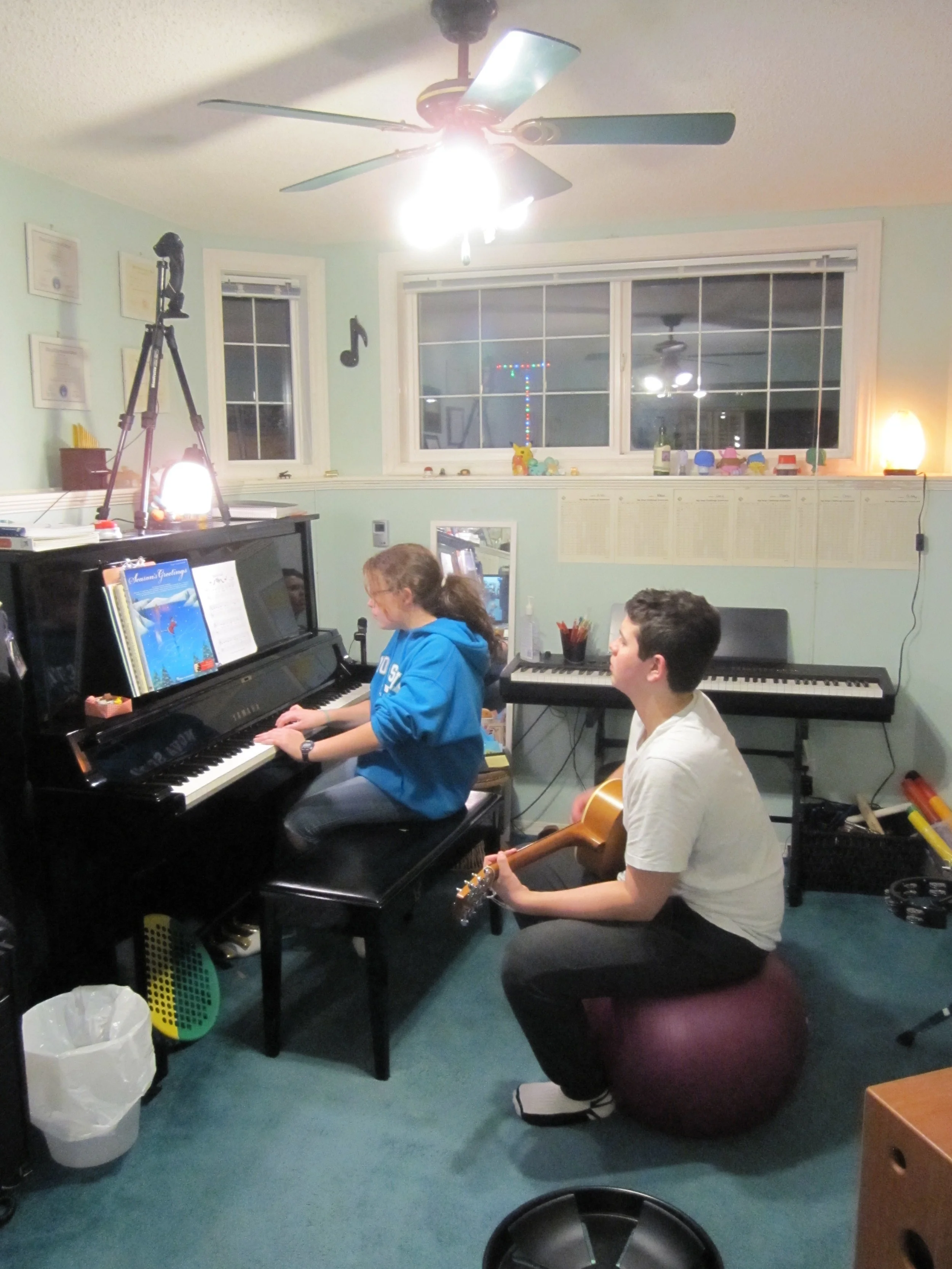
Haley and Grayson brainstorming on ways to vary their Christmas music. Photo credit: Rhona-Mae Arca.
Anyone who has performed at church or a gig knows that sometimes, you need to adjust your playing time on the fly. If the piece is too long, you find a logical place to cut it. But what if you only have a handful of pieces prepared and you are "asked" to play for twice as long as you have pieces?
My students did some brainstorming and experimenting. Everything came down to the same theme: repeat the song and vary it somehow. Here's what they came up with:
Move the piece up or down an octave when you repeat it.
Add embellishments (ornaments) to the melody.
Improvise for a verse and then play it "normally" once again.
Alter the rhythm, articulation, dynamics, or tempo.
Vary the accompaniment.
Playing a Song that You Don't Know (Well)
My students have heard the story of when I was visiting relatives in California. We visited one house with a grand piano. Sure enough, I was asked to play a few songs. I went through my playlist and improvised, but they still wanted me to play. Reluctantly, I opened up the piano bench and began to sight-read kundiman (classic Filipino love songs), while my aunts and uncles sang along. I say "reluctantly" because I disliked sight-reading at the time.
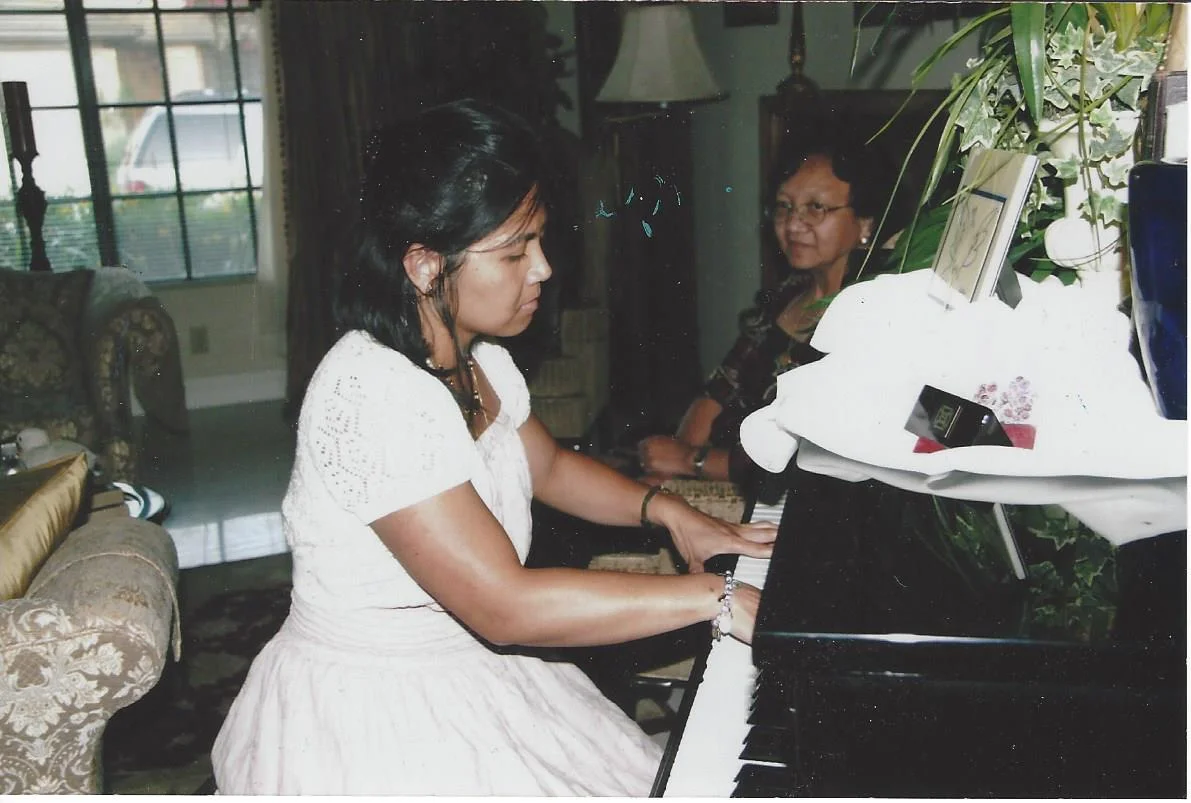
Dragged to the piano to play and not allowed off until the aunts and uncles are happy - if it can happen to me, it can happen to you! Photo: Jun Ancheta.
Then, I had my students work on a Christmas song they weren't familiar with and we discussed different ways to cheat and fake their way through such a performance, based upon their current playing level. These are some of the ideas they came up with:
Play block chords instead of the scored accompaniment.
Play the melody only (for beginners).
Recruit someone else to play through the bass clef notes while you play the treble clef part.
Only play an excerpt of the piece.
Transposing Music on the Fly
Most classically trained music students are taught transposing in music theory. However, they are usually taught how to write out a transposed melody. In the real world, we should be able to transpose on sight at our instrument. Sure, we may be lucky enough to play on a digital piano with a transpose function, but what if there's only an acoustic piano? What if you're playing along with someone whose music is not in concert pitch?
We just glossed through this area as this is best taught one-on-one. However, we did discuss intervallic reading and chording.
Jamming on Christmas Music with Family and Friends
This was perhaps the hardest challenge for most of my students, depending upon what they were playing. The kids on hand percussion and the cajón were fine once I showed them a few rhythms to try. But most had a challenge splitting the piano part up. If someone is playing the melody on flute and the chords on guitar, then as the pianist, you get to explore playing off the page - which is not the norm for today's classical musician.
My beginners were fine with just playing with one hand. Most of my intermediate and advanced students fought with themselves a bit. The desire to play what's on the page was strong. As for my Conservatory Canada Contemporary Idioms students? Generally, it was a piece of cake for them.
Showing off at the Piano
The first thing that comes to mind when I think about showing off at the piano is the Video Game Pianist, Martin Leung, AKA the Blindfolded Pianist:
Other ways of showing off that my students and I discussed included: playing with our hands crossed, playing upside down, and kicking each other off the piano - without missing a beat.
We explored what I called the Jingle Bells Relay. One person began to play this popular Christmas song. Then, one by one, another student would come up to the piano and cut in. The transition had to be sorted out and completed without missing a beat. The ones who successfully did this communicated clearly when and where they would be cutting in. They also kept things consistent by cutting in from one side the piano and exiting off the other.
Oh, there were some fumbles, but hey! They're all learning experiences.
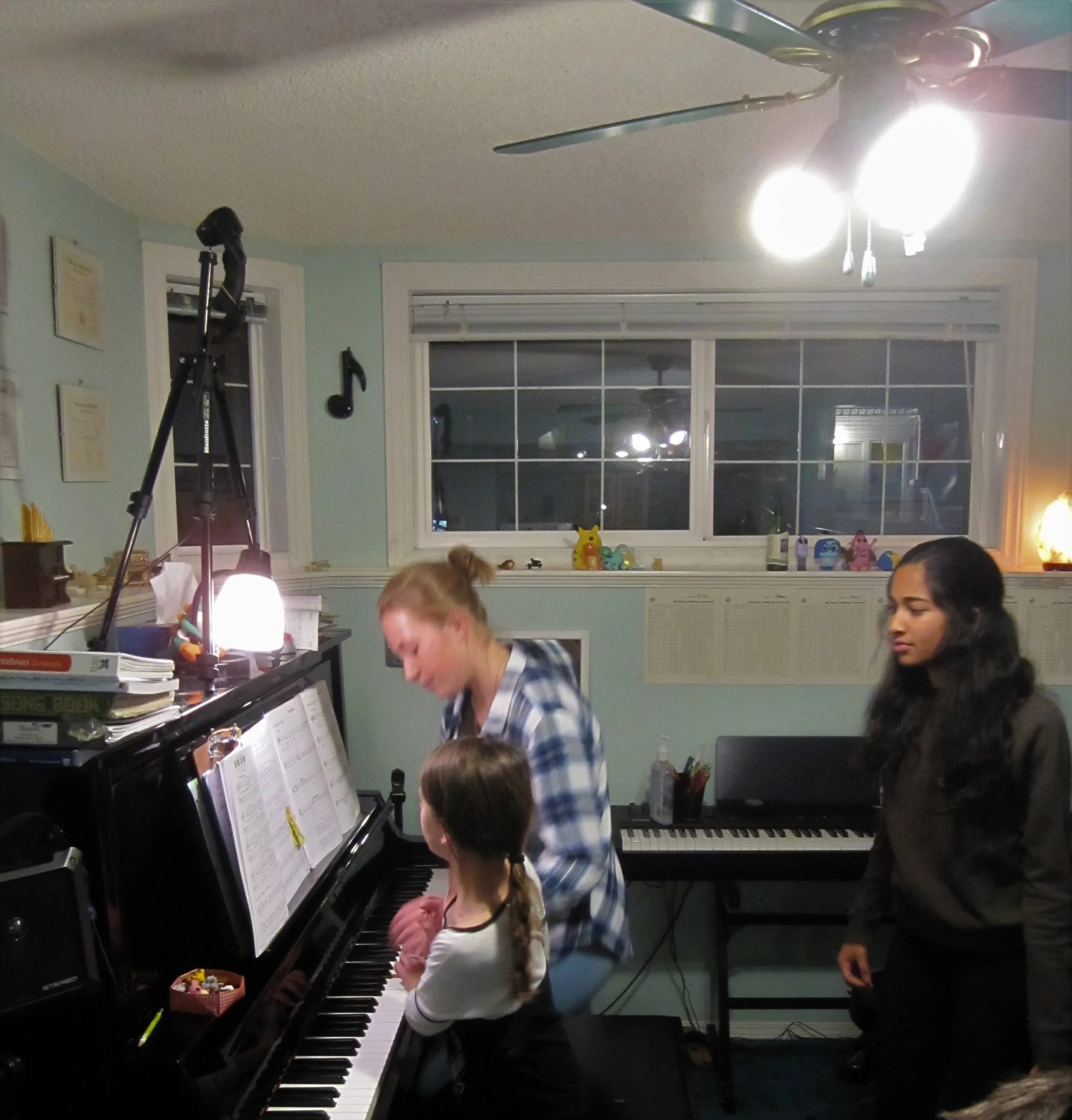
Carly, Claire, and Tanya show off the Jingle Bells Relay in action. Photo by Rhona-Mae Arca.
Over the next few lessons, I will reinforce the one or two group class activities that piqued their interest. I don't expect them to like everything they tried at last week's music group class. However, I do hope that the class opened their ears and minds up to new possibilities. And if they are dragged onto the piano this Christmas Break, at least they aren't going in blind. Forewarned is forearmed.

New Site, New Blog
Sometimes, we just need a fresh start. Managing a Wordpress multsite with several blogs while juggling music teaching, freelancing gigs, and trying to get Maestro's Music Tricks off the ground simply wasn't working.
Sometimes, we just need a fresh start. Managing a Wordpress multsite with several blogs while juggling music teaching, freelancing gigs, and trying to get Maestro's Music Tricks off the ground simply wasn't working.
My webmaster hat and writer's cap have collected quite a bit of dust over these past few months. A bit of website decluttering and reorganizing was well overdue.
When I undertook the project of revamping my dojo's website, my dojo mate in Saskatoon and I settled on using Squarespace. We found the process of building a new site that could be managed by members from our different training locations a relatively smooth process. Web maintenance has been a snap because Squarespace manages all the plugin and framework updates. I can only assume that they are dealing with brute force attacks because we haven't had any issues with our club site.
It's been working so well, that I decided to take the plunge and migrate my site to Squarespace. So, here we are.
The other big decision I made was to consolidate all of my blogs. All six of them. The separation by topic to do different branding only makes sense if one has time to put into branding them individually, which I don't. As for the "new" blog name, as much as I loved the names for all my blogs, The Musical Muse is the only one that could cover all the topics I write about.
It will take some time to tidy up the blog posts to make them fit their new home. It will also take some time to get the Maestro's Music Tricks e-store built. so please be patient. In the meantime, if you would like more information on my gamer-inspired music practice aid, please drop me a line.
Photo credit: Philip Wilson
Music and Movement Class Ideas
Last week, I ran group classes with my students to explore rhythm and timing through music and movement. It required a bit more planning than usual (and a lot of energy), but based on student feedback, it was well worth it to run these music and movement classes.
Last week, I ran group classes with my students. We explored rhythm and timing through music and movement. It required a bit more planning than usual (and a lot of energy), but based on student feedback, it was well worth it.
Music Group Class Idea #1: Teach Them to Dance
Rhythm seems to be a universal sticking point with students. I wanted to address this in a fun and unexpected way: dance.
I chose two dances that I knew my students were unfamiliar with: the Minuet and the Syrtos. The Minuet was a no brainer to me as all my students learn to play a minuet at some point in their music studies. Like many, they pause between the bar lines during the learning phase.
By teaching them the dance steps, I hoped to drive across the point that you need to feel a minuet in six counts. I also wanted my students to understand how to translate the dance step articulation to our hands at the piano.
Yes, there were some coordination issues. They were fine for the most part. Not surprisingly, the ones who have rhythm issues were the ones who had the most trouble dancing in time. They learned quickly to try and get in sync with the person beside them and did improve as the class went on.
The Syrtos was a last minute change. I originally picked a Country line dance but changed it after some students told me that they already learned the line dance at school.
This is a festive Greek chain dance. It is often done at festivals and weddings. I selected it purely because of the hybrid time signature:
Some groups could only dance as a bunch of individuals instead of forming a human chain. Others could only execute the dance steps at a slow tempo. I soon discovered that having my students face each other helped the less coordinated ones sync up with the rest of the class.
Music Group Class Idea #2: Exploring Timing Through Martial Arts
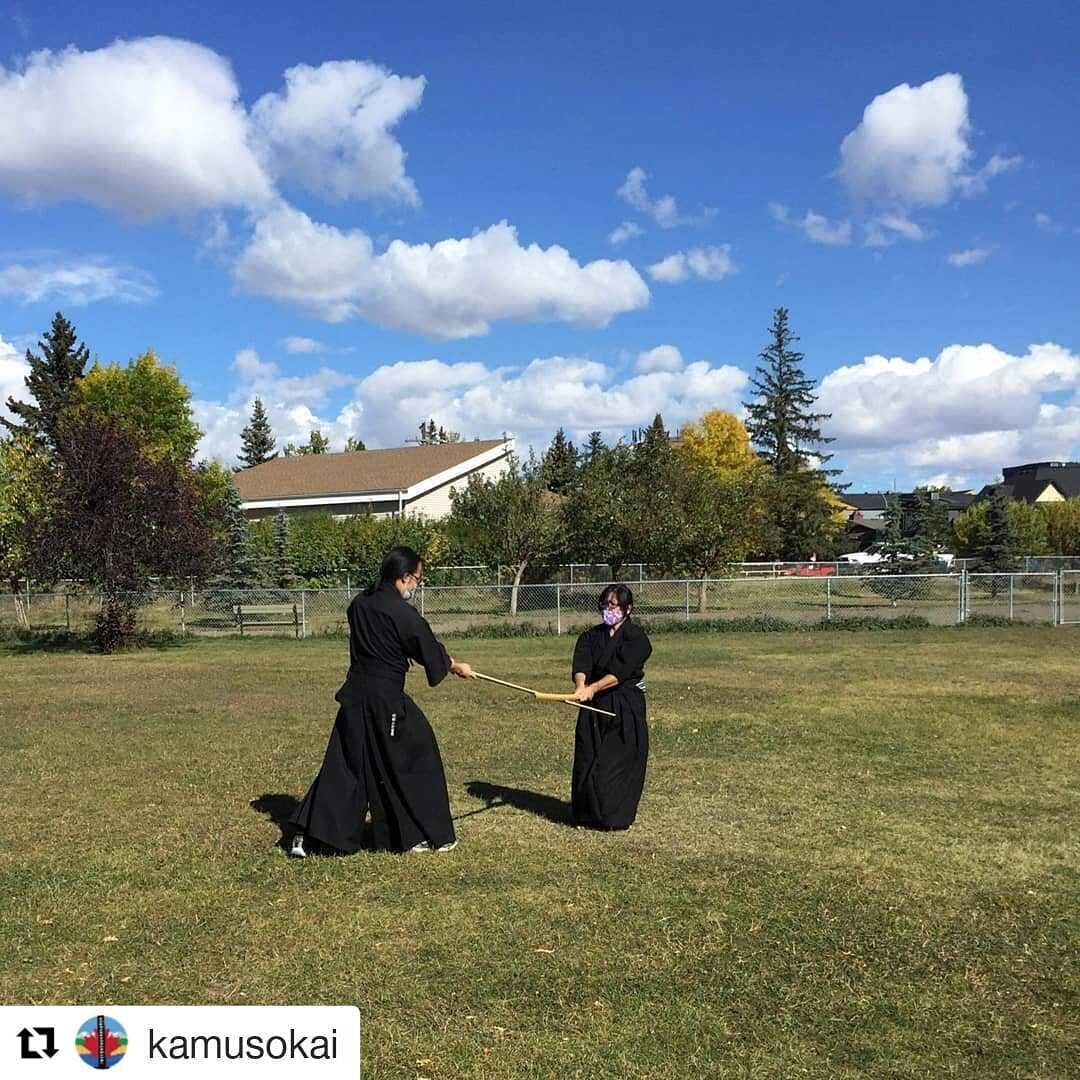
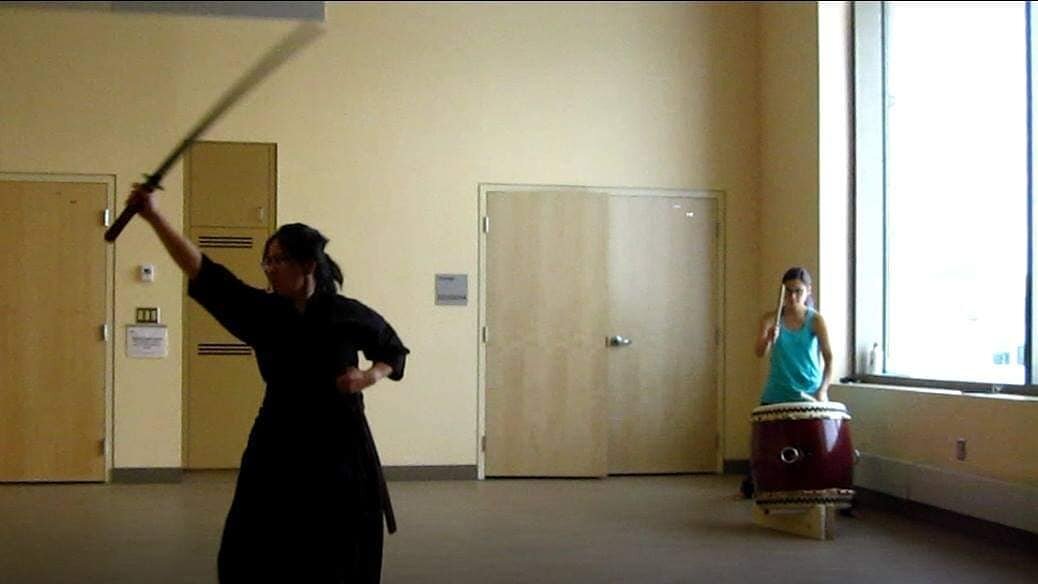
I decided to introduce three martial arts to my students in this group class: Tai Chi, Jodo and Iaido. Nothing too in depth as my intent was to simply show them the importance of timing in a different context.
As I demonstrated, if my timing is off and I'm actually facing a real-life opponent armed with a sword or staff, I'd be gravely injured (or dead). Not to worry readers, my students tried these techniques without contact and used either wooden training swords or broomsticks.
Years ago, I explored Tai Chi. Not once, but twice. It's a lovely meditative art. Although I found it a bit too slow for my liking, I do appreciate its principles and thought it was the perfect way for my students to warm up:
We just explored the first three parts in the sequence. My students were a lot like me when I took Tai Chi for the first time: too scatterbrained and excited. I don't think they reached the point that they could feel energy flowing from their fingertips.
Next up was Jodo, the art of the short staff. My students tried the first three kihon. I even recruited one student who practises Aikido to help demonstrate one of the two-person kata.
It was a good opportunity to test how much I have learned in the past year. Last week also gave me a chance to practice being "sempai".
I introduced Iaido, my primary martial art, to my older students. While demonstrating the first kata, Ippon me Mae, they all asked questions throughout. Even though I demonstrated a set exercise based on a specific scenario, they couldn't help but ask, "What if?": "What if the bad guy moved this way? Or what if he changed what he was doing at the last moment?"
It was the perfect opportunity to discuss practice versus performance. We practice various techniques so that our muscles remember what to do when needed (i.e., in performance). However, once you are on stage, you just have to adapt quickly and push forward when the unexpected happens. Whether it's martial arts, music or another fine art, mindful practice will help you attain a sense of mindlessness and living in the moment when on stage.
I wound up repeating the kata several times to properly demonstrate "jo ha kyu" timing. Then, I had my older students practice sword cuts. Body tension and posture was a huge theme for the evening.
One class was filled with gamers and geeks. They clicked so well that it was hard to keep them focused. They wanted to go out for pizza afterwards.
Now that is another reason I offer group classes to my students: the camaraderie. I didn't have that growing up as a "piano geek". It delights me to no end to see my students bond and build friendships. In fact, those gamers and geeks are completely stoked that I'm looking making the Zelda symphony concert as an official field trip.
One week later, my students tell me that they had a lot fun. Some of the students who have been with me for several years told me that this was their most favourite group class yet. I might have had a few worries about teaching a music and movement group class in the beginning, but it looks like I didn't have to worry at all.
Special thanks to Steinway Pianos of Calgary for putting up with us. The recital hall was the perfect size for this group class.
Social Media Links
archives
- #YYCArts 32
- #YYCEvents 39
- Collaborative Music 25
- Community 11
- Composing & Arranging 6
- Entertainment 139
- Entrepreneurship 53
- Freebies 3
- Gardening 1
- Geeking Out 65
- Health & Wellness 120
- Improvisation 25
- Interviews 28
- Learning Music 188
- Martial Arts 13
- Memorization 7
- Music 230
- Music Careers 9
- Music Education 196
- Music Examinations 7
- Music Exploration 55
- Music Gigs 14
- Music Lessons 6
- Music Performance 32
- Music Theory 13
- Musical Instruments 12
- Musician Health 19
- Pets 57
- Piano Technique 12
- Practicing Music 120
- Productivity 20
- Professional Development 11
- Recommendations & Reviews 93
- Recreation 71
- Social Media 6
- Spirituality 10
- Studio Management 33
- Studio Technology 50
- Teaching Music 146
FOLLOW THE STUDIO on Instagram

Affiliate Links
As a Sheetmusicplus and CD Japan affiliate, I earn from qualifying purchases. The earnings help fund the Studio’s blog and YouTube channels. Your support is greatly appreciated.


FOLLOW Budo no Tabi on Instagram