THE MUSICAL MUSE
Blog dedicated to music education, practice tips, health
&
wellness, and geeking out.
Reducing Hand and Wrist Tension at the Piano
Lately, I have been harping on my students about their wrist technique. Some are playing with locked wrists or excess hand tension, even with us working on it during their lessons. The bottom line is that we teachers can only help you so much in a lesson, the rest comes down to how you practice at home.
Here are a few videos by some of my esteemed colleagues on hand and wrist technique:
Lately, I have been harping on my students about their wrist technique. Some are playing with locked wrists or excess hand tension, even with us working on it during their lessons. The bottom line is that we teachers can only help you so much in a lesson, the rest comes down to how you practice at home.
Here are a few videos by some of my esteemed colleagues on hand and wrist technique:
Irina Gorin and Wrist Relaxation Exercises:
I showed this to an intermediate student. He started to make some progress after viewing this. Irina has more useful videos on her YouTube Channel.
Josh Wright on Reducing Hand Tension
Although he still has some tension (those pesky octaves!), Josh does have some good points. Let's chalk it up to the fact that he's showing you a section that he is working on, so it's a work in progress.
Robert Estrin on Wrist Technique with Octaves:
Robert Estrin has a treasure chest of wonderful piano tutorials on his website. Every pianists should bookmark his site.
The Allan Fraser Institute's Lecture-Demonstration on Hand Tension and Proper Arm Weight Technique
Thanks to Brian Riker for sharing this one.
I promised my students that I would send them some clips to help them play with more relaxed wrists and a less hand tension.
Sometime during Christmas break, I will record some videos in which I deconstruct my piano technique. When I mentioned this to my students, they immediately asked if we could use the GoPro POV camera and the other cameras to film them as well. What a great way to analyze your basic piano technique!
I think I will start using an elastic band. Up to this point, I've either had my students put their hand on mine (or my forearm) to feel the arm weight and tension I use to play their trouble spots. Or, I'll hold their forearm and won't let go until I sense they have relaxed sufficiently.
We've been using imagery a lot too. That's something you might want to try if your teacher hasn't asked you to yet.
Last night, I asked a student to imagine that he was in a pool and he was dragging his arm back and forth in the water. Then, I asked him to imagine that his arms were made of air and that gravity was pulling his hand down towards the keys.
Make sure you stretch regularly to reduce hand tension and prevent musician injuries. Finally, I will leave you with something I say regularly to my students: Spongy wrists, firm fingertips.

Arm and Hand Stretches for Musicians
Many musicians complain of numbness and pain in the hand, forearm and arm. They can prevent repetitive strain injury, ease pain and tension by stretching regularly.
Many musicians complain of numbness and pain in the hand, forearm and arm. They can prevent repetitive strain injury, ease pain and tension by stretching regularly.
By nature, learning music involves repeating until a passage or technical exercise until a high level of proficiency, fluency and artistry is achieved. Instrumentalists use their finger, hand and arm muscles extensively when practicing and performing. This makes them especially vulnerable to a repetitive stain injury such as Carpal Tunnel Syndrome, Bursitis and Tendinitis. Musicians can ease arm and hand pain, relieve tension and prevent injuries by incorporating stretching exercises into their daily routine.
How Musicians Should Stretch the Hand and Arm Muscles
Stretching exercises should be done when the muscles are warm. For example, stretches can be done after a shower, after a bath or after performing some light exercises. Musicians should always stretch prior to practicing. They should also take regular breaks when practicing to stretch. For example, stretches can be done before switching to a new piece or after practicing a physically challenging section of music. Musicians should also stretch prior to performing and in between performances.
Stretching Exercises for Musicians
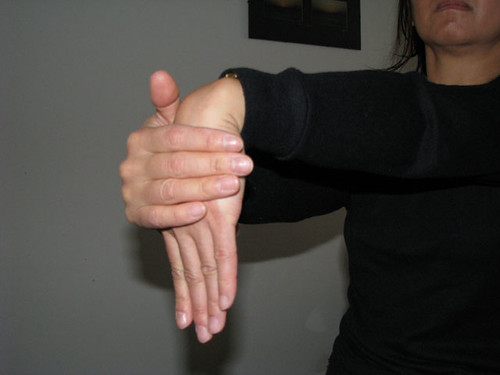
Follow the arm and hand exercises and refer to the photos below:
1 Finger Flicks
Purpose: Prevent Tendinitis and Trigger Finger, relieve tension and increase blood circulation in the hands.


Performance:
Hold your hands in a loose fist in front of you.
Flick your fingers so that your fingers are outstretched. Pretend that you are flicking water.
Hold your fingers in an outstretched position for 10 seconds.
Relax.
Repeat.
2 Wrist Circles
Purpose: Prevent Tendinitis, relieve tension and increase blood circulation in the wrists.
Hold your hands in a loose fist in front of you.
Rotate your wrists in a circle several times in one direction.
Relax.
Rotate your wrists in a circle in the other direction.
Relax.
Variation: Sticking out your thumb as if you were hitchhiking.
3 Fingers Interlaced Wrist Circles
Purpose: Prevent Tendinitis, relieve tension and increase blood circulation in the wrists.
Interlace your fingers together in front of you. Keep track of which thumb is resting on top.
Rotate your wrists in a circle several times in one direction. Start slowly and as you get more comfortable, increase the speed.
Relax.
Reposition your hands so that the opposite thumb is resting on top.
Rotate your wrists in a circle in the other direction.
Relax.
4 Forearm Flexor Stretch
Purpose: Prevent Tendinitis in the elbow and forearm, relieve tension and increase blood circulation.

Performance:
Place your hands together in a praying position.
Push your hands together and push your arms downward until you feel a gentle stretch.
Hold the stretch for 10 - 20 seconds.
Relax.
Repeat at least once.

5 Single Arm Forearm Flexor Stretch
Purpose: Prevent Tendinitis in the elbow and forearm, relieve tension and increase blood circulation.Performance:
Hold your left arm straight in front of you with your palm facing forward as if to indicate "stop".
Brace your left palm with your right hand.
Gently pull the fingers in your left hand towards you until you feel a gentle stretch.
Hold for 10 - 20 seconds.
For a deeper, isometric stretch, push your left arm forward, into your right hand, as you pull your left hand towards you.
Relax.
Repeat with the opposite arm.
6 Forearm Extensor Stretch
Purpose: Prevent Tendinitis in the elbow and forearm, relieve tension and increase blood circulation.Performance:
Extend your left arm in front of you, holding your arm straight.
Let your hand flop downward at the wrist.
Place your right palm over your left hand (above the fingers).
Gently push your left hand towards you with your right hand until you feel a gentle stretch.
Hold for 10 - 20 seconds.
For a deeper, isometric stretch, push your left arm forward, into your right hand, as you pull your left hand towards you.
Relax.
Repeat with the opposite arm.
7 Soup Can Forearm Extensor Exercise
Purpose: Prevent Tendinitis in the elbow and forearm, relieve tension and increase blood circulation.
Performance:
With your right forearm on a table and let your right hand flop down.
Place a soup can in your right hand.
Beginning with your wrist level with your forearm, slowly let your hand point downward until you feel a gentle stretch in your forearm extensors.
Hold for 10 seconds.
Steadily raise your hand so that your wrist is level with your forearm.
Relax.
Complete 10 repetitions.
Repeat the exercises with the opposite arm.
8 Tricep Stretch
Purpose: Prevent Tendinitis in the elbow and upper arm, relieve tension and increase blood circulation.
Performance:
Hold your left elbow with your right hand.
Gently pull your left arm towards you until you feel a gentle stretch.
Hold for 10 - 20 seconds.
Relax.
Stretch the right arm.
Repeat this stretch at least once.
Never stretch to the point of pain. Strive for a gentle stretch. If you are already suffering from a repetitive strain injury, consult a doctor, chiropractor, physiotherapist or registered massage therapist (licensed in therapeutic massage) before attempting these exercises.
By spending as little as five minutes a day on stretching exercises, musicians can alleviate symptoms of carpal tunnel syndrome, prevent tendinitis. This can lead to many years of healthy and pain-free years of music-making.
You may find more information through these links: Benefits of Stretching, Face and Neck Stretches for Musicians, The Art of Practicing, Understanding Musician Injuries, Simple Exercises to Strengthen the Wrists and Wrist Exercises.
Understanding Musician Injuries
The Types, Causes and Prevention of Music-Related Injuries: Musicians are prone to injury from repeating a motion countless times when practicing. A better understanding of music injuries is vital for musicians' health.
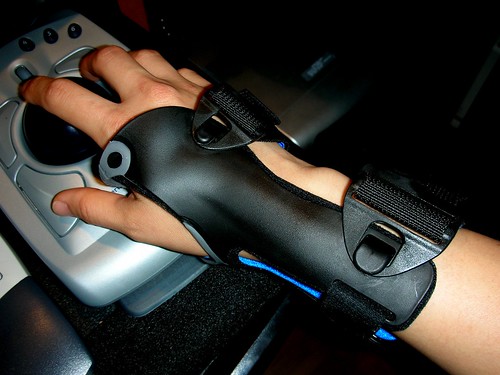
Musicians are prone to injury from repeating a motion countless times when practicing. A better understanding of music injuries is vital for musicians' health.
Common symptoms of a musician repetitive strain injury are similar to computer-related and speech-related injuries:
Numb fingers, arms, wrist, jaw, neck, shoulders and back
Shooting pain up the arms, shoulder and back
Cramping muscles or stiffness
Dull ache experienced in the fingers, arms, back, jaw, throat, wrist, shoulders and back
Hoarseness
If left unchecked, can become chronic conditions. They can potentially lead to long-term disability or end one’s musical career.
Common Types of Music Injuries
Common music-related injuries include:
Bursitis: inflammation of a bursa (fluid-filled sac which lubricates the movements of tendons, muscles and bones at joints)
Carpal Tunnel Syndrome: inflamed or irritated hand flexor tendons
Larynx Contact Ulcers: raw sores on the mucous membranes covering the cartilage attached to the vocal chords
Cubital Tunnel Syndrome: inflamed or irritated tendons affecting the inner side of the forearm and the pinky side of the hand
Laryngitis: inflammation of the larynx
De Quervain's Tenosynovitis: inflammation of the tendons on the side of the wrist beginning at the base of the thumb.
Tendinitis: inflammation of the tendons
Thoracic Outlet Syndrome: compression of the thoracic outlet, the nerve pathway and/or blood vessels between the base of the neck and the armpit
Trigger Finger: inflammation of the index finger tendons
Vocal Nodules & Polyps: small, inflammatory or fibrous growth on the vocal cords of people who strain their voices.
How Music Injuries are Caused
Overuse: Advanced musicians practice between one to ten hours a day.
Repetitive Strain: Musicians repeat a technical exercise or section of music countless times until it comes together.
Improper Posture: Some musicians slouch, sit too close or too far from their instrument and remain in the same position for long periods of time.
Non-Ergonomic Technique: Some musicians hold their body and/or instrument in an uncomfortable position, don’t move their hand and/or body in the direction that their fingers are moving, push their fingers or vocal chords beyond what they can comfortably do.
How to Prevent Music Injuries
Do Your Research: Find out more about the various types of music-related injuries.
Assess Your Instrument: Is your instrument the right size, shape, weight and height for you? Would an adjustable chair, footstool, strap or cushion make you more comfortable?
Know Your Body: Choose pieces that are reasonable for your body to play. If you have small fingers, playing repertoire that requires you to stretch beyond your finger span is a recipe for disaster. However, if you really want to learn a particular piece (or you need to learn it), make adjustments to make it easier to play. If you are a student, let your teacher know right away whether a piece or technical exercise is causing you pain.
Appraise Your Playing Technique: Is your body relaxed? Are your hands, arms, neck, head and core positioned to allow for fluid and comfortable playing or singing? Are you moving with the music? Are you using excess movements? Is your fingering logical and comfortable? Videotaping yourself is a valuable method to assess your playing technique.
Evaluate Your Non-Musical Activities: Desk and computer work, sports, dancing, carrying heavy objects (or dependents) and hobbies can adversely affect your body.
Do Warm-Up Exercises and Stretches: Musicians are sometimes called “small muscle athletes”. Stretching exercises and gentle warm-ups result in increased range of motion, strength, coordination and flexibility.
Take Breaks: One’s muscles, ears and vocal chords need regular breaks to return to their relaxed state. Not doing so tricks the body into thinking that “tense” is the “relaxed state”, resulting in chronic pain and stress.
Engage in Active Sitting: Most musicians remain in a seated position for extended periods of time. Active seating helps ease chronic back pain, promotes correct posture and maintains general health.
Seek Professional Advice: Speak to a doctor, chiropractor, massage therapist, Alexander Technique specialist, music instructor, otolaryngologist or ergonomic specialist for further information or treatment.
Be Proactive in Maintaining Musician Health
With an increased understanding of the types, causes and prevention of music injuries, musicians can be more proactive in maintaining their first instrument: the body. Musicians dedicated to maintaining musician health can look forward to many years of pain and injury-free music-making.
The Rest of My Series on Musician Injuries
Face and Neck Stretches for Musicians | Arm and Hand Stretches for Musicians | Back and Should Stretches for Musicians
Additional References:

The Art of Practicing: A Guide to Making Music from the Heart, Madeline Bruser (New York: Bell Tower, 1999)
Musicians' Injuries: Types and How to Avoid It, Espie Estrella
Musicians and Injuries, UN-L Engineering Electronics Shop, University of Nevada
Originally published on Suite101.com on November 20, 2009. All rights reserved by Rhona-Mae Arca.
On Injuries and Piano Practice
One of my students showed up with a swollen finger last week. C injured it during a non-musical activity and after several days, the swelling was increasing. I demanded that she go see a doctor to get that finger checked out. C injured the middle finger of her left hand, which has presented us with the challenge of how to structure practices and lessons.

One of my students showed up with a swollen finger last week. C injured it during a non-musical activity and after several days, the swelling was increasing. I demanded that she go see a doctor to get that finger checked out. C injured the middle finger of her left hand, which has presented us with the challenge of how to structure practices and lessons. It will take some time for her hand to heal but she can't take time off from practicing if she is to take her exam in the spring.
I have decided to zoom in on her weak spots. On Monday, I attended a workshop by the Royal Conservatory of Music, unveiling their new technical requirements. Some ideas were new while some I needed the refresher on.
C, like the rest of my students will be drilling their scales, chords and arpeggios at least five times per practice; playing them differently each time. Here are some of the variations:
play legato
play staccato
play portato
vary the dynamics
add a crescendo while ascending and diminuendo when descending
vary the rhythm (straight eighths, jazz triplets, even triplets, dotted half note followed by a quarter note)
vary the accents (accent beat one the first time, beat two the second, etc.)
play a repeated note scale (C-C-C D-D-D E-E-E)
play one octave as quarter notes, two octaves as eighth notes, three octaves as triplets and four octaves as sixteenth notes
play chords up the scale
In C's case, she'll have to just practice her right hand and rest her left. With these exercises, it's imperative to use proper fingering.
Tonight, we focused on phrase shaping, continuation notes and right hand rhythms. Next week, we'll tap practice the left hand rhythms.
C is using this opportunity to work harder on her ear training and theory.
The following are informative articles/discussions on dealing with piano-related injuries:
Please feel free to share your tips on injury prevention or dealing with injuries.
(c) 2007 by Musespeak(tm), Calgary, AB, Canada. All rights reserved.
Social Media Links
archives
- #YYCArts 32
- #YYCEvents 39
- Collaborative Music 25
- Community 11
- Composing & Arranging 6
- Entertainment 139
- Entrepreneurship 53
- Freebies 3
- Gardening 1
- Geeking Out 65
- Health & Wellness 120
- Improvisation 25
- Interviews 28
- Learning Music 188
- Martial Arts 13
- Memorization 7
- Music 230
- Music Careers 9
- Music Education 196
- Music Examinations 7
- Music Exploration 55
- Music Gigs 14
- Music Lessons 6
- Music Performance 32
- Music Theory 13
- Musical Instruments 12
- Musician Health 19
- Pets 57
- Piano Technique 12
- Practicing Music 120
- Productivity 20
- Professional Development 11
- Recommendations & Reviews 93
- Recreation 71
- Social Media 6
- Spirituality 10
- Studio Management 33
- Studio Technology 50
- Teaching Music 146
FOLLOW THE STUDIO on Instagram


Affiliate Links
As a Sheetmusicplus and CD Japan affiliate, I earn from qualifying purchases. The earnings help fund the Studio’s blog and YouTube channels. Your support is greatly appreciated.


FOLLOW Budo no Tabi on Instagram