THE MUSICAL MUSE
Blog dedicated to music education, practice tips, health
&
wellness, and geeking out.
Popular Japanese Study Books
Looking for books or CD's to help you learn Japanese? These are 10 popular books on the market, that I came across in my hunt for supplemental study material.

Some of my classmates have been using other Japanese language workbooks to supplement their Japanese studies. Our きょうかしょ is jam-packed with information. However, the print is tiny and it's all in Japanese. It would be nice to have some explanations in English.
I'll be ordering my messenger bag soon, so I thought I would do a quick search
to find some of the popular Japanese workbooks on the market and add one or two to my order. Here are 10 of the most popular Japanese text books and workbooks that I found. どうぞ!
Japanese Sentence Patterns for Effective Communication: A Self-Study Course and Reference
Japanese the Manga Way: An Illustrated Guide to Grammar and Structure
Genki: An Integrated Course in Elementary Japanese Workbook I [Second Edition] (Japanese Edition)
These books are also popular on J-List.com. Click on the link below to shop there:
Why Do Music Students Hate Counting?
Are you like some of my students who hate counting beats? I have a found a few refreshers on how to practice counting beats in your music - for those of you who want the help.
This is something that I've been grappling with every year. Some students, no matter how hard I try, refuse to count their beats. They are usually the ones who really need to because they are struggling and need help with the rhythm or the tempo.
As far as I can tell, my students fall into five general groups. Perhaps you're in one of them:
Students who hope that their rhythmic instability isn't so obvious if they don't count,
Students who are self-conscious and don't like to hear their voice,
Students who just don't care about whether they are playing the rhythm correctly, and
Students who aren't sure how to count beats in their music.
Well students, regardless of whether you count, we music teachers can tell when the timing is off.
For my students who are self-conscious, sometimes, I count out loud with them or bang out the beat on my cajón. You could ask a family member to count with you at home (just ask them to be steady like a clock and then set the metronome to what the tick-tocks should be).
For the students who are apathetic about rhythm, there isn't much that me or your music teacher can do to help you. You've probably heard it before, you just can't help someone who doesn't want help in the first place.
Now for those of you who need a refresher on how to count, I have found these articles and video tutorials:
Grain Free Hamburger Recipe for Dogs
A flavorful meal for dogs made with whole foods, this homemade dog food recipe can be prepared quickly and easily.
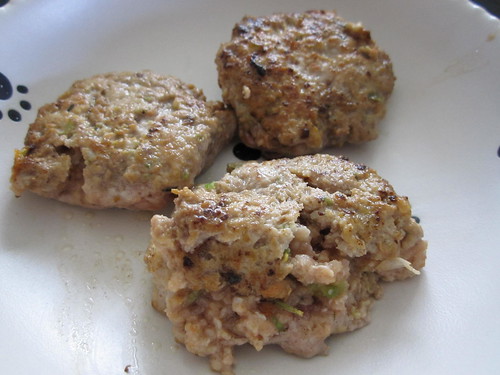
A flavorful meal for dogs made with whole foods, this homemade dog food recipe can be prepared quickly and easily.
Whether your dog has food allergies or sensitivities or you are searching for better food for dogs, this is a viable alternative to expensive premium dog food. Maestro’s Grain Free Burgers is an easy dog food recipe to make. Serving portions and ingredients can be varied to give your dog a balanced diet, thereby ensuring your pet’s health.
Ingredients for Maestro’s Grain Free Burgers
The following whole foods form the foundation for this delicious dog food recipe. This can be easily customized to suit your dog’s preferences and nutritional needs, while providing balance through variety.
1 kg (2.2 pounds) of ground meat (e.g., veal, beef, pork, chicken, turkey, organ meat)
1 – 128 ml jar (4.5 oz.) of organic baby food vegetables (e.g., peas, carrots)
1 – 128 ml jar (4.5 oz.) of organic baby food vegetables (sweet potatoes)
2 tsp. vegetable oil
¼ tsp. rosemary
¼ tsp. basil
5 shakes of black pepper
ground/crushed eggshells or bonemeal
Tips on Portion Control When Preparing Homemade Dog Food
Portion sizes should be calculated prior to making Maestro’s Grain Free Burgers. Raw4Dogs has an online calculator to determine portion sizes. The website also has recommended calculation adjustments for puppies, underweight and overweight dogs. The calcium requirements for a dog varies depending upon its weight.
According to David Bastin, Jennifer Ashton and Dr. Grant Nixon, D.V.M., authors of Better Food for Dogs (Toronto: Robert Rose, Inc. 2002), a 5 lb. dog requires a minimum of 274 mg of calcium daily and a 10 lb.dog needs 536 mg of calcium, while a 50 lb. dog requires at least 2,689 mg. The book, which contains numerous dog food recipes, also contains a comprehensive nutritional guide detailing the nutritional requirements of a dog from 5 lbs. up to 150.
First, calculate the amount of calcium required per meal. Better Food for Dogs does list recommended amounts per meal. Next, calculate the number of meal portions that the recipe will yield. This figure will give you the amount of calcium needed for this recipe.
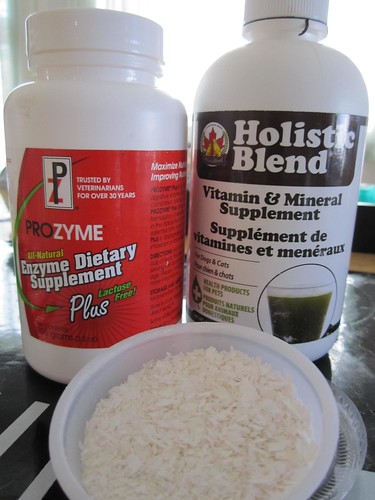
Alternatively, you can add the calcium supplement just prior to feeding. Thoroughly mix the per meal amount with the dog food. Some recipes in Better Food for Dogs suggest adding a pinch of calcium supplement into the food. The balance of the daily required calcium would have to be administered another way (e.g.dog calcium pills, raw bones, milk, yogurt).
Preparing and Cooking Maestro’s Grain Free Burgers
In a large mixing bowl, combine all ingredients.
Thoroughly mix together all ingredients.
Using a measuring scoop, spoon out a portion equivalent to one meal and shape it into a meatball or hamburger patty. Place on a plate for now.
Repeat step #3 until all the ingredients are used up.
Lightly cook the burgers by searing them. You can use either a broiler or a pan-sear them at a high temperature until the outside is brown. According to Dr. Per Schonbeck in his Pet-Nutrition-Advice article, “How is Your Dog Food Damaged by Its Processing,” “lightly broiled meats and steamed vegetables retain most of their nutrients.”
Serving and Storing Maestro’s Grain Free Burgers
As this is a protein-rich dog food recipe, various sides of carbohydrates can be added to balance your dog's meal. According to Bastin, Ashton and Nixon, dogs require 40% protein, 45% carbohydrates and 15% supplemental fat. Examples of fruits and vegetables you can include are chopped carrots, apples and bananas.
For grains, you can add brown rice, cooked oatmeal or cooked pasta. Smaller dogs may need their burgers broken down into bite-sized chunks.
Freeze the remaining burgers for future use. Simply microwave a serving for 45 seconds – 1 minute to defrost and warm up the doggy burgers.
Dogs on a home-prepared diet should take dog supplements such as digestive enzymes, glucosamine for dogs or brewer’s yeast to obtain optimal pet health. They should also take multi-vitamins. However, as many dog vitamins on the market are geared towards dogs on commercial dog food diet, check to make sure the vitamins are sufficient for your dog’s needs.
Vary the Ingredients to Achieve Nutritional Balance Over Time
No single homemade dog food recipe will meet all of a dog’s nutritional requirements. According to Mary Straus in her April 2007 Whole Dog Journal article, "Introduction to Homemade Diets for Dogs", dog owners should strive for nutritional balance over time. Vary the vegetables used as well as type and cut of meat in this hamburger recipe for dogs. However, be sure not to include any foods that are harmful to dogs.
If you are just starting your dog on a home-prepared diet, read "What You Should Know Before You Cook for Your Dog". Explore other dog food recipes and dog food alternatives. You should also consult with a veterinarian to determine your dog’s specific nutritional requirements.
Japanese Reading Practice with Children's Books
On using children's books for Japanese reading practice, with a healthy dose of otaku shopping thrown in for good measure.
When learning a new language, it's important to try and apply what you've learned into daily living. Our Japanese Language school has a lending library.They are mainly children's books, but with our limited vocabulary, kids' books suit us just fine.
For a good laugh, check out みな うんち!It's the weirdest book I have ever read. The English translation is available on Amazon.
One of my classmates recommends the city library. I've also borrowed children's books in Japanese from the Calgary Japanese Community Association.
In the fall, I traveled to Vancouver, British Columbia. There, I visited Daiso Canada, a 100 yen store (or a "toonie" store for us Canucks). There were so many neat things, from kitchenware to slippers and from office supplies to books.
I picked up this puzzle book to work through. It's fun, however, the frustrating part is having to look up every second word!
While doing some spring cleaning, I found the puzzle book again. Guess what I'll be doing during my イースター の やすみ?
I had such a great time wandering the store. One of the staffers looked at me a little oddly when I held up a folder/book protector and asked "いくら です か?" It was before I realized that everything was approximately $2.
One of my friends just returned from a trip to New York City. One of her stops was Kinokuniya Bookstore. She picked up this book for me to practice my Japanese, along with some pamphlets:
Clickity-click, Barba Trick. Now, will I be able to read my Japanese kids' book without singing the Barbapapa Theme?
Choosing a Digital Keyboard Piano or Electric Keyboard
Discover the difference between digital pianos and electric keyboards. Learn what to look for when buying a digital or electronic piano.
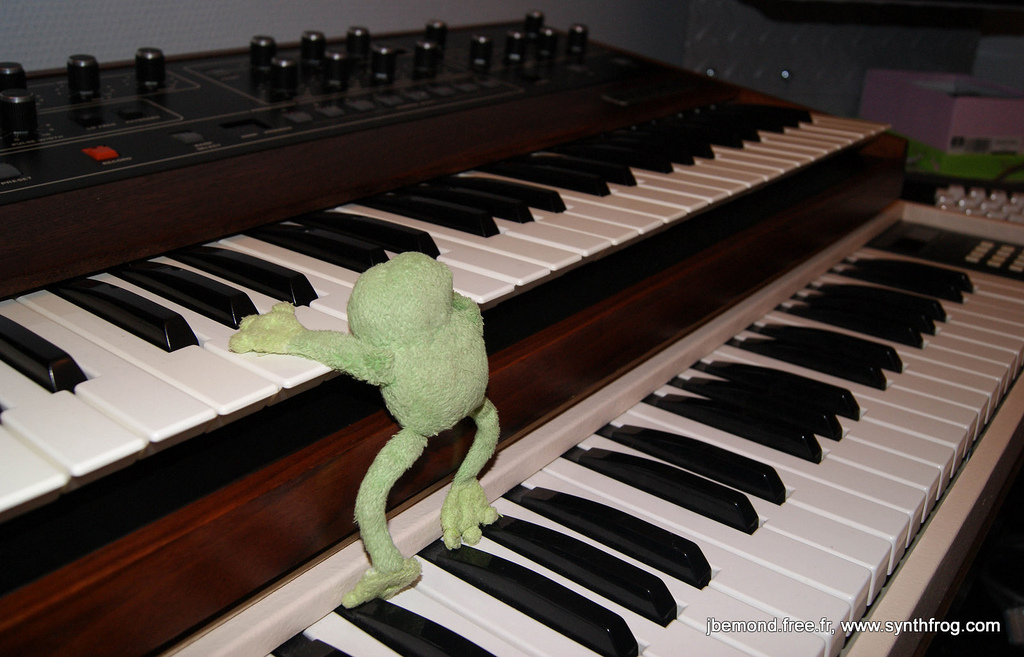
Discover the difference between digital pianos and electric keyboards. Learn what to look for when buying a digital or electronic piano.
Whether one is buying a digital piano for portability, recording, or jamming, it is important to have a basic knowledge of the types of keyboards available. Prospective buyers should also know what to look for when buying a digital or electric keyboard.
Digital Piano vs. Electric Keyboard
Prospective buyers may not know that a digital piano is not the same instrument as an electric keyboard. Both instruments are powered by electricity and use a tone generator to match the sound with the key that is played. How those tones were created differs between these two keyboard instruments.
Digital pianos use digitally sampled sounds. For example, a digital recording of an acoustic instrument, such as the piano or guitar, is made so that a digital piano can replicate the sound of an acoustic instrument. In addition to this, many digital pianos possess weighted keys (heavier key action in the lower register) and are touch sensitive (or “touch-velocity” sensitive).
In contrast, electric keyboards use computer-generated sounds. Many models lack weighted keys and touch-velocity sensitivity.
Types of Digital Pianos
There are three types of digital pianos: a digital piano, an ensemble digital piano and a stage piano:
A digital piano is built into a cabinet. It usually has the full 88 keys, just like an acoustic piano. A small selection of sampled sounds, speakers and a metronome are built into a digital piano. Some digital keyboards possess basic recording capabilities and alternative tunings.
An ensemble digital piano has either 76 or 88 keys. There is a built-in metronome as well as a wider variety of sounds and accompaniment patterns. Ensemble digital pianos can record, while newer models can be connected to the computer for greater recording, composing, and editing capabilities.
Unlike a regular digital piano, a stage piano lacks a cabinet. These generally require external speakers or amplifiers. Stage pianos are commonly used for gigs because of their portability.
Types of Electronic Keyboards
There are three types of electronic keyboards: the arranger keyboard, the keyboard synthesizer, and the music workstation:
An “arranger” is a standard electronic keyboard that contains a wide selection of rhythm and accompaniment patterns. Users can arrange these accompaniment patterns using the Fill-In and Intro/Ending buttons.
A keyboard synthesizer, also called a “synth,” enables users to create and combine various sound waveforms. Synthesizers are used primarily by musicians involved with music production and recording.
A music workstation is a combination of four electronic instruments in one. It is a musical keyboard, sampler, sequencer and synthesizer. Users can edit their recordings and burn them onto a CD.
Tips on Buying a Digital Piano or Electronic Keyboard
There are several considerations that prospective buyers should make when choosing a keyboard:
budget,
design,
touch-velocity sensitivity (the faster a key is played, the louder the sound),
dynamic range,
expandability and upgradeability,
key action (synth vs. weighted keys),
number of keys (classical musicians need more),
pedal levels (full pedal, half-pedal and quarter pedal vs. on/off),
playing level of the user(s),
polyphony (the higher the number, the more acoustic-sounding the instrument),
portability,
sequencing and sound mixing capabilities,
sound quality (realistic tones, sound decay, speaker quality), and
user friendliness.
When testing a digital piano or electronic keyboard, shoppers should listen to it through the speakers and through headphones. This way, one can hear the subtle differences in dynamic range, sound decay and sound quality.
Popular Brands of Digital Keyboards and Electronic Keyboards
There are numerous models and brands of digital and electronic musical keyboards. The leaders in digital pianos and electric keyboards are Alesis, Casio, Clavia (Nord), Korg, Roland, and Yamaha.
Prospective buyers should read product reviews of various models and brands to get a better sense of what type of keyboard would suit them. Three examples of keyboard review sites are Clever Joe’s Musician Resource, Dan Maynard’s Piano Reviews and Piano World.
There are numerous advantages to owning a digital piano or electric keyboard. However, beginner music students, music teachers, composers, and performing artists each have different musical needs. Prospective buyers should learn about the various types of digital and electric keyboards available, as well as the keyboard features in order to choose an instrument that best meets their needs.
For more information about buying a digital piano or electric keyboard, visit:
All About Pianos: Digital Piano FAQ
Know-Your-Keyboard-Piano: Electronic Keyboards - Know the Various Electronic Keyboard Types!
Originally published on Suite101.com on July 10, 2010. Updated March 27, 2013. All rights reserved by Rhona-Mae Arca.
Social Media Links
archives
- #YYCArts 32
- #YYCEvents 39
- Collaborative Music 25
- Community 11
- Composing & Arranging 6
- Entertainment 139
- Entrepreneurship 53
- Freebies 3
- Gardening 1
- Geeking Out 65
- Health & Wellness 120
- Improvisation 25
- Interviews 28
- Learning Music 188
- Martial Arts 13
- Memorization 7
- Music 230
- Music Careers 9
- Music Education 196
- Music Examinations 7
- Music Exploration 55
- Music Gigs 14
- Music Lessons 6
- Music Performance 32
- Music Theory 13
- Musical Instruments 12
- Musician Health 19
- Pets 57
- Piano Technique 12
- Practicing Music 120
- Productivity 20
- Professional Development 11
- Recommendations & Reviews 93
- Recreation 71
- Social Media 6
- Spirituality 10
- Studio Management 33
- Studio Technology 50
- Teaching Music 146
FOLLOW THE STUDIO on Instagram




Affiliate Links
As a Sheetmusicplus and CD Japan affiliate, I earn from qualifying purchases. The earnings help fund the Studio’s blog and YouTube channels. Your support is greatly appreciated.


FOLLOW Budo no Tabi on Instagram