THE MUSICAL MUSE
Blog dedicated to music education, practice tips, health
&
wellness, and geeking out.

The First Brain Game Exercise I Learned
This was a brain exercises that I committed to memory and has become a favourite amongst my students.
During the 2015 CFMTA Music Teachers' Convention, educator Terry Small came and talked to us. It was a fantastic talk about engaging the whole brain as musicians. This was a warm-up that I committed to memory and has become a favourite amongst my students:
Terry has some wonderful advice and tips for brain health on his blog, the Brain Bulletin.

Beats and Budo
Several months ago, one of my fellow iaidoka (AKA, “The Tiny Samurai”) posed a question to Kim Taylor sensei of Sei Do Kai with regards to beats and budo. Taylor sensei shared some of his thoughts here, then made a reference to me (AKA, “The Tinier Samurai”) to try tackling the question.
When I first began my Iai journey in the mid 2000s, I recognized immediately the many shared themes between music and martial arts. Beats and budo, now this is something that I have been grappling with since Day One.
Several months ago, one of my fellow iaidoka (AKA, “The Tiny Samurai”) posed a question to Kim Taylor sensei of Sei Do Kai with regards to beats and budo. Taylor sensei shared some of his thoughts here, then made a reference to me (AKA, “The Tinier Samurai”) to try tackling the question.
When I first began my Iai journey in the mid 2000s, I recognized immediately the many shared themes between music and martial arts. Beats and budo, now this is something that I have been grappling with since Day One. More on that later. First, I’ll touch upon some of Taylor sensei’s other points that resonated with me.
Music as a Metaphor for the Story
Taylor sensei said that music can be used to tell the riai, the story of a kata. That makes a lot of sense to me as a musician and an iaidoka. Whereas books tell stories through words, music tells stories through sound and silence. Of all the performing arts, kata is most like dance, as both tell a story through movement.
I recently stumbled upon a draft of some scores I wrote back in 2007 where I began to translate the kata into music. This is as far as I got.
In Mokuso, I used a major pentatonic scale and quartal harmonies to give an Oriental sound. I gradually slowed the rhythm down to show the progression from having jumbled thoughts to achieving mushin (“no mind”), where I am calm and alert.
In Mae, I used a Locrian mode. I find it the creepiest of all the old church modes. I used two voices. The high voice depicts the iaidoka, while the piano is the teki. Register depicts movement up and down, dissonance and dynamics indicate the sword’s movement, while rhythm represents jo ha kyu. You’ll notice in the score that I even scribbled down what was happening in the kata.
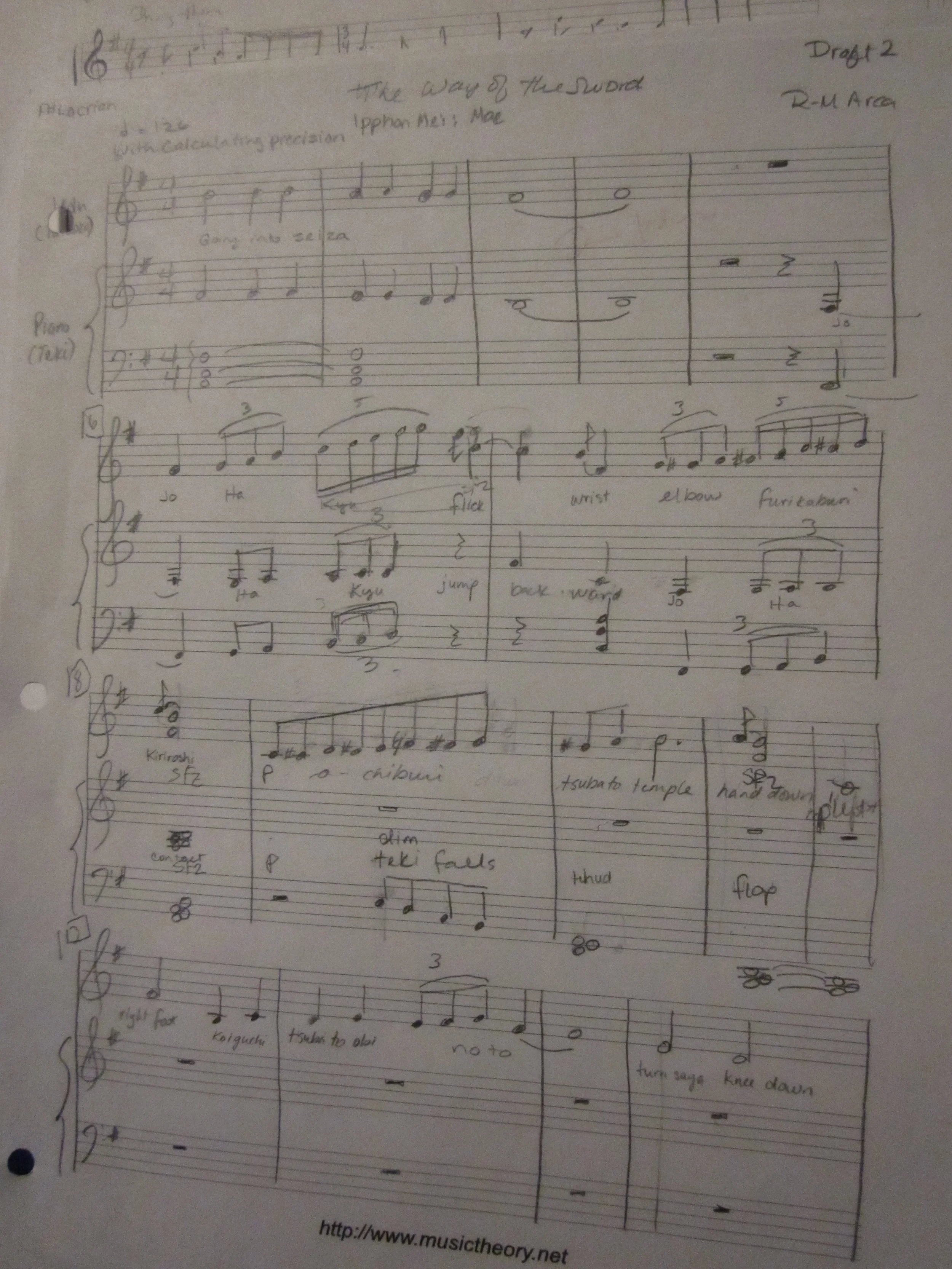
My early scribbles for setting Ippon Me Mae to music. The top staff is the iaidoka, while the bottom two represent teki. Credit: R-M Arca.
Add a training hiatus in the middle of my journey, age, increased knowledge and experience, and I have a slightly different perspective on my budo. These days, I’m really trying to refine my jo ha kyu timing. If I were to translate the kata now, I would take a different approach. Rhythm would play a much bigger role. It would most likely be non-metrical or polymeter. Plus, I’d use one of the Japanese scales I learned earlier this year.
Copying Another’s Performance to Achieve Mastery
In his post, Taylor sensei said that “A perfect copy of James Ehnes is going to be an actor playing the part.” Agreed. Does parroting a famous artist show that you truly understand what’s going on? No. Does it show that you understand the instrument? Nope. Does it show who you are? Not at all.
On a related note: Can a robot perform a piece better than a person? Can a machine completely capture the essence of a person’s performance? Technology can now recreate the performances of famous pianists. Check out the Steinway Spirio:
When I saw the Spirio in action at Steinway Pianos for the first time, my initial reaction was, “Creepy.” Sure, it was cool to see that we can do this, but it just felt like it was a shadow of Gershwin’s actual performance. I was drawn more to Gershwin’s recorded performance on the TV screen versus the piano’s recreation of it. It had more soul to me.
I could see George’s expression, the speed of his attack, his arm gestures, and his breathing. Those little things told me much more about the story and his playing than watching keys being pressed by mechanical means.
Music students who work through either the Royal Conservatory of Music or Conservatory Canada have a set list of repertoire to choose from. Some pieces are more popular than others, so sometimes, teachers, adjudicators, and examiners hear the same pieces countless times from multiple students. The notes are the same, but each student’s interpretation is unique. Not only that, each time they work with their own teacher or obtain feedback from an adjudicator or coach, it undergoes another metamorphosis.
One student make take a piece at the low end of the recommended tempo range, whereas the next may perform it at the opposite end. One may use a heavier touch. Another may use dramatic dynamic contrasts. One may choose to take extra time in Bar 8, while another may push the tempo in that same spot.
It doesn’t necessarily mean that one student has achieved a higher level of mastery than another. For that, one must ask if technical fluency was in evidence and whether the performer convincingly told us the story in a way that is in style with the form and the idiom.
To a practiced listener, it is possible to recognize a musician by their sound, or to recognize a musician’s lineage by how they play. Budo has that too. Although we strive to get our timing in line with “dojo timing,” each of us has a slightly different internal timing. Whenever we run through our Seitei Iaido kata as a club, the group timing differs ever so slightly, depending upon who is leading, who is there, and how focussed everyone is. Regardless, it should still be relatively close to sensei’s timing.
That’s the beauty of it. We don’t want to be carbon copies of someone else. The subtle differences provide some variety to the same story - and that’s what keeps things interesting.
The Same Art but Different Eras or Regions
Perhaps one day, I’ll get around to completing my musical set of Iaido kata. Unfortunately, that day isn’t anytime soon. Real life commitments have a tendency to cut into composing time.
Since The Tiny Samurai posed her question, I have also pondered Iaido kata on a structural and stylistic level. The seitei set reminds me of a Baroque suite of dances. Each dance represents a different country, e.g. a sarabande is Spanish, whereas a minuet is French.
Baroque dances have a set structure, binary or rounded binary. They also have a set order of steps. Some have telltale rhythms. The time signature changes depending upon the dance, but the tonic key remains the same. Very little markings are given in terms of dynamics and expression, leaving room for various interpretations of the same story.
I see the koyru iaido sets as being akin to character or mood music from the Romantic era. These are generally composed in ternary form, although other structures, like through-composed, crop up from time to time. Like certain pieces, e.g. polonaise or lieder, each koryu can represent a different region.
My mind wanders to Modest Mussorgsky’s Pictures at an Exhibition. Each piece depicts a different painting that two characters are viewing and sometimes, debating over:
Another way to describe this musically is to have two pieces with the same title and same overall structure. However, each are completely different:
Leitmotif in Budo
Merriam-Webster Dictionary defines leitmotif as “an associated melodic phrase or figure that accompanies the reappearance of an idea, person, or situation especially in a Wagnerian music drama.” John Williams made good use of it in the Star Wars movies with “Luke’s Theme,” the “Imperial March,” and so on. Taylor sensei also mentioned it in his beats and budo post.
I could see one leitmotif for Muso Shinden Ryu noto and a different one for Muso Jikiden Eishin Ryu. O-chiburi could be notated a little differently from yoko chiburi. Musically, that would provide unity and consistency.
Beats and Budo - Reprise
Beats and budo - Miyamoto Musashi called this rhythm-timing in the Go rin no sho. Ever since reading that, I’ve been playing around with beats. I came up with timing for the opening etiquette, which I waxed poetic on in The Iaido Journal. Here’s the link to the article, entitled Rhythm and Flow.
I’ve been experimenting with the following rhythms for jo ha kyu:
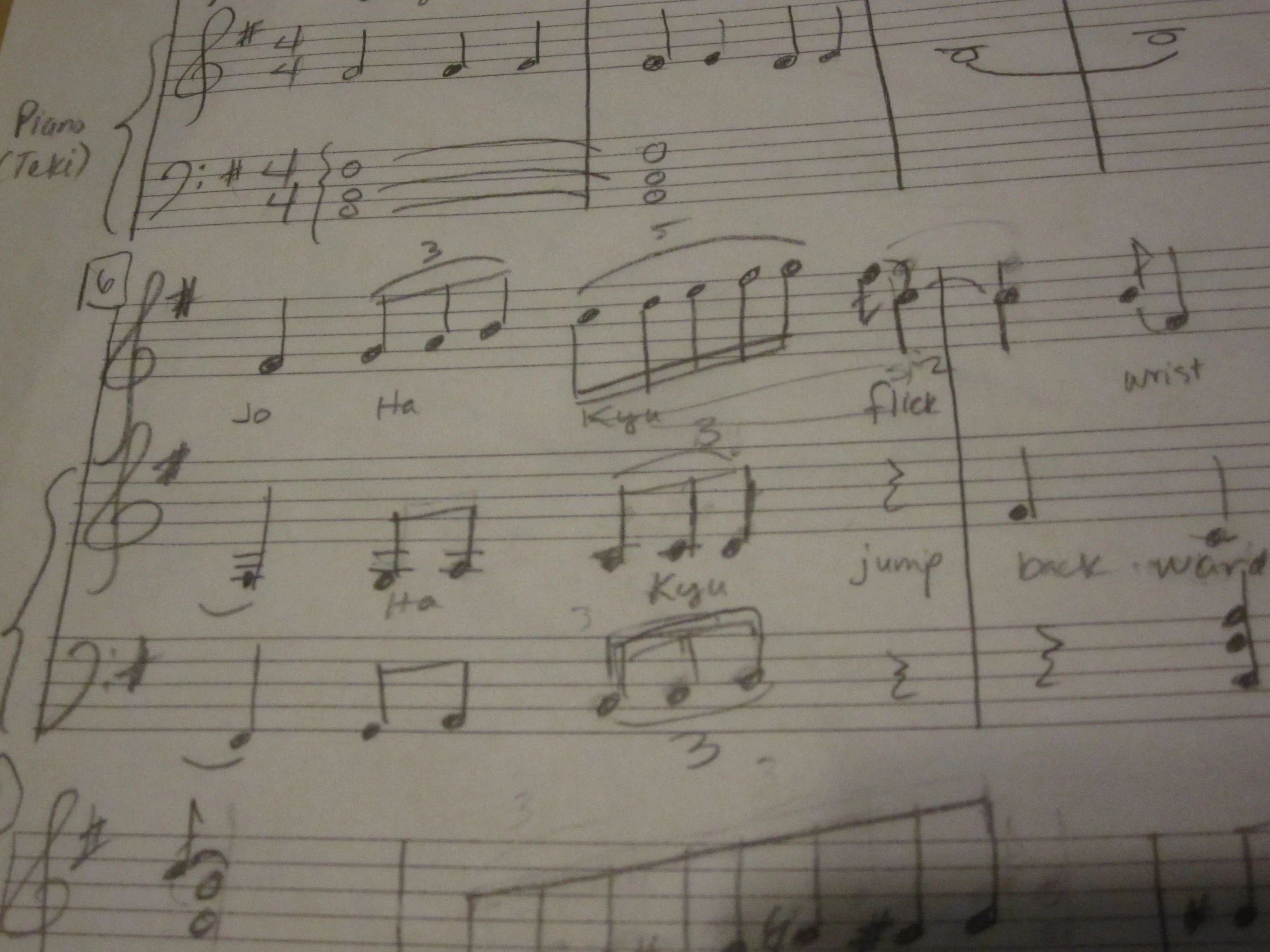
My rhythmic representation of jo ha kyu in 2007. Credit: R-M Arca.
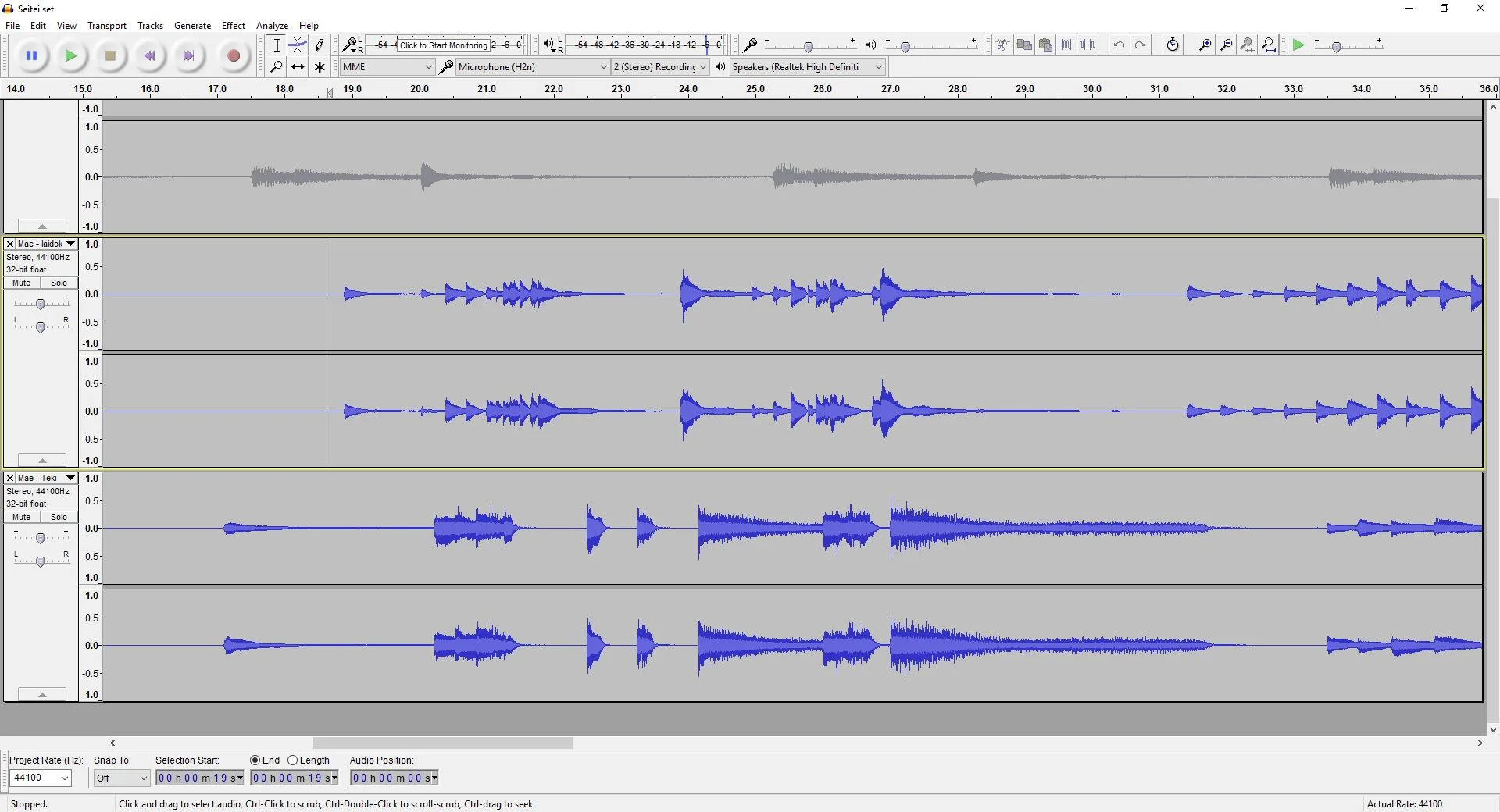
A screenshot revealing the waveforms for that same section of music. The iaidoka's jo starts just after the cursor. Credit: R-M Arca.
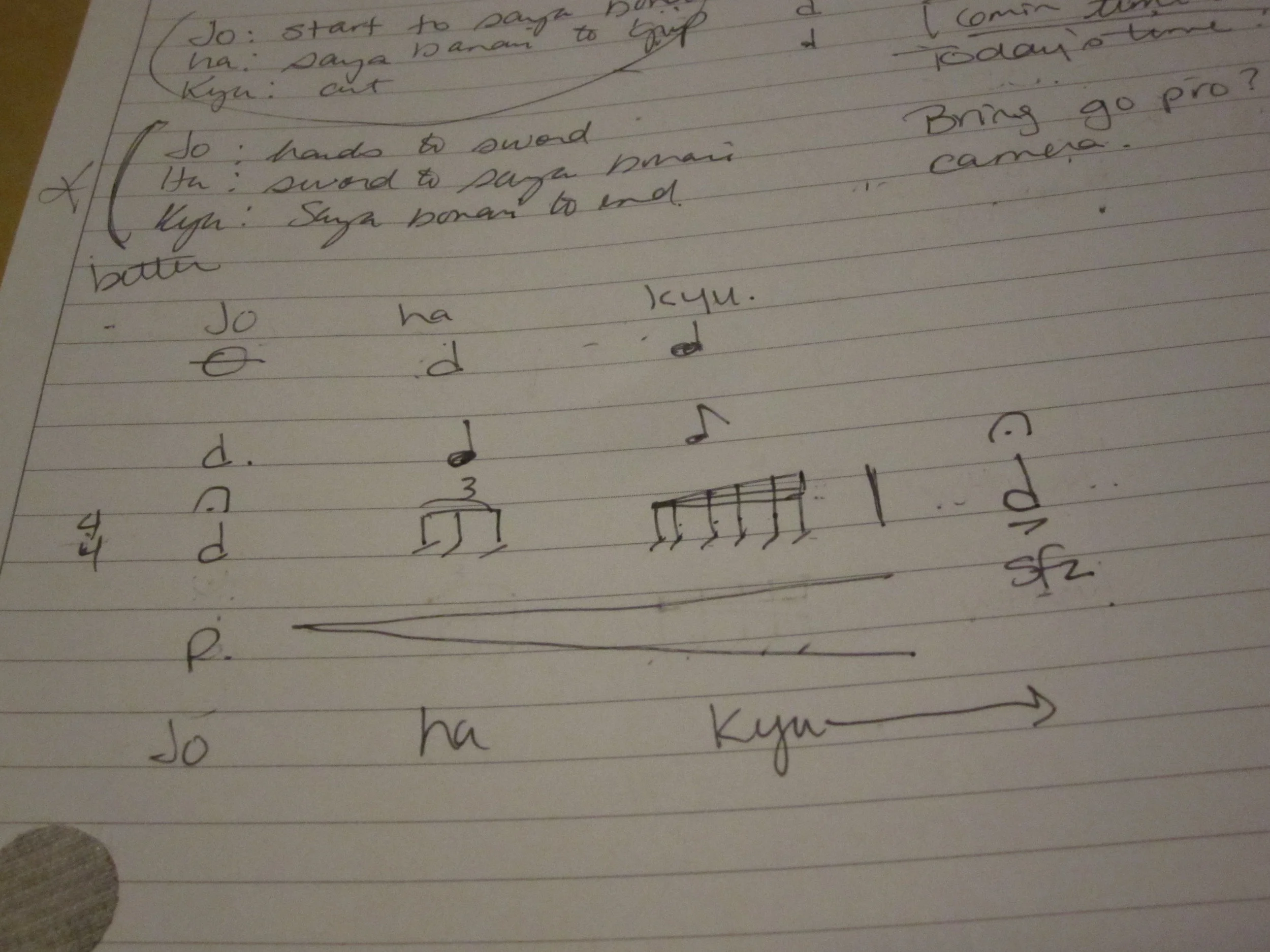
Jo Ha Kyu circa 2016. Credit: R-M Arca.
The last one is the one I’ve been playing around with. I don’t hear pitches. When I’m by myself, I’ll use a bit of singspiel, saying “Jo ha kyu”, in rhythm, from the moment my hands to go my tsuka to nukitsuke in Mae. I use dynamics for intensity.
Last night, I was studying a video of Alex Cook sensei practising Mae and improvising at the piano to it. I used the Hirajoshi scale and a lot of tone clusters. The result isn’t pretty sounding, but then, when you think about the riai for Mae, it’s not supposed to be:
Studying the waveforms made it easier to see how I need to have more ha not only in my iai but in my musical interpretation of the riai.
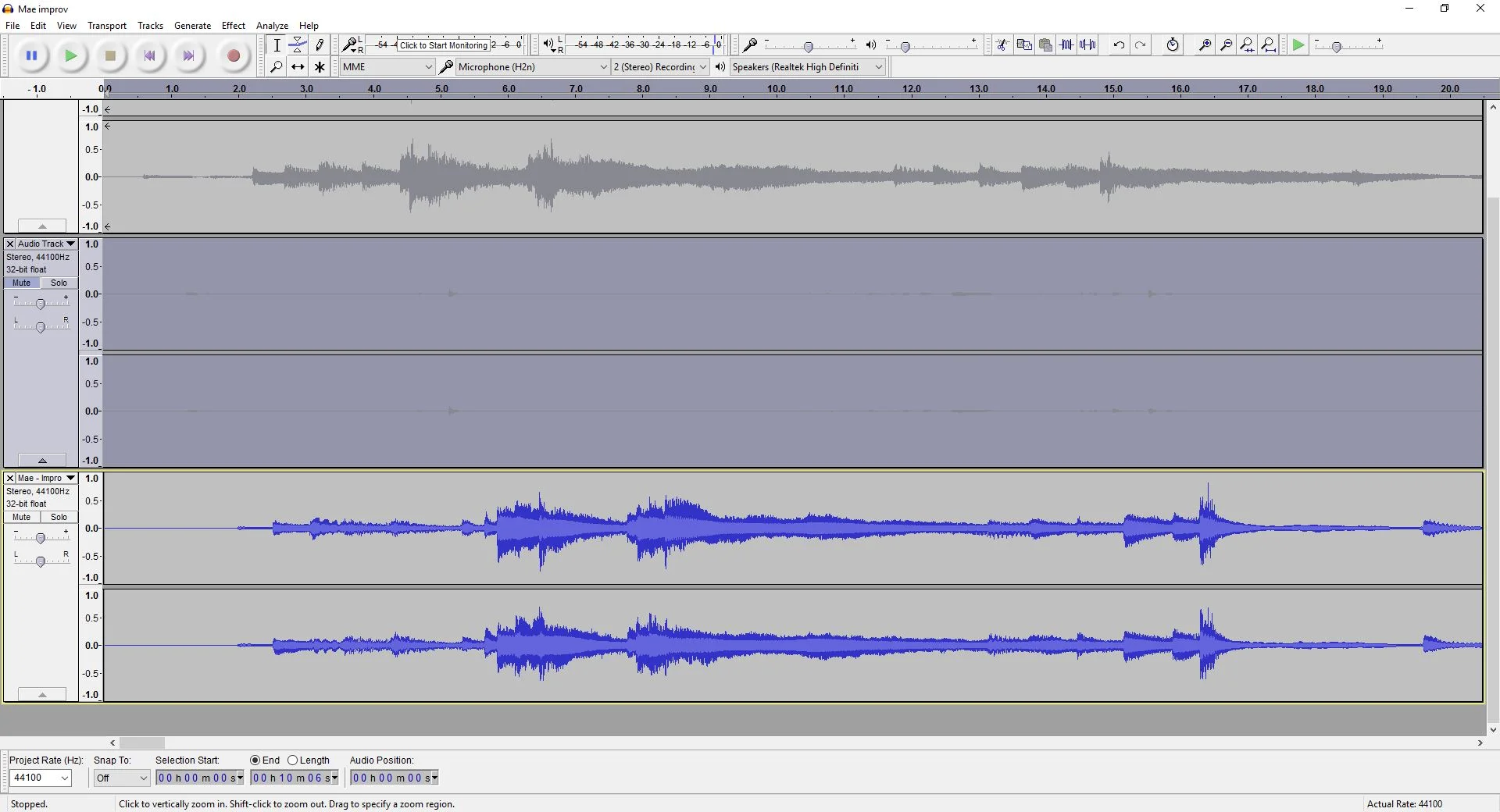
The waveforms reveal the quickening of sound during ha, yet still distinctly shows that there is a ha. This is what I must work on. Credit: R-M Arca.
I will do a bit of rhythmic dictation and attempt to notate sensei’s rhythm. I have a feeling that until I have the rhythm notated in a way that I can count the beats, I will be playing with jo ha kyu for a while longer yet.

My Season of Firsts: The Grief Journey So Far
It is hard to believe that it has been seven months since Maestro crossed Rainbow Bridge. I decided that it would be cathartic to reflect upon my grief journey so far.
It is hard to believe that it has been seven months since Maestro crossed Rainbow Bridge. I decided that it would be cathartic to reflect upon my grief journey so far.
The First Summer: Keep Moving and Don't Think
Maestro and I usually packed in numerous day trips in the summertime. We did everything from attending outdoor concerts to cloud gazing in the park. He enjoyed trips to downtown Calgary just as much as jaunts to Turner Valley and Black Diamond.
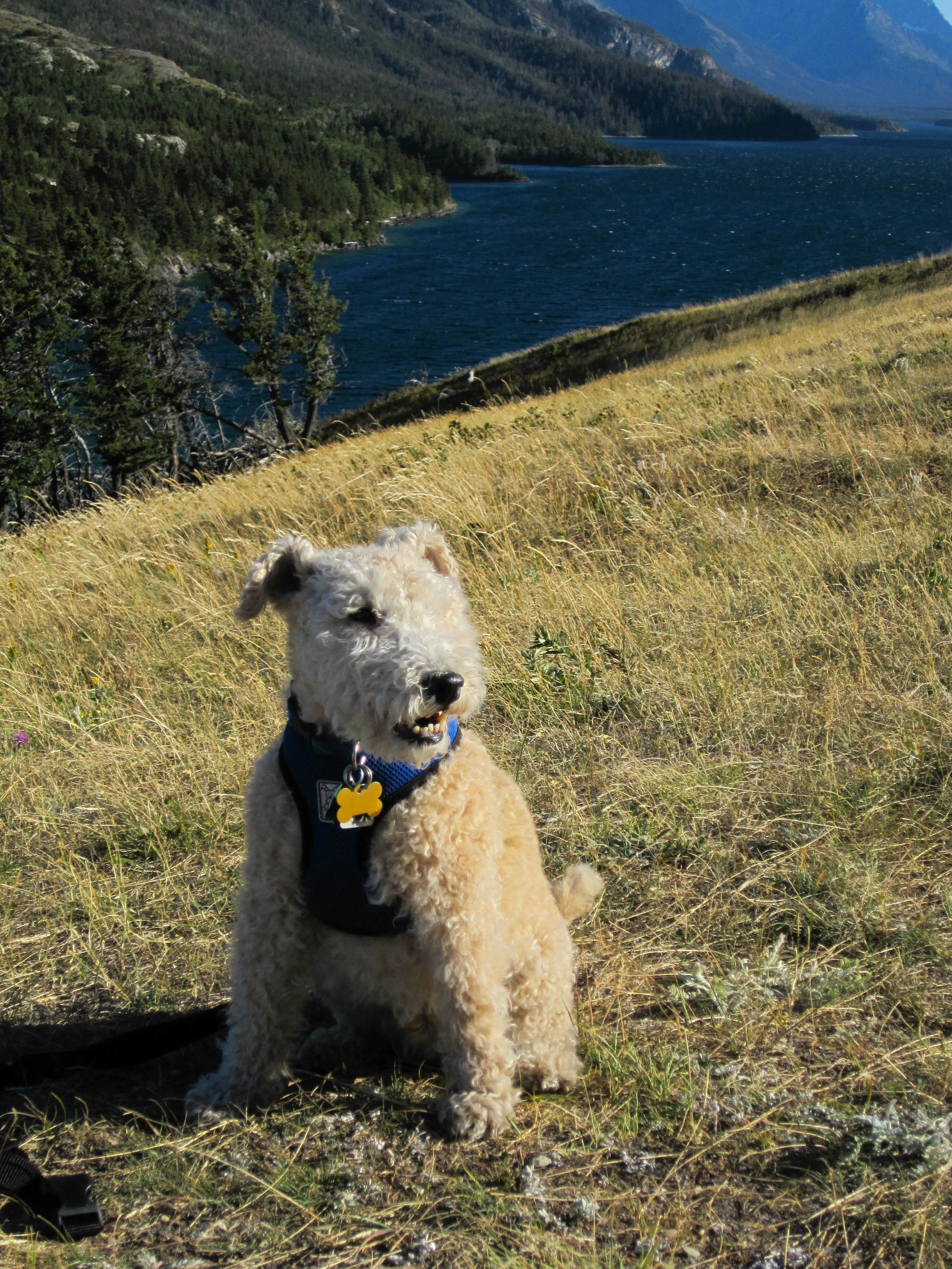
Maestro does Waterton Park. Photo: R-M Arca.
I didn't feel ready to tackle any of those activities without my furkid, and with teaching and the concert season winding down for the summer, I had more pressing things to attend to. Enter special events.
I got a part-time casual job as Events Staff for a security company. All of the events were outdoor musical events and festivals. It seemed like a natural progression for a musician/usher/samurai-in-training.
It was also the perfect way for me to get out and have new adventures. Show up at the event, get briefed, and hit the ground running. Keep moving and don't think: #AchievementUnlocked .
Our dojo had its annual summer seminars, which also kept me busy. Swinging swords for days on end was active meditation at its best. It's amazing what active meditation does for one's heart and soul.
The First Fall: What Would Maestro Do?
The fall was incredibly busy. The events job wound down for the summer. However, I started a new part-time job in a school, so I am juggling two jobs plus teaching. The shock to my system was sorely needed. I had grown complacent in my routines. Now, I am forced to manage my time more effectively (but that's another series of posts). I think I'm just starting to get the hang of a routine that doesn't centre around Maestro's appointments, medication, and sleeping schedule.
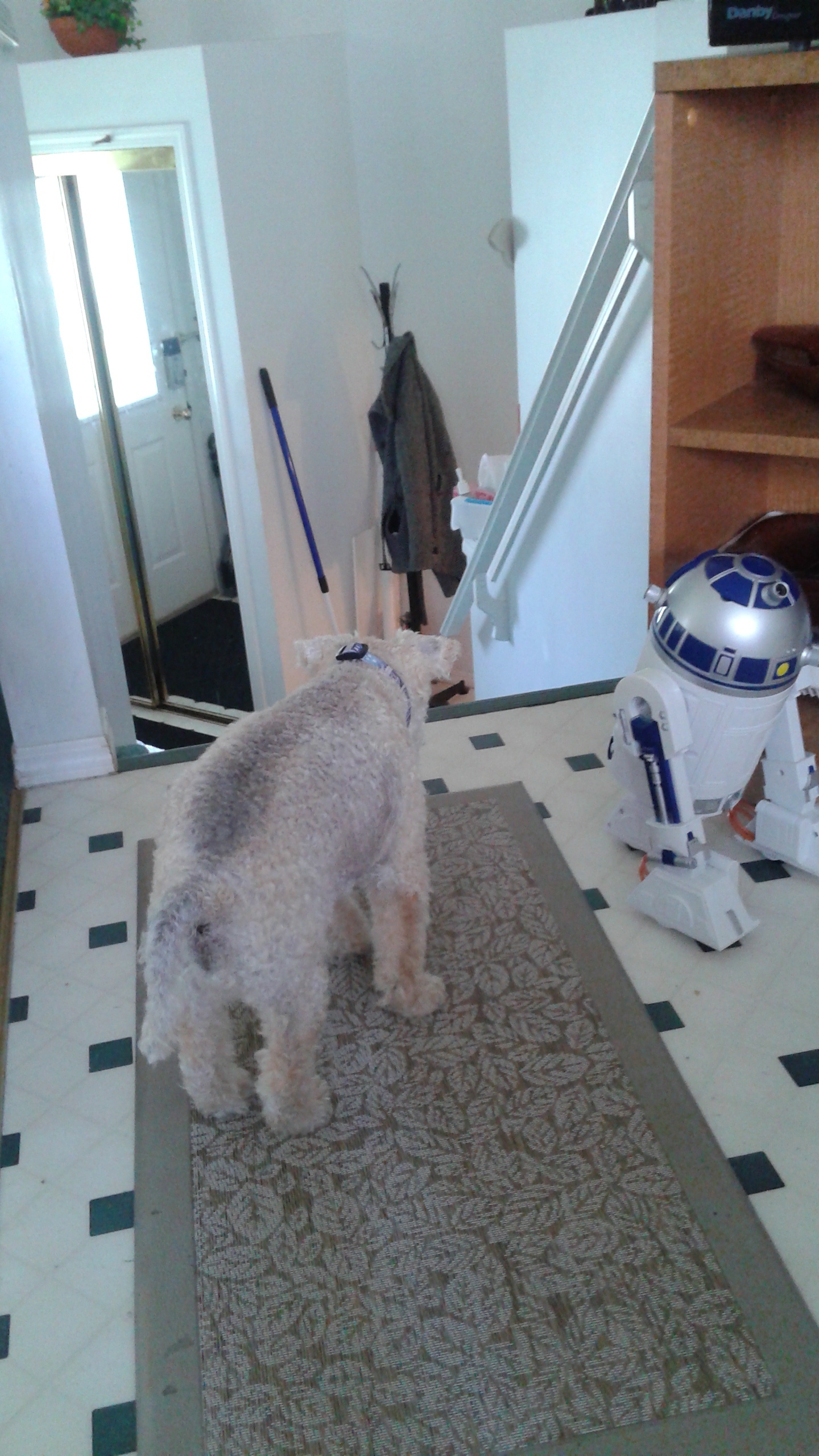
R2-D2, Maestro's minion, has been helping out by greeting the studio families. He also chirps happily when someone plays well and swears when someone doesn't. Sounds suspiciously like some furball I know.
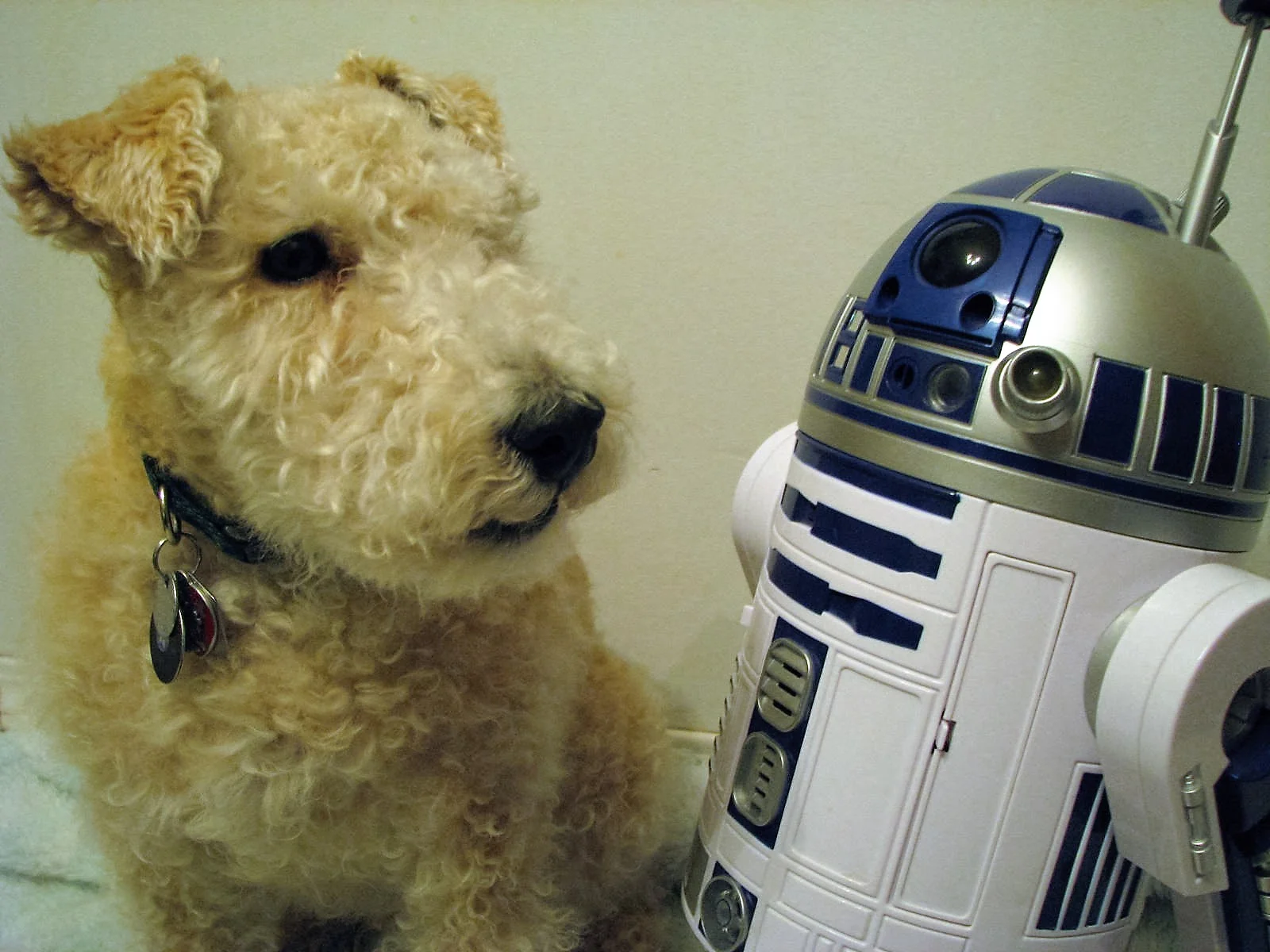
Maestro and R2-D2 were a unit when it came to waiting for students or demanding treats. Photo: R-M Arca.
This year, I welcomed two new piano students, one from a current studio family and one from a studio family from a few years ago. I was actually relieved to not go through the audition-interview process alone with a brand new family.
It hadn't really sunk in until that point just how much I relied on Maestro when interviewing prospective studio families. Looking back, I can tell you that I watched Maestro's eyes, ears, tail, and behaviour for cues. If he was comfortable with the family, then I knew that they would be a good fit for our studio.
"What would Maestro do?" has cropped up in lessons this year, along with "Would Maestro clear you on that arpeggio? I don't think he would, so I can't possibly clear you on it yet."
Sometimes, students and studio parents tap the percussion tree or one of Maestro's instruments for old time's sake. We share a wistful smile or a chuckle, recalling how Maestro would come stomping into the studio to say, "Hey! That's mine!"
One piano mom found it hard to come inside the studio for the first time after Maestro passed away. She teared up as she looked around at the various Maestro mementos and his pawprints. Maestro has clearly left his mark on his studio.
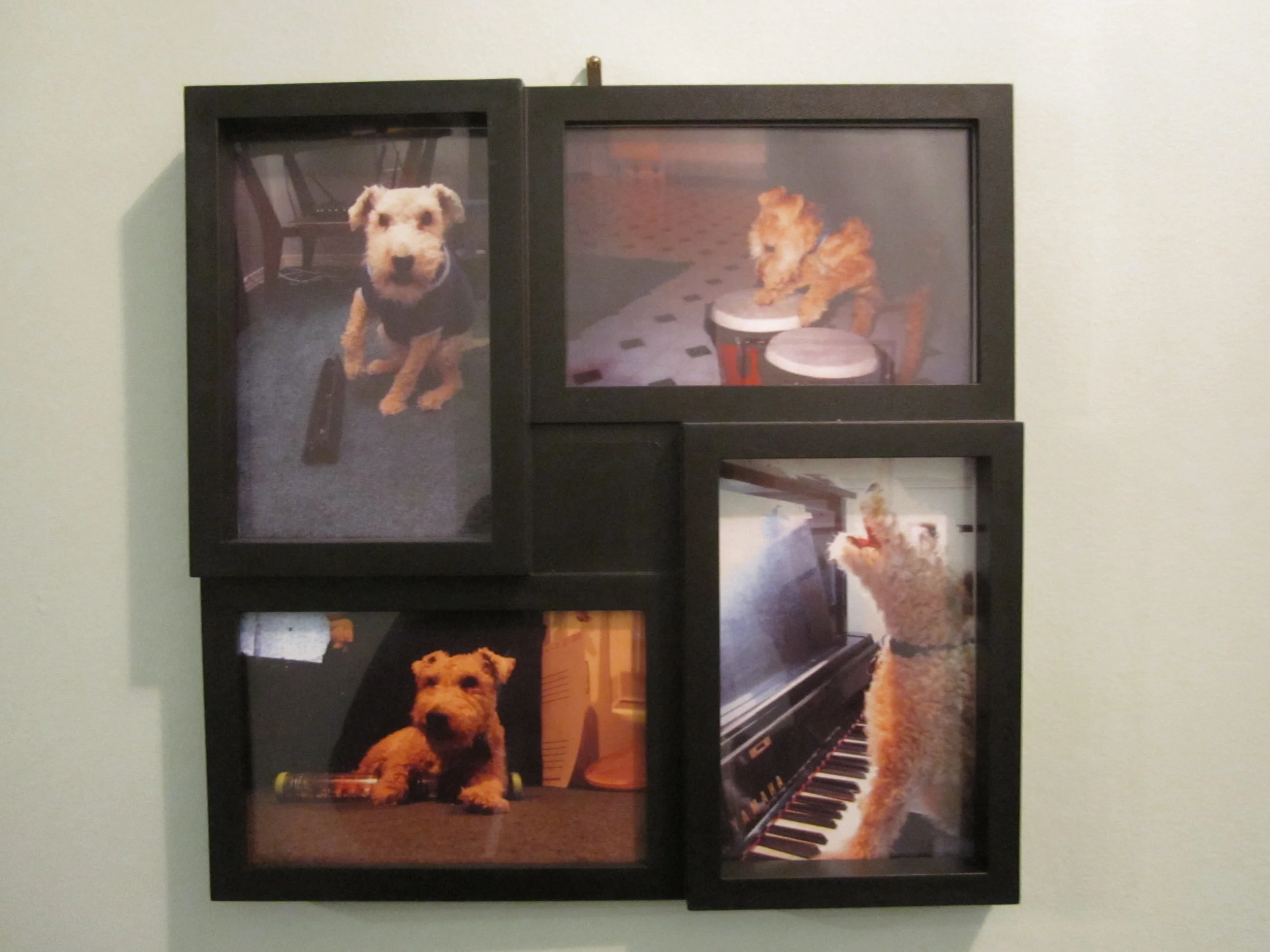
Maestro and his many instruments. Photo: R-M Arca.
The First Holidays: Have a Good Cry and Move On
Driving to my parents' for Thanksgiving was hard. At first, I was congratulating myself for not turning into a blubbering mess. Then, my CD player randomly switched to Dancing Queen. I started to belt out the lyrics, just as Maestro and I would on our car rides. That's when I lost it.
My family saw the tears, nodded, gave me a hug, and then we carried on with the weekend.
Even Halloween was teary. Maestro would get all decked out for our Halloween Piano Parties. He also looked forward to my dojo's pumpkin tameshigiri class in October. He was the primary beneficiary of pureed pumpkin, enthusiastically so. I automatically started to pack many pumpkins into my bags and containers after training, but then tearfully realized that I no longer need that much.
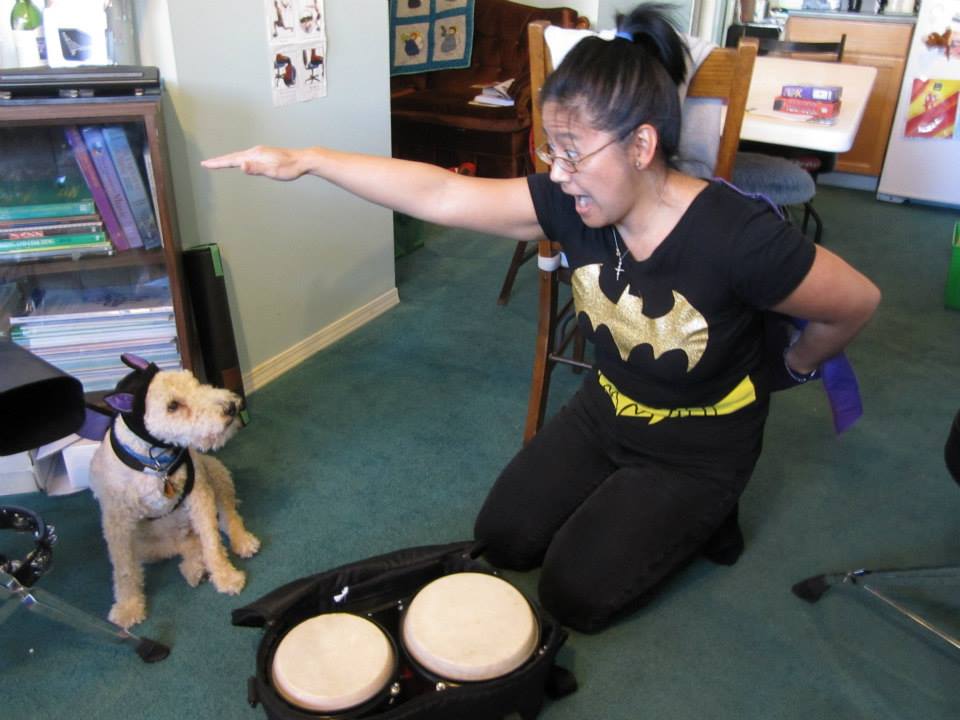
Batdog and Batgirl prepare for the Halloween Piano Party. Photo: C. Kohl.
Fast forward to Christmas. Part of me was dreading Christmas this year. Maestro loved Christmas so much. He got impatient because I could never put up the tree fast enough for his liking. Then, he would park himself in front of the tree to guard it, along with any presents that appeared. Ditto for the studio Christmas tree shown below:
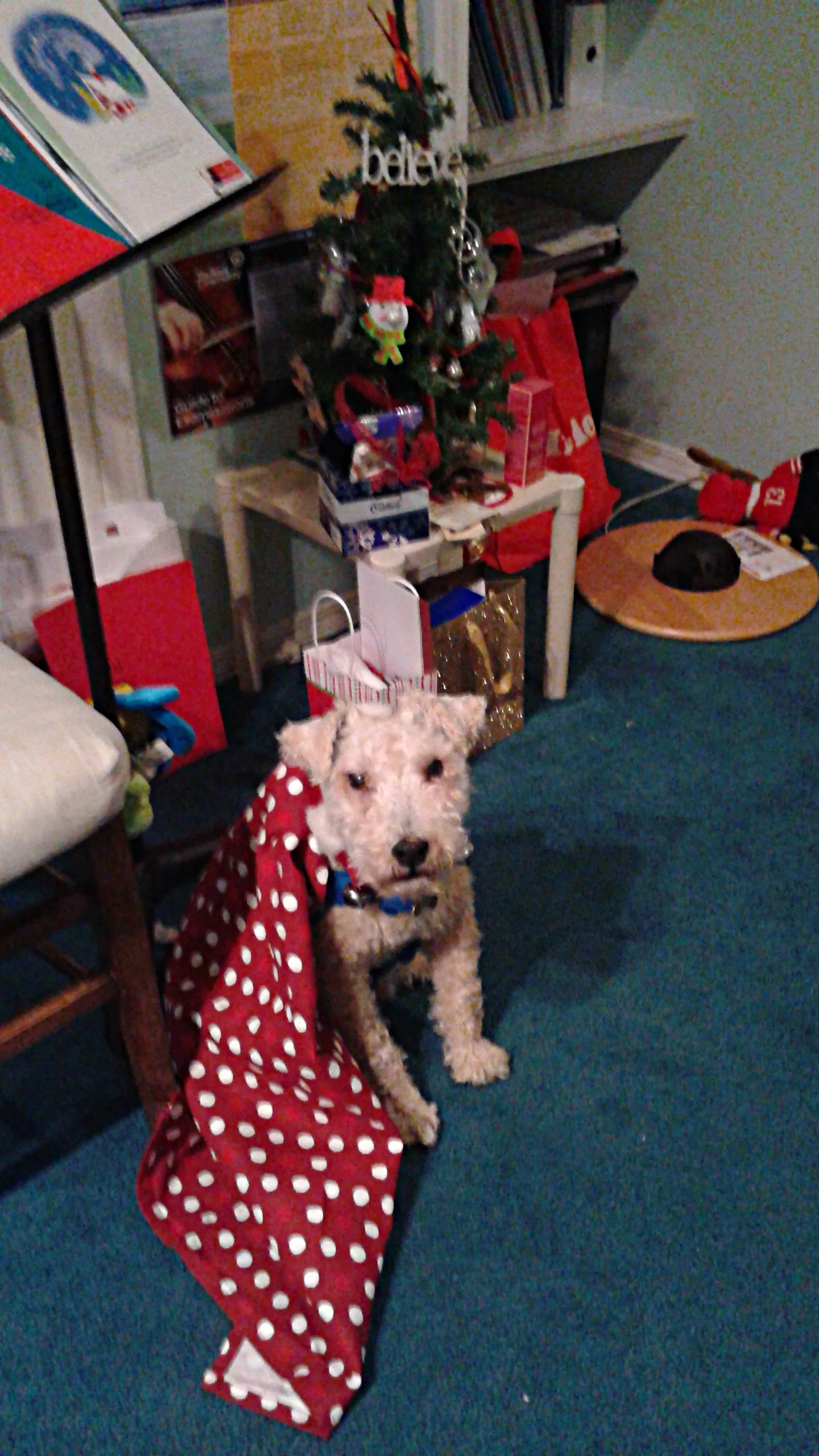
Gimme presents. Now. Photo: R-M Arca.
In fact, I was contemplating whether to decorate at all, knowing that it would hurt so much. I decided to decorate in the end as I figured that if I delay any of these firsts, it would only be harder next year. Besides, I could just picture Maestro standing on a heavenly cloud, barking angrily at me at the mere thought of not putting up his Christmas tree.
Dad was over when I put the tree up. Through tears, I told Dad what Maestro would do as we decorated. It felt good to get the tree and decorations up. Next year will be easier.
This Christmas, I made photo ornaments of all our furry family members, past and present for the family tree. It was a wonderful trip down memory lane.
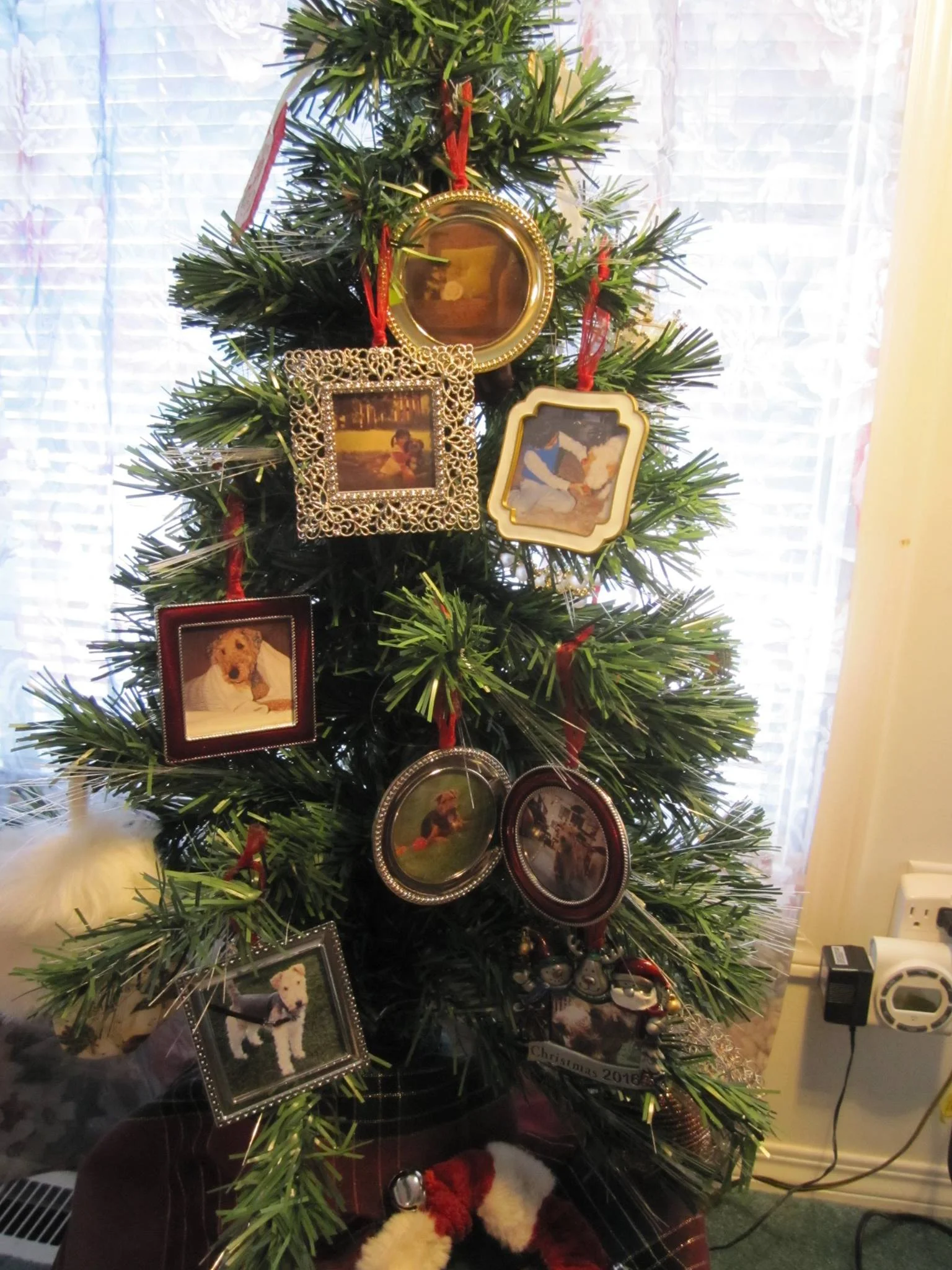
The Arca family dogs through the years, as shown on Maestro's tree. Photo: R-M Arca.
Christmas has come and gone. It wasn't as hard as I was expecting it to be. We shared funny stories about all of our furry family members. Mom even gave Angel Maestro a little stuffie to place beside his urn. I also was able to spend quality time with friends I haven't seen in quite a while.
Last week, we got a huge snow dump. I dug a maze in the backyard, for old time's sake. Maestro really liked his mazes:
Earlier this week, the Lakeland Terrier calendar that I ordered arrived. Maestro makes a posthumous appearance in March with the feature photo for this post. Sale proceeds go towards helping two terrier rescue groups. How apropos that he shares March with another Caliente Lakie.
Honour the Journey
Once, I told a student that with Maestro having played a huge part in my life on a personal as well as professional level, I've had to get to know myself as well as Musespeak all over again, and get used to this new dynamic.
As I adjust to the changes, I'm also dealing with a lot of crap. There are things that got postponed for far too long, as well as years of clutter that I'm dealing with. There's literal crap too. Perhaps I should put a tracker in my Bullet Journal to remind me to put enzymes in Maestro's Waste Manager Disposal System.
The waves of grief come farther apart now. Sometimes, it's like Christmas, where I have a quick cry and move on. Other times, it hits so unexpectedly. It's the little things that do it. There was the dull ache that lead to a dam bursting upon seeing a puppy pulling on his leash. He wanted to make his human cross the street more quickly.
There was the quick stab of emotion when I choked up while trying to sing Dancing Queen. I'll keep trying. One of these days, I'll be able to belt it out with a smile instead of tears.
If there's anything that I've learned, it's to respect the journey. If you feel sad, that's okay. Take the time to let it out. Ride the wave and have a good cry. It shows how much of an impact that person or pet has had on your life.
The other thing I've learned is to take time. All these little firsts take a lot of energy - physically, emotionally, mentally, and spiritually. I was exhausted after putting up the Christmas tree. That was a good reminder to not schedule anything other than rest after going through a big first.
More people are starting to ask me whether I'll be getting a new dog soon. My answer: Someday, but not yet. Let me get more crap out of the way, get through a couple more gradings, and maybe squeeze in a trip first. The journey continues.

My KonMari Journey: Clothes and Books
My KonMari journey began last summer, after several friends urged me all spring to give it a try. I liked the idea of decluttering by category versus room as well as going from easy (clothes), gradually working our way up to hard (sentimental items).
Before jumping in though, I checked out some YouTube videos on the subject. I especially enjoyed watching Lavendaire's video on organizing her closet:
My KonMari journey began last summer, after several friends urged me all spring to give it a try. I liked the idea of decluttering by category versus room as well as going from easy (clothes), gradually working our way up to hard (sentimental items).
Before jumping in though, I checked out some YouTube videos on the subject. I especially enjoyed watching Lavendaire's video on organizing her closet:
I then found a fantastic KonMari checklist on Jersha & Dup's site and jumped in. Sometime between decluttering clothes and books, I purchased Marie Kondo's book, The Magical Art of Tidying Up. It was a very quick read.
KonMari Method Round 1: Clothes
Applying the KonMari Method on clothes was fairly easy. I believe it took me one or two weeks, most likely because I have done some decluttering on a yearly basis. However, this was the most aggressive decluttering that I have ever done.
Although Marie Kondo states to keep only what sparks joy, I stretched my criteria to include, "Items I Need for Work" and "Things that Make Me Feel Good." Everything that didn't meet this criteria was given away to family, friends, students, and charity. Let's just say I have quite a few Hero Cards from Value Village.
I went by section off of Jersha & Dup's list, so one day, I tackled shirts. Next day, pants. It was illuminating to see just how many items I was hanging onto that no longer fit or I simply hadn't worn for years. After some heavy duty KM-ing, I had tons of room in my closet and dresser to give each item a proper home.
I am pleased to say that one year later, everything generally goes back to their home when not in use. There is definitely a sense of belonging to see them placed in their allotted cubbyholes.
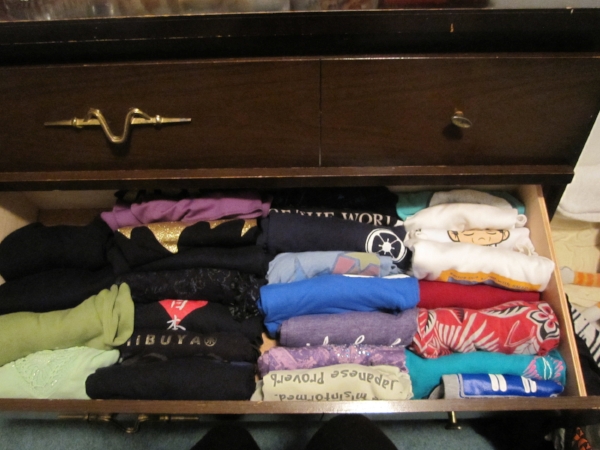
This is the longest that my t-shirt drawer has ever been this organized.
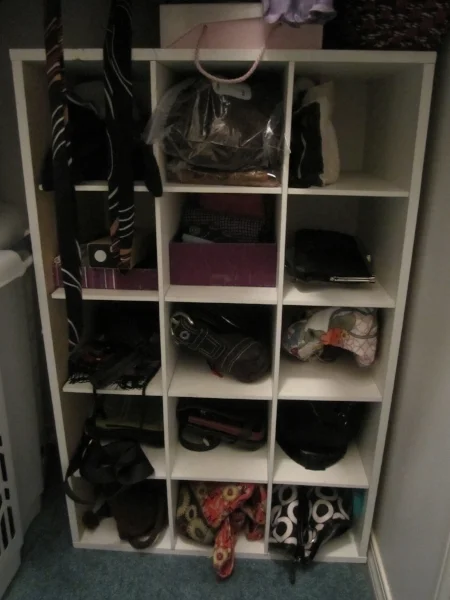
My parents picked up three of these units at a garage sale. Since they weren't using them, I snagged them to organize my purses, stuff in my craft room, and my winter gloves, scarves, etc.
KonMari Round 2: Books and More Books
I didn't think that I was a huge bibliophobe, but I do have a sizeable personal and work-related book collection. It was impossible to get all my books (including music books) into one room for the discarding process, so again, I went in categories.
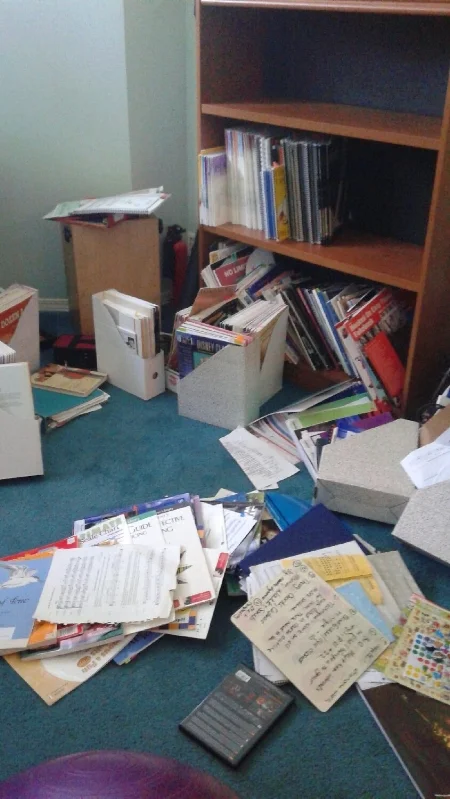
This was the beginnings of my discarding phase in the music studio.

Some of the books that I let go of.
KMi-ing my book collection was also a Summer 2015 project. It wasn't particularly difficult to decide what to let go of. Yes, I let go of books I liked, but they weren't ones I liked enough to want to re-read in the short-term or books that I had re-read on a regular basis.
My piano students and their parents got first crack at my book discards. Next, a friend who had opened a music school (Flamingo School of Music) went through it. Many of her students are either from low income families or just immigrated to Canada, so the donations were put to good use.
Next, I took books to the Calgary Public Library, then Calgary Co-Op's book sharing bin and Value Village. Sadly, some books weren't wanted by any of these places and wound up in recycling.
One year later, my personal book collection remains organized (with a special basket for books I'm borrowing). My music library remains a work in progress. I'm going to recruit my students to help me re-shelve the books after their lessons for coveted Maestro Bucks.
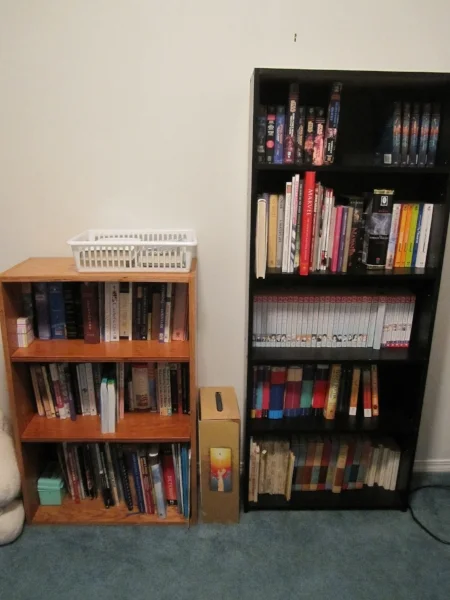
My personal library - one year after getting the KonMari treatment.
Next time, I'll share my ongoing experiences with paper decluttering. It's been quite the journey - and it's not over yet! Here's a preview:

Before he passed away, Maestro was quite the KonMari Supervisor. As you can see, he wasn't impressed with the amount of paper I had amassed.

Lessons I Learned from My Dog
Today marks the seven-week anniversary of Maestro crossing Rainbow Bridge. As anyone who has grieved for a loved one knows, it's an emotional roller coaster, with grief hitting you in waves.
I've had some time to reflect upon what I have learned from my sidekick and furkid. If one could put Maestro's life philosophies into words, I'd say they are..
My heart broke on May 11, 2016. That's when I brought Maestro to the vet clinic for what I thought was a urinary tract infection. That's when the vet discovered the lump. "It could be nothing," Dr. Maya said. Then, she paused and looked me in the eye as we both said, "Or it could be something really bad." My heart sunk. We both knew that at Maestro's age, a lump like that is most likely very bad. She prescribed some antibiotics and asked to see Maestro the following week.
One week later, there was some improvement in the pee department, but the lump was more pronounced. Through tears, Dr. Maya recommended a prostate flush and ultrasound to confirm what we both believed to be true: cancer. Maestro, pragmatic as always, simply looked back at me to say, "It's OK, Mom. I know already. Clock is ticking."
Maestro was diagnosed with Transitional Cell Carcinoma. It's an aggressive cancer that is common in spayed and neutered cats and dogs. We could have put Maestro in drug and radiation therapy but really, what responsible pet parent is going to put their furkid - one who has already lived a full and long life, through that kind of pain - with no guarantee at the end? It's far more loving to keep him comfortable and happy until he was ready to go, and trust that Maestro would let me know when he was ready to make that journey.
I broke the news to "our" students as soon as Maestro's diagnosis was fairly certain. When one told me, "Let's make the last bit the best bit," I set out to figure out and fulfill Maestro's Bucket List.
Maestro's Twilight Adventures
Instinct and observation told me that Maestro had up to a month, but more likely mere weeks. If you knew that you had weeks to live, what would you want to do? I figured that Maestro's Bucket List would be similar to anyone else's: do your favourite things, visit your favourite places, eat your favourite foods, and spend quality time with those whom you care for.

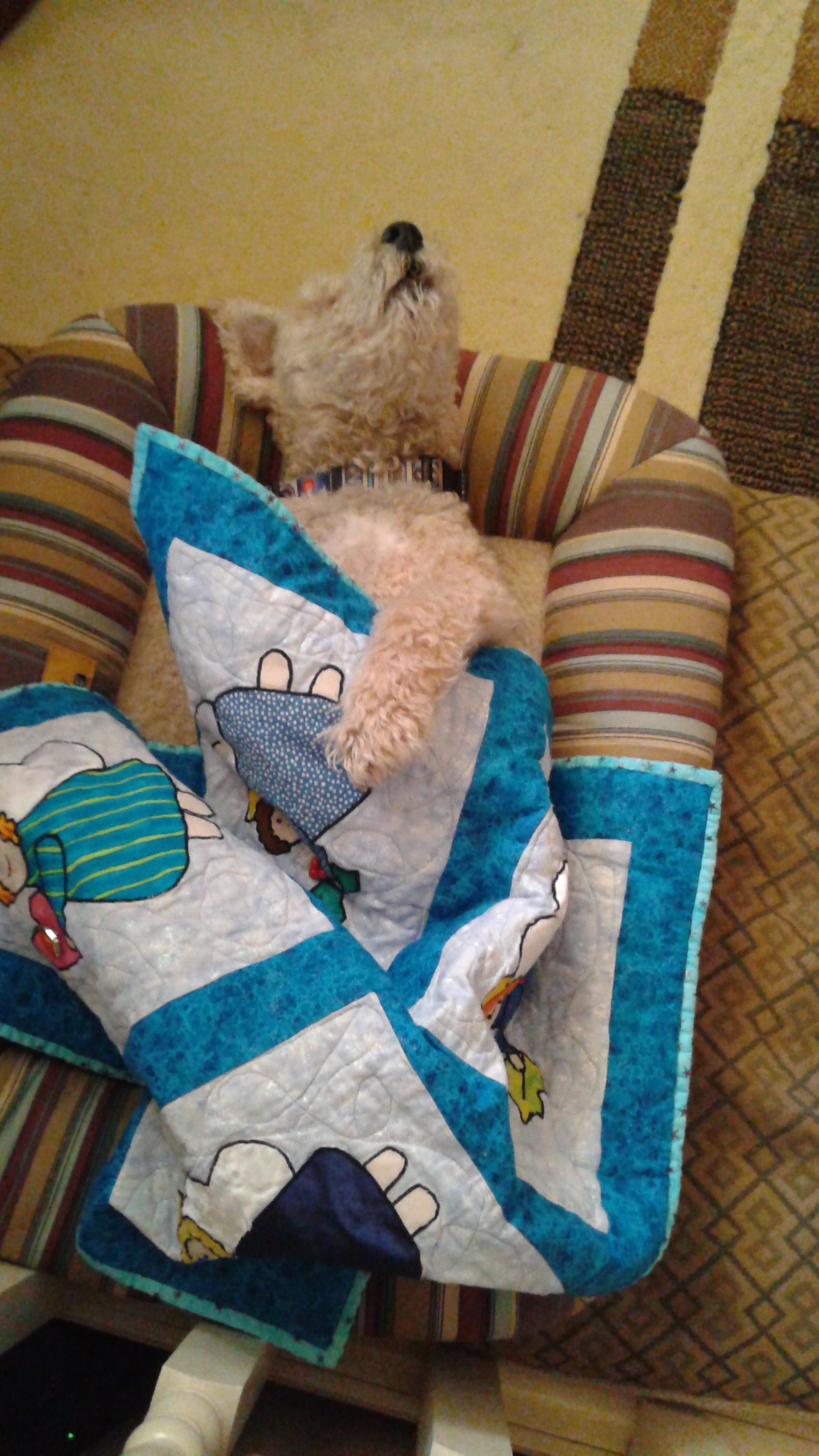
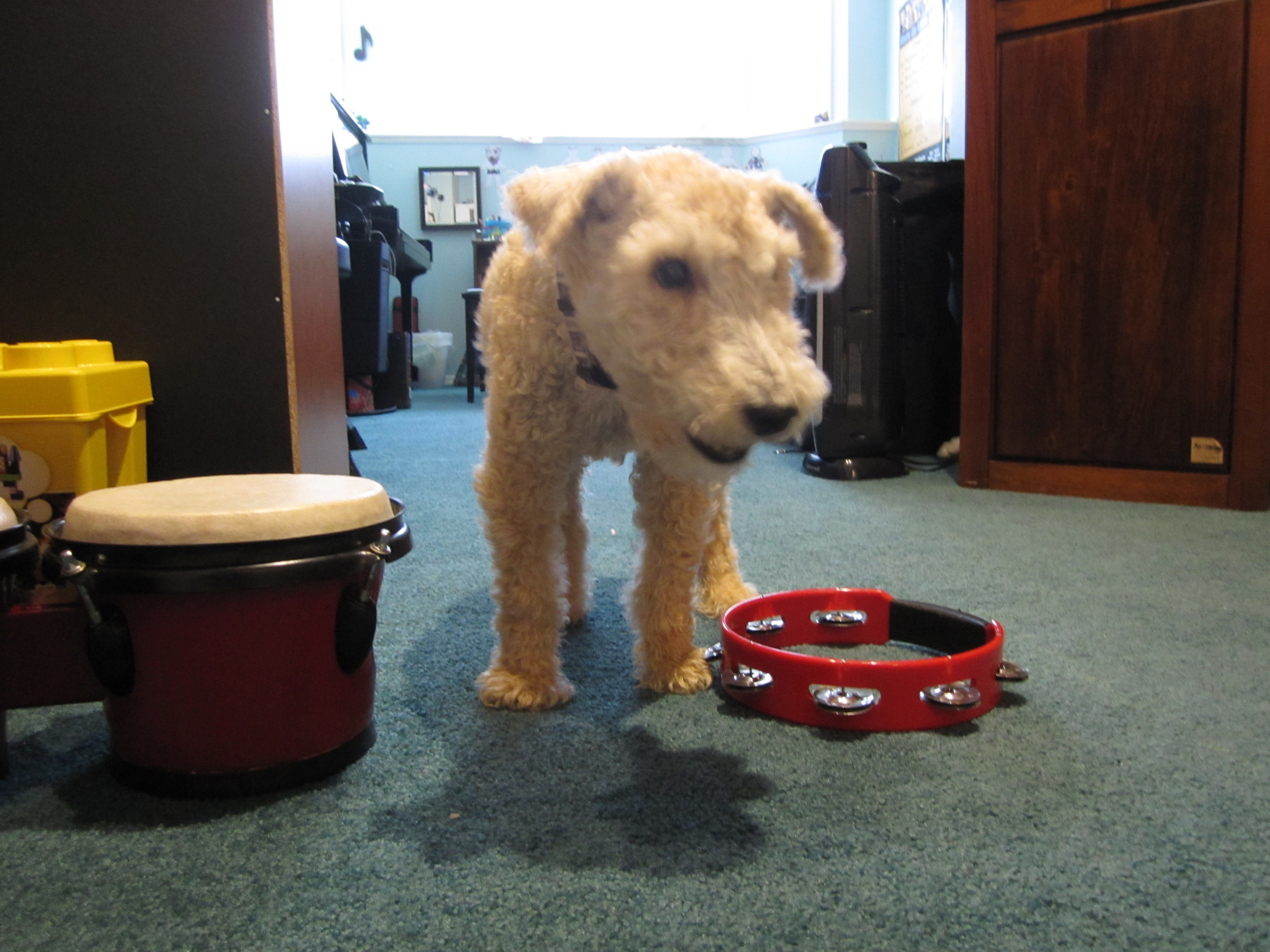

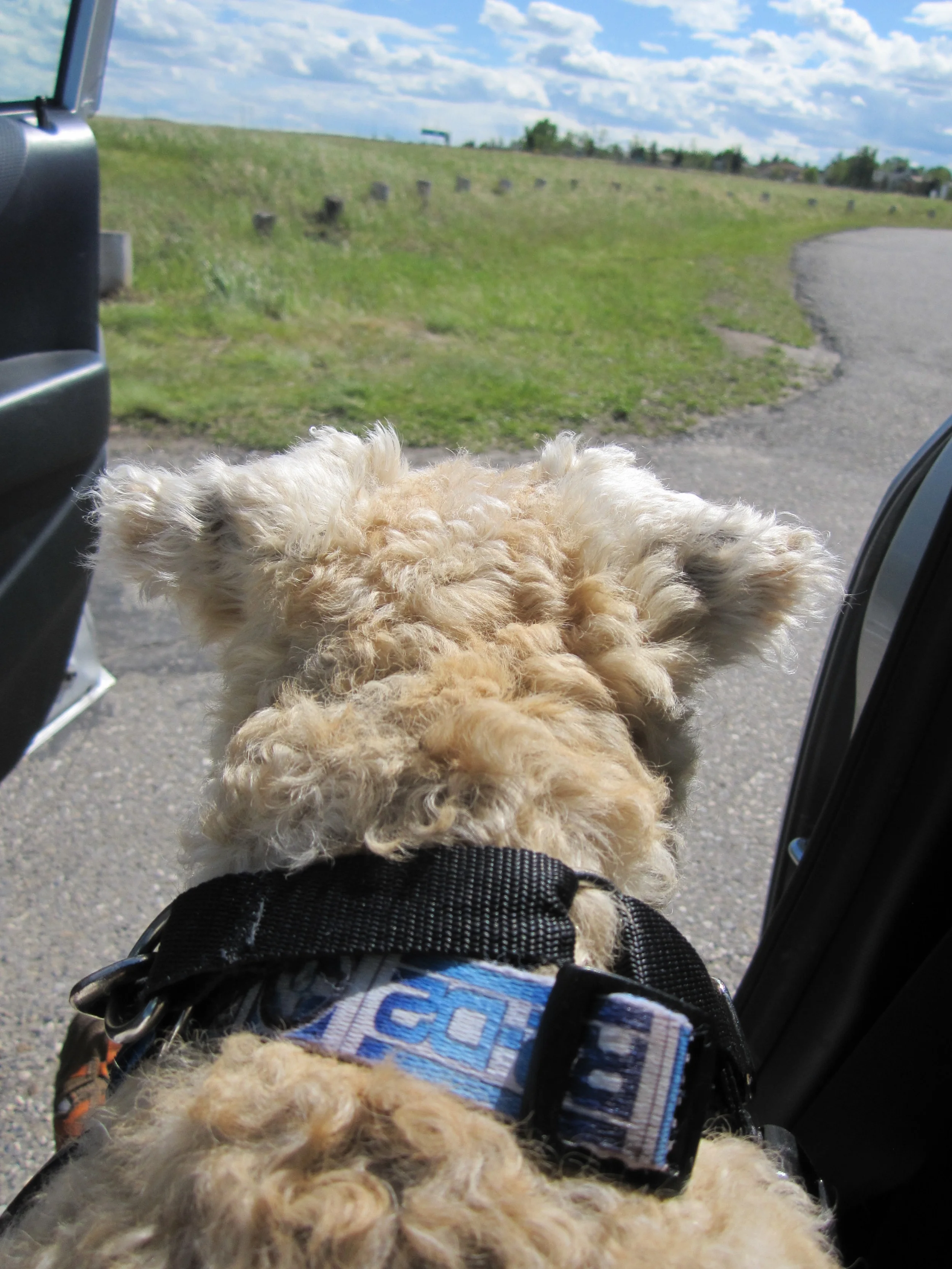
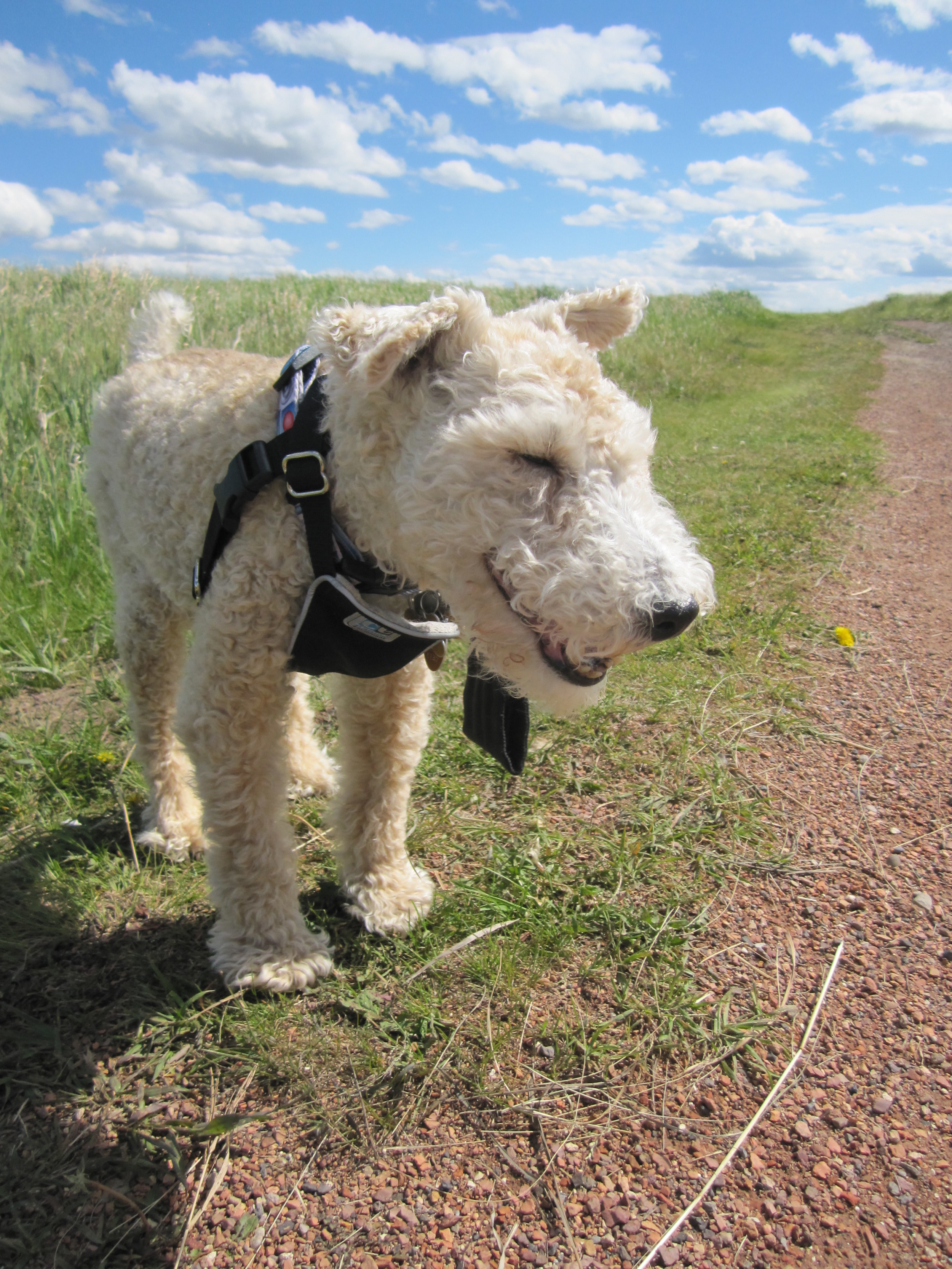
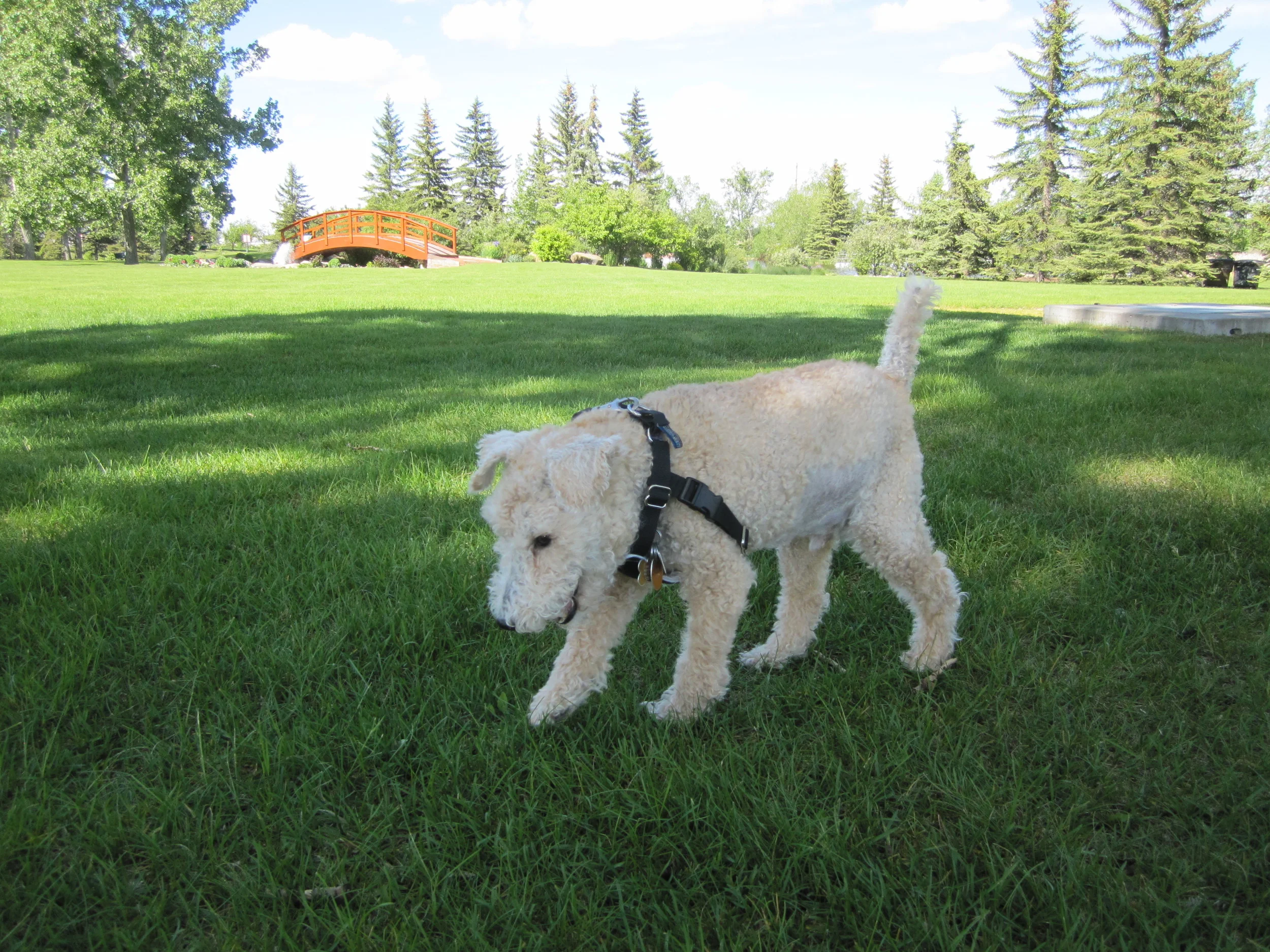
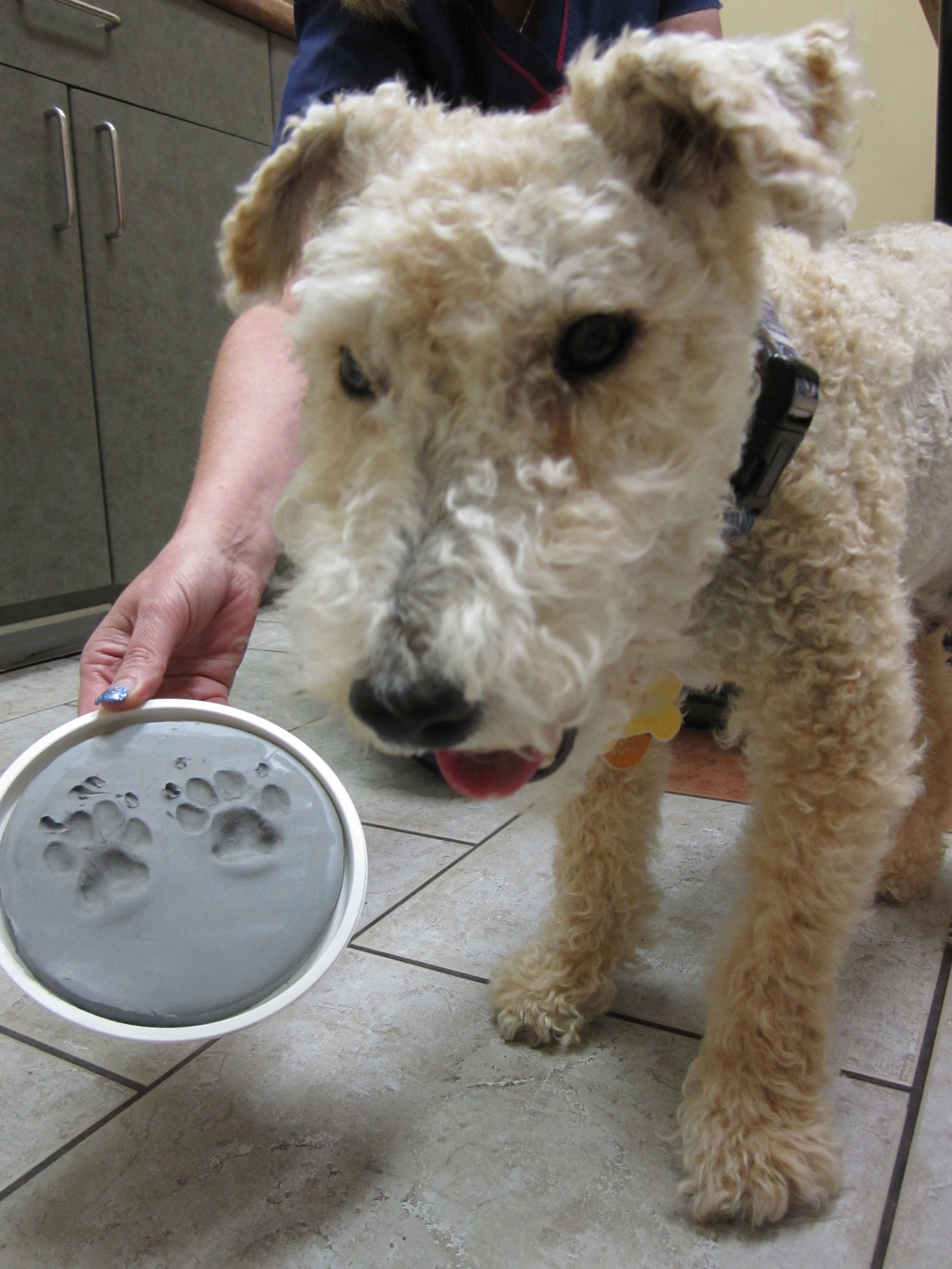
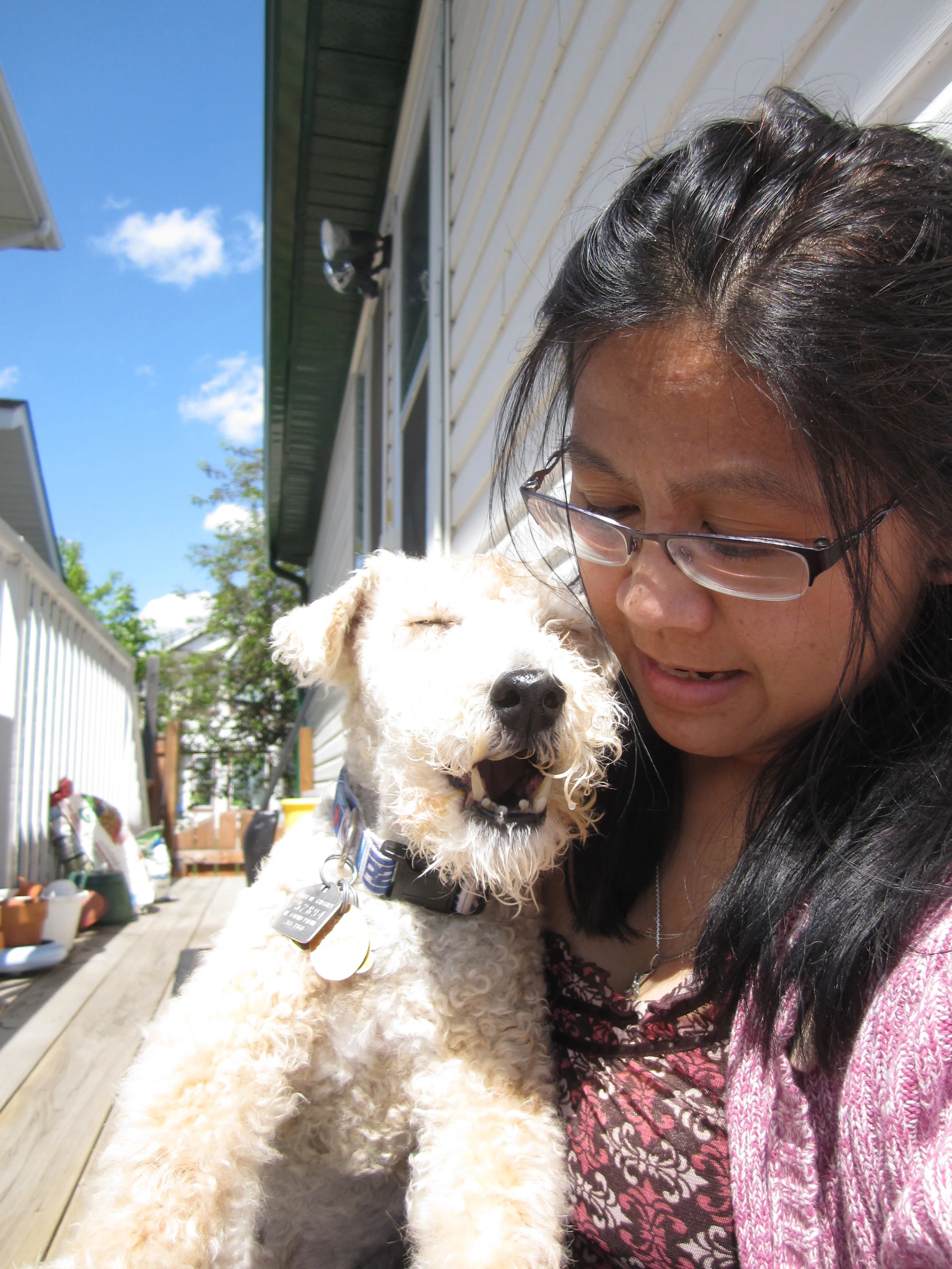
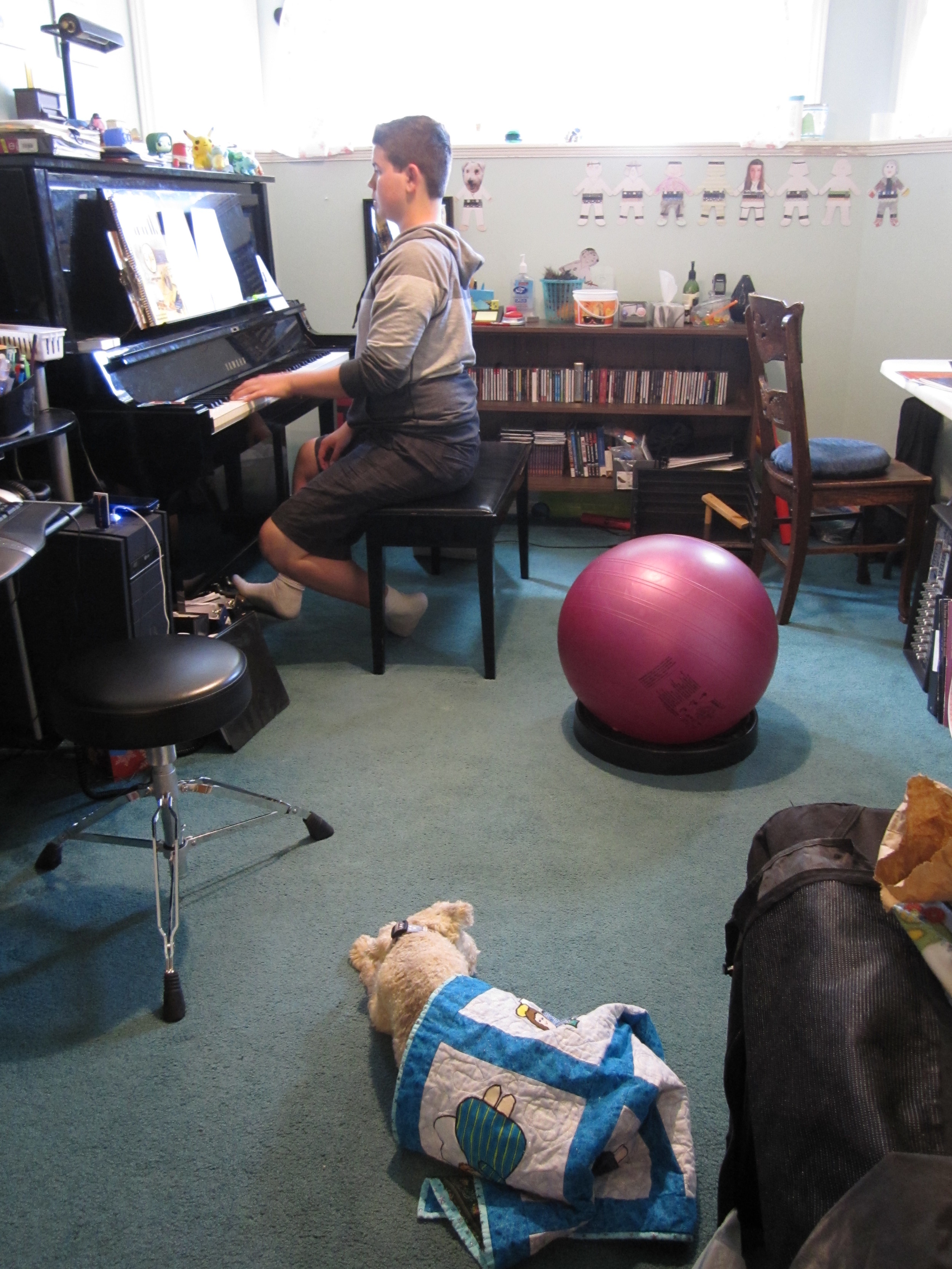

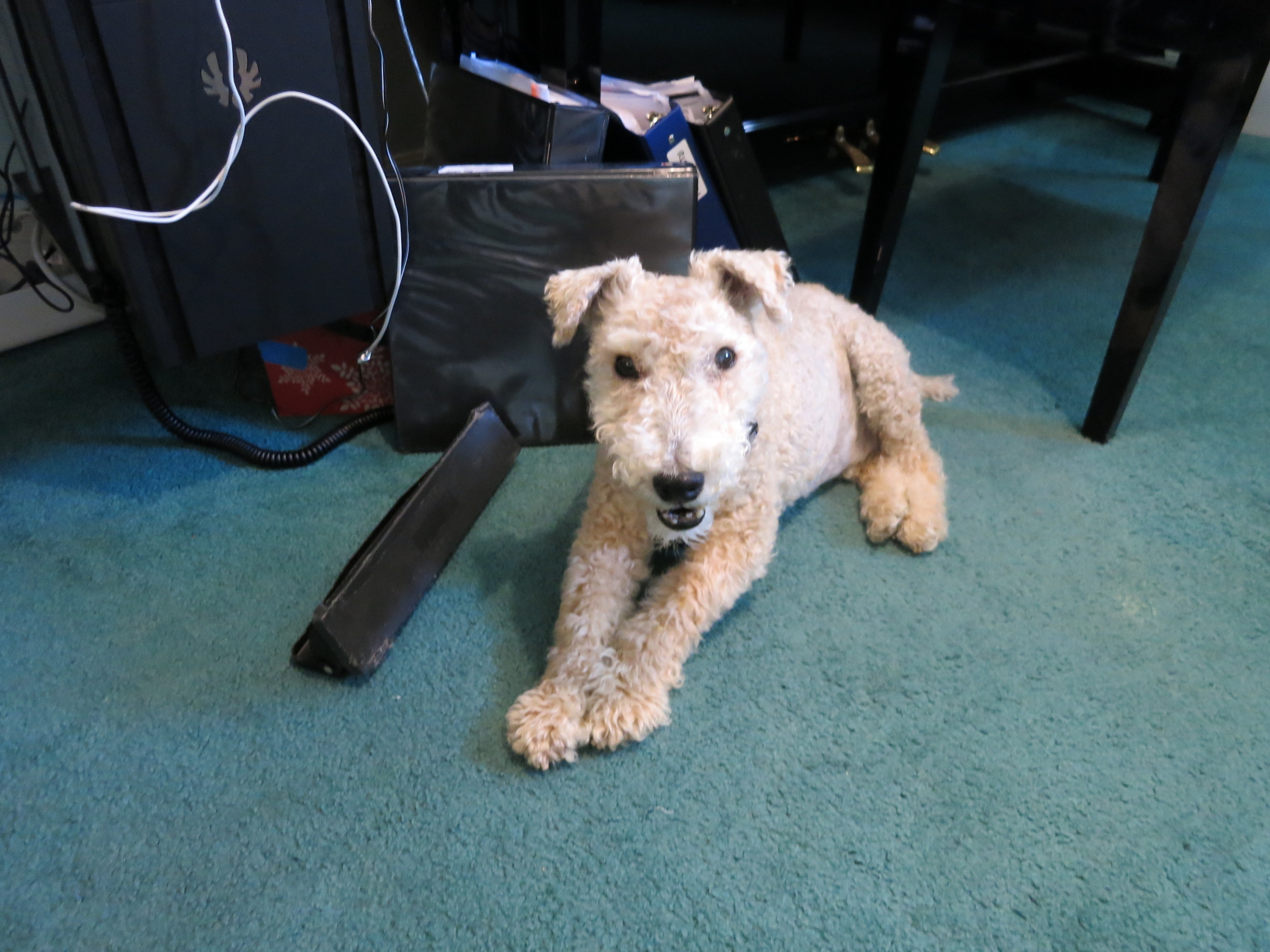
Each morning, he'd tell me with his eyes, "Yeah, it's getting harder but I'm going to give it my best today." I'd smile at him through tears and try to muster up the courage to get through the day. Maestro threw himself into each twilight adventure with gusto. He wasn't going to leave until he was ready.
As each item got checked off Maestro's Bucket List, I could sense him fading a little more. My heart broke repeatedly as we walked this bittersweet journey together. He lived minute by minute, moment by moment, while I was trying so hard to burn every second into memory.
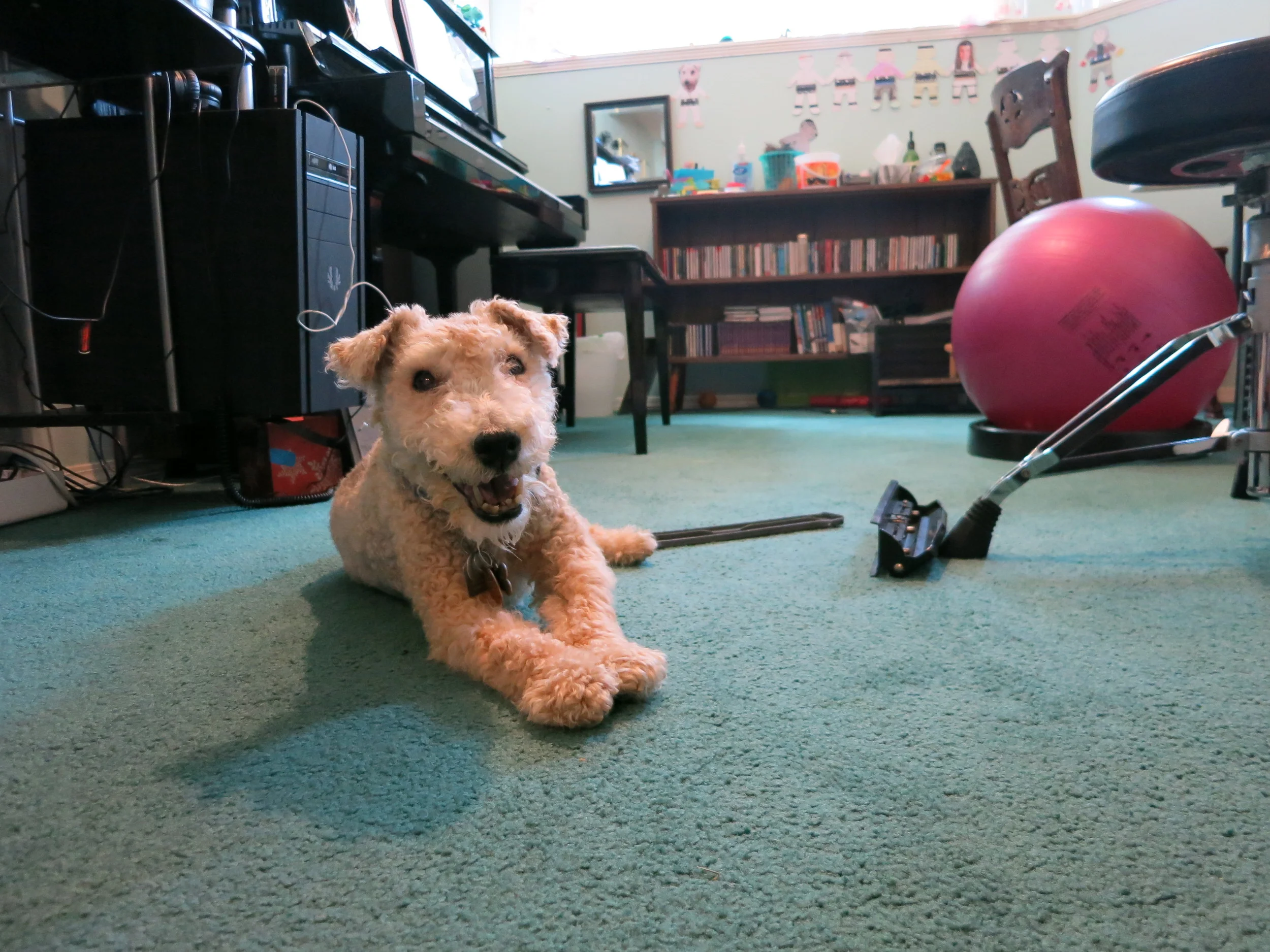
I did it my way and I did good. Credit: R-M Arca.
By the time Maestro had said his good-byes to everyone he loved, enjoyed one last night stargazing, and one last walk around the neighbourhood, he was ready to go. Once he told me, I didn't hesitate. On June 2, after 14 fun and music-filled years, chock full of adventures, Maestro, Musespeak's trusty Studio Assistant and my fur baby, crossed Rainbow Bridge. He went where and when he wanted to. Maestro's vet came to the house to help us send Maestro on his way. It was beautiful, smooth, and peaceful.
Lessons I Learned from My Dog
Today marks the seven-week anniversary of Maestro crossing Rainbow Bridge. As anyone who has grieved for a loved one knows, it's an emotional roller coaster, with grief hitting you in waves.
I've had some time to reflect upon what I have learned from my sidekick and furkid. If one could put Maestro's life philosophies into words, I'd say they are:
Work hard. Play harder.

Maestro, like many Lakeland Terriers, loved the water. (Credit: R-M Arca).
Maestro took his job as Musespeak's Studio Assistant very seriously. It only took him two weeks to memorize a new teaching schedule for the year. He scolded students and me alike if we didn't stick to the schedule.
But when it was playtime, he played even harder. The intensity was sometimes frightening, especially when it came to water, his Awful Mad Kitty, and his hole punch.
Tell it like it is.
If someone's scales were subpar, Maestro would tell you. Why beat around the bush?
At last month's year-end party, my students all shared stories of Maestro walking out of their lessons when he wasn't pleased, or breaking out into song when he was pleased with how they played. Once, he scolded a student while she played a Mozart sonata. Through laughter, I asked her to tell me why Maestro was upset with her playthrough. She knew. I knew.
Go big or go home.
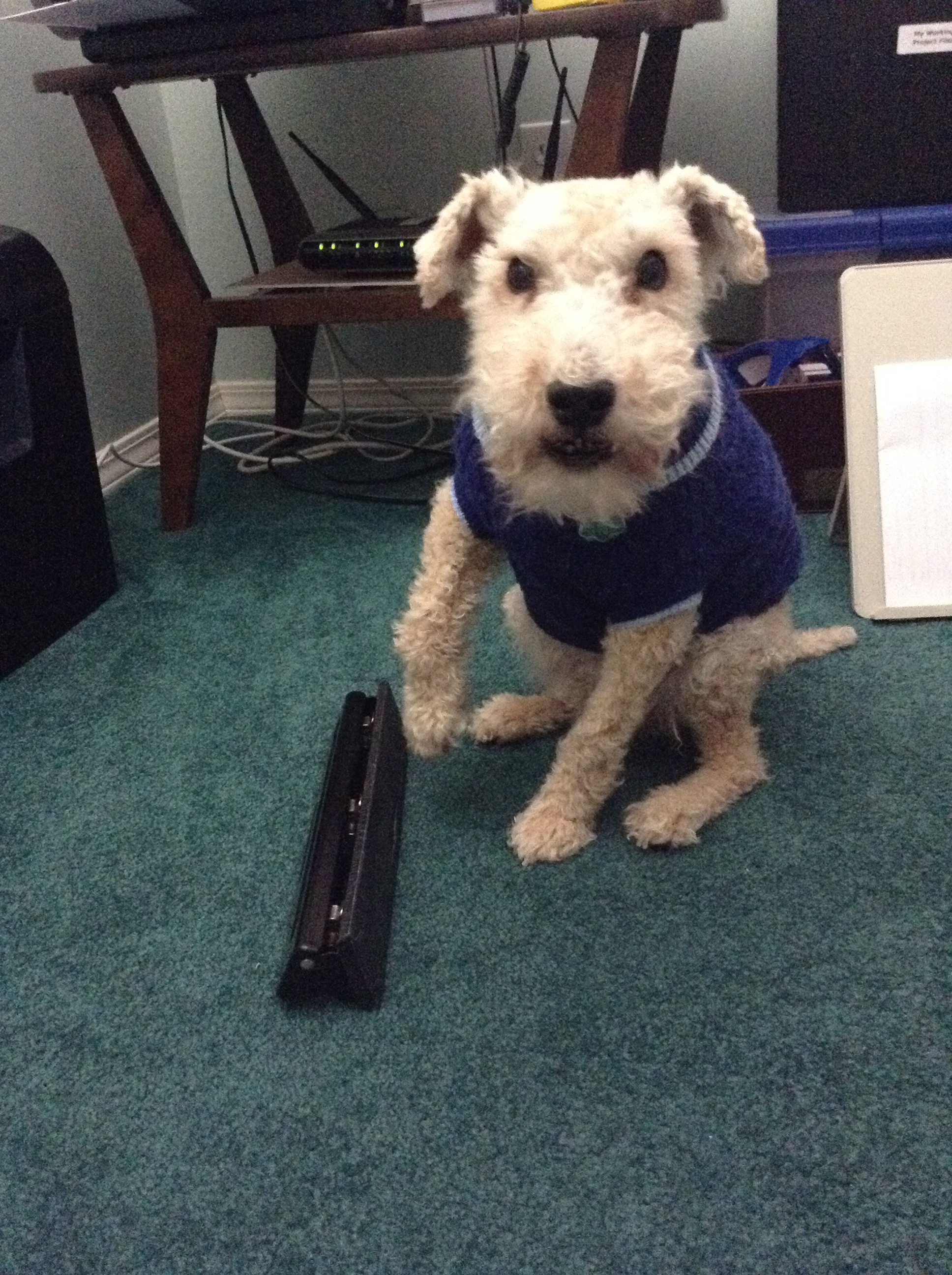
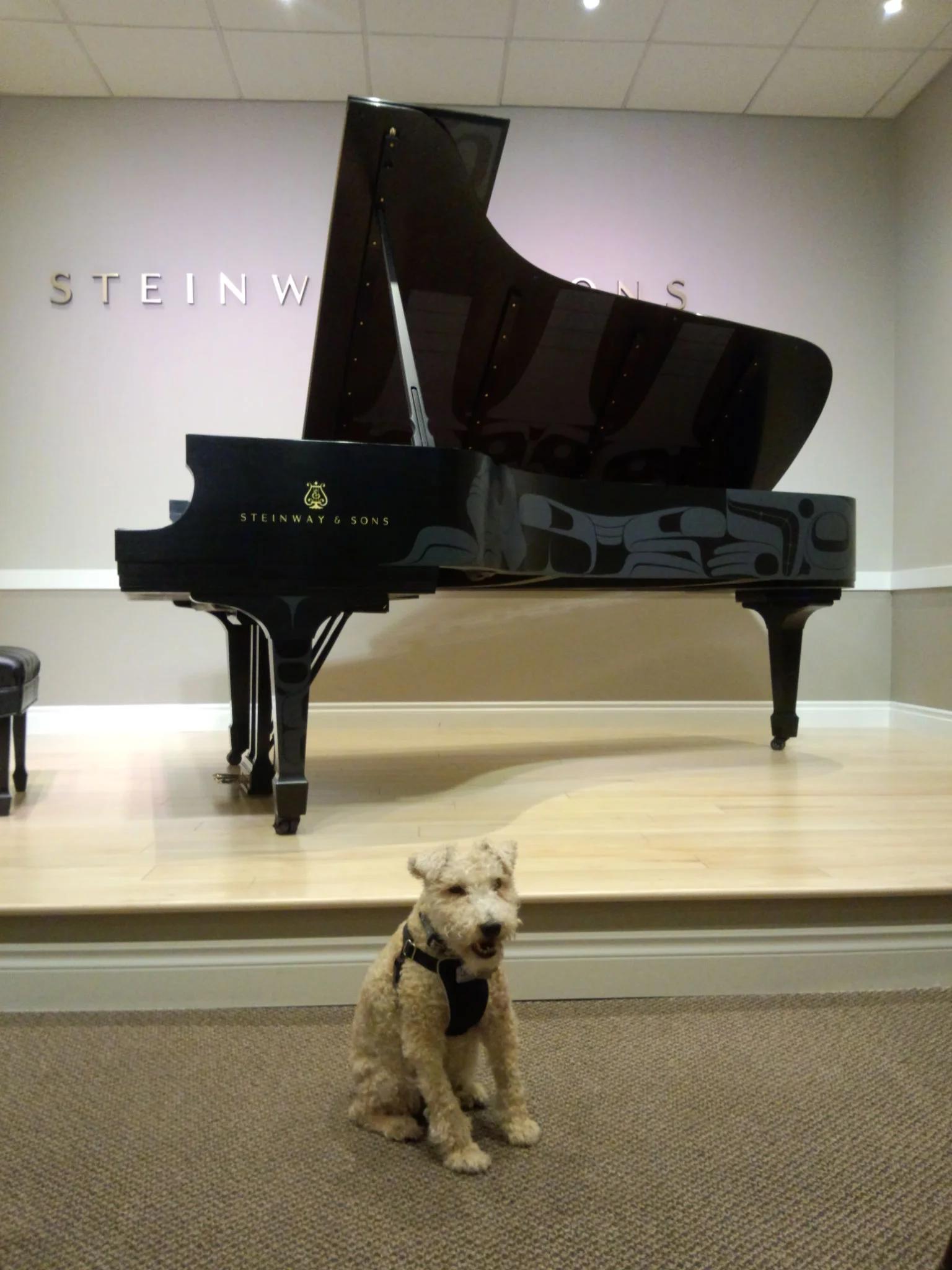
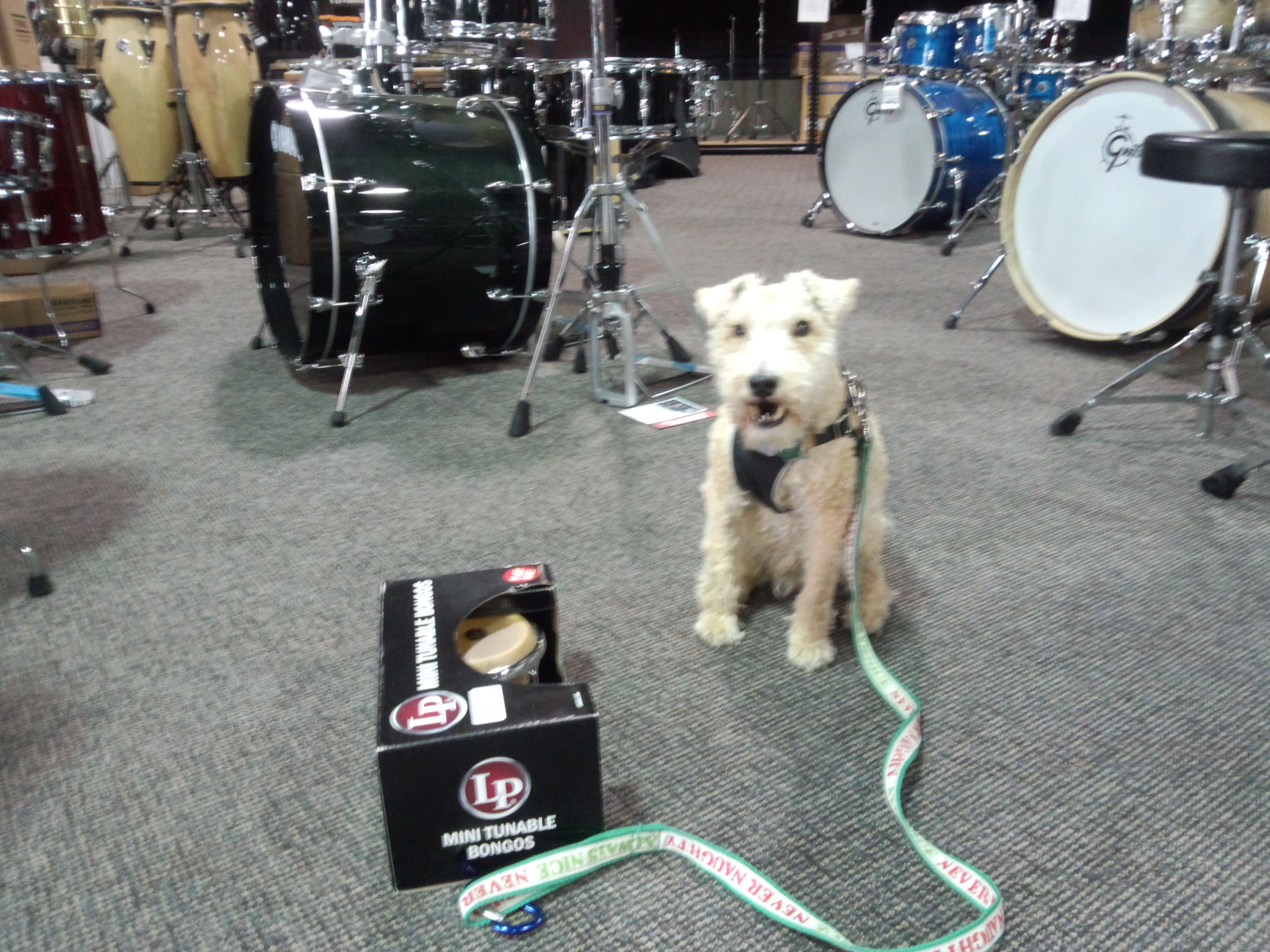
Whether it was playing the hole punch or singing Happy Birthday, Maestro believed in committing to something fully. "Go big or go home," also applied to his tastes in musical instruments. Maestro preferred the $30 tambourine over a kids' toy. He looked pleased as punch to pose with the $600,000 Steinway piano. We got into an argument at Long & McQuade one day over the $250 tablas.

Never give up!
When Maestro was diagnosed with arthritis and Intervertebral Disc Disease, he didn't let that stop him from working or going on adventures.
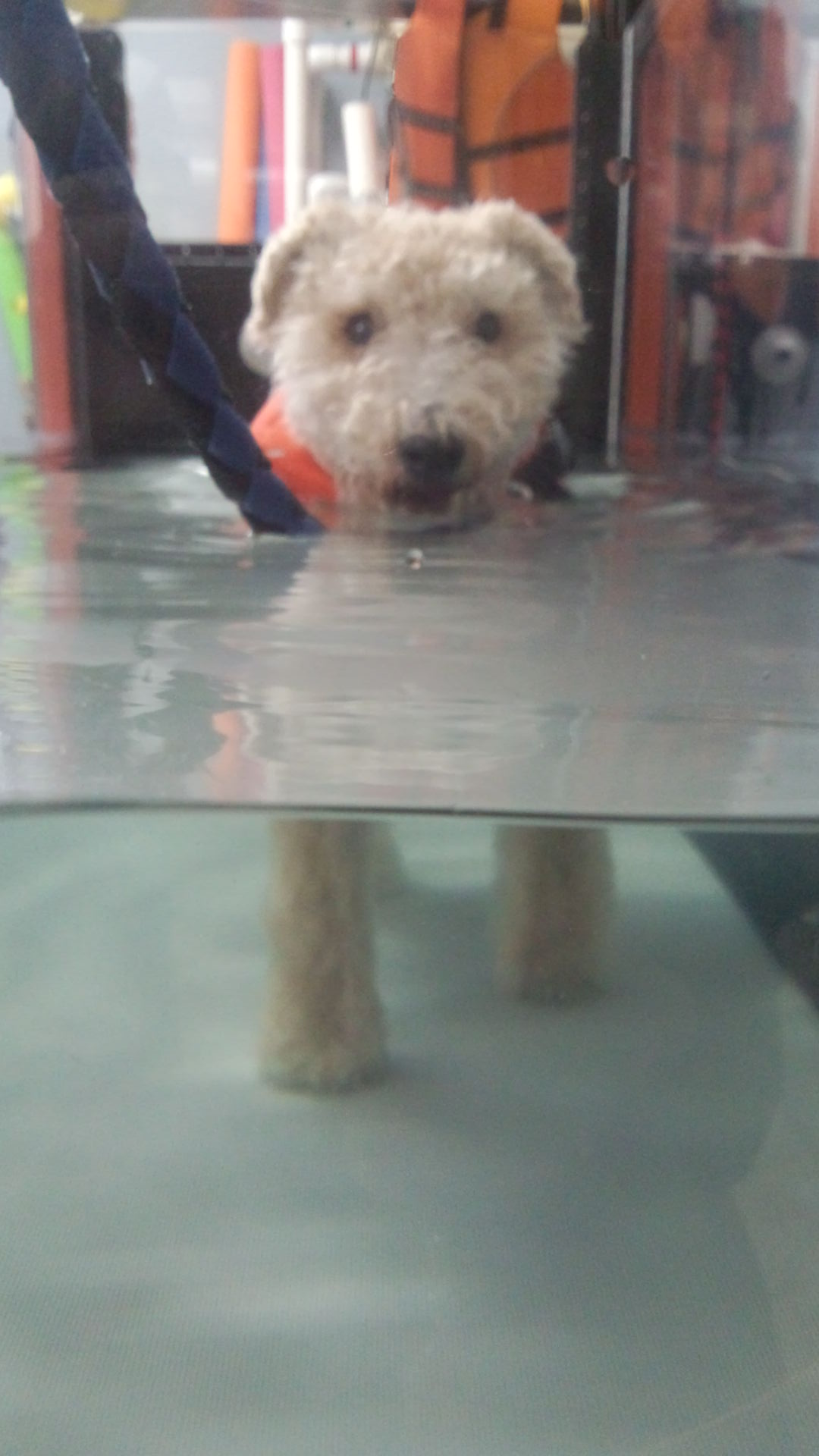
With acupuncture from Dr. Mark at the Bridlewood Veterinary Clinic, laser and aquatherapy from Dr. Catherine at Canine Aquafitness, Maestro was able to keep trucking along for a few more years.
Aquatherapy helped manage Maestro's canine arthritis and Intervertebral Disc Disease.
Live well. Live NOW!
Maestro was a huge supporter of eating well, sleeping well, and getting out there to enjoy life. He loved the Rotation Diet. He preferred fresh foods. He loved carrots.
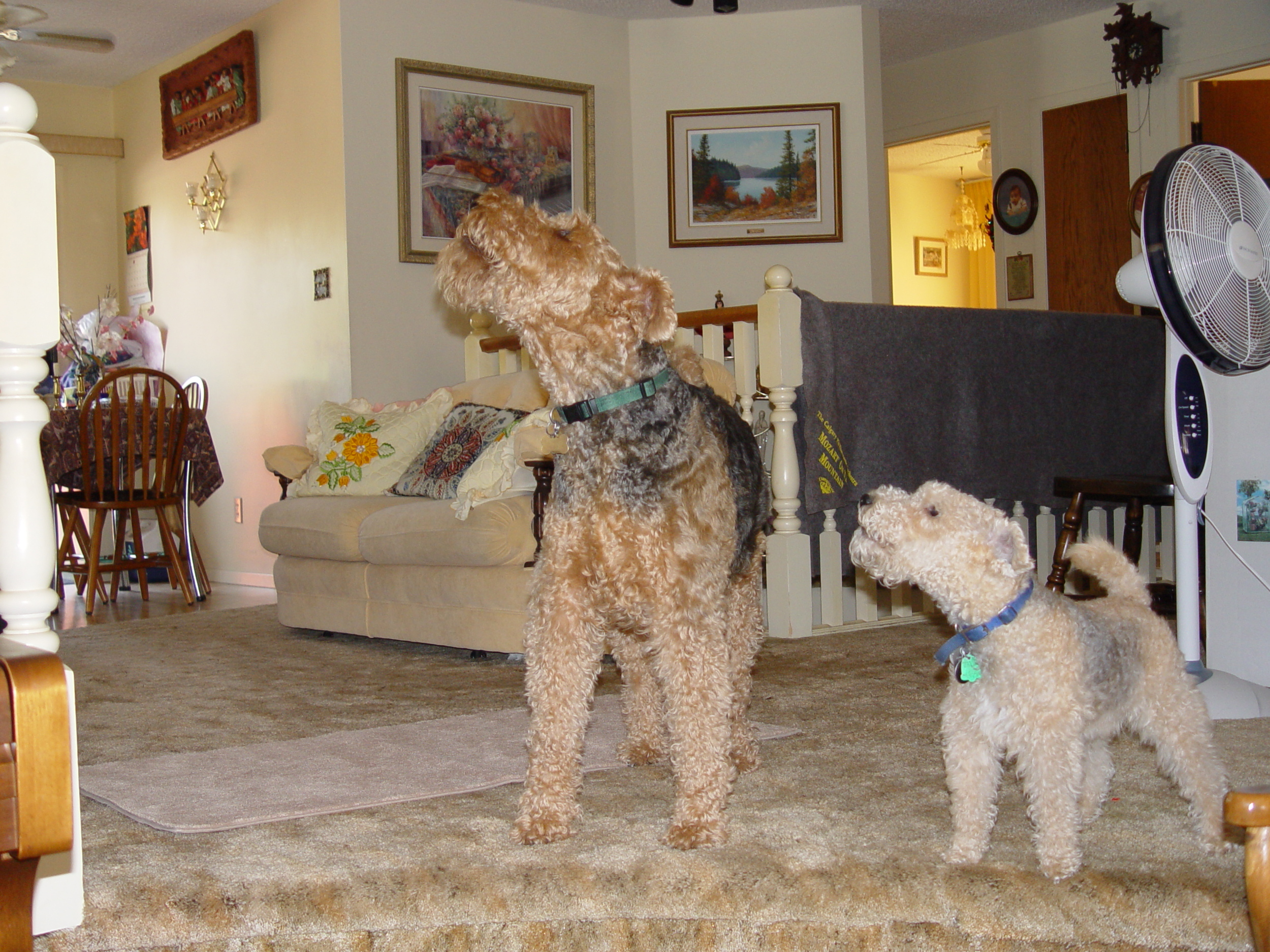
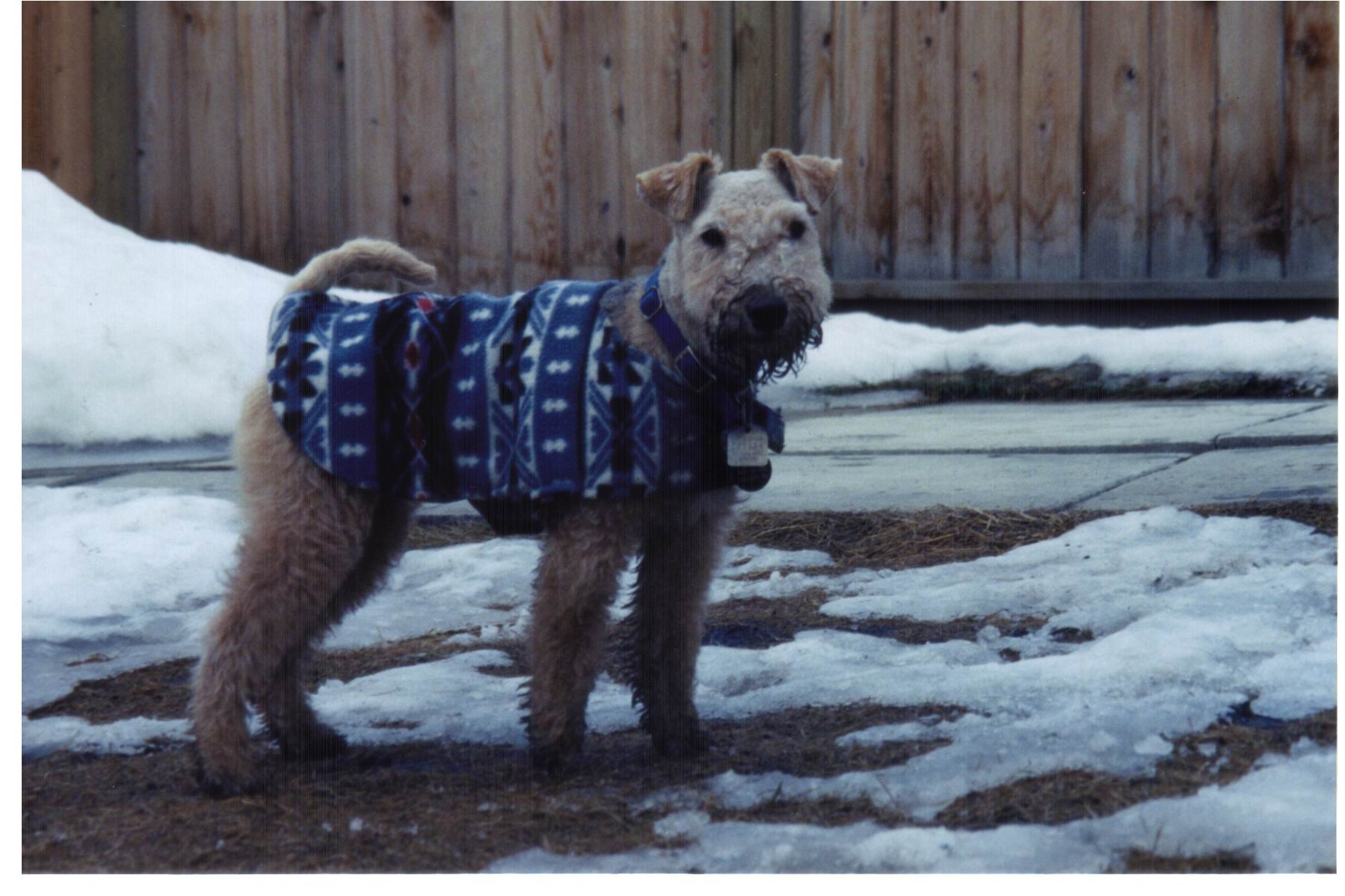

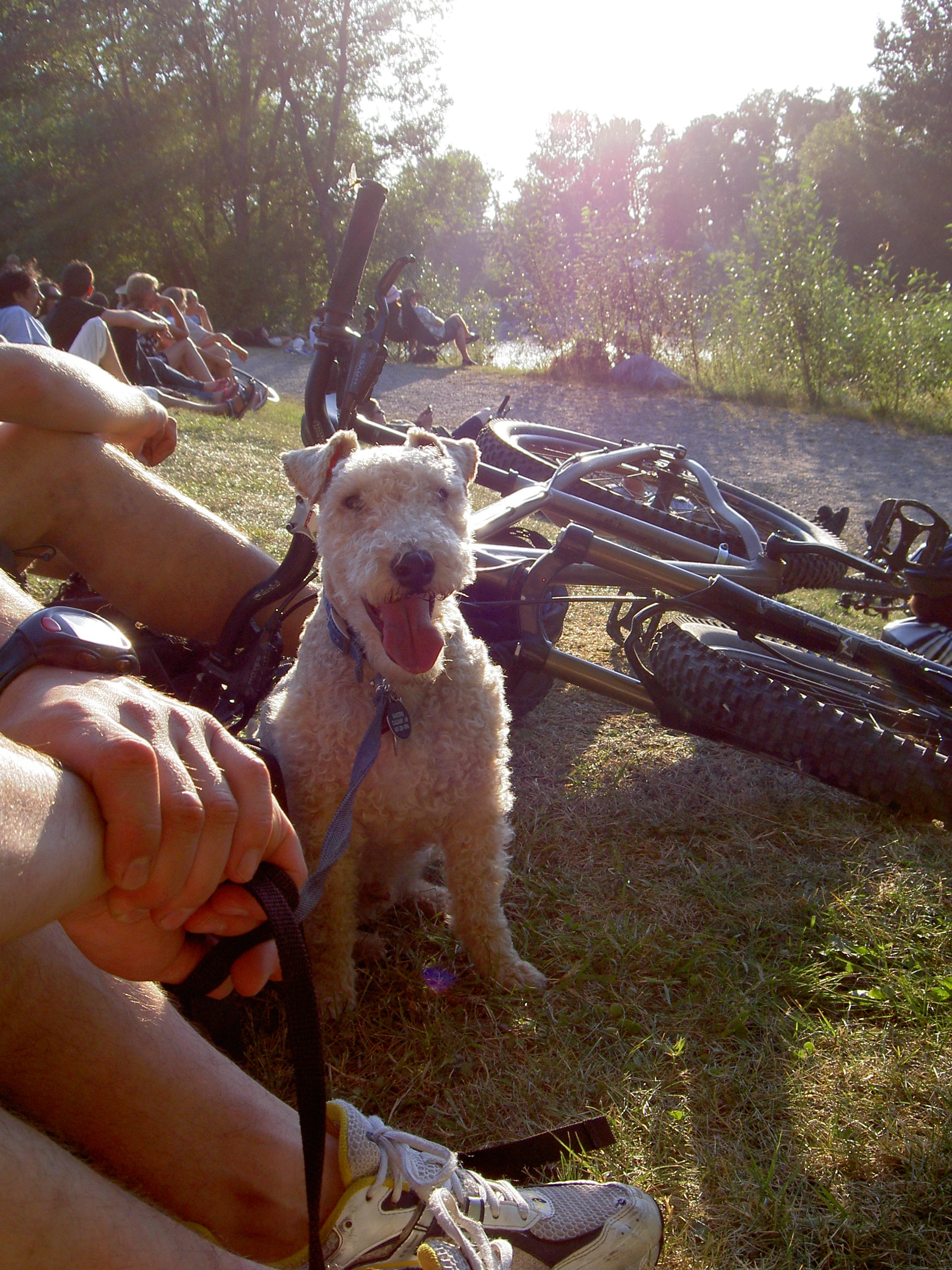
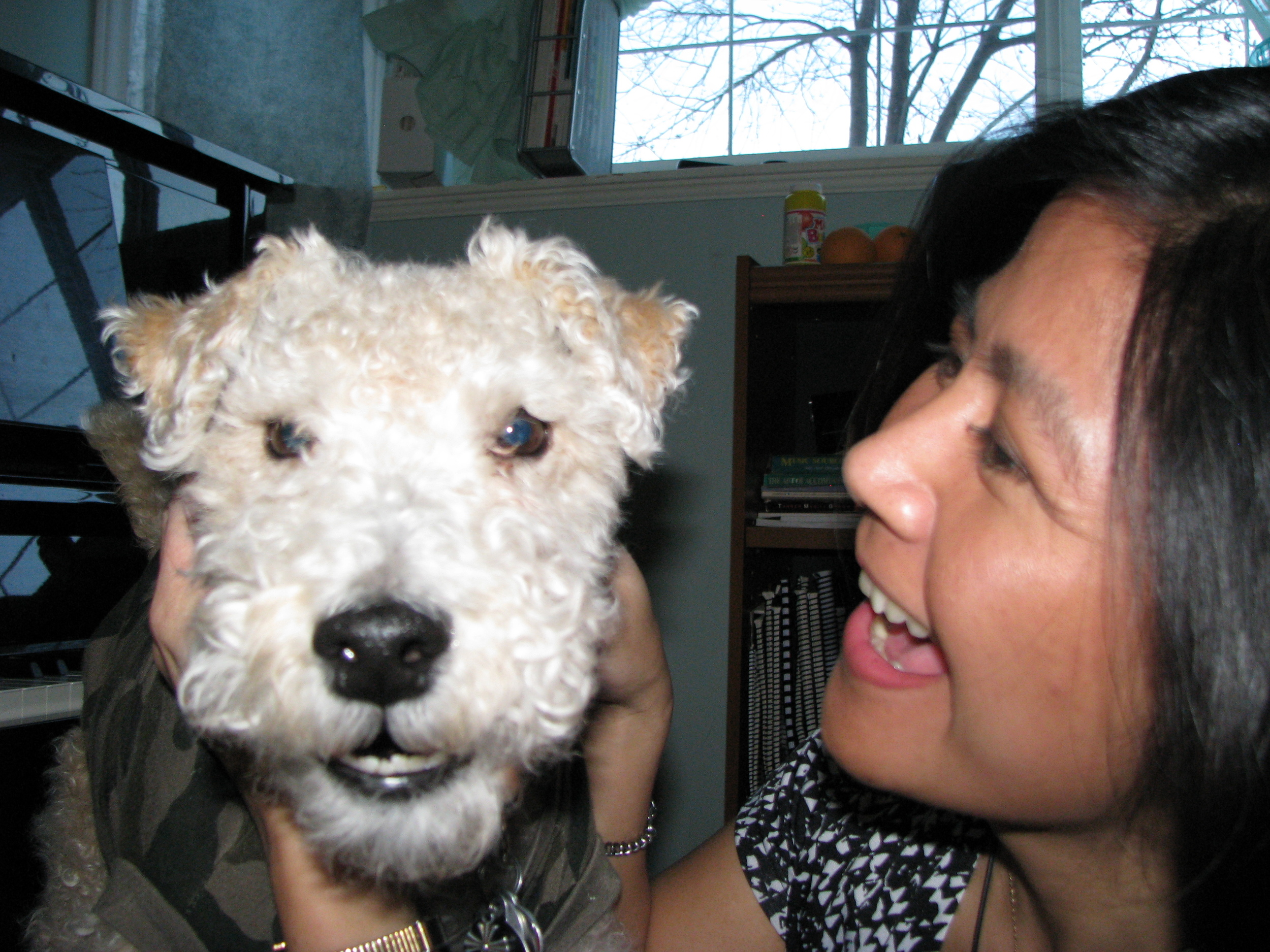
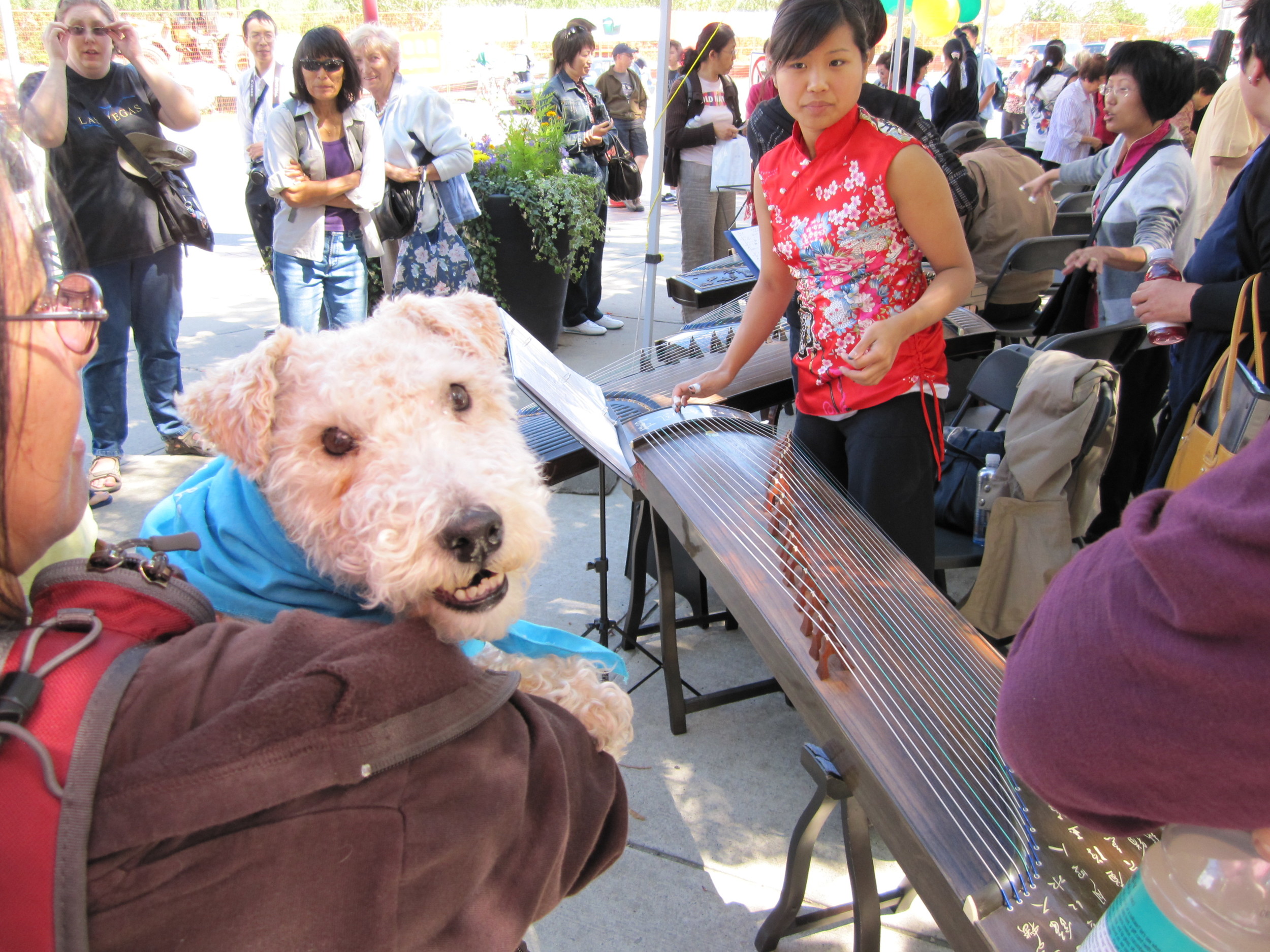

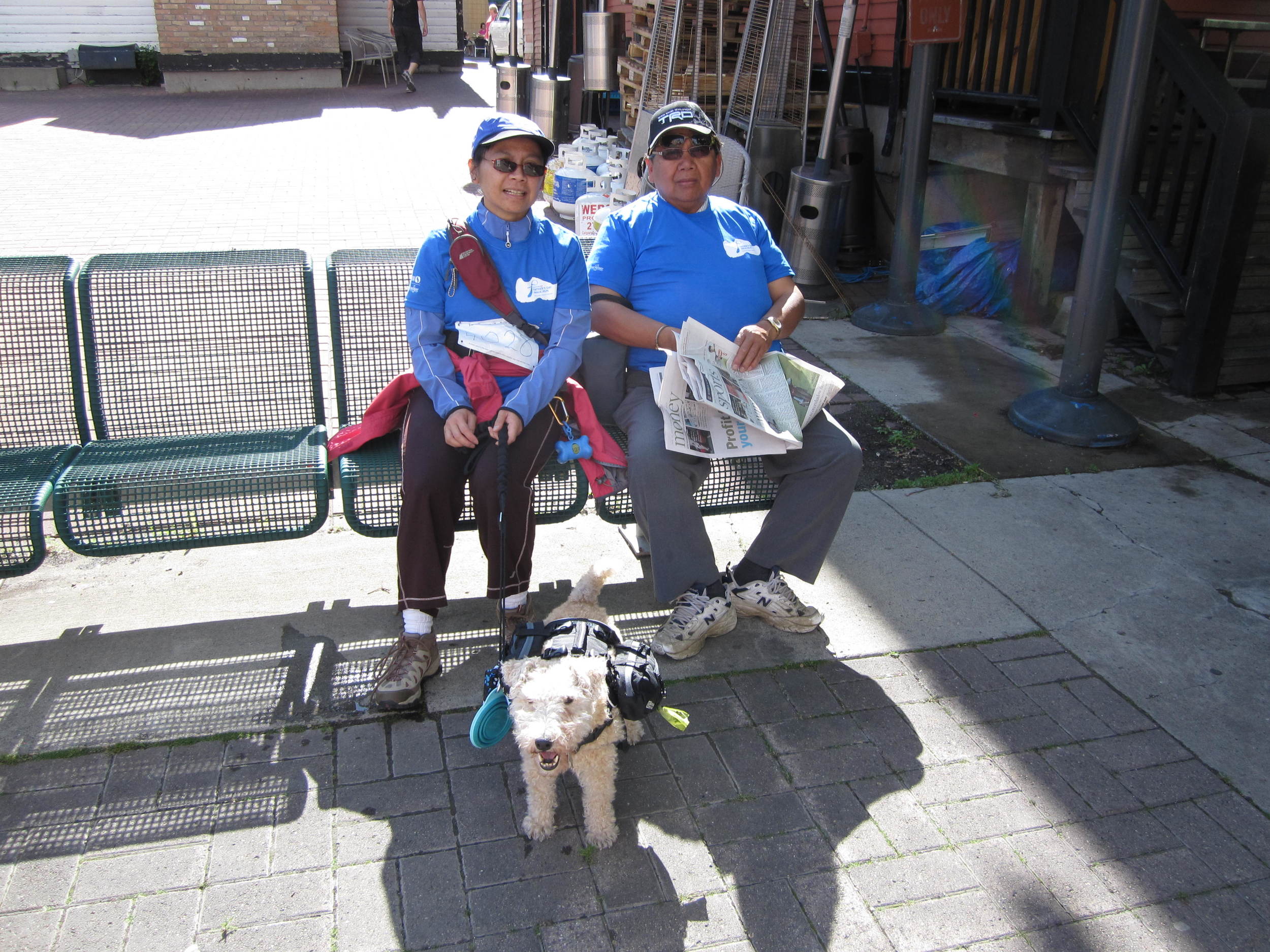

He also enjoyed living in the moment, as surely all of our furry, feathery, and scaly family members do. That is one lesson that will take many of us years to get.
"What a huge legacy he has," one of my students said one lesson, as we looked around at all the different ways Maestro has left his mark in the studio: his student incentive programs, Maestro's Market, his bed and Maestro's Music Tricks. Like this paw imprint that he did days before his death, Maestro has left his mark in countless ways that will be felt for years to come.

Maestro was so proud of himself when he completed this. Credit: R-M Arca.
Social Media Links
archives
- #YYCArts 32
- #YYCEvents 39
- Collaborative Music 25
- Community 11
- Composing & Arranging 6
- Entertainment 139
- Entrepreneurship 53
- Freebies 3
- Gardening 1
- Geeking Out 65
- Health & Wellness 120
- Improvisation 25
- Interviews 28
- Learning Music 188
- Martial Arts 13
- Memorization 7
- Music 230
- Music Careers 9
- Music Education 196
- Music Examinations 7
- Music Exploration 55
- Music Gigs 14
- Music Lessons 6
- Music Performance 32
- Music Theory 13
- Musical Instruments 12
- Musician Health 19
- Pets 57
- Piano Technique 12
- Practicing Music 120
- Productivity 20
- Professional Development 11
- Recommendations & Reviews 93
- Recreation 71
- Social Media 6
- Spirituality 10
- Studio Management 33
- Studio Technology 50
- Teaching Music 146
FOLLOW THE STUDIO on Instagram

Affiliate Links
As a Sheetmusicplus and CD Japan affiliate, I earn from qualifying purchases. The earnings help fund the Studio’s blog and YouTube channels. Your support is greatly appreciated.


FOLLOW Budo no Tabi on Instagram