THE MUSICAL MUSE
Blog dedicated to music education, practice tips, health
&
wellness, and geeking out.

Friday Freebie: 2020/21 Goal Setting Sheet
This week’s Friday Freebie is a goal setting sheet for music students and teachers.
It’s been a while since I’ve shared some of my handouts. Here’s the goal setting sheet that I am giving to my students next week.
The front side of the document is for goal-setting. The flip side is the student’s learning timeline, where teachers may add milestones.
Download the 2020/21 Goal Setting Sheet here.

Fostering Self-Assessment with Cross-Training
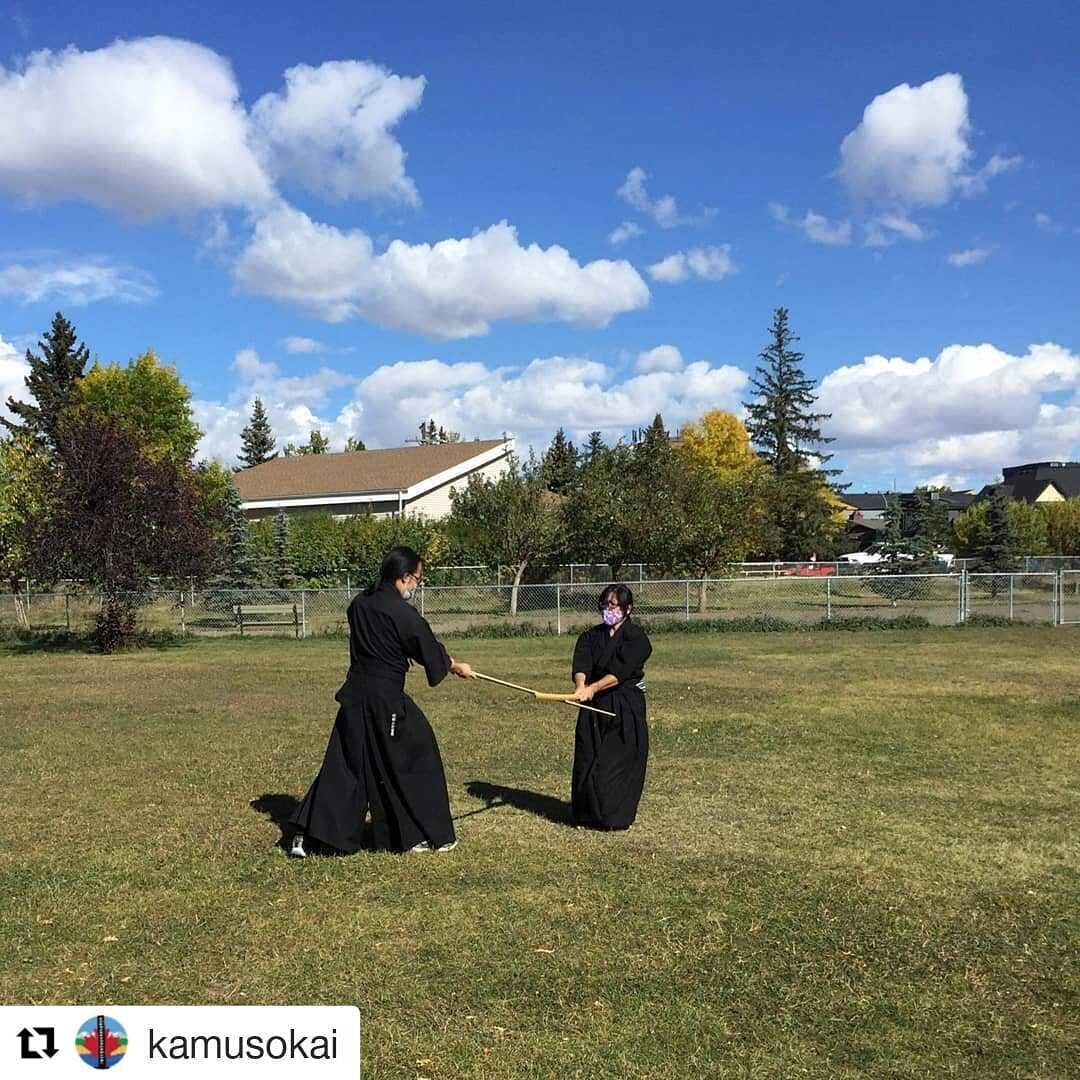
For someone who trains in four somewhat rare martial arts, the Zoominar was a priceless opportunity to work with some of the top instructors in Canada, to listen to one of the highest ranking instructors in the world from his home in England, and to meet practitioners from around the world.
The focus of all the sessions was to give attendees tools to take ownership of their physical distancing training. Immediately, I could see how these self-assessment tools and drills could be adapted to help music students do the same. Here are some of the tools and tips that my students and I have added into our practicing.
Originally published in the July 2020 edition of APTA News & Views.
One of the positives from the COVID-19 pandemic is that we are able to attend classes and seminars from the comfort of our own homes. On the May long weekend, I was able to participate in an international martial arts seminar that was hosted in Guelph, Ontario. For someone who trains in four somewhat rare martial arts, the Zoominar was a priceless opportunity to work with some of the top instructors in Canada, to listen to one of the highest ranking instructors in the world from his home in England, and to meet practitioners from around the world.
The focus of all the sessions was to give attendees tools to take ownership of their physical distancing training. Immediately, I could see how these self-assessment tools and drills could be adapted to help music students do the same. Here are some of the tools and tips that my students and I have added into our practicing.
Galligan Sensei’s Quadrants
Carole Galligan sensei is the highest ranking female in Canada for Iaido, the art of cutting from the sword draw. With her preparing for her 7th degree black belt grading, she shared how she was continuing to train without the benefit of being in the same room as her sensei. Like music teachers, sensei normally physically adjust arms, hands and body position or demonstrate concepts via partner work.
She held up this diagram while saying that each of our techniques contain these elements. Then she led us through various exercises to identify our dominant quadrant. Our weakest quadrant lays kitty-corner to it.

Galligan sensei holds up her quadrants for us to work through during the 2020 Guelph Seminar.
In discussion with my students, this is how we adapted sensei’s quadrants for music:

My teen and adult students have set out to identify their overall dominant quadrant, as well as their dominant for each piece. That done, they are now focussing their practices on “levelling up” their weakest. The younger students are picking one quadrant to focus on per practice.
Whether my students think that Galligan sensei is cool or they love the tool, I am seeing and hearing immediate results.
What’s Wrong with this Picture?
Galligan sensei also showed us several photos of her doing various techniques incorrectly and asked us to identify what was wrong. She then challenged us to do the same when reviewing photos and videos of ourselves practising. Some practitioners admitted that they were uncomfortable watching themselves. Sensei recommended they start by studying photos and videos of other people.
This translates extremely well to music practice. This past week, I have played videos of other people performing my students’ repertoire, asking them to identify what was good (and not so good) about the performances. Some of them have already jumped to Stage 2, which is to record and review their own practices.
Play it Backwards Drill
Galligan sensei confused several of us when she asked us to execute a kata (form) from end to start. It jolted us all out of complacency, forcing us to really concentrate. By the time we performed the kata normally, we noticed that overall, we were cleaner and smoother.
Several of my students have jumped onto this drill, immediately applying it to all of their troublespots. Others needed more repetitions or smaller practice chunks. The improvement has ranged from noticeable to incredible.
Green Sensei’s Adaptability Drill
In his session, David Green sensei (6 degree black belt in Iaido) covered changing one or more elements in our practice space and routine to jolt our brains out of complacency and challenge our ability to adapt. For example, training on a different surface or facing a different direction.
With us being housebound we, along with our students, have lost a bit of our adaptability savvy developed from performing on different pianos. My students came up with these changes to practice adaptability: change the lighting, practice with eyes closed, move objects and music to a different spot in the room, change chairs, and to record practices.
Tribe Sensei’s Tips on Dealing with Conflicting Advice
Eric Tribe sensei (6 degree black belt in Iaido and Jodo) is the CKF Head Examiner for Jodo in Eastern Canada (the art of the Japanese short staff), as well as the President of Jodo Canada. In his session, he presented video clips from two different instructors on the subject of technique.
On the surface, it seemed like they were coming at it from opposite sides. Tribe sensei had us try the technique, following the advice of each instructor. He then asked us to find the common ground between the two viewpoints. Between the commonalities and discussing what felt natural and logical, we were able to find our middle ground.
This also translates very well for music. My teen students have been listening to three or more performances of their pieces. Not only have they been comparing and contrasting, but they are also gaining ideas for experimentation. *
It has been a lot of fun adapting these drills and tools for music practice. My sensei have all been encouraging of this type of cross-training. Perhaps there is something that you do as a hobby or for exercise that you can adapt and use with your students. Or maybe there is something that your students do that can have applications to music. A little cross-training is good for everyone.

Music and Injuries, Budo and Injuries
A split second was all it took for me to cut a nerve in another finger, six weeks ago.
It’s amazing what can happen in a split second. That’s all it took for me to back into a parked car in my 20s. I was distracted, talking with my friend sitting beside me. It was dark and I didn’t take that extra second to do one last shoulder check. Thankfully, the vehicle was unoccupied and my friend and I were able to locate the owner. Eleven years ago, a second was all it took to lose control of a knife while cutting a pot roast, watch it fly out of my hand, and cut my finger. I needed stitches and was unable to practice piano with my right hand for at least two weeks. That made preparing for Piano Camp rather interesting.
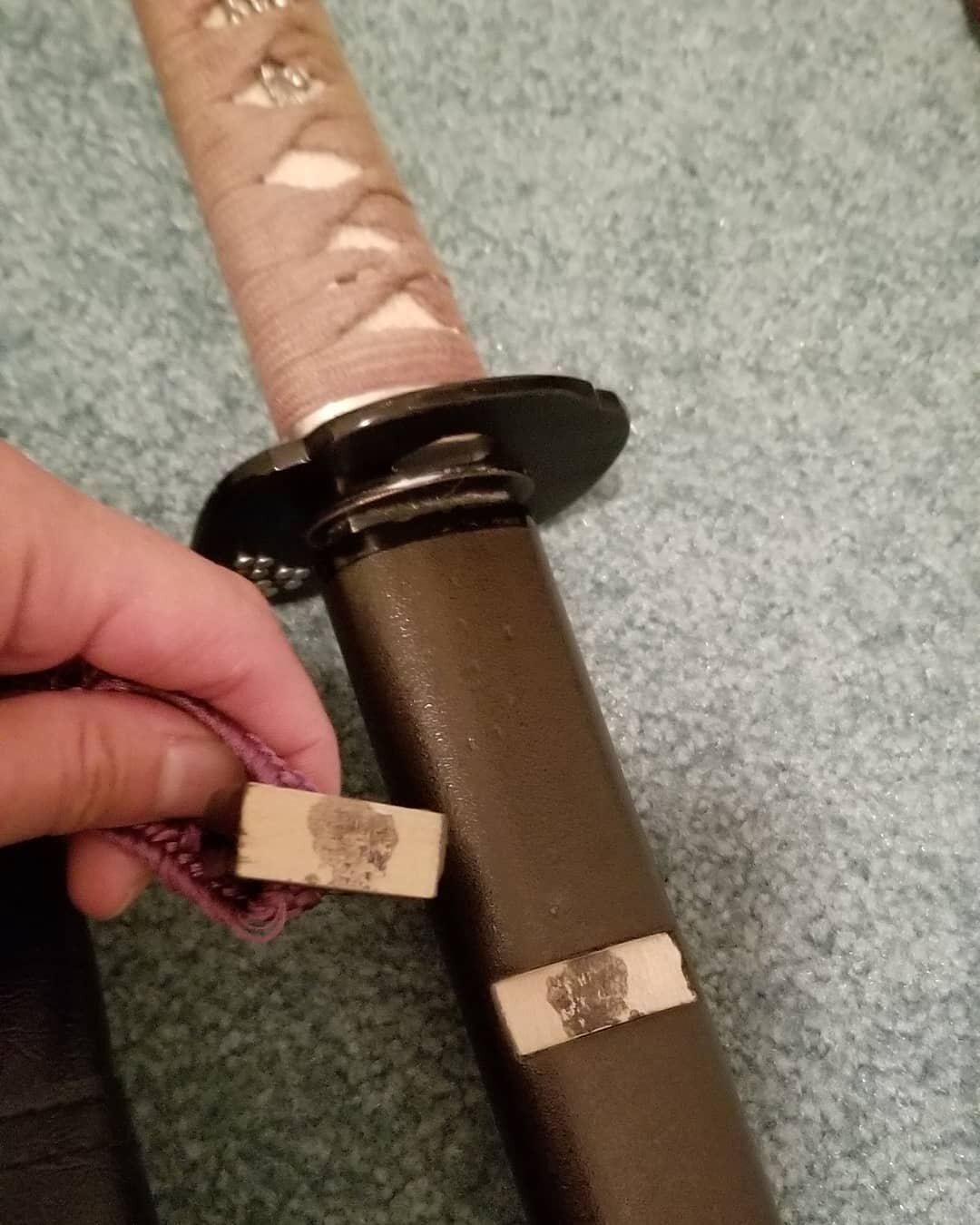
A split second was all it took for me to cut a nerve in another finger, six weeks ago. The Coles’ Notes version: Our order of new swords arrived at the dojo that evening and we were all excited. I was trying to get a new sword - a live blade - unstuck from its scabbard. When it became unstuck, I was not careful enough and LH2 got cut. The nerve was cut cleanly, so stitching it back together was a straightforward procedure. It was a stark reminder to be fully present whenever doing something that should have your complete attention.
It is healing well and my finger is expected to regain full sensation (if not, pretty darn close). For that, I am thankful to my quick thinking friends, the staff at the Sheldon M. Chumir Health Centre, my rockin’ surgical team, my physiotherapist, and God.
I was debating whether or not to write anything about it here. It was a careless moment that could have been much worse. Lesson learned. One of my dojo mates suggested that I share how playing and practising music didn’t stop because of my injury. Budo training didn’t stop because of my injury. If the desire and motivation are there, you can find ways to practice safely with an injury.
MIttori Keiko: Training by Watching
The accident happened just before Ka Muso Kai’s biennial seminar with Colin Hyakutake Watkin sensei, Menkyo Hyoho Niten Ichi Ryu and 12th Shihan, Choken Battojutsu Kagéryu. With my injured finger in a splint for three weeks, I became the official notetaker for the seminar.
Martial arts seminars are quite intense and sometimes, it is hard to remember the big revelation you had 30 minutes prior because you’re so focussed on trying to get the current technique right. Pen in hand, I was able to take copious notes and follow Watkin sensei around to catch additional tips and corrections.
As I had several students preparing for summer exams and piano camp, I still had to practice music. I dusted off the practice techniques I employ whenever I suffer an repetitive strain injury (or the aforementioned pot roast incident): scorestudy, rhythm work and studying videos of performances.
It was rinse and repeat on the budo side of things. Between notes, training manuals and videos, I had plenty to study.
One-Handed Piano and Sword Practice
Shortly after the accident, I contacted several colleagues for repertoire suggestions for the right-hand alone. I remembered that composer and pedagogue, Dennis Alexander, composed a piece for another colleague, Ingrid Clarfield (the first clinician we had at Piano Camp). Dennis sent me a list of all of his compositions for right-hand alone. Here’s Arioso:
I wound up with a sizeable list of repertoire for one hand. It’s a longer list than I actually needed, but I’ll hang onto it in case someone else suffers a hand injury. Another colleague reminded me to practice my blues licks. However, I found that hard to do without my left hand. I wound up playing a simple bass line with one or two fingers, being careful not to jostle my index finger.
I also used the opportunity to work on my ear training, by playing one hand’s piano part and trying to sing the other hand’s part. Let’s just say that needs more work.
My kouhai were surprised to see me at the dojo a week after the seminar. With their Jodo grading fast approaching, I wanted to be on hand to assist with preparations. When not coaching, I worked on my footwork and right-handed sword cuts.
Practising the Other Instruments

Brightly coloured wrap - because #YOLO.
Singing and conducting got plenty of practice time last month. I wound up filling in for our choir directors at church. It probably looked odd conducting with a finger in a splint, and wrapped in brightly coloured cohesive wrap but hey, it gave my finger something to do. I was allowed to do gentle flexing movements, so it could handle cues and cut-offs just fine. My morning routine of rolling small items around on my kitchen table with my injured index finger paid off.
My poor finger worked incredibly hard in those first three weeks to reconnect the affected nerves. The “Re-connection Parties” were quite intense whenever I practised or trained. The neurons fired madly, as if the finger knew that it should be playing or training.
Easing Back into Regular Practice and Training with a Hand Injury
The splint came off at the three week mark and I was cleared for physiotherapy. My surgeon also gave the green light to ease myself back into piano practice, but to hold off on the other instruments and putting a sword or jo in my left hand for a bit longer.
I had to train my brain to accept that LH2 feeling funny is normal - at least until the neuroregeneration process is complete. As my left hand was significantly weaker than my right, I pulled out several technical exercise books from my shelves: Schmitt, Jazz Hanon, Dozen a Day, etc. Even just practicing good ol’ scales, chords, and arpeggii, analyzing my fingers and hand position helped.
In fact, I learned that my injured finger really needs to practice daily as part of my hand rehabilitation. I didn’t practice piano for a day-and-a-half during the August long weekend. By 10 pm, my hand was screaming for the piano. Practising was the only thing that made the pain stop.
Week 6: On the Road to Being a Fully Functional Musician & Budoka Once Again
On the weekend, I eased myself back into regular training at the dojo. Remember in Harry Potter and the Deathly Hallows, when Harry and his newly repaired holly and phoenix feather wand had a joyful reunion? That’s what it felt like when my left hand was able to hold my iaito.

Left-hand and sword reunited. Photo: R-M Arca.
I started with two-handed sword cuts and working through the Seitei Iaido kata. Although I had to take frequent breaks to stretch my finger and massage scar tissue, my hand “felt” happy to be back at training.
Last night, I worked on Jodo kata in partners, as well as the majority of the Iaido kata I know. The scar tissue proved annoying more than anything else, but I managed to get some good training in. I should be able to handle this weekend’s Iaido and Jodo seminar, so long as I give my finger all the stretch and massage breaks it needs.
This week, the tenderness decreased enough for me to resume barehanded cajón playing. I can already tell that it will be a great way to break up the scar tissue.
Flexibility, dexterity, sensation, and strength are coming back steadily. Both my surgeon and physiotherapist are pleased with my finger’s progress. Based on their reactions, it seems like my finger is recovering faster than they anticipated.

Almost a fist. Steady progress.
Although I can’t handle playing advanced piano repertoire or technique up to speed, I’m getting pretty close. The new nerves are slowly making their way down to my hand. In the meantime, I am taking this opportunity to read through my student repertoire library, play through all the technical exercise books I own, and take a bunch of online piano pedagogy courses. Pretty productive despite a hand injury.
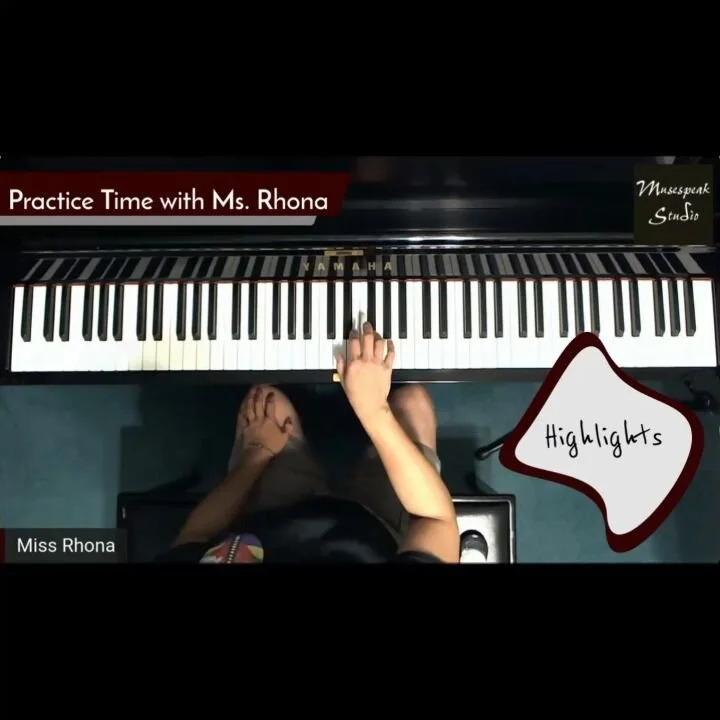
Check out my hand rehabilitation journey on the Studio’s Instagram feed:


Our 100 Days of Practice Challenge - in the Students' Words
Last time, I shared my takeaways from latest 100 Days of Practice Challenge. My students who have completed their first 100 Days of Practice Challenge have submitted their surveys. Here’s what they have to share on practising for 100 days in a row:
Last time, I shared my takeaways from latest 100 Days of Practice Challenge. My students who have completed their first 100 Days of Practice Challenge have submitted their surveys. Here’s what they have to share on practising for 100 days in a row:
What was the easiest part for you about the challenge?
The easiest part about the challenge is for when you don’t have time so you can do a very little practice or just listen to your music, also that other instruments that I have play [count].
Doing finger practices or listening to my pieces on the days I was busy.
Remembering to practice every day.
I was allowed to play whatever I wanted.
Finding something to practice every day.
The easiest part of the challenge for me was finding a type of music to practice, whether that be theory, listening to pieces, marching band or piano.
I started the challenge as I was preparing for my exam, so the motivation to practice daily was very strong.
What was the hardest part for you about the challenge?
Trying to play the piano every day. Especially when you do not feel well.
Having to practice every day.
Playing without a break.
Theory. Definitely.
Finding different things to practice every day.
The hardest part was practicing for long amounts of time.
Sometimes just finding the time!
Has your playing changed since participating in this challenge. If so, how?
Yes, I believe it has because I am getting things a lot faster.
I don’t think so.
Not since the 60 day challenge.
No.
Yes it has. It has improved technically.
Yes, my practices schedule has become more consistent and regular.
The approach to getting time to practice. It is less “Oh I have to practice,” and more part of the daily routine and have a set time rather than “Oh I should practice.” Also if it is late or I am tired I will still practice and often, “Oh I’ll just do 15 minutes,” becomes 30 - 45 minutes.”
Have you noticed or discovered anything interesting about your musical journey since starting this challenge? If so, what?
I discovered that we are around music all the time from playing instruments to going outside and listening to the nature.
No.
Not since the last challenge.
I improve best when I spread out the practice of that one thing.
I have noticed that once I have gotten into a steady routine of practicing it is easier to make time for it.
Practices are more relaxed but also more productive as I will stay longer on one thing and feel I have to log everything, as I know I will practice again the next day. If I don’t practice I feel I’ve missed something.
Any other comments, questions, or suggestions to make the practice challenge better next round? Or other practice challenges/projects?
Maybe being able to take a break if they have something major like exams.
Instead of practising continuously, maybe there can be 1 day of rest.
Have break days.
Nope
I enjoyed the challenge. Even when the exam was over I kept it going. I feel it gives me time/permission to not only work on exam pieces but all other fun pieces. As of today,my 100 days has expanded to 130 days.
My students have decided to continue with either a 60 Days of Practice Challenge or a couple of 30 Days of Practice Challenges (with a break in between). They don’t want to lose their momentum now that they’ve got their practice groove on.
Thank you to my students Haley, Kateri, Henry, Claire, Erika, Edel, and P for sharing their feedback here. I should point out that Edel is an adult student, so it has been a delight to hear about her weekly discoveries in the practice room and with the music meetups she participates in.

100 Days of Practice Challenge 2019 Reflection
On Thursday, I celebrated the completion of both my Music 100 Days of Practice Challenge AND my Budo 100 Days of Practice Challenge. Neither went exactly as I had planned, but there were still some valuable lessons and takeaways from the experience.
On Thursday, I celebrated the completion of both my Music 100 Days of Practice Challenge AND my Budo 100 Days of Practice Challenge. Neither went exactly as I had planned, but there were still some valuable lessons and takeaways from the experience.
Reviewing my 100 Days of Practice Challenge - Music
I didn’t do a good job at meeting any of my goals this round, as far as my featured trio of pieces are concerned. For those tuning in just now, they were Papillions by Robert Schumann, Danza del gaucho matrero by Alberto Ginastera, and Happy Together by The Turtles (originally, Somewhere Over the Rainbow). The reality of being a church choir musician - a multi-instrumentalist at that, and a piano teacher with mostly intermediate and advanced students preparing for festivals and exams - is that their repertoire took precedence over my featured trio because January to April was pretty hectic for both. I did hit some milestones though:
Papillions: I did learn the Introductzione, no. 2, no. 3, and #7. I determined early on that this was more a study piece than performance piece. I struggled with repetitive strain injury from the blocked octaves (Refer to my Day 30 & Day 70 Check-in). I struggled with trying to like the piece. I made my peace with that though. So long as I could play through those pieces slowly, remembering to relax my hands and arms between each blocked octave, I called it a success. Since Papillions didn’t spark joy for me, I was happy to “Konmari” it from my practice list.
Danza del gaucho matrero: I think I got about halfway through relearning it before Holy Week preparations took over my entire practice time. I have decided to continue working on it, with the endgame being to get the entire work, Danzas Argentinas, better than how I played it back in my ARCT days.
Happy Together: This was probably the one piece that got the closest to having a check mark on it. On Day 65, I recorded myself singing and playing the song on ukulele, and then practised on cajón whilst listening to the track.
Biggest takeaways? Balance. Having three pet projects during an incredibly busy time of the year was not a great life choice.
The second is that my singing-and-playing-at-the-same-time skills leveled up significantly this round. Funny what regular practice can accomplish, eh? Playing and singing at six out of seven of our Holy Week services was exhilarating and exhausting. I think this was perhaps the most I have done for Holy Week. Preparing for it was a test in endurance as well as adaptability, as things do change on the fly.

My brother and I played musical chairs in the rhythm section for the church choir throughout the Holy Week services. Photo credit: R-M Arca.
Perhaps the third takeaway was that if I’m going to choose a piece that has some connection with my late piano teacher, Irina Ginzburg, at least pick one of the pieces I actually love. There are several, but partway during this challenge, I gravitated towards Leyenda (Asturias) by Isaac Albéniz (the last piece we worked on together). The goal is to have it performance ready for my studio’s year-end recital.
Reviewing my 100 Days of Budo Practice Challenge
With the increased study and training time, I noticed that things have been sticking better in my brain and my muscles. There is less cross-contamination between the four martial arts I study. Oh, it’s still there, but just not as much.

Demonstrating Ukigumo from the Chuden Iaido set (Muso Shinden Ryu) at the 2019 Calgary Expo. Funny thing is, I was supposed to demonstrate Yamaoroshi, but hey - kigurai. Photo credit: Jonathon Wilkes.
The result is that I entered our martial arts demonstrations at the 2019 Calgary Comic & Entertainment Expo with more confidence than years past.
More importantly, I got small glimpses of kigurai. My sensei once described it as the confidence you have from doing something numerous times. Sang Kim of Byakkokan Dojo says, “…it translates roughly into pride in your technique and confidence,” while Francis Briers uses, “self-possession” and “subtle but powerful confidence” (Source: The Training Journal). It’s the type of quiet confidence that a visiting sensei or senpai exudes as they walk into a new dojo. Or a musician walking onto the stage of a new-to-them venue.
The other takeaway isn’t new. If I want to squeeze in more training time (versus book/video study time), I need to schedule it in, just like I do with music practice. It also needs to be done before I start teaching piano for the day. I will have to keep fiddling with that perfect balance between studying and physical training.
Beyond the #100DaysofPracticeChallenge
“I think you now need 100 days of rest and contemplation,” posted one friend after I shared my Day 100 post on Facebook. I chuckled upon reading it. After 100 consecutive days of practice, with only one sick day, music and budo practice are just part of my daily routine now. I took yesterday off and it felt weird.
My general guideline is to keep violinist Jascha Heifetz’ quote in mind as I move forward. It is, “If I don't practice one day, I know it; two days, the critics know it; three days, the public knows it."
I will continue plugging away with the spirit of the 100 Days of Practice Challenge but without the hashtag or the daily log updates on Instagram. If I’m away on vacation or need a day off, I’ll take time off, but otherwise, I’ll strive to practice and train daily. I will maintain my practice logs in my Budo and Music practice journals. Occasionally, I’ll post some “work in progress” clips on IG, but otherwise, I will try to get my students to show off a bit more on the studio IG page for the next little while.
I liked the practice parameters I set out for both challenges at the beginning. They offered me flexibility to get in quality practices, whether I had two minutes or three hours.
Musically, I have decided that one “me project” during the busy periods is probably easier to balance along with choir repertoire, student repertoire, and keeping my musician survival skills up to snuff.
Budo-wise, I am leaning towards training/studying three to four times a week, one day being at the dojo (due to my work schedule). On the off days, I’m going to work on cardio and/or core strengthening. I suppose, it still falls under budo as it is conditioning the mind and body. My other goal is to strive towards having two longer training sessions per week (or more).
#100DaysofPractice - Student Update
Most of my students participated in the 100 Days of Practice Challenge. All who did have recently wrapped up their 100 days of practice. Some have opted to finish the year doing 30 Days of Practice Challenges, while others settled on doing one more 60 Days of Practice Challenge. Once all of their surveys have been turned in, I will share some of their takeaways from the experience.
100 Days of Practice - Closing Thoughts
One worry that I have is that by not tying my practice to an official #100daysofpractice challenge online, I will fall off the bandwagon. I have to have faith that after completing four of these practice challenges (one #30daysofpractice music challenge, two 100 days of practice music challenges, and one #100daysofmartialarts challenge), that I won’t.
I have several studio administrative projects and tasks that I am woefully behind on, so I need to spend more time on those overdue items. To be honest, reviewing the videos and photos to post daily did eat up a lot of time that could have been spent on those other tasks. I have a couple of ideas for future 100 days of practice challenges, which can wait till the summer or the fall.
Who else has completed their 100 Days of Practice Challenge? I’d be interested in hearing about you experiences.
Social Media Links
archives
- #YYCArts 32
- #YYCEvents 39
- Collaborative Music 25
- Community 11
- Composing & Arranging 6
- Entertainment 139
- Entrepreneurship 53
- Freebies 3
- Gardening 1
- Geeking Out 65
- Health & Wellness 120
- Improvisation 25
- Interviews 28
- Learning Music 188
- Martial Arts 13
- Memorization 7
- Music 230
- Music Careers 9
- Music Education 196
- Music Examinations 7
- Music Exploration 55
- Music Gigs 14
- Music Lessons 6
- Music Performance 32
- Music Theory 13
- Musical Instruments 12
- Musician Health 19
- Pets 57
- Piano Technique 12
- Practicing Music 120
- Productivity 20
- Professional Development 11
- Recommendations & Reviews 93
- Recreation 71
- Social Media 6
- Spirituality 10
- Studio Management 33
- Studio Technology 50
- Teaching Music 146
FOLLOW THE STUDIO on Instagram
Affiliate Links
As a Sheetmusicplus and CD Japan affiliate, I earn from qualifying purchases. The earnings help fund the Studio’s blog and YouTube channels. Your support is greatly appreciated.


FOLLOW Budo no Tabi on Instagram