THE MUSICAL MUSE
Blog dedicated to music education, practice tips, health
&
wellness, and geeking out.
Group Class Week Round 3 Reflections - 2013 edition
Reflecting upon what worked and what didn't work so well during this week's music group classes at Musespeak and To the Wind Studios.
Another Group Class Week has come and gone. I must say, I am quite grateful that I had to foresight to throw in group classes just before Spring and Easter Break. It's a great way to transition into the break.
The kids have been enjoying the group classes, for the most part. For us music teachers, we're just glad to be able to spend more time with our students on special areas of interest.
This week, some of my brother's and some of my students attended the following classes:
Creative Composition with Strings
Playing with Patterns - Introductory Improvisation
Music Appreciation 101: Music & Technology
Project – Studio
Introduction to Sound & Technology
Piano Combo Class
In my brother's Creative Composition class, the students wrote short compositions with limitations. Some of the limitations could be: write a short song in two minutes, write a jingle for a radio commercial or a video game loop or write a song for only certain instruments. I hear it went well.
In the introductory improvisation class, I gave the students the skeleton of five patterns to improvise on. In truth, I gave them certain modes to jam on. One student would take care of melody, the other played bass. I had to jump in on percussion to keep everyone in time. The group was pretty quiet, so I was unsure of whether they enjoyed it.
I ran the Music Appreciation: Music & Technology Class twice this week. Our students surprised me with what caught their interest. For instance, they perked up while watching a video where a technician started to pull apart a harpsichord. I had to stop the video several times to field questions. Ditto for the magnetic tape segment ("This recording was made with sticky tape and rust.").
The one area that they really surprised me with was copyright. They asked some really good questions. I think that I will have to write a group class plan for Creating and Copyright.
Project - Studio was lively. This is another class that ran twice this week. The students created a radio commercial, from concept to production in 90-minutes. Although Maestro didn't approve of the music selections or sound effects, I can safely say that the students left with smiles on their faces after completing their project.
Introduction to Sound & Technology has evolved since the first time it was offered in August. Last night, the students explored different types of sound recording technology before recording sound effects to go with a short video game clip. The students worked extremely well together and got a lot accomplished.
This was the first time that the Piano Combo Class ran this year. Three keyboards, three students. Each took a turn at working on melody, comping and playing bass. Depending upon their instrument choices, I had to jump in on melodica and try comping on the chords (emphasis on "try"). The kids worked on Ev'rybody Wants to Be A Cat, Tetris Theme A and Bad Romance. The hardest part for them was to approach their instrument from an ensemble perspective and not a one-person band. For instance, I had to remind them (and myself) to comp with rootless chords.
Now that Round 3 is over, we are getting a better picture of what works and what doesn't. For starters, any of the technology projects need more than one class to complete. They are just begging to be set up as a three or four-class course. The same could be said for the accompanying and conducting classes that ran earlier this school year.
Some projects are really hard to figure out running times for. It really depends upon how well the students work well together and how focused they are at completing their projects.
In some cases, two students are ideal in a class. Five is starting to feel like too much. Three or four is just right. That way, they all get a chance to work on the computer or on all the instruments.
Two more rounds to go. One in May and the final round in July. After which, we'll be able to assess which classes to expand on and which ones to cut completely.
Happy Passover 2013
A Happy Passover wish to the Jewish peoples and a very brief description for the non-Jewish. If you are interested in attending a seder meal, check out the international directory at the bottom of the post.

The evening of Monday, March 25, 2013 marks the beginning of Passover. This tradition is observed every year by people of the Jewish faith worldwide.
Passover is in Christian history as well, since the Torah does make up the Christian Old Testament.
This tradition goes back, way back to the 10 plagues and the time Moses led the Jewish people out of Egypt.
It is a tradition that commemorates the Jewish people's exodus from Egypt. On the night before their escape, they shared a meal with unleavened bread, matzo.
This seder plate shows a zeroah (roasted bone), beitzah (hard-boiled egg), maror (horseradish root), charoset (chopped apple, ground walnuts and red wine), karpas (small slice of onion, boiled potato or sprigs of parsley dipped in salt water), chazeret (romaine lettuce),
For more information, check out Passover, Passover - History & Overviewor, non-Jewish folk can crack open a Bible to the Book of Exodus.
If you would like to attend a Passover Seder Meal, check out the International Seder Directory.
Happy Passover!
Happy 328th Birthday Johann Sebastian Bach

According to some historical pundits, today is Johann Sebastian Bach's 328th birthday.
Although I can't say that he's my favourite composer, I do have tremendous respect for his genius. To be able to hear how five voices can weave together harmoniously in a fugue and create that - it's just amazing.
I must admit that I enjoy listening to Bach's music more than playing it.
A quick search on Amazon reveals that these are 10 of the most popular recordings of the master of the fugue:

Joan Kennedy: The Joy of Classical Music- The Audio Companion to the Best Seller
Bach: 6 Brandenburg Concertos / 4 Orchestral Suites -Trevor Pinnock and The English Concert (1989)
Bach: St. Matthew Passion by The Collegiate Chorale, Charles Bressler, Betty Allen, William Wildermann and Adele Addison (1999)
J.S. Bach: Matthäus-Passion by Johann Sebastian Bach, Herbert von Karajan, Walter Hagen-Groll, Berlin National Cathedral Choir and Berlin Philharmonic Orchestra (1990)
Bach: Matthäus-Passion (St. Matthew Passion) by Elisabeth Schwarzkopf / Peter Pears, Dietrich Fischer-Dieskau / Walter Berry, Raymond Clark / Bela Dekany, Ralph Downes / Christa Ludwig and Nicolai Gedda / John Carol Case (1989) - Original recording remastered
Build Your Baby's Brain 1 by Wolfgang Amadeus Mozart, Ludwig van Beethoven, George Frederick Handel, Franz [Vienna] Schubert and Antonio Vivaldi (1998)
Leonard Bernstein - A Total Embrace: The Conductor by Pyotr Il'yich Tchaikovsky, Igor Stravinsky, Maurice Ravel, Johann Sebastian Bach and Bela Bartok (2003) - Original recording remastered
Paper Music by Bobby McFerrin, Peter Howard, Johann Sebastian Bach, Luigi Boccherini and Gabriel Faure (1995)
UltraSound - Music for the Unborn Child by Claude Debussy, Johann Sebastian Bach, Robert Schumann, Jules Massenet and Wolfgang Amadeus Mozart (1999)
If I had to choose which three to add to my library on my next music order, I'd have to go with the following:
#5 - Herbert von Karajan, Walter Hagen-Groll, Berlin National Cathedral Choir and Berlin Philharmonic Orchestra's recording of St. Matthew's Passion: A solid group of performers and at a price point that I might - just might - loan out to a responsible student.
#8 - Leonard Bernstien's recording: I have fond memories of studying Leonard Bernstein in music history.

#9 - Paper Music with Bobby McFerrin: I've enjoyed Bobby's music in my youth. I admire him even more with the work he has been doing with The Music Instinct: Science and Song, which looks at music and the brain.
I leave you with one of my favourite works by Johann Sebastian Bach, the Brandenberg Concerti
Proper Use, Care and Disposal of Sacramental Objects
Many Catholics own devotional items, such as rosaries and scapulars. Learn how to use, care for and dispose of them with reverence.
Many Catholics own devotional items, such as rosaries and scapulars. Learn how to use, care for and dispose of them with reverence.
Sacramentals are types of devotions specific to the Catholic Church. According to the Catechism of the Catholic Church, sacramentals are "sacred signs instituted by the Church. They prepare men to receive the fruit of the sacraments and sanctify different circumstances in life."
The are five kinds of sacramentals:
blessings;
exorcisms;
rubrics;
prayers; and
blessed objects of devotion.
With respect to sacramental objects, many Catholics own several religious articles in the course of their lifetime.
What Makes an Item a Sacramental Object?
A religious object only becomes a sacramental once consecrated by a priest. A priest prays over the devotional item. In Catholic Q & A, by Father John Dietzen, a blessed object of devotion is described as "a material item over which the church has prayed a blessing, asking God to accept the prayers of the church for those who reverently use it." Whereas a sacrament, such as baptism and communion, produces sanctifying grace, sacramentals are channels of grace.
Some priests say that some religious objects become sacramentals once they have been prayed upon. One example of this would be a Rosary.
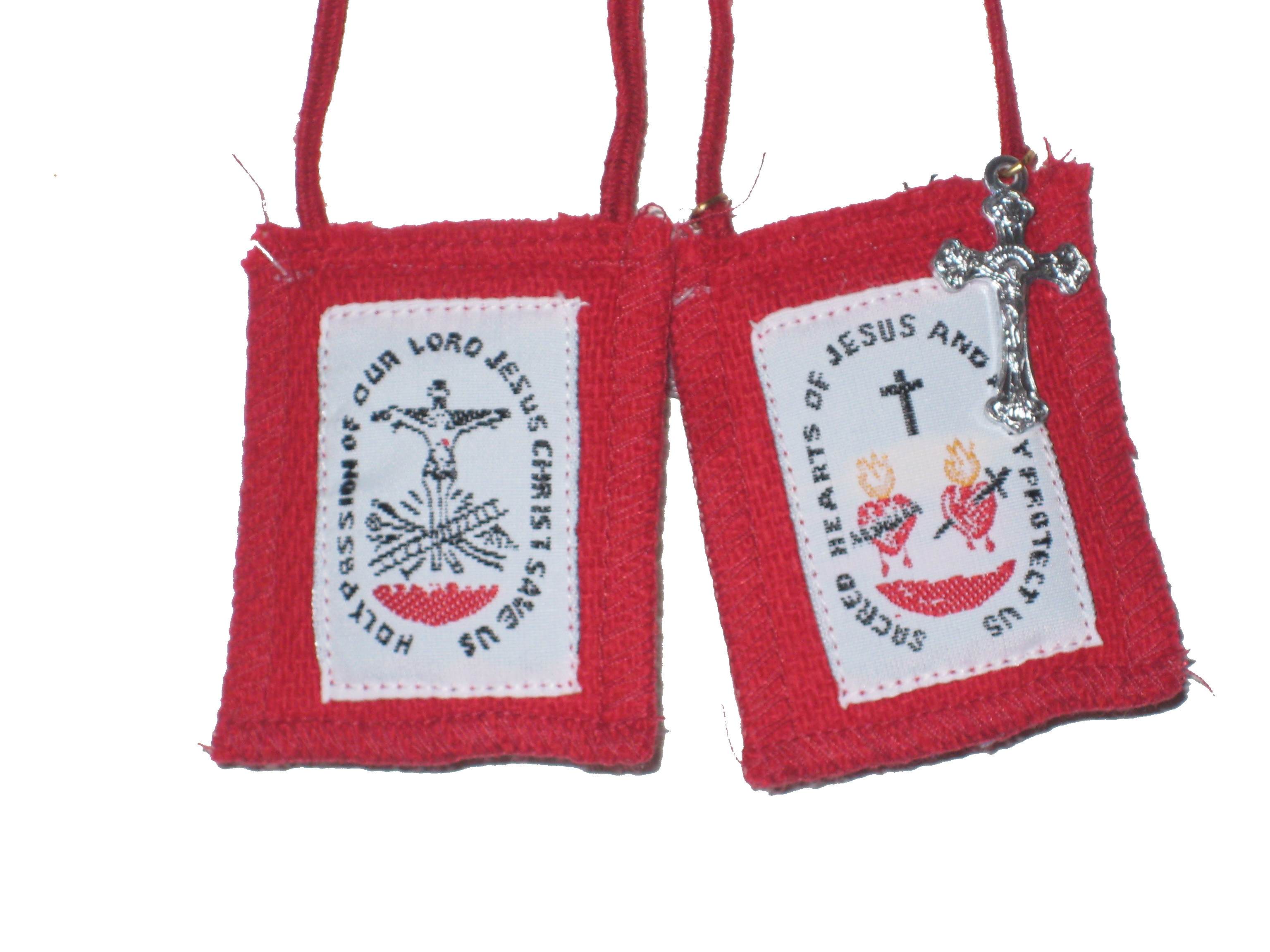
Consecrated objects are outward symbols of a Catholic's faith and devotion. Examples of sacramentals include: crucifixes, rosaries, scapulars, religious pictures, Holy Medals, Holy Water, liturgical candles, statues and palm leaves.
Use and Care of Blessed Objects of Devotion
A sacramental is a channel through which God can work. In "The Sacramentals" from the Baltimore Catechism, it states that "sacramentals obtain favors from God through the prayers of the Church offered for those who make use of them, and through the devotion they inspire. "
The faithful experience several benefits when using sacramentals: blessings of good health (physical and material), forgiveness of venial sins, graces, protection from evil spirits and remission of temporal punishment.
Sacramental objects help strengthen a Catholic's faith in God in a variety of ways. Holy water reminds Catholics of their baptismal promises and their commitment to Jesus, while using the rosary helps focus their prayers.
There is no magical power in sacramental objects. These religious articles are not to be used as good luck charms or objects of superstition.
These articles of faith should always be treated with reverence and devotion. For instance, many Catholics will kiss a sacramental object if dropped accidentally on the ground.
Proper Disposal of Sacramental Objects
An article of faith shouldn't be thrown in the trash when it is broken, worn out or no longer of use; it's believed that doing so would desecrate the sacramental. It must first be broken down in such as way that it loses its identity as a devotional item.
The Sisters of Carmel advise Catholics that a "sacramental should be returned to the earthly elements". Books, pictures of Jesus and Mary and scapulars should be burned and then buried. Rosary beads should be pulled apart from each other and statues should be broken into small pieces and buried. Metal objects should be melted and reused. An object that once was a devotional item should be buried in a place that won't be tread upon.
Consecrated religious articles lose their blessing once they lose their identity as a sacramental. They also lose their blessing if they are sold for profit. However, if a person gives a consecrated article to someone as a gift or sells it at cost, the original blessing upon it remains.
Sacramental objects, such as rosaries and scapulars, are used by Catholics around the world. These religious articles obtain favors from God for the faithful who use them and help strengthen their faith in God. Sacramentals are consecrated materials and should be used with, cared for and disposed of with respect.
Sources:
Catechism of the Catholic Church, NY: Doubleday Dell Publishing Group, Inc. 1995.
Dietzen, Fr. John J. Catholic Q & A: Answers to the Most Common Questions About Catholicism, . NY: Crossroad Publishing Company, 2002.
Sisters of Carmel (accessed June 12, 2010).
CatholiCity: The Sacramentals (accessed June 12, 2010).
Originally published on Suite101.com on June 12, 2010. All rights reserved by Rhona-Mae Arca.
Review of Johnny Summers – Piano Sessions Vol. 1 CD Release Concert
Calgary multi-instrumentalist Johnny Summers and friends delivered an intimate and passionate performance on Saturday, March 16, 2013 at the University of Calgary's Rozsa Centre. The event was a CD Release Party to introduce Summers’ third jazz album, Piano Sessions Vol. 1.

Calgary multi-instrumentalist Johnny Summers and friends delivered an intimate and passionate performance on Saturday, March 16, 2013 at the University of Calgary's Rozsa Centre. The event was a CD Release Party to introduce Summers’ third jazz album, Piano Sessions Vol. 1.
The Calgary event also featured Chris Andrew on piano, Al Muirhead on trumpet, Jason Valleau on bass and vocals, Sheldon Valleau on ukulele and vocals and finally, Shane Statz on tenor sax. Johnny Summers performed on vocals, trumpet and flugelhorn.
Swing, Ballads and Blues Featured in Johnny Summers' Piano Sessions Vol. 1
The concert opened with "She Thinks that I Still Care". Unlike with George Jones' original country stylings, this interpretation was injected with a "hot summer's day in New Orleans" feel.
The dramatic pauses at the ends of key phrases set a playful tone to the number. The trumpet and piano solos were longer than they were on the album, giving Johnny Summers and Chris Andrew an opportunity to really expand on their ideas.
Between numbers, Johnny explained some of his inspirations for recording this jazz album. Listening to great crooners such as Harry Connick Jr. and Tony Bennett, as well as instrumentalists Bill Evans, Chet Baker and Paul Blaine instilled the idea of an album featuring piano and voice. "That's beautiful to me," he said.
"You're extremely exposed," he divulged. Johnny added, "You have to have a good sense of time."
During the recording sessions, four additional songs were recorded, which didn't make it onto the album: "I'll Be Home for Christmas" and "Winter Wonderland", "Look for the Silver Lining" and "Mood Indigo." The classic Christmas songs were bundled together in Winter Wonderland. The other two made it onto Saturday's programme.
Jerome Kern & B.G. DeSylva's "Look for the Silver Lining" was made famous by Chet Baker. This medium swing song had a light, breezy feel to it.
Chris' solo was peppered with syncopated rhythms and impressive runs. In contrast, Johnny's solo on his brand new Yamaha flugelhorn was tender and warm, gradually blossoming into each a high point. Partway through, the groove became more animated and the two traded 4's.
The ballad "Maybe This Time" has been recorded by many artists, including crooner Tony Bennett. Johnny shared some of his memories of hearing Bennett sing live in concert. "He walks on stage...and you feel the electricity...When he sings, he fills you."
Johnny's interpretation was soulful and wistful, with an unhurried tempo throughout. That made the climax more impassioned. The piano shakes were performed in a dreamy fashion.
Jason and Sheldon Valleau of the band, The Polyjesters, lent their talents to "My Baby Just Cares for Me". This jazz standard by Walter Donaldson and Gus Kahn has been considered the signature piece of Nina Simone.
This medium swing number featured a soft, easygoing piano solo by Chris. The crescendo towards a soft, fermata in Johnny's trumpet solo was a short reprieve before the melody shot up to the instrument's upper register. The lyrics were delivered with a cheeky and humourous flair. The impromptu "doo-doo-doo" at the end of the tag was by Sheldon was a nice touch.
Variety, Extended Solos and Delightful Surprises at Johnny Summers CD Release Concert

One of the highlights in the second set was Nat King Cole's "I'm an Errand Boy for Rhythm". After a slow introduction on voice and piano, the mood shifted to a lively upswing. The interlude featured a rhythmic piano solo, followed by Al's elegantly shaped phrases. In contrast, Johnny's trumpet solo weaved and raced to the top with rapid runs. The trumpet dialogue between Al and Johnny was playful. At times, it sounded just like scatting. Other times, it sounded like a car race.
This interpretation of Duke Ellington's "Mood Indigo" had shades of Nina Simone. It featured solos by Shane Statz on tenor sax, Johnny on trumpet and Chris on piano.
The final song of the evening was a rousing performance of Johnny Cash's "Folsom Prison Blues". One of the most delightful things about music is that you never hear the same performance twice. This was especially true in this case.
The piano intro was extended for the live performance, gathering momentum just as a train does when it pulls out. The sax solo was grittier, exploring the lower range of the instrument. In contrast, Al's solo was lighter and higher, much like birds chirping. Chris' solo featured a healthy dose of "crunchy" chords and driving rhythms, while Johnny's trumpet solo spun and shot up - higher - and higher.
Jason performed a percussion solo on his bass before Johnny and Jason scatted. Jason's surprise trumpet-like squeal led to various instruments being imitated.
The entire audience rose quickly to give everyone a standing ovation. The ensemble performed one encore, "St. James Infirmary."
Six more songs were performed at the Piano Sessions Vol. 1 CD Release. Four more other songs were performed in the first set: "Dream a Little Dream of Me", "You Don't Know Me", "Going Home" and "Exactly Like You". The second half also featured "I Wonder, I Wonder" and "Simple Song".
Piano Sessions Vol. 1 Concert Review
From the opening line, the balance between the voice and piano and later, the remaining instruments, was nothing short of perfect. The ensemble made full use of the acoustics that the Rozsa Centre offers, delivering a crisp and clear sound. They definitively demonstrated that the album's Global Music Awards for Best Listener Impact and Best Male Vocalist are well deserved.

Technical proficiency, when coupled with artistry, is a winning combination. What more could a performer or listener ask for? Well, perhaps for the lead vocalist to not have strep throat, perhaps.
The live performance offered listeners different type of performance. Feeding off the energy from the audience and the ensemble can push a musician to new heights of artistry. This manifested on Saturday into spontaneous moments of brilliance that lead to new directions for improvisation. Yes, live was slightly different from the album, but just as beautiful in its own right.
About Johnny Summers
Johnny Summers is a Calgary-based multi-instrumentalist who performs jazz, soul, gospel, blues and almost everything in between. He's a singer and songwriter, as well as a trumpet and flugelhorn player. As the director of the Calgary Jazz Orchestra, he serves as composer, arranger and band leader.
Piano Sessions Vol. 1 is currently available on CD Baby and iTunes on March 16, 2013. Click here to read my album review.
Social Media Links
archives
- #YYCArts 32
- #YYCEvents 39
- Collaborative Music 25
- Community 11
- Composing & Arranging 6
- Entertainment 139
- Entrepreneurship 53
- Freebies 3
- Gardening 1
- Geeking Out 65
- Health & Wellness 120
- Improvisation 25
- Interviews 28
- Learning Music 188
- Martial Arts 13
- Memorization 7
- Music 230
- Music Careers 9
- Music Education 196
- Music Examinations 7
- Music Exploration 55
- Music Gigs 14
- Music Lessons 6
- Music Performance 32
- Music Theory 13
- Musical Instruments 12
- Musician Health 19
- Pets 57
- Piano Technique 12
- Practicing Music 120
- Productivity 20
- Professional Development 11
- Recommendations & Reviews 93
- Recreation 71
- Social Media 6
- Spirituality 10
- Studio Management 33
- Studio Technology 50
- Teaching Music 146
FOLLOW THE STUDIO on Instagram

Affiliate Links
As a Sheetmusicplus and CD Japan affiliate, I earn from qualifying purchases. The earnings help fund the Studio’s blog and YouTube channels. Your support is greatly appreciated.


FOLLOW Budo no Tabi on Instagram