THE MUSICAL MUSE
Blog dedicated to music education, practice tips, health
&
wellness, and geeking out.

Adventures in Live Streaming & Streaming
I think it was around 9:00 PM that Saturday night when I concluded that if I was feeling depressed about the music ministry not being able to contribute to Holy Week services, the rest of the choir probably felt the same. Perhaps they would like to sing along with me while I practiced?
That led to a quick search on live streaming options.
My foray into live streaming and streaming began on Palm Sunday weekend, my designated weekend to play at church. All in-person church services were cancelled at the point due to the COVID-19 pandemic.
Holy Week is huge for Catholics, so I am sure I wasn’t alone in feeling gutted and a little lost that this most vital celebration of our faith and Jesus’ sacrifice was relegated to worshipping alone in isolation, together yet apart, rather than celebrating together as a faith community at church. So, I kept practicing because I needed to do something that felt normal for that time of year. A small part of me practiced in the off-chance that we’d get the green light to have music at our Easter Sunday Mass that was live streamed (we did and it was glorious).
Jumping into Live Streaming
I think it was around 9:00 PM that Saturday night when I concluded that if I was feeling depressed about the music ministry not being able to contribute to Holy Week services, the rest of the choir probably felt the same. Perhaps they would like to sing along with me while I practiced?
That led to a quick search on live streaming options. I must admit, I didn’t know much about live streaming or streaming, other than the fact that sometimes my gamer friends and favourite YouTubers did live streams (live broadcasts online). Sometimes, they upload prepared content (streaming).
OBS popped up at the top of my search. Impressive, but the learning curve seemed too high for my mental state that weekend. Having made the decision, I just wanted to start streaming right away. I considered Facebook Live and Instagram Live briefly. A small part of my mind was already thinking ahead to multi-streaming - broadcasting to multiple places, like Facebook and YouTube simultaneously. So, Facebook Live and Instagram Live were ruled out immediately.
That’s when I found StreamYard. It’s a web-based livestreaming service, which allows you to stream to YouTube, LinkedIn, Twitch, Facebook, Periscope and Custom RMTP. Upon a quick skim, StreamYard seemed to have the lowest learning curve so I plunged in. A few quick sound tests and within 10 minutes, I was live streaming a practice session - and people listened and interacted throughout.
Music Ministry Hour
I was soon joined by my friends and fellow liturgical musicians Lisa Kiernan (St. Gabriel the Archangel) and Kay Alexander (St. Mark’s). Our impromptu live streams morphed into a weekly worship sing-a-long throughout the Easter season. Sometimes, we were joined by my brother Jay (St. Francis de Sales) and the Wourms family from St. Gabriel’s. We all studied the Scripture readings for the upcoming week and selected songs that we would typically do if we celebrated Mass. We multi-streamed - live - to Facebook and YouTube (A.K.A. “simulcasting”).

Sound check in StreamYard’s virtual Broadcast Studio.
Each week, we learned a little bit more about audio levels, equipment, and mic positioning. One weekend, I played around with custom overlays in Figma and banners in StreamYard, so things looked pretty darn slick by the last session:

Designing video thumbnails and overlays in Figma has been a lot of fun.
Live Streaming Recitals
After Spring Break, my students and I discussed options for the June 2020 recital: to live stream or pre-record. I was already experimenting with live streaming. My students, being the tech savvy folks they are, knew just as well as I that editing videos usually takes longer than you think it will. Perhaps that’s why even they were curious about live streaming a recital.
We needed to do a test. I contacted our local nursing home to see if they’d like us to perform for the residents in a virtual recital. Six students signed up to be guinea pigs. Here’s a clip of my live stream preparations for the recital:
The residents watched the live stream or the replay. We also invited family and friends to watch the recital as an unlisted YouTube live broadcast. It went well. Afterwards, my students said that it felt similar to a normal recital. The excitement level was the same. Everyone liked the idea that we could chat backstage, while parents were pleased with the sound quality and overall experience.
We decided to move forward with a live stream recital in June. My students took full advantage of the backstage chat window during the recital, cheering each other on. Family and friends utilized the live chat on YouTube. Thanks to StreamYard’s user interface, I inserted some of the comments directly into the live stream and responded to comments and questions in real time.
I don’t think anyone noticed that I accidentally left the broadcast. Thankfully, with StreamYard doing all the heavy lifting, the show went on. I quickly slipped back in before the next performer needed to take the stage.
It wasn’t the same as being in a church and having the Snack & Chat afterwards, but at least there was that real-time interaction with family and friends both near and far.
Live Streaming 101 Webinars
In May, both the Alberta Registered Music Teachers’ Association and Alberta Piano Teachers’ Association asked me to do a webinar on Live Streaming and Streaming Recitals and other studio events. From the sounds of it, it was well received and convinced a handful of teachers to give live streaming or streaming a shot.
The webinar and reference materials are currently only available to APTA and ARMTA members. I am in the process of re-jigging the material into an online course that will be available for purchase on the Studio website next month.
Live Streaming & Streaming - The Adventure Continues
Throughout the spring and summer, I played around with streaming and live streaming. The bulk of my content creation so far has been teacher demos of student repertoire and RCM and Conservatory Canada technical requirements, which are available on the Studio’s YouTube Channel. I record in StreamYard to toggle between multiple camera angles while recording and use Davinci Resolve to edit the videos.

What “So…um…” looks like.
In the fall, my impromptu Practice Clips & Tips Instagram and Facebook series levelled up to the Practice Time with Ms. Rhona weekly series on YouTube:
I picked up a new toy to improve my audio quality. I’m still playing around with both the mixer board and the microphones to find the ideal setup. It’s a work in progress:
Check out my studio tech setup here.
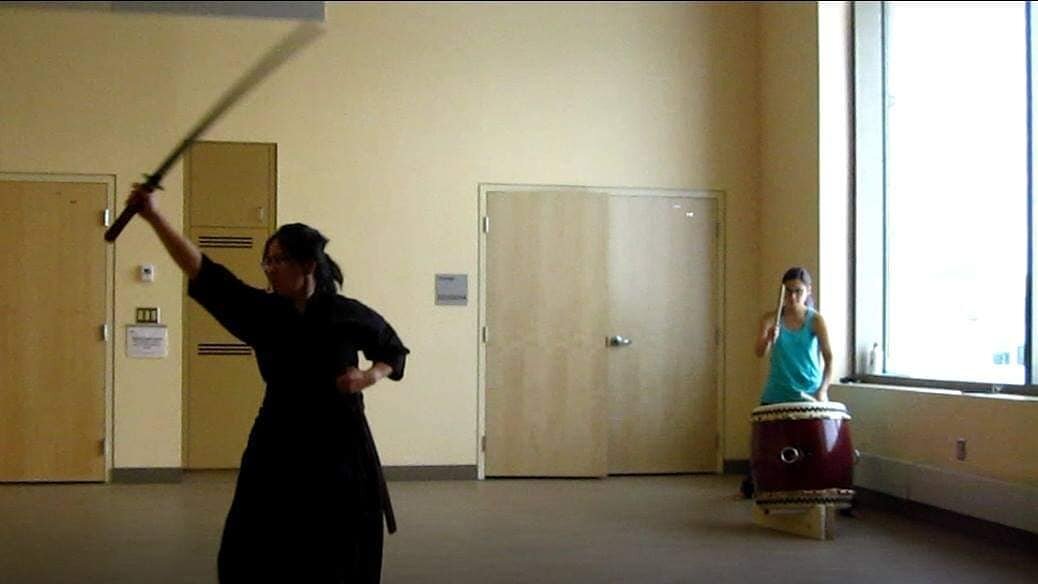
I also decided to commit more time to creste content for my two other channels. There’s The Musical Muse - my musician/freelance writer channel, where I upload performances, unboxing videos and reviews, as well as Budo No Tabi - my budo & Japanese culture related channel, uploading sword care tutorials, unboxing, and fun videos of my exploration of Japanese culture. I have a few more content ideas but that’ll be a surprise.
This is not easy by any stretch of the means. The biggest challenges for me right now are balancing my workload, prioritizing tasks better, and managing my time and energy. It has been a fun adventure, learning how to use Davinci Resolve and exploring different setups, content ideas, and so on.
My students and I held the first piano party of the year in StreamYard and Steam. We used the “Record Only” option in StreamYard for the performances. We kept the Broadcast Room open while we played Skribbl.io and Among Us. Naturally, we muted our mics and turned off our cameras while playing Among Us so as to not give away who was a Crewmate and who was an Impostor.
Afterwards, I shared the video with studio family and friends as an unlisted video. However, I can share these highlights with you:
Next month, we will be performing our annual Christmas recital for the nursing home residents online. It will be live streamed privately to the residents as well as to studio family and friends. My returning students are pros at setting up their mics and cameras now, so I don’t think the sound check period prior to the recital will need to be as long as it was in June. I think Sound Check began one or 1.5 hours before we went live. The newbies will just need a little bit of coaching, but thankfully, most of them attended the piano party, so they got a little taste of what’s to come.
***
Fellow teachers, with stricter gathering restrictions in place once again, what are you doing this year for recitals?
DISCLAIMER: This post contains a referral link to StreamYard. If you get a Basic or Pro subscription, you will get a discount and I’ll get a little referral bonus.

First Impressions of the Private Music Teacher Planner
Check out my first impressions of the Private Music Teacher Planner & Agenda by The Full Voice Music.
I recently ordered the Private Music Teacher Planner, created by The Full Voice Studio. Gone are the days of using school teacher planners that don’t quite work or creating my own from scratch (because, really, who has the time?).
I foresee that I will get a lot of use out of this planner and agenda, designed by private music teachers, for music teachers. I do a detailed walk-through on the Studio’s YouTube Channel:
The Private Music Teacher Planner & Agenda is available for $29.99 CAD on Amazon.ca. Click on the Studio’s affiliate link to check it out:

Fostering Self-Assessment with Cross-Training
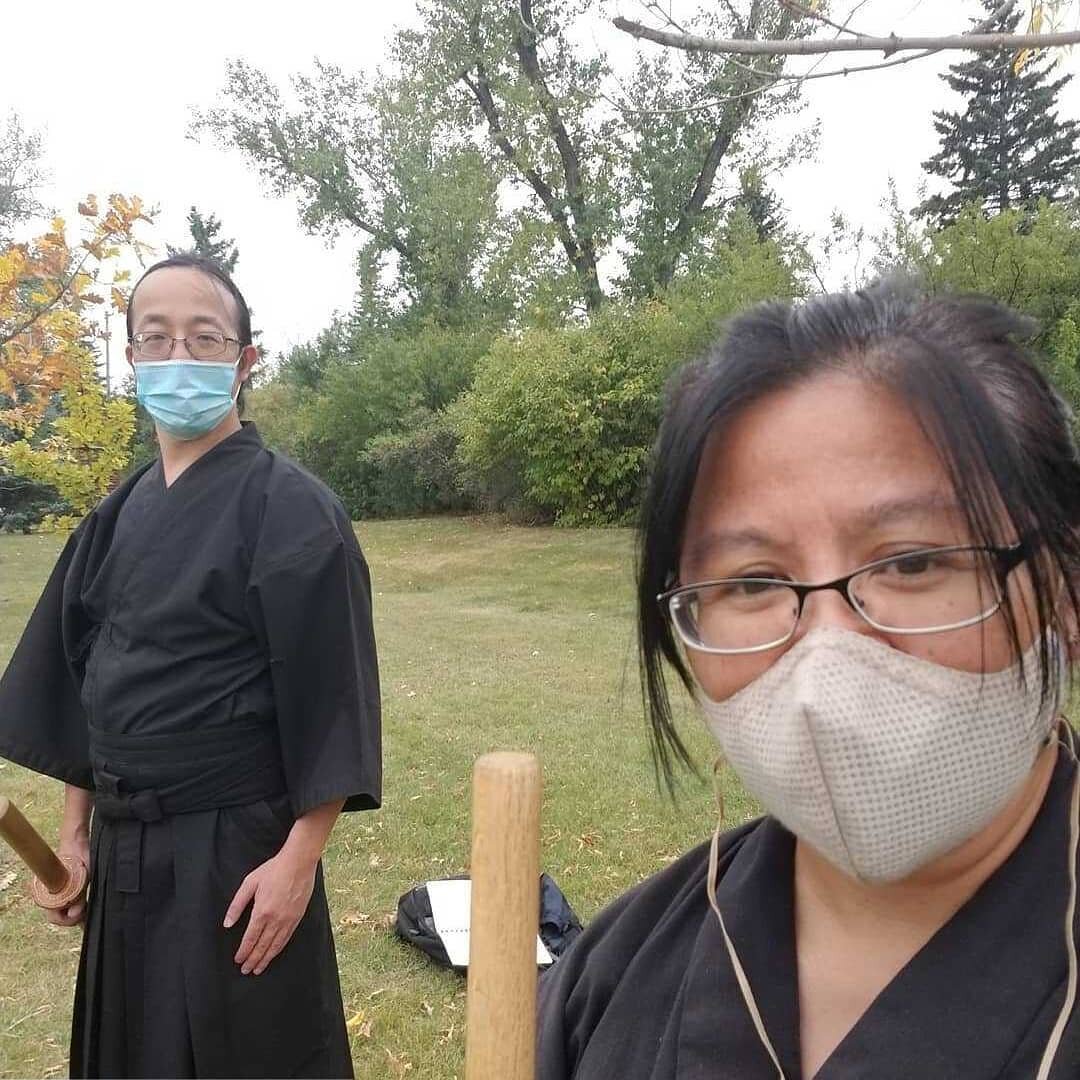
For someone who trains in four somewhat rare martial arts, the Zoominar was a priceless opportunity to work with some of the top instructors in Canada, to listen to one of the highest ranking instructors in the world from his home in England, and to meet practitioners from around the world.
The focus of all the sessions was to give attendees tools to take ownership of their physical distancing training. Immediately, I could see how these self-assessment tools and drills could be adapted to help music students do the same. Here are some of the tools and tips that my students and I have added into our practicing.
Originally published in the July 2020 edition of APTA News & Views.
One of the positives from the COVID-19 pandemic is that we are able to attend classes and seminars from the comfort of our own homes. On the May long weekend, I was able to participate in an international martial arts seminar that was hosted in Guelph, Ontario. For someone who trains in four somewhat rare martial arts, the Zoominar was a priceless opportunity to work with some of the top instructors in Canada, to listen to one of the highest ranking instructors in the world from his home in England, and to meet practitioners from around the world.
The focus of all the sessions was to give attendees tools to take ownership of their physical distancing training. Immediately, I could see how these self-assessment tools and drills could be adapted to help music students do the same. Here are some of the tools and tips that my students and I have added into our practicing.
Galligan Sensei’s Quadrants
Carole Galligan sensei is the highest ranking female in Canada for Iaido, the art of cutting from the sword draw. With her preparing for her 7th degree black belt grading, she shared how she was continuing to train without the benefit of being in the same room as her sensei. Like music teachers, sensei normally physically adjust arms, hands and body position or demonstrate concepts via partner work.
She held up this diagram while saying that each of our techniques contain these elements. Then she led us through various exercises to identify our dominant quadrant. Our weakest quadrant lays kitty-corner to it.

Galligan sensei holds up her quadrants for us to work through during the 2020 Guelph Seminar.
In discussion with my students, this is how we adapted sensei’s quadrants for music:

My teen and adult students have set out to identify their overall dominant quadrant, as well as their dominant for each piece. That done, they are now focussing their practices on “levelling up” their weakest. The younger students are picking one quadrant to focus on per practice.
Whether my students think that Galligan sensei is cool or they love the tool, I am seeing and hearing immediate results.
What’s Wrong with this Picture?
Galligan sensei also showed us several photos of her doing various techniques incorrectly and asked us to identify what was wrong. She then challenged us to do the same when reviewing photos and videos of ourselves practising. Some practitioners admitted that they were uncomfortable watching themselves. Sensei recommended they start by studying photos and videos of other people.
This translates extremely well to music practice. This past week, I have played videos of other people performing my students’ repertoire, asking them to identify what was good (and not so good) about the performances. Some of them have already jumped to Stage 2, which is to record and review their own practices.
Play it Backwards Drill
Galligan sensei confused several of us when she asked us to execute a kata (form) from end to start. It jolted us all out of complacency, forcing us to really concentrate. By the time we performed the kata normally, we noticed that overall, we were cleaner and smoother.
Several of my students have jumped onto this drill, immediately applying it to all of their troublespots. Others needed more repetitions or smaller practice chunks. The improvement has ranged from noticeable to incredible.
Green Sensei’s Adaptability Drill
In his session, David Green sensei (6 degree black belt in Iaido) covered changing one or more elements in our practice space and routine to jolt our brains out of complacency and challenge our ability to adapt. For example, training on a different surface or facing a different direction.
With us being housebound we, along with our students, have lost a bit of our adaptability savvy developed from performing on different pianos. My students came up with these changes to practice adaptability: change the lighting, practice with eyes closed, move objects and music to a different spot in the room, change chairs, and to record practices.
Tribe Sensei’s Tips on Dealing with Conflicting Advice
Eric Tribe sensei (6 degree black belt in Iaido and Jodo) is the CKF Head Examiner for Jodo in Eastern Canada (the art of the Japanese short staff), as well as the President of Jodo Canada. In his session, he presented video clips from two different instructors on the subject of technique.
On the surface, it seemed like they were coming at it from opposite sides. Tribe sensei had us try the technique, following the advice of each instructor. He then asked us to find the common ground between the two viewpoints. Between the commonalities and discussing what felt natural and logical, we were able to find our middle ground.
This also translates very well for music. My teen students have been listening to three or more performances of their pieces. Not only have they been comparing and contrasting, but they are also gaining ideas for experimentation. *
It has been a lot of fun adapting these drills and tools for music practice. My sensei have all been encouraging of this type of cross-training. Perhaps there is something that you do as a hobby or for exercise that you can adapt and use with your students. Or maybe there is something that your students do that can have applications to music. A little cross-training is good for everyone.

Our 100 Days of Practice Challenge - in the Students' Words
Last time, I shared my takeaways from latest 100 Days of Practice Challenge. My students who have completed their first 100 Days of Practice Challenge have submitted their surveys. Here’s what they have to share on practising for 100 days in a row:
Last time, I shared my takeaways from latest 100 Days of Practice Challenge. My students who have completed their first 100 Days of Practice Challenge have submitted their surveys. Here’s what they have to share on practising for 100 days in a row:
What was the easiest part for you about the challenge?
The easiest part about the challenge is for when you don’t have time so you can do a very little practice or just listen to your music, also that other instruments that I have play [count].
Doing finger practices or listening to my pieces on the days I was busy.
Remembering to practice every day.
I was allowed to play whatever I wanted.
Finding something to practice every day.
The easiest part of the challenge for me was finding a type of music to practice, whether that be theory, listening to pieces, marching band or piano.
I started the challenge as I was preparing for my exam, so the motivation to practice daily was very strong.
What was the hardest part for you about the challenge?
Trying to play the piano every day. Especially when you do not feel well.
Having to practice every day.
Playing without a break.
Theory. Definitely.
Finding different things to practice every day.
The hardest part was practicing for long amounts of time.
Sometimes just finding the time!
Has your playing changed since participating in this challenge. If so, how?
Yes, I believe it has because I am getting things a lot faster.
I don’t think so.
Not since the 60 day challenge.
No.
Yes it has. It has improved technically.
Yes, my practices schedule has become more consistent and regular.
The approach to getting time to practice. It is less “Oh I have to practice,” and more part of the daily routine and have a set time rather than “Oh I should practice.” Also if it is late or I am tired I will still practice and often, “Oh I’ll just do 15 minutes,” becomes 30 - 45 minutes.”
Have you noticed or discovered anything interesting about your musical journey since starting this challenge? If so, what?
I discovered that we are around music all the time from playing instruments to going outside and listening to the nature.
No.
Not since the last challenge.
I improve best when I spread out the practice of that one thing.
I have noticed that once I have gotten into a steady routine of practicing it is easier to make time for it.
Practices are more relaxed but also more productive as I will stay longer on one thing and feel I have to log everything, as I know I will practice again the next day. If I don’t practice I feel I’ve missed something.
Any other comments, questions, or suggestions to make the practice challenge better next round? Or other practice challenges/projects?
Maybe being able to take a break if they have something major like exams.
Instead of practising continuously, maybe there can be 1 day of rest.
Have break days.
Nope
I enjoyed the challenge. Even when the exam was over I kept it going. I feel it gives me time/permission to not only work on exam pieces but all other fun pieces. As of today,my 100 days has expanded to 130 days.
My students have decided to continue with either a 60 Days of Practice Challenge or a couple of 30 Days of Practice Challenges (with a break in between). They don’t want to lose their momentum now that they’ve got their practice groove on.
Thank you to my students Haley, Kateri, Henry, Claire, Erika, Edel, and P for sharing their feedback here. I should point out that Edel is an adult student, so it has been a delight to hear about her weekly discoveries in the practice room and with the music meetups she participates in.

100 Days of Practice Challenge 2019 Reflection
On Thursday, I celebrated the completion of both my Music 100 Days of Practice Challenge AND my Budo 100 Days of Practice Challenge. Neither went exactly as I had planned, but there were still some valuable lessons and takeaways from the experience.
On Thursday, I celebrated the completion of both my Music 100 Days of Practice Challenge AND my Budo 100 Days of Practice Challenge. Neither went exactly as I had planned, but there were still some valuable lessons and takeaways from the experience.
Reviewing my 100 Days of Practice Challenge - Music
I didn’t do a good job at meeting any of my goals this round, as far as my featured trio of pieces are concerned. For those tuning in just now, they were Papillions by Robert Schumann, Danza del gaucho matrero by Alberto Ginastera, and Happy Together by The Turtles (originally, Somewhere Over the Rainbow). The reality of being a church choir musician - a multi-instrumentalist at that, and a piano teacher with mostly intermediate and advanced students preparing for festivals and exams - is that their repertoire took precedence over my featured trio because January to April was pretty hectic for both. I did hit some milestones though:
Papillions: I did learn the Introductzione, no. 2, no. 3, and #7. I determined early on that this was more a study piece than performance piece. I struggled with repetitive strain injury from the blocked octaves (Refer to my Day 30 & Day 70 Check-in). I struggled with trying to like the piece. I made my peace with that though. So long as I could play through those pieces slowly, remembering to relax my hands and arms between each blocked octave, I called it a success. Since Papillions didn’t spark joy for me, I was happy to “Konmari” it from my practice list.
Danza del gaucho matrero: I think I got about halfway through relearning it before Holy Week preparations took over my entire practice time. I have decided to continue working on it, with the endgame being to get the entire work, Danzas Argentinas, better than how I played it back in my ARCT days.
Happy Together: This was probably the one piece that got the closest to having a check mark on it. On Day 65, I recorded myself singing and playing the song on ukulele, and then practised on cajón whilst listening to the track.
Biggest takeaways? Balance. Having three pet projects during an incredibly busy time of the year was not a great life choice.
The second is that my singing-and-playing-at-the-same-time skills leveled up significantly this round. Funny what regular practice can accomplish, eh? Playing and singing at six out of seven of our Holy Week services was exhilarating and exhausting. I think this was perhaps the most I have done for Holy Week. Preparing for it was a test in endurance as well as adaptability, as things do change on the fly.

My brother and I played musical chairs in the rhythm section for the church choir throughout the Holy Week services. Photo credit: R-M Arca.
Perhaps the third takeaway was that if I’m going to choose a piece that has some connection with my late piano teacher, Irina Ginzburg, at least pick one of the pieces I actually love. There are several, but partway during this challenge, I gravitated towards Leyenda (Asturias) by Isaac Albéniz (the last piece we worked on together). The goal is to have it performance ready for my studio’s year-end recital.
Reviewing my 100 Days of Budo Practice Challenge
With the increased study and training time, I noticed that things have been sticking better in my brain and my muscles. There is less cross-contamination between the four martial arts I study. Oh, it’s still there, but just not as much.

Demonstrating Ukigumo from the Chuden Iaido set (Muso Shinden Ryu) at the 2019 Calgary Expo. Funny thing is, I was supposed to demonstrate Yamaoroshi, but hey - kigurai. Photo credit: Jonathon Wilkes.
The result is that I entered our martial arts demonstrations at the 2019 Calgary Comic & Entertainment Expo with more confidence than years past.
More importantly, I got small glimpses of kigurai. My sensei once described it as the confidence you have from doing something numerous times. Sang Kim of Byakkokan Dojo says, “…it translates roughly into pride in your technique and confidence,” while Francis Briers uses, “self-possession” and “subtle but powerful confidence” (Source: The Training Journal). It’s the type of quiet confidence that a visiting sensei or senpai exudes as they walk into a new dojo. Or a musician walking onto the stage of a new-to-them venue.
The other takeaway isn’t new. If I want to squeeze in more training time (versus book/video study time), I need to schedule it in, just like I do with music practice. It also needs to be done before I start teaching piano for the day. I will have to keep fiddling with that perfect balance between studying and physical training.
Beyond the #100DaysofPracticeChallenge
“I think you now need 100 days of rest and contemplation,” posted one friend after I shared my Day 100 post on Facebook. I chuckled upon reading it. After 100 consecutive days of practice, with only one sick day, music and budo practice are just part of my daily routine now. I took yesterday off and it felt weird.
My general guideline is to keep violinist Jascha Heifetz’ quote in mind as I move forward. It is, “If I don't practice one day, I know it; two days, the critics know it; three days, the public knows it."
I will continue plugging away with the spirit of the 100 Days of Practice Challenge but without the hashtag or the daily log updates on Instagram. If I’m away on vacation or need a day off, I’ll take time off, but otherwise, I’ll strive to practice and train daily. I will maintain my practice logs in my Budo and Music practice journals. Occasionally, I’ll post some “work in progress” clips on IG, but otherwise, I will try to get my students to show off a bit more on the studio IG page for the next little while.
I liked the practice parameters I set out for both challenges at the beginning. They offered me flexibility to get in quality practices, whether I had two minutes or three hours.
Musically, I have decided that one “me project” during the busy periods is probably easier to balance along with choir repertoire, student repertoire, and keeping my musician survival skills up to snuff.
Budo-wise, I am leaning towards training/studying three to four times a week, one day being at the dojo (due to my work schedule). On the off days, I’m going to work on cardio and/or core strengthening. I suppose, it still falls under budo as it is conditioning the mind and body. My other goal is to strive towards having two longer training sessions per week (or more).
#100DaysofPractice - Student Update
Most of my students participated in the 100 Days of Practice Challenge. All who did have recently wrapped up their 100 days of practice. Some have opted to finish the year doing 30 Days of Practice Challenges, while others settled on doing one more 60 Days of Practice Challenge. Once all of their surveys have been turned in, I will share some of their takeaways from the experience.
100 Days of Practice - Closing Thoughts
One worry that I have is that by not tying my practice to an official #100daysofpractice challenge online, I will fall off the bandwagon. I have to have faith that after completing four of these practice challenges (one #30daysofpractice music challenge, two 100 days of practice music challenges, and one #100daysofmartialarts challenge), that I won’t.
I have several studio administrative projects and tasks that I am woefully behind on, so I need to spend more time on those overdue items. To be honest, reviewing the videos and photos to post daily did eat up a lot of time that could have been spent on those other tasks. I have a couple of ideas for future 100 days of practice challenges, which can wait till the summer or the fall.
Who else has completed their 100 Days of Practice Challenge? I’d be interested in hearing about you experiences.
Social Media Links
archives
- #YYCArts 32
- #YYCEvents 39
- Collaborative Music 25
- Community 11
- Composing & Arranging 6
- Entertainment 139
- Entrepreneurship 53
- Freebies 3
- Gardening 1
- Geeking Out 65
- Health & Wellness 120
- Improvisation 25
- Interviews 28
- Learning Music 188
- Martial Arts 13
- Memorization 7
- Music 230
- Music Careers 9
- Music Education 196
- Music Examinations 7
- Music Exploration 55
- Music Gigs 14
- Music Lessons 6
- Music Performance 32
- Music Theory 13
- Musical Instruments 12
- Musician Health 19
- Pets 57
- Piano Technique 12
- Practicing Music 120
- Productivity 20
- Professional Development 11
- Recommendations & Reviews 93
- Recreation 71
- Social Media 6
- Spirituality 10
- Studio Management 33
- Studio Technology 50
- Teaching Music 146
FOLLOW THE STUDIO on Instagram

Affiliate Links
As a Sheetmusicplus and CD Japan affiliate, I earn from qualifying purchases. The earnings help fund the Studio’s blog and YouTube channels. Your support is greatly appreciated.


FOLLOW Budo no Tabi on Instagram