THE MUSICAL MUSE
Blog dedicated to music education, practice tips, health
&
wellness, and geeking out.
Summer Workshops for Music Teachers
One of these days, I'm going to sign up for a bunch of these summer workshops and courses for music teachers. Check out a handful that caught my eye. Perhaps I'll see you at one of these?
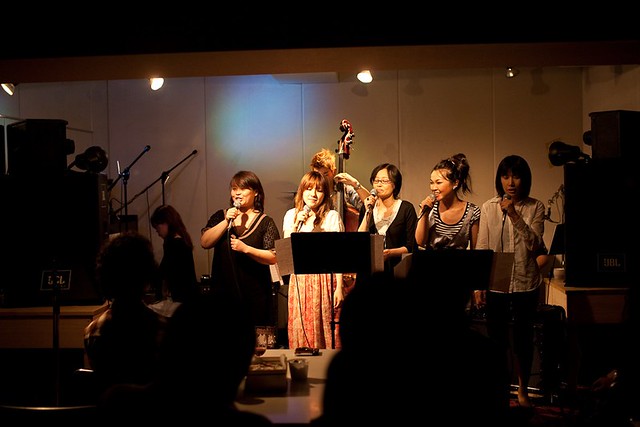
Our music teacher organizations and the Calgary Arts Summer School Association do a wonderful job at offering professional development opportunities for music teachers through workshops and conferences.
One thing I would like to get into more is to go away to study music teaching and performance. Here are some summer music programs for music teachers that caught my eye:
Adult Continuing Education Courses in Music at the Victoria Conservatory of Music
Boston University Summer Music Courses
Summer Workshops for Musicians and Music Teachers at MSU
Summer 2013 Workshops for Music Teachers at the University of Wisconsin
University of Delaware Workshops for Music Educators
University of Massachusetts Amherst Music and Drama Workshops and Courses
Video Conferencing and "Live" Music Technology and Jazz Education Workshops at Western State College
Get Your Virtual Pass to the 2013 Calgary Comic & Entertainment Expo
Whether you missed out on getting a weekend pass before the Calgary Comic and Entertainment Expo sold out, or are unable to attend a session you really want to check out, you have options!

This weekend, geeks from all over the world will descend upon Calgary for our city's second largest annual show - the Calgary Comic & Entertainment Expo (AKA "The Calgary Expo"). There is a fantastic line-up for geeks of all ages.
The show gets started with the Parade of Wonders the morning of Friday, April 26, 2013. Then the doors open at the Calgary Stampede. There will be something for everyone, from traditional gaming to video games and from Star Wars to Torchwood. Personally, I'm looking forward to seeing Stan Lee and Nathan Fillion in person, as well as WETA Studio's display. And if you grew up listening to Weird Al Yankovic, you'll be happy to hear that he's performing here Friday night.
Whether you missed out on getting a weekend pass before the Calgary Expo sold out, or have the quandary being unable to attend a session you really want to check out, you can get your Virtual Pass to the Calgary Expo. Panels will be streamed live and then archived for later viewing.
Head to FlipOn.tv to get your Calgary Expo Virtual Pass for only $14.95. Check out the line-up on the show's website.
What to Have in Your Technique Toolbox
My friend and colleague, LaDona Ahenda expands upon my list of Popular Hand & Technical Exercises Books with this three-part series.

My friend and colleague, LaDona Ahenda has published a comprehensive series on "In the Technique Toolbox". She takes a look at several books and methods, grouped by level.
In the Technique Box (Part 1): Beginner & Elementary
In the Technique Box (Part 2): Intermediate
In the Technique Box (Part 3): Advanced
Are we surprised that most of them are on the Popular Hand Exercises For Piano Book List? Please, tell me that you weren't.
DVD Review - The Music Instinct: Science & Song
Driven by curiosity to find out where goose bumps come from, neuroscientist Daniel Levitin, musician Bobby McFerrin and a team of scientists explore why music moves us.

"One of the last frontiers is the human brain," said Robert J. Zatorre, neuroscientist at McGill University. "Music serves as a gateway to understanding human cognition." Zatorre and Daniel Levitin teamed up with colleagues from around the world to unravel the secrets of the brain in The Music Instinct: Science & Song.
Also featured in this PBS Network DVD documentary are physicist Brian Greene, neuroscientists Lawrence Parsons and Jamshed Bharucha, archeologists Steven Mithen and Nicholas Conard, ethnomusicologist Kay K. Shelemay, researchers Sheila C. Woodward, Kathleen Wermke and Tom Fritz, psychologist John Sloboda, neurologists Gottfried Schlaug, Oliver Sacks and Tom Cicoria, neurobiologist Aniruddh Patel and author Steven Pinker.
Musicians interviewed include singer Bobby McFerrin, deaf percussionist Evelyn Glennie, violinist Daniel Bernard Roumain, conductor/pianist Daniel Barenboim, British rockers Jarvis Cocker and Richard Hawley, cellist Yo-Yo Ma, blind pianist Hwaen Ch'uqi and Lebanese singer Christiane Karam.
Cutting Edge Technology Reveals How Music Affects the Brain
With Functional Magnetic Resonance Imaging (FMRI) and PET technology, scientists can track blood flow and brain activity when subjects are listening to music, improvising, composing and collaborating. This helps them map various areas of the brain that are used.
In The Music Instinct, scientists discovered that the body is a barometer of our musical response to music. When listening to frightening music, our body responds by exhibiting the "flight or fight" response. When we listen to music we like, dopamine, the neurotransmitter for pleasure, is released. A recent discovery is that multiple areas of the brain are involved in processing music.
Music Teaches Us about the Brain, the Brain Teaches Us Music
"If you look at music performance, there's no activity that we do that allows the brain to do so many things at once, with such a complicated coordination and at such depth," said Parsons. His team discovered brain activity is higher when performing in collaboration versus performing solo. Playing an instrument engages the brain more than just listening to music.
"Music - probably one of the most distinctive characteristics of humans," said Mithen, who set out to discover how this compulsion for musicality evolved. He traveled to Germany, where Conard showed him an ivory flute from the Ice Age. The ancient artifacts found seem to indicate that music was as much a part of their life as it is now and that they used a similar scale in their music.
Woodward and Wermke found that babies can hear sound within their mother's womb and that they prefer consonance. Wermke learned that babies cry using melodic intervals, commonly using a perfect fifth, major and minor third and perfect fourth.
Both found that children of deaf parents performed similarly. This is significant as children of deaf parents were subject to less sound stimulation in the womb.
Is Music Universal?
Researchers learned that there are three intervals that are most common worldwide: the perfect fifth, perfect fourth and the perfect octave (the third is next). Ethnomusicologists also found that art music and lullabies from around the world possess common traits.
One interesting study showed the Mafa tribe in Africa. This civilization is far removed from modern technology and Western music. Researchers asked the Mafa to listen to musical excerpts from around the world and identify each as being "happy", "sad" or "scary". Their response was identical to people from Western cultures.
However, Shelemay warns viewers against claims of anything being "universal" in music. "Conceptions vary," she said.
Neurologists and other scientists found that playing music with a strong pulse helps patients with Parkinson's Disease learn to walk again. They also discovered that music helps stroke patients improve their speech and motor skills. Music that mimics the sound of a mother's heartbeat soothes premature babies, while it helps slow down the progress of dementia.
A Well Done Piece that Leaves Viewers with More Questions
Will this take away the mystery of music for you or whet your appetite for more information? Watch it and decide for yourself.
This PBS documentary features an impressive team of scientists and musicians. However, as the team admits, they face challenges and controversies moving forward. Are music and language two sides of the same coin or can they be separated? How much of what we know is learned and how much is "music instinct"? Does music move us or do the memories we attach to a song move us?
To find out more about Daniel Levitin's studies on science and music, visit Why Music Moves Us, Why Do People Sing?, DanielLevitin's website and The Music Instinct on PBS.
If you haven't figured it out yet: goose bumps come from the brain.
Release Date: 2009
Running Time: 120 minutes
MPAA Rating: Not Rated
Director: Elena Mannes
Executive Producers: Elena Mannes & Margaret Smilow
Special Features: 12 additional interviews and performances
Where to buy The Music Instinct:
Originally published on Suite101.com on December 19, 2009. Updated April 2, 2013. All rights reserved by Rhona-Mae Arca.
Teaching Music Using VARK Learning Preferences
Each person's learning style is unique. Music teachers can teach more effectively with a basic understanding of VARK learning preferences and teaching strategies.
Each person's learning style is unique. Music teachers can teach more effectively with a basic understanding of VARK learning preferences and teaching strategies.

Every student learns differently. Teachers can tailor music lessons to tap into individual learning styles. Photo by woodleywonderworks.
Although there are several learning style models, this article will focus on the VARK Model. VARK defines four learning preferences: Visual, Aural, Read/Write and Kinesthetic.
The Visual Learner
Visual learners learn by seeing. In her August 8, 2008 "Moulding with Modalities" presentation at a piano pedagogy workshop in Calgary, Alberta, clinician Victoria Chow explained that visual learners are good sight readers, favor Impressionistic and Contemporary Classical music, and enjoy music theory and analysis. They are easily distracted by movement and have a weak ear. They prefer written instructions over oral.
The VARK Learning Styles website states that visual learners like to learn through:
PowerPoint
Internet
video
colorful posters, graphics, diagrams, pictures, flow charts, handouts
symbols and white space
The Aural Learner
Aural learners learn by listening. Chow said aural learners have a strong musical ear and enjoy listening to music and discussing its style and tone. They like to sing and listen to recordings. Auditory learners think melodically and prefer music with a strong melodic line, such as music by Chopin and Schubert. They are easily distracted by noises.
The VARK Learning Styles website and Amanda-Makenzie Braedyn Svecz's article "Learning Styles - Visual, Auditory, Kinesthetic" explain that auditory learners learn by:
listening to and participating in discussions and tutorials
listening to interesting examples, stories, jokes
listening to recordings
verbal repetition
giving presentations or speeches
creating jingles or mnemonics
The Read/Write Learner
According to the VARK website, Read/Write learners learn by:
reading
written activities
closed book tests
essays
making lists
taking notes
I have searched in vain to find pedagogical ideas on how to teach this group music. The ideas that I have listed are a combination of general Read/Write learner traits and study ideas, as well as my own observations and experiences, having worked with several students who are "pure" Read/Write learners.
They prefer to put instructions into their own words or follow step-by-step instructions over oral or visual demonstrations. Those that enjoy reading enjoy sight reading new repertoire while some who prefer writing do exhibit an interest in composition. They tend to prefer to keep their musical score as neat and uncluttered as possible.
The Kinesthetic Learner
Chow described the Kinesthetic learner as one who likes to try things out and cannot sit still. They prefer repertoire with clear chords and enjoy music with chordal harmony such as pieces by Brahms and Schumann.
In Ann Marie Dinkel, RLATG's June 25, 2011 article "Training the Kinesthetic Learner" for ALN Magazine, she recommends hands on activities and discovery projects. "Think “show me.” Demonstrate, diagram, point out, manipulate; encourage the learners to touch, trace, point out, rearrange, build, model, or map a process," she elaborated. She also recommends using flashcards and wet labs, the latter gives students a chance to touch and handle equipment and instruments.
Learning Preference Assessment
It is beneficial to conduct a learning preference assessment prior to incorporating VARK teaching strategies into music lessons. Youth and adult students can complete a printed or online questionnaire available on the VARK Learning Styles website as well as several other sites.
A student may exhibit more than one learning preference. Teachers can employ teaching strategies that engage all the modalities a student is strong in. There are other learning style models, which may provide a more accurate assessment. A brief description of these can be found in Alice Luxton's article "Successful Study Habits for All Learning Styles."
VARK-Related Music Teaching Strategies
Once an assessment has been completed, a music teacher can employ any of the following teaching strategies based on VARK learning preferences:
Visual LearnerMusic Teaching Strategies
Keep motion distractions to a minimum.
Give students a clear view of the teacher to watch his/her body language during explanations.
Use highlighter or highlighter tape on the score to mark patterns, structure and important points.
New techniques should be demonstrated to show what the desired effect "looks" like.
Make video recordings of lessons or provide video examples for students to review at home.
Use charts and pies when teaching concepts such as note values.
Encourage students to make a drawing to depict their piece to aid in memorization and expression.
Aural LearnerMusic Teaching Strategies
Students should make audio recordings of their lessons and practices to review at home.
Keep written instructions by the teacher to a minimum.
Incorporate verbal analogies.
Read out instructions and theory questions.
Minimized noise distractions during lessons.
Introduce new genres or musical forms by playing audio recordings and engaging the student in a discussion about the various elements of music.
Use solfège, humming or encourage the student to make lyrics for their piece.
New techniques should be demonstrated to show what the desired effect "sounds" like.
Read/Write LearnerMusic Teaching Strategies
Give students one minute to write down an assigned task in his/her own words.
Assign written projects such as a composer report or writing a story to describe his/her piece.
Have the student transcribe a piece by hand.
Write out learning goals and objectives in steps or as a checklist for younger students.
Incorporate melodic and rhythmic dictation exercises in the lesson.
New techniques should be demonstrated but students need to read a handout outlining the steps prior to the demonstration or write out the steps for execution in their own words.
Kinesthetic LearnerMusic Teaching Strategies
Move around the studio frequently during the lesson, e.g., from the instrument to a desk to the floor.
Encourage students to move around in time to the music during ear training exercises or when listening to a piece.
Block broken chords when first assigning a piece.
Encourage students to try their piece in different registers of their instrument, on different instruments or if playing a digital piano - different instrument settings.
Difficult sections can be taught by by rote.
When demonstrating a new technique, the teacher can explain what the desired technique "feels" like.
Ask the student to place his/her hand on top of the teacher's during a demonstration of a technique.
Demonstrate a finger technique by "playing" on the student's forearm and then ask the student to to try the motion using the teacher's forearm as the piano.
Use three-dimensional teaching aids such as pie pieces when teaching note values.
Additional strategies can be found in Susan Carney's article "Identifying Students' Learning Styles."
As each person learns differently, music teachers can benefit from using a learning styles assessment tool. Using the VARK Method, a student's primary learning style can be identified as visual, aural, read/write, kinesthetic or multi-modal. By choosing repertoire that engages a student's learning preferences and by employing teaching strategies that complement those preferences, music teachers can capitalize on a students' strengths and build upon their weakness, while music students will find it easier and more enjoyable to study music.
References:
Chase, Gregory. "Keeping the Momentum and Excitement at the Intermediate Level", APTA News, Volume IX no. 3, Spring 2002.
Chow, Victoria. "Moulding with Modalities", Piano Pedagogy Workshop Presentation, Calgary Arts Summer School Association, 2008.
Dinkel, Ann Marie (RLATG). "Training the Kinesthetic Learner", ALN Magazine, 2011.
Originally published on Suite101.com on May 5, 2010. Updated April 18, 2013. All rights reserved by Rhona-Mae Arca.
Social Media Links
archives
- #YYCArts 32
- #YYCEvents 39
- Collaborative Music 25
- Community 11
- Composing & Arranging 6
- Entertainment 139
- Entrepreneurship 53
- Freebies 3
- Gardening 1
- Geeking Out 65
- Health & Wellness 120
- Improvisation 25
- Interviews 28
- Learning Music 188
- Martial Arts 13
- Memorization 7
- Music 230
- Music Careers 9
- Music Education 196
- Music Examinations 7
- Music Exploration 55
- Music Gigs 14
- Music Lessons 6
- Music Performance 32
- Music Theory 13
- Musical Instruments 12
- Musician Health 19
- Pets 57
- Piano Technique 12
- Practicing Music 120
- Productivity 20
- Professional Development 11
- Recommendations & Reviews 93
- Recreation 71
- Social Media 6
- Spirituality 10
- Studio Management 33
- Studio Technology 50
- Teaching Music 146
FOLLOW THE STUDIO on Instagram


Affiliate Links
As a Sheetmusicplus and CD Japan affiliate, I earn from qualifying purchases. The earnings help fund the Studio’s blog and YouTube channels. Your support is greatly appreciated.


FOLLOW Budo no Tabi on Instagram