THE MUSICAL MUSE
Blog dedicated to music education, practice tips, health
&
wellness, and geeking out.
SleepRight Secure Comfort Dental Guard
Millions of people suffer from bruxism. The SleepRight NIght Secure-Comfort Dental Guard is an affordable way to relieve the effects of teeth grinding.
Millions of people suffer from bruxism. The SleepRight NIght Secure-Comfort Dental Guard is an affordable way to relieve the effects of teeth grinding.
In "Bruxism - Signs and Symptoms", Dr. Melissa Conrad Stoppler estimates that 50 - 95% of adults and 15% of children clench and grind their teeth. Bruxism can lead to problems such as TMJ Disorder, tinnitus, problems swallowing, loss of teeth sensitivity and loss of teeth.
Using a dental guard at night can help ease the pain and effects of teeth grinding at night. The SleepRight Secure-Comfort Dental Guard is one of three dental guards created by Splintek, Inc. as an affordable treatment for teeth grinding and clenching.
A Look at the SleepRight Secure-Comfort Dental Guard
The SleepRight Secure-Comfort Guard is a clear, soft dental guard and therefore does not require boiling to make it fit to the user's mouth. It is made from polypropylene and EVA and has been approved by the US Food and Drug Administration (FDA).
The guard has adjustable bite-pads to adjust to the user's mouth size. The bite-pads swivel to match the user's bite. This model contains stability wings to provide a higher level of security than Splintek's Slim-Comfort model. The smooth band sits beneath the lower teeth to prevent the guard from sliding.
The SleepRight Secure-Comfort Guard was designed by dentists at Splintek and is available online at Amazon and at select drug stores throughout Canada and the United States.It retails for approximately $50 CAD.
Splintek also sells a Slim-Comfort and Dura-Comfort model. It is ranked #9 on Amazon under Health & Personal Care.
Use and Care of the SleepRight Secure-Comfort Night Guard
The SleepRight guard encourages the jaw to adjust to a healthy "lips together, teeth apart" position, fostering muscle relaxation. It can be used at night or throughout the day. However, the manufacturers recommend that the SleepRight be used for no more than 12 hours a day.
Prior to using the the SleepRight for the first time, the guard should be rinsed with cool water for initial cleaning and to provide lubrication. The bite-pads should rest between the upper and lower molars, with the front edge of the pads resting between the cuspid and the premolar teeth. There are four notches located on both sides of the guard to allow the user to move the bite-pads backwards or forwards to achieve the optimal fit.
The thermal band should sit between the lower lip and gums. The band will adjust to the user's body temperature.
The Secure-Comfort Guard is available in plain and mint-flavor.
The SleepRight guard can be cleaned by rinsing it with cool water or mouthwash. For a deeper clean, users can brush it with mouthwash or toothpaste. When not in use, it should be stored in the carrying case that came with it.
How Well Does the SleepRight Secure-Comfort Night Guard Work?
The product's softness is a double-edged sword. The adjustment time to the product is shorter than the adjustment time required for a customized occlusal splint made of acrylic resin. Users can adjust to the SleepRight guard within a matter of days. In addition, it is significantly cheaper than a customized teeth guard.
The efficacy of the Sleep Right Secure-Comfort Night Guard depends mainly upon the severity of the user's bruxism. During times of stress, people with bruxism tend to clench and grind more frequently and vigorously. This will affect the lifespan of the bite-pads. This product is not recommended for people with severe TMJ Disorder or for children.
I went through two SleepRight Secure Comfort Dental Guards in the span of three months. Long enough for me to order a customized occlusal splint, which lasts for years.
Users can extend the lifespan of their Sleep Right guard by massaging the jaw area, applying heat to the tempromandibular joint and doing isometric jaw exercises to relax the jaw before bedtime.
Alternatives to the Secure-Comfort Night Guard
There are other soft night guards available, such as The Doctor's Night Guard, DenTek Custom Comfort Dental Guard and Dr. Brux which are also available over the counter.
People with TMJ Disorder severe bruxism should consult their dentist when deciding upon the best course of treatment for their jaw clenching and teeth grinding.
As a method to treat bruxism, the SleepRight Secure-Comfort Guard is a viable option for people who clench and grind their teeth. The short adjustment time and affordable price are big benefits to this product, while the adjustable bite-pads are unique among the soft mouth guards in the market.
Originally published on Suite101.com on March 29, 2010. Updated March 22, 2013. All rights reserved by Rhona-Mae Arca.

My First Passover Seder Meal
My reflections and the lessons I took away from attending my first Passover Seder Meal.

On Monday, I partook in the Passover Seder Meal. I walked away extremely full - physically, mentally and spiritually. Perhaps you, like Rabbi Matsuof are thinking, "Why are you so interested? What brings you here?" After all, I am a cradle Catholic, active in my parish and in my hometown one whenever I visit. I grew up in a small town comprised of Catholics, Protestants, Jehovah Witnesses and Mormons. No Jewish peoples. Naturally, at least for me, I'm curious and I want to learn.
I have been curious since university, only to get frustrated because Religious Studies 1000 - An Introduction to World Religions never seemed to fit into my timetable. I've been interested since 1993 when my boss at the time shared some matzo (or "matzah") with me and listened patiently to my questions about Judaism (e.g. "Why can't you work on certain days during Passover?" and "Why can you only eat matzo and not normal bread during Passover?"). That just heightened during my piano lessons with one of my piano teachers (her husband makes fantastic latkes during Hanukkah).
However, it's not enough for me to just read about Passover in a book. Or to watch The Ten Commandments on TV (again). For me to get a deeper sense of this ancient tradition, I need to experience it. This year, I was delighted to learn that Passover coincided with Spring Break. Finally, I could attend.
My companion for the evening was my father. He wants to visit the Holy Land someday, so I knew he'd be up for sharing the experience. I also learned that one of my piano classmates would also be attending.
We attended the 23rd Annual Community Seder hosted by the Chabad Lubavitch of Alberta. This year, things were a little different. The Seder usually takes place at nightfall. However, it's spring and nightfall didn't come until around 8 pm. It's a lengthy mitzvah (6:00 - 10:50 PM), so to ensure that everything was done properly, yet without us passing out, we were offered a "light" meal to start the evening.
I put "light" in quotations because it was a large, scrumptious meal. The first course was a delicate chicken soup with egg noodles and carrots. This was followed by roast chicken in orange and ginger sauce, accompanied by roasted vegetables, grilled potatoes and mushroom blintzes. The blintze was dry but everything else was flavourful.
Our dinner companions were an interesting mix. One gentleman was a cradle Catholic-turned-Protestant-converting to Judaism. His partner was Russian, so I'll presume that she's Russian Orthodox since she said she wasn't Jewish. There was a quiet man with his 17-year old son. Their family emigrated from Latvia. Then there was a Hungarian Levite who brought two co-workers (one Catholic, the other one seemed a little bored). I suspect on the promise of good food and lots of alcohol.
The other woman at my table and I soon learned that Levites don't speak to women, which immediately resulted in me asking the gentleman in the process of converting, "How does he work in an office if he can't talk to women?" (and to quote Chitanda from Hyouka: "Watsahi, kininarimasu!").
After dinner, the men left the room to pray, while the women lit the candles and prayed to welcome Pesach (AKA, Passover). We said this beautiful prayer (well, the other ladies said it, I listened and followed their hand gestures).
Next, we were to set the Seder Plate. Well, the Levi gentleman at our table took over that task. Here's what the plate looks like before anything was placed on it:
Rabbi explained what each item signified. Rabbi Matsuof summed up that the plate represents mourning, bitterness, tears, what we can't have, charoset to represent mortar (used in the work of slaves). You'd think, "Who would want that if everything on the plate signifies something negative?"
"Freedom and slavery is what we make of it," he continued. The Seder plate represents the challenges we face now in the hopes of facing a better tomorrow. "Despite all that is in front of my face, I am free. I am true to myself. Tomorrow will be better," he added.
Next, it was time to recite the Haggadah, "The Telling". Even though I read up on it before attending, I was thankful that books were placed at each table (in English, Yiddish and Russian) for everyone to follow. The children sang the four questions at an impressive speed. Here are the four questions with a bit of an explanation:
Prayers are recited and songs of thanksgiving and praise to G-d are sung and the Hebrew's exodus from Egypt is retold as the Story of the Four Sons. That's the short version of what happens. Now, a bit more detail. There are fourteen parts to the Seder:
Kaddesh: Sanctification and prayer, followed by drinking the first glass of wine while leaning to the left (signifying freedom)
Urechatz: Ritual Washing
Karpas: Eating the vegetable dipped in salt water
Yachatz: Breaking of the middle matzo. Rabbi didn't trust us enough to not eat the matzo until the appointed time (probably learned from experience). He kept the three matzo at his table.
Maggid: The Passover Story as told by four sons asking four questions, after which, the second cup of wine is drunk.
Rachtzah: Ritual Washing in silence
Motzi Matzah: At this time, the matzo for all tables came out. After the blessing, we all ate our pieces in silence.
Maror: Bitter Herbs (horseradish)
Korech: a matzo sandwich of lettuce, horseradish and charoset are eaten
Shulchan Orech: Dinner and drinks
Tzafun: The hidden piece of matzo - the afrikomen - is eaten (leaning over)
Barech: Blessing after the Meal. The third cup of wine is drunk after the blessing.
Hallel: Songs. The fourth cup of wine is drunk.
Nirtzah: Closing. The opening of the door, the chair for Elijah and the recitation of "Next year in Jerusalem!"
The four glasses of wine symbolize G-d's four promises to the Hebrews (Exodus 6:6-7):
I will take you out of Egypt.
I will deliver you from Egyptian slavery.
I will redeem you with a demonstration of my power.
I will acquire you as a nation.
This is only a very brief explanation. This ancient tradition is rich in ritual and text. Please refer to this English translation of the Haggadah for a more complete picture.
People from every table had an opportunity to recite the Haggadah. Throughout, Rabbi would interpret the Passover, highlighting the lessons that are relevant today. These are some of the words of wisdom that I managed to scribble down:
"We need to make ourselves go out of our own Egypt. We are our own worst enemy."
"To be free in freedom - that is the challenge."
"True and honest sweetness is not what is sweet now, but what is sweet tomorrow."
"Bitter today, sweet tomorrow."
"Don't give up. Stand up for your rights."
"We are all united - in freedom - for a better tomorrow. We need to celebrate freedom. We need to celebrate the freedom in freedom."
Passover - a celebration of liberation - has lessons that anyone can take in.
To close, here's my favourite song that we sung at the Seder:
Happy Passover!
To learn more about Judaism, visit the Chabad website or check out some of the outreach programmes offered by your neighbourhood synagogue.
Studying Japanese with Dog Food?
My dog was bored during Spring Break, so I made him study Japanese with me. His reward? Eating my food art.
My piano students and I (and their parents) are enjoying a much needed break: はる の やすみ (Spring Break). However, my dog doesn't see it that way. He's pretty bored without the students. That meant that he was more than willing to participate in this impromptu Japanese study session. I made a face (かお) with dog food and pointed out the body parts to him. He waited patiently for me to finish before digging in:
Popular Hand Exercises Books for Piano
If you or your piano teacher have decided that you add finger strengthening exercises into your at-home practice sessions, check out these popular books of finger exercises. Please note, this list is just for piano. I'll eventually get around to posting popular exercise books for the other instruments.
Regardless of your playing level, or whether you are preparing for a piano exam, finger exercises are one of the keys to achieving technical fluency. These finger strengthening exercises give you the chops you need to tackle your pieces (AKA "repertoire").
This is a list of 15 of the most popular books of finger exercises for piano. If you click on the link, you'll go to a page to order it (or get more information on it):
Piano Essentials: Scales, Chords, Arpeggios, and Cadences for the Contemporary Pianist (Book & CD)
The First Book of Scales, Chords, Arpeggios & Cadences (Alfred's Basic Piano Library)
Master School of Virtuoso Piano Playing: Volume I Finger Exercises (Dover Music for Piano)
Oscar Peterson - Jazz Exercises, Minuets, Etudes & Pieces for PianoMaster School of Virtuoso Piano Playing: Volume I Finger Exercises (Dover Music for Piano)
Burgmuller, Czerny & Hanon: 32 Piano Studies for Technique and Musicality: 1
Twenty-Five Easy and Progressive Studies for the Piano, Op. 100: Piano Solo
Hanon: The Virtuoso Pianist (Complete) (Alfred Masterwork Edition)
Your eyes aren't deceiving you. There are several different editions of Hanon's exercises - all of them are pretty popular.
Interview With The Godchild Director Philip Spink
In this exclusive interview, writer/director/producer Philip Spink talks about sci fi TV and films, coming home and filming The Godchild.
In this exclusive interview, writer/director/producer Philip Spink talks about sci fi TV and films, coming home and filming The Godchild.
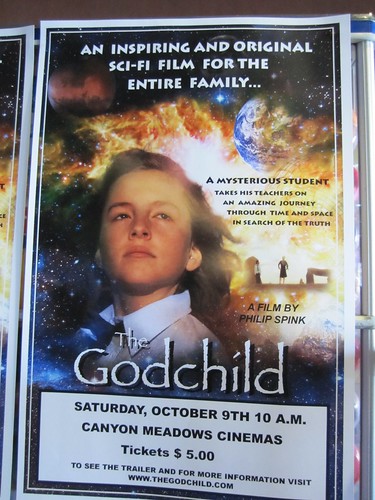
Philip Spink is recognized in the North American film industry as a skilled commercial director, as well as for his work on action miniseries and TV fantasy movies such as Voyage of a Unicorn. He is the screenwriter, film director and film producer of The Godchild.
This indie sci fi fantasy film hit theatres on October 9, 2010, his latest work. It explores the space time continuum through one unique boy's journey in search for a lost loved one and universal truths. Independent film director Philip Spink chatted with me when I worked with Suite 101 prior to film’s premiere.
Philip Spink, Leading Canadian Commercial Director
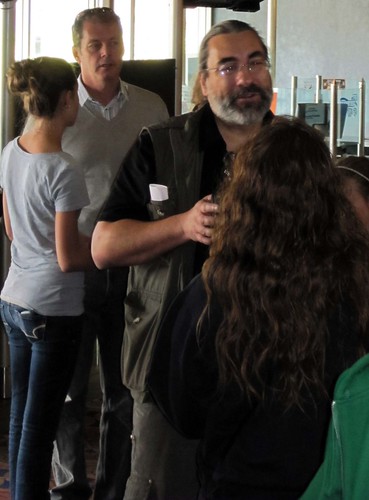
Philip Spink grew up in Edmonton, Alberta. He began his professional career as a classically-trained artist and illustrator. In the 1990’s, Spink relocated to Vancouver, BC and began working in the film industry, working on commercials. Gradually, he gravitated towards film making.
Spink directed various TV series and movies, including KidZone and Ronnie & Julie (1997). The latter work garnered actress Alexandra Purvis a Young Artist Award nomination for Best Performance in the young actress category.
Spink’s Journey From Commercials to Award-Winning Sci Fi TV
“The genre draws me in,” said Spink of science fiction fantasy. “It takes you to another place.”
Not surprisingly, Spink debuted as a screenwriter/film director with a fantasy film. Once in a Blue Moon (1995). The production earned a Genie nomination for costume design and won a Leo Award for Best Musical Score.
In 2009, Spink directed Knights of Bloodsteel, a fantasy TV miniseries for RHI Entertainment that featured Christopher Lloyd. Some of his other TV series and miniseries have appeared on Showtime TV, Spike TV and the Sy Fy Channel.
Spink earned international recognition with the Hallmark Channel TV miniseries Voyage of the Unicorn (2001), which starred Beau Bridges (Stargate SG-1, The District), Chantal Conlin (Tru Calling, Life as We Know It) and Heather McEwen (Young Blades, The Baby Dance). Voyage garnered numerous awards and nominations, including a Gemini for Best Special Effects and a Leo Award for Feature Length Drama: Best Cinematography, Feature Length Drama. It also earned a Primetime Emmy nomination.
Spink Returns to Alberta
After living on the west coast for over 10 years, Philip Spink returned to Alberta, settling down in Calgary. “I have kids and wanted them to be close to relatives,” he explained.
The move didn’t hamper his work, fortunately. “As a director, it doesn’t matter where you live,” he said.
However, Spink wanted to produce something in Alberta. “I really wanted to work where I lived. I really wanted to get a project of my own off the ground; so I tried to design a project that I could do here with local actors.” This project was The Godchild.
Local Talent and Low Budget can Equal High Quality Film
Philip Spink’s goals in making The Godchild. were three-fold: to develop a high quality movie with a low to mid-range budget, to use local talent and to make it an independent film. Pitching films to networks can be challenging at times, which prompted the decision to work outside the system.
“It’s very difficult to do something unique and original because you have to go through so many hoops,” he explained. Teen comedies and westerns are much easier to sell to networks. As an independent film production, Spink was unencumbered by pressures and politics of network or film production companies.
(In Part 2 of this exclusive interview with film director and producer Philip Spink, he talks about the cast, music and production model of his latest work, The Godchild. This sci fi fantasy film premiered in Calgary on October 9, 2010 and was by me on my Stumbling Still Blog.
Originally published October 16, 2010 on Suite 101. Updated March 22, 2013. All rights reserved by Rhona-Mae Arca.
Social Media Links
archives
- #YYCArts 32
- #YYCEvents 39
- Collaborative Music 25
- Community 11
- Composing & Arranging 6
- Entertainment 139
- Entrepreneurship 53
- Freebies 3
- Gardening 1
- Geeking Out 65
- Health & Wellness 120
- Improvisation 25
- Interviews 28
- Learning Music 188
- Martial Arts 13
- Memorization 7
- Music 230
- Music Careers 9
- Music Education 196
- Music Examinations 7
- Music Exploration 55
- Music Gigs 14
- Music Lessons 6
- Music Performance 32
- Music Theory 13
- Musical Instruments 12
- Musician Health 19
- Pets 57
- Piano Technique 12
- Practicing Music 120
- Productivity 20
- Professional Development 11
- Recommendations & Reviews 93
- Recreation 71
- Social Media 6
- Spirituality 10
- Studio Management 33
- Studio Technology 50
- Teaching Music 146
FOLLOW THE STUDIO on Instagram


Affiliate Links
As a Sheetmusicplus and CD Japan affiliate, I earn from qualifying purchases. The earnings help fund the Studio’s blog and YouTube channels. Your support is greatly appreciated.


FOLLOW Budo no Tabi on Instagram