THE MUSICAL MUSE
Blog dedicated to music education, practice tips, health
&
wellness, and geeking out.

Arm and Hand Stretches for Musicians
Many musicians complain of numbness and pain in the hand, forearm and arm. They can prevent repetitive strain injury, ease pain and tension by stretching regularly.
Many musicians complain of numbness and pain in the hand, forearm and arm. They can prevent repetitive strain injury, ease pain and tension by stretching regularly.
By nature, learning music involves repeating until a passage or technical exercise until a high level of proficiency, fluency and artistry is achieved. Instrumentalists use their finger, hand and arm muscles extensively when practicing and performing. This makes them especially vulnerable to a repetitive stain injury such as Carpal Tunnel Syndrome, Bursitis and Tendinitis. Musicians can ease arm and hand pain, relieve tension and prevent injuries by incorporating stretching exercises into their daily routine.
How Musicians Should Stretch the Hand and Arm Muscles
Stretching exercises should be done when the muscles are warm. For example, stretches can be done after a shower, after a bath or after performing some light exercises. Musicians should always stretch prior to practicing. They should also take regular breaks when practicing to stretch. For example, stretches can be done before switching to a new piece or after practicing a physically challenging section of music. Musicians should also stretch prior to performing and in between performances.
Stretching Exercises for Musicians
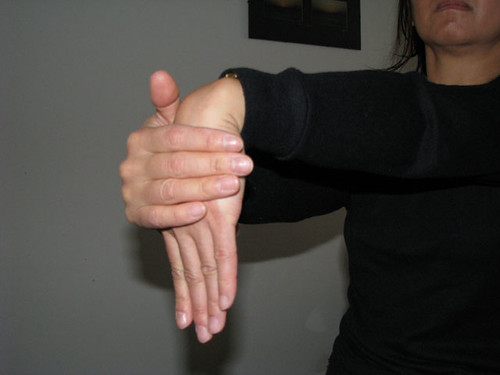
Follow the arm and hand exercises and refer to the photos below:
1 Finger Flicks
Purpose: Prevent Tendinitis and Trigger Finger, relieve tension and increase blood circulation in the hands.


Performance:
Hold your hands in a loose fist in front of you.
Flick your fingers so that your fingers are outstretched. Pretend that you are flicking water.
Hold your fingers in an outstretched position for 10 seconds.
Relax.
Repeat.
2 Wrist Circles
Purpose: Prevent Tendinitis, relieve tension and increase blood circulation in the wrists.
Hold your hands in a loose fist in front of you.
Rotate your wrists in a circle several times in one direction.
Relax.
Rotate your wrists in a circle in the other direction.
Relax.
Variation: Sticking out your thumb as if you were hitchhiking.
3 Fingers Interlaced Wrist Circles
Purpose: Prevent Tendinitis, relieve tension and increase blood circulation in the wrists.
Interlace your fingers together in front of you. Keep track of which thumb is resting on top.
Rotate your wrists in a circle several times in one direction. Start slowly and as you get more comfortable, increase the speed.
Relax.
Reposition your hands so that the opposite thumb is resting on top.
Rotate your wrists in a circle in the other direction.
Relax.
4 Forearm Flexor Stretch
Purpose: Prevent Tendinitis in the elbow and forearm, relieve tension and increase blood circulation.

Performance:
Place your hands together in a praying position.
Push your hands together and push your arms downward until you feel a gentle stretch.
Hold the stretch for 10 - 20 seconds.
Relax.
Repeat at least once.

5 Single Arm Forearm Flexor Stretch
Purpose: Prevent Tendinitis in the elbow and forearm, relieve tension and increase blood circulation.Performance:
Hold your left arm straight in front of you with your palm facing forward as if to indicate "stop".
Brace your left palm with your right hand.
Gently pull the fingers in your left hand towards you until you feel a gentle stretch.
Hold for 10 - 20 seconds.
For a deeper, isometric stretch, push your left arm forward, into your right hand, as you pull your left hand towards you.
Relax.
Repeat with the opposite arm.
6 Forearm Extensor Stretch
Purpose: Prevent Tendinitis in the elbow and forearm, relieve tension and increase blood circulation.Performance:
Extend your left arm in front of you, holding your arm straight.
Let your hand flop downward at the wrist.
Place your right palm over your left hand (above the fingers).
Gently push your left hand towards you with your right hand until you feel a gentle stretch.
Hold for 10 - 20 seconds.
For a deeper, isometric stretch, push your left arm forward, into your right hand, as you pull your left hand towards you.
Relax.
Repeat with the opposite arm.
7 Soup Can Forearm Extensor Exercise
Purpose: Prevent Tendinitis in the elbow and forearm, relieve tension and increase blood circulation.
Performance:
With your right forearm on a table and let your right hand flop down.
Place a soup can in your right hand.
Beginning with your wrist level with your forearm, slowly let your hand point downward until you feel a gentle stretch in your forearm extensors.
Hold for 10 seconds.
Steadily raise your hand so that your wrist is level with your forearm.
Relax.
Complete 10 repetitions.
Repeat the exercises with the opposite arm.
8 Tricep Stretch
Purpose: Prevent Tendinitis in the elbow and upper arm, relieve tension and increase blood circulation.
Performance:
Hold your left elbow with your right hand.
Gently pull your left arm towards you until you feel a gentle stretch.
Hold for 10 - 20 seconds.
Relax.
Stretch the right arm.
Repeat this stretch at least once.
Never stretch to the point of pain. Strive for a gentle stretch. If you are already suffering from a repetitive strain injury, consult a doctor, chiropractor, physiotherapist or registered massage therapist (licensed in therapeutic massage) before attempting these exercises.
By spending as little as five minutes a day on stretching exercises, musicians can alleviate symptoms of carpal tunnel syndrome, prevent tendinitis. This can lead to many years of healthy and pain-free years of music-making.
You may find more information through these links: Benefits of Stretching, Face and Neck Stretches for Musicians, The Art of Practicing, Understanding Musician Injuries, Simple Exercises to Strengthen the Wrists and Wrist Exercises.
An Otaku's Guide to Buying Japanese Pop Culture Merchandise
A sampling of places otaku can buy apparel, Jpop, Jrock, geta, bento boxes, plushies, anime figures and other Japanese entertainment merchandise. Some places are on my wish list, while others, I have frequented.
A sampling of places otaku can buy apparel, Jpop, Jrock, geta, bento boxes, plushies, anime figures and other Japanese entertainment merchandise.
For some otaku, anime and manga are just the beginning of their fascination-obsession with Japanese pop culture. Whether it's Glico Pocky or Japanese ear cleaners, there is a plethora of Japanese merchandise that otaku can purchase locally or online. This is a selection of what I have tracked down in my searches as well as places I have shopped at.
Shopping for Japanese Entertainment Merchandise in North America
Chain bookstores such as Chapters/Indigo, Barnes & Noble and Powell's Bookstore stock a variety of manga and graphic novels. These stores carry most of the popular titles, including Bleach, Chobits and Naruto.Larger city centers also have independent comic and hobby stores that sell anime, manga, figures and other toys. The following are some anime-related stores in North America:
Kinokuniya Bookstores are found in Australia, Japan, Singapore, Malaysia, Thailand,Taiwan and the USA (California, New York, Oregon and Washington). Kinokuniya carries CD's and videos by popular Japanese artists and bands such as Arashi, Yui and Rie Fu.
Shirokiya (Honolulu, HI) is a Japanese department store in Ala Moana Center. Otaku can find a wide variety of merchandise, including kimonos, geta, Jpop and Jrock CD's, sake sets and food.
Konbiniya Japan Centre (Vancouver, BC) carries a wide selection of Japanese products, including Japanese DVDs, drinks, food, karaoke, kitchenware, manga and snacks.
Broadcast Entertainment and Fantasia (Markham, ON) carries anime DVD's, CD's, key chains, bags and other knick-knacks. There is a wide assortment of Helly Kitty merchandise, such as pencil cases and wallets.
Buy Anime, Manga and Video Game Merchandise at Anime Conventions
The Dealer Room, also referred to as the Vendor Room or Exhibitors' Hall, is a mecca for anime fangirls and fanboys. Large anime cons can draw hundreds of exhibitors. For instance, Anime North (Toronto, ON) had over 200 tables of merchandise at its 2010 convention, while Sakura Con (Seattle, WA) had more than 100 vendor booths.At anime and comic conventions, enthusiasts can purchase everything from cosplay accessories, anime DVD's, Jpop CD's, video games, plushies, bags, manga, light novels and figures. The Artists' Alley sells anime-themed posters, bookmarks, comics and buttons drawn by emerging and established artists. Popular series such as Bleach, Code Geass, Fullmetal Alchemist and Hetalia Axis Powers are popular sellers.
Shopping Online for Japanese Apparel, Music, DVD's, Manga and More
This is a short list of reputable online stores that sell legal anime-related and Japanese entertainment merchandise:
Animenation (Tampa, FL): Founded in 1995, Animenation has over 8,000 products and gets 15 million page views per month. Bestsellers include Bleach manga and DVD's, Soul Eater DVD's, Samurai Champloo action figures and the Appleseed EX Machina figure. Ships worldwide.
CDJapan (Tokyo, Japan): Founded in 1997, CDJapan, sells a wide selection of the hottest Jpop and Jrock by artists such as GACKT, BoA, Do as Infinity and Kanon. CDJapan also sells anime OST music and singles from popular anime such as Macross Frontier and Soul Eater, as well as apparel, books, magazine, figures, collectibles and games. Ships worldwide.
J-List (Isesaki, Gunma Prefecture, Japan): Founded in 1996, J-List now serves 200,000 customers worldwide. J-List also has a North American office in San Diego, CA. Thousands of products are available, from magazines to cosplay, calendars to t-shirts and more. Popular items include the Saori Hara Special DVD Box Set, Tsumugi Kotobuki Figma Action Figure from K-ON!, and Shirokuma Ice Cream Drops. J-List has a separate area for adult material. J-Box is a special section for shoppers under the age of 18.
Right Stuf Inc. (Grimes, IA): Founded in 1997, Right Stuf is an online anime superstore which sells a wide selection of anime merchandise anime DVD's, manga, games, bags, plushies, wall scrolls and other collectibles. Popular sellers include the Ouran High School Host Club Hunny's Rabbit Plush Bag, Tsundere Tribute Japanese t-shirt and the Tsubasa Necklace: Sakura Feather
Yesasia (Hong Kong, Japan, Korea): Founded in 1998, Yesasia has been ranked in the Top 50 and Top 500 Lists for Top Retailer Websites. Yesasia sells anime, movies, plushies, models, electronics and models from popular anime such as Neon Genesis Evangelion and the Gundam series.
When shopping online, shoppers should buy from retailers with a solid reputation, good customer service and a satisfactory returns policy. For more information about online shopping, read the Consumer Guide to Internet Shopping.
Otaku Customer Reflections
In my pursuit of otaku goodies, I have shopped at anime conventions, at local stores and online. If you have a chance to go to Shirokiya in Hawaii, you won't be disappointed. Three floors of Japanese culture. I could have spent hours in there!
As for the online stores, I have shopped at CD Japan, Animenation and JList. All three have a wide selection of anime, cosplay and manga products. Orders are quickly filled and the quality of the products are high.
From hoodies to Gundam models and from Hiragana flash cards to cosplay caps, there are numerous places for anime, manga, gamers and geeks to get their "Japanese fix". Local bookstores, anime conventions and Internet retailers offer countless items to suit otaku of all ages and interests. References:
J!-ENT: Sakura Con 2010 was Another Huge Success.
The Asunaro Club's Guide to Japanese Music: Where to Buy Japanese Music.
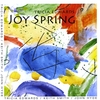
CD Review: Tricia Edward's Joy Spring
Calgary-based jazz pianist Tricia Edwards takes a handful of jazz standards and transforms them into a relaxing and playful set in her debut CD.

Calgary-based jazz pianist Tricia Edwards takes a handful of jazz standards and transforms them into a relaxing and playful set in her debut CD.
Tricia Edwards' musical journey has taken her down many paths, most recently, in local jazz bars and the recording studio. From classical piano to classic jazz, from soloist to collaborative artist and from student to teacher/performer. With Joy Spring, Edwards takes her audience on a cheerful yet relaxing, playful yet romantic ride.
The Journey From Classical to Jazz
Edwards' musical studies began in classical music. She earned her Masters' and Bachelors' degrees in classical piano performance at the University of Alberta. After graduation, Edwards worked as a teacher and collaborative pianist in Alberta and the Middle East.
In 2003, Edwards began studying jazz piano, studying with Derek Stoll, a prominent jazz pianist in Western Canada. In 2009, she was awarded the Richard Harold Cowie Scholarship by the Calgary Musician's Association and C-Jazz.
Since then, Edwards has been busy. She has formed her own trio and quartet, the Whisper Not Jazz Ensemble, Calgary Jazzwinds, the Wednesday Night Big Band, Wednesday Night Little Big Band and a new unnamed smooth jazz quartet. She has performed at popular jazz clubs such as the BeatNiq Jazz and Social Club and Koi Cafe.
Joy Spring Disc Information
Track Listing
One Note Samba (N. Mendonca/A.C. Jobim)
Sugar (S. Turrentine)
Sidewinder (L. Morgan)
On the Street Where You Live (A.J. Lerner/ F. Lowe)
There Will Never Be Another You (M. Gordon/H. Warren)
My Funny Valentine (L. Hart/R. Rodgers)
Cherokee (R. Noble)
Bluesette (J.B. Thielmans)
All the Things You Are (O. Hammerstein/J. Kern)
Well You Needn't (T. Monk)
Joy Spring (C. Brown)
Alone Together (H. Dietze/A. Schartz)
Musicians: Tricia Edwards (piano), Keith Smith (guitar), John Hyde (bass)
Arranger: Tricia Edwards
Label: None
Produced by: NRS Productions
Cover Art by: Alison Edwards
Release Date: March 9, 2009
Joy Spring Highlights
Joy Spring is a smooth jazz CD comprised of jazz standards; a little Latin jazz, a little swing and a little waltz. The first track, "One Note Samba", opens with a cheerful piano solo before being joined by the guitar and bass. The guitar solo teases us with a line that steps away from the "one note" but leisurely returns to that "one note". The piano matches the playful and unhurried tone set by the guitar. Gradually the line ebbs and flows.
"Sidewinder" displays the funky and frolicsome interplay between all the instruments. Each member of the trio takes ideas presented by another member and takes it to another level. Nothing is rushed, everything is smooth and relaxed.
"My Funny Valentine" begins with a piano solo, playing a simple ostinato over the descending bass. The guitar enters with a very melancholic saxophone-like line. The head is played simply with sparse accompaniment. Gradually, the harmonies become thicker. The solos do reach virtuosic proportions yet remain lazy, smoky and sultry.
The jazz waltz "Bluesette" begins with a dreamy piano intro that is soon joined by the bass. The piano solo is syncopated, unhurried and sprightly. The bass solo could have been louder.
The title track, "Joy Spring" is a playful Latin groove. The head wanders up and down at a laid back pace.
In the piano solo, Edwards plays with the rhythm, throwing in a couple of runs. The guitar solo is highly syncopated and melodic.
Lighthearted Relaxation Music
The interplay between the piano and guitar and piano is well done. It is clear that the members of this jazz trio listen to each other, lend support and build on each other's ideas. The bass gives subtle but strong support. Joy Spring as a debut CD presents Tricia Edward's joy of music and playful nature; making it a fun listen, whether you are curled up with a good book and a glass of wine, driving across the countryside or enjoying a romantic dinner.
To find out more about Tricia Edwards or to listen to sample tracks, visit her website. To learn buy Joy Spring, click on the icon below:
Originally published March 1, 2010. All rights reserved by Rhona-Mae Arca.
What's in a Pope's Name?
My students were abuzz this week, talking about Pope Francis I. Reflecting on his name.
Several of my students have come in this week, all abuzz about His Holiness, Pope Francis I. Most of them attend separate school, so they have been following the Conclave in religion class. They've been fixated on everything from how he had part of his lung removed as a teenager to how he prefers to take public transit and from how he preferred to live in a simple apartment to how quickly he was chosen to be pope.
Two students stumped me when they asked, "Why would a Pope resign? Aren't you supposed to be a pope until you die?" The two sisters followed this up by, "Can a pope get kicked out?" Oh dear, it would have been nice to have one of our priests here to field those questions. I quickly told them that these are questions to ask a priest and tried to steer the conversation back towards music.
I told some of them how St. Francis would have freaked out over the massive basilica built in his name in Assisi. As beautiful as it is, and as beautiful as it was for me to attend Mass there, I think St. Francis would have wanted the money used to build the basilica to help the poor.
They, and I are very happy about the Pope's papal name: Francis. St. Francis of Assisi is the patron saint of animals and children, so he's pretty popular in my studio.
We talked about what the Pope might be trying to convey with his choice of name. It came down to what St. Francis is known for: simplicity, humility and service to the poor. That resonates strongly with them - and with me as well.
He's got a tough job ahead of him. We can hope and pray that he'll have the help he needs to rebuild and reorganize the Church. However, with just his choice of name and his demeanor, he has instilled hope - and excitement - in my students and I. He seems like one of us - an ordinary person trying to get by in the world by the grace of God. Someone who wants to help us and work with us. Someone we'd like to invite over for tea and cookies.
I leave you with a song that I sung at many a school Mass when I lived down east. It's a favourite with my students as well and since the news broke out, this song has been playing in my head all day:
A Look at Chord Helps
A look at four tools that I have come across in my attempt to help my piano students understand chords, key signatures and the Circle of Fifths better.

Most of my students are visual-aural or visual-kinesthetic learners. Needless to say, cracking open their music theory workbook is not their idea of a good time. Therefore, I'm always on the lookout for tools that "speak" more to their learning styles.
The following are four tools that I have come across in my attempt to help my piano students understand chords and the Circle of Fifths better:
Walrus Productions Piano Chords Mini-Chart


This Piano Chord Mini Chart is ideal for the visual learner. There is a piano keyboard on top to help music students with music theory. It's made of bendable plastic. I suppose one could use it as a place-mat or mouse pad if they are so inclined.
Each row contains the major, minor, dominant seventh, augmented and diminished chords starting on a particular note. The red dots show how to build each chord. If a student is still unsure of their note names, the keyboard at the top of the chart can help clear things up for them.
Is it complete? No. It just gives those basic chord types. It would have been nice if it had diminished seventh chords as well. The reverse side could have been utilized to show the Circle of Fifths and perhaps some common chord progressions.
The Piano Chords Mini-Chart runs for approximately $2.68 USD on Amazon. I purchased mine at my local Long & McQuade for $5.08 CAD.
Alfred Publishing Keyboard Chord Chart
With over 100 chords, this Keyboard Chord Chart boasts a more complete collection. What I like about this chart over the previous one is that it gives presents the information in two different ways: first, you see what the chord looks like on the staff. Then, it shows how to build the chord on the piano. However, it goes one step beyond but showing the letter names on the keys. There is a section that covers the inversion of chords as well.
It retails for approximately $3.50 USD and $3.59 CAD. One of my colleagues has a gigantic, wall-sized version of this chart.
The Pocket Idiot's Guide to Piano Chords
This 183-page pocket-book was written by my colleague Karen Berger. We "met" when we freelanced together at Suite101.com.
The Pocket Idiot's Guide to Piano Chords is more expensive than the two options I listed above. However, it offers so much more. There's a section on keyboard geography, note reading 101, building chords, advanced chords and more. It has a user rating of 4/5 stars on Amazon.
It retails for $12.95 USD and approximately $13.24 CAD. I don't have this handy book in my professional library. However, I do mean to pick one up in the near future.
The Chord Wheel
I picked up The Chord Wheel: The Ultimate Tool for All Musicians at the advice of one of the associates at Long & McQuade. It's colourful, I'll grant you that. Between the rainbow colours and the spinning wheel, it captures the attention of most of my students whenever it is out.
When you open it up, you'll see a section on analyzing chord progressions, transposition and composition. It gives some handy tips on figuring out the key signature to a song by looking at the chords listed (provided that you are looking at a fake book or P/V/G book).
It also covers scales, chords, modes and relative minors and gives ideas on what chords to use for songwriting. Sounds good, doesn't it?
However, it's not something I'd recommend for my younger students, or even my tween students who are struggling with music theory to begin with. The explanations go right over their head.
It's not piano-centric, so it is useful for vocalists, guitarists and other instrumentalists. The text is tailored towards the older learner, high school to adult.
The Chord Wheel ranks consistently in the Top 50 of Amazon's Best Seller List for Music Theory aids with a 4/5 star rating. It is the most expensive aid on this list, retailing at $14.99 USD and $15.33 CAD.
Social Media Links
archives
- #YYCArts 32
- #YYCEvents 39
- Collaborative Music 25
- Community 11
- Composing & Arranging 6
- Entertainment 139
- Entrepreneurship 53
- Freebies 3
- Gardening 1
- Geeking Out 65
- Health & Wellness 120
- Improvisation 25
- Interviews 28
- Learning Music 188
- Martial Arts 13
- Memorization 7
- Music 230
- Music Careers 9
- Music Education 196
- Music Examinations 7
- Music Exploration 55
- Music Gigs 14
- Music Lessons 6
- Music Performance 32
- Music Theory 13
- Musical Instruments 12
- Musician Health 19
- Pets 57
- Piano Technique 12
- Practicing Music 120
- Productivity 20
- Professional Development 11
- Recommendations & Reviews 93
- Recreation 71
- Social Media 6
- Spirituality 10
- Studio Management 33
- Studio Technology 50
- Teaching Music 146
FOLLOW THE STUDIO on Instagram



Affiliate Links
As a Sheetmusicplus and CD Japan affiliate, I earn from qualifying purchases. The earnings help fund the Studio’s blog and YouTube channels. Your support is greatly appreciated.


FOLLOW Budo no Tabi on Instagram