THE MUSICAL MUSE
Blog dedicated to music education, practice tips, health
&
wellness, and geeking out.
Mastering the Art of Playing & Singing
Here are some sites my students and I have been using for our chording and singing purposes:
My student Bianca has been working on accompanying herself singing, either with piano accompaniment or guitar. She's become pretty good at it, to the point of inspiring her examiner to clap and say "Brava!" at the end of her examination performance of "Teardrops from My Guitar". She's been one of my inspirations for doing the same - for gigs though, not exams. Here are some sites my students and I have been using for our chording and singing purposes:
As I mentioned in a previous post, it's a great way to practice ear training. It's really tricky trying to sing on pitch while only playing chords.
September 3, 2020 update: I updated some of the links as the old links were defunct.
Post-Examination musings
I had a terrible dream the other night that I got an 83% on my Conservatory Canada Level 7 Contemporary Idioms examination. Normally, I'd be happy with an 83, which is First Class Honors. However, having turned music into a profession, I was aiming for higher. I also wanted to beat my highest exam mark from my youth, an 88% on my Grade 8 RCM practical, which I got on my second attempt.

I had a terrible dream the other night that I got an 83% on my Conservatory Canada Level 7 Contemporary Idioms examination. Normally, I'd be happy with an 83, which is First Class Honors. However, having turned music into a profession, I was aiming for higher. I also wanted to beat my highest exam mark from my youth, an 88% on my Grade 8 RCM practical, which I got on my second attempt.
[Note to students: Get a good night's rest the night before an exam and don't spend it staying up all night to read a juicy novel or else you wind up botching your exam and need to re-take it.]
I digress. I was therefore delighted to log into ConCan's site and find that I scored 88.7% (on my one and only attempt). Now I'm itching to see my exam comments.
So, how was it, you ask?
What a surreal experience. It didn't feel like an examination at all. It was far more relaxed than my RCMexaminations in my youth.I vacillated from feeling calm, almost lackadaisical to thinking, "Oh my God! This is my exam. For real. Eek." It felt more like a lesson with a very relaxed examiner. As for the improvising section, I was just jamming along with another teacher.
I felt pretty confident in my technical elements, although my hands weren't completely in sync on my first mode (B Aeolian). Growing up, this was one of my weakest areas so I was determined to show that I've matured.
The same goes for ear, rhythm, sight-reading and keyboard harmony. Gone are the days when I was a panicking mess over two lines of sight reading, stumbling and pausing all the way through. It's amazing what a difference a slow, steady tempo makes, as well as counting out loud!
The repertoire went generally well. A few tiny slips in Gershwin's I Got Rhythm and a few more oddities in Vince Guaraldi's What Child is This? Hey, I was just glad my tempo was there for both. Mantecawent quite well as did Thriller Rag.
The examiner stumped me on one of the Viva Voce questions. I didn't research jazz waltz enough so I was winging it with my answer. When he asked about Dizzy Gillespie and Manteca. I said the first thing that popped into my head, "He had big cheeks...I heard him play a while back."
It didn't help that the room had many hard surfaces. I should have compensated more for it but the excitement of the moment kicked in. So, the examiner said I was a little percussive and not melodic enough. Too technical. I've never considered myself a technical player. I've been called "expressive" and "analytical" but never "technical". Until now.
I thought I had dynamics but if anything, I suspect he'll say I needed more contrast and shaping (it's something we always say to our students, why should this time be any different?).
I had a mini-lesson afterwards which was basically like a master class. This added to the "non-exam" feel of the experience.
I felt all right about the exam. I didn't feel terrible either. I simply felt that I could have done better. That is probably what fuelled my dream the other night.
One colleague asked whether I'll prepare for the Level 8 exam. I'd have to think about it. I'm too busy trying to incorporate all these new tricks I learned into my gig repertoire.
(c) 2009 by Musespeak(tm), Calgary, AB, Canada. All rights reserved.
Bird Who Loves Ray Charles
Here is something to lighten one's spirits. It's a bird who likes jiving to Ray Charles.
Here is something to lighten one's spirits. It's a bird who likes jiving to Ray Charles. Thanks to my student Molly for sharing this:
Enjoy! (c) 2009 by Musespeak(tm), Calgary, AB, Canada. All rights reserved.
Music - medicine for the heart, mind and soul
Thank you to my friend and colleague Sharon Omura for sharing this with me. This is the Welcome Address that Karl Paulnack, Director of Music Division at the Boston Conservatory delivered to students and their parents in 2004.It's a moving speech on why art matters and more specifically, why music matters. There are many quotes I like in his speech. This is just one of them:
Thank you to my friend and colleague Sharon Omura for sharing this with me. This is the Welcome Address that Karl Paulnack, Director of Music Division at the Boston Conservatory delivered to students and their parents in 2004.It's a moving speech on why art matters and more specifically, why music matters. There are many quotes I like in his speech. This is just one of them:
"If we were a medical school, and you were here as a med student practicing appendectomies, you'd take your work very seriously because you would imagine that some night at two AM someone is going to waltz into your emergency room and you're going to have to save their life. Well, my friends, someday at 8 PM someone is going to walk into your concert hall and bring you a mind that is confused, a heart that is overwhelmed, a soul that is weary. Whether they go out whole again will depend partly on how well you do your craft. "
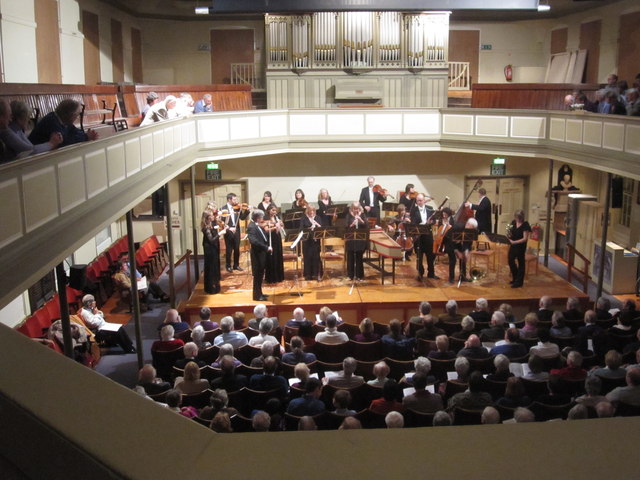
He shared a touching story about the most important concert of his life, which took place in a nursing home in a small Midwestern town a few years ago. A war veteran came to him after hearing Aaron Copland's Sonata and said, "How does the music do that? How did it find those feelings and those memories in me?" The piece brought back one particular memory regarding a fellow pilot. Only afterwards did the war vet learn that the piece was dedicated to a fallen pilot who fought in WWII.
Click here to go to Karl Paulnak's speech.
Here's the videos of the piece that moved the war veteran:
The second movement especially makes the heart weep.
If you'd like to add Copland's Sonata for Violin and Piano to your music collection, click on the image below:
Now if you'd like to learn this piece, check it out here:
 look inside
|
The Copland Violin Collection 13 Pieces for Violin and Piano. Composed by Aaron Copland (1900-1990). Boosey & Hawkes Chamber Music. Classical. Softcover. 126 pages. Boosey & Hawkes #M051105786. Published by Boosey & Hawkes (HL.48019947). |
The Rules of Ensemble Playing (according to students)
Thanks to my Giggle Trio (AKA Tess, Gabriel & Danielle) for sharing these rules of ensemble playing and rehearsing. It's quite the work of art, which I think applies to ALL ensembles:
Thanks to my Giggle Trio (AKA Tess, Gabriel & Danielle) for sharing these rules of ensemble playing and rehearsing. It's quite the work of art, which I think applies to ALL ensembles:
No knee pinching.
No story telling until the end of the rehearsal.
Try not to giggle so much.
Listen to everybody's ideas.
Pay attention.
Try new stuff.
If the group is getting too giggly, tell them to stop.
Listen/look for each other's cues.
No body checking.
Have a plan.
Have fun!!!!!
Personally, I think rule #9 is a classic!
(c) 2009 by The Giggle Trio, Calgary, AB, Canada. Posted with permission.
Social Media Links
archives
- #YYCArts 32
- #YYCEvents 39
- Collaborative Music 25
- Community 11
- Composing & Arranging 6
- Entertainment 139
- Entrepreneurship 53
- Freebies 3
- Gardening 1
- Geeking Out 65
- Health & Wellness 120
- Improvisation 25
- Interviews 28
- Learning Music 188
- Martial Arts 13
- Memorization 7
- Music 230
- Music Careers 9
- Music Education 196
- Music Examinations 7
- Music Exploration 55
- Music Gigs 14
- Music Lessons 6
- Music Performance 32
- Music Theory 13
- Musical Instruments 12
- Musician Health 19
- Pets 57
- Piano Technique 12
- Practicing Music 120
- Productivity 20
- Professional Development 11
- Recommendations & Reviews 93
- Recreation 71
- Social Media 6
- Spirituality 10
- Studio Management 33
- Studio Technology 50
- Teaching Music 146
FOLLOW THE STUDIO on Instagram

Affiliate Links
As a Sheetmusicplus and CD Japan affiliate, I earn from qualifying purchases. The earnings help fund the Studio’s blog and YouTube channels. Your support is greatly appreciated.


FOLLOW Budo no Tabi on Instagram