THE MUSICAL MUSE
Blog dedicated to music education, practice tips, health
&
wellness, and geeking out.
A Look at Alfred's Basic Keyboard Chart
Alfred's Basic Keyboard Chart can help music students learn how to play the piano when they are unable to be near their instrument.
Alfred's Basic Keyboard Chart can help music students learn how to play the piano when they are unable to be near their instrument.
I picked up one of these for the fun of it. However, it has proven to be a handy practice aid not just for my piano students, but for me as well. If you're going away on a trip, or need extra work on your keyboard geography, this music aid is worth checking out.
What is Alfred's Basic Keyboard Chart?
It's a simple fold-out piano keyboard made out of card-stock. One side has Alfred's Basic Keyboard Chart. If you're struggling a bit with note reading or keyboard geography, this really breaks it down for you: The note on the staff is printed right on the matching note on the keyboard.
Flip it over and you get Alfred's Basic Practice Keyboard. It's just the piano keys, all 88 of them. Full-sized too.
Ideas on How to Use Alfred's Basic Keyboard Chart
The first time I used this keyboard chart was when I was on a trip. I wasn't sure if I would have access to a piano and couldn't afford to not practice.
It was a true test to how well I knew my pieces by taking away one of my senses (hearing). I had to rely more on muscle memory and analytical memory.
Since then, I've picked up two or three "cardboard keyboards" for my students to borrow when they are away. Their biggest complaint is that they can't hear anything. I usually respond by telling them about some of the great Russian pianists who practiced mostly on a cardboard keyboard. If they can do it, then they can too.
This year, I started using it with my students who need to work on their keyboard geography. On the keyboard chart side, I labeled the notes by their keyboard number, e.g. Low C is C2. Middle C is C4.
The Good, the Bad and the Ugly About Alfred's Keyboard Chart
The good: Alfred's Keyboard Chart is compact. The four panels fold up so that it's approximately 5-1/2 inches by 12 inches. Perfect to stuff in a binder or a suitcase.
The bad: It doesn't show how notes are notated two lines above or below the staff. Nor does it show bass clef ledger line notes above Middle C or treble clef ledger line notes below middle C.
The ugly: Why are the note names and notes on the staff written upside down on the keys? Wouldn't be easier for visual learners if they were printed facing the same direction?
Alternatives to Alfred's Basic Keyboard Chart
Alfred's Basic Keyboard Chart is not the only cardboard keyboard on the block. You could also buy Hal Leonard's Keyboard Chart (approx. $1.99 USD), which tops the Amazon Best Seller List for keyboard charts. There is also Willis Music Reference and Keyboard Chart (approx. $1.76 USD). At $3.95 USD, Alfred's is the most expensive in the market.
If you want to go more high-tech, there are roll-up rubber practice keyboards, like this one:

Some are battery operated and/or come with a power adaptor. Others plug into your computer or tablet via USB.
Where to Buy Alfred's Basic Keyboard Chart
You can buy Alfred's Basic Keyboard Chart online from Amazon or Sheet Music Plus (below):
 look inside
|
Alfred's Basic Keyboard Chart Composed by Willard A. Palmer and Bill Hughes. Piano - Teaching Supplement; Posters/Charts; Resources. Other. Alfred Music #00-196. Published by Alfred Music (AP.196). |
Most local music stores carry this keyboard chart as well. In Canada, music students can check out Long & McQuade, Empire Music and Tom Lee Music.
Alfred's Basic Keyboard Chart - The Verdict
It's simple. It's compact. It's relatively inexpensive. In short, it does the trick when you are away and need to practice piano. It can help you study your note-reading and keyboard geography, if you're OK with having the keyboard upside down in relation to the note names and staff.
Understanding Musician Injuries
The Types, Causes and Prevention of Music-Related Injuries: Musicians are prone to injury from repeating a motion countless times when practicing. A better understanding of music injuries is vital for musicians' health.
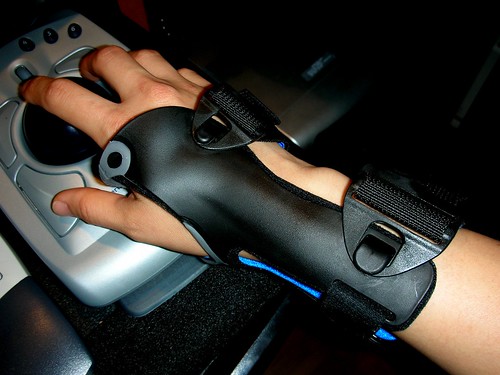
Musicians are prone to injury from repeating a motion countless times when practicing. A better understanding of music injuries is vital for musicians' health.
Common symptoms of a musician repetitive strain injury are similar to computer-related and speech-related injuries:
Numb fingers, arms, wrist, jaw, neck, shoulders and back
Shooting pain up the arms, shoulder and back
Cramping muscles or stiffness
Dull ache experienced in the fingers, arms, back, jaw, throat, wrist, shoulders and back
Hoarseness
If left unchecked, can become chronic conditions. They can potentially lead to long-term disability or end one’s musical career.
Common Types of Music Injuries
Common music-related injuries include:
Bursitis: inflammation of a bursa (fluid-filled sac which lubricates the movements of tendons, muscles and bones at joints)
Carpal Tunnel Syndrome: inflamed or irritated hand flexor tendons
Larynx Contact Ulcers: raw sores on the mucous membranes covering the cartilage attached to the vocal chords
Cubital Tunnel Syndrome: inflamed or irritated tendons affecting the inner side of the forearm and the pinky side of the hand
Laryngitis: inflammation of the larynx
De Quervain's Tenosynovitis: inflammation of the tendons on the side of the wrist beginning at the base of the thumb.
Tendinitis: inflammation of the tendons
Thoracic Outlet Syndrome: compression of the thoracic outlet, the nerve pathway and/or blood vessels between the base of the neck and the armpit
Trigger Finger: inflammation of the index finger tendons
Vocal Nodules & Polyps: small, inflammatory or fibrous growth on the vocal cords of people who strain their voices.
How Music Injuries are Caused
Overuse: Advanced musicians practice between one to ten hours a day.
Repetitive Strain: Musicians repeat a technical exercise or section of music countless times until it comes together.
Improper Posture: Some musicians slouch, sit too close or too far from their instrument and remain in the same position for long periods of time.
Non-Ergonomic Technique: Some musicians hold their body and/or instrument in an uncomfortable position, don’t move their hand and/or body in the direction that their fingers are moving, push their fingers or vocal chords beyond what they can comfortably do.
How to Prevent Music Injuries
Do Your Research: Find out more about the various types of music-related injuries.
Assess Your Instrument: Is your instrument the right size, shape, weight and height for you? Would an adjustable chair, footstool, strap or cushion make you more comfortable?
Know Your Body: Choose pieces that are reasonable for your body to play. If you have small fingers, playing repertoire that requires you to stretch beyond your finger span is a recipe for disaster. However, if you really want to learn a particular piece (or you need to learn it), make adjustments to make it easier to play. If you are a student, let your teacher know right away whether a piece or technical exercise is causing you pain.
Appraise Your Playing Technique: Is your body relaxed? Are your hands, arms, neck, head and core positioned to allow for fluid and comfortable playing or singing? Are you moving with the music? Are you using excess movements? Is your fingering logical and comfortable? Videotaping yourself is a valuable method to assess your playing technique.
Evaluate Your Non-Musical Activities: Desk and computer work, sports, dancing, carrying heavy objects (or dependents) and hobbies can adversely affect your body.
Do Warm-Up Exercises and Stretches: Musicians are sometimes called “small muscle athletes”. Stretching exercises and gentle warm-ups result in increased range of motion, strength, coordination and flexibility.
Take Breaks: One’s muscles, ears and vocal chords need regular breaks to return to their relaxed state. Not doing so tricks the body into thinking that “tense” is the “relaxed state”, resulting in chronic pain and stress.
Engage in Active Sitting: Most musicians remain in a seated position for extended periods of time. Active seating helps ease chronic back pain, promotes correct posture and maintains general health.
Seek Professional Advice: Speak to a doctor, chiropractor, massage therapist, Alexander Technique specialist, music instructor, otolaryngologist or ergonomic specialist for further information or treatment.
Be Proactive in Maintaining Musician Health
With an increased understanding of the types, causes and prevention of music injuries, musicians can be more proactive in maintaining their first instrument: the body. Musicians dedicated to maintaining musician health can look forward to many years of pain and injury-free music-making.
The Rest of My Series on Musician Injuries
Face and Neck Stretches for Musicians | Arm and Hand Stretches for Musicians | Back and Should Stretches for Musicians
Additional References:

The Art of Practicing: A Guide to Making Music from the Heart, Madeline Bruser (New York: Bell Tower, 1999)
Musicians' Injuries: Types and How to Avoid It, Espie Estrella
Musicians and Injuries, UN-L Engineering Electronics Shop, University of Nevada
Originally published on Suite101.com on November 20, 2009. All rights reserved by Rhona-Mae Arca.
Tips for Practicing Music - Speed Linking
Many musicians DON'T practice properly. Save yourself some headaches by checking out some of these practice tips.

Sometimes, it may seem like we music teachers are harping on the same things. Well, there's a reason for that. We've been where you are right now and we hope that some of our pearls of wisdom, learned from years of learning and practicing music help you to learn your music more quickly and more effectively.
Here are some tips from other music teachers and pro musicians on how to practice music:
Curve Those Piano Fingers!
Is your piano teacher getting on your case about playing piano with flat fingers? Check out these tips courtesy of my fellow teachers (and friends), Katrina Thompson Fost and Melodie Archer:
Finger Posture Tip #1: The Water Bottle Trick
Is your piano teacher getting on your case about playing piano with flat fingers? Check out these tips courtesy of my fellow teachers (and friends), Katrina Thompson Fost and Melodie Archer:
Finger Posture Tip #1: The Water Bottle Trick
If you squeeze the bottle too hard, you will have too much tension in your hand and forearm (not to mention, you'll get wet). This works well with an egg. Be brave and try it with a raw egg (you'll learn really quickly!).
Finger Posture Tip #2: The O's Game
This is an extension of the "Making O's" or "Making Eyeglasses" warm-up in the Piano Adventures books. Make an "O" and gently squeeze your finger and thumb together.
Then, test how firm your finger is pushing into your thumb by pushing on the curved finger - anywhere from the nail to the first knuckle is fine. If that finger collapses (goes flat), then you need to firm up your fingertips a little bit more.
You could even get a family member or friend to push on your curved finger. Go ahead a turn it into a bit of a game.
Every Other Bar Drill Demonstration for Piano and Melodica
The Every Other Bar Drill has proved to be a successful drill with my students this month. Some need to clean things up, especially their notes, rhythm and fingering. Others need to make their music flow more smoothly. This drill addresses these issues. The student plays the odd numbered bars in a troublespot, while I play the even numbered bars on the melodica. Then we switch.Afterwards, when I get them to play the entire passage, the difference from their first runthrough at the lesson and the latest is like night and day.

It really doesn't matter what that second instrument is - voice, French horn, percussion. What I have been finding is that this drill really forces my students to count and "feel" the pulse. For me, this is proving to be a great way to practice "Instrument #5" - the melodica. This wind piano is a fun little instrument. It looks like I'll need to work on breath technique a bit more, though.
Special thanks to my student "S" for giving me permission to share this clip from last week's lesson.
Social Media Links
archives
- #YYCArts 32
- #YYCEvents 39
- Collaborative Music 25
- Community 11
- Composing & Arranging 6
- Entertainment 139
- Entrepreneurship 53
- Freebies 3
- Gardening 1
- Geeking Out 65
- Health & Wellness 120
- Improvisation 25
- Interviews 28
- Learning Music 188
- Martial Arts 13
- Memorization 7
- Music 230
- Music Careers 9
- Music Education 196
- Music Examinations 7
- Music Exploration 55
- Music Gigs 14
- Music Lessons 6
- Music Performance 32
- Music Theory 13
- Musical Instruments 12
- Musician Health 19
- Pets 57
- Piano Technique 12
- Practicing Music 120
- Productivity 20
- Professional Development 11
- Recommendations & Reviews 93
- Recreation 71
- Social Media 6
- Spirituality 10
- Studio Management 33
- Studio Technology 50
- Teaching Music 146
FOLLOW THE STUDIO on Instagram


Affiliate Links
As a Sheetmusicplus and CD Japan affiliate, I earn from qualifying purchases. The earnings help fund the Studio’s blog and YouTube channels. Your support is greatly appreciated.


FOLLOW Budo no Tabi on Instagram