THE MUSICAL MUSE
Blog dedicated to music education, practice tips, health
&
wellness, and geeking out.
On Injuries and Piano Practice
One of my students showed up with a swollen finger last week. C injured it during a non-musical activity and after several days, the swelling was increasing. I demanded that she go see a doctor to get that finger checked out. C injured the middle finger of her left hand, which has presented us with the challenge of how to structure practices and lessons.
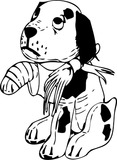
One of my students showed up with a swollen finger last week. C injured it during a non-musical activity and after several days, the swelling was increasing. I demanded that she go see a doctor to get that finger checked out. C injured the middle finger of her left hand, which has presented us with the challenge of how to structure practices and lessons. It will take some time for her hand to heal but she can't take time off from practicing if she is to take her exam in the spring.
I have decided to zoom in on her weak spots. On Monday, I attended a workshop by the Royal Conservatory of Music, unveiling their new technical requirements. Some ideas were new while some I needed the refresher on.
C, like the rest of my students will be drilling their scales, chords and arpeggios at least five times per practice; playing them differently each time. Here are some of the variations:
play legato
play staccato
play portato
vary the dynamics
add a crescendo while ascending and diminuendo when descending
vary the rhythm (straight eighths, jazz triplets, even triplets, dotted half note followed by a quarter note)
vary the accents (accent beat one the first time, beat two the second, etc.)
play a repeated note scale (C-C-C D-D-D E-E-E)
play one octave as quarter notes, two octaves as eighth notes, three octaves as triplets and four octaves as sixteenth notes
play chords up the scale
In C's case, she'll have to just practice her right hand and rest her left. With these exercises, it's imperative to use proper fingering.
Tonight, we focused on phrase shaping, continuation notes and right hand rhythms. Next week, we'll tap practice the left hand rhythms.
C is using this opportunity to work harder on her ear training and theory.
The following are informative articles/discussions on dealing with piano-related injuries:
Please feel free to share your tips on injury prevention or dealing with injuries.
(c) 2007 by Musespeak(tm), Calgary, AB, Canada. All rights reserved.
Why We Should Practice Scales, Chords and Arpeggios
A few of my students detest their technical exercises. In fact, I have a few students who really need to pull up their socks in this area if they're going to pass their piano exam next month. I hated them too. With a passion. That hatred was reflected in my poor technical skills mark on piano exams.
Since then, I've learned to like them.
A few of my students detest their technical exercises. In fact, I have a few students who really need to pull up their socks in this area if they're going to pass their piano exam next month. I hated them too. With a passion. That hatred was reflected in my poor technical skills mark on piano exams.
Since then, I've learned to like them. Elinor Lawson, my piano instructor at university, assigned me some songs from Dances in Bulgarian Rhythm by Béla Bartok. In it, I found several passages where chords progressed up in a scale (e.g. B chord, C chord, D chord, etc.). I started looking at music harmonically - from the chord progressions to how a melody would be stated in one key and then reappear in a closely related key. I learned that looking for patterns like this made memorizing easier.
In Chopin's Nocturne in e minor, op. 72 no. 1, which I'm currently working on, there are virtuosic scale passages that I've spent many an hour on.
As a listener at a concert, I've heard jazz and classical musicians play scale passages that move in parallel, contrary and zigzag motion.
As a teacher, I see chords, arpeggios and scales in my students' songs.
Scales, chords and arpeggios are often called the building blocks of music as I've illustrated above. They also are exercises in motor dexterity and strength. Those tricky passages in the Nocturne demand technical precision. The dramatic effect is lost if I stumble my way to the top.
It comes down to this: it doesn't matter how expressive a musician is, if he or she is weak technically, he or she can't convey the music convincingly. It's like trying to read an essay or a resume that's riddled with grammatical and typographical errors.
Here are a few more articles on the importance of practicing technique:
Using Scales to Improve All Your Music (primarily for guitarists)
(c) 2007 by Musespeak(tm), Calgary, AB, Canada. All rights reserved.
Social Media Links
archives
- #YYCArts 32
- #YYCEvents 39
- Collaborative Music 25
- Community 11
- Composing & Arranging 6
- Entertainment 139
- Entrepreneurship 53
- Freebies 3
- Gardening 1
- Geeking Out 65
- Health & Wellness 120
- Improvisation 25
- Interviews 28
- Learning Music 188
- Martial Arts 13
- Memorization 7
- Music 230
- Music Careers 9
- Music Education 196
- Music Examinations 7
- Music Exploration 55
- Music Gigs 14
- Music Lessons 6
- Music Performance 32
- Music Theory 13
- Musical Instruments 12
- Musician Health 19
- Pets 57
- Piano Technique 12
- Practicing Music 120
- Productivity 20
- Professional Development 11
- Recommendations & Reviews 93
- Recreation 71
- Social Media 6
- Spirituality 10
- Studio Management 33
- Studio Technology 50
- Teaching Music 146
FOLLOW THE STUDIO on Instagram


Affiliate Links
As a Sheetmusicplus and CD Japan affiliate, I earn from qualifying purchases. The earnings help fund the Studio’s blog and YouTube channels. Your support is greatly appreciated.


FOLLOW Budo no Tabi on Instagram