THE MUSICAL MUSE
Blog dedicated to music education, practice tips, health
&
wellness, and geeking out.
THWOMP Interview: On Video Game Bands and Niches
In Part Two of this exclusive interview, Brad Stanton and Dave Marshall of the Nintendo® cover band THWOMP discuss band names and niches.
In Part Two of this exclusive interview, Brad Stanton and Dave Marshall of the Nintendo® cover band THWOMP discuss band names and niches.
Inspired by the music of video game composers Nobuo Uematsu (Final Fantasy), Koji Kondo (Super Mario Bros) and more, Nintendo® cover band THWOMP share their music with a growing fan base of gamers young and old.
Brad Stanton (lead guitar) and Dave Marshall (keyboards/percussion) from THWOMP take a break from their Animethon 17 preparations to chat with Suite 101. In the first part of their interview with Suite 101, Brad and Dave discussed THWOMP's origins. In this installment, they discuss Nintendo® bands, names and niches.
THWOMP on Naming the Band
It took the band a long time to settle on a name."I don’t even remember any of the iterations before we figured out THWOMP", said Brad. "We tried to have some “Legend of Zelda” reference for a while. We could never find one we liked."
By then, the band was starting to get gigs, making it necessary to name the band. "I don’t remember who came up with it," said Brad. "We should just attribute it to the drummer. It was probably him. I remember we were all standing there out in the parking lot of our jam space, drinking beer and smoking; and somebody said, “THWOMP”. We all just looked at him and we were all like, “Yeah!” It was definitely one of those "light shining from the clouds" moments. On the parking lot of our shitty jam space."
Nintendo® Bands and MAGFest
There are several Nintendo® cover bands out there, such as The Advantage, The Minibosses, Armcannon and NESkimos. Some have carved a niche for themselves in the realm of video game music. One of the top groups is Powerglove, a metal group. Another band, The OneUps, performs jazz interpretations of video game music.
Some of these bands perform at anime conventions and comic cons. The popular Nintendo® bands perform at MAGFest, a video game festival and conference in New Jersey. "Everybody but us, pretty much," said Brad. Their time will come.
On THWOMP’s Musical Niche
The members of the band are involved in other music groups and projects, ranging from jazz to rock and from bar gigs to workshops. THWOMP's focus, however, will forever be video game music. "It will never be anything other than that," said Brad. "It will never be watered down. It will never be compromised."
Their musical background and training, along with their love for the original music influences their philosophy. "We’re all purists about it, really," said Brad. "We really try to make everything absolutely note-for-note. Absolutely exact. We have really high standards for each other." They admit to holding some "good natured but fierce" cutting contests at rehearsals and putting each other in his place on occasion.
Giving others the same nostalgia factor they experience when playing classic Nintendo® music is not only important to them, it's their favorite part about playing this style of music. "We really want it to be fast, punchy, everything you remember," said Brad. "Every show we play, there’s some 30-year old guy in the audience who has no idea who we are and just stands there agape, staring at us, nearly crying. That happens at every show we play and it’s so gratifying.
The band enjoys watching the audience going through the actions from various Nintendo® video gameswhile they perform. "Tetris is always amusing because people try to become Tetris pieces," recalled Dave. "I don’t know if anyone’s come very close to being a Tetris piece yet but we’re interested to see people keep trying."
THWOMP is a Nintendo® band comprised of Calgarians Brad Stanton (lead guitar), Colin Mitchel (lead guitar), Scott Munro (bass), Scott Moffat (drums), David Marshall (keyboards/percussion) and Kirk McVean (keyboards). For more information about THWOMP, the band or to listen to audio clips, visit their website, BandCamp and Myspace page.
The full interview series:
Full interview series: Part 1 – THWOMP’s Origins | Part 2 – Band Names & Niches | Part 3 – Songwriting | Part 4 - Hey! Listen! CD Release | Part 5 - On Gigs | Part 6 - Convention Gigs | Part 7 - Video Games | Part 8 - Fun & Food
Originally published on Suite101.com on July 27, 2010. Updated on March 22, 2013. All rights reserved by Rhona-Mae Arca.
Popular Portable Keyboards
To follow up on my "Choosing a Digital Piano or Electric Keyboard" post I did some digging around to find out which portable keyboards are popular on the market right now.
Last week, I posted about Choosing a Digital Piano or Electric Keyboard. To follow up, I thought I'd check out what some of the popular portable keyboards are currently in the market. Plus, I'm a little curious to see where mine are on the list. Here goes:
Portable Keyboards with 61 Keys
Yamaha YPT-230 Premium Keyboard Pack with Headphones, Power Supply, and Stand
Casio LK165 Lighted Key Premium Keyboard Pack with Headphones, Power Supply, and Stand
Casio CTK-2300 61-Key Premium Portable Keyboard Package with Headphones, Stand and Power Supply
Digital Pianos with 76 Keys
Yamaha YPG-235 76-key Portable Grand Graded-Action USB Keyboard
Casio WK-225 76-Key Premium Portable Keyboard Package with Headphones, Stand and Power Supply
Digital Pianos with 88 Keys
I limited the list to digital keyboards with 61 full-sized keys or more. It isn't bad to start with 61 and it's perfectly fine when you're composing or jamming, although 76 keys would be better. However, if you're taking piano lessons, ideally, you want the full 88 keys.
These portable keyboards made Amazon's Best Sellers in Musical Instrument Keyboards. The list contains more items than keyboards, so I pulled the most popular keyboards on the list.
Now, how did mine do?

My Yamaha DGX-230 Keyboard ranked #57 on the list. Considering that the list contains everything from accessories as well as keyboards, that's not too shabby at all.


As for my Yamaha CP33 Stage Piano, it's not one that a beginner student would get. As the name implies ("stage piano"), it's geared for performance. It ranked #45 under Digital Pianos.
Interview with Dave Marshall and Brad Stanton of THWOMP
In Part One of this exclusive interview, Brad Stanton and Dave Marshall of the Nintendo® cover band THWOMP discuss the band's roots.
In Part One of this exclusive interview that I originally did for Suite101, Brad Stanton and Dave Marshall of the Nintendo® cover band THWOMP discuss the band's roots.
Drawn together by their passion for music and classic Nintendo® games, THWOMP has performed throughout Alberta, playing at everything from bar mitzvahs to comic-cons.
The year 2010 is an exciting one for the band, with gigs at the Calgary Comic Convention, Otafest and Animethon 17, as well as their upcoming CD release party in the fall. Suite 101 sat down with Brad Stanton and Dave Marshall before a rehearsal to chat. In this segment, they share how the band came together.
The Origin of THWOMP, a Nintendo® Cover Band
THWOMP is a six-piece progressive "prog" rock band based in Calgary, Alberta. It is comprised of Brad Stanton (lead guitar), Colin Mitchel (lead guitar), Scott Munro (bass), Scott Moffat (drums), David Marshall (keyboards/percussion) and Kirk McVean (keyboards).
Band mates Brad Stanton and Scott Munro met in 2001 while they were attending Mount Royal University (then a College). Brad recounted the first time he and Scott jammed on video game music, "I walked by his room one day and heard him playing the battle music from “Final Fantasy VI” and it was like, “That’s frickin’ awesome! Teach me how to play that.”
Writing down what he learned was the natural next step for Brad. "I went home and started transcribing for real, writing it out in three parts, for bass and two guitars. Then, I just did more and more and more tunes from that game." Eventually, Brad amassed enough transcriptions to begin jamming on the music. He called on Colin Mitchel and Scott Moffat, two buddies who play with Scott Munro in Günther, a three-piece progressive rock trio.
Classical Nintendo® games were ideal for the new band. "You can separate out the audio and it comes down to four tracks," Brad explained. "The original Nintendo® pieces work so perfectly for a four-piece band because you just transcribe every note and it sounds perfect."
However, the advent of Super Nintendo® posed some challenges for the group. "Well we wanted to do more Super Nintendo® games and they have 16 channels," said Brad. "That’s eight tracks of audio. I had to make decisions between what tracks I could do and what tracks I couldn’t do. I had to cut out stuff and give Colin a lead and me a harmony and miss this other string patch or something like that."
Dave Marshall Joins THWOMP
The group played at house parties, shows and bars around town for approximately two years. They met David Marshall at Broken City. At the time, the club hosted the Ramp Show on the first Thursday of each month to showcase new music or bands.
"We played the very first one as Günther’s side project and absolutely tore it up," recalled Brad. "The place was packed and everybody loved it. I remember you [Dave] being there and…the shit-eating grin on your face when we played Final Fantasy."
Hearing the band for the first time was a special moment for Dave. "I played that game in particular so much that as soon I heard it, I knew every note. I think that’s part of the appeal of the band too; there are lots of people who have that same experience when they hear us play. It took me a year to convince them that I was supposed to be in the band too."
Thanks to a cold snap during the winter, Dave was given a chance to play with the group. "It was about 35 below outside. It was ridiculous," said Brad. The rehearsal space didn't have heating, so Dave invited the band to rehearse in his home nearby. After jamming with the group, the decision was unanimous: "We decided that Dave needed to be in the band." The addition of Dave's keyboard and percussion skills meant that the group could explore music from Super Nintendo® games without compromising voicings.
THWOMP is a Nintendo® band that took root during an impromptu jam session between founding members Brad Stanton and Scott Munro on Final Fantasy tunes. The four-piece band became a quintet with the addition of keyboardist and percussionist Dave Marshall.
For more information about THWOMP, the band or to listen to audio clips, visit their website, BandCamp and Myspace page.
The full interview series:
Full interview series: Part 1 – THWOMP’s Origins | Part 2 – Band Names & Niches | Part 3 – Songwriting | Part 4 - Hey! Listen! CD Release | Part 5 - On Gigs | Part 6 - Convention Gigs | Part 7 - Video Games | Part 8 - Fun & Food
Originally published on Suite101.com on July 27, 2010. Updated on March 22, 2013. All rights reserved by Rhona-Mae Arca.
Choosing a Digital Keyboard Piano or Electric Keyboard
Discover the difference between digital pianos and electric keyboards. Learn what to look for when buying a digital or electronic piano.
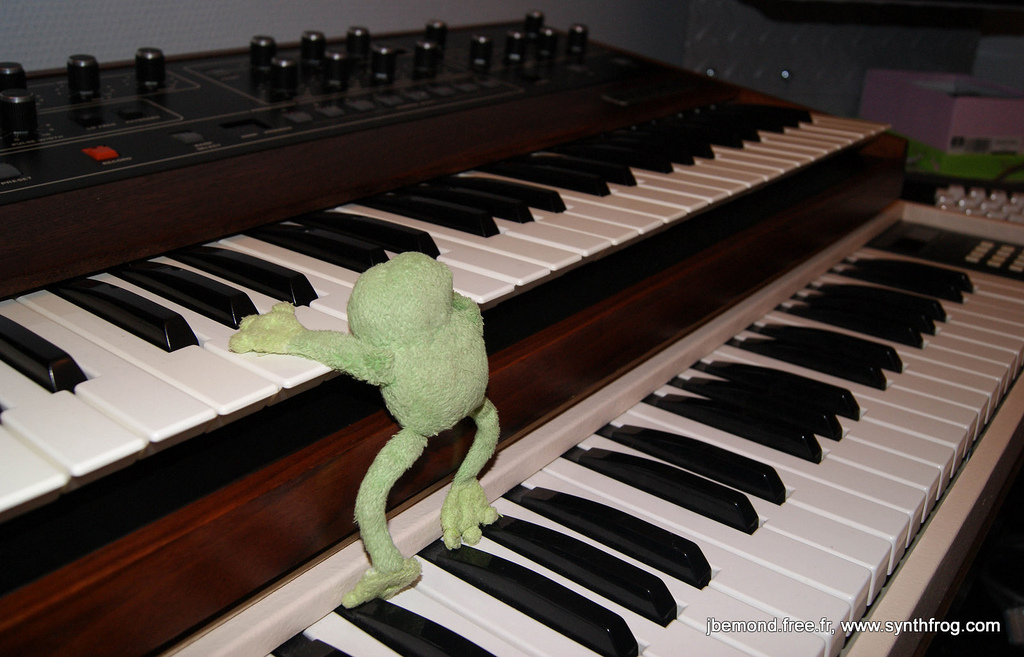
Discover the difference between digital pianos and electric keyboards. Learn what to look for when buying a digital or electronic piano.
Whether one is buying a digital piano for portability, recording, or jamming, it is important to have a basic knowledge of the types of keyboards available. Prospective buyers should also know what to look for when buying a digital or electric keyboard.
Digital Piano vs. Electric Keyboard
Prospective buyers may not know that a digital piano is not the same instrument as an electric keyboard. Both instruments are powered by electricity and use a tone generator to match the sound with the key that is played. How those tones were created differs between these two keyboard instruments.
Digital pianos use digitally sampled sounds. For example, a digital recording of an acoustic instrument, such as the piano or guitar, is made so that a digital piano can replicate the sound of an acoustic instrument. In addition to this, many digital pianos possess weighted keys (heavier key action in the lower register) and are touch sensitive (or “touch-velocity” sensitive).
In contrast, electric keyboards use computer-generated sounds. Many models lack weighted keys and touch-velocity sensitivity.
Types of Digital Pianos
There are three types of digital pianos: a digital piano, an ensemble digital piano and a stage piano:
A digital piano is built into a cabinet. It usually has the full 88 keys, just like an acoustic piano. A small selection of sampled sounds, speakers and a metronome are built into a digital piano. Some digital keyboards possess basic recording capabilities and alternative tunings.
An ensemble digital piano has either 76 or 88 keys. There is a built-in metronome as well as a wider variety of sounds and accompaniment patterns. Ensemble digital pianos can record, while newer models can be connected to the computer for greater recording, composing, and editing capabilities.
Unlike a regular digital piano, a stage piano lacks a cabinet. These generally require external speakers or amplifiers. Stage pianos are commonly used for gigs because of their portability.
Types of Electronic Keyboards
There are three types of electronic keyboards: the arranger keyboard, the keyboard synthesizer, and the music workstation:
An “arranger” is a standard electronic keyboard that contains a wide selection of rhythm and accompaniment patterns. Users can arrange these accompaniment patterns using the Fill-In and Intro/Ending buttons.
A keyboard synthesizer, also called a “synth,” enables users to create and combine various sound waveforms. Synthesizers are used primarily by musicians involved with music production and recording.
A music workstation is a combination of four electronic instruments in one. It is a musical keyboard, sampler, sequencer and synthesizer. Users can edit their recordings and burn them onto a CD.
Tips on Buying a Digital Piano or Electronic Keyboard
There are several considerations that prospective buyers should make when choosing a keyboard:
budget,
design,
touch-velocity sensitivity (the faster a key is played, the louder the sound),
dynamic range,
expandability and upgradeability,
key action (synth vs. weighted keys),
number of keys (classical musicians need more),
pedal levels (full pedal, half-pedal and quarter pedal vs. on/off),
playing level of the user(s),
polyphony (the higher the number, the more acoustic-sounding the instrument),
portability,
sequencing and sound mixing capabilities,
sound quality (realistic tones, sound decay, speaker quality), and
user friendliness.
When testing a digital piano or electronic keyboard, shoppers should listen to it through the speakers and through headphones. This way, one can hear the subtle differences in dynamic range, sound decay and sound quality.
Popular Brands of Digital Keyboards and Electronic Keyboards
There are numerous models and brands of digital and electronic musical keyboards. The leaders in digital pianos and electric keyboards are Alesis, Casio, Clavia (Nord), Korg, Roland, and Yamaha.
Prospective buyers should read product reviews of various models and brands to get a better sense of what type of keyboard would suit them. Three examples of keyboard review sites are Clever Joe’s Musician Resource, Dan Maynard’s Piano Reviews and Piano World.
There are numerous advantages to owning a digital piano or electric keyboard. However, beginner music students, music teachers, composers, and performing artists each have different musical needs. Prospective buyers should learn about the various types of digital and electric keyboards available, as well as the keyboard features in order to choose an instrument that best meets their needs.
For more information about buying a digital piano or electric keyboard, visit:
All About Pianos: Digital Piano FAQ
Know-Your-Keyboard-Piano: Electronic Keyboards - Know the Various Electronic Keyboard Types!
Originally published on Suite101.com on July 10, 2010. Updated March 27, 2013. All rights reserved by Rhona-Mae Arca.
THWOMP Album Review: Hey! Listen!
THWOMP's sophomore album, which features beloved Nintendo® video game themes, including The Legend of Zelda series, Double Dragon II and FFVII is reviewed.
THWOMP's sophomore album, which features beloved Nintendo® video game themes, including The Legend of Zelda series, Double Dragon II and FFVII is reviewed.
Nintendo® cover band THWOMP released its sophomore album on April 27, 2012. Entitled Hey! Listen!, the album boasts 15 tracks, a musical treat for gamers of all ages.
THWOMP is a five-piece progressive "prog" rock band based in Calgary, Alberta. It is comprised of Brad Stanton (bass), Colin Mitchell (lead guitar), Dan Bronson (guitar), Scott Moffat (drums) and David Marshall (keyboards).
Founded in 2001 by Brad Stanton and former band member Scott Munro, THWOMP performs regularly at conventions across Western Canada. Last month, the band performed at the Calgary Comic Expo, where Hey! Listen! was unveiled.
THWOMP released its debut album, Knight League EP in 2010. The eight-track Nintendo® CD featured the band's arrangements from the classic Super Nintendo® racing game F-Zero.
Hey! Listen! is the group's first full-length album. Transcription was done by Brad Stanton, Kirk McVean and David Marshall. All members of THWOMP were involved with writing the band arrangements on the album.
Hey! Listen Highlights
The “Dungeon Theme” from The Legend of Zelda sets the tone for a nostalgic journey back in time. The opening is truly a gem, best appreciated live. "The beginning of the 'Zelda - Dungeon Theme' is actually two guitars, one playing 8th notes, the other playing off-beat 16ths," explained David Marshall in recent correspondence. "The neatest part about it is that it sounds like one guitar. It's an especially cool effect live, coming off the stage in stereo."
They are soon joined by the drums. Layer upon layer is added until the main dungeon theme appears played on the keyboards. As the theme loops, it builds in intensity, gradually leading the listener down musical depths before coming to slow mournful conclusion on solo guitar.
THWOMP's version of the “J-E-N-O-V-A” theme is edgier than it is in Final Fantasy VII. The keyboards, playing it as it appears in the game, but the guitars are quickly given the theme. They circle around and clash as if in battle, playing against the backdrop of a relentless rock groove on percussion.
“Fever” from Dr. Mario is a catchy and “feel good” track. The opening theme is first played by the keyboards (set for full nostalgic effect). The drums lay a catchy groove that is bound to set toes tapping and heads bopping long before the guitars take over the melody. THWOMP really shows how effective rests can be. Although they are in the original theme, the silences in THWOMP's arrangement are especially crisp. Indeed, they are long enough to elicit chuckles or squeals of excitement or delight from listeners.
The band vamps a bit, building the excitement before launching full-on into the “Korobeiniki” theme from Tetris. The guitars play the opening theme, while the keyboards provide an effective contrast with the the second theme. There's enough time in the interlude for listeners to mimic falling Tetris pieces before the main themes return in full force.
A little bit of disco shuffle merged with solid 80's rock grooves come together for the “Double Dragon II Theme”. The guitars belt out the main themes while the keyboards provide the requisite video game sound FX. One could easily imagine character Billy Lee taking down a street full of baddies to this rendition.
Listeners can truly rock out with the Star Fox “Attack Carrier” theme. The guitars weave around like Fox McCloud's Arwing, soaring against the driving beat laid down by the drums. The keyboards have some cool licks too.
Hey! Listen! Track Listing
The Legend of Zelda – Dungeon
A Link to the Past - Dark World
The Adventure of Link - Minor Battle
The Adventure of Link - Palace
Final Fantasy VII – J-E-N-O-V-A
Final Fantasy VII - Under the Rotting Pizza
Final Fantasy VII - Still More Fighting
Dr. Mario – Fever
Tetris – Korobeiniki
Double Dragon II - Theme
Double Dragon II - At the Heliport
Star Fox - Corneria
Star Fox - Attack Carrier
Star Fox - Course Clear
Star Fox - Space Armada
Label: Bandcamp
Release Date: April 27, 2012
Price: $4.99 CAD
Hey! Listen! Verdict
At 15 tracks, it may seem at first glance that Hey! Listen! is far too long, but that is not the case. Video game themes, by the nature of the scenes, are fairly short. The album contains 36 minutes worth of musical adventure.
THWOMP delivers these classic video game themes ably and serves them up with a bit of spice. At times sexy, sometimes humorous, but always cool and fun, Hey! Listen! provides retro-gamers with a solid collection of themes to indulge in a bit of nostalgia. This video game CD also introduces a younger generation of gamers and music fans to a fun era of video game music.
Hey! Listen! Is available through Bandcamp. Video game music download formats include MP3 320, FLAC, as well as other audio types. Stay tuned for their Suite101.com interview, which will be republished here.
Social Media Links
archives
- #YYCArts 32
- #YYCEvents 39
- Collaborative Music 25
- Community 11
- Composing & Arranging 6
- Entertainment 139
- Entrepreneurship 53
- Freebies 3
- Gardening 1
- Geeking Out 65
- Health & Wellness 120
- Improvisation 25
- Interviews 28
- Learning Music 188
- Martial Arts 13
- Memorization 7
- Music 230
- Music Careers 9
- Music Education 196
- Music Examinations 7
- Music Exploration 55
- Music Gigs 14
- Music Lessons 6
- Music Performance 32
- Music Theory 13
- Musical Instruments 12
- Musician Health 19
- Pets 57
- Piano Technique 12
- Practicing Music 120
- Productivity 20
- Professional Development 11
- Recommendations & Reviews 93
- Recreation 71
- Social Media 6
- Spirituality 10
- Studio Management 33
- Studio Technology 50
- Teaching Music 146
FOLLOW THE STUDIO on Instagram


Affiliate Links
As a Sheetmusicplus and CD Japan affiliate, I earn from qualifying purchases. The earnings help fund the Studio’s blog and YouTube channels. Your support is greatly appreciated.


FOLLOW Budo no Tabi on Instagram