THE MUSICAL MUSE
Blog dedicated to music education, practice tips, health
&
wellness, and geeking out.
Musical Dogs
Maestro shares performances by other musical dogs. These ones make him very excited!
Maestro has selected video clips of other musical dogs to share. Here's Porter playing and singing on a Casio keyboard:
Maestro is used to singing in "doggy trios" like this one:
This poodle has been making the rounds on Facebook for a while now:
These two have a really good ear:
And for some reason, Maestro becomes quite excited when he sees and hears himself play or sing:

Arm and Hand Stretches for Musicians
Many musicians complain of numbness and pain in the hand, forearm and arm. They can prevent repetitive strain injury, ease pain and tension by stretching regularly.
Many musicians complain of numbness and pain in the hand, forearm and arm. They can prevent repetitive strain injury, ease pain and tension by stretching regularly.
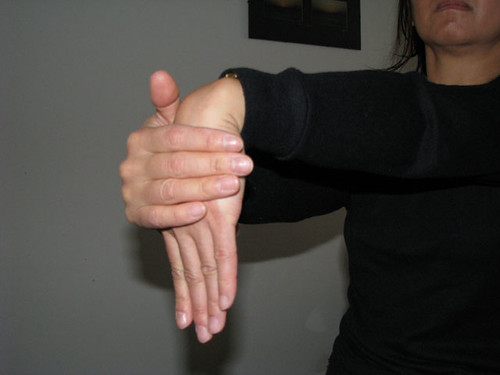
By nature, learning music involves repeating until a passage or technical exercise until a high level of proficiency, fluency and artistry is achieved. Instrumentalists use their finger, hand and arm muscles extensively when practicing and performing. This makes them especially vulnerable to a repetitive stain injury such as Carpal Tunnel Syndrome, Bursitis and Tendinitis. Musicians can ease arm and hand pain, relieve tension and prevent injuries by incorporating stretching exercises into their daily routine.
How Musicians Should Stretch the Hand and Arm Muscles
Stretching exercises should be done when the muscles are warm. For example, stretches can be done after a shower, after a bath or after performing some light exercises. Musicians should always stretch prior to practicing. They should also take regular breaks when practicing to stretch. For example, stretches can be done before switching to a new piece or after practicing a physically challenging section of music. Musicians should also stretch prior to performing and in between performances.
Stretching Exercises for Musicians
Follow the arm and hand exercises and refer to the photos below:
1 Finger Flicks
Purpose: Prevent Tendinitis and Trigger Finger, relieve tension and increase blood circulation in the hands.


Performance:
Hold your hands in a loose fist in front of you.
Flick your fingers so that your fingers are outstretched. Pretend that you are flicking water.
Hold your fingers in an outstretched position for 10 seconds.
Relax.
Repeat.
2 Wrist Circles
Purpose: Prevent Tendinitis, relieve tension and increase blood circulation in the wrists.
Hold your hands in a loose fist in front of you.
Rotate your wrists in a circle several times in one direction.
Relax.
Rotate your wrists in a circle in the other direction.
Relax.
Variation: Sticking out your thumb as if you were hitchhiking.
3 Fingers Interlaced Wrist Circles
Purpose: Prevent Tendinitis, relieve tension and increase blood circulation in the wrists.
Interlace your fingers together in front of you. Keep track of which thumb is resting on top.
Rotate your wrists in a circle several times in one direction. Start slowly and as you get more comfortable, increase the speed.
Relax.
Reposition your hands so that the opposite thumb is resting on top.
Rotate your wrists in a circle in the other direction.
Relax.
4 Forearm Flexor Stretch
Purpose: Prevent Tendinitis in the elbow and forearm, relieve tension and increase blood circulation.

Performance:
Place your hands together in a praying position.
Push your hands together and push your arms downward until you feel a gentle stretch.
Hold the stretch for 10 - 20 seconds.
Relax.
Repeat at least once.

5 Single Arm Forearm Flexor Stretch
Purpose: Prevent Tendinitis in the elbow and forearm, relieve tension and increase blood circulation.Performance:
Hold your left arm straight in front of you with your palm facing forward as if to indicate "stop".
Brace your left palm with your right hand.
Gently pull the fingers in your left hand towards you until you feel a gentle stretch.
Hold for 10 - 20 seconds.
For a deeper, isometric stretch, push your left arm forward, into your right hand, as you pull your left hand towards you.
Relax.
Repeat with the opposite arm.
6 Forearm Extensor Stretch
Purpose: Prevent Tendinitis in the elbow and forearm, relieve tension and increase blood circulation.Performance:
Extend your left arm in front of you, holding your arm straight.
Let your hand flop downward at the wrist.
Place your right palm over your left hand (above the fingers).
Gently push your left hand towards you with your right hand until you feel a gentle stretch.
Hold for 10 - 20 seconds.
For a deeper, isometric stretch, push your left arm forward, into your right hand, as you pull your left hand towards you.
Relax.
Repeat with the opposite arm.
7 Soup Can Forearm Extensor Exercise
Purpose: Prevent Tendinitis in the elbow and forearm, relieve tension and increase blood circulation.
Performance:
With your right forearm on a table and let your right hand flop down.
Place a soup can in your right hand.
Beginning with your wrist level with your forearm, slowly let your hand point downward until you feel a gentle stretch in your forearm extensors.
Hold for 10 seconds.
Steadily raise your hand so that your wrist is level with your forearm.
Relax.
Complete 10 repetitions.
Repeat the exercises with the opposite arm.
8 Tricep Stretch
Purpose: Prevent Tendinitis in the elbow and upper arm, relieve tension and increase blood circulation.
Performance:
Hold your left elbow with your right hand.
Gently pull your left arm towards you until you feel a gentle stretch.
Hold for 10 - 20 seconds.
Relax.
Stretch the right arm.
Repeat this stretch at least once.
Never stretch to the point of pain. Strive for a gentle stretch. If you are already suffering from a repetitive strain injury, consult a doctor, chiropractor, physiotherapist or registered massage therapist (licensed in therapeutic massage) before attempting these exercises.
By spending as little as five minutes a day on stretching exercises, musicians can alleviate symptoms of carpal tunnel syndrome, prevent tendinitis. This can lead to many years of healthy and pain-free years of music-making.
You may find more information through these links: Benefits of Stretching, Face and Neck Stretches for Musicians, The Art of Practicing, Understanding Musician Injuries, Simple Exercises to Strengthen the Wrists and Wrist Exercises.
CD Review: Tricia Edward's Joy Spring
Calgary-based jazz pianist Tricia Edwards takes a handful of jazz standards and transforms them into a relaxing and playful set in her debut CD.
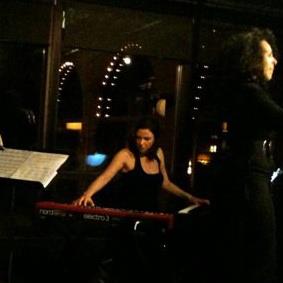
Calgary-based jazz pianist Tricia Edwards takes a handful of jazz standards and transforms them into a relaxing and playful set in her debut CD.
Tricia Edwards' musical journey has taken her down many paths, most recently, in local jazz bars and the recording studio. From classical piano to classic jazz, from soloist to collaborative artist and from student to teacher/performer. With Joy Spring, Edwards takes her audience on a cheerful yet relaxing, playful yet romantic ride.
The Journey From Classical to Jazz
Edwards' musical studies began in classical music. She earned her Masters' and Bachelors' degrees in classical piano performance at the University of Alberta. After graduation, Edwards worked as a teacher and collaborative pianist in Alberta and the Middle East.
In 2003, Edwards began studying jazz piano, studying with Derek Stoll, a prominent jazz pianist in Western Canada. In 2009, she was awarded the Richard Harold Cowie Scholarship by the Calgary Musician's Association and C-Jazz.
Since then, Edwards has been busy. She has formed her own trio and quartet, the Whisper Not Jazz Ensemble, Calgary Jazzwinds, the Wednesday Night Big Band, Wednesday Night Little Big Band and a new unnamed smooth jazz quartet. She has performed at popular jazz clubs such as the BeatNiq Jazz and Social Club and Koi Cafe.
Joy Spring Disc Information
Track Listing
One Note Samba (N. Mendonca/A.C. Jobim)
Sugar (S. Turrentine)
Sidewinder (L. Morgan)
On the Street Where You Live (A.J. Lerner/ F. Lowe)
There Will Never Be Another You (M. Gordon/H. Warren)
My Funny Valentine (L. Hart/R. Rodgers)
Cherokee (R. Noble)
Bluesette (J.B. Thielmans)
All the Things You Are (O. Hammerstein/J. Kern)
Well You Needn't (T. Monk)
Joy Spring (C. Brown)
Alone Together (H. Dietze/A. Schartz)
Musicians: Tricia Edwards (piano), Keith Smith (guitar), John Hyde (bass)
Arranger: Tricia Edwards
Label: None
Produced by: NRS Productions
Cover Art by: Alison Edwards
Release Date: March 9, 2009
Joy Spring Highlights
Joy Spring is a smooth jazz CD comprised of jazz standards; a little Latin jazz, a little swing and a little waltz. The first track, "One Note Samba", opens with a cheerful piano solo before being joined by the guitar and bass. The guitar solo teases us with a line that steps away from the "one note" but leisurely returns to that "one note". The piano matches the playful and unhurried tone set by the guitar. Gradually the line ebbs and flows.
"Sidewinder" displays the funky and frolicsome interplay between all the instruments. Each member of the trio takes ideas presented by another member and takes it to another level. Nothing is rushed, everything is smooth and relaxed.
"My Funny Valentine" begins with a piano solo, playing a simple ostinato over the descending bass. The guitar enters with a very melancholic saxophone-like line. The head is played simply with sparse accompaniment. Gradually, the harmonies become thicker. The solos do reach virtuosic proportions yet remain lazy, smoky and sultry.
The jazz waltz "Bluesette" begins with a dreamy piano intro that is soon joined by the bass. The piano solo is syncopated, unhurried and sprightly. The bass solo could have been louder.
The title track, "Joy Spring" is a playful Latin groove. The head wanders up and down at a laid back pace.
In the piano solo, Edwards plays with the rhythm, throwing in a couple of runs. The guitar solo is highly syncopated and melodic.
Lighthearted Relaxation Music
The interplay between the piano and guitar and piano is well done. It is clear that the members of this jazz trio listen to each other, lend support and build on each other's ideas. The bass gives subtle but strong support. Joy Spring as a debut CD presents Tricia Edward's joy of music and playful nature; making it a fun listen, whether you are curled up with a good book and a glass of wine, driving across the countryside or enjoying a romantic dinner.
To find out more about Tricia Edwards or to listen to sample tracks, visit her website. To learn buy Joy Spring, click on the icon below:
Originally published March 1, 2010. All rights reserved by Rhona-Mae Arca.
Interview with CA Edington of Virtual Choir 3.0
When I was with Suite101, I interviewed CA Edington from Eric Whitacre's Virtual Choir 3.0 to discuss musical traditions, life in Japan and Virtual Choir.
When I was with Suite101, I interviewed CA Edington from Eric Whitacre's Virtual Choir 3.0 to discuss musical traditions, life in Japan and Virtual Choir.

CA Edington of Sapporo, Japan, recorded the Soprano 4 part to Eric Whitacre's Virtual Choir 3 project: “Water Night” from Whitacre's Grammy-winning album, Light & Gold. This huge multi-track project received a total of 3,746 videos from amateur and professional singers worldwide. The audio and video was cleaned on each submission before they were incorporated together.
Ms. Edington sat down with Suite101 on April 14 and 28, 2012 via Skype to discuss Eric Whitacre's music, life in Japan and Virtual Choir.
CA Edington on Musical Traditions
CA grew up in a very musical family around upstate New York. “Everybody would go to my grandparents' house at Christmas,” she recalled. “It was in a small town in Ohio and they had a huge house. We would all stay there for two or three days, and the piano was never empty.”
Christmas carols were unique. “Christmas morning, we would all gather around the tree and before we opened the presents, we would sing a carol in four-part harmony. I thought this was a tradition that was carried on everywhere, in every family. I didn't realize it was just us,” she added with a laugh.
CA Edington on Living and Singing in Japan
CA Edington moved to Japan in 1982 and hasn't looked back since. “I wanted to be in another culture, not just visit. I wanted it to be another culture that's very different from the US.” CA works as an English teacher, proofreader, narrator and transcriber in Sapporo.
CA has nothing but warm things to say about her adopted home. “The city of Sapporo is such an easy city to get around, compared with a lot of places in Japan because it is only a little over 100 years old. The public transportation is fantastic here. I live near a gorgeous park. I can walk through that park anytime of day or night and feel completely safe.”
One of the draws to Sapporo for CA is the vibrant arts community. “Music is very big here,” she said. “There are a lot of choral competitions. There are so many choruses, I don't even know how many.”
Sapporo also boasts The Pacific Music Festival, which was founded by Leonard Bernstein in 1990. “He founded it here in Sapporo. Young musicians come from all over the world for a month to study and perform here in Sapporo.”
CA was one of the first members of the Sapporo Symphony Orchestra Chorus. “It just got started about five years ago,” she recalled. “A student knew about the auditions and she got the audition papers for me and I thought, “Oh. I'll just fill them out.” I was in another chorus, a pretty high level chorus that does mainly classical music and I was very happy in that chorus. I thought, “I'll just try out,” and I went and tried out. Actually, there were about six people from my chorus, six other women and a couple of the men who tried out as well.”
The audition process took place in several stages. “First, we had to do sight reading. I mean cold. We got the piece and got to look at it for 30 seconds and then we had to go in and sing it. The next stage of the audition process was to sing an excerpt from Beethoven's Ninth Symphony.
Getting accepted was a pleasant surprise. “Fast forward to a month later. The class that had recommended that I join the chorus was just finishing up. I went across the hall and found a letter from the symphony. I opened it and I couldn't exactly understand what it was saying.” With a laugh, she added, “So I took it over to my class members and they read it and said, “CA you got in!””
After a moment's reflection, she added. “I wasn't sure whether they would accept me or not, but I've been very accepted. What I love about the chorus is that I'm not a gaijin [non-Japanese] in the chorus. I'm a soprano.”
CA Edington Discusses Eric Whitacre's Virtual Choir
CA learned about Eric Whitacre's Virtual Choir shortly after VC2: “Sleep”, so she had to wait for almost another year to participate in VC3. “I thought 'OK, I'll learn the piece in a couple of days and record it and then that'll be it.' Well, I didn't start until the middle of January and what I discovered was that it was going to be much more challenging than I had thought; especially since I chose Soprano 4.”
She can laugh easily now about some of the challenges she experienced. “Then I'm ready for recording, right before the deadline. I mean, a day or two and there was trouble! I kept getting error messages and then discovered – because I was on the Facebook site and also checking the website – that others were having technical problems.”
Another issue was staggering the breath. “When you're with a chorus you stagger your breath with the person around but here you are singing alone and where do you stagger the breath?” She decided to check some of the other Virtual Choir submissions. “I don't think I heard anyone who got all the way through “soul” the final word, without taking a breath; so then I felt more relaxed about it.”
In the end, it all worked out. “I don't even know how the technicians work that out. To me, that's amazing, but I suppose once you get 3,500 plus voices together, it's not that noticeable who's taking a breath where.”
CA Edington on Eric Whitacre's Music and the “Water Night” Premiere
CA was moved when VC3: "Water Night" and Water Night the album premièred on April 2, 2012. “When that blue screen came up and the faces started – even talking about it right now, I'm getting chills. Just chills,” she recalled. “Of course, I was riveted, not just because I had participated in it, but because the whole concept and the piece and Eric himself are all – I don't want to use the word “amazing”. That's overused. I can't find a word that describes it entirely. It gave me chills. Pleasant chills. Good chills.”
Like many Whitacre fans, Eric Whitacre's music holds a special place in CA's heart. “It transports me when I hear it. It's so complex and at the same time, so simple. How he gets all those notes in there and how they end up sounding so together, I have no idea. The man is a genius and he is the kind of genius that is just so rare.”
Originally published June 12, 2012. All rights reserved by Rhona-Mae Arca.
Roots CD Review
At only 21 years of age, Alex Goodman shows the world why he's a force to be reckoned with in the Canadian jazz scene with his first jazz album, "Roots".
At only 21 years of age, Alex Goodman shows the world why he's a force to be reckoned with in the Canadian jazz scene with his first jazz CD, "Roots".
"Without question, one of the most gifted guitarists of his generation," said Tim Ries of the Rolling Stones after hearing Alex Goodman perform. Together with Jonathan Kay on saxophone, Justin Gray on bass and Josh Park on drums, they form The Alex Goodman Quartet.
Alex Goodman - A Rising Star
Alex Goodman is a Canadian jazz guitarist, pianist and composer. He studied jazz performance at the Schulich School of Music at McGill University before transferring to the University of Toronto where he attended on a full scholarship. He has received numerous awards and accolades including a Banff Program for Jazz and Creative Music merit award, recognition as a CBC/Galaxie 2008 “Rising Star.” He studied performance and composition with international jazz greats Ben Monder, Wayne Krantz, Jim McNeely, Rich Perry, Tim Ries and Ethan Iverson.
He composed and played on the soundtrack for the award winning film Goodbye Rosebud which was screened at the Cannes’ Film Festival. He also wrote, arranged and performed all music for Reality Check, a TV film that aired nationally on Global in 2007.
Alex has performed in Canada, Thailand, India, Spain and the United States.
Roots - An Analysis
Bloom is a catchy track that alternates between a charming jazz waltz and an quick Latin groove. Jonathan Kay keeps up with the switches styles ably, maintaining a full and warm tone on the tenor sax. Alex Goodman demonstrates his technical precision by throwing in rapid rhythms that switch gears from one style to the next in the blink of an eye in his jazz improvisation.
The Cantus begins with a punchy rhythm played by the drums and bass. The piano and alto sax soon join in with a quick, highly syncopated melody. The saxophone solo fires up and down the register as the rest of the combo maintains punchy comping rhythms.
Things slow down a bit with Validation, which has a soulful feel like Round Midnight by Thelonious Monk. It gains a bit of momentum by the 1:00 mark. The piano solo uses classical-style sequences with jazz harmonies and steadily kicks up the momentum another notch with some rapid flourishes. The bass solo, in contrast, is calmer and introspective. The sax matches the gentle tone at first and then builds the intensity, gradually moving higher up the range. The drums play around with rhythms, starting simple and then getting more complicated, before easing back.
Recordame is a Joe Henderson classic. Its bossa roots aren't as evident in this version. This is also the first track on the CD to feature the guitar, which really does change the tone of the piece. The use of the guitar and the alto sax give this track an easy-going feel.
Nihilism contains some bebop melodic shaping but keeps things at an easygoing tempo - at first. The solos quickly push the mood from calm to excited. The interplay of the combo during the sax solo complemented the sax without stepping on the solo.
Out of Nowhere is another laid back track. The saxophone's range is explored in depth during the solo. The guitar solo is very "scat-able".
Perito Moreno begins with a fast bebop groove in the bass and drums. The sax truly lets loose with some virtuosic passages that fly high and low during the solo. The piano solo is filled with syncopation and rapid passages. The bass and drums maintain the intensity with their driving lines.
The final track, Winter, is slow and dreamy, like Vince Guaraldi's Christmastime is Here. It opens with just the piano and a gentle brush groove by the drums. The head, played by the sax is sultry and melancholic, while the bass continues with an pensive solo. The piano solo incorporates some rhythms and harmonies reminiscent of Impressionist music but maintains the calm feel.
Roots Track Listing
Bloom (A. Goodman)
The Cantus (A. Goodman)
Validation (A. Goodman)
Recordame (J. Henderson)
Nihilism (A. Goodman)
Out of Nowhere (J. Green/ E. Heyman)
Perito Moreno (A. Goodman)
Winter (A. Goodman)
Produced by: Alex Goodman
Recorded with: Central Audio Productions
Released: 2007
Roots - The Verdict
Roots is a solid debut CD, showcasing the versatility of this jazz combo as well as Goodman's compositional style. Their cohesion is pretty tight and it's hard to believe that these young jazz musicians are barely into their 20's. Alex Goodman and Jonathan Kay truly shine in this CD. However, as able as Justin Gray and Josh Park were, it would have been nice to hear them really let loose. Perhaps in their next CD.
Since releasing Roots, The Alex Goodman Quartet has become The Alex Goodman Quintet. To find out more about Alex Goodman visit his website and his MySpace page.
Although Roots doesn't appear to be available, the jazz combo's latest album, Bridgesis. It was nominated for a 2013 JUNO Award for Contemporary Jazz Album of the Year. Alex Goodman is currently pursuing his Masters in Music at the Manhattan School of Music.
Originally published on Suite101 on December 21, 2009. Updated March 11, 2013. All rights reserved by Rhona-Mae Arca.
Social Media Links
archives
- #YYCArts 32
- #YYCEvents 39
- Collaborative Music 25
- Community 11
- Composing & Arranging 6
- Entertainment 139
- Entrepreneurship 53
- Freebies 3
- Gardening 1
- Geeking Out 65
- Health & Wellness 120
- Improvisation 25
- Interviews 28
- Learning Music 188
- Martial Arts 13
- Memorization 7
- Music 230
- Music Careers 9
- Music Education 196
- Music Examinations 7
- Music Exploration 55
- Music Gigs 14
- Music Lessons 6
- Music Performance 32
- Music Theory 13
- Musical Instruments 12
- Musician Health 19
- Pets 57
- Piano Technique 12
- Practicing Music 120
- Productivity 20
- Professional Development 11
- Recommendations & Reviews 93
- Recreation 71
- Social Media 6
- Spirituality 10
- Studio Management 33
- Studio Technology 50
- Teaching Music 146
FOLLOW THE STUDIO on Instagram

Affiliate Links
As a Sheetmusicplus and CD Japan affiliate, I earn from qualifying purchases. The earnings help fund the Studio’s blog and YouTube channels. Your support is greatly appreciated.


FOLLOW Budo no Tabi on Instagram