THE MUSICAL MUSE
Blog dedicated to music education, practice tips, health
&
wellness, and geeking out.
Music - medicine for the heart, mind and soul
Thank you to my friend and colleague Sharon Omura for sharing this with me. This is the Welcome Address that Karl Paulnack, Director of Music Division at the Boston Conservatory delivered to students and their parents in 2004.It's a moving speech on why art matters and more specifically, why music matters. There are many quotes I like in his speech. This is just one of them:
Thank you to my friend and colleague Sharon Omura for sharing this with me. This is the Welcome Address that Karl Paulnack, Director of Music Division at the Boston Conservatory delivered to students and their parents in 2004.It's a moving speech on why art matters and more specifically, why music matters. There are many quotes I like in his speech. This is just one of them:
"If we were a medical school, and you were here as a med student practicing appendectomies, you'd take your work very seriously because you would imagine that some night at two AM someone is going to waltz into your emergency room and you're going to have to save their life. Well, my friends, someday at 8 PM someone is going to walk into your concert hall and bring you a mind that is confused, a heart that is overwhelmed, a soul that is weary. Whether they go out whole again will depend partly on how well you do your craft. "
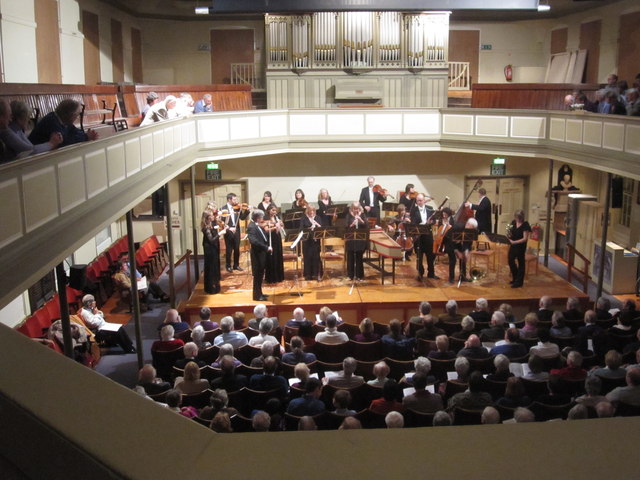
He shared a touching story about the most important concert of his life, which took place in a nursing home in a small Midwestern town a few years ago. A war veteran came to him after hearing Aaron Copland's Sonata and said, "How does the music do that? How did it find those feelings and those memories in me?" The piece brought back one particular memory regarding a fellow pilot. Only afterwards did the war vet learn that the piece was dedicated to a fallen pilot who fought in WWII.
Click here to go to Karl Paulnak's speech.
Here's the videos of the piece that moved the war veteran:
The second movement especially makes the heart weep.
If you'd like to add Copland's Sonata for Violin and Piano to your music collection, click on the image below:
Now if you'd like to learn this piece, check it out here:
 look inside
|
The Copland Violin Collection 13 Pieces for Violin and Piano. Composed by Aaron Copland (1900-1990). Boosey & Hawkes Chamber Music. Classical. Softcover. 126 pages. Boosey & Hawkes #M051105786. Published by Boosey & Hawkes (HL.48019947). |
The Rules of Ensemble Playing (according to students)
Thanks to my Giggle Trio (AKA Tess, Gabriel & Danielle) for sharing these rules of ensemble playing and rehearsing. It's quite the work of art, which I think applies to ALL ensembles:
Thanks to my Giggle Trio (AKA Tess, Gabriel & Danielle) for sharing these rules of ensemble playing and rehearsing. It's quite the work of art, which I think applies to ALL ensembles:
No knee pinching.
No story telling until the end of the rehearsal.
Try not to giggle so much.
Listen to everybody's ideas.
Pay attention.
Try new stuff.
If the group is getting too giggly, tell them to stop.
Listen/look for each other's cues.
No body checking.
Have a plan.
Have fun!!!!!
Personally, I think rule #9 is a classic!
(c) 2009 by The Giggle Trio, Calgary, AB, Canada. Posted with permission.
Online Music Games
If you're looking for something new to give your students (or if you, a student is looking for something new to play), try these online music games:
If you're looking for something new to give your students (or if you, a student is looking for something new to play), try these online music games:
Star Jam - Drop blocks into the space in front of the moving ball to create a musical guitar riff.
Music Catch - Catch musical shapes that fly onto the screen in time to the music. Yellow is good. Purple is good but Red is BAD.
Enjoy!
(c) 2009 by Musespeak(tm), Calgary, AB, Canada. All rights reserved.
Music Exam Preparation Tips
With music students across the country taking exams next month, I thought it would be apropos to post some exam preparation tips. Some of these are "general exam" tips, but for the most part, they can be applied to music exams.
With music students across the country taking exams next month, I thought it would be apropos to post some exam preparation tips. Some of these are "general exam" tips, but for the most part, they can be applied to music exams. After all, an exam is an exam, whether it is theoretical or practical.
A few other things I've been constantly reminding my students are:
You can't cram technique: practice those scales, chords and arpeggios (and vocalises if you're a singer) and get everything faster than the listed speed. The required speed gets you a pass. If you want a higher mark, go faster (just make sure it's a tempo you can maintain, play cleanly and with good tone).
Spend more time on the areas that need work. For many students, it's the technical requirements or the ear and sight reading tests. For others, it's memory or "that one dreaded piece".
Look at the mark breakdown, spend more time on the areas that are worth more marks and also make sure that you're not giving any "easy marks" away. If you're in Conservatory Canada, that information is in the back of your piano book. If you're in RCM, check the Syllabus for your instrument at any music store (perhaps consider investing in one).
Practice frequency is the key. Right now, the more "airtime" your pieces and technical elements get, the more opportunities you give for everything to sink into your mental and muscle memory.
Perform often between now and exam day - it's the closest you can get to simulating exam performance conditions. See if your teacher can sign you up for a student recital hosted by one of the local teaching associations or schedule your own mini-recital and invite all your family and friends to hear you run through your exam repertoire.
(c)2009 by Musespeak(tm), Calgary. AB, Canada. All rights reserved.
Keeping Ensembles in Sync
This year, my students are working on duets and trios. For most, it's their first experience in the collaborative arts. Some groups are finding it relatively easy to find the ensemble's pulse. These players have a fairly good internal pulse…
This year, my students are working on duets and trios. For most, it's their first experience in the collaborative arts. Some groups are finding it relatively easy to find the ensemble's pulse. These players have a fairly good internal pulse and have caught on to giving and receiving cues. Or in the case of those who aren't usually steady, they become steady because they are listening to their partners and to how everything fits together. And - they get along (always a bonus).
Then, there's the other extreme. One trio is comprised of a boy whose tempi vary widely (although he vehemently denies this), one girl who stops every time she plays a note that's not on the page and one girl who just doesn't care about getting the notes right, much less the tempo. I can only hope that the next trio class will go more smoothly. In another group, my "Giggle Trio" - two players were distracting each other, which drove the third partner crazy because she just wanted to get through the entire song.
Here are a few articles on ensemble playing:
The Ensemble that Plays Together - another great post from Chris Foley
Why Being a Great Ensemble Player May Require More than Just Our Ears
September 3, 2020: Updated some of the dead links.
Social Media Links
archives
- #YYCArts 32
- #YYCEvents 39
- Collaborative Music 25
- Community 11
- Composing & Arranging 6
- Entertainment 139
- Entrepreneurship 53
- Freebies 3
- Gardening 1
- Geeking Out 65
- Health & Wellness 120
- Improvisation 25
- Interviews 28
- Learning Music 188
- Martial Arts 13
- Memorization 7
- Music 230
- Music Careers 9
- Music Education 196
- Music Examinations 7
- Music Exploration 55
- Music Gigs 14
- Music Lessons 6
- Music Performance 32
- Music Theory 13
- Musical Instruments 12
- Musician Health 19
- Pets 57
- Piano Technique 12
- Practicing Music 120
- Productivity 20
- Professional Development 11
- Recommendations & Reviews 93
- Recreation 71
- Social Media 6
- Spirituality 10
- Studio Management 33
- Studio Technology 50
- Teaching Music 146
FOLLOW THE STUDIO on Instagram

Affiliate Links
As a Sheetmusicplus and CD Japan affiliate, I earn from qualifying purchases. The earnings help fund the Studio’s blog and YouTube channels. Your support is greatly appreciated.


FOLLOW Budo no Tabi on Instagram