THE MUSICAL MUSE
Blog dedicated to music education, practice tips, health
&
wellness, and geeking out.
Music Theory Musings: A Practical Example
Sometimes, students ask, “Why do I need to take music theory?” The simple answer is, “It makes you a better musician.” With theoretical knowledge of the music, one is able to better learn and understand their repertoire, resulting in stronger performances.
Sometimes, students ask, “Why do I need to take music theory?” The simple answer is, “It makes you a better musician.” With theoretical knowledge of the music, one is able to better learn and understand their repertoire, resulting in stronger performances.
I’ll use a practical example: Two of my students are working on a Bourée this year, which is a lively French dance popular in the Baroque period. One is learning the Bourée in A minor by Johann Ludwig Krebs while the other is working on a Bourée in F Major from Georg Philipp Telemann’s Solo in F Major, TWV 32:4.
At the beginning of the school year, we discussed the form of the music. Both are in binary form (rounded binary to be more specific). That makes learning simpler, knowing that the A section returns with some or no modifications. Both begin on an upbeat, which encourages the performer to give a nice strong accent to beat one in the following bar. They should be in duple meterbut strangely, they’re both in quadruple meter. Lively dance in quadruple meter? Past experience suggests that they play with a feeling of one beat per bar.
The first section begins in the tonic key but ends in a decisive perfect (V-I) cadence in a contrasting, closely related key (either the Dominant or the relative major)
The B section in both dances are based on a short motive from the A section. After some sequences, the music returns to the A section (or in the case of the second dance, a portion of A). Both songs end in a decisive perfect cadence in the tonic key.
My students learned their Bourées, one section at a time. They are currently busy bees, trying to memorize their songs for the upcoming APTA Festival. The memorization process has been easier because they recognize the form and the cadences (the usual trouble spots). However, both are struggling with the sequential patterns.
Theoretically, sequences should be easy to memorize but sometimes, it takes a while to internalize the pattern, as my students are finding. You learn the original pattern and then transpose it up a step or down a step, as marked in the score. I am now trying to get them to memorize the chords, e.g. C goes to F, D goes to G, E goes to A, etc. I just realized that should have told one student that this pattern is a series V-I chords, with the pattern moving up a step (C – D – E or F, G, A, depending on which chord you focus on). Maybe that will help.
© 2006, Musespeak™,Calgary, AB, Canada. All rights reserved.
Excuses and Commitments
I have noticed that the excuses for not practicing increase around this time of year:
“We were at my grandparents’ all weekend and they don’t have a piano.”
“My parents are renovating and the piano is all covered up.”
“The batteries on my keyboard are dead.”
I have noticed that the excuses for not practicing increase around this time of year:
“We were at my grandparents’ all weekend and they don’t have a piano.”
“My parents are renovating and the piano is all covered up.”
“The batteries on my keyboard are dead.”
“We went skiing.”
“I had a lot of tests this week.”
“I had a ton of homework!”
“I had a sports tournament.”
“I had a dance competition/exam.”
“I just wasn’t in the mood.”
“I was busy…playing with my X-Box/Nintendo/Playstation/Internet.”
Don’t get me wrong, I do sympathize with today’s kids. It seems like they get more homework than my generation did. I also do know what it’s like to be busy at their age, having been involved in several extracurricular activities.
Teachers get grumpy when they hear the same excuses from the same students on a weekly basis. Somehow, my brother and I made it work - good grades, extracurricular activities and piano. We didn’t practice as much as we should have but our parents made sure we practiced enough (try 6:30 AM AND 11 PM practices!).
One student recently used the last two excuses on the list. I told her that if there is something else she’d rather be doing, then do it and quit piano. However, if she does want to stay in piano, then she has to make a commitment.
Regardless of the activity, be it hockey, karate, soccer, drama, dance or piano – there is a level of commitment students must exhibit to make it worthwhile for the themselves, parents and teachers. For each of these, commitment equals practice time.
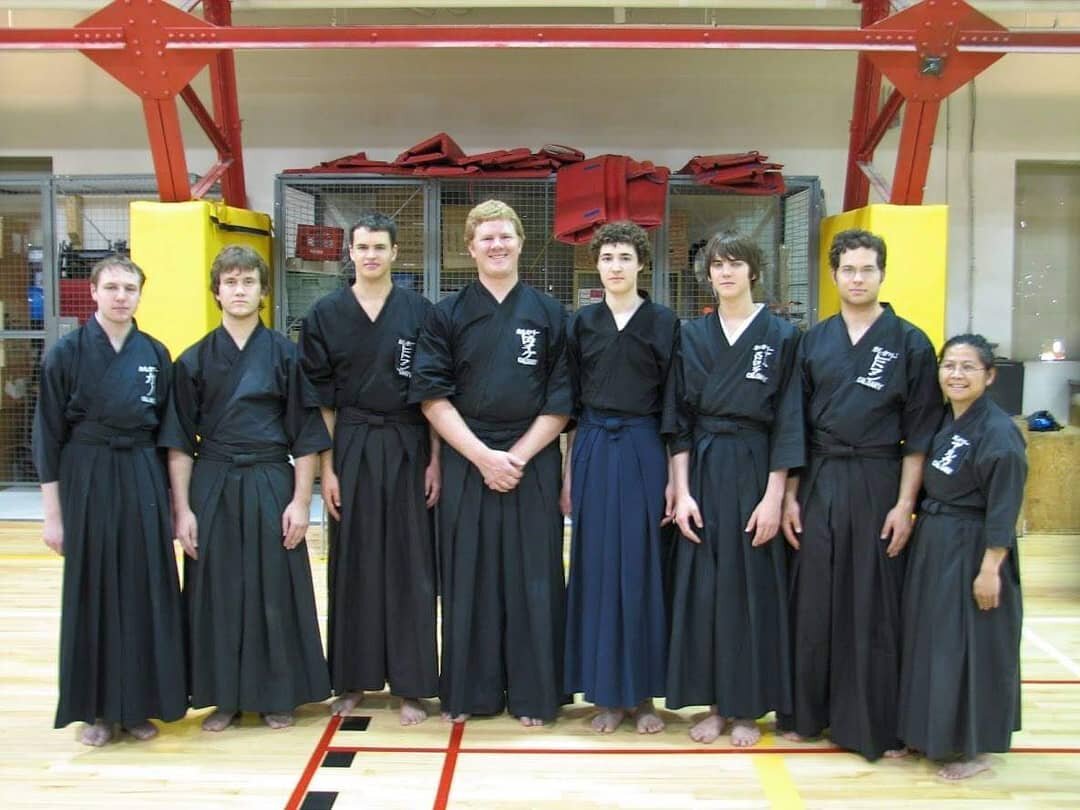
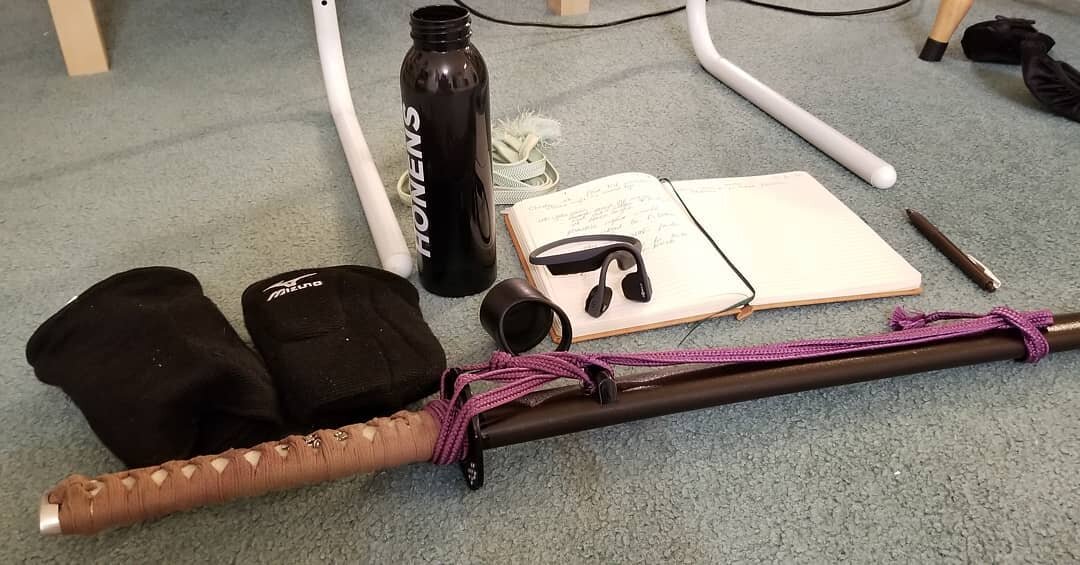
I'm jealous of my students, to tell you the truth. I wish I had their schedules. To just concentrate on piano, school and Iaido (the latter replaces the yearbook committee and basketball scorekeeping activities of my youth), would be heavenly.
Instead, Iaido practice is squished in before my morning administrative tasks and errands (if I’m not in an ARMTA meeting or workshop), while piano gets tacked on well after 10 pm, when I’ve wrapped up teaching for the evening and planning for the next day (my room-mate can attest to the “well after 10” part). Neither winds up happening daily but I do strive for five days a week for both. Some weeks are better than others. I need to make room for more writing, but that’s a dilemma for another day.
I really wish I could supervise my students’ practicing in their homes and limit their distractions and/or extracurriculars; but I lack Santa's ability to be in over 40 places simultaneously.
© 2006 Musespeak™, Calgary, AB, Canada. All rights reserved.
Friday Fun Link #16
Just when I thought I finished all my work for the week. Maestro is all set to play Frisbee but I just couldn’t log off without doing today’s Friday Fun Link.
Just when I thought I finished all my work for the week. Maestro is all set to play Frisbee but I just couldn’t log off without doing today’s Friday Fun Link. Head to PBS Kids’ Music site and try some of their online games. Maestro and I played a game called “Jam with Wiley”. He picked out the bongo drums for our instrument, while I tried to play the colour-coded drum that corresponded with the moving notes on the screen. A very tricky feat when you’re holding a musical dog under one arm and trying to manipulate the stylus in the other hand.
Enjoy!
Terrific Thursday Link #3
Thanks to Liam, a student, and his mom for this week’s link…
Thanks to Liam, a student, and his mom for this week’s link. www.musicstudy.com has ear training and music theory software programs to help students of various levels. Check out their free demos.
Musicians & Memory
Musicians young and old struggle with memory. I have a few students who are really struggling with it this year (we memorize in chunks). You may ask, “Why do musicians need to memorize their songs?” If you learn something “by heart”, you know it inside and out. You understand it on several levels and can perform it confidently – consistently. Plus it just looks good.
Musicians young and old struggle with memory. I have a few students who are really struggling with it this year (we memorize in chunks). You may ask, “Why do musicians need to memorize their songs?” If you learn something “by heart”, you know it inside and out. You understand it on several levels and can perform it confidently – consistently. Plus it just looks good.
Now there are times to memorize and there are times not to. Memorization is required at festivals and exams. Student recitals? It depends. If it’s a recital to air out exam pieces, then yes to memory. If it’s just a fun recital, it’s optional. If you’re just jamming with family and friends, memory is optional (improvising is probably more valuable here). If you’re at a family reunion and you’re dragged to the piano? You better have something ready at your fingertips (or be a good improviser!).
There are five types of memory that musicians use. The more forms you use, the stronger your memory is. They are:
Aural: memorizing by ear
Visual: AKA “photographic memory”
Tactile/Digital: AKA motor memory
Analytical: looking for patterns and relationships
Kinesthetic: AKA “muscle memory"
Here are a few interesting articles on memory and music:
© 2006, Musespeak™, Calgary, AB, Canada. All rights reserved.
Social Media Links
archives
- #YYCArts 32
- #YYCEvents 39
- Collaborative Music 25
- Community 11
- Composing & Arranging 6
- Entertainment 139
- Entrepreneurship 53
- Freebies 3
- Gardening 1
- Geeking Out 65
- Health & Wellness 120
- Improvisation 25
- Interviews 28
- Learning Music 188
- Martial Arts 13
- Memorization 7
- Music 230
- Music Careers 9
- Music Education 196
- Music Examinations 7
- Music Exploration 55
- Music Gigs 14
- Music Lessons 6
- Music Performance 32
- Music Theory 13
- Musical Instruments 12
- Musician Health 19
- Pets 57
- Piano Technique 12
- Practicing Music 120
- Productivity 20
- Professional Development 11
- Recommendations & Reviews 93
- Recreation 71
- Social Media 6
- Spirituality 10
- Studio Management 33
- Studio Technology 50
- Teaching Music 146
FOLLOW THE STUDIO on Instagram


Affiliate Links
As a Sheetmusicplus and CD Japan affiliate, I earn from qualifying purchases. The earnings help fund the Studio’s blog and YouTube channels. Your support is greatly appreciated.


FOLLOW Budo no Tabi on Instagram