THE MUSICAL MUSE
Blog dedicated to music education, practice tips, health
&
wellness, and geeking out.
Calgary Wind Symphony Apollo Sings Concert Review
The Calgary Wind Symphony wrapped up its 2012/13 season with sweeping melodies, dramatic harmonies and rich contrasts.
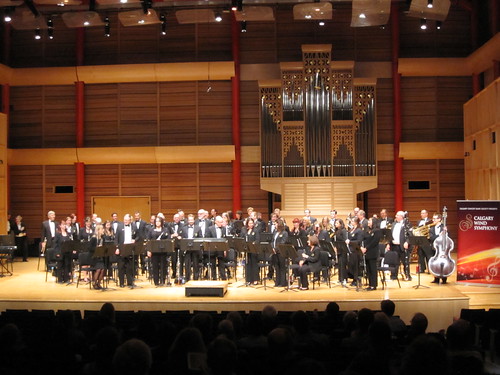
Sweeping melodies, dramatic contrasts and lush imagery were on tap at the Calgary Wind Symphony's June 2, 2013 performance at the Rozsa Centre. Billed as "Apollo Sings! Music that Soars", this live concert featured a diverse mix of program and absolute music to work the listener's imagination.
Picking up the conductor's baton for this wind symphony concert were Artistic Director Dr. Jeremy Brown and Associate Conductor Wendy Freeman. CWS members Mary Hamm and Noel Jones were featured in Mendelssohn's Concertpiece No. 2 for Two Clarinets with Band.
Programme and Aleatoric Music Performed by the Calgary Wind Symphony
The concert opened with Alfred Reed's The Hounds of Spring. The work is based on Algernon Charles Swinburne's poem Atlanta in Calydon. The sweeping melodic lines, depicted romance in the springtime. This was a number that showcased just how wonderful the acoustics are in the Rozsa Centre. It also demonstrated how tight the ensemble is. The balance was superb, while the tone was rich and warm..
Yasuhide Ito's Gloriosa was one of the many hidden gems on the programme. This work for symphonic band featured Christian hymns that were "Japanified" by Crypto-Christians who continued to practice their religion in secret after it was banned in Japan (1643 - 1848).
Gloriosa contains three movements. "Oratio" was dripping with melancholy. The chimes in the opening, followed by the CWS singing a Gregorian chant, filled the hall with sorrow. In contrast, the middle section featured the flutes and clarinets playing a sweeping Japanese melody, punctuated by accents and harmonies in the brass, depicting the persecution of the Crypto-Christians. The movement ends as it began, with distant chimes. It was an utter delight to listen to the Calgary Wind Symphony sing the Gregorian chants.
"Cantus" showcased the flute and piccolo playing a melody sounding very much like a traditional Japanese song on the shakuhachi. Another Gregorian chant was buried deep within the score, nearly hidden by the flute melody, the taiko-like percussion and the blues-like harmonies..
From the shrill opening to the taiko-like rhythms, "Dies Festus" sounded more like a battle than a festival. This movement contained a Nagasaki folk song that was popular where many Crypto-Christians lived.
Christiaan Ventner's Dancing Lights of the North earned positive comments in the lobby during intermission from various concert patrons. To introduce it, Dr. Brown spoke of how the process is just as important as the melody. The piece is comprised of unfolding segments that contain a high element of improvisation.
It opened with a solo water glass passage (yes, you read that correctly), The twinkling percussion undoubtedly represented stars, while the woodwinds represented the shimmering aurora borealis. To me, the rumbling brass depicted night descending upon the listener. Later, the woodwinds sounded like birds and crickets in the night:
Associate Conductor Wendy Freeman conducted Illyrian Dances by Guy Woolfenden. This three-part work would fit perfectly in a fantasy tale such as the Chronicles of Narnia series. "Rondeau" was a lively modal dance peppered with syncopation and hemiolas. In contrast, "Aubade" was a slow and dreamier movement. "Gigue" is extremely playful, as depicted by the dancing flute melody and light percussion. The horns interjected with a hunting-like theme.
The CWS Presented Dramatic Contrasts and Meltdown by Marco Pütz
Calgary Wind Symphony members Mary Hamm and Noel Jones took to centrestage for Mendelssohn's Concertpiece No. 2 for Two Solo Clarinets with Band. The Romantic composer penned the work for the sons of clarinetist Heinrich Barmann.
This three-movement work is highly technical. It opened with a dramatic swell from the ensemble before Hamm and Jones' lines weaved and danced around like birds exploring the landscape from above.The second movement unfoled slowly. The running sixteenths were reminiscent of Schubert's Ave Maria. The third movement was rather operatic, like the love duet between the main characters in an opera. It finishes off with a highly virtuosic cadenza between the soloists.
Hamm and Jones were superb throughout. Their tone was well-matched and their technique complemented each other beautifully. They negotiated through those rapid-fire runs gracefully.
The highlight of the second half was Meltdown by Marco Pütz. This symphonic poem could easily fit into a dramatic film score. Even without knowing the programme - the meltdown of a nuclear reactor - one can easily hear it working for movies involving dinosaurs, gigantic monsters or space battles.
Meldown began ominously with the bass clarinet, followed by the other woodwinds, one layer at a time. The dance of the nuclear particles was extremely tense and frenetic, achieved by instruments playing in the extreme high register, an uneven waltz pattern and dissonant harmonies.
The brass and percussion drove the listeners towards the actual meltdown, with an increase of aural explosions. Rhythm and harmony continued to play a role in weaving a tale of instability, drama and fear. The lone beeping and hum from the synthesizer was akin to a lone machine beeping in the aftermath before fading into nothingness. The closing theme presented by a solo trumpet before being joined by the rest of the wind ensemble, seemed to describe the survivors surveying the landscape after the explosion.
To clear the air, Meltdown was followed up with two lighter works, Leonard Bernstein's Overture to Candide Karl King's The Purple Pageant March. These two are well known and oft-performed.
Smart Programming, Balance and Variety by the Calgary Wind Symphony

One thing that continues to impress me with the Calgary Wind Symphony is the programme choices. The group isn't afraid to step out of the box of standard concert band repertoire. Each concert has included lesser-known works, as well as pieces that may challenge some listeners.
That's just fine. The edgier works are introduced clearly in the concert programmes as well as by the conductors on stage. What's even smarter is how these works are programmed. There is always a balance between these newer works with a good dose of familiar composers or styles.
About the Calgary Wind Symphony
The CWS (formerly the Calgary Concert Band) is a 60-member wind ensemble that has been around since 1947. It is directed by directed by Dr. Jeremy Brown of the University of Calgary and Associate Conductors Wendy Freeman and Gareth Jones.
Subscriptions for the 2013/14 season are already available.The lobby was abuzz with the news of Carmina Burana on the December programme. For more information, visit the Calgary Wind Symphony's website.
The Calgary Wind Symphony presented an engaging and varied programme for the ensemble's final concert of the 2012/13 season. Like the Greek god, Apollo, the June 2, 2013 concert brought sunlight into the concert hall and lit up the stage with soaring melodies and rich harmonies.
Honens ProAm Piano Competition for Amateurs 2011 Review
This unique piano competition held Saturday, October 15, 2011 in Calgary, Alberta raised over $100,000 for the 2012 Honens International Piano Competition.
This unique piano competition held Saturday, October 15, 2011 in Calgary, Alberta raised over $100,000 for the 2012 Honens International Piano Competition.
Four amateur pianists went head-to-head on Saturday, October 15, 2011, 7:30 p.m. at Theatre Junction GRAND at this unique music competition. Nearly every seat was full when Daniel Yang, Andrew Hoffmanns, Colin Edie and David Dixon performed their solo recitals.
Amateur Musicians Perform for a Good Cause at Honens ProAm
The Honens ProAm Piano Competition is the brainchild of Calgary-based philanthropist Jenny Belzberg. This unique event is a fundraiser for the Honens International Piano Competition. The first year the ProAm was held was in 2008.
This music competition is open to recreational pianists who play at a high-calibre. In other words, all competitors must have careers outside of music. Each of these amateur musicians performed a 15-minute recital from memory.
In addition to their recital preparations, they strove to raise a minimum of $25,000 each. Prior to the event, they collected pledges from family, friends, employers, colleagues and music aficionados.
The competitors were judged by three music experts: Bob Clark, Charles Foreman and Mélanie Léonard. Clark is a performing arts writer for the Calgary Herald. Foreman, a Professor Emeritus at the University of Calgary, has performed around the world as a solo pianist and chamber musician. Maestra Léonard is currently the resident conductor for the Calgary Philharmonic Orchestra.
The Honens International Piano Competition Searches for the "Complete Artist"
Out of the many prestigious piano competitions throughout the world, the Honens is unparalleled in two areas. First, competitors must perform solo and chamber recital programmes in addition to a movement of a piano concerto. Jurors are tasked with finding the “complete artist”.
Secondly, Honens Laureates participate in an extensive artistic and career development program. This is above and beyond the prize money they receive. Some of the benefits include assistance in booking engagements, recording CD's and developing press kits.
The Honens was the brainchild of the late Esther Honens. She was a Calgary-based philanthropist who endowed $5 million dollars in 1991 to launch an international piano competition in Calgary.
All proceeds from the Honens ProAm goes towards the Seventh Honens International Piano Competition. The next Honens will take place in Calgary from October 17 to 26, 2012.
ProAm Competition 2011 Contenders Deliver Four Exciting Performances
The 2011 ProAm got off to a colourful and romantic start with Daniel “Marathon Man” Yang's performance. Yang, sporting a purple tux, opened with Prelude in b-flat minor, op. 28, no. 4 by Polish composer Fréderic Chopin. He then delivered a sensitive interpretation of Edvard Grieg's Notturno. This was followed by another popular Chopin piece, Nocturne in E-flat Major, op. 9, no. 2. Wolfgang Amadeus Mozart's “Rondo alla Turca” from his Sonata no. 11 in A Major, K. 331 rounded out the programme.
Yang is a Reservoir Specialist for Canadian Natural Resources and the CEO of Borealis Geopower. He holds a Ph.D. In Natural Sciences and studies with Calgary-based piano instructor Ann Davidson.
The second ProAm contender, Andrew “Dutchie” Hoffmanns, hails from the Netherlands. He moved to Calgary last year and works as a financial analyst for Shell Canada Limited. He studies piano with pianist, teacher and clinician Gabriella Jonas of Calgary.
Hoffmans performed two contrasting works which showcased his warm, rich tone. He began with Sergei Rachmaninov's Prelude in c-sharp minor, op. 3, no. 2. He concluded his programme with selections from Kinderszenen (Scenes from Childhood) by Robert Schumann.
Colin “Jock” Edie drew loud cheers when he strode confidently on stage in his light grey-blue tux and matching hat. That confidence rang through throughout his entire recital programme, in which he demonstrated a strong tone, good phrasing and balance.
He first performed “Allegro moderato” from Sonata in E-flat Major, No. 62 Hob. XVI52 by Franz Joseph Haydn. This was followed by La Cathédral engloutie by Claude Debussy. For his final work, Edie performed Chopin's Revolutionary Etude.
Edie works for Encana Corporation as a Petroleum Engineer. He has his Grade 10 certificate from the Royal Conservatory of Music and studies with Allen Reiser, a Calgary-based piano teacher, writer, performer, adjudicator and clinician.
The evening drove towards a dramatic climax with David “Big Band” Dixon's performance. This jazz fan performed two challenging works: La Danse de Puck by Impressionist composer Claude Debussy and Frederic Chopin's Scherzo in E Major, op. 54, no. 4.
Dixon, a Reservoir Engineer at Nexen Inc., displayed a strong command of the piano. His technique was solid, while his phrasing and dynamics were well balanced. He elicited a standing ovation from the audience.
David recently earned his ARCT Diploma from the Royal Conservatory of Music. He studies with pianist, teacher, adjudicator and clinician Linda Kundert-Stoll in Calgary.
Honens ProAm Competition 2011 Declared a Resounding Success
The fundraising goal for this year's Honens ProAm was $100,000, which as exceeded. This year's Top Fundraiser Award went to Daniel Yang, who raised $43,000.
The audience was concurred with the event's jurors. David Dixon was declared the Audience Choice Prize winner and the 2011 Honens ProAm Champion. He won a gift certificate to the seafood restaurant Catch, the entire Honens CD library and a weekend residency at the Banff Centre for the Performing Arts.
The 2011 Honens ProAm Competition for Amateurs was held at Theatre Junction GRAND on Saturday, October 15, 2011. With four dynamic performances delivered to nearly a full-house and the fundraising goal surpassed, this original fundraiser for the 2012 Honens International Piano Competition is a resounding success.
Originally published on Suite101.com on October 18, 2011. Updated May 13, 2013. All rights reserved by Rhona-Mae Arca.
Calgary Jazz Orchestra's 2013 Pop! Concert Review
The final concert in the Calgary Jazz Orchestra's 2012/13 concert season featured two World Premieres, jazzy pop-rock, vivid soundscapes and lots of laughter.
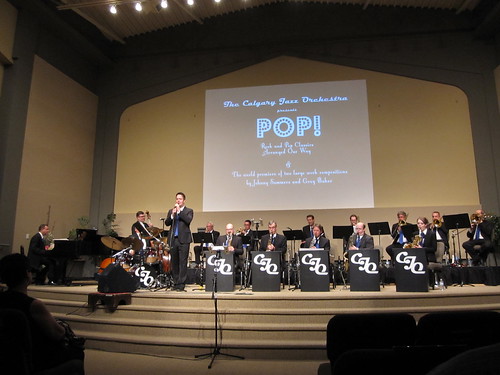
The Calgary Jazz Orchestra wrapped up its 2012/13 season on Sunday, May 5, 2013 at Riverpark Church. Pop! featured big band jazz arrangements of pop and rock classics, as well as two world premieres.
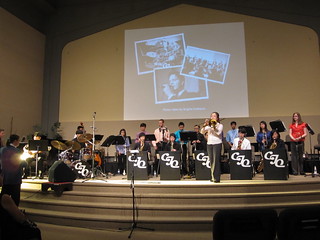
Directed by Judy Wishloff, Churchill's Blue Jazz Band opened for the CJO by performing two numbers. The jazz band first performed A Blues for Dave by Doug Beach, which featured trombone and guitar solos.
Mike Tomaro's arrangement of I Mean You (Thelonious Monk) opened with an upbeat piano solo. It showcased the trombone, trumpet, soprano sax, piano and drums.
The Beatles, Jesus Jones and the World Premiere of Calgary Suite at the CJO
The first half of the programme featured big band arrangements and compositions by Greg Baker, while the second half showcased Johnny Summers' arrangements. Jammin' (Bob Marley) began brightly in the trumpets, while the saxophones painted a groovin' night scene. The trombones cruised steadily towards the solos. Jammin' featured solos by Gerry Hebert on alto saxophone, Dave Reid on trombone and André Wickenheiser on trumpet.
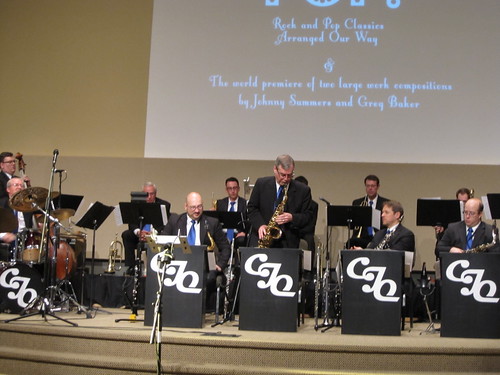
The CJO presented the world premiere performance of Greg Baker's Calgary Suite ("Ten Days in July", "Rockies" and "Waiting for the Chinook"). Due to time constraints, "Rockies" was omitted.
Ten Days in July" conjured up sound pictures of Cowtown. The trombones played a recurring accented hoedown-eque motif. The saxophones and trumpets circled around like a chuckwagon race.
The solos maintained the festive mood. Johnny Summers' trumpet danced and bounced like carnival lights and bells. In contrast, Shane Statz's tenor sax looped around like a sheepdog herding sheep. Egor Ukoloff (piano) and Greg steadily built up the intensity, punctuated by shots from the band. Sarah Matheson's bari sax solo spun like the Tornado ride, while Gerry's solo rang out like casino slot machines.

"Waiting for the Chinook" began as a ballad, later becoming bright swing. The varied layers were a delight to listen to, for example, flugelhorns with trombones and muted trumpets with piano. It featured solos by Rich Harding on alto sax, Egor, Kodi, Shane, Paul Ashwell on trombone and Greg on drums. There was a lovely dialogue between Johnny on the flugelhorn and Dean Yeats on trombone.
The CJO performed two more numbers in the first set. There was an easy swing version of Right Here Right Now (Mike Edwards) and a medium swing arrangement of Help (John Lennon & Paul McCartney).
CJO Premieres The Wonderment Suiteby Johnny Summers
CJO Director Johnny Summers recounted a conversation he had with a patron during intermission. She inquired about what the band plays and the arrangements. Johnny responded by describing the elements of music as a musician's palette of colours, which is used to paint a picture musically, while the form of the piece provides a road map to follow. Jazz musicians must stay within the confines of the form while improvising.
Johnny Summers' The Wonderment Suite was premiered in the second set. Each movement captured a mood: "Awakening", "Stability", "Thrill", "Confidence", "Adventure", "Sweetness" and "Wonderment". The final number was cut from the programme due to time constraints.
"Awakening" eased the audience in, opening with a sleepy melody on soprano sax by Gerry Hebert, while the trombones played sustained tones. The rest of the sections joined in one by one. It featured solos by Gerry, as well as Gordon Wilhelm on trumpet.
"Thrill" opened with a tremendous amount of energy. Like a child searching for hidden Christmas presents before Christmas, the solos captured a building sense of excitement and the thrill of discovery using meandering lines and playful rhythms. It featured solos by Sean Craig on tenor sax and Paul on euphonium, along with Egor and Sarah. There were chatty tenor sax exchanges between Shane and Sean.

The trombone section oozed with "Confidence", with a swaggering recurring motif and later, by taking over the stage. Shane's solo featured driving lines that traversed up and down the musical road. Meanwhile, members of the trombone section provided comic relief by standing and sitting like Whac-a-Moles because one of them rose up to play early.
Brian Walley's trombone solo soared and leaped playfully, while Johnny's trumpet spun and shot out a brilliant spray of notes.
The music faded away, at which point, the trombone section stood up one by one, delighting everyone onstage and in the house with a cutting contest. Who could play the slowest? Lowest? Loudest?
Adele's Skyfall closed the second set. This gritty ballad opened with a unison chord that waxed and waned into the night. Then the piano came in, joined by the bass, trombones, clarinets and flugelhorns. Johnny successfully handled that challenging, disjunct vocal melody.
The CJO also performed Michael Jackson's The Way You Make Me Feel, a crowd favourite from a couple of seasons back. For an encore, the band played Johnny Cash's Folsom Blues. Everyone went all out for their final solo of the season. Of special note, André's soft solo whispered and fluttered like a hummingbird. The audience was rapt with attention. Folsom Blues brought the house down and the audience to its feet for the second time that night.
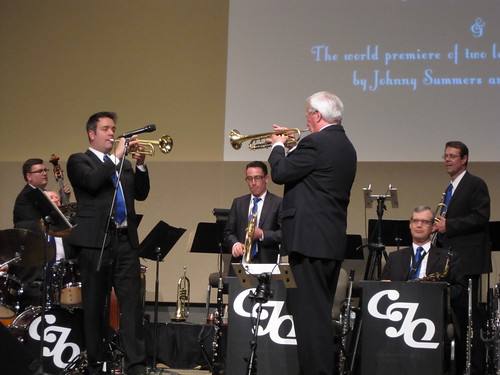
For more information about the Calgary Jazz Orchestra's upcoming summer jazz concert, young jazz musician's competition and to buy 2013/14 concert season tickets, please visit the CJO's website.
The Calgary Jazz Orchestra entertained and delighted with its Pop! Concert in Calgary, Alberta on May 5, 2013. The jazz group was successful at painting a vivid soundscape colourful playing. This jazz concert was a fabulous way to end the 2012/13 concert season.
Calgary Jazz Orchestra A Perfectly Frank Christmas 2010 Concert Review
The Calgary Jazz Orchestra entertained a full house, playing Christmas favorites and Frank Sinatra classics at River Park Church on December 19, 2010.
Calgary music aficionados love Christmas music, Frank Sinatra and the Calgary Jazz Orchestra. Concertgoers lined up outside and around River Park Church in Calgary, Alberta on Sunday, December 19, 2010 for a chance to get tickets to CJO’s sold out jazz concert, "A Perfectly Frank Christmas".
The concert start time was delayed by 15 minutes to ensure that the audience could find seats and get settled. The programme featured big band jazz arrangements of Sinatra classics along with fresh arrangements of popular Christmas songs.
Hazel Proctor and Greg Baker Sparkle in the Opening Set of “A Perfectly Frank Christmas”
The CJO set a relaxed yet festive tone to the evening with Hark! arranged by Paul Ashwell. This moderate swing number featured easygoing solos by Dr. Jeremy Brown (saxophone) and Bob Erlendson (piano).
Director Johnny Summers traded his trumpet in for the microphone for three numbers: Sleigh Bells, I’ve Got You Under My Skin from “Songs for Swingin' Lovers” (1956) and Just the Way You Look Tonight from “Sinatra Sings Days Of Wine And Roses, Moon River, And Other Academy Award Winners” (1964). Sinatra’s music wonderfully showcases Summers’ wide vocal range and warm timbre, especially on the upbeat numbers.
The Calgary Jazz Orchestra welcomed jazz vocalist Hazel Proctor as a guest performer for the evening. Proctor comes from a rich musical heritage that set roots in Alberta in 1910. She has performed at Dixieland jazz festivals throughout Canada and the US. Proctor currently sings with the Dixie Boppers of Calgary, Alberta.
Proctor joined the CJO on two numbers: Please Come Home for Christmas and The Christmas Song. Her down-to-earth nature drew the audience in. Proctor’s rich, earthy tone wowed the audience, often drawing cheers and applause throughout her performance. The Christmas Song marked the first duet that Proctor and Summers have performed live together.
Another performer that elicited the same response was drummer Greg Baker. Summers did a special arrangement of Little Drummer Boy to display Baker’s talents. His playful nature, tempered with technical virtuosity brought the house down. His solos ranged from youthful reminiscings (pounding) to the “drum roll please” groove and from toe-tapping rock to mind-blowing funk.
The Calgary Jazz Orchestra rounded out the first half with two additional numbers. What Child is This? was a fast swing number that ended in an extremely Baroque fashion. It featured solos by Shane Statz (sax), Al Muirhead (trumpet), Carsten Rubeling (trombone) and Bob Erlendson (piano). I’m Walkin’ was a bold, lively number that featured strong solos by Johnny Summers (vocals), Richard Harding (sax), Andrew Wickenheiser (trumpet), Gerry Hebert (sax), Carsten Rubeling and Kodi Hutchinson (bass).
Strong Jazz Solos, Swing Dancers and Comedic Moments Mark the Second Set
The jazz band launched the second set with Ol’ Santa Claus, a quick march-like call and response number. A 3-2 clave pattern wound its way into the drums, keeping it extremely rhythmic and lively.
Silent Night showcased Richard Harding on sax. His improvisation was quite varied and yet always maintained the soulfulness of the original melody. Harding’s final improv was done against an ostinato of the first two bars of the melody, played by the rest of the saxophone section.
Summers invited Matthew Isenor and Nicole Tomes of Toe Tapping Swing to show off their graceful choreography for his next vocal number, Come Fly with Me. Another memorable number was What a Wonderful World in which Baker and Summers exchanged places. Baker surprised the audience with his rousing tribute to Louis Armstrong, successfully imitating Satchmo’s rumbly timbre.
One of the fun things about playing jazz music is being able to put a completely new spin on old classics. Deck the Halls was good example of this. Baker’s arrangement moved this traditional carol into a minor key and threw in a sultry Latin groove (Besame Mucho, anyone?). This featured solos by Johnny Summers (trumpet) and Gerry Hebert (soprano sax).
One audience member learned what happens if you have the misfortune of arriving late to a CJO performance. She was on the receiving end of some good-natured ribbing throughout the evening. Molly will undoubtedly show up on time to next year’s performance and without her “winterscape” sweater that Summers admired. Others Sinatra hits performed in the second set included Love Me or Leave Me, Star Dust and All or Nothing at All.
The CJO closed the programme with Oh Holy Night. This arrangement was an interesting blend of styles – part gospel, part classical, and part country. The music soon gave way to an upbeat, double-time groove and featured solos by Sarah Matheson (baritone sax), Carsten Rubeling and Greg Baker.
The audience quickly rose to their feet to give the CJO a standing ovation and called out for an encore. The jazz band complied with one final Frank Sinatra hit, I’ve Got the World on a String. Isenor and Tomes returned to the stage, complementing the music with their toe-tapping swing.
About the Calgary Jazz Orchestra
The Calgary Jazz Orchestra is a sixteen-member jazz band that was founded in 2004 and is directed by Johnny Summers. "A Perfectly Frank Christmas" featured Johnny Summers, Hazel Proctor and Greg Baker on vocals, Gerry Hebert, Richard Harding, Jeremy Brown, Shane Statz and Sarah Matheson on saxophones, Johnny Summers, Kim Beachum, Gordon Wilhelm, Andrew Wickenheiser and Al Muirhead on trumpets and Tim Embree, Carsten Rubeling, Shawn Hamilton and Greg Robertson on trombones. Bob Erlendson (piano), Kodi Hutchinson (bass) and Greg Baker (drums) complete the jazz band. The band arrangements for this concert were by Paul Ashwell, Johnny Summers and Greg Baker.
The CJO delivered a lively programme with strong performances at "A Perfectly Frank Christmas", held Sunday, December 19, 2010. The band launched its 2010/11 season in September, featuring music by Charlie Mingus and Oscar Peterson. Upcoming jazz concerts include “ENTERTAINMENT!” on January 30, 2011, featuring music from pop culture (pop, movies and video games) and on April 10, 2011, the music Duke Ellington and Harry Connick Jr. For more information about the CJO, visit their website.
Originially published Suite101.com on December 20, 2010. Updated on April 13, 2013. All rights reserved by Rhona-Mae Arca.
Video Game Jazz Music at The Runaway Five's First All Ages Show
Driving, funky jazz versions of video game music were on tap when The Runaway Five performed in concert in Calgary, Alberta at the National Musical Centre Saturday, April 6, 2013. It was the jazz group's first "all ages" show.
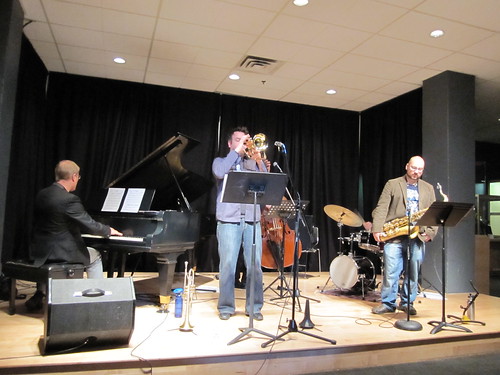
This concert featured Johnny Summers on trumpet and flugelhorn, Shane Statz on tenor sax, Sheldon Zandboer on piano, Brendan McElroy on bass and Karl Schwonik on drums. It was the group's first performance in a quintet configuration.
Jazz Arrangements of Classic Video Game Themes Played by the Runaway Five
The quintet opened the first half with two songs from the SNES game Earthbound (AKA "MOTHER 1+2"):"Sound Stone" and "Threed". This particular arrangement of the "Sound Stone" melody was quite lively, complete with stride piano. It featured solos by Shane, Johnny and and Sheldon.
In contrast, "Threed" was a laid back bossa nova. One of the neat moments in this arrangement was the transition between the flugelhorn and tenor sax solos. There was a lovely dialogue between the two instruments, which weaved and bobbed like someone floating aimlessly in the pool or ocean. I could have sworn I heard a "quote" from "Rainy Days and Mondays" by The Carpenters for a fraction of a second.
Next game on the set list was SimCity 3000, which is known for its jazz and new age soundtrack. "Updown Town" was a toe-tapping medium upswing. The trumpet solo began in the lower registered with shots that gradually led the listeners higher and higher. This was followed by an extremely chromatic piano solo, complete with rapid-fire blues riffs and shakes. After a very catchy vamp, the tenor sax solo gradually built up higher and higher, like a skyscraper.
"Into the Darkness" from Final Fantasy IVwas a lazy jazz waltz. The ensemble played upon the rhythmic ostinato from the introduction, working it into their solos. The flugelhorn solo was soft and mournful. In contrast, the tenor sax rose and fell like waves. The piano solo had punchy riffs and crunchy chords, while the bass solo played upon the theme, leading the audience deeper and deeper, lower and lower into blackness.
Another highlight from the first set was "Love Song" from BioWare's Dragon Age. This slow jazz waltz featured a beautiful duet between the flugelhorn and tenor sax. The sax solo began simply, who lush long tones, but the rhythm grew in complexity, building the tension. In contrast, the piano solo featured tender chords that rose and fell like a sigh. It too gradually grew in intensity with crunchier harmonies. The gradual deconstruction of the theme was a neat effect, just before leading the audience back to the head.
Three more video game themes were performed in the first set. "Buy Something Will Ya" (Earthbound) was a moderate swing number. "Zelda's Lullaby" (Zelda), which showcased the flugelhorn and piano. The Runaway Five closed the first set with the "Overworld Theme" from Super Mario Bros 2.
Soul Jazz, Ragtime and Swing Video Game Music in The Runaway Five's All Ages Concert
The Runaway Five did their best to make the audience forget the miserable weather outside with "Koopa Troopa Beach" from Super Mario Kart 64. Was I the only one pretending to drive my Mario Kart around the beach during the performance? I hope not.
The tenor sax solo was wavy, with splashes up into the higher register. The flugelhorn solo kept the mood high and bright, not just with playing in the higher register, but with the introduction of a different rhythm. The piano took that rhythm and changed it even more. When the head returned to lead us back to the finish line, it was a nostalgic moment.
Another highlight from the second half of the show was "Muscle Soul" from Battlefield Bad Company 2 Vietnam (Hill 137). This isn't a game I'd normally play, so hearing this theme was my introduction to the music of Anders Lewen.
This number opened with the bass and drums vamping on that opening riff until one by one, the rest of the company stepped in. The trumpet solo traversed a wide range, like a unit marching to their next mission. The sax solo was as soulful as the original recording. The piano solo had a little Motown, a little funk and a hint of disco.
The Runaway Five closed the show with "Air Platform - The Athletic Rag" from Super Mario World. The quintet had fun playing around with the two main themes from this classic video game. The trumpet solo used the A theme as a springboard to new riffs.
The tenor sax took the last rhythms played by the trumpet and then improvised on the B theme, then back to the A theme before tossing it to the piano, where we heard a chromatic treatment of the B theme, complete with zippy runs. The drum solo was playful, exploring different rhythmic and timbre combinations.
Three more VG themes were featured in the second set, including the "Figaro Castle Theme" from Final Fantasy III (VI), "Green Hill Zone" from Sonic the Hedgehog 2 opened with the drums and music from Street Fighter.
About The Runaway Five
Founded by Brendan McElroy, the Runaway Five performs jazz music arrangements of classic video games, including Super Mario Bros., Final Fantasy and Zelda. In 2008 and 2009, the group performed at Massey Hall in Toronto during the Video Games Live tour. The ensemble members change, increasing or decreasing depending upon the needs of the show.
The Runaway Five performed an intimate concert open to all ages on Saturday, April 6, 2013 at the National Music Centre. The interplay between the musicians was a delight to hear, while the themes left the audience feeling nostalgic about games past and present.
If you missed the show, you can check out some of group's earlier performances on their Youtube Channel. The Runaway Five will perform later this year. Details to follow.
Social Media Links
archives
- #YYCArts 32
- #YYCEvents 39
- Collaborative Music 25
- Community 11
- Composing & Arranging 6
- Entertainment 139
- Entrepreneurship 53
- Freebies 3
- Gardening 1
- Geeking Out 65
- Health & Wellness 120
- Improvisation 25
- Interviews 28
- Learning Music 188
- Martial Arts 13
- Memorization 7
- Music 230
- Music Careers 9
- Music Education 196
- Music Examinations 7
- Music Exploration 55
- Music Gigs 14
- Music Lessons 6
- Music Performance 32
- Music Theory 13
- Musical Instruments 12
- Musician Health 19
- Pets 57
- Piano Technique 12
- Practicing Music 120
- Productivity 20
- Professional Development 11
- Recommendations & Reviews 93
- Recreation 71
- Social Media 6
- Spirituality 10
- Studio Management 33
- Studio Technology 50
- Teaching Music 146
FOLLOW THE STUDIO on Instagram

Affiliate Links
As a Sheetmusicplus and CD Japan affiliate, I earn from qualifying purchases. The earnings help fund the Studio’s blog and YouTube channels. Your support is greatly appreciated.


FOLLOW Budo no Tabi on Instagram