THE MUSICAL MUSE
Blog dedicated to music education, practice tips, health
&
wellness, and geeking out.
THWOMP Album Review: Hey! Listen!
THWOMP's sophomore album, which features beloved Nintendo® video game themes, including The Legend of Zelda series, Double Dragon II and FFVII is reviewed.
THWOMP's sophomore album, which features beloved Nintendo® video game themes, including The Legend of Zelda series, Double Dragon II and FFVII is reviewed.
Nintendo® cover band THWOMP released its sophomore album on April 27, 2012. Entitled Hey! Listen!, the album boasts 15 tracks, a musical treat for gamers of all ages.
THWOMP is a five-piece progressive "prog" rock band based in Calgary, Alberta. It is comprised of Brad Stanton (bass), Colin Mitchell (lead guitar), Dan Bronson (guitar), Scott Moffat (drums) and David Marshall (keyboards).
Founded in 2001 by Brad Stanton and former band member Scott Munro, THWOMP performs regularly at conventions across Western Canada. Last month, the band performed at the Calgary Comic Expo, where Hey! Listen! was unveiled.
THWOMP released its debut album, Knight League EP in 2010. The eight-track Nintendo® CD featured the band's arrangements from the classic Super Nintendo® racing game F-Zero.
Hey! Listen! is the group's first full-length album. Transcription was done by Brad Stanton, Kirk McVean and David Marshall. All members of THWOMP were involved with writing the band arrangements on the album.
Hey! Listen Highlights
The “Dungeon Theme” from The Legend of Zelda sets the tone for a nostalgic journey back in time. The opening is truly a gem, best appreciated live. "The beginning of the 'Zelda - Dungeon Theme' is actually two guitars, one playing 8th notes, the other playing off-beat 16ths," explained David Marshall in recent correspondence. "The neatest part about it is that it sounds like one guitar. It's an especially cool effect live, coming off the stage in stereo."
They are soon joined by the drums. Layer upon layer is added until the main dungeon theme appears played on the keyboards. As the theme loops, it builds in intensity, gradually leading the listener down musical depths before coming to slow mournful conclusion on solo guitar.
THWOMP's version of the “J-E-N-O-V-A” theme is edgier than it is in Final Fantasy VII. The keyboards, playing it as it appears in the game, but the guitars are quickly given the theme. They circle around and clash as if in battle, playing against the backdrop of a relentless rock groove on percussion.
“Fever” from Dr. Mario is a catchy and “feel good” track. The opening theme is first played by the keyboards (set for full nostalgic effect). The drums lay a catchy groove that is bound to set toes tapping and heads bopping long before the guitars take over the melody. THWOMP really shows how effective rests can be. Although they are in the original theme, the silences in THWOMP's arrangement are especially crisp. Indeed, they are long enough to elicit chuckles or squeals of excitement or delight from listeners.
The band vamps a bit, building the excitement before launching full-on into the “Korobeiniki” theme from Tetris. The guitars play the opening theme, while the keyboards provide an effective contrast with the the second theme. There's enough time in the interlude for listeners to mimic falling Tetris pieces before the main themes return in full force.
A little bit of disco shuffle merged with solid 80's rock grooves come together for the “Double Dragon II Theme”. The guitars belt out the main themes while the keyboards provide the requisite video game sound FX. One could easily imagine character Billy Lee taking down a street full of baddies to this rendition.
Listeners can truly rock out with the Star Fox “Attack Carrier” theme. The guitars weave around like Fox McCloud's Arwing, soaring against the driving beat laid down by the drums. The keyboards have some cool licks too.
Hey! Listen! Track Listing
The Legend of Zelda – Dungeon
A Link to the Past - Dark World
The Adventure of Link - Minor Battle
The Adventure of Link - Palace
Final Fantasy VII – J-E-N-O-V-A
Final Fantasy VII - Under the Rotting Pizza
Final Fantasy VII - Still More Fighting
Dr. Mario – Fever
Tetris – Korobeiniki
Double Dragon II - Theme
Double Dragon II - At the Heliport
Star Fox - Corneria
Star Fox - Attack Carrier
Star Fox - Course Clear
Star Fox - Space Armada
Label: Bandcamp
Release Date: April 27, 2012
Price: $4.99 CAD
Hey! Listen! Verdict
At 15 tracks, it may seem at first glance that Hey! Listen! is far too long, but that is not the case. Video game themes, by the nature of the scenes, are fairly short. The album contains 36 minutes worth of musical adventure.
THWOMP delivers these classic video game themes ably and serves them up with a bit of spice. At times sexy, sometimes humorous, but always cool and fun, Hey! Listen! provides retro-gamers with a solid collection of themes to indulge in a bit of nostalgia. This video game CD also introduces a younger generation of gamers and music fans to a fun era of video game music.
Hey! Listen! Is available through Bandcamp. Video game music download formats include MP3 320, FLAC, as well as other audio types. Stay tuned for their Suite101.com interview, which will be republished here.
Review of Johnny Summers – Piano Sessions Vol. 1 CD Release Concert
Calgary multi-instrumentalist Johnny Summers and friends delivered an intimate and passionate performance on Saturday, March 16, 2013 at the University of Calgary's Rozsa Centre. The event was a CD Release Party to introduce Summers’ third jazz album, Piano Sessions Vol. 1.

Calgary multi-instrumentalist Johnny Summers and friends delivered an intimate and passionate performance on Saturday, March 16, 2013 at the University of Calgary's Rozsa Centre. The event was a CD Release Party to introduce Summers’ third jazz album, Piano Sessions Vol. 1.
The Calgary event also featured Chris Andrew on piano, Al Muirhead on trumpet, Jason Valleau on bass and vocals, Sheldon Valleau on ukulele and vocals and finally, Shane Statz on tenor sax. Johnny Summers performed on vocals, trumpet and flugelhorn.
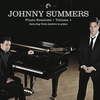
Swing, Ballads and Blues Featured in Johnny Summers' Piano Sessions Vol. 1
The concert opened with "She Thinks that I Still Care". Unlike with George Jones' original country stylings, this interpretation was injected with a "hot summer's day in New Orleans" feel.
The dramatic pauses at the ends of key phrases set a playful tone to the number. The trumpet and piano solos were longer than they were on the album, giving Johnny Summers and Chris Andrew an opportunity to really expand on their ideas.
Between numbers, Johnny explained some of his inspirations for recording this jazz album. Listening to great crooners such as Harry Connick Jr. and Tony Bennett, as well as instrumentalists Bill Evans, Chet Baker and Paul Blaine instilled the idea of an album featuring piano and voice. "That's beautiful to me," he said.
"You're extremely exposed," he divulged. Johnny added, "You have to have a good sense of time."
During the recording sessions, four additional songs were recorded, which didn't make it onto the album: "I'll Be Home for Christmas" and "Winter Wonderland", "Look for the Silver Lining" and "Mood Indigo." The classic Christmas songs were bundled together in Winter Wonderland. The other two made it onto Saturday's programme.
Jerome Kern & B.G. DeSylva's "Look for the Silver Lining" was made famous by Chet Baker. This medium swing song had a light, breezy feel to it.
Chris' solo was peppered with syncopated rhythms and impressive runs. In contrast, Johnny's solo on his brand new Yamaha flugelhorn was tender and warm, gradually blossoming into each a high point. Partway through, the groove became more animated and the two traded 4's.
The ballad "Maybe This Time" has been recorded by many artists, including crooner Tony Bennett. Johnny shared some of his memories of hearing Bennett sing live in concert. "He walks on stage...and you feel the electricity...When he sings, he fills you."
Johnny's interpretation was soulful and wistful, with an unhurried tempo throughout. That made the climax more impassioned. The piano shakes were performed in a dreamy fashion.
Jason and Sheldon Valleau of the band, The Polyjesters, lent their talents to "My Baby Just Cares for Me". This jazz standard by Walter Donaldson and Gus Kahn has been considered the signature piece of Nina Simone.
This medium swing number featured a soft, easygoing piano solo by Chris. The crescendo towards a soft, fermata in Johnny's trumpet solo was a short reprieve before the melody shot up to the instrument's upper register. The lyrics were delivered with a cheeky and humourous flair. The impromptu "doo-doo-doo" at the end of the tag was by Sheldon was a nice touch.
Variety, Extended Solos and Delightful Surprises at Johnny Summers CD Release Concert

One of the highlights in the second set was Nat King Cole's "I'm an Errand Boy for Rhythm". After a slow introduction on voice and piano, the mood shifted to a lively upswing. The interlude featured a rhythmic piano solo, followed by Al's elegantly shaped phrases. In contrast, Johnny's trumpet solo weaved and raced to the top with rapid runs. The trumpet dialogue between Al and Johnny was playful. At times, it sounded just like scatting. Other times, it sounded like a car race.
This interpretation of Duke Ellington's "Mood Indigo" had shades of Nina Simone. It featured solos by Shane Statz on tenor sax, Johnny on trumpet and Chris on piano.
The final song of the evening was a rousing performance of Johnny Cash's "Folsom Prison Blues". One of the most delightful things about music is that you never hear the same performance twice. This was especially true in this case.
The piano intro was extended for the live performance, gathering momentum just as a train does when it pulls out. The sax solo was grittier, exploring the lower range of the instrument. In contrast, Al's solo was lighter and higher, much like birds chirping. Chris' solo featured a healthy dose of "crunchy" chords and driving rhythms, while Johnny's trumpet solo spun and shot up - higher - and higher.
Jason performed a percussion solo on his bass before Johnny and Jason scatted. Jason's surprise trumpet-like squeal led to various instruments being imitated.
The entire audience rose quickly to give everyone a standing ovation. The ensemble performed one encore, "St. James Infirmary."
Six more songs were performed at the Piano Sessions Vol. 1 CD Release. Four more other songs were performed in the first set: "Dream a Little Dream of Me", "You Don't Know Me", "Going Home" and "Exactly Like You". The second half also featured "I Wonder, I Wonder" and "Simple Song".
Piano Sessions Vol. 1 Concert Review
From the opening line, the balance between the voice and piano and later, the remaining instruments, was nothing short of perfect. The ensemble made full use of the acoustics that the Rozsa Centre offers, delivering a crisp and clear sound. They definitively demonstrated that the album's Global Music Awards for Best Listener Impact and Best Male Vocalist are well deserved.

Technical proficiency, when coupled with artistry, is a winning combination. What more could a performer or listener ask for? Well, perhaps for the lead vocalist to not have strep throat, perhaps.
The live performance offered listeners different type of performance. Feeding off the energy from the audience and the ensemble can push a musician to new heights of artistry. This manifested on Saturday into spontaneous moments of brilliance that lead to new directions for improvisation. Yes, live was slightly different from the album, but just as beautiful in its own right.
About Johnny Summers
Johnny Summers is a Calgary-based multi-instrumentalist who performs jazz, soul, gospel, blues and almost everything in between. He's a singer and songwriter, as well as a trumpet and flugelhorn player. As the director of the Calgary Jazz Orchestra, he serves as composer, arranger and band leader.
Piano Sessions Vol. 1 is currently available on CD Baby and iTunes on March 16, 2013. Click here to read my album review.
CD Review: Tricia Edward's Joy Spring
Calgary-based jazz pianist Tricia Edwards takes a handful of jazz standards and transforms them into a relaxing and playful set in her debut CD.
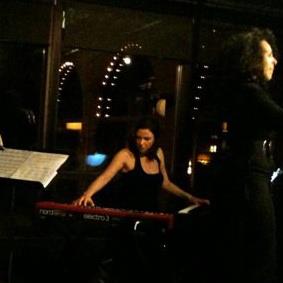
Calgary-based jazz pianist Tricia Edwards takes a handful of jazz standards and transforms them into a relaxing and playful set in her debut CD.
Tricia Edwards' musical journey has taken her down many paths, most recently, in local jazz bars and the recording studio. From classical piano to classic jazz, from soloist to collaborative artist and from student to teacher/performer. With Joy Spring, Edwards takes her audience on a cheerful yet relaxing, playful yet romantic ride.
The Journey From Classical to Jazz
Edwards' musical studies began in classical music. She earned her Masters' and Bachelors' degrees in classical piano performance at the University of Alberta. After graduation, Edwards worked as a teacher and collaborative pianist in Alberta and the Middle East.
In 2003, Edwards began studying jazz piano, studying with Derek Stoll, a prominent jazz pianist in Western Canada. In 2009, she was awarded the Richard Harold Cowie Scholarship by the Calgary Musician's Association and C-Jazz.
Since then, Edwards has been busy. She has formed her own trio and quartet, the Whisper Not Jazz Ensemble, Calgary Jazzwinds, the Wednesday Night Big Band, Wednesday Night Little Big Band and a new unnamed smooth jazz quartet. She has performed at popular jazz clubs such as the BeatNiq Jazz and Social Club and Koi Cafe.
Joy Spring Disc Information
Track Listing
One Note Samba (N. Mendonca/A.C. Jobim)
Sugar (S. Turrentine)
Sidewinder (L. Morgan)
On the Street Where You Live (A.J. Lerner/ F. Lowe)
There Will Never Be Another You (M. Gordon/H. Warren)
My Funny Valentine (L. Hart/R. Rodgers)
Cherokee (R. Noble)
Bluesette (J.B. Thielmans)
All the Things You Are (O. Hammerstein/J. Kern)
Well You Needn't (T. Monk)
Joy Spring (C. Brown)
Alone Together (H. Dietze/A. Schartz)
Musicians: Tricia Edwards (piano), Keith Smith (guitar), John Hyde (bass)
Arranger: Tricia Edwards
Label: None
Produced by: NRS Productions
Cover Art by: Alison Edwards
Release Date: March 9, 2009
Joy Spring Highlights
Joy Spring is a smooth jazz CD comprised of jazz standards; a little Latin jazz, a little swing and a little waltz. The first track, "One Note Samba", opens with a cheerful piano solo before being joined by the guitar and bass. The guitar solo teases us with a line that steps away from the "one note" but leisurely returns to that "one note". The piano matches the playful and unhurried tone set by the guitar. Gradually the line ebbs and flows.
"Sidewinder" displays the funky and frolicsome interplay between all the instruments. Each member of the trio takes ideas presented by another member and takes it to another level. Nothing is rushed, everything is smooth and relaxed.
"My Funny Valentine" begins with a piano solo, playing a simple ostinato over the descending bass. The guitar enters with a very melancholic saxophone-like line. The head is played simply with sparse accompaniment. Gradually, the harmonies become thicker. The solos do reach virtuosic proportions yet remain lazy, smoky and sultry.
The jazz waltz "Bluesette" begins with a dreamy piano intro that is soon joined by the bass. The piano solo is syncopated, unhurried and sprightly. The bass solo could have been louder.
The title track, "Joy Spring" is a playful Latin groove. The head wanders up and down at a laid back pace.
In the piano solo, Edwards plays with the rhythm, throwing in a couple of runs. The guitar solo is highly syncopated and melodic.
Lighthearted Relaxation Music
The interplay between the piano and guitar and piano is well done. It is clear that the members of this jazz trio listen to each other, lend support and build on each other's ideas. The bass gives subtle but strong support. Joy Spring as a debut CD presents Tricia Edward's joy of music and playful nature; making it a fun listen, whether you are curled up with a good book and a glass of wine, driving across the countryside or enjoying a romantic dinner.
To find out more about Tricia Edwards or to listen to sample tracks, visit her website. To learn buy Joy Spring, click on the icon below:
Originally published March 1, 2010. All rights reserved by Rhona-Mae Arca.
CWS Concert Review Music of Mysteries, Legends and Ritual
The Calgary Wind Symphony performed a selection of mysterious and sweeping music on a snowy Sunday, March 3, 2013 at the University of Calgary’s Rozsa Centre. Dubbed "Music of Mysteries, Legends and Ritual", the concert featured Terri Shouldice on flute and Dr. Jeremy Brown on alto saxophone. It also included two premières: the Canadian première of Kenneth Fuch's Rush - Concerto in E flat for Alto Saxophone and the Alberta première of Paul Hart's Cartoon.
Recently, when Dr. Jeremy Brown was conducting the University of Calgary Jazz Ensemble in the United States, he had the opportunity to meet with Daniel Bukvich, who composed the first piece, entitled Voodoo. Bukvich was delighted to hear that the Calgary Wind Symphony was working on Voodoo and promised to send another one of his works.
Calgary Wind Symphony Conjures Vivid Imagery at Calgary Concert
At the downbeat , the Rozsa Centre was draped in darkness, with only the twinkling lights from the music stands and Dr. Jeremy Brown's blue glow-in -the-dark baton. Voodoo painted a vivid picture for listeners.It was as if the audience was transported into the middle of a David Attenborough nature documentary, complete with bird calls and trombone slides to depict swinging monkeys. The rain sticks and flash lights gave the effect of a rainstorm, while the clapping and chanting evoked images of aborginal peoples celebrating a successful hunt.
Charles Griffes' Poem for Flute and Orchestrafeatured CWS flautist Terri Shouldice. This Impressionistic inspired work offered listeners aural post cards of contrasting scenes. It opened with the low brass instruments. The winds echoed back the theme before the flute's entrance. The languid first theme showcased. The solo flute passages varied from sweeping motives to a mysterious Spanish-infused theme.The applause lasted for several minutes after the performance.
Old Churches by Pullitzer prize winner Michael Colgrass evoked images crumbling, abandoned churches. The melancholy soundscape was peppered with momentary shots of dissonance, created by the aleatoric segments. At times, it sounded like debris blowing in the wind and hitting against broken glass, while the stainless steel mixing bowls sounded like an iron gate clanging against a broken latch.
The final work for the first half, Cartoon by Paul Hart was an absolute treat to hear. Dr. Brown introduced it as a "sophisticated musical stew."
It opened with a lively march, a la Bugs Bunny. The scurrying dialogue between the winds and percussion mimicked a chase à la Tom & Jerry, while the muted trombones sounded an awful lot like the teacher from Peanuts.
The slower middle theme contained Gershin-esque harmonies and sweeping melodies which conjured images of Pepe le Pew on a night on the town. "Music Mysteries, Legends & Ritual" marked what Dr. Brown believed was the Alberta première performance of this entertaining work.
Haunting Flute Music Performed by the Parthenia Flute Choir
Concert patrons enjoyed some otherworldly music in the lobby during intermission, performed by the Parthenia Flute Choir. The flute ensemble, under the direction of Wendy Freeman, performed Eric Ewazen's Harmony in Blue and Gold.
Comprised of four movements, Harmony was inspired by James McNeill Whistler’s "Peacock Room" located at the Smithsonian Institution's Freer Gallery. Eric Ewazen composed this work for Femme Flutale.
A Canadian Premiere and a Rarely Performed Work at the CWS Concert
The Calgary Wind Symphony delivered the Canadian première performance of Rush - Concerto for E flat Alto Saxophone, American composer Kenneth Fuchs. This demanding work featured Dr. Jeremy Brown on saxophone and Wendy Freeman as the conductor.
The first movement, "Evening" opened with a saxophone solo that featured long soulful tones. The ensemble soon joined in with a grand sweeping theme. As the saxophone continued to play a pensive melody, the flutes and percussion played carefully placed notes, depicting stars lighting up the sky, one by one. The saxophone part traversed the alto saxophone's entire range and showcased Dr. Brown's beautiful tone.
The second movement, "Morning", revealed several contrasting moods. It began with a lyrical sax solo. This soon gave way to a rhythmic passage, featuring the winds in the upper range against a sweeping motif played by the saxophones. As the movement progressed, the music featured more syncopated rhythms, pushing towards a dramatic climax.
The music of Kenneth Fuchs is gaining recognition worldwide and has led to successful collaborations. He has worked with Pulitzer Prize-winning playwright Lanford Wilson and the London Symphony Orchestra, under the direction of JoFalletta recorded three albums featuring Fuch's music. The first album was nominated for two Grammys.
Flute Cocktail by Harry Simeone was a light hearted piece. It opened with the flutes playing a Baroque-styled theme, which soon gave way to the brass and percussion instruments, while the flutes played a bubbly motif underneath. Snippets of London Bridge weaved throughout the work.
The Calgary Wind Symphony closed with La Fiesta Mexicana by H. Owen Reed. Dr. Brown explained that due to the work's length of 18 minutes, it is rarely performed. "Maybe once every 10 years," he said.
One interesting feature for this work is the fact that various musicians went off-stage to perform, mimicking a mariachi band heard in the distance. The work is comprised of three movements: a rhythmic and energetic "Prelude and Aztec Dance", a reverent "Mass" and a toe-tapping "Carnival".
About the Calgary Wind Symphony
The Calgary Wind Symphony is a 60-member ensemble, directed by Dr. Jeremy Brown of the University of Calgary. Formerly known as the Calgary Concert Band, the ensemble has been active in Calgary’s musical community since 1947.
Music aficionados can check out the Calgary Wind Symphony on Sunday, June 2 at 2:30 p.m. The CWS will present “Apollo Sings! Music that Soars”. For more information and to buy concert tickets, please visit the CWS’s website.
For those who braved the terrible winter roads on March 3, 2013, the Calgary Wind Symphony’s “Music of Mysteries, Legends and Ritual” concert proved to be a diverse and highly entertaining programme of eerie and grand music.
Calgary Jazz Orchestra Plays Mingus and Peterson Concert Review
The Calgary Jazz Orchestra launched its 2010-11 season with The Music of Charles Mingus and Oscar Peterson on September 26, 2010. Originally published on Suite101.com .
The Calgary Jazz Orchestra opened its 2010-11 season on Sunday, September 26, 2010 at 7:00 p.m. at Calgary's River Park Church. The concert featured big band jazz arrangements of music by Oscar Peterson and Charles Mingus.


An impromptu survey conducted by CJO director Johnny Summers at the beginning of the programme revealed that few people in the audience had heard of Charles Mingus. The group hoped that pairing Mingus with Peterson would attract more interest in Mingus' music.
Calgary Jazz Orchestra Performed The Music of Charles Mingus
The first half of the programme featured the jazz music of Charles Mingus. He was an American bassist, pianist, bandleader and composer who lived from 1922 – 1979. The set list reflected the stark contrasts and moodiness indicative of Mingus' musical style.
The band opened with "Boogie Stop Shuffle", from the Mingus Ah Um album released in 1959. It's a lively boogie that featured breathtaking solos. Each soloist seemed determined to outperform each other by playing faster, higher and funkier. Drummer Greg Baker drew out cries of astonishment and awe with his lightning fast solo.
Members of the jazz band exhibited a fight for virtuosic supremacy in "Haitian Fight Song" from the 1957 album The Clown. It began simply enough but quickly revealed an edgy, punchy groove as members clashed repeatedly for the duration of the number.
During "Moanin'", Sarah Matheson proved on her baritone sax that she can hold her own amidst this male-dominated jazz band. Her solos were fiery and gritty, which matched the angst of this piece from Mingus' 1959 album Blues & Roots.
Two slower pieces rounded out the first half of the concert programme. "My Jelly Roll Soul", an homage to Jelly Roll Morton and "Goodbye Pork Pie Hat", which is a tribute to Lester Young.
Calgary Jazz Orchestra Performed The Music of Oscar Peterson
The second set was dedicated to Canadian jazz legend Oscar Peterson (1925-2007). He is considered one of the greatest jazz pianists in the 20th and 21st centuries. The programme featured a premiere performance of Johnny Summers and Greg Baker's arrangement of Peterson's Canadiana Suite.
The eight pieces in Canadiana Suite represent various cities and regions throughout Canada, spanning east to west. In "Peterson, Oscar" in The Canadian Encyclopedia by Betty Nygaard King, Canadiana is Peterson's best-known work. The Canadiana Suite album was recorded in 1964.
Bob Erlendson opened "Ballad to the East" with a sensitive and lyrical jazz piano solo. Johnny Summers on trumpet, Rubim de Toledo on bass and Greg Baker on drums also performed solos.
"Place St. Henri" is a catchy number that captures the hustle and bustle of Montreal, where Peterson grew up. Dr. Jeremy Brown (saxophone) and Johnny Summers (trumpet) delivered rapid-fire solos that spanned the entire range of their respective instruments. Once again, Greg Baker matched their virtuosic velocity on drums.
"March Past", an upbeat number brought Canadiana to an end. This featured lightning fast solos on piano, bass, sax and trumpet. Other numbers in Canadiana Suite that were performed were "Laurentide Waltz", "Hogtown Blues", "Wheatland" and "Land of the Misty Giants".
At the end of the programme, Greg Baker called out the encore. "Can the drummer do that?" asked Johnny Summers. The audience shuffled back to hear a relaxing rendition of "Easy Does It" from the Oscar Peterson Trio's album Night Train.
The audience responded with cheers, applause and gasps of amazement throughout the concert. At the conclusion of the evening, the audience rose quickly to give the CJO a standing ovation.
About the Calgary Jazz Orchestra
The Calgary Jazz Orchestra is a sixteen-member jazz band that was founded in 2004. Gerry Hebert, Rich Harding, Dr. Jeremy Brown, Shane Statz and Sarah Matheson make up the saxophone section. Johnny Summers, Kim Beachum, Gordon Wilhelm and Al Muirhead play trumpet. Jim Scott, Carsten Rubeling, Mike Thomas and Dave Reid form the trombone section. The rhythm section is comprised of Bob Erlendson on piano, Rubim de Toledo on bass and Greg Baker on drums.
The band arrangements for this programme were by Johnny Summers and Greg Baker. The CJO is directed by Johnny Summers.
The Calgary Jazz Orchestra got the 2010-11 season off to a rousing start with The Music of Charles Mingus and Oscar Peterson on Sunday, September 26, 2010. The performance was filled with rapid-fire solos and "crunchy" harmonies.
This concert review was originally published on Suite101.com . All rights are reserved by Rhona-Mae Arca.
Social Media Links
archives
- #YYCArts 32
- #YYCEvents 39
- Collaborative Music 25
- Community 11
- Composing & Arranging 6
- Entertainment 139
- Entrepreneurship 53
- Freebies 3
- Gardening 1
- Geeking Out 65
- Health & Wellness 120
- Improvisation 25
- Interviews 28
- Learning Music 188
- Martial Arts 13
- Memorization 7
- Music 230
- Music Careers 9
- Music Education 196
- Music Examinations 7
- Music Exploration 55
- Music Gigs 14
- Music Lessons 6
- Music Performance 32
- Music Theory 13
- Musical Instruments 12
- Musician Health 19
- Pets 57
- Piano Technique 12
- Practicing Music 120
- Productivity 20
- Professional Development 11
- Recommendations & Reviews 93
- Recreation 71
- Social Media 6
- Spirituality 10
- Studio Management 33
- Studio Technology 50
- Teaching Music 146
FOLLOW THE STUDIO on Instagram

Affiliate Links
As a Sheetmusicplus and CD Japan affiliate, I earn from qualifying purchases. The earnings help fund the Studio’s blog and YouTube channels. Your support is greatly appreciated.


FOLLOW Budo no Tabi on Instagram