THE MUSICAL MUSE
Blog dedicated to music education, practice tips, health
&
wellness, and geeking out.
My Foray into Sword Repair
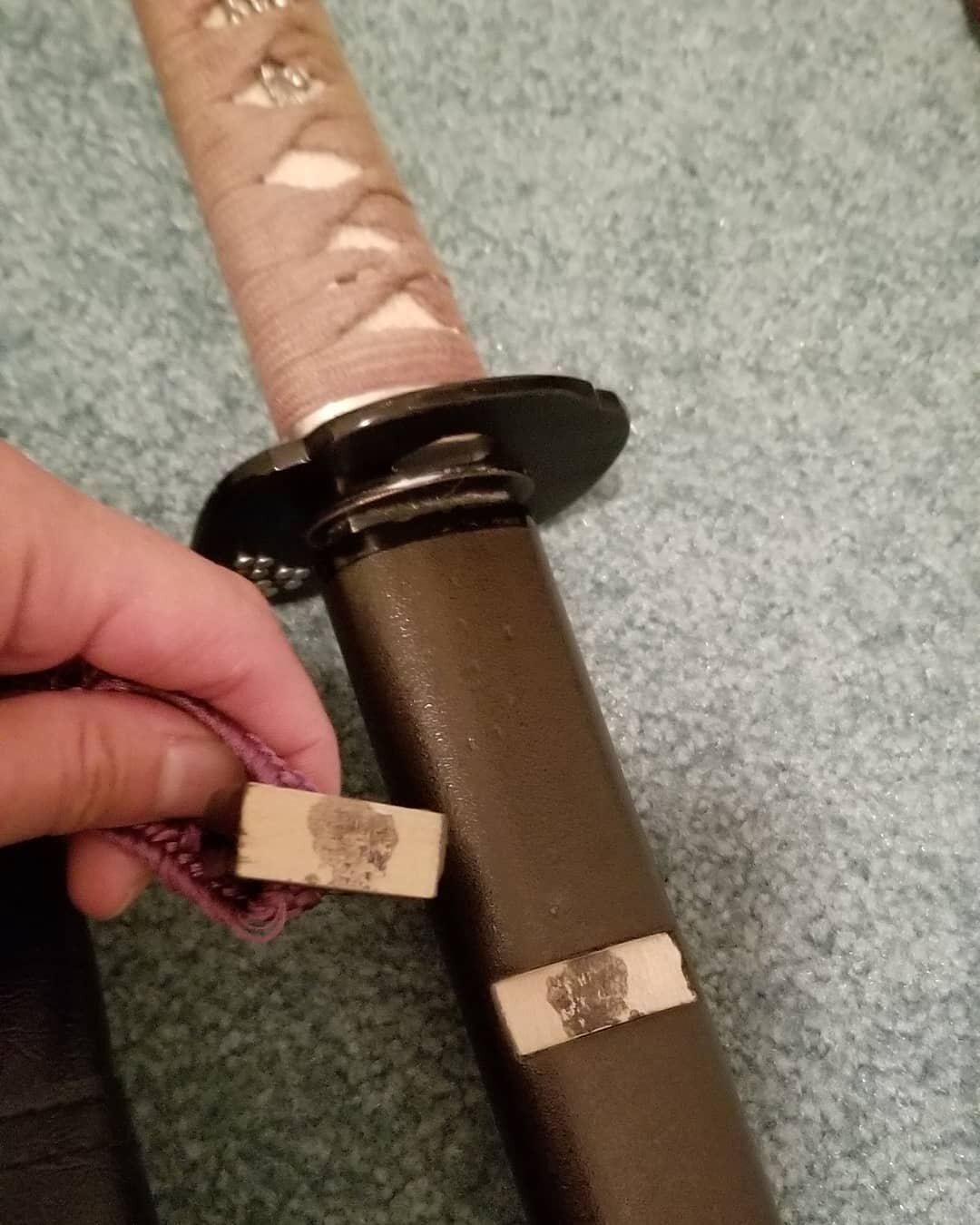
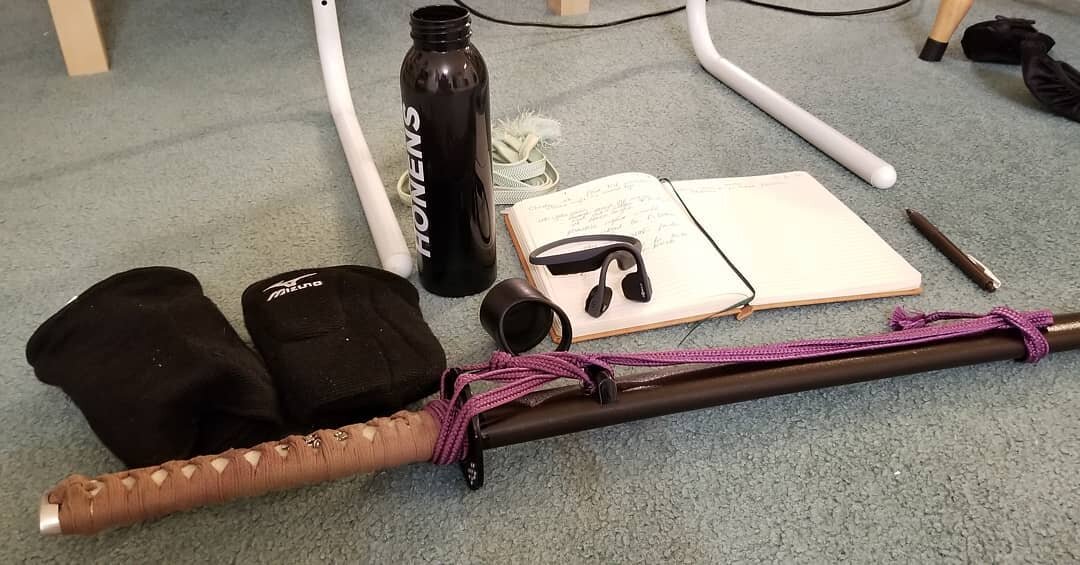
Watkin-sensei brought a san shaku for me to use. It 's been well used and has good energy when I hold it. It just needed some TLC
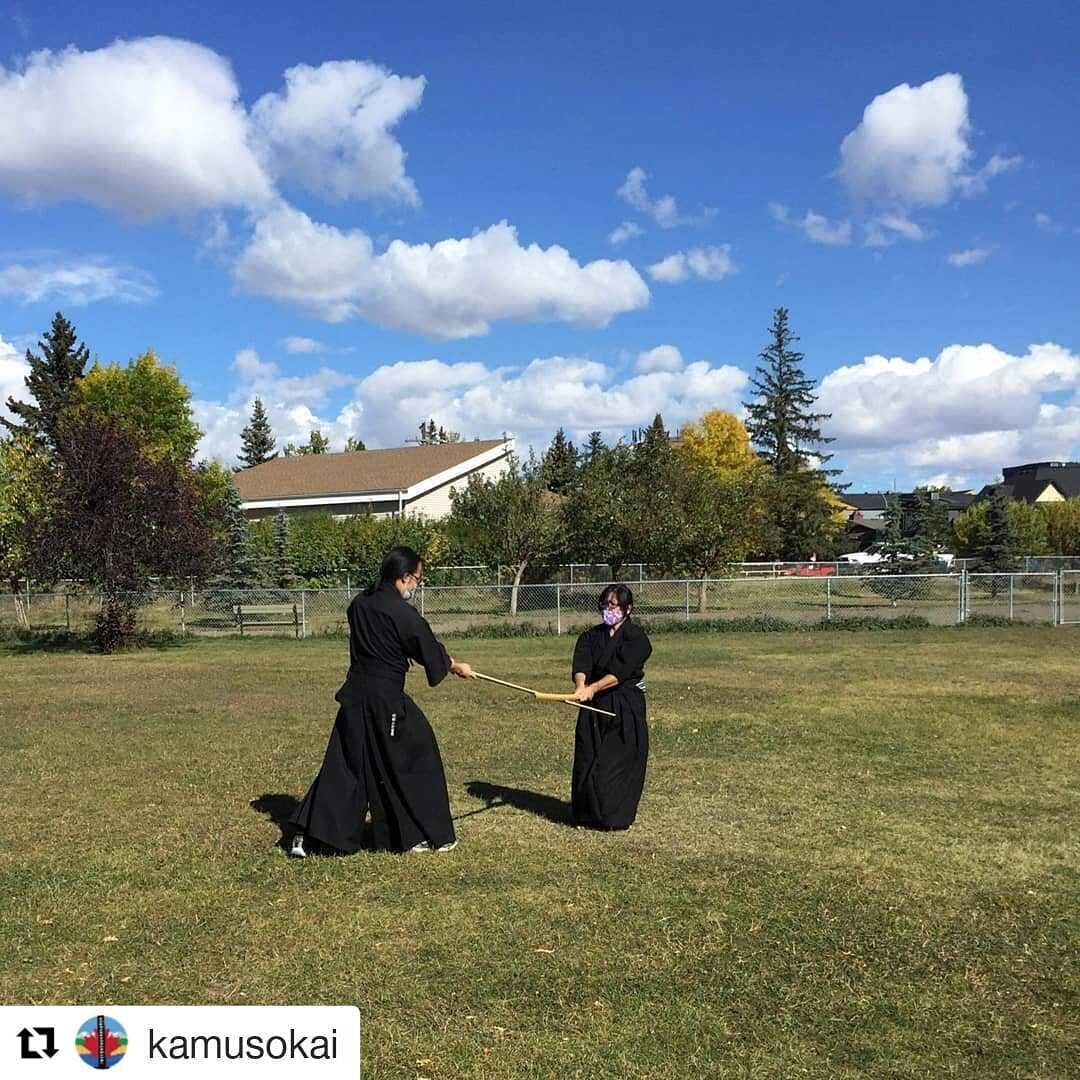
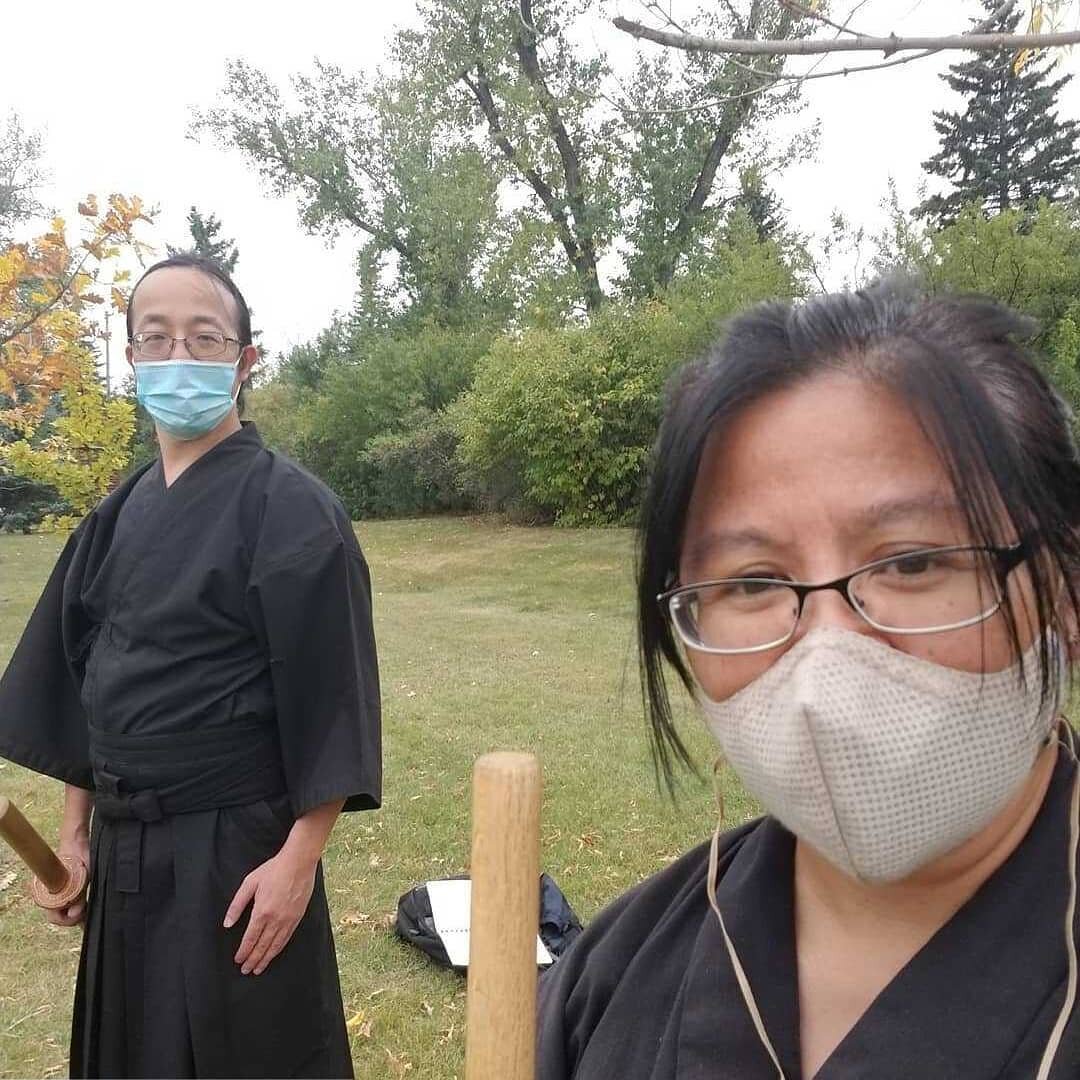
In the summer, Ka Muso Kai hosted Colin Watkin sensei. He came from the Philippines to give a seminar on Kage Ryu and Hyoho Niten Ichi Ryu. Kage Ryu is the art of using the Japanese long sword. Normally, it is practised with a choken. However, you can see that I have a bit of a challenge with the choken.
Watkin-sensei brought a san shaku for me to use. It 's been well used and has good energy when I hold it. It just needed some TLC:
I named it "Raijin" or "Thunder God."
You can check out some photos taken from our summer seminars on Ka Muso Kai's Facebook Page.
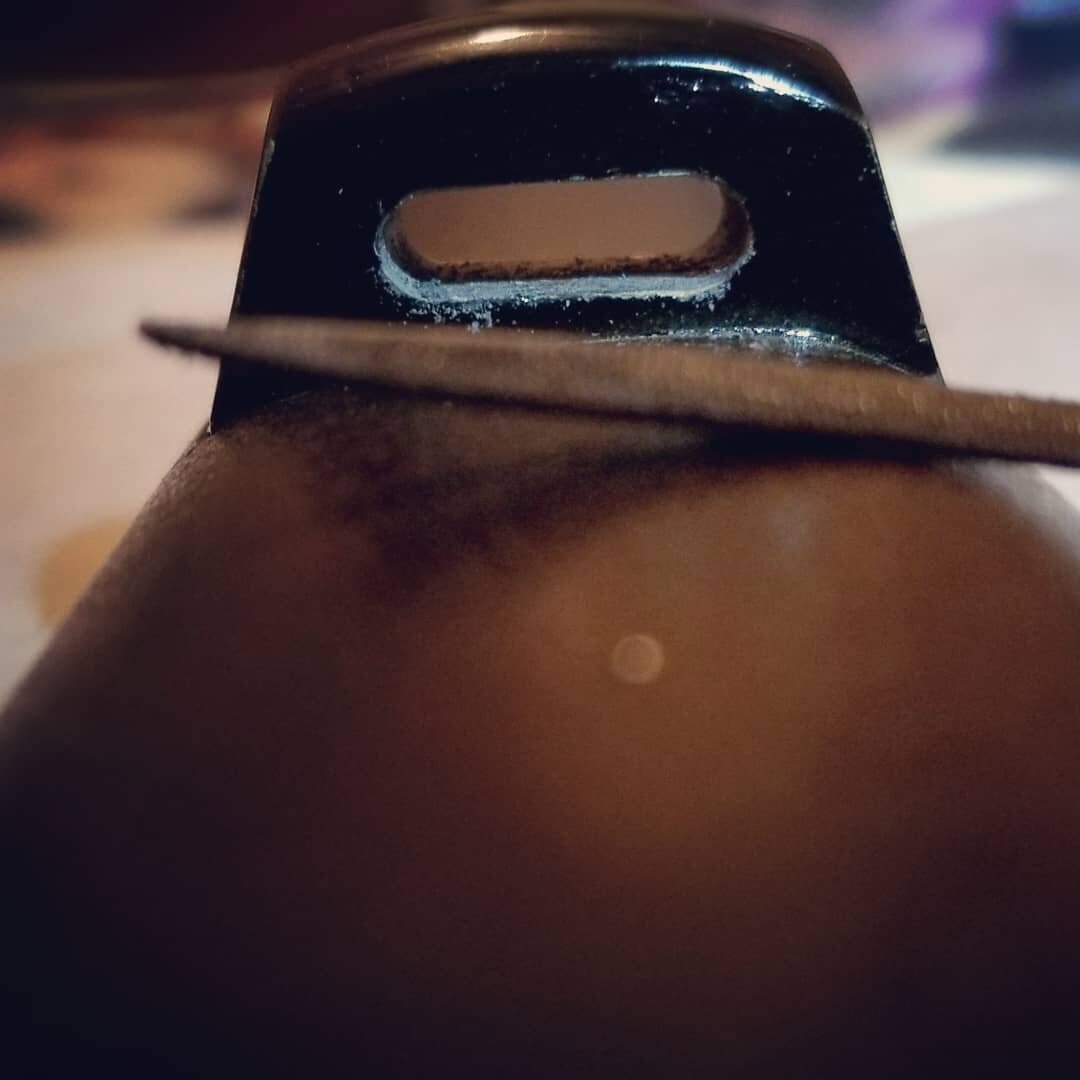
I finally got around to fixing up, thanks to some guidance from a clerk at Home Depot. Here's my journey:
Step 1: Sand off the old finish and smooth out the knicks.
Step 2: Apply the wood filler and let it dry. Sand everything down so it's nice and smooth.
Step 3: Apply the satin finish.
Step 3a: Repeat steps because I noticed a few spots that weren't filled in completely.
Step 4: Touch ups
Drum roll please...
Now, I have to stretch, stretch and stretch some more so that I can draw Raijin properly and consistently! Time to dust off my old yoga stretches.
Returning to the Zen of Iaido
I've been craving stillness for a while, but passive meditation isn't my thing. When I returned to martial arts training, I discovered that I was craving the zen of Iaido.
At the beginning of the month, I returned to martial arts training. I was on hiatus for approximately five years, so I was a bit rusty. When I visited my dojo in September, I found that I was craving stillness. My body, mind and spirit were yearning for the zen of Iaido. Why did I stop?
As you well know, there are only so many hours in a day. I wanted to dedicate more time to my own professional development as a musician. During that time, I accompanied five choirs, studied jazz piano, took a contemporary music examination, singing lessons and sang with a live band. Oh, and started to play other instruments.
Fast forward to today. Although my studio is smaller than it was back then, I am writing more and exploring other projects. My days are still abuzz and it's a challenge to find that stillness.
There was a sense of homecoming on my first day back to Iaido training. Ka Muso Kai has changed too during my hiatus: new name, new training location and other folks have come and gone; but when I stepped into the dojo, all that vanished. I was home.
During my first week of training, I made several discoveries:
I was completely out of practice with meditation. When sempai called out "Mokuso", my heart was racing for quite a while. With each progressive week,, it has improved.
Muscle memory is extremely powerful. Holding my iaito was akin to hopping onto a bike for the first time in years.
Having some knowledge of the Japanese language levelled up my understanding of Iaido. For instance, although I was rusty on the steps to "Kesa giri", I knew that I would have to do a diagonal cut.
My problem spots of old are still my problem spots.
Using a mirror during at-home practice makes a huge difference.
One thing that I've been doing when I practice at home is to empty my mind of nearly all thought. I focus on what my next action will be. Then, I try to quickly attain stillness before executing the action. I can't remember whether I did that the first time round, but has resulted in less corrections and repetitions.
Being able to shed all unnecessary thoughts and emotions, save for the ones needed to execute the kata efficiently is a skill that can be transferred easily into any situation or crisis. That calm but steely focus sure came in handy when dealing with a minor fire recently.
In truth, you can find zen in any activity - baking, writing, photography - it doesn't have to be martial arts. For me, however, the zen of Iaido is where it's at. Jodo, is another thing altogether, which can wait for another time.
Exploring Meditation in Movement
I've had sporadic success with passive meditation. On the other hand, active meditation, or meditation in movement works better for me.
I first knowingly explored active meditation in the late 1990's with Tai Chi. At the time, I found the movements too slow and my companions and I were too immature for this ancient art.
The next time I flirted with mediation in movement was when my coworkers and I signed up for a pottery class around Y2K. I loved being able to focus on only one thing: the clay that I was shaping. My senses seemed augmented as I felt the clay on the wheel, listened to the hum of the wheel, watched and breathed in the art of making. I wasn't particularly skilled at it, unless you count being skilled at wrecking my fingernails. At least I was able to create some serviceable pen cups.
What is Active Meditation?
In Active Mediation: A technique of the future, Eliza Mala Dalian describes it as "an evolutionary process of releasing our stress and pent up emotions from the body while simultaneously being engaged in witnessing and dis-identifying from our thoughts and emotions." Unlike passive meditation, you are actually doing something.
Ms Dalian describes Osho meditations, which has been practice throughout the the world since the 1970's. However, based upon her definition, I recognize meditation in movement in various activities that either my family, friends or I do, such as: nature or landscape photography, painting, drawing, knitting, origami and flower arranging. The way I see it, so long as it is an activity that requires you to move around, allows you to lose yourself into it and ground you in the process, it qualifies as active meditation.

Martial Arts and Active Meditation
I did wind up revisiting Tai Chi last year, taking classes from Jane Sponair. Having a much smaller class and different companions made my Tai Chi practice more successful. I was able to love myself into the movements.
However, at the end of the second course, I was yearning for something more. That something more "stares" at me in my office: my iaito.
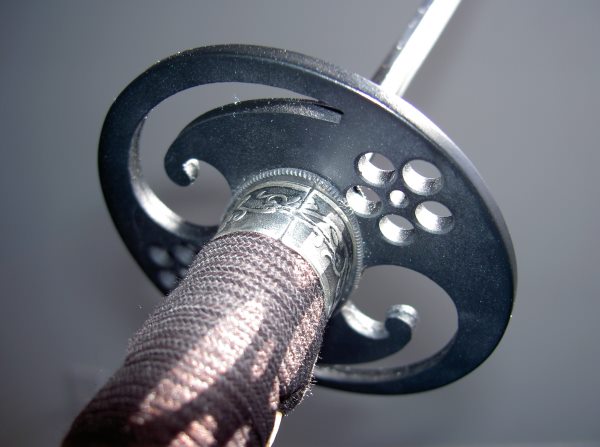
After Christmas, I'll be resuming my Iaido studies. I know that it will be bumpy in the beginning (five years is a long time for your skills to dull).
However, I know that some of it will come rushing back to me. For instance, I still practice my sword cuts occasionally as doing so releases some of the tension in my shoulders. In Mushin: The State of Mind, Chris Caile defines it as follows: "The Japanese term Mushin is a shortened version of the Zen expression "mushin no shin" which translates as "the mind without mind" or "no-mindness." It is a nice way to describe active mediation.
These are just a few ways that one can practice active meditation. Are there any activities that you engage in that qualify as meditation in movement? Please share.
On the advent of change
As we approach a new liturgical year, our church choir is undergoing some changes.
Last night was our choir director's last Mass with us. She will be missed. It's not good-bye though. She will fill in when I'm unable to play the piano and there are other musical projects that we can collaborate on. Having said that, my days with my church choir are also numbered.
Our choir continues to attract new singers, but pianists, guitarists and leaders are harder to come by. We can only hope and pray that more instrumentalists and a new director steps forward before my last Sunday.
I had a good chat with one of the choir members about these changes a few weeks ago. She and I have served on three or more church ministries for several years now. Since joining the choir, I had to drop my other ministries.
That evening, we talked about the need to take time to rest and renew.
Rest and renew. I like the sound of that. It is something that I think as adults, we have a tough time doing. It is something I will need to do more regularly as I concentrate on several big projects.
When I visited my old dojo in the summer, I realized how much I missed practicing iai. Practicing mushin. Engaging in active meditation.
I learned that one of the training nights had moved to a non-teaching night. However, it conflicts with choir practice and the church service I play at.
I still plan on serving the church community in some way. I do look forward to serving in ways that aren't tied down to a specific Mass and to be able to attend any Mass.
Just like I am looking forward to returning to studying Iaido and learning Jodo in the new year. Will I be able to grade for my Sho-dan next year? Who knows? I'm not going to rush it though. For now, it is enough knowing that these changes are over the horizon.
Calgary Omatsuri 2013 Interview with Dave Rathnow
My Calgary Omatsuri interview with Dave Rathnow sensei of Shin Ken Kai Nobara Iaido Club of Calgary. We talk about the martial art I started to learn - Iaido - and the differences between the two main styles practiced today.
At this year's Calgary Japanese Festival, I had the opportunity to interview Dave Rathnow, an Iaido practitioner and instructor at Shin Ken Kai Nobara Iaido Club. Iaido is referred to as "the art of Japanese swordmanship" or "the art of drawing of the sword". It is the sister art to Kendo. Unlike kendo, iaido is a non-contact martial art.
I must come clean, when I started to watch Bleach, I became interested in weapons-based martial arts. The Agent of the Shinigami arc remains, in my eyes, one of the strongest storylines I've come across in the shounen genre.
However, I digress. I wanted to learn kendo, but the cost of the equipment scared me off. I turned my attention to iaido. After watching videos online of how smooth and fluid the iaido kata are, I was hooked.
See for yourself the rhythm and flow of iai. Here are excerpts from the Iaido demonstration that Dave Rathnow-sensei, Allen Yee-sempai and Brent May-sempai did at the Calgary Omatsuri:
If you want a bit more of an introduction to Iaido, please read my article entitled "An Introduction to Iaido". I also have published a few more articles on Iaido for The Iaido Journal: "Rhythm and Flow", "Tempering Fire" and "A Special Box for a Special Club"
Now, for my interview with Dave-sensei:
Here are some of the websites I checked out when I first researched iaido:
Aoi Budo Gu: where I ordered my iaito
Ka Muso Kai Iaido Club: my dojo
Shin Ken Kai Nobara Iaido Club: Dave-sensei's dojo
SDK Supplies: where I ordered my beginner iaidoka set and my Hyoho Niten Ichi-Ryu (Musashi's two-sword style) bokuto
Sword Store: many of my sempai ordered their iaito from here
I currently have three katana and samurai-related books in my library. The are: The Book of Five Ringsby Miyamoto Musashi,The Life-giving Sword by Yagyu Munenori and the Hagakure by Yamamoto Tsunetomo.
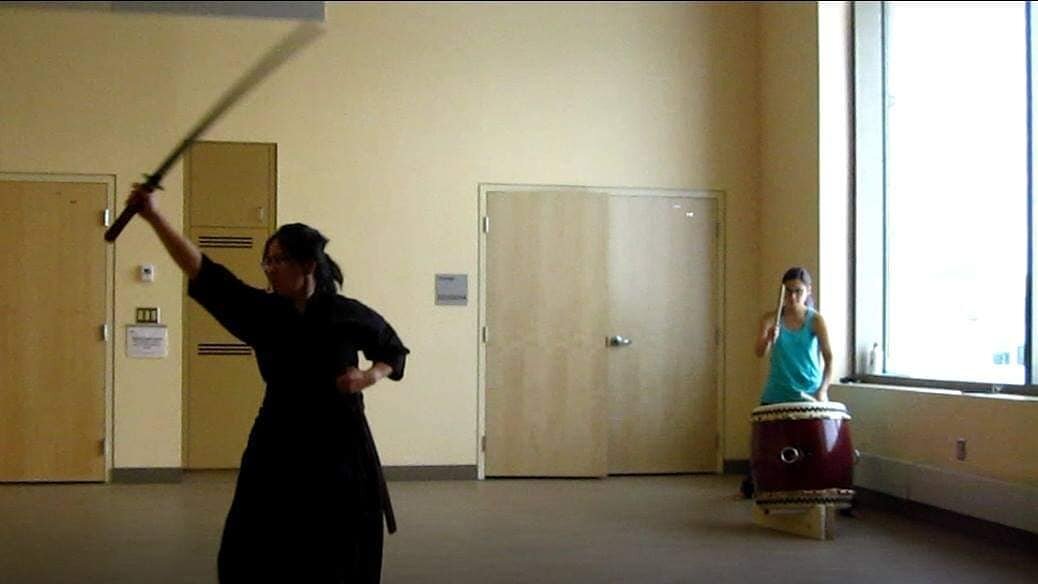
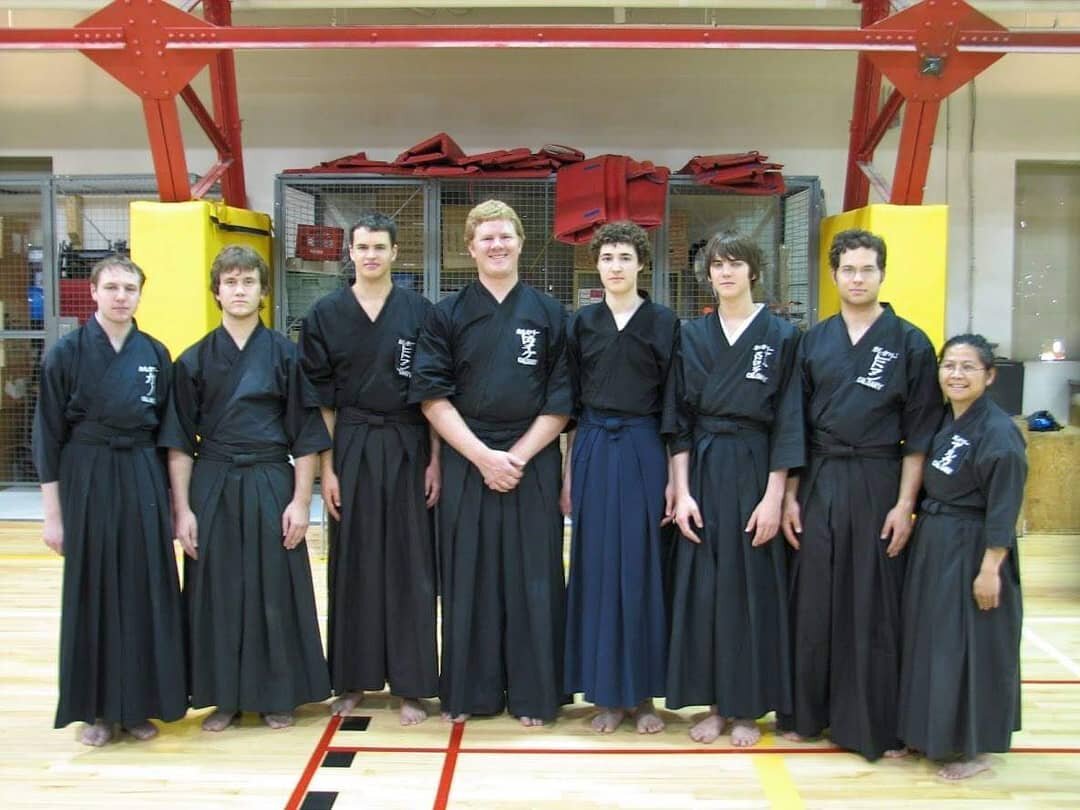
Here's a trip down memory lane for me. These are some photos of when I studied Iaido:
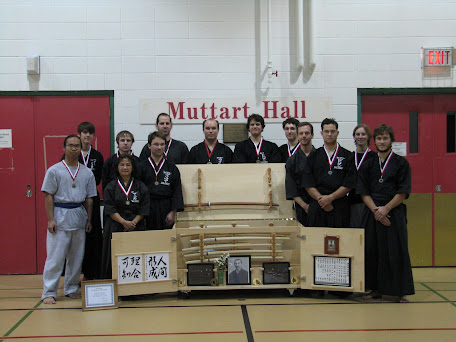
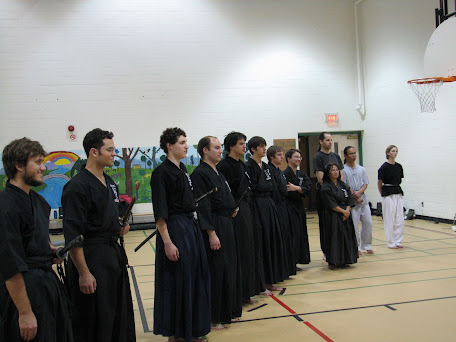
Sadly, training nights moved to prime teaching nights for me a while back, so I had to stop training. I do hope to get back into it someday. For now, I'll just try to keep regular with sword cuts. After all, it's a lot of fun to hear my iaito go "whoosh".
About the featured image: Allen-sempai demonstrates the first Iaido kata from the Seitei Gata Iaido at the Calgary Omatsuri. Photo credit: Christine Kohl. Publisher: Kathleen Boucher.
Social Media Links
archives
- #YYCArts 32
- #YYCEvents 39
- Collaborative Music 25
- Community 11
- Composing & Arranging 6
- Entertainment 139
- Entrepreneurship 53
- Freebies 3
- Gardening 1
- Geeking Out 65
- Health & Wellness 120
- Improvisation 25
- Interviews 28
- Learning Music 188
- Martial Arts 13
- Memorization 7
- Music 230
- Music Careers 9
- Music Education 196
- Music Examinations 7
- Music Exploration 55
- Music Gigs 14
- Music Lessons 6
- Music Performance 32
- Music Theory 13
- Musical Instruments 12
- Musician Health 19
- Pets 57
- Piano Technique 12
- Practicing Music 120
- Productivity 20
- Professional Development 11
- Recommendations & Reviews 93
- Recreation 71
- Social Media 6
- Spirituality 10
- Studio Management 33
- Studio Technology 50
- Teaching Music 146
FOLLOW THE STUDIO on Instagram





Affiliate Links
As a Sheetmusicplus and CD Japan affiliate, I earn from qualifying purchases. The earnings help fund the Studio’s blog and YouTube channels. Your support is greatly appreciated.


FOLLOW Budo no Tabi on Instagram