THE MUSICAL MUSE
Blog dedicated to music education, practice tips, health
&
wellness, and geeking out.
Taiko Drumming: Working the Brain and Body
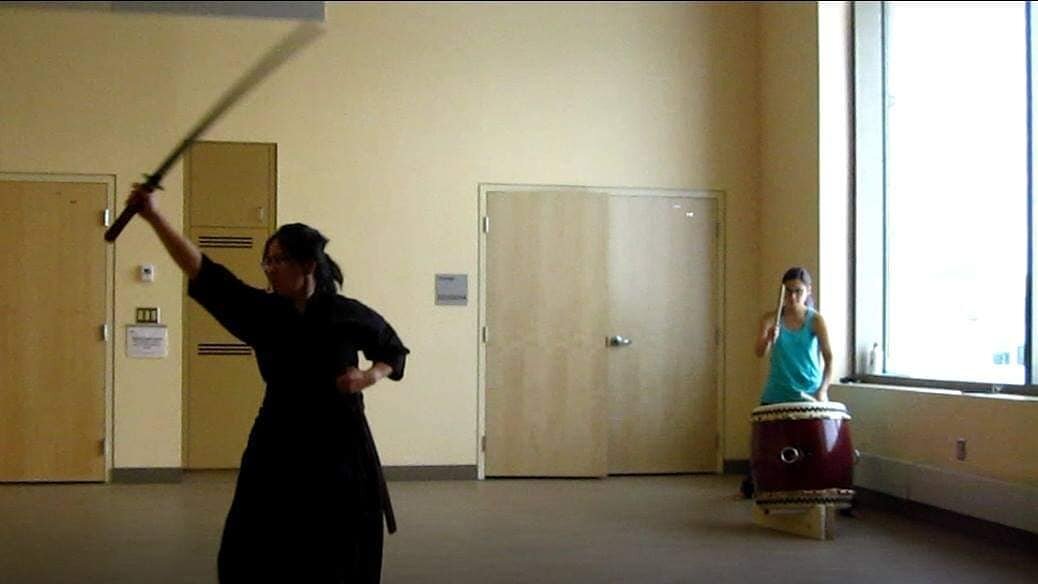
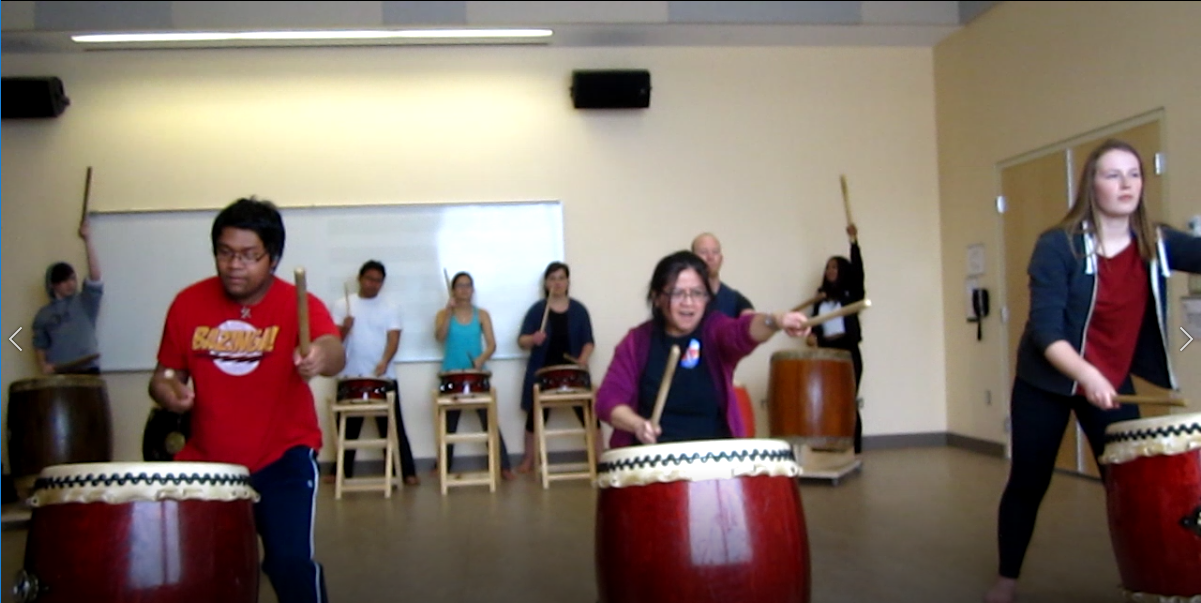
Last weekend, some of my studio families, friends and I took a beginner taiko drumming workshop. It might sound like an unusual activity for a piano studio, but music is music, regardless of instrument. Besides, nothing challenges your sense of rhythm and coordination like playing percussion in a group.
Last weekend, some of my studio families, friends and I took a beginner taiko drumming workshop. It might sound like an unusual activity for a piano studio, but music is music, regardless of instrument. Besides, nothing challenges your sense of rhythm and coordination like playing percussion in a group.
The first time I heard taiko drumming live was at the Calgary Omatsuri, featuring the Midnight Taiko Kai. I was immediately drawn to the driving rhythms, the synchronicity amongst the ensemble members, and the martial arts like discipline.
That was several years ago. I have since gotten to know two members of Midnight Taiko though other musical endeavours, thus making it rather easy to set up a custom taiko workshop through the Mount Royal Conservatory.
Taiko and Brain Games
We had a three-hour workshop let by Paula Midori Niekar sensei, Artistic Director of Midnight Taiko. She started us off with various brain exercises based on the Rock, Paper, Scissors game to wake up our foggy brains:
After a few minutes, we added the rest of our body to the mix, scooting up and down the floor. It was challenging.
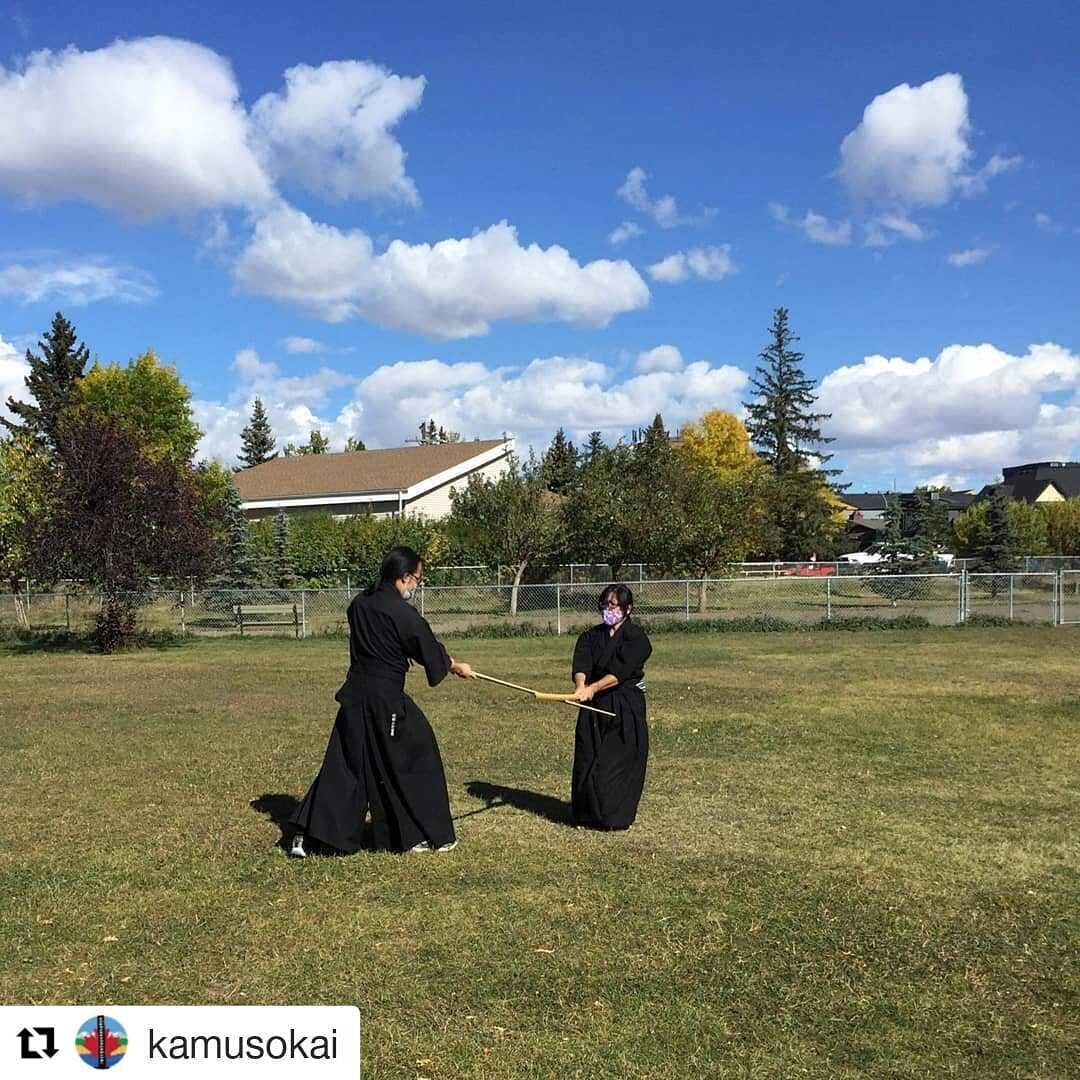
Next, we learned basic techniques for holding the drumsticks (bachi) and our stance (kamae). The latter reminded me our our long stance for one of the martial arts I practice.
Testing our Endurance with Taiko
We learned a couple of basic patterns by ear and by rote, which is traditionally how taiko is taught. Then, we moved on to the Oroshi, which is the "Come check out what we're doing!" pattern.
Finally, we learned Isami Goma, which is a song I have heard Midnight Taiko perform. It translates to "Courageous War Horse." It's quite a long piece, so we had to learn it in sections and went through countless repetitions.
It really tested our memory, coordination and physical endurance. Finally, we had it decent enough to record:
Unfortunately, the sound quality isn't the greatest. My poor camera mic just couldn't handle all that percussion. Next time, I'll bring my Handy Zoom and adjust the mic levels and set-up appropriately.
My students and their parents enjoyed themselves immensely. Afterwards, they expressed the desire to do another taiko workshop next year.
Opening the workshop up to my piano parents and friends made for a wonderful studio community activity. As some of you know, social interaction with other "piano geeks" was one thing that was missing from my musical education growing up. It became an integral part to my musical studies at university. Group activities are an important part of my studio for these reasons, along with giving my students varied ways to enjoy music.
どうも ありがとう ございました to Paula Midori Niekar, Lisa Macleod and the Mount Royal Conservatory. If you'd like to try your hand at taiko, check out the taiko programs at MRU. If you'd like to hear taiko live, check out Midnight Taiko in concert on March 17, 2018.
On Group Classes, Edutainment and Playful Learning
After five rounds of music group classes, it's time to reflect and review before I start planning for the upcoming year. Lots to mull over.
Another Group Class Week has come and gone. As I sit here trying to get my brain around next year, I'm mulling over how to approach group classes going forward.
Some students just aren't into group classes. While some like the idea of trying out something new (e.g. trying to make a radio commercial) but aren't really that interested in learning and honing their skills in those areas. Some like the ensembles. While some are just too busy for group classes and have missed every single one. You get the idea.
I know, we can't please everyone. To that end, I'm contemplating the idea of making the group classes optional and available to outside students.
Now, one comment that I usually hear from students and parents is how "X has so much fun at group classes." Well that's fine and dandy, but as an educator, I feel duty bound to teach them something. I'd like for them to learn something that will help them become better musicians and listeners.
The classes that they enjoyed the most weren't necessarily the ones where they actually learned anything. The aspiration of having the students create a video game theme, record, edit and then present it at the year-end recital? No dice. All the dreams of having them do a singing and accompanying project throughout the year and then perform it at the year-end recital? Nyet.
They fiddled, they made noise, they laughed a lot. Some made a 30-second radio commercial and saved a file. Others spent 90 minutes learning three types of beat patterns, while others played in a piano combo for the first time.
Is anything perform-able in public? Not without hours of tweaking (practice, editing, rendering and re-recording, etc.). Did they learn something that they can execute on their own? Uh-uh.
At least, they tried something new.
One area that started really slowly but gathered momentum was my Music Appreciation 101: Music & Technology class. It evolved each time a little bit to adjust to the next group of students. The students were fascinated with how music listening devices have evolved, especially with the addition of my retro-player:
Not only did this capture their attention, but the topic of copyright interested them too.
Now, the only group activity that saw any thread of progress and continuity was my student band WEDG as they prepared for the Long and McQuade Music Education Contest and later, the APTA Festival. That was an optional activity, which impacted only four students - profoundly enough that they are continuing to work together.
My challenge becomes one of creating group classes that will generate enough interest, yet from a pedagogical standpoint, teach them something useful. I've heard the term "edutainment" thrown around in relation to TV shows. However, that doesn't quite sit right with what I'm trying to do here. I suppose that "playful learning" or "learning through play" would be a closer fit. I suppose that really, they're just different terms on the same continuum of learning.
It's a lot of food for thought.
Group Class Week Round 3 Reflections - 2013 edition
Reflecting upon what worked and what didn't work so well during this week's music group classes at Musespeak and To the Wind Studios.
Another Group Class Week has come and gone. I must say, I am quite grateful that I had to foresight to throw in group classes just before Spring and Easter Break. It's a great way to transition into the break.
The kids have been enjoying the group classes, for the most part. For us music teachers, we're just glad to be able to spend more time with our students on special areas of interest.
This week, some of my brother's and some of my students attended the following classes:
Creative Composition with Strings
Playing with Patterns - Introductory Improvisation
Music Appreciation 101: Music & Technology
Project – Studio
Introduction to Sound & Technology
Piano Combo Class
In my brother's Creative Composition class, the students wrote short compositions with limitations. Some of the limitations could be: write a short song in two minutes, write a jingle for a radio commercial or a video game loop or write a song for only certain instruments. I hear it went well.
In the introductory improvisation class, I gave the students the skeleton of five patterns to improvise on. In truth, I gave them certain modes to jam on. One student would take care of melody, the other played bass. I had to jump in on percussion to keep everyone in time. The group was pretty quiet, so I was unsure of whether they enjoyed it.
I ran the Music Appreciation: Music & Technology Class twice this week. Our students surprised me with what caught their interest. For instance, they perked up while watching a video where a technician started to pull apart a harpsichord. I had to stop the video several times to field questions. Ditto for the magnetic tape segment ("This recording was made with sticky tape and rust.").
The one area that they really surprised me with was copyright. They asked some really good questions. I think that I will have to write a group class plan for Creating and Copyright.
Project - Studio was lively. This is another class that ran twice this week. The students created a radio commercial, from concept to production in 90-minutes. Although Maestro didn't approve of the music selections or sound effects, I can safely say that the students left with smiles on their faces after completing their project.
Introduction to Sound & Technology has evolved since the first time it was offered in August. Last night, the students explored different types of sound recording technology before recording sound effects to go with a short video game clip. The students worked extremely well together and got a lot accomplished.
This was the first time that the Piano Combo Class ran this year. Three keyboards, three students. Each took a turn at working on melody, comping and playing bass. Depending upon their instrument choices, I had to jump in on melodica and try comping on the chords (emphasis on "try"). The kids worked on Ev'rybody Wants to Be A Cat, Tetris Theme A and Bad Romance. The hardest part for them was to approach their instrument from an ensemble perspective and not a one-person band. For instance, I had to remind them (and myself) to comp with rootless chords.
Now that Round 3 is over, we are getting a better picture of what works and what doesn't. For starters, any of the technology projects need more than one class to complete. They are just begging to be set up as a three or four-class course. The same could be said for the accompanying and conducting classes that ran earlier this school year.
Some projects are really hard to figure out running times for. It really depends upon how well the students work well together and how focused they are at completing their projects.
In some cases, two students are ideal in a class. Five is starting to feel like too much. Three or four is just right. That way, they all get a chance to work on the computer or on all the instruments.
Two more rounds to go. One in May and the final round in July. After which, we'll be able to assess which classes to expand on and which ones to cut completely.
Ensemble Musings
The kids have been working hard since September on two or three ensemble pieces. Instead of their regular lesson, they will have a combo class. Next week is the first time they will meet as a group to work on their pieces. It's hard to tell who's more excited: my students, Maestro or myself!
I've split my students into eight ensembles. We have a varied line-up:
No world exploration clip this week. My students and I have been reviewing video of their performances at last week's recital. There were many strong performances. However, I think the ensemble numbers really got the crowd going.
Those ensemble performances were a great prelude to what coming up at the studio. Next week is Group Class Week.
The kids have been working hard since September on two or three ensemble pieces. Instead of their regular lesson, they will have a combo class. Next week is the first time they will meet as a group to work on their pieces. It's hard to tell who's more excited: my students, Maestro or myself!
I've split my students into eight ensembles. We have a varied line-up:
"Mission Impossible" (for sax, clarinet, keyboard and cajon)
"Numb" by Linkin Park (for voice, keyboard, cajon and bass)
"Under the Sea" for 4 hands/1 piano, cajon and hand percussion
"Super Mario Overworld Theme" for piano, cajon and hand percussion
"Lady Bird" for piano and cajon
Pia no Jac's version of "Ode to Joy" for piano and cajon
"Edge of Glory" by Lady Gaga for voice, keyboard, cajon and hand percussion
"The Athletic Rag" from Super Mario for 4 hands/1 piano, cajon and hand percussion
"Bless the Broken Road" for piano, guitar and cajon
"Gerudo Valley Theme" from Zelda for 4 hands/1 piano and cajon
"Floral Heartstring" by Pia no Jac for piano, cajon and hand percussion
"When You Believe" for voice, piano and cajon
"Moves Like Jagger" by Maroon 5 for voice, keyboard and cajon
In addition to the studio combos, I've been preparing for my submission to
Eric Whitacre's Virtual Choir 3.0
. This is undoubtedly one of the most difficult works for voice I have ever worked on. With it being a "virtual" choir, I do not have the benefit of having a stellar singer beside me to follow. I need to know my pitches! Not only that, but I have to work tremendously hard on breath support.
It's been a wonderful challenge though. I got goosebumps when I first heard
and am excited to just be a part of it.
Solo music making is fun but I'm finding that there is something magical and energizing about music making in an ensemble.
(c) 2012 by Musespeak(TM), Calgary, AB, Canada. All rights reserved.
Social Media Links
archives
- #YYCArts 32
- #YYCEvents 39
- Collaborative Music 25
- Community 11
- Composing & Arranging 6
- Entertainment 139
- Entrepreneurship 53
- Freebies 3
- Gardening 1
- Geeking Out 65
- Health & Wellness 120
- Improvisation 25
- Interviews 28
- Learning Music 188
- Martial Arts 13
- Memorization 7
- Music 230
- Music Careers 9
- Music Education 196
- Music Examinations 7
- Music Exploration 55
- Music Gigs 14
- Music Lessons 6
- Music Performance 32
- Music Theory 13
- Musical Instruments 12
- Musician Health 19
- Pets 57
- Piano Technique 12
- Practicing Music 120
- Productivity 20
- Professional Development 11
- Recommendations & Reviews 93
- Recreation 71
- Social Media 6
- Spirituality 10
- Studio Management 33
- Studio Technology 50
- Teaching Music 146
FOLLOW THE STUDIO on Instagram

Affiliate Links
As a Sheetmusicplus and CD Japan affiliate, I earn from qualifying purchases. The earnings help fund the Studio’s blog and YouTube channels. Your support is greatly appreciated.


FOLLOW Budo no Tabi on Instagram