THE MUSICAL MUSE
Blog dedicated to music education, practice tips, health
&
wellness, and geeking out.
My First Lenten Mission
This was my first Lenten Mission. Entitled “Nothing More Beautiful,” it was offered by my hometown parish. Father Clair Watrin gave four sessions this past weekend.
One of the spiritual goals I set for this year was to go on a spiritual retreat. In the past, I have attended silent weekend retreats at Mount St. Francis in Cochrane, AB.
These days, I have been too busy to go out of town to attend a retreat. I know, just looking at that in black and white looks like a lame excuse. However, I suppose that I can take comfort knowing that I am not alone. Lenten missions have emerged in recent years to appeal to the busy.
What is a Lenten Mission?
The purpose of a spiritual retreat is to get away from our daily distractions and reconnect with God. Without the noise, you can re-balance and re-prioritize as well.
As far as a Parish Mission goes, I will quote Deacon W. Gerard Gautrau from “Reinvigorate Your Faith at Lenten Missions” by Kyle Barrett: “I would say the Lenten mission is the retreat coming to the people rather than the people going to the retreat.” Deacon Gautrau serves at Sacred Heart of Jesus in Norco, LA. As to why it is a Lenten mission, that's because it takes place during Lent.
Over the course of several days, usually a weekend, a guest speaker comes to a parish and gives theme-based presentations and/or meditations. Sometimes, there is music. Whenever possible, free childcare is offered. Spiritual Directors are available for those seeking guidance, the Sacrament of Reconciliation is offered and Mass is celebrated.
My First Lenten Mission Experience
This was my first Lenten Mission. Entitled “Nothing More Beautiful,” it was offered by my hometown parish. Father Clair Watrin gave four sessions this past weekend. I attended the three for adults.
The first session really gripped me. Father Watrin spoke and presented several questions for us to reflect upon. At the heart of it was this: “What is most important?”
To help us, Father Clair asked us, “What do you spend the most time on?” and “What captures you?” What stood out to me is in the busyness of life, what is most important to us doesn't match what we spend the most time on.
Another point Father Clair brought up is that if we lead someone to sin, we are murdering their soul. By extension, you could say each time we sin, we murder our own soul. These were harsh words, but I think Father was trying to drive the importance of our spiritual well-being, and being mindful of the spiritual wellbeing of others.
The second session I attended focussed on love and practising “doing the right thing.” There are two parts to this.
With regards to love, Father Clair spoke of how we all love stories about “heroic love,” such as a complete stranger risking his or her life to save someone in danger. “True love,” he said, “is doing the right thing when you don’t feel like doing it.” Perhaps you are angry with your friend/significant other/spouse/co-worker/child. Doing something caring for that person, even when you don’t feel very loving at the moment is an example of this. “It takes courage to love when you don’t feel very loving,” he added.
On practising “doing the right thing,” Father Clair incorporated a bit of visualization to practise how to respond when faced with a crisis or temptation. The example I gave a friend was this: say you’re a teen and you’re going to a party where there is alcohol. You don’t want to drink, so you practise how to respond to people asking, cajoling or trying to force you to drink.
The final session was on prayer and truly living in the moment. This also spoke volumes to me.
“Every prayer makes a difference,” he said. “Prayer is the most powerful thing in the world.” The thing is, sometimes we just don’t see that our prayers are making a difference. Or sometimes, it takes time for us to see the results of our prayers.
“All there is to life is right now,” Father Clair said. We’re always in a hurry. Or, we’re too busy looking forward, or dwelling on the past.
“Every now moment is an opportunity to surrender to God,” he said. To get close to Him.
This last part truly resonated with me. Lately, I’ve been focussed on “After I get this done, I can [insert blank].” Or, “When I get this done, then I’ll be ready for [insert blank].” During the mission, I realized that things are getting dropped because of this mindset, and relationships with those around me are affected by my tunnel vision.
As I sat there in silence with the other parishioners during Adoration of the Blessed Sacrament, I mulled over this. Then, variations of the same phrase pop into my consciousness:
What can I do right now to help [So-and-So]?
What can I do right this minute to get out debt?
If I want to ______ what can I do right now to work towards that goal?
What can I do right here and right now to make the world a better place?
Lenten Mission: Closing Thoughts
I enjoyed my first Lenten Parish Mission. This was a great way for me to meet my goal of attending a spiritual retreat.
The biggest revelation that I came away with is that I need to realign so that what I truly find important matches what I spend most of my time. I need to learn how to manage my time more efficiently, so that I can spend more time on the things that matter and less time fretting over the other stuff.
Proper Use, Care and Disposal of Sacramental Objects
Many Catholics own devotional items, such as rosaries and scapulars. Learn how to use, care for and dispose of them with reverence.
Many Catholics own devotional items, such as rosaries and scapulars. Learn how to use, care for and dispose of them with reverence.
Sacramentals are types of devotions specific to the Catholic Church. According to the Catechism of the Catholic Church, sacramentals are "sacred signs instituted by the Church. They prepare men to receive the fruit of the sacraments and sanctify different circumstances in life."
The are five kinds of sacramentals:
blessings;
exorcisms;
rubrics;
prayers; and
blessed objects of devotion.
With respect to sacramental objects, many Catholics own several religious articles in the course of their lifetime.
What Makes an Item a Sacramental Object?
A religious object only becomes a sacramental once consecrated by a priest. A priest prays over the devotional item. In Catholic Q & A, by Father John Dietzen, a blessed object of devotion is described as "a material item over which the church has prayed a blessing, asking God to accept the prayers of the church for those who reverently use it." Whereas a sacrament, such as baptism and communion, produces sanctifying grace, sacramentals are channels of grace.
Some priests say that some religious objects become sacramentals once they have been prayed upon. One example of this would be a Rosary.
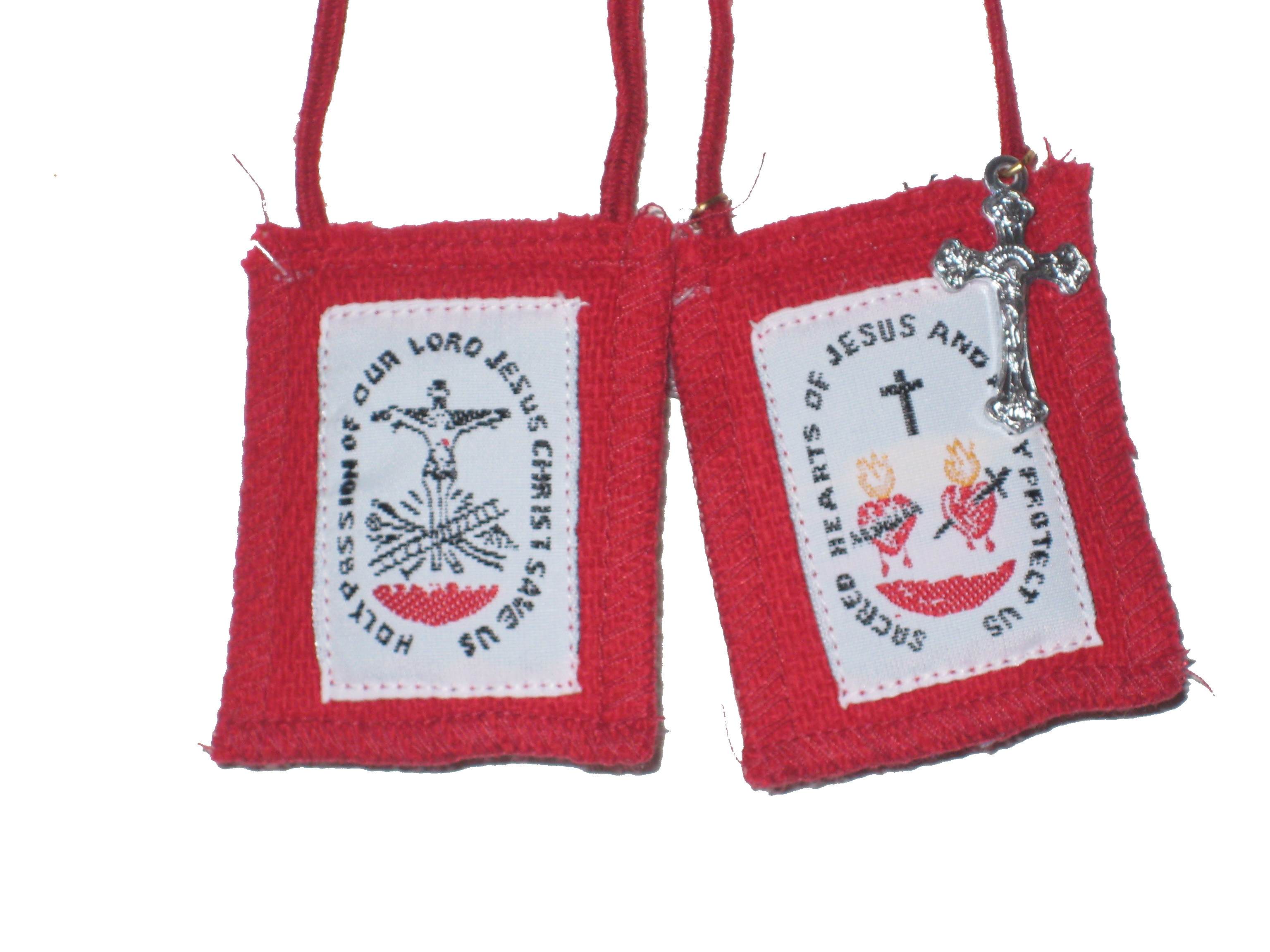
Consecrated objects are outward symbols of a Catholic's faith and devotion. Examples of sacramentals include: crucifixes, rosaries, scapulars, religious pictures, Holy Medals, Holy Water, liturgical candles, statues and palm leaves.
Use and Care of Blessed Objects of Devotion
A sacramental is a channel through which God can work. In "The Sacramentals" from the Baltimore Catechism, it states that "sacramentals obtain favors from God through the prayers of the Church offered for those who make use of them, and through the devotion they inspire. "
The faithful experience several benefits when using sacramentals: blessings of good health (physical and material), forgiveness of venial sins, graces, protection from evil spirits and remission of temporal punishment.
Sacramental objects help strengthen a Catholic's faith in God in a variety of ways. Holy water reminds Catholics of their baptismal promises and their commitment to Jesus, while using the rosary helps focus their prayers.
There is no magical power in sacramental objects. These religious articles are not to be used as good luck charms or objects of superstition.
These articles of faith should always be treated with reverence and devotion. For instance, many Catholics will kiss a sacramental object if dropped accidentally on the ground.
Proper Disposal of Sacramental Objects
An article of faith shouldn't be thrown in the trash when it is broken, worn out or no longer of use; it's believed that doing so would desecrate the sacramental. It must first be broken down in such as way that it loses its identity as a devotional item.
The Sisters of Carmel advise Catholics that a "sacramental should be returned to the earthly elements". Books, pictures of Jesus and Mary and scapulars should be burned and then buried. Rosary beads should be pulled apart from each other and statues should be broken into small pieces and buried. Metal objects should be melted and reused. An object that once was a devotional item should be buried in a place that won't be tread upon.
Consecrated religious articles lose their blessing once they lose their identity as a sacramental. They also lose their blessing if they are sold for profit. However, if a person gives a consecrated article to someone as a gift or sells it at cost, the original blessing upon it remains.
Sacramental objects, such as rosaries and scapulars, are used by Catholics around the world. These religious articles obtain favors from God for the faithful who use them and help strengthen their faith in God. Sacramentals are consecrated materials and should be used with, cared for and disposed of with respect.
Sources:
Catechism of the Catholic Church, NY: Doubleday Dell Publishing Group, Inc. 1995.
Dietzen, Fr. John J. Catholic Q & A: Answers to the Most Common Questions About Catholicism, . NY: Crossroad Publishing Company, 2002.
Sisters of Carmel (accessed June 12, 2010).
CatholiCity: The Sacramentals (accessed June 12, 2010).
Originally published on Suite101.com on June 12, 2010. All rights reserved by Rhona-Mae Arca.
What's in a Pope's Name?
My students were abuzz this week, talking about Pope Francis I. Reflecting on his name.
Several of my students have come in this week, all abuzz about His Holiness, Pope Francis I. Most of them attend separate school, so they have been following the Conclave in religion class. They've been fixated on everything from how he had part of his lung removed as a teenager to how he prefers to take public transit and from how he preferred to live in a simple apartment to how quickly he was chosen to be pope.
Two students stumped me when they asked, "Why would a Pope resign? Aren't you supposed to be a pope until you die?" The two sisters followed this up by, "Can a pope get kicked out?" Oh dear, it would have been nice to have one of our priests here to field those questions. I quickly told them that these are questions to ask a priest and tried to steer the conversation back towards music.
I told some of them how St. Francis would have freaked out over the massive basilica built in his name in Assisi. As beautiful as it is, and as beautiful as it was for me to attend Mass there, I think St. Francis would have wanted the money used to build the basilica to help the poor.
They, and I are very happy about the Pope's papal name: Francis. St. Francis of Assisi is the patron saint of animals and children, so he's pretty popular in my studio.
We talked about what the Pope might be trying to convey with his choice of name. It came down to what St. Francis is known for: simplicity, humility and service to the poor. That resonates strongly with them - and with me as well.
He's got a tough job ahead of him. We can hope and pray that he'll have the help he needs to rebuild and reorganize the Church. However, with just his choice of name and his demeanor, he has instilled hope - and excitement - in my students and I. He seems like one of us - an ordinary person trying to get by in the world by the grace of God. Someone who wants to help us and work with us. Someone we'd like to invite over for tea and cookies.
I leave you with a song that I sung at many a school Mass when I lived down east. It's a favourite with my students as well and since the news broke out, this song has been playing in my head all day:
Social Media Links
archives
- #YYCArts 32
- #YYCEvents 39
- Collaborative Music 25
- Community 11
- Composing & Arranging 6
- Entertainment 139
- Entrepreneurship 53
- Freebies 3
- Gardening 1
- Geeking Out 65
- Health & Wellness 120
- Improvisation 25
- Interviews 28
- Learning Music 188
- Martial Arts 13
- Memorization 7
- Music 230
- Music Careers 9
- Music Education 196
- Music Examinations 7
- Music Exploration 55
- Music Gigs 14
- Music Lessons 6
- Music Performance 32
- Music Theory 13
- Musical Instruments 12
- Musician Health 19
- Pets 57
- Piano Technique 12
- Practicing Music 120
- Productivity 20
- Professional Development 11
- Recommendations & Reviews 93
- Recreation 71
- Social Media 6
- Spirituality 10
- Studio Management 33
- Studio Technology 50
- Teaching Music 146
FOLLOW THE STUDIO on Instagram

Affiliate Links
As a Sheetmusicplus and CD Japan affiliate, I earn from qualifying purchases. The earnings help fund the Studio’s blog and YouTube channels. Your support is greatly appreciated.


FOLLOW Budo no Tabi on Instagram