THE MUSICAL MUSE
Blog dedicated to music education, practice tips, health
&
wellness, and geeking out.
Free Summer Concerts by the Calgary Wind Symphony
Enjoy a relaxing afternoon with family, friends and the Calgary Wind Sym
Looking for a frugal and enjoyable activity for the entire family? How about summer concerts in the park by the Calgary Wind Symphony?
Bring a picnic, a book, Frisbee and enjoy some great concert band classics performed by the Calgary Wind Symphony. Even the family dog can come too!
The concerts take place at Riley Park, Calgary
The CWS summer concerts are on Sunday, August 11 and Sunday, August 25, 2013. Concert start time is 2:00 pm.
The CWS is directed by Dr. Jeremy Brown. For more information on the Calgary Wind Symphony or to check out the 2013/14 concert season, visit their
or their
.
Calgary Wind Symphony Apollo Sings Concert Review
The Calgary Wind Symphony wrapped up its 2012/13 season with sweeping melodies, dramatic harmonies and rich contrasts.
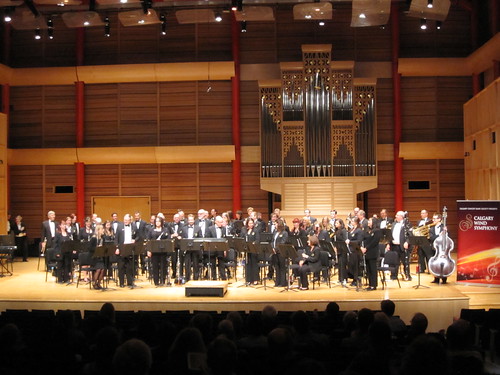
Sweeping melodies, dramatic contrasts and lush imagery were on tap at the Calgary Wind Symphony's June 2, 2013 performance at the Rozsa Centre. Billed as "Apollo Sings! Music that Soars", this live concert featured a diverse mix of program and absolute music to work the listener's imagination.
Picking up the conductor's baton for this wind symphony concert were Artistic Director Dr. Jeremy Brown and Associate Conductor Wendy Freeman. CWS members Mary Hamm and Noel Jones were featured in Mendelssohn's Concertpiece No. 2 for Two Clarinets with Band.
Programme and Aleatoric Music Performed by the Calgary Wind Symphony
The concert opened with Alfred Reed's The Hounds of Spring. The work is based on Algernon Charles Swinburne's poem Atlanta in Calydon. The sweeping melodic lines, depicted romance in the springtime. This was a number that showcased just how wonderful the acoustics are in the Rozsa Centre. It also demonstrated how tight the ensemble is. The balance was superb, while the tone was rich and warm..
Yasuhide Ito's Gloriosa was one of the many hidden gems on the programme. This work for symphonic band featured Christian hymns that were "Japanified" by Crypto-Christians who continued to practice their religion in secret after it was banned in Japan (1643 - 1848).
Gloriosa contains three movements. "Oratio" was dripping with melancholy. The chimes in the opening, followed by the CWS singing a Gregorian chant, filled the hall with sorrow. In contrast, the middle section featured the flutes and clarinets playing a sweeping Japanese melody, punctuated by accents and harmonies in the brass, depicting the persecution of the Crypto-Christians. The movement ends as it began, with distant chimes. It was an utter delight to listen to the Calgary Wind Symphony sing the Gregorian chants.
"Cantus" showcased the flute and piccolo playing a melody sounding very much like a traditional Japanese song on the shakuhachi. Another Gregorian chant was buried deep within the score, nearly hidden by the flute melody, the taiko-like percussion and the blues-like harmonies..
From the shrill opening to the taiko-like rhythms, "Dies Festus" sounded more like a battle than a festival. This movement contained a Nagasaki folk song that was popular where many Crypto-Christians lived.
Christiaan Ventner's Dancing Lights of the North earned positive comments in the lobby during intermission from various concert patrons. To introduce it, Dr. Brown spoke of how the process is just as important as the melody. The piece is comprised of unfolding segments that contain a high element of improvisation.
It opened with a solo water glass passage (yes, you read that correctly), The twinkling percussion undoubtedly represented stars, while the woodwinds represented the shimmering aurora borealis. To me, the rumbling brass depicted night descending upon the listener. Later, the woodwinds sounded like birds and crickets in the night:
Associate Conductor Wendy Freeman conducted Illyrian Dances by Guy Woolfenden. This three-part work would fit perfectly in a fantasy tale such as the Chronicles of Narnia series. "Rondeau" was a lively modal dance peppered with syncopation and hemiolas. In contrast, "Aubade" was a slow and dreamier movement. "Gigue" is extremely playful, as depicted by the dancing flute melody and light percussion. The horns interjected with a hunting-like theme.
The CWS Presented Dramatic Contrasts and Meltdown by Marco Pütz
Calgary Wind Symphony members Mary Hamm and Noel Jones took to centrestage for Mendelssohn's Concertpiece No. 2 for Two Solo Clarinets with Band. The Romantic composer penned the work for the sons of clarinetist Heinrich Barmann.
This three-movement work is highly technical. It opened with a dramatic swell from the ensemble before Hamm and Jones' lines weaved and danced around like birds exploring the landscape from above.The second movement unfoled slowly. The running sixteenths were reminiscent of Schubert's Ave Maria. The third movement was rather operatic, like the love duet between the main characters in an opera. It finishes off with a highly virtuosic cadenza between the soloists.
Hamm and Jones were superb throughout. Their tone was well-matched and their technique complemented each other beautifully. They negotiated through those rapid-fire runs gracefully.
The highlight of the second half was Meltdown by Marco Pütz. This symphonic poem could easily fit into a dramatic film score. Even without knowing the programme - the meltdown of a nuclear reactor - one can easily hear it working for movies involving dinosaurs, gigantic monsters or space battles.
Meldown began ominously with the bass clarinet, followed by the other woodwinds, one layer at a time. The dance of the nuclear particles was extremely tense and frenetic, achieved by instruments playing in the extreme high register, an uneven waltz pattern and dissonant harmonies.
The brass and percussion drove the listeners towards the actual meltdown, with an increase of aural explosions. Rhythm and harmony continued to play a role in weaving a tale of instability, drama and fear. The lone beeping and hum from the synthesizer was akin to a lone machine beeping in the aftermath before fading into nothingness. The closing theme presented by a solo trumpet before being joined by the rest of the wind ensemble, seemed to describe the survivors surveying the landscape after the explosion.
To clear the air, Meltdown was followed up with two lighter works, Leonard Bernstein's Overture to Candide Karl King's The Purple Pageant March. These two are well known and oft-performed.
Smart Programming, Balance and Variety by the Calgary Wind Symphony

One thing that continues to impress me with the Calgary Wind Symphony is the programme choices. The group isn't afraid to step out of the box of standard concert band repertoire. Each concert has included lesser-known works, as well as pieces that may challenge some listeners.
That's just fine. The edgier works are introduced clearly in the concert programmes as well as by the conductors on stage. What's even smarter is how these works are programmed. There is always a balance between these newer works with a good dose of familiar composers or styles.
About the Calgary Wind Symphony
The CWS (formerly the Calgary Concert Band) is a 60-member wind ensemble that has been around since 1947. It is directed by directed by Dr. Jeremy Brown of the University of Calgary and Associate Conductors Wendy Freeman and Gareth Jones.
Subscriptions for the 2013/14 season are already available.The lobby was abuzz with the news of Carmina Burana on the December programme. For more information, visit the Calgary Wind Symphony's website.
The Calgary Wind Symphony presented an engaging and varied programme for the ensemble's final concert of the 2012/13 season. Like the Greek god, Apollo, the June 2, 2013 concert brought sunlight into the concert hall and lit up the stage with soaring melodies and rich harmonies.
CWS Concert Review Music of Mysteries, Legends and Ritual
The Calgary Wind Symphony performed a selection of mysterious and sweeping music on a snowy Sunday, March 3, 2013 at the University of Calgary’s Rozsa Centre. Dubbed "Music of Mysteries, Legends and Ritual", the concert featured Terri Shouldice on flute and Dr. Jeremy Brown on alto saxophone. It also included two premières: the Canadian première of Kenneth Fuch's Rush - Concerto in E flat for Alto Saxophone and the Alberta première of Paul Hart's Cartoon.
Recently, when Dr. Jeremy Brown was conducting the University of Calgary Jazz Ensemble in the United States, he had the opportunity to meet with Daniel Bukvich, who composed the first piece, entitled Voodoo. Bukvich was delighted to hear that the Calgary Wind Symphony was working on Voodoo and promised to send another one of his works.
Calgary Wind Symphony Conjures Vivid Imagery at Calgary Concert
At the downbeat , the Rozsa Centre was draped in darkness, with only the twinkling lights from the music stands and Dr. Jeremy Brown's blue glow-in -the-dark baton. Voodoo painted a vivid picture for listeners.It was as if the audience was transported into the middle of a David Attenborough nature documentary, complete with bird calls and trombone slides to depict swinging monkeys. The rain sticks and flash lights gave the effect of a rainstorm, while the clapping and chanting evoked images of aborginal peoples celebrating a successful hunt.
Charles Griffes' Poem for Flute and Orchestrafeatured CWS flautist Terri Shouldice. This Impressionistic inspired work offered listeners aural post cards of contrasting scenes. It opened with the low brass instruments. The winds echoed back the theme before the flute's entrance. The languid first theme showcased. The solo flute passages varied from sweeping motives to a mysterious Spanish-infused theme.The applause lasted for several minutes after the performance.
Old Churches by Pullitzer prize winner Michael Colgrass evoked images crumbling, abandoned churches. The melancholy soundscape was peppered with momentary shots of dissonance, created by the aleatoric segments. At times, it sounded like debris blowing in the wind and hitting against broken glass, while the stainless steel mixing bowls sounded like an iron gate clanging against a broken latch.
The final work for the first half, Cartoon by Paul Hart was an absolute treat to hear. Dr. Brown introduced it as a "sophisticated musical stew."
It opened with a lively march, a la Bugs Bunny. The scurrying dialogue between the winds and percussion mimicked a chase à la Tom & Jerry, while the muted trombones sounded an awful lot like the teacher from Peanuts.
The slower middle theme contained Gershin-esque harmonies and sweeping melodies which conjured images of Pepe le Pew on a night on the town. "Music Mysteries, Legends & Ritual" marked what Dr. Brown believed was the Alberta première performance of this entertaining work.
Haunting Flute Music Performed by the Parthenia Flute Choir
Concert patrons enjoyed some otherworldly music in the lobby during intermission, performed by the Parthenia Flute Choir. The flute ensemble, under the direction of Wendy Freeman, performed Eric Ewazen's Harmony in Blue and Gold.
Comprised of four movements, Harmony was inspired by James McNeill Whistler’s "Peacock Room" located at the Smithsonian Institution's Freer Gallery. Eric Ewazen composed this work for Femme Flutale.
A Canadian Premiere and a Rarely Performed Work at the CWS Concert
The Calgary Wind Symphony delivered the Canadian première performance of Rush - Concerto for E flat Alto Saxophone, American composer Kenneth Fuchs. This demanding work featured Dr. Jeremy Brown on saxophone and Wendy Freeman as the conductor.
The first movement, "Evening" opened with a saxophone solo that featured long soulful tones. The ensemble soon joined in with a grand sweeping theme. As the saxophone continued to play a pensive melody, the flutes and percussion played carefully placed notes, depicting stars lighting up the sky, one by one. The saxophone part traversed the alto saxophone's entire range and showcased Dr. Brown's beautiful tone.
The second movement, "Morning", revealed several contrasting moods. It began with a lyrical sax solo. This soon gave way to a rhythmic passage, featuring the winds in the upper range against a sweeping motif played by the saxophones. As the movement progressed, the music featured more syncopated rhythms, pushing towards a dramatic climax.
The music of Kenneth Fuchs is gaining recognition worldwide and has led to successful collaborations. He has worked with Pulitzer Prize-winning playwright Lanford Wilson and the London Symphony Orchestra, under the direction of JoFalletta recorded three albums featuring Fuch's music. The first album was nominated for two Grammys.
Flute Cocktail by Harry Simeone was a light hearted piece. It opened with the flutes playing a Baroque-styled theme, which soon gave way to the brass and percussion instruments, while the flutes played a bubbly motif underneath. Snippets of London Bridge weaved throughout the work.
The Calgary Wind Symphony closed with La Fiesta Mexicana by H. Owen Reed. Dr. Brown explained that due to the work's length of 18 minutes, it is rarely performed. "Maybe once every 10 years," he said.
One interesting feature for this work is the fact that various musicians went off-stage to perform, mimicking a mariachi band heard in the distance. The work is comprised of three movements: a rhythmic and energetic "Prelude and Aztec Dance", a reverent "Mass" and a toe-tapping "Carnival".
About the Calgary Wind Symphony
The Calgary Wind Symphony is a 60-member ensemble, directed by Dr. Jeremy Brown of the University of Calgary. Formerly known as the Calgary Concert Band, the ensemble has been active in Calgary’s musical community since 1947.
Music aficionados can check out the Calgary Wind Symphony on Sunday, June 2 at 2:30 p.m. The CWS will present “Apollo Sings! Music that Soars”. For more information and to buy concert tickets, please visit the CWS’s website.
For those who braved the terrible winter roads on March 3, 2013, the Calgary Wind Symphony’s “Music of Mysteries, Legends and Ritual” concert proved to be a diverse and highly entertaining programme of eerie and grand music.
Calgary Wind Symphony Presents Music of Mysteries, Legends & Ritual
Mystery, legends and rituals are on tap when the Calgary Wind Symphony (formerly the "Calgary Concert Band") performs on Sunday March 3 at 2:30 PM.
Mystery, legends and rituals are on tap when the Calgary Wind Symphony performs on Sunday March 3 at 2:30 PM.
"Music of Mysteries, Legends and Ritual" will showcase the Canadian première of Concerto for Saxophone composed by Kenneth Fuchs. Featured soloists for this concert include Dr. Jeremy Brown (saxophone) and Terri Shouldice (flute). Wendy Freeman will take to the podium as the guest conductor. The programme will also feature La Fiesta Mexicanais and Poem by Charles Griffes.
The Calgary concert will be held at Eckhardt-Gramatte Hall, Rozsa Centre, University of Calgary. Tickets are $15/adult and $/students & senior. You can buy concert tickets on the Calgary Wind Symphony's website and Eventbrite.
The Calgary Wind Symphony is a 60-member ensemble, directed by Dr. Jeremy Brown of the University of Calgary. Formerly known as the Calgary Concert Band, the ensemble has been active in Calgary’s musical community since 1947. The band went on a European tour in 2011, performing to enthusiastic audiences in Italy and Austria.
In the summer of 2012, the CCC changed its name to the “Calgary Wind Symphony”. The CWS operates under the Calgary Concert Band Society.
Earlier this season, the Calgary Wind Symphony presented "Hilarious Holidays". This was a highly entertaining and festive concert. Click here for my concert review.
Concert Review of the Calgary Wind Symphony's Hilarious Holidays
The Calgary Wind Symphony performed a selection of upbeat and amusing band music at its Christmas concert on Sunday, December 2, 2012 at the University of Calgary's Rozsa Centre. Cellphone soloist Wendy Freeman and pianist Julie Jacques drew the crowd in with their energetic performances.
The Calgary Wind Symphony performed a selection of upbeat and amusing band music at its Christmas concert on Sunday, December 2, 2012 at the University of Calgary's Rozsa Centre. Cellphone soloist Wendy Freeman and pianist Julie Jacques drew the crowd in with their energetic performances.
The CWS Set the Stage for an Afternoon of Hilarity
Various members of the Calgary Wind Symphony glittered. Literally. There was a wide assortment of blinking and non-blinking elf caps, Santa Claus hats and reindeer antlers, which set the tone for a lighthearted musical afternoon.
“
It only gets more garish as the afternoon goes on,” quipped CWS Music Director, Dr. Jeremy Brown after walking on stage with his fire-truck red cummerbund beneath his tux.
Fanfare and Cell Phones Highlighted at the Calgary Wind Symphony Concert
The CWS its Christmas programme opened with Jim Colonna's “Fanfare on Adeste Fidelis”, a lively number that featured a witty fugal fanfare in the brass. This was followed up with Jan Van der Roost's “Flashing Winds”. This energetic number contained sweeping themes reminiscent of the classic TV show “Bonanza”.
One of the highlights from the first half was the “Concerto for Cell Phone” by James M. Stephenson. Yes, you read that correctly – cell phone. Soloist Wendy Freeman scoured the malls to record “the six most epic ring tones”. Each ring tone was “introduced” by the cellphone and then developed by the CWS. The fugal treatment of the infamous NOKIA® ring tone was beautifully done.
The first half ended with “Pequeña Suite para Banda” by Luis Serrano Alarcón. This suite featured some polytonality, instruments played in extreme registers and catchy rhythms. The flute solo in the “Rana” was simply exquisite, while the melodic themes in “Galop” weaved a twisting soundscape, punctuated with energetic, Batman-like “SPLATS”.
The CWS Presents the World Premiere of Le Tombeau de Liberace and More Season Favourites
The hilarity reached epic levels in the second half, beginning with the world premiere performance of Michael Daugherty's
. This suite in four dances is scored for piano, flute, clarinet, French horn, violin and percussion. Julie Jacques of Calgary took on the role of Liberace at the piano.
It showcased everything you'd expect for a Liberace tribute – glittering rings, feather boas, candelabras and trademark Libarace piano riffs. The first dance, the “Rhinestone Kickstep”, featured a dialogue between the marimba and the piano, boogie woogie rhythms and crunchy harmonies.
“
How Do I Love Thee” is named after Elizabeth Barret Browning's sonnet of the same name. Liberace often recited this poem at performances. It featured a mournful melody on the French horn, glittering
arpeggii
on the piano and some lush Debussy-esque harmonies.
“
Sequin Music” is a classic example of
music. The 12-tone motive was presented and then developed through various permutations, such as transposition, inversion and retrograde. It became more embellished once the piano cadenza was reached.
The final dance in the suite is “Candelabra Rhumba”. The Spanish-flavoured theme weaved between the instruments against heavily syncopated rhythms played on the piano.
The stage lit up even more for the next piece, with a sudden increase in blinking Christmas hats and antlers. The CWS performed “Canadian Brass Christmas”, arranged by Luther Henderson and adapted for band by Howard Cable.
This upbeat number opened with the Big Ben clock theme before launching into a contrapuntal treatment of “Ding Dong Merrily on High”. The medley also included “Here We Come A Wassailing” as well as “Huron Carol”.
Another highlight from the second half was “A+: A Precise Prelude and an Excellent March” by Thomas C. Duffy. To set up this number, trombonist and band
teacher, Jim Kramer shared this quote by baseball legend Ted Williams:
"Baseball is the only field of endeavour where a man can succeed three times out of ten and be considered a good performer.”
With “A+”, Duffy wanted to demonstrate the difference between a performance in which everyone is trying to play as proficiently and expressively as possible (A+) and a performance akin to Williams' 3/10 game stats. Suffice it to say that Duffy and the Calgary Wind Symphony proved that getting 3/10 notes right in music is unacceptable.
The final number on the programme was Leroy Anderson's “Sleigh Ride”. As an encore, the CWS performed Karl L. King's “Circus Days – Galop”, featuring Monica Leong on bicycle honker horns.
About the Calgary Wind Symphony
The Calgary Wind Symphony is a 60-member ensemble, directed by Dr. Jeremy Brown of the
. Formerly known as the Calgary Concert Band, the ensemble has been active in Calgary's musical community since 1947. The band went on a European tour in 2011, performing to enthusiastic audiences in Italy and Austria.
In the summer of 2012, the CCC changed its name to the “Calgary Wind Symphony”, operating under the Calgary Concert Band Society.
Music aficionados can check out the Calgary Wind Symphony's upcoming concerts for the 2012/13 season. On Sunday, March 3, 2013 at 2:30 p.m., the CWS presents “Music of Mysteries, Legends and Ritual”. On Sunday, June 2 at 2:30 p.m., the Calgary Wind Symphony presents “Apollo Sings! Music that Soars”. Both concerts will take place at the Rozsa Centre on the U of C campus. For more information and to buy concert tickets, please visit the
.
The Calgary Wind Symphony's “Hilarious Holidays!” concert in Calgary on December 2, 2012 boasted a lively and amusing programme guaranteed to elicit giggles and chuckles from the audience. From the downbeat, the CWS had audience members tapping their toes, chuckling and cheering in appreciation for not only a proficient performance, but a highly entertaining one.
Social Media Links
archives
- #YYCArts 32
- #YYCEvents 39
- Collaborative Music 25
- Community 11
- Composing & Arranging 6
- Entertainment 139
- Entrepreneurship 53
- Freebies 3
- Gardening 1
- Geeking Out 65
- Health & Wellness 120
- Improvisation 25
- Interviews 28
- Learning Music 188
- Martial Arts 13
- Memorization 7
- Music 230
- Music Careers 9
- Music Education 196
- Music Examinations 7
- Music Exploration 55
- Music Gigs 14
- Music Lessons 6
- Music Performance 32
- Music Theory 13
- Musical Instruments 12
- Musician Health 19
- Pets 57
- Piano Technique 12
- Practicing Music 120
- Productivity 20
- Professional Development 11
- Recommendations & Reviews 93
- Recreation 71
- Social Media 6
- Spirituality 10
- Studio Management 33
- Studio Technology 50
- Teaching Music 146
FOLLOW THE STUDIO on Instagram

Affiliate Links
As a Sheetmusicplus and CD Japan affiliate, I earn from qualifying purchases. The earnings help fund the Studio’s blog and YouTube channels. Your support is greatly appreciated.


FOLLOW Budo no Tabi on Instagram