THE MUSICAL MUSE
Blog dedicated to music education, practice tips, health
&
wellness, and geeking out.
Cooking for A Dog with Arthritis
Researching foods to feed Maestro to help alleviate his arthritis pain.

Lately, I've been exploring what changes to make to his home-prepared diet. From my preliminary searches, I have found that cayenne pepper, red peppers, turmeric and cumin contain either anti-inflammatory properties or have cleansing properties.
It also appears that grains needs to be completely cut out. Omega-3 oils and Glucosamine are a must.
Lean meats are a must too. Oh, Maestro will be happy to hear that he can still eat cartilage.
The following are a few articles that I have found regarding the types of foods and herbs to feed an arthritic dog. I'll post more as I come across them:
Arthrtis in DogsDiet Guidelines for Dogs with ArthritisTreating Canine Arthritis Naturally
A quick update on Maestro's treatments: Maestro seems to be responding well to his medication since being diagnosed with IVDD and osteoarthritis. Administering his medication is a snap with Pill Pockets.
He was pretty good at the Canine Aquafitness Centre too, where they did some heat therapy and chriopractic adjustments. However, for one moment, he was reluctant to have the vet complete the adjustment to his neck area. He turned around to face her and his expression clearly said, "You can adore me, but do not touch my neck." He was all perky afterwards.
The vet recommends that he try laser therapy. It's gentler on his joints.
Are you a Misodoctakleidist?
Are you a misodoctakleidist? You're not alone.
Trust me, you aren't the only one. If there's actually a fancy term for it, then this is more common than you think. "Misodoctakleidist" means...
...Drumroll please....
"Someone who hates practicing the piano." (Source: Encyclo)
What does this mean to you? Well, isn't it comforting to know that you aren't alone? However, just because you don't like it, doesn't mean you shouldn't do it. If you want to learn a particular song, or if you're getting ready for a performance, competition, festival or exam, then you just have to - as one of my senior students told his junior - "Suck it up, Princess!"
The things that happen when you get one student to help another.
Thanks to my friend and colleague, Hetty Jagersma for the word of the day.
Calgary Wind Symphony Apollo Sings Concert Review
The Calgary Wind Symphony wrapped up its 2012/13 season with sweeping melodies, dramatic harmonies and rich contrasts.
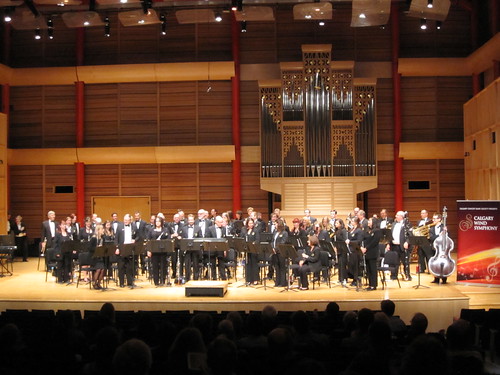
Sweeping melodies, dramatic contrasts and lush imagery were on tap at the Calgary Wind Symphony's June 2, 2013 performance at the Rozsa Centre. Billed as "Apollo Sings! Music that Soars", this live concert featured a diverse mix of program and absolute music to work the listener's imagination.
Picking up the conductor's baton for this wind symphony concert were Artistic Director Dr. Jeremy Brown and Associate Conductor Wendy Freeman. CWS members Mary Hamm and Noel Jones were featured in Mendelssohn's Concertpiece No. 2 for Two Clarinets with Band.
Programme and Aleatoric Music Performed by the Calgary Wind Symphony
The concert opened with Alfred Reed's The Hounds of Spring. The work is based on Algernon Charles Swinburne's poem Atlanta in Calydon. The sweeping melodic lines, depicted romance in the springtime. This was a number that showcased just how wonderful the acoustics are in the Rozsa Centre. It also demonstrated how tight the ensemble is. The balance was superb, while the tone was rich and warm..
Yasuhide Ito's Gloriosa was one of the many hidden gems on the programme. This work for symphonic band featured Christian hymns that were "Japanified" by Crypto-Christians who continued to practice their religion in secret after it was banned in Japan (1643 - 1848).
Gloriosa contains three movements. "Oratio" was dripping with melancholy. The chimes in the opening, followed by the CWS singing a Gregorian chant, filled the hall with sorrow. In contrast, the middle section featured the flutes and clarinets playing a sweeping Japanese melody, punctuated by accents and harmonies in the brass, depicting the persecution of the Crypto-Christians. The movement ends as it began, with distant chimes. It was an utter delight to listen to the Calgary Wind Symphony sing the Gregorian chants.
"Cantus" showcased the flute and piccolo playing a melody sounding very much like a traditional Japanese song on the shakuhachi. Another Gregorian chant was buried deep within the score, nearly hidden by the flute melody, the taiko-like percussion and the blues-like harmonies..
From the shrill opening to the taiko-like rhythms, "Dies Festus" sounded more like a battle than a festival. This movement contained a Nagasaki folk song that was popular where many Crypto-Christians lived.
Christiaan Ventner's Dancing Lights of the North earned positive comments in the lobby during intermission from various concert patrons. To introduce it, Dr. Brown spoke of how the process is just as important as the melody. The piece is comprised of unfolding segments that contain a high element of improvisation.
It opened with a solo water glass passage (yes, you read that correctly), The twinkling percussion undoubtedly represented stars, while the woodwinds represented the shimmering aurora borealis. To me, the rumbling brass depicted night descending upon the listener. Later, the woodwinds sounded like birds and crickets in the night:
Associate Conductor Wendy Freeman conducted Illyrian Dances by Guy Woolfenden. This three-part work would fit perfectly in a fantasy tale such as the Chronicles of Narnia series. "Rondeau" was a lively modal dance peppered with syncopation and hemiolas. In contrast, "Aubade" was a slow and dreamier movement. "Gigue" is extremely playful, as depicted by the dancing flute melody and light percussion. The horns interjected with a hunting-like theme.
The CWS Presented Dramatic Contrasts and Meltdown by Marco Pütz
Calgary Wind Symphony members Mary Hamm and Noel Jones took to centrestage for Mendelssohn's Concertpiece No. 2 for Two Solo Clarinets with Band. The Romantic composer penned the work for the sons of clarinetist Heinrich Barmann.
This three-movement work is highly technical. It opened with a dramatic swell from the ensemble before Hamm and Jones' lines weaved and danced around like birds exploring the landscape from above.The second movement unfoled slowly. The running sixteenths were reminiscent of Schubert's Ave Maria. The third movement was rather operatic, like the love duet between the main characters in an opera. It finishes off with a highly virtuosic cadenza between the soloists.
Hamm and Jones were superb throughout. Their tone was well-matched and their technique complemented each other beautifully. They negotiated through those rapid-fire runs gracefully.
The highlight of the second half was Meltdown by Marco Pütz. This symphonic poem could easily fit into a dramatic film score. Even without knowing the programme - the meltdown of a nuclear reactor - one can easily hear it working for movies involving dinosaurs, gigantic monsters or space battles.
Meldown began ominously with the bass clarinet, followed by the other woodwinds, one layer at a time. The dance of the nuclear particles was extremely tense and frenetic, achieved by instruments playing in the extreme high register, an uneven waltz pattern and dissonant harmonies.
The brass and percussion drove the listeners towards the actual meltdown, with an increase of aural explosions. Rhythm and harmony continued to play a role in weaving a tale of instability, drama and fear. The lone beeping and hum from the synthesizer was akin to a lone machine beeping in the aftermath before fading into nothingness. The closing theme presented by a solo trumpet before being joined by the rest of the wind ensemble, seemed to describe the survivors surveying the landscape after the explosion.
To clear the air, Meltdown was followed up with two lighter works, Leonard Bernstein's Overture to Candide Karl King's The Purple Pageant March. These two are well known and oft-performed.
Smart Programming, Balance and Variety by the Calgary Wind Symphony

One thing that continues to impress me with the Calgary Wind Symphony is the programme choices. The group isn't afraid to step out of the box of standard concert band repertoire. Each concert has included lesser-known works, as well as pieces that may challenge some listeners.
That's just fine. The edgier works are introduced clearly in the concert programmes as well as by the conductors on stage. What's even smarter is how these works are programmed. There is always a balance between these newer works with a good dose of familiar composers or styles.
About the Calgary Wind Symphony
The CWS (formerly the Calgary Concert Band) is a 60-member wind ensemble that has been around since 1947. It is directed by directed by Dr. Jeremy Brown of the University of Calgary and Associate Conductors Wendy Freeman and Gareth Jones.
Subscriptions for the 2013/14 season are already available.The lobby was abuzz with the news of Carmina Burana on the December programme. For more information, visit the Calgary Wind Symphony's website.
The Calgary Wind Symphony presented an engaging and varied programme for the ensemble's final concert of the 2012/13 season. Like the Greek god, Apollo, the June 2, 2013 concert brought sunlight into the concert hall and lit up the stage with soaring melodies and rich harmonies.
Rock Groove to Help You Practice Improvising
Need a rockin' drum groove to practice improvising to? Download this simple yet fun rock groove I came up with on cajón. Enjoy!
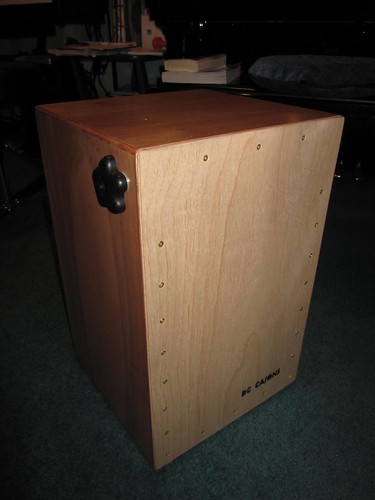
One of my students is improvising for his supplemental piece on his Grade 7 Conservatory Canada exam. You get two bonus marks if you play with accompaniment.
Here's a groove I created for him. You can use it to practice improvising too. It's 56 bars long and alternates between A and B patterns (8 bars each). Tempo is 126 beats per minute. Enjoy!
Singing with My Students in Virtual Choir 4.0
When VC4.0 was announced, I like several teachers, grumbled about how this is smack dab in the middle of our craziest period. It's been a blessing in disguise that not one, not two or three, but six of my students told me that they'd like to sing in Eric Whitacre's Virtual Choir this year. While coaching them, I get to practice. It's a win-win situation.
When composer/conductor Eric Whitacre launched Virtual Choir 4.0 a few weeks ago, I'm sure I wasn't the only music teacher in the world to say, "Oh no! This couldn't have come at a worse time!" Music festivals, recitals, exams, putting together the registration package for next year, etc. etc. - there is a LOT on our plates right now (our counterparts in the school system would undoubtedly agree). In fact, I was rather grumpy about not having time to practice Bliss. Thankfully, Team Eric have prepared a lot of support materials. I have been listening to the practice tracks on a regular basis - it keeps me calm while I deal with the icky administrative tasks of running your own business. I am quite relieved that the Bliss is easier than Water Night (although, I do love Water Night to bits).
When six of my piano students stepped forward to say, "I'd like to sing in Virtual Choir" this year, the opportunist within me got excited. For my students, this is a great learning opportunity: in terms of music technology, ear training, expression, speed learning, etc. etc. For me, their lessons ARE my practice time.
As soon as they said "yes", I sent their families the Underage Consent Form (if applicable) and encouraged them to join the Virtual Choir Community. Together, with their parents, they could read up on how to practice, download the practice tracks and ask questions. One of my students has been spending quite a bit of time on the forums so I've been directing my other students to ask HIM questions.
Last week, I coached my students on the trouble spots. It really helps that they are singing parts that are in my vocal range. This week, we're working on pitch, breathing and pronunciation. After working through it at a lesson today, I feel hopeful that I can record at least one track ahead of my students.
This Friday, we are going to have a studio Virtual Choir rehearsal. Staggered breathing will make much more sense to them when we work as a group. As well, they will have an opportunity to watch the conductor videos together and ask questions.
I can also share with them this little demo that fellow Virtual Choir members put together by randomly selecting 44 members of VC4 who have already submitted their videos:
Afterwards, they will take turns recording in my special Virtual Choir recording booth:
Since our time-frame is extremely short (we must submit our tracks before June 10), we have to go with the best of three takes, a far cry from my Virtual Choir recording experience last year. Everyone is bringing non-dairy food to share as we'll be cutting into dinnertime. Their parents get to hang out with us if they'd like (or just curl up on my waiting room couch with a book).
Perhaps in July, when Virtual Choir 4.0 is unveiled at the Coronation Festival’s Gala performances for Her Royal Majesty Queen Elizabeth, we can have a VC4 party.
Social Media Links
archives
- #YYCArts 32
- #YYCEvents 39
- Collaborative Music 25
- Community 11
- Composing & Arranging 6
- Entertainment 139
- Entrepreneurship 53
- Freebies 3
- Gardening 1
- Geeking Out 65
- Health & Wellness 120
- Improvisation 25
- Interviews 28
- Learning Music 188
- Martial Arts 13
- Memorization 7
- Music 230
- Music Careers 9
- Music Education 196
- Music Examinations 7
- Music Exploration 55
- Music Gigs 14
- Music Lessons 6
- Music Performance 32
- Music Theory 13
- Musical Instruments 12
- Musician Health 19
- Pets 57
- Piano Technique 12
- Practicing Music 120
- Productivity 20
- Professional Development 11
- Recommendations & Reviews 93
- Recreation 71
- Social Media 6
- Spirituality 10
- Studio Management 33
- Studio Technology 50
- Teaching Music 146
FOLLOW THE STUDIO on Instagram

Affiliate Links
As a Sheetmusicplus and CD Japan affiliate, I earn from qualifying purchases. The earnings help fund the Studio’s blog and YouTube channels. Your support is greatly appreciated.


FOLLOW Budo no Tabi on Instagram