THE MUSICAL MUSE
Blog dedicated to music education, practice tips, health
&
wellness, and geeking out.
Music Teaching Idea: Alternatives to Counting the Beats
This week, one of my beginners, a sweet introspective lad, was struggling with the timing on “Starry, Starry Night” from the Faber & Faber Piano Adventures series. His family is doing some travelling this summer and, he’s a bit of a history and geography buff, so we used country names to “count” the beats.
One of the hardest paradigm shifts my students face is learning that rhythm is more important than note accuracy. In fact, the first thing they bring up when I ask them, “How do you think you did?” is “wrong notes”.
“Rhythm,” I tell them, “is harder to fix than notes.” Like many of my students, I am a multi-modal kinesthetic learner, so I use analogy to help drive my point. home: “Ppppp….lease….ppp..aaaass...mmmmeeee a Kleee..ex.”
Our brain tends to fill in the blanks and correct things like typos on a page, so we can read and listen to misspelled or even misused words and generally, suss out the meaning. However, in the case of the Kleenex question above, it’s a bit more difficult to figure out what the speaker is trying to say. This was illustrated beautifully at a Pattern Play workshop I attended in 2010 with Forrest Kinney.
When They Can’t Count the Beats in Music
We try hard to teach and encourage our students to count the beats: “1 & 2 &...” For the younger ones, we often use “ta’s” and “ti-ti’s”. Once in a while, however, I’ve had a student who has a mind block to either.
One year, I taught two boys who were huge Pokémon fans. To subdivide the beats, we used variations on Pikachu’s name: “Pi - Pi - Pi-ka-chu.” You can read about it here. For some students, we use food: “blue-ber-ry, huck-le-ber-ry, a-pple, pie”. It tends to make us extremely hungry during lessons, though.
This week, one of my beginners, a sweet introspective lad, was struggling with the timing on “Starry, Starry Night” from the Faber & Faber Piano Adventures series. His family is doing some travelling this summer and, he’s a bit of a history and geography buff, so we used country names to “count” the beats. We even invited the Grade 12 student after him to contribute, a process they both enjoyed.
Here’s our handiwork:
When I asked him to clap a small passage and later play it, my student performed marvelously.
Further Reading on Other Ways to Teach Counting the Beats in Music
Four Ways to Prepare Ti-Ti and Ta

Gluten Free Food for Dogs
When Maestro was diagnosed with canine arthritis and Intervertebral Disk Disease, his vets told me that Maestro can’t eat wheat, that is, I needed to buy and/or cook gluten free food for dogs. When I attended the GF Expo last week, it was for both of us.

Last weekend, I attended the Calgary Gluten Free Expo. Although I don’t have celiac, I have noticed a significant improvement in my sinuses, general gastrointestinal health and energy level whenever I do go gluten free.
When Maestro was diagnosed with canine arthritis and Intervertebral Disk Disease, his vets told me that Maestro can’t eat wheat. When I attended the GF Expo last week, it was for both of us.
Gluten Free Food for Dogs and People
Maestro was very excited to try some of the samples from the Calgary Gluten Free Expo. We both liked the oatmeal and granola by Bakery on Main.
However, I didn't notice the yeast in the Ingredients Listing on the Breton crackers. Maestro is a dog with yeast sensitivities. It was a rough couple of days for us until the yeast worked its way out of his system.
One of the “new to me” finds was MILA. As some health-conscious folk know, chia seeds boast numerous health benefits, including weight loss, decreased joint pain, anti-aging, heart health, and sleep.
It was a pricey purchase, at $60 for a 16-oz. bag. At least, it’s something that both Maestro and I can use.
It’s too soon to tell, and we haven’t been consistent. We’ll report in about a month of regular use how Maestro is doing. I have also found that my favourite neighbourhood supermarkets do sell chia seeds at a more attractive price point.
The other find was camelina oil, which I tried at the Three Farmers’ booth. They had three versions for sale: natural and flavoured with herbs. When cooking for your pet, it’s safest to go with the natural version.
The representative said that unlike olive oil, you can cook camelina oil at high temperatures safely. It is high in Omega-3’s and Omega-6’s, which is fantastic for joint health. You can buy camelina oil at your nearest health food store, and online at Amazon.
So, far, I have used camelina oil on our quinoa salads. Sometimes, I just drizzle a little bit into Maestro’s food. He doesn’t shy away from it, so that’s a good sign!
Gluten Free Dog Treats and GF Dog Supplements in Maestro’s Cupboard
Maestro already has several gluten free dog food and dog treats in his cupboard. Right now, he has the following:
think! Dog Louisiana Alligator Dog Biscuts: Available at Amazon.com and Canine Aquafitness Rehabiliation Clinic. They might be at Pet Valu and Pet Planet.
Head to Tail Vitamin+ and Hip and Joint: There are cat versions as well. We buy ours at Pet Valu.
Fruitables pet foods: Many stores carry these treats, including Pet Valu, Pet Planet and, Petland. Online, you can order them online:

Maestro and I like to cook together (he has a fine sense for what smells good together). We’ll share some of our latest recipes in the coming weeks.
Further Reading:
Mila Chia Seeds: Nutritional Claims and Facts
My First Lenten Mission
This was my first Lenten Mission. Entitled “Nothing More Beautiful,” it was offered by my hometown parish. Father Clair Watrin gave four sessions this past weekend.
One of the spiritual goals I set for this year was to go on a spiritual retreat. In the past, I have attended silent weekend retreats at Mount St. Francis in Cochrane, AB.
These days, I have been too busy to go out of town to attend a retreat. I know, just looking at that in black and white looks like a lame excuse. However, I suppose that I can take comfort knowing that I am not alone. Lenten missions have emerged in recent years to appeal to the busy.
What is a Lenten Mission?
The purpose of a spiritual retreat is to get away from our daily distractions and reconnect with God. Without the noise, you can re-balance and re-prioritize as well.
As far as a Parish Mission goes, I will quote Deacon W. Gerard Gautrau from “Reinvigorate Your Faith at Lenten Missions” by Kyle Barrett: “I would say the Lenten mission is the retreat coming to the people rather than the people going to the retreat.” Deacon Gautrau serves at Sacred Heart of Jesus in Norco, LA. As to why it is a Lenten mission, that's because it takes place during Lent.
Over the course of several days, usually a weekend, a guest speaker comes to a parish and gives theme-based presentations and/or meditations. Sometimes, there is music. Whenever possible, free childcare is offered. Spiritual Directors are available for those seeking guidance, the Sacrament of Reconciliation is offered and Mass is celebrated.
My First Lenten Mission Experience
This was my first Lenten Mission. Entitled “Nothing More Beautiful,” it was offered by my hometown parish. Father Clair Watrin gave four sessions this past weekend. I attended the three for adults.
The first session really gripped me. Father Watrin spoke and presented several questions for us to reflect upon. At the heart of it was this: “What is most important?”
To help us, Father Clair asked us, “What do you spend the most time on?” and “What captures you?” What stood out to me is in the busyness of life, what is most important to us doesn't match what we spend the most time on.
Another point Father Clair brought up is that if we lead someone to sin, we are murdering their soul. By extension, you could say each time we sin, we murder our own soul. These were harsh words, but I think Father was trying to drive the importance of our spiritual well-being, and being mindful of the spiritual wellbeing of others.
The second session I attended focussed on love and practising “doing the right thing.” There are two parts to this.
With regards to love, Father Clair spoke of how we all love stories about “heroic love,” such as a complete stranger risking his or her life to save someone in danger. “True love,” he said, “is doing the right thing when you don’t feel like doing it.” Perhaps you are angry with your friend/significant other/spouse/co-worker/child. Doing something caring for that person, even when you don’t feel very loving at the moment is an example of this. “It takes courage to love when you don’t feel very loving,” he added.
On practising “doing the right thing,” Father Clair incorporated a bit of visualization to practise how to respond when faced with a crisis or temptation. The example I gave a friend was this: say you’re a teen and you’re going to a party where there is alcohol. You don’t want to drink, so you practise how to respond to people asking, cajoling or trying to force you to drink.
The final session was on prayer and truly living in the moment. This also spoke volumes to me.
“Every prayer makes a difference,” he said. “Prayer is the most powerful thing in the world.” The thing is, sometimes we just don’t see that our prayers are making a difference. Or sometimes, it takes time for us to see the results of our prayers.
“All there is to life is right now,” Father Clair said. We’re always in a hurry. Or, we’re too busy looking forward, or dwelling on the past.
“Every now moment is an opportunity to surrender to God,” he said. To get close to Him.
This last part truly resonated with me. Lately, I’ve been focussed on “After I get this done, I can [insert blank].” Or, “When I get this done, then I’ll be ready for [insert blank].” During the mission, I realized that things are getting dropped because of this mindset, and relationships with those around me are affected by my tunnel vision.
As I sat there in silence with the other parishioners during Adoration of the Blessed Sacrament, I mulled over this. Then, variations of the same phrase pop into my consciousness:
What can I do right now to help [So-and-So]?
What can I do right this minute to get out debt?
If I want to ______ what can I do right now to work towards that goal?
What can I do right here and right now to make the world a better place?
Lenten Mission: Closing Thoughts
I enjoyed my first Lenten Parish Mission. This was a great way for me to meet my goal of attending a spiritual retreat.
The biggest revelation that I came away with is that I need to realign so that what I truly find important matches what I spend most of my time. I need to learn how to manage my time more efficiently, so that I can spend more time on the things that matter and less time fretting over the other stuff.
Music Practice Tip: All Musicians Should Sing the Music
This music practice tip is something I should get my students to do more regularly: sing the music. Too often, we get hung up on the mechanics of music, that is, the notes and the rhythm. Well, that’s all good and dandy, but we’re not robots. When we bring music to life, we are telling a story through sound and silence.
This music practice tip is something I should get my students to do more regularly: sing the music. Too often, we get hung up on the mechanics of music, that is, the notes and the rhythm. Well, that’s all good and dandy, but we’re not robots. When we bring music to life, we are telling a story through sound and silence.
At university, one of my piano teachers told me that if I couldn’t sing the opening phrase of the Chopin Impromptu in G-flat Major, I had no business playing the piece. I thought she was joking. She wasn’t.
Through that exercise, I learned phrasing and expression. I learned where Chopin wanted the climax and where he wanted me (or any pianist) to pull back. I learned where to breathe.
Another benefit is that you internalize the music. Strangely, I learned this with interval ear training. It took work, but I drilled playing a note and singing a certain interval above or below it.
I applied this to my last piano exam, Level 7 in Conservatory Canada’s Contemporary Idioms syllabus, which I took a few years ago. I scored the highest I ever have in my piano exam history.
All I could think of was, “Why didn’t I do this when I was younger?” I would have aced ear training!
Musician Graehme Floyd lists several benefits to singing and internalizing the music with your voice. The top three should be enough to convince you: internalizing your music by singing cuts down on your learning time, your memorization time and boosts your confidence on stage. You can read the rest in his article, “Every Musician Should Sing”.
To read more about this music practice tip, check out: Robert Rawlins, Ph. D.’s article “Young Instrumentalists Should Learn to Sing So They can Learn to Hear” and “Learning to Listen: Dame Emma Kirkby's Collaborative Technique” by Jessica Chow.
Personalizing my Kanzashi
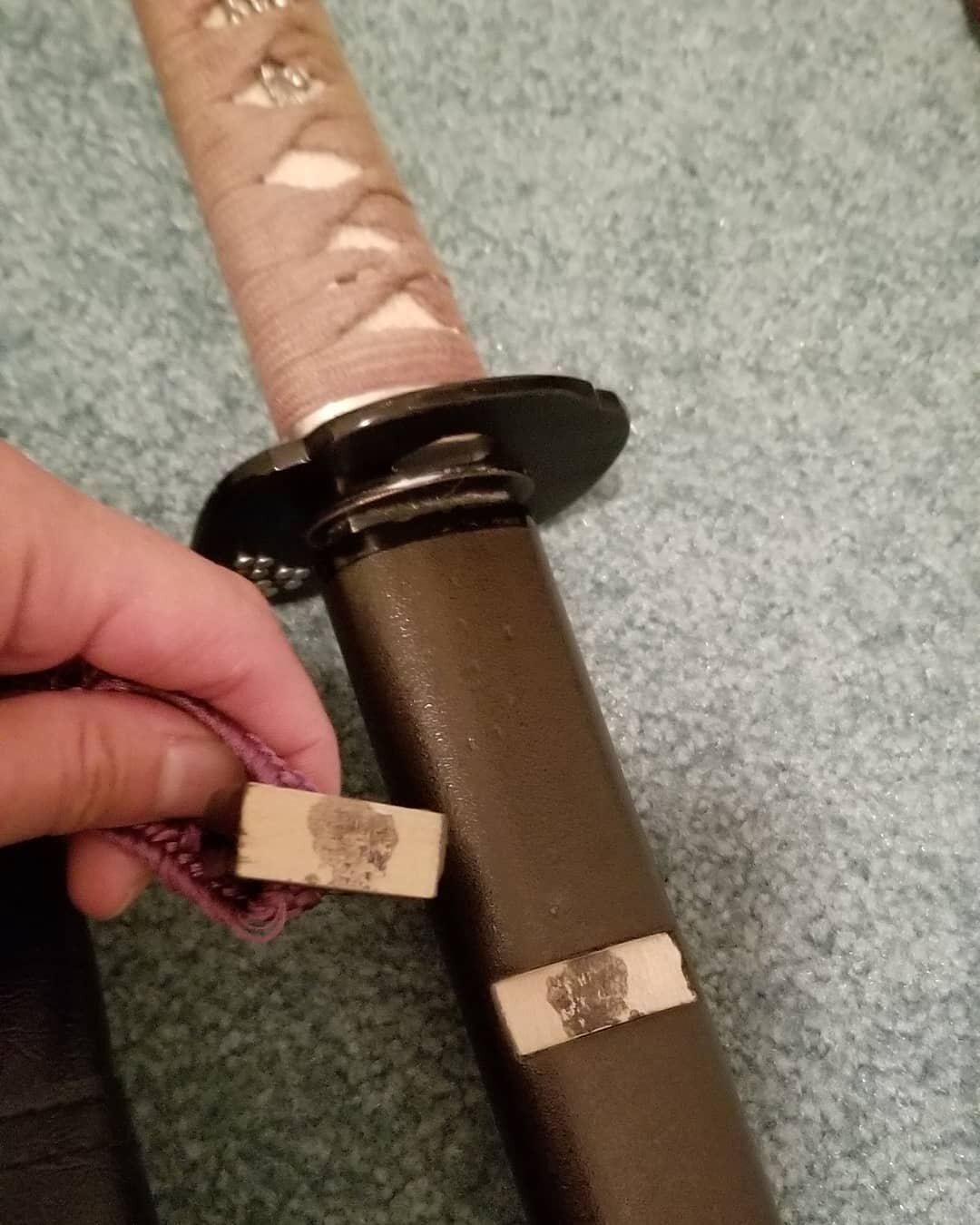
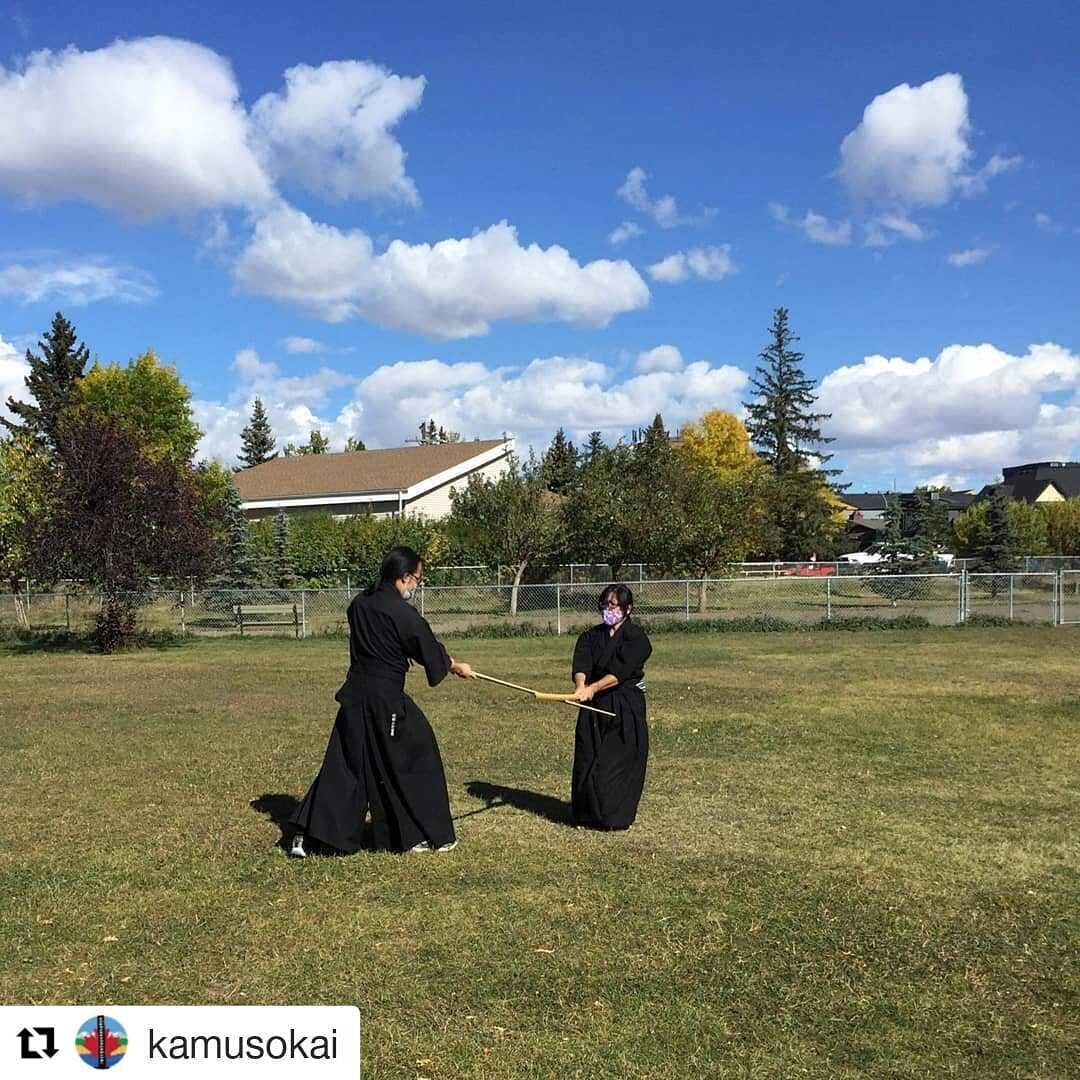
Recently, one of my sensei sent some kanzashi to our dojo, for all the female iaidoka. These handcrafted Japanese hair ornaments were a great reward after an energetic evening of training at Ka Muso Kai.
Recently, one of my sensei sent some kanzashi to our dojo, for all the female iaidoka. These handcrafted Japanese hair ornaments were a great reward after an energetic evening of training at Ka Muso Kai. Long ago, Japanese hair ornaments were used for self-defense. Some sources say that the tips of the kanzashi were dipped in poison.


As you can see from these photos, kanzashi could be useful if one were to be attacked.
These days, "hair sticks" are used to create simple, yet elegant hair styles.
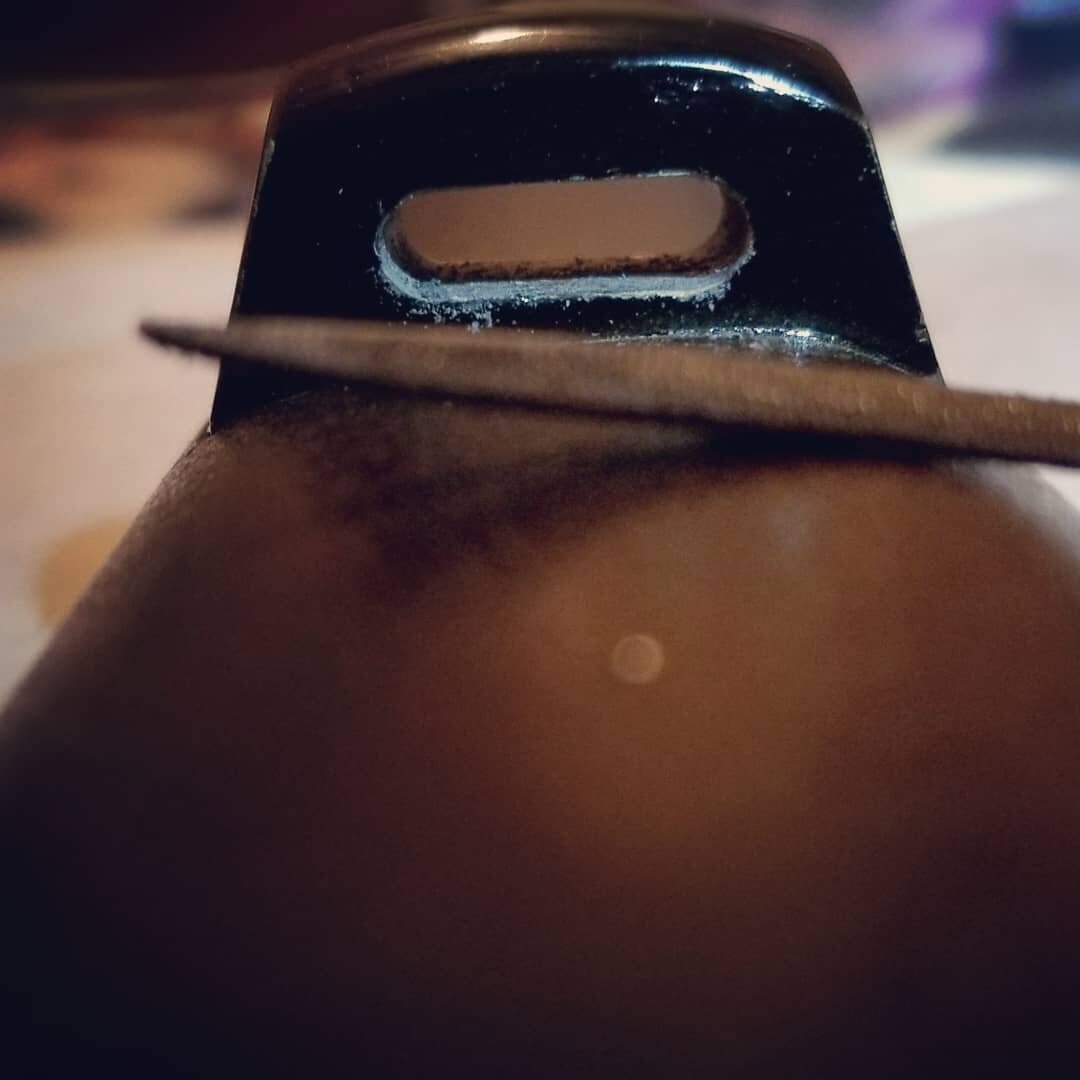
The kanzashi that I received from sensei blends in with my hair. To make it stand out more, I painted some sakura flowers onto the handle:
To seal my flowers onto the wood, I put a couple of coats of Mod Podge and let it dry.
Social Media Links
archives
- #YYCArts 32
- #YYCEvents 39
- Collaborative Music 25
- Community 11
- Composing & Arranging 6
- Entertainment 139
- Entrepreneurship 53
- Freebies 3
- Gardening 1
- Geeking Out 65
- Health & Wellness 120
- Improvisation 25
- Interviews 28
- Learning Music 188
- Martial Arts 13
- Memorization 7
- Music 230
- Music Careers 9
- Music Education 196
- Music Examinations 7
- Music Exploration 55
- Music Gigs 14
- Music Lessons 6
- Music Performance 32
- Music Theory 13
- Musical Instruments 12
- Musician Health 19
- Pets 57
- Piano Technique 12
- Practicing Music 120
- Productivity 20
- Professional Development 11
- Recommendations & Reviews 93
- Recreation 71
- Social Media 6
- Spirituality 10
- Studio Management 33
- Studio Technology 50
- Teaching Music 146
FOLLOW THE STUDIO on Instagram


Affiliate Links
As a Sheetmusicplus and CD Japan affiliate, I earn from qualifying purchases. The earnings help fund the Studio’s blog and YouTube channels. Your support is greatly appreciated.


FOLLOW Budo no Tabi on Instagram