THE MUSICAL MUSE
Blog dedicated to music education, practice tips, health
&
wellness, and geeking out.
Music and Movement Class Ideas
Last week, I ran group classes with my students to explore rhythm and timing through music and movement. It required a bit more planning than usual (and a lot of energy), but based on student feedback, it was well worth it to run these music and movement classes.
Last week, I ran group classes with my students. We explored rhythm and timing through music and movement. It required a bit more planning than usual (and a lot of energy), but based on student feedback, it was well worth it.
Music Group Class Idea #1: Teach Them to Dance
Rhythm seems to be a universal sticking point with students. I wanted to address this in a fun and unexpected way: dance.
I chose two dances that I knew my students were unfamiliar with: the Minuet and the Syrtos. The Minuet was a no brainer to me as all my students learn to play a minuet at some point in their music studies. Like many, they pause between the bar lines during the learning phase.
By teaching them the dance steps, I hoped to drive across the point that you need to feel a minuet in six counts. I also wanted my students to understand how to translate the dance step articulation to our hands at the piano.
Yes, there were some coordination issues. They were fine for the most part. Not surprisingly, the ones who have rhythm issues were the ones who had the most trouble dancing in time. They learned quickly to try and get in sync with the person beside them and did improve as the class went on.
The Syrtos was a last minute change. I originally picked a Country line dance but changed it after some students told me that they already learned the line dance at school.
This is a festive Greek chain dance. It is often done at festivals and weddings. I selected it purely because of the hybrid time signature:
Some groups could only dance as a bunch of individuals instead of forming a human chain. Others could only execute the dance steps at a slow tempo. I soon discovered that having my students face each other helped the less coordinated ones sync up with the rest of the class.
Music Group Class Idea #2: Exploring Timing Through Martial Arts
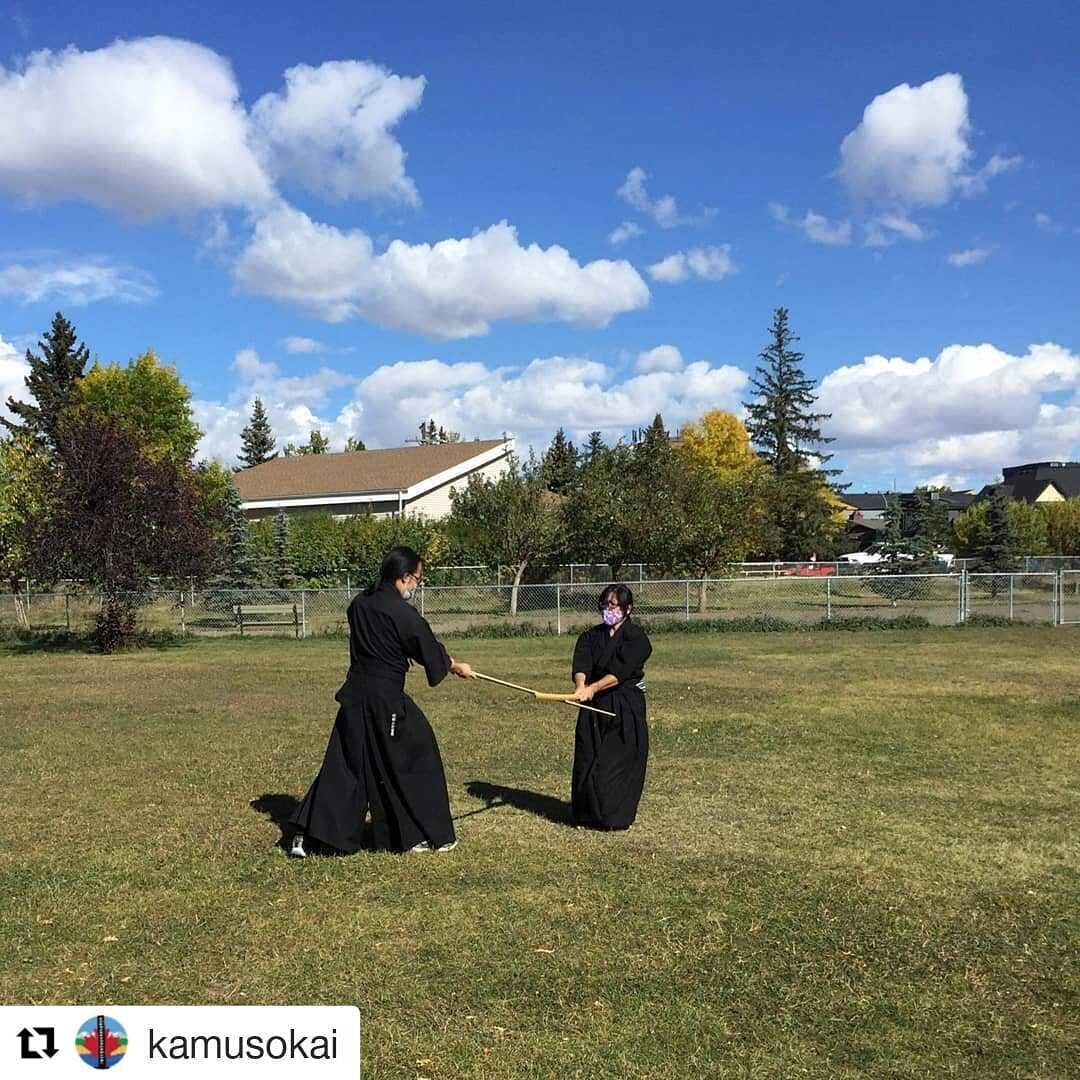
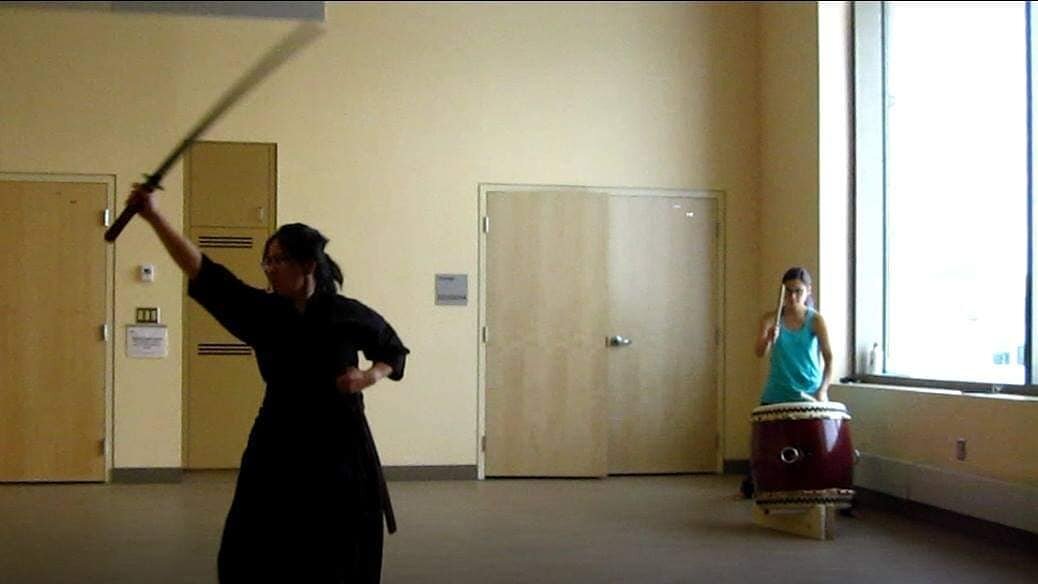
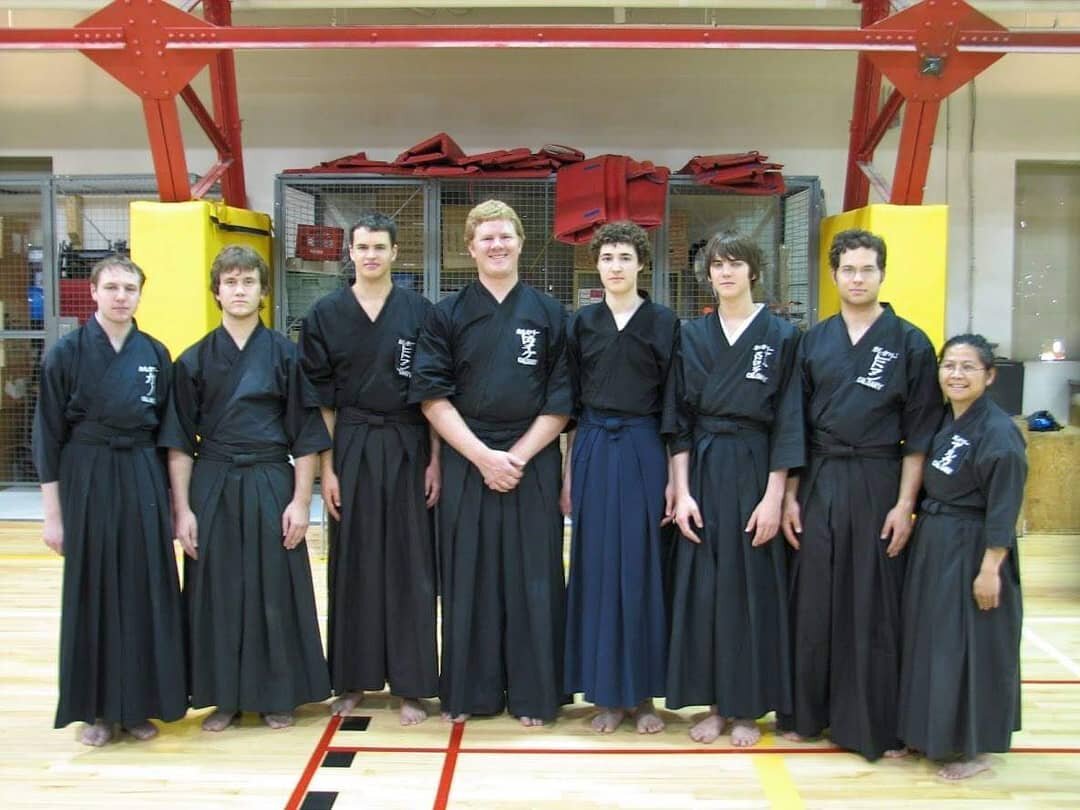
I decided to introduce three martial arts to my students in this group class: Tai Chi, Jodo and Iaido. Nothing too in depth as my intent was to simply show them the importance of timing in a different context.
As I demonstrated, if my timing is off and I'm actually facing a real-life opponent armed with a sword or staff, I'd be gravely injured (or dead). Not to worry readers, my students tried these techniques without contact and used either wooden training swords or broomsticks.
Years ago, I explored Tai Chi. Not once, but twice. It's a lovely meditative art. Although I found it a bit too slow for my liking, I do appreciate its principles and thought it was the perfect way for my students to warm up:
We just explored the first three parts in the sequence. My students were a lot like me when I took Tai Chi for the first time: too scatterbrained and excited. I don't think they reached the point that they could feel energy flowing from their fingertips.
Next up was Jodo, the art of the short staff. My students tried the first three kihon. I even recruited one student who practises Aikido to help demonstrate one of the two-person kata.
It was a good opportunity to test how much I have learned in the past year. Last week also gave me a chance to practice being "sempai".
I introduced Iaido, my primary martial art, to my older students. While demonstrating the first kata, Ippon me Mae, they all asked questions throughout. Even though I demonstrated a set exercise based on a specific scenario, they couldn't help but ask, "What if?": "What if the bad guy moved this way? Or what if he changed what he was doing at the last moment?"
It was the perfect opportunity to discuss practice versus performance. We practice various techniques so that our muscles remember what to do when needed (i.e., in performance). However, once you are on stage, you just have to adapt quickly and push forward when the unexpected happens. Whether it's martial arts, music or another fine art, mindful practice will help you attain a sense of mindlessness and living in the moment when on stage.
I wound up repeating the kata several times to properly demonstrate "jo ha kyu" timing. Then, I had my older students practice sword cuts. Body tension and posture was a huge theme for the evening.
One class was filled with gamers and geeks. They clicked so well that it was hard to keep them focused. They wanted to go out for pizza afterwards.
Now that is another reason I offer group classes to my students: the camaraderie. I didn't have that growing up as a "piano geek". It delights me to no end to see my students bond and build friendships. In fact, those gamers and geeks are completely stoked that I'm looking making the Zelda symphony concert as an official field trip.
One week later, my students tell me that they had a lot fun. Some of the students who have been with me for several years told me that this was their most favourite group class yet. I might have had a few worries about teaching a music and movement group class in the beginning, but it looks like I didn't have to worry at all.
Special thanks to Steinway Pianos of Calgary for putting up with us. The recital hall was the perfect size for this group class.
Reviewing My Student Incentives
This year, I modified my incentive program slightly to incorporate "musician survival skills". These are the areas that we as teachers and performing musicians know are necessary: aural skills, sight-reading, chording, transposition, improvising, technical skills, and practice frequency. They are also the areas that most students either gloss over or ignore.
Throughout the years, I've tried several kinds of student incentive programs. The one that has been the most successful is Maestro's Top Dogs. This year, I modified my incentive program slightly to incorporate "musician survival skills". These are the areas that we as teachers and performing musicians know are necessary: aural skills, sight-reading, chording, transposition, improvising, technical skills, and practice frequency. They are also the areas that most students either gloss over or ignore.
We began the year with aural, note-reading, sight-reading, rhythm, and technical skills. Most of my students enjoyed the speed note-reading challenge using Music Tutor Sight Read and NoteWorks. Some students made it their goal to beat my score. None have, but a couple have come close.
All of my students learned all 24 major and minor pentascales by Halloween. Most are sight-reading two to three levels below their current playing level.
Now that we are in month three, the challenges are more personalized. I got the idea of personalizing the challenges from Michiko Yurko, creator of Music Mind Games.
For instance, a student who doesn't normally practise his or her technical exercises will find that they will earn $10 Maestro Bucks each day that they do. Another student, who isn't as strong with his note-reading (and happens to dislike the note-reading apps) now earns $10 (or is it $15) each time he prepares for the sight-reading challenge.
Is the new student incentive program working? It's working more than the Top Dogs program did on its own. Now, with the two programs combined, a hard working student can walk out of a lesson with over $342 Maestro Bucks, while a less inspired student can still earn approximately $15.
My students get to spend their Maestro Bucks at Maestro's Market. Speaking of which, I'm due for a shopping trip to stock up on their student incentives.
Now, the moment you have been waiting for: freebies! Here are free handouts of the sheets I created for Maestro's Top Dogs and the Musician Survival Skills Challenges.
Maestro's Top Dogs & Musician Survival Skills Challenge Information Sheet
Survival Skill Challenge: Stage 1 (used in September)
Survival Skill Challenge: Stage 2 (used in October)
Survival Skill Challenge: Stage 3 (used from now until the end of the school year)
Teachers, if you would like a pdf of the Maestro Bucks to use for these student incentive programs, please contact me. I'd rather not tempt my students by making the document available online where they could find it.
Past versions:
Music Teacher Freebies
One of the wonderful things about the Internet is that I have been able to learn and use free music teaching resources developed by fellow music teachers all over the world. Now, it's my turn to start sharing some music teacher freebies.
Hello everyone! After taking the summer off (and then some) from blogging, I am refreshed and ready to start posting more regularly. One of the wonderful things about the Internet is that I have been able to learn and use free music teaching resources developed by fellow music teachers all over the world. Now, it's my turn to start sharing some music teacher freebies.
Active Listening Handout
When I'm really organized, I have a set of audio and/or video clips lined up for students to listen to. I used to aim for a weekly "Clip of the Week" but we just go too busy. When my students and I do the Clip of the Week exercise, I normally bring out this Active Listening handout to help guide my students in the art of active listening.
These sheets, like all materials I will be sharing here, are free to download and print for teaching and private study only.
Ways to Describe Music
My younger brother attended Piano Camp for several years in a row. I attended once as an adult. We both had the pleasure of working with Ingrid Clarfield of Westminster Choir College. She had a sheet with some adjectives to help students play more expressively.
Inspired, I found more adjectives and used my basic desktop layout skills to create this handout. One side lists various expressive adjectives while the other has what is the beginning of Maestro's Music Tricks with a bit of a music practice guide, entitled, "Am I Done Yet?"
Visual Music Practice Planners (AKA "Assignment Sheets")
This summer, I researched teaching strategies for autistic students. I don't have any students with autism (that I know of), but there is a person in one of my volunteer groups that might be.
When I looked at various planners and To Do Lists, I realized that this concept would work well for my highly visual-kinesthetic learners (see Teaching Music Using VARK Learning Preferences). I came up with these assignment sheets:
Visual Planner #1: Ideal for younger students, highly visual-kinesthetic learners, and autistic students. I laminated the sheet. Cutting up the practice squares and trying to position them carefully on a laminator sheet was quite the challenge.
Visual Planner #2: For older visual learners. Probably can work with some students on the autism spectrum.
Visual Assignment Sheet #3:Good for multi-modal students with a high score in visual learning.
Lesson Assignment Sheet and Practice Diary for Read/
Write Learners, Teens and Above
I have some students who will be distracted by all the colours. This plain Jane assignment sheet is perfect for them.
Next week, I will share my student incentive program.
Screen Cleaner Coolness at My Studio
I bought it because it looked small and cute. Then, I read the sign on the point-of-sale display at Staples. It stated that most cell phones are dirtier than a toilet seat in a public bathroom. Let that sink in a moment. Eww!
Sold! I picked up one AM Mist Screen Cleaning Block
I bought it because it looked small and cute. Then, I read the sign on the point-of-sale display at Staples. It stated that most cell phones are dirtier than a toilet seat in a public bathroom.
Let that sink in a moment. Eww!
Sold! I picked up one AM Mist Screen Cleaning Block. Even though my smartphone is waterproof (and gets regular washings), my other mobile gadgets, as well as my students’, aren’t.
Once you slide the canister out from the case, you wind up with one cute block containing a gentle cleaning solution. The outside of the cannister is made of microfiber to kill all the germs on any cell phone, tablet or iPod. The sticker on the case indicates that the spray bottle is refillable.
My students notice this small screen cleaner for cell phones, tablets and iPods right away because it’s colourful and cute. Then, I explain what it is to them and they promptly ask to clean their mobile device. It’s an undisputed hit at my studio this week.
For $12.99 CAD at Staples, it’s a pretty cheap way for us to keep the germs away. Other sizes are available on the AM website. If you want to check out a product review of the AM Mist + Spray, check out the one by Gadget Mac.
Music Teaching Idea: Alternatives to Counting the Beats
This week, one of my beginners, a sweet introspective lad, was struggling with the timing on “Starry, Starry Night” from the Faber & Faber Piano Adventures series. His family is doing some travelling this summer and, he’s a bit of a history and geography buff, so we used country names to “count” the beats.
One of the hardest paradigm shifts my students face is learning that rhythm is more important than note accuracy. In fact, the first thing they bring up when I ask them, “How do you think you did?” is “wrong notes”.
“Rhythm,” I tell them, “is harder to fix than notes.” Like many of my students, I am a multi-modal kinesthetic learner, so I use analogy to help drive my point. home: “Ppppp….lease….ppp..aaaass...mmmmeeee a Kleee..ex.”
Our brain tends to fill in the blanks and correct things like typos on a page, so we can read and listen to misspelled or even misused words and generally, suss out the meaning. However, in the case of the Kleenex question above, it’s a bit more difficult to figure out what the speaker is trying to say. This was illustrated beautifully at a Pattern Play workshop I attended in 2010 with Forrest Kinney.
When They Can’t Count the Beats in Music
We try hard to teach and encourage our students to count the beats: “1 & 2 &...” For the younger ones, we often use “ta’s” and “ti-ti’s”. Once in a while, however, I’ve had a student who has a mind block to either.
One year, I taught two boys who were huge Pokémon fans. To subdivide the beats, we used variations on Pikachu’s name: “Pi - Pi - Pi-ka-chu.” You can read about it here. For some students, we use food: “blue-ber-ry, huck-le-ber-ry, a-pple, pie”. It tends to make us extremely hungry during lessons, though.
This week, one of my beginners, a sweet introspective lad, was struggling with the timing on “Starry, Starry Night” from the Faber & Faber Piano Adventures series. His family is doing some travelling this summer and, he’s a bit of a history and geography buff, so we used country names to “count” the beats. We even invited the Grade 12 student after him to contribute, a process they both enjoyed.
Here’s our handiwork:
When I asked him to clap a small passage and later play it, my student performed marvelously.
Further Reading on Other Ways to Teach Counting the Beats in Music
Four Ways to Prepare Ti-Ti and Ta
Social Media Links
archives
- #YYCArts 32
- #YYCEvents 39
- Collaborative Music 25
- Community 11
- Composing & Arranging 6
- Entertainment 139
- Entrepreneurship 53
- Freebies 3
- Gardening 1
- Geeking Out 65
- Health & Wellness 120
- Improvisation 25
- Interviews 28
- Learning Music 188
- Martial Arts 13
- Memorization 7
- Music 230
- Music Careers 9
- Music Education 196
- Music Examinations 7
- Music Exploration 55
- Music Gigs 14
- Music Lessons 6
- Music Performance 32
- Music Theory 13
- Musical Instruments 12
- Musician Health 19
- Pets 57
- Piano Technique 12
- Practicing Music 120
- Productivity 20
- Professional Development 11
- Recommendations & Reviews 93
- Recreation 71
- Social Media 6
- Spirituality 10
- Studio Management 33
- Studio Technology 50
- Teaching Music 146
FOLLOW THE STUDIO on Instagram

Affiliate Links
As a Sheetmusicplus and CD Japan affiliate, I earn from qualifying purchases. The earnings help fund the Studio’s blog and YouTube channels. Your support is greatly appreciated.


FOLLOW Budo no Tabi on Instagram