THE MUSICAL MUSE
Blog dedicated to music education, practice tips, health
&
wellness, and geeking out.
Preparing for the Long & McQuade Music Education Contest
For the first time, my studio submitted an entry to Long & McQuade's Annual Music Education Contest. It's been a really neat experience for my students and I.
For the first time, my studio submitted an entry to Long & McQuade's Annual Music Education Contest. It's been a really neat experience for my students and I.
When I saw the poster back in November, I had a hunch that the four students I selected for the project would work well together (aged 11 - 13). Three of them had already worked together in combo classes and improv classes in previous years. I went on a hunch with the fourth member. This is her first year studying with me. However, her creative vision and personality seemed like a good fit for the other three.
In December, D stepped up to be Team Captain/Music Director. They held planning meetings at my studio, starting in January. G, the new student, wound up being the Secretary, writing down ideas and project deadlines and practice schedule on the whiteboard. E picked the song, while W brought supplies for their photo shoot.
They opted to perform "50 Ways to Say Goodbye" by Train:
They wound up practicing sometimes twice a week at my studio throughout January. They did most of the planning by themselves. I served as an advisor, while D's mother helped supervise meetings while I was teaching.
After several discussions over their band name, they christened themselves "WEDG" (opting to use the first initial in their names). The group is comprised of W (cajón/vocals), E (lead vocals), D (vocals/keyboard) and G (keyboard/hand percussion).
I have a digital piano in my office, so I was still able to teach while WEDG practiced in the studio. At the end of the evening, I emailed the mp3 files from their practice for them to review.
There was one setback. Long & McQuade announced that the audio category was full at the end of January. The kids decided to press forward and record as they were already planning to continue working together. They were already talking about CD covers and decided they could still submit an photo entry for the contest.
We did receive good news last week though, in that Long & McQuade re-opened the audio category for the bonus prizes. Last Friday, the group recorded their entry AND posed for photos for not only the photo contest, but also their CD cover.
To my delight, I even heard a bit of their own compositions in passing. I was occupied with setting up the recording equipment when I overheard one of them say, "Let's run through our song first." I was floored as I listened to them run through a catchy pop tune that they created.
Whether WEDG wins a prize in the Long & McQuade Music Education Contest or not doesn't really matter. The moment I heard them come together as a completely cohesive unit for the recording their final take and the surprise moment when they ran through their own band songs - that's what matters. The ties created by their shared love for music, along with their shared vision. As their teacher, I couldn't be any prouder than I was at that moment. I cannot wait to hear what they come up with next.
Advice on Music Exams, Cramming and Number Games
Sometimes, our music students are still scrambling to get ready for their music exams. If you're like my one Grade 9 piano student who has been trying to memorize his Brahms' Intermezzo, it's too late.
Sometimes, our music students are still scrambling to get ready for their music exams. If you're like my one Grade 9 piano student who has been trying to memorize his Brahms' Intermezzo, it's too late. You need to start looking at the numbers and focusing your energy on the areas where it is do-able to in the time you have left to prepare. Take a look at what he'll be doing at his Gr. 9 partial examination through Conservatory Canada:
List C (Romantic): 10 marks
List D (Late Romantic to Contemporary Classical): 10 marks
Studies (2): 10 marks (worth 5 apiece)
Technical Tests: 14 marks
Memory: 2 marks (1 for List C and 1 for List D)
Now take a look at what examiners are looking to award Honours (70 - 79%)
consistent tempo
clean rhythms
clean notes
technical facility
clear dynamic contrasts
some articulation
a sense of phrasing
good tone
sense of musical style
Memory needs lots of time for the music to settle (and performances). As you can see, memorization is only worth one mark for his Intermezzo. I asked him if he wanted to sacrifice the 70ish marks he'd get for all of the above for that one measly memory mark. For a piece that's not completely secure, there is a good chance that these things will crumble under the pressure of an exam.
If you're like my student, you're better off focusing on getting the basics as stated above. If those are secure, you can still walk away with Honours or even First Class Honours.
Technique is a big area. It's worth 14 - 16 marks alone, depending upon the grade and the music conservatory you are following. If your technical facility is lacking, examiners will penalize you. This is not an area to cram in at the last minute.
Sight-reading, rhythm and ear training are crammable - to a degree. If this is truly a weak spot for you, then it is an area you need to work on throughout the year, not just one week before your exam. However, bear in mind that sight-reading is worth 10 marks (clapping and playing), while ear and rhythm training are worth 10 marks. Those are easy marks to give away but just as easy to keep with some consistent practice.
I used to panic over melody playback (worth four marks). In hindsight, I should have focussed on nailing my intervals, chords and cadences more (worth six marks). That, combined with my clap backs, would have balanced the scales a bit.
To wrap up, when you're trying to play the "numbers game" with your exam marks, keep in mind the following:
Beef up the foundation (the basics) of the areas that are worth the most marks.
If you know that one area is going to be wobbly no matter what, then look at the other elements in that section and try to strengthen those areas.
Just guess on the wobbly areas. You may get partial marks.
Speak with your teacher if you have any questions on this or need more advice. The mark breakdown for each grade is listed in the conservatory syllabi.
Sources: Conservatory Canada Piano Syllabus & Royal Conservatory of Music Examiner's Guidelines for Assessment of Repertoire.
Memory needs lots of time for the music to settle (and performances). As you can see, memorization is only worth one mark for his Intermezzo. I asked him if he wanted to sacrifice the 60 or so marks he'd get for having most of the notes, rhythm and the tempo there for that one measly memory mark. For a piece that's not completely secure, there is a good chance that things will fall apart under the pressure of an exam.

My Kotatsu Table Project
t seems like there is a kotatsu table in every household featured in the anime shows I watch. A kotatsu is a heated Japanese table. The special kotatsu heater sits on the underside of the table. They are generally fairly low, with a futon placed on top to keep the heat in. The first time I saw it, I thought, "Man, I really need one of those!"
It seems like there is a kotatsu table in every household featured in the anime shows I watch. A kotatsu is a heated Japanese table. The special kotatsu heater sits on the underside of the table. They are generally fairly low, with a futon placed on top to keep the heat in. The first time I saw it, I thought, "Man, I really need one of those!"
Japanese homes don't have central heating, so having one of these in your home is a must once winter hits. If the Internet is an indicator, it's catching on here in North America too. Great for those of us without a fireplace or those who are looking for ways to keep heating bills down.
Last winter, I decided to make a kotatsu table. It was a lot easier than I thought it would be.
I found this set of instructions on How to Build and American-style Kotatsu.Then, it was off to Ebay to order my kotatsu heater from 4kokuq. It has to be a kotatsu heater. An ordinary space heater would be a fire hazard. Kotatsu heaters have low voltage, so they can handle being in an enclosed space.
The cost for the kotatsu heating unit, including shipping and the exchange rate, was just under $100 CAD. It came within two weeks, as promised.
Next, I went to IKEA to pick up a LACK table (under $20) and a comforter from Wal-Mart for approximately $25. I picked up four fluffy accent pillows to use as seating cushions. I think they were between $7 - 12 each. Thankfully, Canada uses the same voltage as Japan, so I did not need to purchase an adapter.
It didn't take long to assemble the LACK table. The next step was to install the heater. At the time, I was only in Level 1 of Japanese language classes, so I couldn't read any of the kanji in the instructions. However, I did learn that it asked me to "Insert kotatsu heater in wooden frame underneath table. Insert screws into holes of said frame and screw into the heater."
Perhaps you see my challenge. I don't have a bona fide kotatsu table, so there is no frame. This required a quick trip to Home Depot. The solution? Corner Braces.
I marked in pencil where I should position the heating unit and screwed in the braces at each corner. Then it was time to screw the heating unit in.
Since the LACK table lacks space inside the table leg to thread the power cord through, another adjustment had to be made to keep the cord in place. This time, a picture hook came to my rescue.
Last two steps were pretty easy - put the comforter on top and then what was originally the shelving unit for the LACK table on top of the comforter.
Click here for my Kotatsu Making Photo Album.
This clip shows some other uses for this versatile Japanese table:
December 12, 2013 update: If you don't want to make your own, one of my fave otaku stores, J-List makes them. A steal of a deal for $100 USD. Click for J-List Kotatsu!
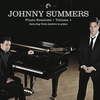
Johnny Summers - Piano Sessions Vol. 1 Album Review
Johnny Summers' third album, Piano Sessions Volume 1, showcases his versatility as a musician and presents a diverse mix of musical genres. From swing to ballad and from honky-tonk to blues, there is something for every music aficionado to enjoy.
Johnny Summers' third album, Piano Sessions Volume 1, showcases his versatility as a musician and presents a diverse mix of musical genres. From swing to ballad and from honky-tonk to blues, there is something for every music aficionado to enjoy.
The album also features Chris Andrew on the piano and several special guests, including a capella group The Polyjesters, Jason Valleau (bass/vocals), Sheldon Valleau (ukulele/vocals), Shane Statz (tenor sax), Johanna Silanpaa (vocals), Kodi Hutchinson (bass) and Al Muirhead (trumpet).
Johnny Summers is a Calgary-based vocalist and trumpeter. He is also the founder and music director of the Calgary Jazz Orchestra. Johnny runs Summertime Music.
Piano Sessions Volume 1 Highlights
The opening track, "I Wonder, I Wonder" is an easygoing swing number. A short introduction is played by Chris Andrew, Jason Valleau on bass and Sheldon Valleau on ukelele before the rest of the ensemble joins in. The Polyjesters' "oohs" add a touch of doo-wop to the mix. Chris' weaving lines and shakes on the piano dance playfully around Summers' smoky vocals. Summers' trumpet solo ebbs and flows as gently as the Pacific Ocean while watching a peaceful sunset at the beach.
Chris Andrews opens "Folsom Prison Blues" with a slightly dissonant chord and shakes before steadily gathering steam as the train (er song) pulls out. Johnny Summers and Shane Statz add some train whistles sounds on the trumpet and tenor sax respectively. They take a slower pace than Johnny Cash does. The slightly slower tempo enables the ensemble to deliver a more soulful interpretation and bend the notes more. The transition from the sax to the trumpet solo is seamlessly done.
"Simple Song" is simply stunning. From the tender opening laid down by Chris Andrews, this ballad unfolds one layer at a time. The heartfelt lyrics start gently and gradually grow in passion. For claiming to not be as fancy as Shakespeare or Van Gogh, it's downright eloquent. Gentlemen, this is the perfect song to play for the special woman in your life on Valentine' Day:
Vocalist Johanna Sillanpaa joins Johnny in singing a playful arrangement "Exactly Like You". Their vocals blend together beautifully in this delightful jazz standard. Kodi Hutchinson and Chris Andrew provide catchy, rhythmic comping throughout.
The final track "Going Home", is based on the second movement theme from Antonin Dvořák's New World Symphony. Johnny Summers' phrasing on the trumpet is smooth and soulful. Chris' solo nails the melancholy tone of this beautiful theme.
Piano Sessions Volume 1 Track Listing
I Wonder, I Wonder - Cecil Gant (3:41)
She Thinks I Still Care - George Jones (5:51)
Maybe This Time - John Kander, Fred Ebb (5:36)
Dream a Little Dream of Me - Fabian Andre, Wilbur Schwandt, Gus Kahn (3:22)
Folsom Prison Blues - Johnny Cash (3:53)
My Baby Just Cares for Me - Walker Donaldson, Gus Kahn (3:16)
Simple Song - Johnny Summers (4:21)
Exactly Like You - Jimmy McHugh, Dorothy Fields (2:41)
You Don't Know Me - Cindy Walker, Eddie Arnold (5:44)
I'm an Errand Boy for Rhythm - Nat King Cole (4:09)
Going Home - William Arms Fisher, Antonin Dvořák (4:30)
Genres: jazz, blues, gospel, funk, swing, ballad, honky-tonk Label: Summertime Music Cover Design by FLIPP.ca Photography by Michael Stellmach
Piano Sessions Volume 1 Review
The balance and sound quality on Piano Sessions Volume 1 album is just beautiful. Not one voice is out of balance. Superb. The variety of musical styles represented gives new listeners a taste of each style, without offering too much of any one genre. The musicians all work well together, that is, they sound good together and complement one another. That's the byproduct of everyone involved having worked together before.
If anything, this album makes me excited to hear more of Johnny Summers' original works. If they are like "Simple Song", I can't wait for the next release.
Johnny Summers Piano Sessions CD Release
The CD release for Piano Sessions Volume 1 is on Saturday, March 16, 2013 at 7:30 p.m. at the University of Calgary in the Eckhardt-Gramatte Hall, Rozsa Centre. Tickets go on sale February 15 at the U of C Campus Ticket Centre.
To purchase an advance copy of Piano Sessions Volume 1, come out to a Calgary Jazz Orchestra performance on Sunday, February 10, 2013 or Saturday, February 23, 2013. Alternatively, you may contact Johnny Summers at Summertime Music.
March 11, 2013 update:
Johnny Summers' upcoming release, Piano Sessions Volume 1 recently won two Global Music Awards for Best Male Vocalist and Best Listener Impact. The album is currently available on CD Baby and will be available on iTunes on March 16, 2013.

Using the Circle of Fifths to Practice Technique
This popped into my head while I was teaching a lesson last week. I asked my student to play her Grade 8 piano technique by going through the Circle of Fifths.
This popped into my head while I was teaching a lesson last week. I asked my student to play her Grade 8 piano technique by going through the Circle of Fifths. Not only was it quickly evident that my student needs to review her key signatures, but it also was clear that she was used to practicing her technique in a certain order. However, during a music examination, you have no clue which of the required technical elements you will be asked to play. It is important to mix things up regularly.
In this piano lesson tutorial, I demonstrate what how my student practiced her piano technique using the Circle of Fifths approach.
Social Media Links
archives
- #YYCArts 32
- #YYCEvents 39
- Collaborative Music 25
- Community 11
- Composing & Arranging 6
- Entertainment 139
- Entrepreneurship 53
- Freebies 3
- Gardening 1
- Geeking Out 65
- Health & Wellness 120
- Improvisation 25
- Interviews 28
- Learning Music 188
- Martial Arts 13
- Memorization 7
- Music 230
- Music Careers 9
- Music Education 196
- Music Examinations 7
- Music Exploration 55
- Music Gigs 14
- Music Lessons 6
- Music Performance 32
- Music Theory 13
- Musical Instruments 12
- Musician Health 19
- Pets 57
- Piano Technique 12
- Practicing Music 120
- Productivity 20
- Professional Development 11
- Recommendations & Reviews 93
- Recreation 71
- Social Media 6
- Spirituality 10
- Studio Management 33
- Studio Technology 50
- Teaching Music 146
FOLLOW THE STUDIO on Instagram


Affiliate Links
As a Sheetmusicplus and CD Japan affiliate, I earn from qualifying purchases. The earnings help fund the Studio’s blog and YouTube channels. Your support is greatly appreciated.


FOLLOW Budo no Tabi on Instagram