THE MUSICAL MUSE
Blog dedicated to music education, practice tips, health
&
wellness, and geeking out.
World Music Exploration - Vivaldi's Four Seasons
This week, we are listening to the music of Antonio Vivaldi (1675-1741). He was nicknamed the "red priest" because of his red hair, which was unusual at the time. He worked at Conservatorio dell'Ospedale della Pietà, which was a music school for orphaned girls.
Our musical journey moves northward to Venezia (Venice) for this week's clip. While setting up the clip, I surveyed my students."Pizza" and "pasta" are the first words that came to mind when asked about their knowledge of Italy. "It's shaped like a boot," came third. However, One of my 10 year-old students impressed me with his knowledge of Italian history, namely all about the city states and which country owned which area.
This week, we are listening to the music of Antonio Vivaldi (1675-1741). He was nicknamed the "red priest" because of his red hair, which was unusual at the time. He worked at Conservatorio dell'Ospedale della Pietà, which was a music school for orphaned girls.
Vivaldi composed cantatas, concerti, chamber music, church music, operas and an oratorio. He was one of the first Baroque composers to write for clarinet.
This is "Winter" from Vivaldi's Four Seasons. This work is comprised of four violin concerti:
The first thing my students have commented on are the dramatic masks, which Venice is famous for. Next, their eyes bug out when they hear the opening theme played on the solo violin.
Four Seasons is an example of programme music. Based on sonnets, this work is rich in imagery. My students and I have decided that this excerpt could be used for a snowstorm. One student imagined a couple of dogs chasing and playing in the snow.
(c) 2012 by Musespeak(TM), Calgary, AB, Canada. All rights reserved.

An Introduction to the Cajón
The cajón or drum box, is a small instrument with a big voice. Pronounced “ka-HONE”, this versatile instrument is Spanish for “box” or “crate”. This portable drum is used in a variety of performance settings and music genres.
The cajón or drum box, is a small instrument with a big voice. Pronounced “ka-HONE”, this versatile instrument is Spanish for “box” or “crate”. This portable drum is used in a variety of performance settings and music genres.
A Brief History on the Cajón
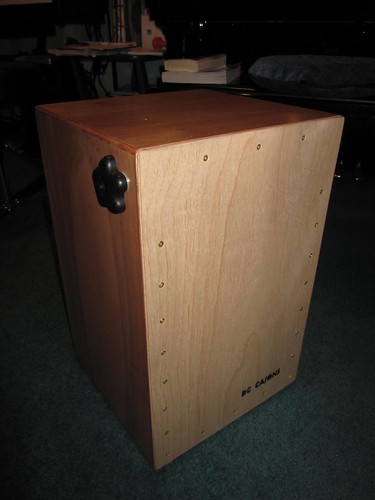
Cajon portable drum. Photo by R-M Arca
Most sources indicate that the cajón is Afro-Peruvian in origin. In the 16th century, African slaves took shipping crates and played them as they would play a drum from their motherland. Sometimes, drawers were used.
By the 19th century, the cajón had a distinct place in Afro-Peruvian and Afro-Cuban music. From Flamenco music to pop, rock and jazz, the cajón has steadily grown in popularity.
Cajón Construction
The cajón is generally made of pine, although there are several other types of woods used today. Another layer of thin plywood is nailed to the front. One notable feature is that the top corners of the face are left loose so as to produce a slapping sound. Another distinct feature is the sound hole in the back.
Some cajóns also have a snare (adjustable or non-adjustable). For a traditional Peruvian or African sound, the snare is turned off. There are also bongo cajóns, tubular and trapezoidal ones available too.
Buying a Cajón
If you live in a large city centre, chances are one of more music stores in your area is a licensed retailer of cajóns. If not, some music stores do ship worldwide.
There are several popular cajóns brands available around the world:
Asia: Pearl
North America: KOTZ™ in the US
Europe: Meinl Cajon in Germany, The Cajon Drum Shop in the UK, Requena cajon drums in Spain, Cajón de Gregorio in Spain and Schlagwerk drums in Germany
Cajóns vary in cost, depending on the make and the material used. Beginner cajóns are in the low $100's, while custom, hand-made cajóns can cost well over $600.
Learning to Play the Cajón
Getting started on the cajón is relatively easy. The instrumentalist sits on the cajón, with the drum face pointing forward. Striking the lower part of the drum face produces a warm bass tone. As you move higher, the sound is higher, similar to a bongo. You can slap the loose ends as well.

Vater Cajon Brushes. Photo by R-M Arca.
Drum accessories can enhance your cajón configuration. You can add other percussion instruments, such as cymbals, castanets, tambourines and blocks. As well, drum brushes or specific cajón brushes expand the range of tones you can produce on the instrument.
Several resources are available online to help you develop proper technique. There are free video tutorials, such as those available at Learn Cajon and Framed Drums. DVD courses available by notable cajón instrumentalists David Kuckhermann and Danny Moreno on their websites or via Amazon.
For those who one one-on-one instruction, contact your local flamenco club or Peruvian cultural society and enquire about cajón instructors in your area. Alternatively, some musicians do offer cajón lessons through Skype.
In addition to being a portable drum, the cajón is a relatively easy instrument to learn. From its humble Afro-Peruvian roots, it has expanded into other genres – from flamenco to jazz and from pop to church music.
Plus, it's just a lot of fun to play. Case in point: Japanese jazz-rock duo Pia no Jac:
© 2012 by Rhona-Mae Arca, MusespeakTM. All rights reserved.
World Music Exploration - Tarantella
It translates to "tarantula". It's a circle dance which features changes in direction and tempo. This recording features the mandolin. The above version is Neopeltana one.
Now that the ensemble classes and Virtual Choir 3.0 (that's another story) are behind us, we can resume our world music exploration. This month, my students and I are exploring one of my favourite countries in the world: Italy.
Italy is rich in history, food, culture and of course - music! This is perhaps one of Italy's most famous folk dances, the Tarrantella:
It translates to "tarantula". It's a circle dance which features changes in direction and tempo. This recording features the mandolin. The above version is Neopeltana one. There is also a Sicilian and Calabrese Tarantella.
All this talk of Italy has given me a huge craving for Italian cuisine and limone gelato.
(c) 2012 by Musespeak(TM), Calgary, AB, Canada. All rights reserved.

Doggone Holidays - Unique Ideas for Dog-Friendly Vacations
People love their pets. According to the Travel Industry Association of America, over 49% of Americans consider their pets to be full-fledged members of the family. In 2009, 18% of Americans took their pets on vacation with them.
I was quite surprised that this piece of mine fell victim to Suite101.com 's Great Purge. I had a blast writing this. There are just so many places to take Maestro to!
People love their pets. According to the Travel Industry Association of America, over 49% of Americans consider their pets to be full-fledged members of the family. In 2009, 18% of Americans took their pets on vacation with them.Businesses in the tourism industry are getting the hint. Some establishments offer packages for dogs and the people in their lives, such as activity camps and canoeing adventures; while one beach town has opened the majority of its doors to canine visitors.Outdoor Vacations for Adventurous Dogs and Their Families Camps are sprouting up with fun activities for dogs to enjoy with their entire family. These companies include classes such as agility, flyball, frisbee, rally obedience and swimming. In addition, these camps offer workshops and demonstrations for human family members on various topics, such as first aid for dogs, understanding your dog's body language and troubleshooting behavioral issues.
Canine Club Getaway on Roaring Brook Ranch (Lake George, NY), offers five-day getaways for the entire family. In addition to classes and demonstrations, they offer hikes, Barks and Crafts, a costume contest, Yappy Hour and doggie weddings.
In Chicago, IL, Camp Dogwood designs offers weekend and extended camps throughout the fall, winter and spring. Some of their unique classes include Training Secrets: Teach Your Dog to Do Anything, Dock Diving Workshop and their Rowdy Rover Workshop.
For active dogs and their humans, Dog Paddling Adventures in Richmond Hill, ON, offers exciting outdoor adventures year-round. They offer canoe trips in the summer and in the winter, they offer skijoring and kicksledding in trips. They run hikes in the spring and fall.
Luxurious Vacations for Pampered Dogs and Their Families
An increasing number of hotels, motels and bed and breakfast establishments welcome pets. They offer amenities for their canine guests, ranging from pet beds and water dishes to massages and special menus for the dog. Pet sitters can be arranged when owners want to do some sight-seeing or shopping without the dog.
Hotel Valley Ho in Scottsdale, AZ is one of four hotel resorts recommended by Modern Dog Magazine. Canine guests arrive to find treats, a water bowl and dog blanket in their room. Their goodie bag includes a leash, tennis ball, dog toy, MANKINDog wristband, waste bags and more treats. Hotel Valley Ho offers in-room doggie massages for their canine guests.
In Vancouver, BC, dogs and cats registered in the Palisades Pooch Program at the Pacific Palisades Hotel are welcomed in grand style. In the pet corner, visiting pets are listed on the hotel welcome board. Each canine and feline guest receives treats, water bowls and a special door sign to use when the pet does not want to be disturbed.
For families who want to include their dog on all aspects of their vacation, head to Carmel-by-the-Sea, CA. In "Carmel redefines dog-friendly vacations", Ann Tatko-Peterson states "It has 25 hotels, inns and bed-and-breakfasts welcome pets of all sizes, and 44 restaurants, bars and coffee houses that offer seating where dogs are permitted." Various art galleries, stores, city hall and even the Church of the Wayfarer welcome pets.
Families who consider their dog a full-fledged member of the family have a growing number of vacation spots that welcome and cater to these pampered pets, including activity camps, hotels and tourism sites. Pet owners should research traveling with their dog and handling pet travel anxiety before embarking on a dog-friendly vacation. It is best to make reservations in advance to ensure that the accommodations are prepared to receive all members of the family, furry and non-furry.
(c) Rhona-Mae Arca, 2010. All rights reserved.

Iaido - The Art of Traditional Japanese Swordmanship
A brief introduction to the Japanese martial art of drawing the sword - Iaido.
Another one of my Suite101.com articles that got cut in The Big Purge. I'm not entirely sure why this one didn't make it but as you can see, not concerned enough to dispute it:
In times of war, samurai honed their swordsmanship skills on the battlefield. Iaido was developed as a means for samurai to maintain their skills during times of peace. Today, it is a martial art that attracts practitioners seeking moving meditation. Iaido is related to Kendo and Jodo.
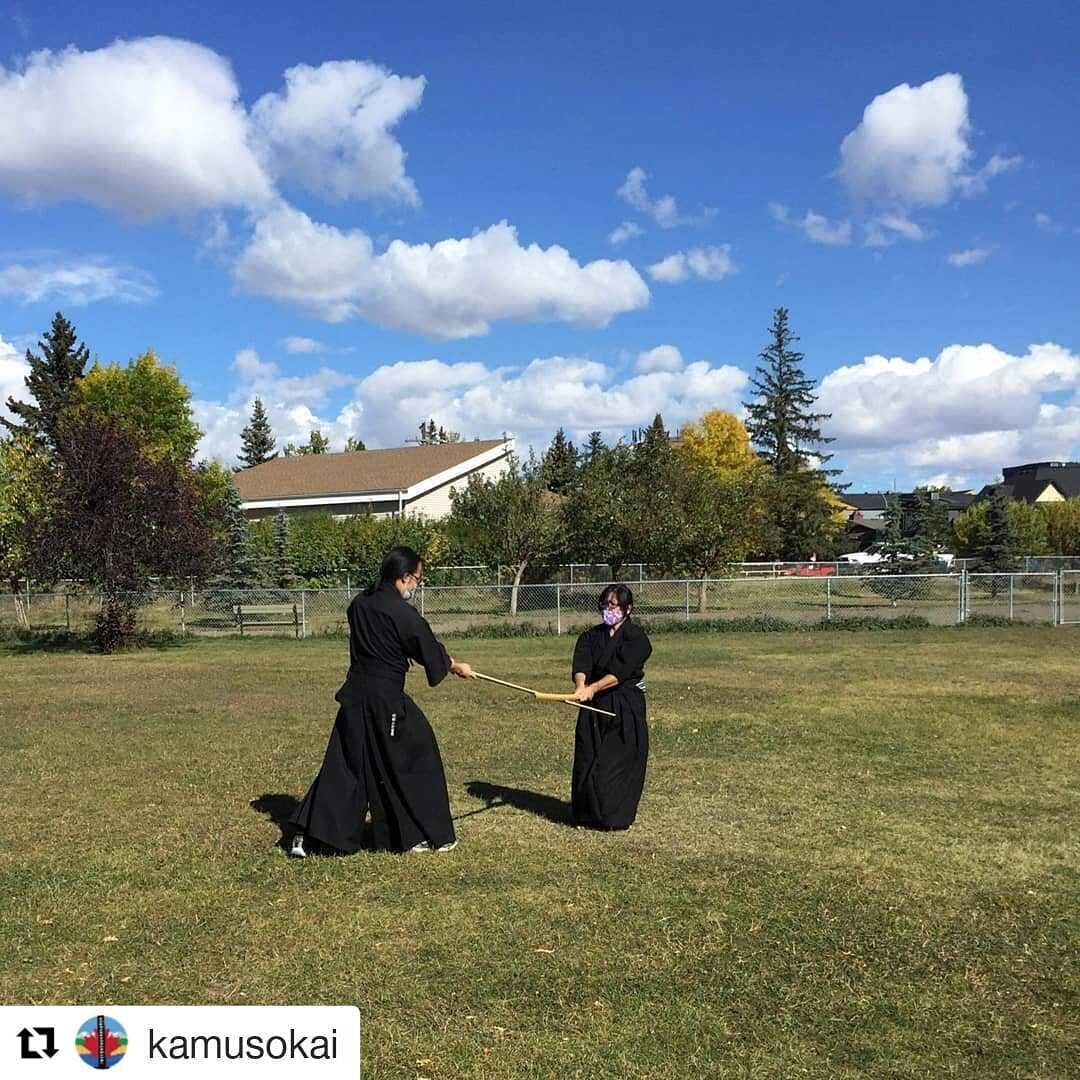
Like its siblings, Iaido involves traditional Japanese weaponry. Unlike Kendo and Jodo, Iaido is a solitary, non-combative martial art. One common translation of the kanji for "Iaido" is the one used by Chris Gilham sensei of Ka Muso Kai: “the way of harmonizing one's self in action at all times and in all conditions.”

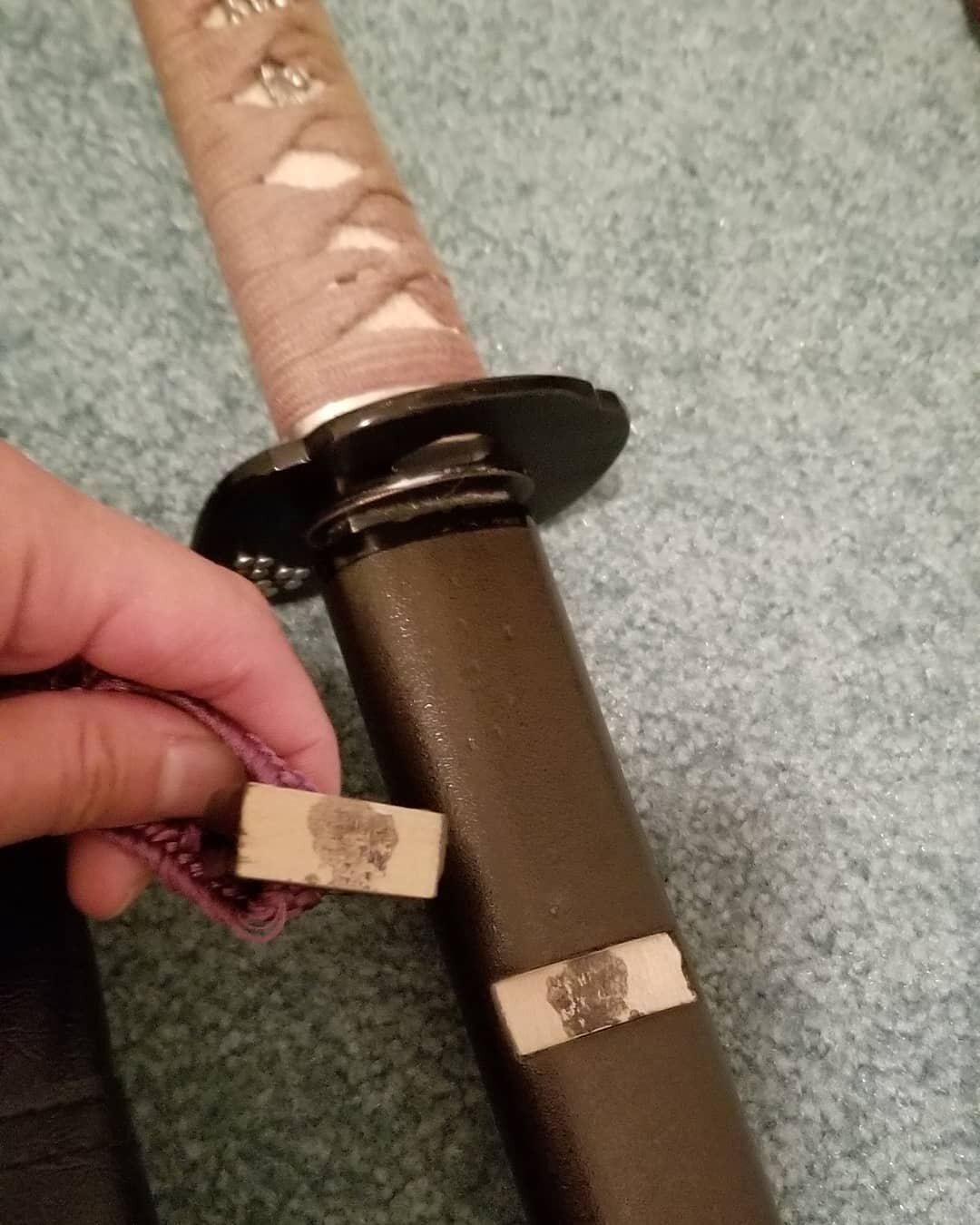
An iaito, or practice sword is custom-made to the users tastes and size. Photo by R-M Arca.
Iaido Clothing and Equipment
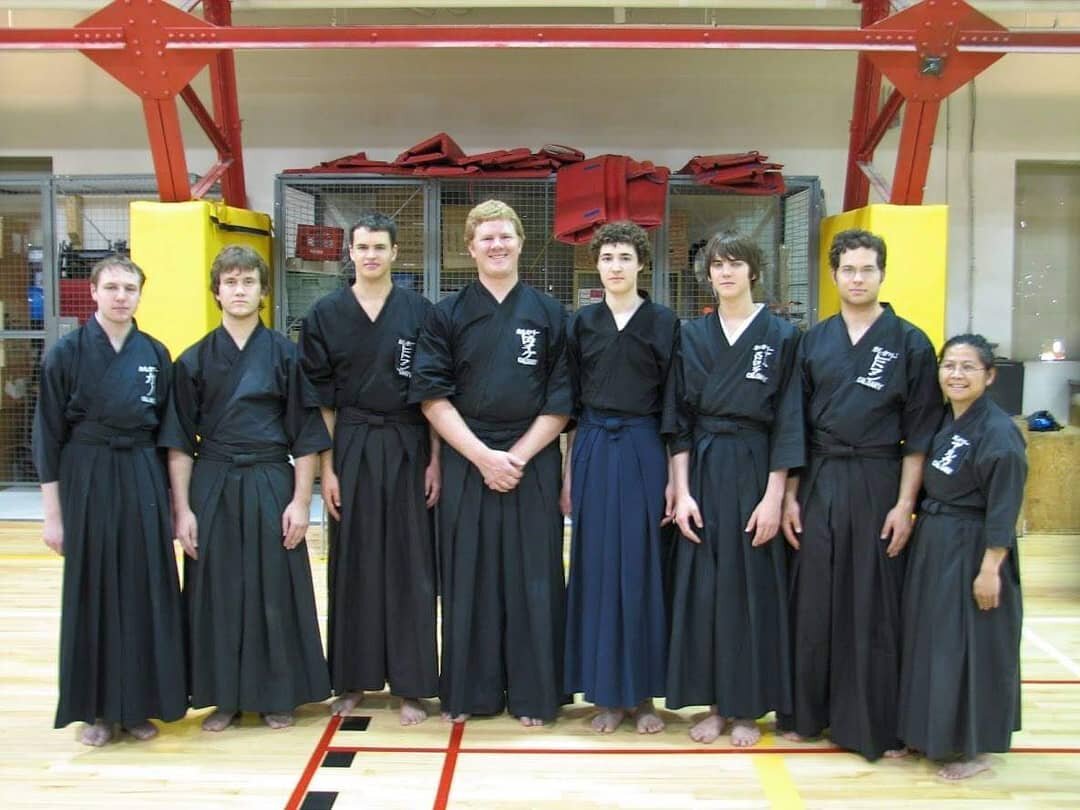
Iaido practitioners, called "iaidoka", begin training with a wooden practice sword (bokuto or bokken). As training progresses, they invest in an iaito, a dull-blade training sword. Advanced practitioners can use a shinken (live blade). Only iaito and shinken are allowed when grading. The Iaido uniform consists of a black gi, hakama and obi. The sheathed sword is inserted through the obi. The sheath (saya), is secured to the uniform by tying a silk or cotton cord (sageo), to the hakama.
Iaido Customs and Etiquette
The newest students in the dojo are responsible for set-up and clean-up of the training space. Upon entering the dojo, Iaido practitioners bow towards the shrine (shinzen or kamiza). While in the dojo, iaidoka traverse barefoot and in straight lines. They walk along the periphery of the dojo as a safety precaution.
The instructor is addressed as “sensei” (teacher) while the more senior students are called “senpai” (seniors). Junior members are called “kohai.” When responding to one another, practitioners respond affirmatively in Japanese. When greeting or thanking one another, iaidoka bow to each other as a sign of respect.
Iaido Training and Techniques
Iaido training is comprised of reiho (etiquette), warm-up exercises and kata (forms). Opening and closing reiho involve bowing to the shinzen, sensei and sword. Warm-up exercises include sword cuts in various positions. The sensei introduces a technique to a student and then leaves the student to practice. Periodically, the sensei and senpai check on a kohai's progress. Once a student masters a technique to the sensei's satisfaction, a new one is taught.
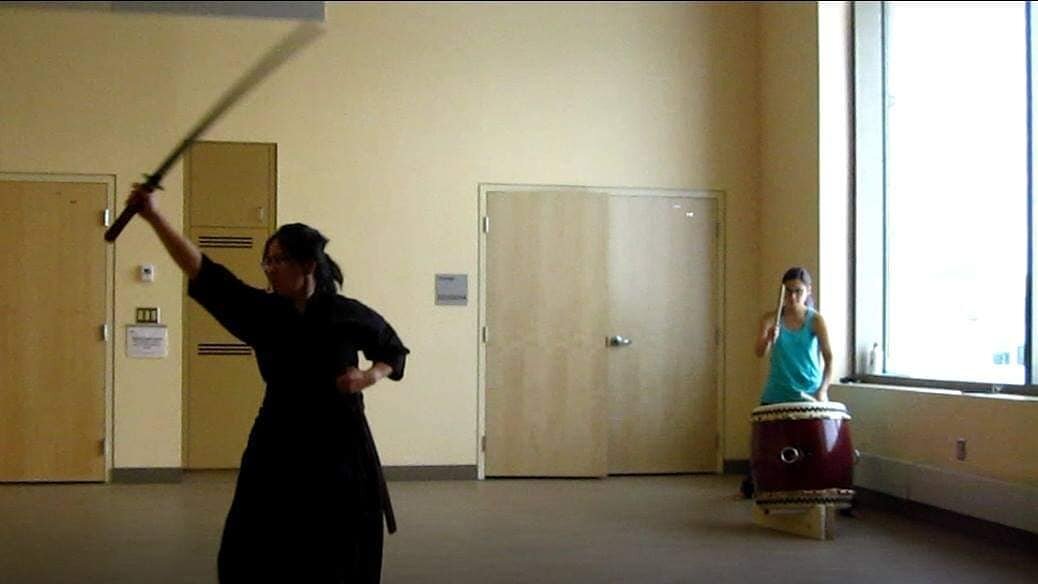
Iaido kata are patterns that represent everyday situations a samurai might have faced, such as drinking with someone who suddenly draws his sword. Iaidoka perform these kata while facing an imaginary opponent (teki). From a state of relaxed awareness and with the eyes focused on the horizon (metsuke), the Iaido practitioner reacts to an envisioned threat.
There are five parts to every kata:
Nukitsuke: drawing the sword and making the initial cut,
Furikaburi: raising the sword overhead,
Kiri-oroshi: killing cut,
Chiburi: shaking the blood from the blade and
Noto: re-sheathing the sword.
Each kata is completed by returning to one’s original position. Jo-ha-kyu is integral to the rhythm-timing in Iaido. Forms should be executed with fluidity, efficiency and precision, all while the practitioner's eyes are focused on the opponent.
There are 12 forms in the Seitei Iai Gata: mae, ushiro, uke nagashi, tsuka ate, kesa giri, morote zuki, sanpo giri, ganmen ate, soete zuki, shiho giri, sou giri and nuki uchi. After mastering these kata, Iaido practitioners learn older styles of Iaido, such as koryu and okuden.
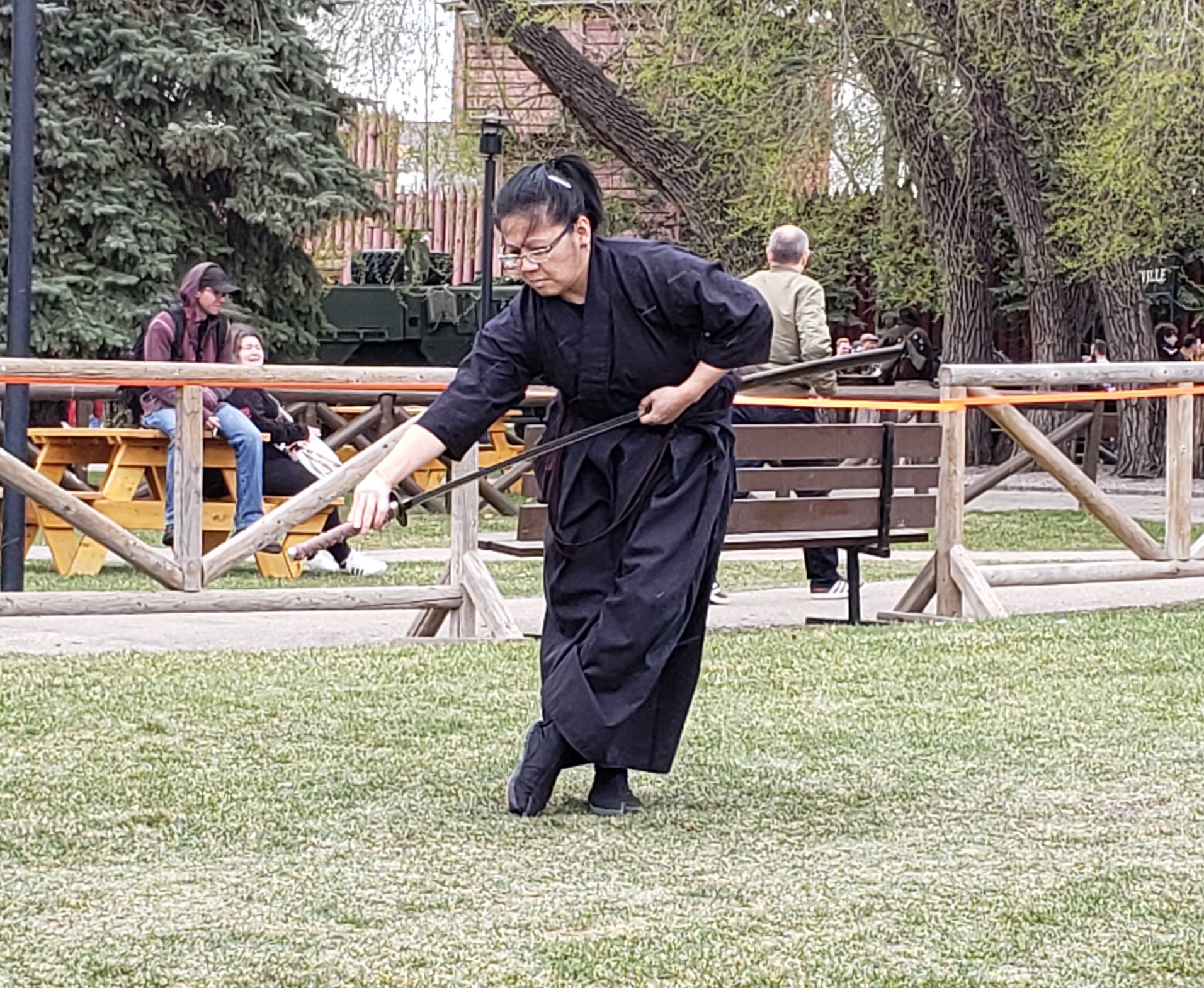
Iaido is the art of of Japanese swordmanship. Photo by Jonathon Wilkes.
Iaido practitioners can participate in tournaments and grading. The All-Japan Federation adopted a -kyu ranking for lower levels and a -dan ranking system for grading black belt levels in Iaido. Many federations, such as the Canadian Kendo Federation, the British Kendo Federation and the All United States Kendo Federation, follow this system.
History of Iaido
Iaido can trace its roots to a Japanese swordsman named Hayashizaki Jinsuke Minamoto no Shigenobu, who lived from 1546 - 1601. His sword techniques were called Batto-Jutsu, Shin Muso Hayashizaki Ryu, Junpaku Den, Shigenobu Ryu and Iai-jutsu.
Upon Hayashizaki's death, his style was carried on by the first Soke (headmaster), Tamiya Taira-no-Hyoe Narimasa, who instructed Tokugawa Ieyasu. By the eleventh Soke, two distinct sword styles emerged: Shimomura-ha and Tanimura-ha. These later evolved into Muso Shinden Ryu and Muso Jikiden Eishin Ryu, two popular styles of Iaido today. The term "Iaido" was first used by grand master Nakayama Hakudo in 1932. He was involved with codifying the techniques for both schools.
Once a means for samurai to maintain their swordsmanship skills during times of peace, Iaido is now a non-combative martial art. Although it is a sword-based art, Iaido is a form of meditation in motion, in which the practitioner strives to reach "mushin" (no-mindedness).
Sources:
Chris Gilham sensei (4th dan), Colin Pitman (4nd dan) and Alex Cook (4nd dan) of Ka Muso Kai.
Aukland Kendo Club: History of Iaido (accessed June 30, 2010).
Fighting Arts: Iaido (accessed June 30, 2010).
Fighting Arts: From the Beginning: The Importance of Reishiki in Iaido (accessed June 30, 2010).
The Iaido Journal: An Introduction to Iaido: Its Purpose and Benefits (accessed June 30, 2010). Copyright Rhona-Mae Arca, 2010. All rights reserved.
Social Media Links
archives
- #YYCArts 32
- #YYCEvents 39
- Collaborative Music 25
- Community 11
- Composing & Arranging 6
- Entertainment 139
- Entrepreneurship 53
- Freebies 3
- Gardening 1
- Geeking Out 65
- Health & Wellness 120
- Improvisation 25
- Interviews 28
- Learning Music 188
- Martial Arts 13
- Memorization 7
- Music 230
- Music Careers 9
- Music Education 196
- Music Examinations 7
- Music Exploration 55
- Music Gigs 14
- Music Lessons 6
- Music Performance 32
- Music Theory 13
- Musical Instruments 12
- Musician Health 19
- Pets 57
- Piano Technique 12
- Practicing Music 120
- Productivity 20
- Professional Development 11
- Recommendations & Reviews 93
- Recreation 71
- Social Media 6
- Spirituality 10
- Studio Management 33
- Studio Technology 50
- Teaching Music 146
FOLLOW THE STUDIO on Instagram





Affiliate Links
As a Sheetmusicplus and CD Japan affiliate, I earn from qualifying purchases. The earnings help fund the Studio’s blog and YouTube channels. Your support is greatly appreciated.


FOLLOW Budo no Tabi on Instagram