THE MUSICAL MUSE
Blog dedicated to music education, practice tips, health
&
wellness, and geeking out.

Our 30 Day Practice Challenge: In the Students' Words
Last time, I shared some of my observations and musings while my students and I participated in the 30 Day Practice Challenge. Now that most of them have completed the challenge, it’s time for my students to share their thoughts on practising every day for 30 days.
Last time, I shared some of my observations and musings while my students and I participated in the 30 Day Practice Challenge. Now that most of them have completed the challenge, it’s time for my students to share their thoughts on practising every day for 30 days.
As they each completed the challenge, I asked them to answer a few questions. Some of them have graciously given permission for me to share their comments here so that other music students and music teachers can read them:
What was the easiest part for you about the challenge?
“Finding ways to practice in simple forms (fingering, theory, listening to pieces").”
“Technique: when I didn’t have time for my songs.”
“Being able to practice in a variety of forms: listening to music, drumming, tapping & piano.”
“I can do my own pieces.”
“The easiest part was doing theory the days I was busy.”
“It was easier to remember to practice because if I just do it everyday, it wouldn’t slip my mind.”
What was the hardest part for you about the challenge?
“Finding the time to practice everyday. Finding ways to practice differently than the norm.”
“Doing more than just technique everyday. LOL.”
“Getting time on the piano.”
“Never having a day off but after a while, I got used to it.”
“The hardest part was making sure I practice every day, even when I’m busy.”
“Actually doing it.”
Practicing every day.”
Has your playing changed since participating in the challenge? If so, how?
“I think so. At home practice, I definitely hear a difference.”
“I’ve been getting my technique and scales faster than I did last year.”
“Yes. I have prioritized music more & have been able to improve on my pieces.”
“It hasn’t.”
“Yes. I’m learning the notes faster and the practices aren’t as hard because I remember the notes from day to day.”
“Yes, since I played every day, my songs got better.”
“Reading music itself is easier.”
“It has changed because I feel that I’m finishing learning music pieces much faster than compared to last year. I feel that every time I notice I am getting better.”
Have you noticed or discovered anything interesting about your musical journey since starting this challenge? If so, what?
“How practicing every day really does help you improve faster.”
“Just that I’ve gotten my scales faster.”
“Yes, I feel more connected & aware of my music schedule.”
“I’ve been able to play more songs because I learn them faster and I don’t mind practicing as much because I know I’m earning something special at the end of the challenge.”
“Got bored faster, so [I] tried to find other things [to play].”
“I’m doing better than I was last year.”
Any other comments, questions or suggestions to make the practice challenge better next round?
“Maybe a free day in case you can’t practice (free space day).”
“Maybe setting alarms of when to practice.”
“It was fun.”
Musings from the Teacher’s Chair
There you have it. The comments should come as no surprise to performing artists, writers, and athletes. They should come as no surprise to scientists who have found a connection between myelination and learning.
However, I think it makes a much bigger impact on my students to see and hear how they have improved over the #30daysofpractice . It will make a bigger impact on my colleagues’ students to read what their peers learned, in their own words.
My students are well into Maestro’s 60 Day Practice Challenge, while I’m plugging away at the 100 Day Practice Challenge. In fact, one of my students is a day ahead of me in the challenge.
We talk more regularly about different ideas for those light practices, because let’s face it: practising every day for 60 days or 100 days seems like a really long time at the moment. I may need to remind them that if they are feeling under the weather, they can take a day off. I suspect that a few of my students are getting some light practice ideas from my practice log on the Studio’s Instagram:
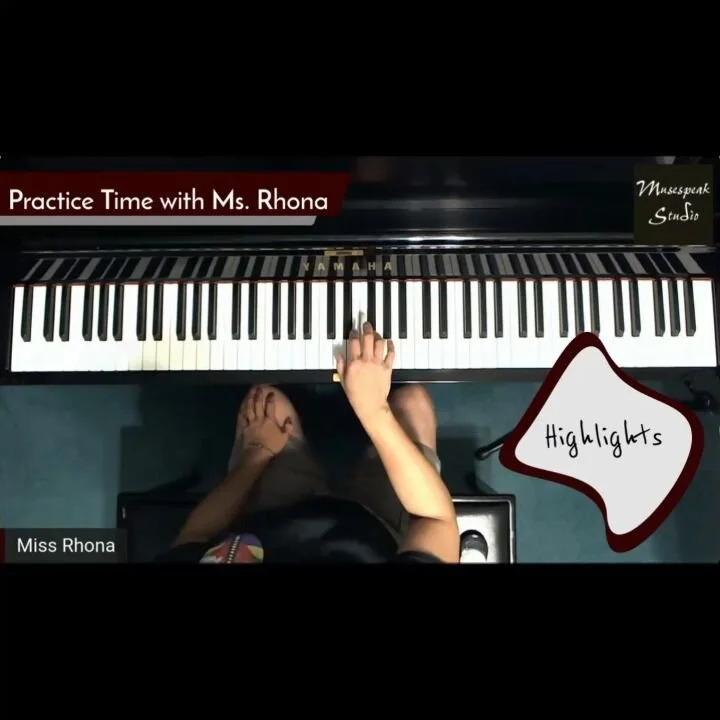
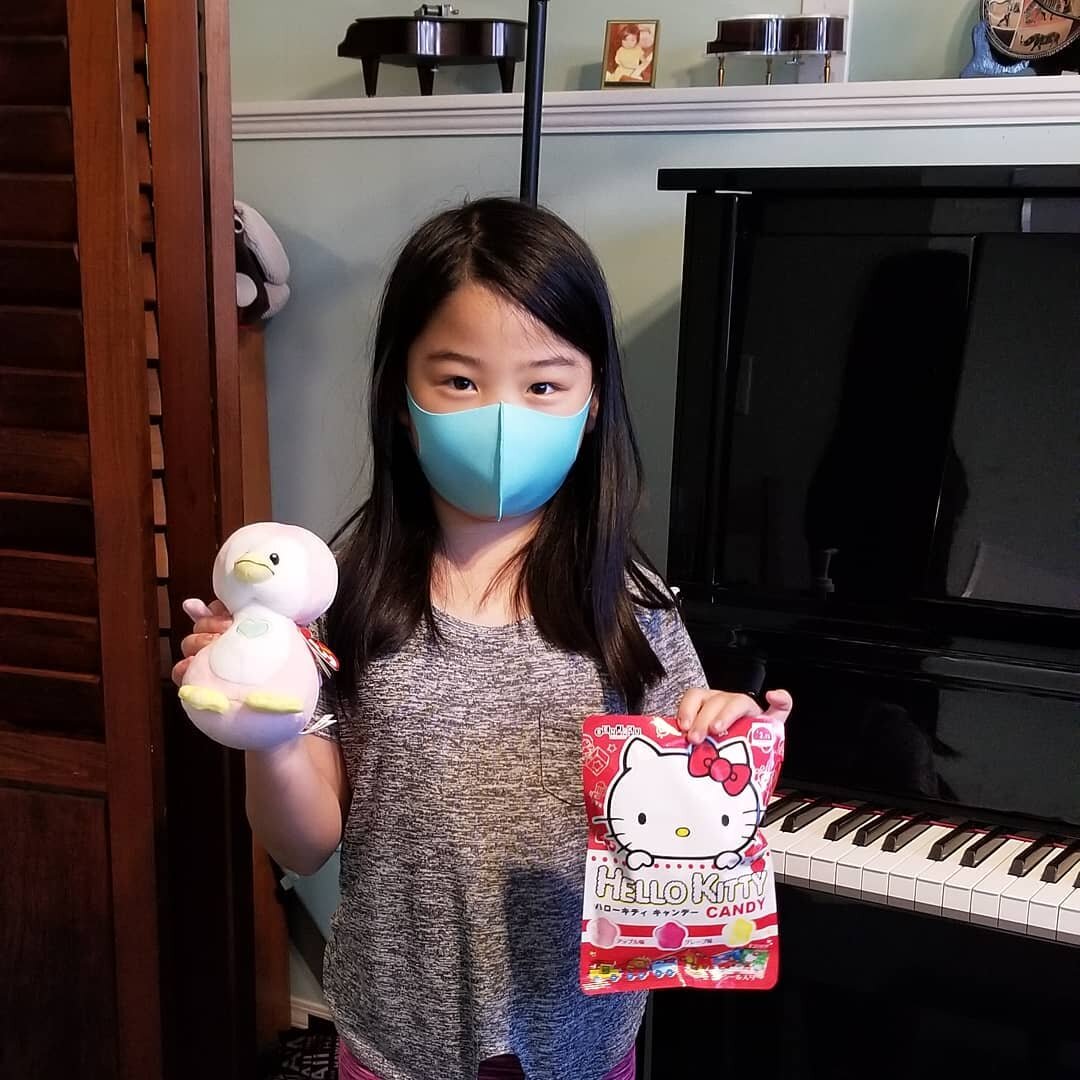
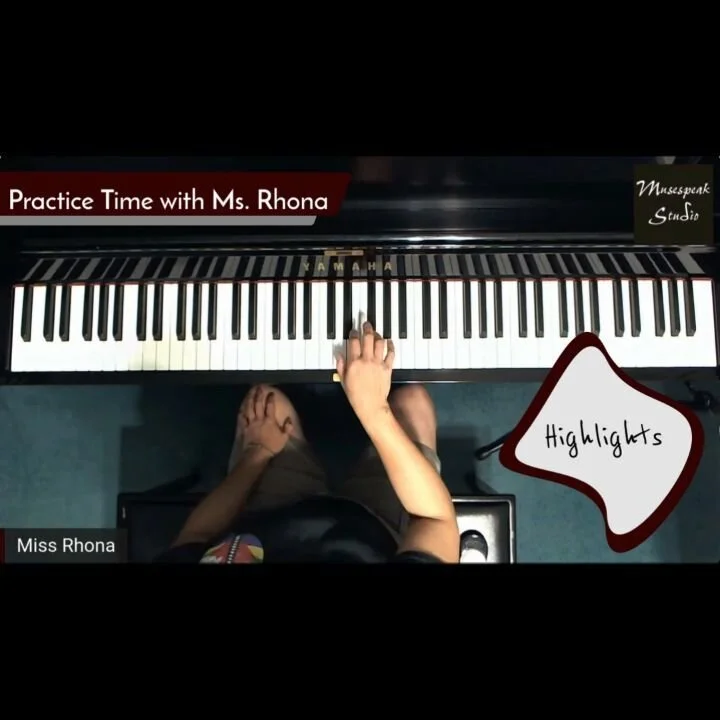

I have heard a significant improvement in all of my students’ playing, especially in their technical skills. Ditto for my own. It’s delightful because we can spend more time during their piano lessons exploring their musical expression, bulletproofing skills, and performance savvy.
With fluency comes confidence. I have also noticed that even my shy students are more willing to be the “Instagram Star of the Day,” while some who don’t like performing are actually showing off for their friends at school.
I do hope they realize that practising is a journey. We trip and fall a lot in the early stages, and there’s some “two steps forward, three steps back” in the troubleshooting phase; but with regular practice - mindful practice - we reach those awesome moments more quickly.
Remind me next round to record clips when they start and finish the 100 Day Practice Challenge. I have a feeling that the second half of the school year is going to be full of awesome musical moments.
Special thanks to my students: Claire, Tanya, Erika, Henry, Kateri, Alexandra, P., and Anonymous for giving me permission to share their #30daysofpractice experience.

Our 30 Days of Practice Challenge
As I mentioned in my post about this year’s Maestro’s 2018/19 Studio Challenges, my students and I are are doing a new practice challenge this year. Last month, we started a 30 Days of Practice Challenge. The practice challenge was inspired by concert violinist Hilary Hahn and her 100 Days of Practice Challenge on Instagram
As I mentioned in my post about this year’s Maestro’s 2018/19 Studio Challenges, my students and I are are doing a new practice challenge this year. Last month, we started a 30 Days of Practice Challenge. The practice challenge was inspired by concert violinist Hilary Hahn and her 100 Days of Practice Challenge on Instagram:
I felt that my students need to build up their chops a bit before they are ready to tackle the 100 Day Challenge. Enter Stage 1: the 30 Day Practice Challenge.
The premise is that students commit to practising 30 days in a row. Healthy days, that is. Sick days won’t count against them. I told my students that I didn’t want them anywhere near their instrument if they had a fever or felt like puking. It would be a wasted effort. Better to concentrate on getting well. They’ll earn $200 Maestro Bucks once they complete the challenge. If they miss a day, then they must restart the count.
Some of my students are close to wrapping up their 30 Day Challenge, so I think it’s a good time to share some of our discoveries, observations, and lessons.
The Challenges of Practice Tracking
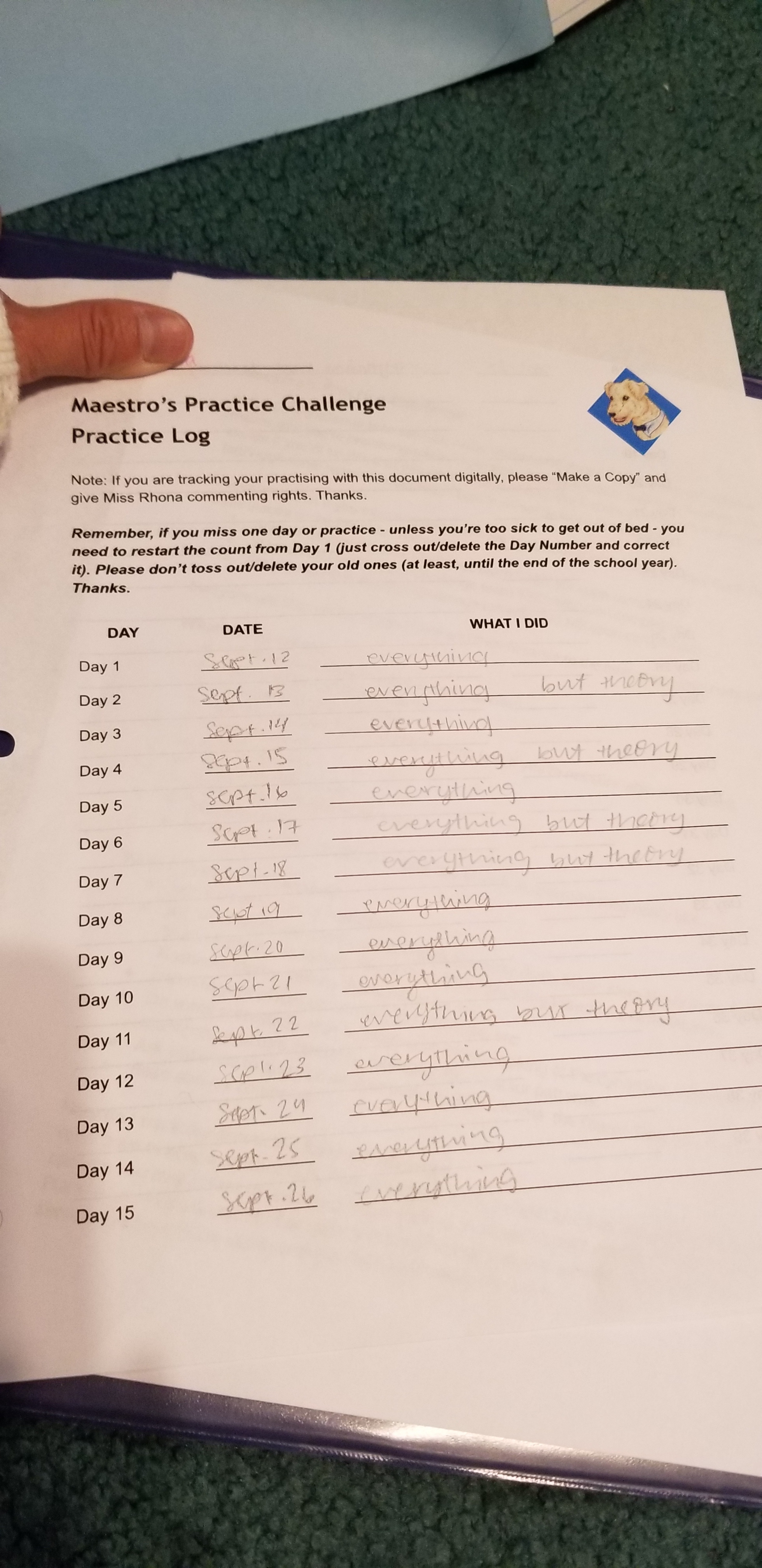
My students have to maintain a practice diary or log of some form. Most opted for the paper diary, although some are using it in conjunction with the Practice Buddy app.
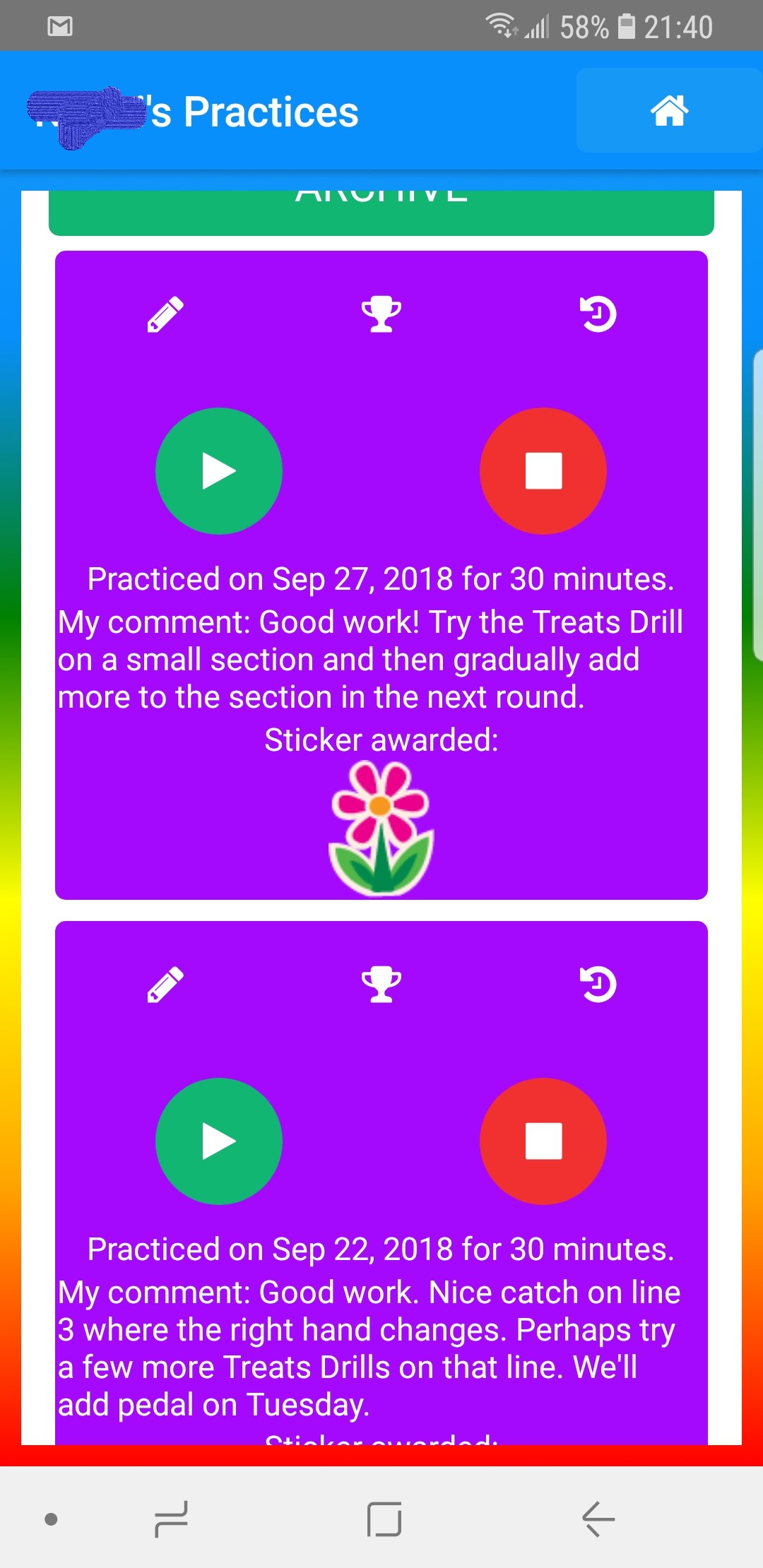
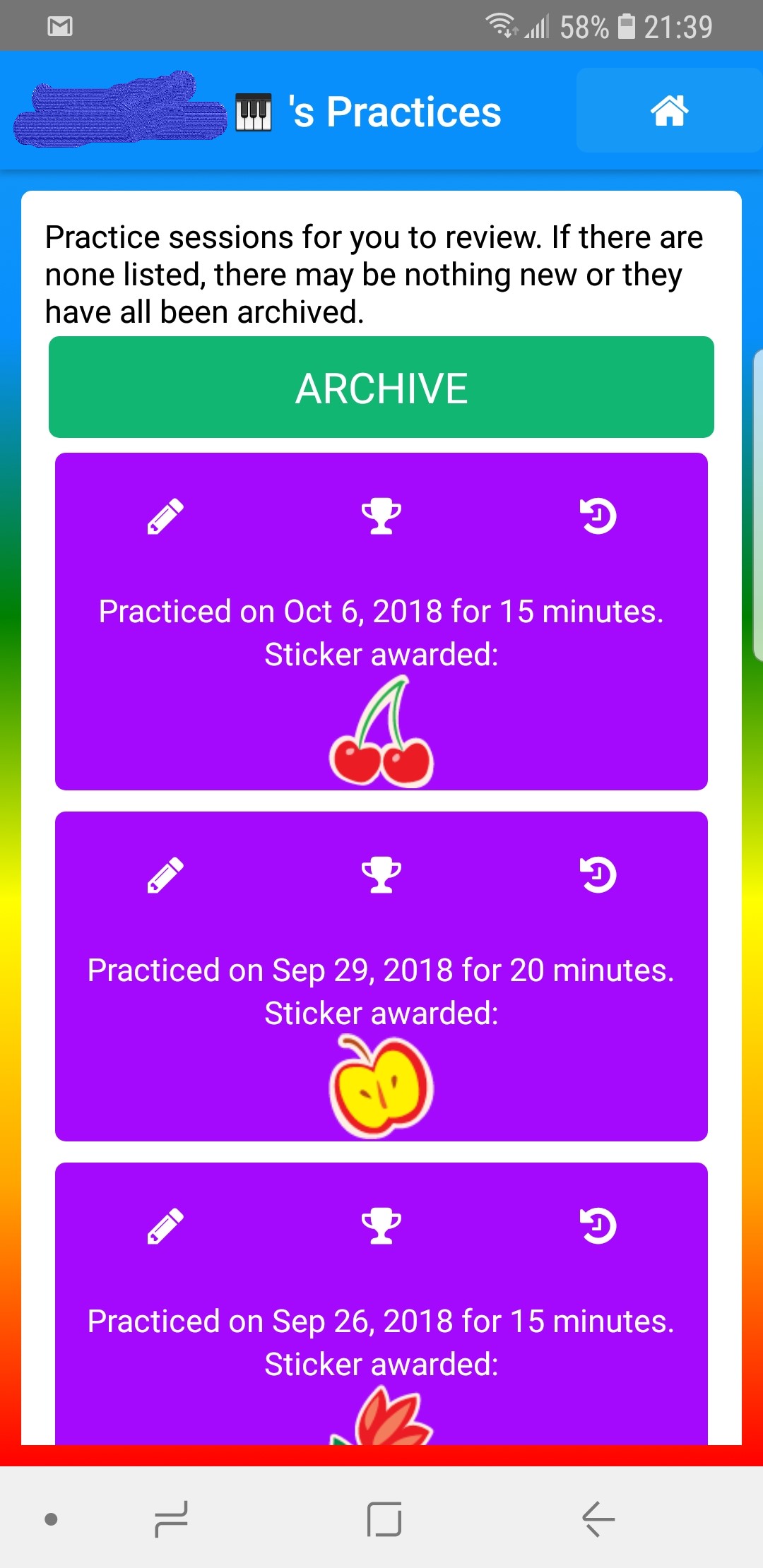
Initially, most started by using the Practice Buddy app, but some students experienced glitches which resulted in lost practice log entries, and some practice sessions do take place when students are separated from the mobile device that had the app. Then, there were cases when students forgot to start the timer on the app or forgot to keep up with their paper log entries. The conclusion was that a paper log was still required.
Practice Makes Consistent
The Practice Buddy app has been useful in giving students a relatively easy method to send me practice clips for feedback during the week. It’s been fun on my end listening to the clips, hearing my students’ progress, and giving them cute stickers in addition to feedback.
A handful of my junior intermediate students are very close to completing their 30 Days of Practice Challenge. They should be wrapping it up within the next week or so. They are pretty excited about their bonus.
They do a combination of practising at the piano as well as theory and using some music apps such as Note Rush, Note Works, Music Reading Essentials, Perfect Ear, and Tenuto. Their progress has been steady in their repertoire, theory, and technical exercises. I hope that they are as pleased with their progress as I am.
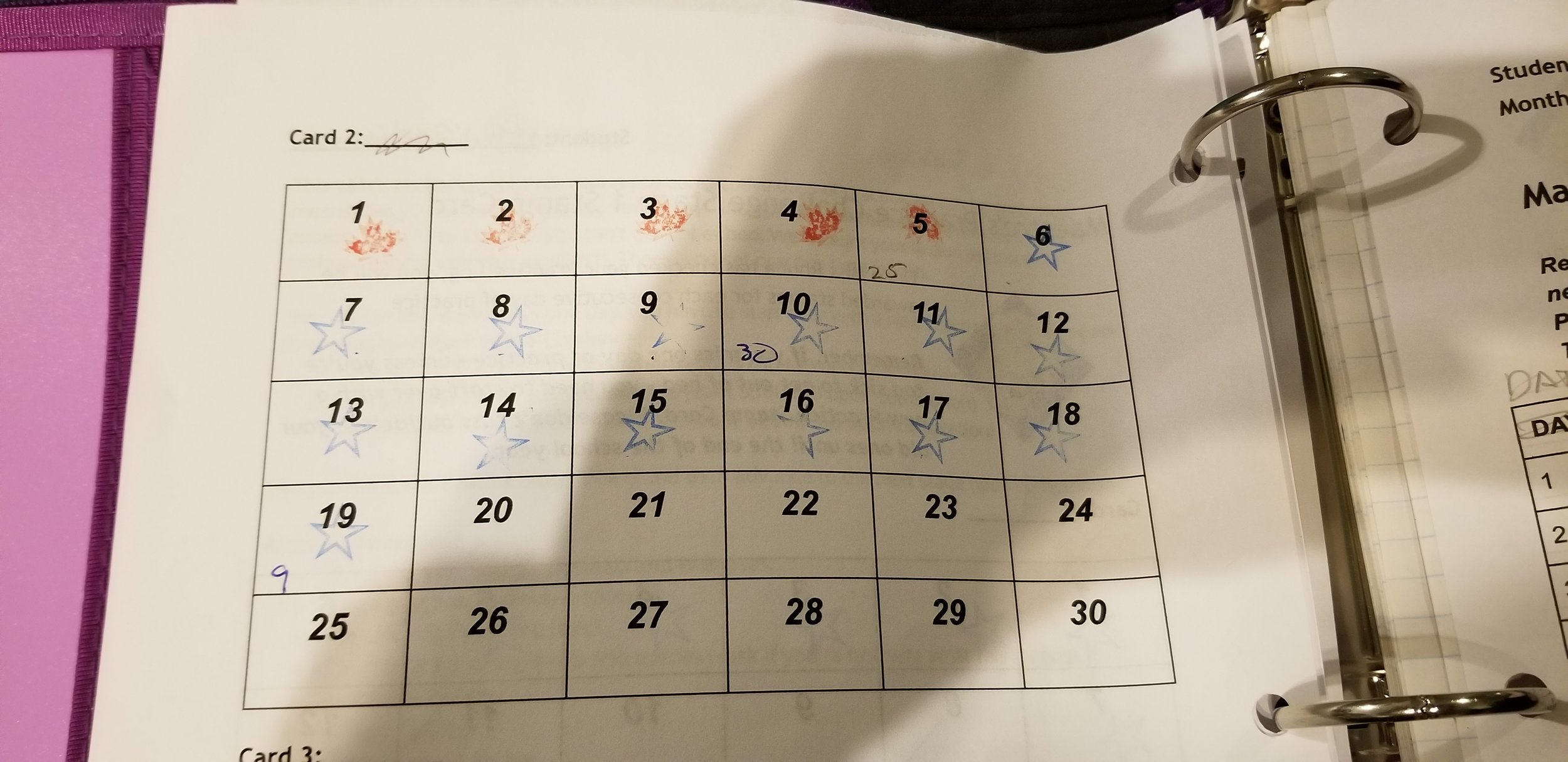
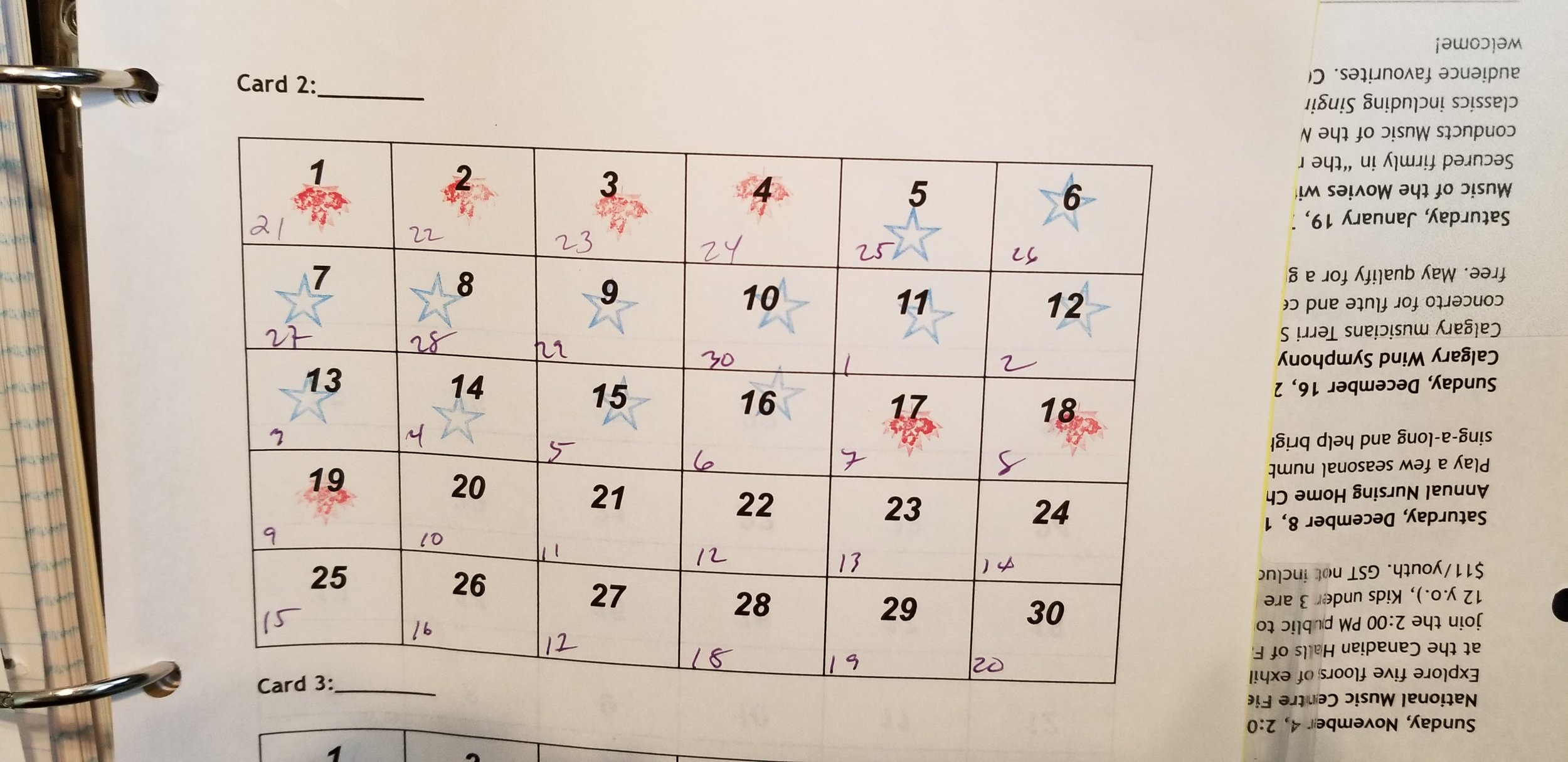
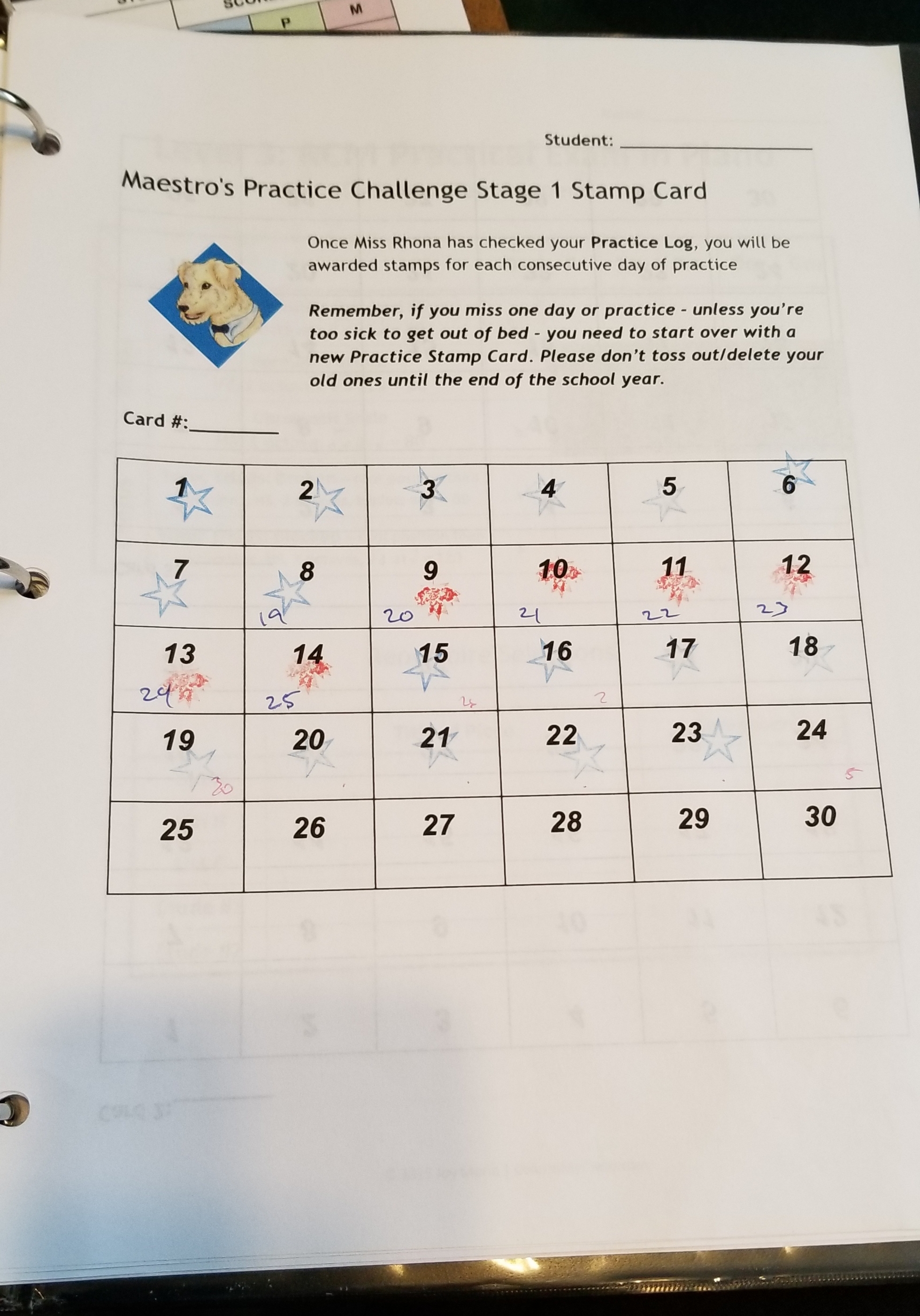
My upper intermediate and advanced students are having a tougher time at practising every day. They get a roll but then something comes up and they miss a day or two. I’ve suggested that they install one of the abovementioned apps and to visit the Student Repertoire Playlist I created on YouTube.
Having said that, they are still maintaining a good practice frequency for the most part, so it’s still a winning scenario as far as I’m concerned. A couple of students thought of a way to do some scorestudy on the go, which I thought was pretty brilliant.
Walking the Talk: My #30daysofpractice Challenge
Oftentimes, it seems like there’s never enough time for music teachers to dedicate to work on something new or hone their skills. I think we wind up looking for ways to push ourselves into preparing something to perform: like joining a music teacher performance group, playing in a church choir, accompanying other musicians, deciding to prepare for a concert/workshop/piano camp, and joining an ensemble. After all, it doesn’t matter if it’s the teacher or student, we need a goal to work towards.
It is in this spirit that I decided to take up the challenge along with my students. Then, I needed to find a way to make my practice log accessible to them so that they could see that yes, I’m working through trouble spots and scales, just like they rest of them. I decided follow Hilary Hahn’s example by posting every day to the studio’s Instagram account:
I still used the Practice Buddy app as a timer but maintained my Practice Tracker in my Bullet Journal so that I could keep track of what I practiced each day.

The paper form of my practice tracker lives in my Bullet Journal. Photo by R-M Arca.
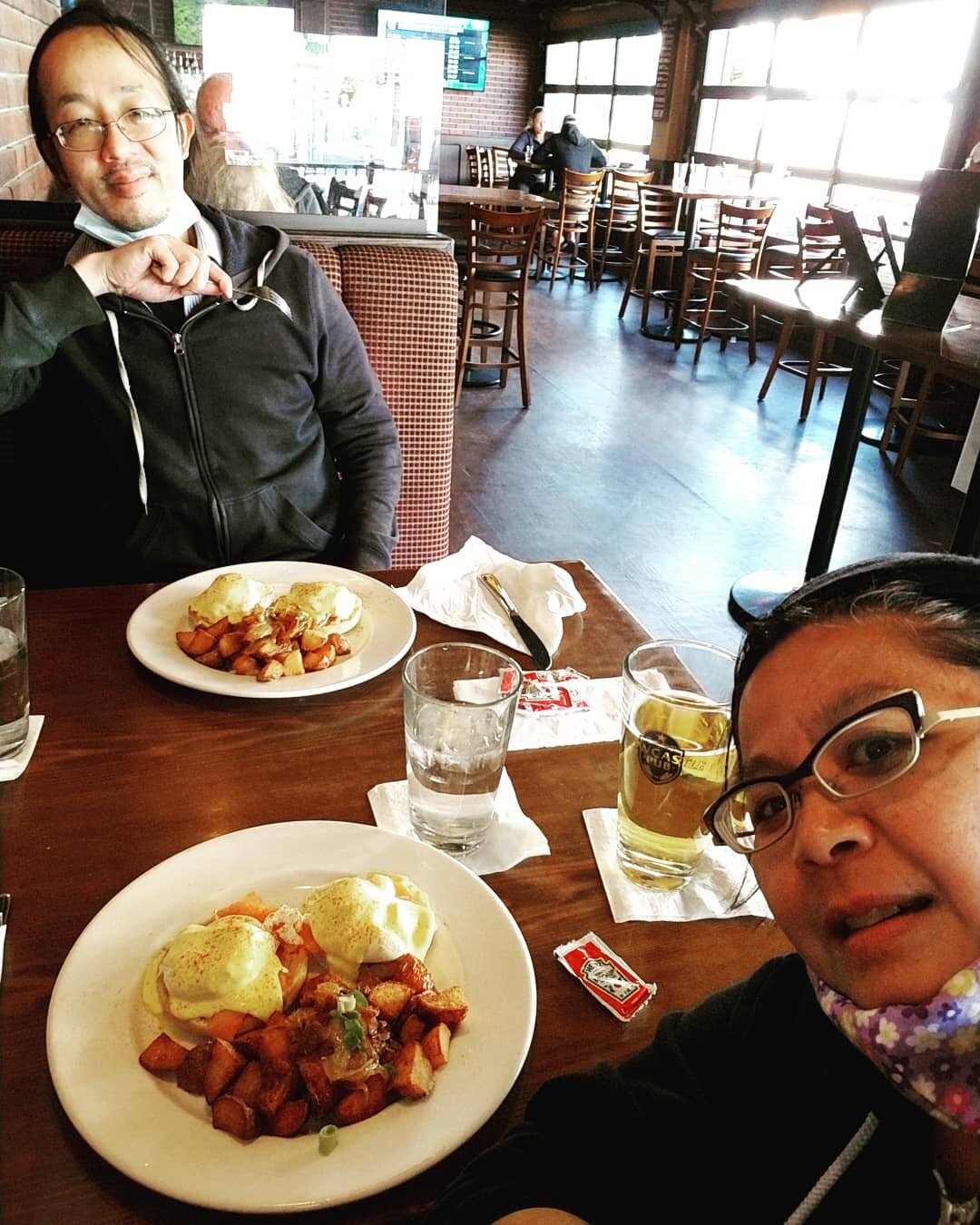
I completed my 30 Days of Practice Challenge yesterday. At breakfast, I was discussing with my brother the takeaways from my journey. Here they are:
Practice makes consistent: This isn’t anything new. This is something that my brother and I both learned as we worked towards our ARCT in Piano Performance through the Royal Conservatory. It’s something that we learned through years of budo. Anyone who practices an art or is an athlete know this lesson well.
All areas improved: With the challenge, I practised my other instruments more regularly. In fact, two of my most popular posts in my 30 day challenge was for the ukulele (Day 10) and cajón (Day 27).
My technical chops are nearly back to where they were when I was taking jazz piano lessons. Ear training, rhythm, sight-reading, chording and improvisation skills improved too. That’s all well and good, as I need to have my chops up to snuff this year.
Learning and sharing with musicians: Partway through my challenge, I started to follow posts with the #100daysofpractice, #30daysofpractice, #cajon, and #ukulele hashtags. The result is that I got neat practice drills, grooves, and ideas from other musicians. Abigail Raber (@passionate_harpist) inspired me to break out the metronome more regularly. Karina Mandock (@theoperaticcatholic) made me feel normal as her practice sessions are similar to mine. And I just love listening to Minoustics clips.
On the flipside, each time I post a practice clip of the Game of Thrones Medley arranged by Jarrod Radnich, people ask where I got the music from. Maybe I should ask for a commission on sales as a result of my practice posts.
It really wasn’t that hard - once I made the commitment: It didn’t help that I injured my lower back last month, which affected my practice length. However, I used my “light practice day routine” as I was healing. This is comprised of any combination of scorestudy, listening to either my students’ repertoire or my own, ear training, or rhythm work. It is a bit of a bonus that I also work at concerts through my side jobs, so I get to listen to fantastic music performed live and call it practice.
When I was just using my Bullet Journal to track practices, I still wasn’t practising daily. Nor was I tracking on a regular basis. Somedays just got away from me. Other days, I talked myself out of it, saying I was too tired or needed to get something else done instead. However, once I made the commitment to my students and to those who followed my 30 Days of Practice online, I couldn’t skip. I mean, it would look really bad if me the teacher, reneged on the challenge, right?
My Practice Log
Day 1: Practice Buddy photo | Day 2: In Christ Alone Recording Photo | Day 3: Practice Buddy photo | Day 4: Scales | Day 5: Arpeggii | Day 6: Cajón drill | Day 7: Scorestudy photo & video | Day 8: Game of Thrones Medley | Day 9: Pirates of the Caribbean | Day 10: Someone to Lava & Sonata in G Minor, Hob. XVI:44 | Day 11: Sonata in D, op. 12 no. 3 | Day 12: Perfect Ear app | Day 13: Perfect Ear app | Day 14: Mass of Glory | Day 15: Game of Thrones Medley | Day 16: Sonatina in D, op. 36 no. 6 | Day 17: Perfect Ear app | Day 18: Nocturne in e minor, op. 72 no. 1 | Day 19: Anthem | Day 20: Choir practice photo | Day 21: Perfect Ear app | Day 22: Pirates of the Caribbean | Day 23: Seven of Hearts | Day 24: Prelude & Fugue in d minor, BWV 851 | Day 25: Spanish Alleluia | Day 26: Des pas sur la neige | Day 27: New cajón groove | Day 28: Choir practice photo | Day 29: Perfect Ear app | Day 30: Sonatina in D, op. 36, no. 6, 1st mvt.
The Next Practice Challenge
Tomorrow, I’ll treat myself to some calamari from Opa for completing my 30 Days of Practice. I was planning to give myself a few days off before beginning my next practice challenge, but since I’m playing piano at church this weekend, I can’t. Well I could but I want to play the parts to the Mass of Glory better than I did last time, so I better carry on.
Stage 2 in Maestro’s Practice Challenge is a 60 Days of Practice Challenge. I decided a couple of days ago that I’m actually going to jump to Stage 3: the 100 Days of Practice Challenge.
It will be interesting to see if any of my students opt to do the same. Should they decide to proceed to Stage 2, they will get $500 Maestro Bucks upon completion. Although some may need to restart, they should be able to complete the challenge by Christmas Break and enjoy a break before their first attempt at the 100 Days of Practice Challenge.
After completing Stage 3, they will receive $1,000 Maestro Bucks to spend at Maestro’s Market. Jumping to Stage 3 now means they can potentially earn more Maestro Bucks by the end of the year, completing two Stage 3 rounds and possibly a Stage 2 Round. However, jumping to Stage 3 now means that they’ll be in the same boat as me - practising over the break. If they are doing a piano exam, it would be wise for them to maintain a practice regime over the break.
As for me, there’s no point in doing the 60 Day Practice Challenge. Between studio recording projects, piano parties, a Christmas recital, and Christmas Masses, I have plenty to work on from now until past New Year’s. Making the #100daysofpractice challenge should be doable.

Maestro's 2018/19 Studio Challenges
During my brainstorming, the following themes came through: technique, ear/rhythm/sight-reading, and practice frequency. To be honest, those are the key themes every year, but these are areas I really want my students to shine in this year. So, I had to tweak the student challenges and incentives a bit.
Towards the end of summer, I thought about what improvements to make to Maestro’s Top Dogs, my student incentive program that still bears Maestro’s name. Students earn Maestro Bucks throughout the year, which they can spend on prizes at Maestro’s Market.
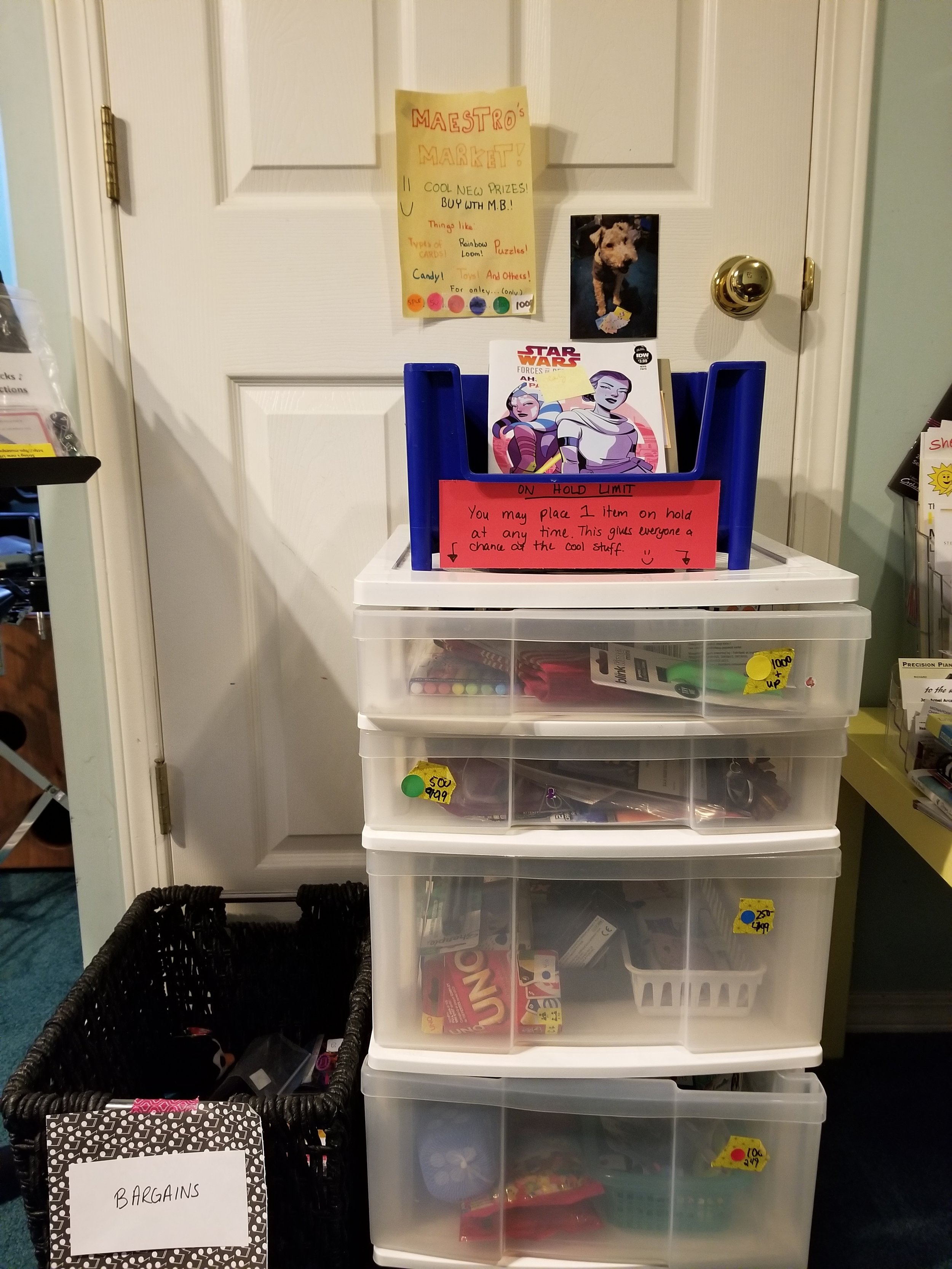
Maestro’s Market - full of fun prizes that range from $1 to $15. Credit: R-M Arca.
During my brainstorming, the following themes came through: technique, ear/rhythm/sight-reading, and practice frequency. To be honest, those are the key themes every year, but these are areas I really want my students to shine in this year. So, I had to tweak the student challenges and incentives a bit.
Maestro’s Technique Challenge
Those who knew Maestro knew that he was really picky about piano technique. If you had one too many stumbles in your scales, chords, or arpeggios, he stomped out of the studio, only to return when he heard something that pleased him. As you can see here, Maestro didn’t make an exception for me:
In my brainstorming bubbles, I jotted down, “Don’t send them home until their fingering doesn’t suck.” To accomplish this, we are going to focus on only one or two technical exercises in a lesson (more if this is a strong area for them). My students will have to clear “Play with correct notes and fingering,” challenge at the lesson. I have them work on different ways to play that exercise as they try to clear that first challenge, varying the articulation, tempo, touch, rhythm, and dynamics. My students may not be thrilled that we are going to spend more time on technique in the lesson, but at least they’ll have a better idea of how to practice it at home; and I can feel a bit more confident that even if they only get to it once or twice at home, fingering and/or notes should hold.
The other challenges are: play hands separately, play hands together, play at a steady tempo and play at the minimum required tempo for their playing level. Some students have cleared two or three challenges already for the exercise of the week. Others - it will take a few weeks at first. In the end, practising them at home should become easier since we’ve tackled the hardest part in the lesson.
Students will earn Maestro Bucks (MB) for each cleared exercise, for each key, commensurate with their playing level (Beginners - Grade 2: $5 MB/challenge, Grade 3 - 6: $10 MB/challenge, Grade 7+: $20/challenge).
Maestro’s Music Moxie Challenge
I don’t think I altered this from last year. Students will earn Maestro Bucks in the following ways:
Each time they add to their Bulletproof Musician Playlist, which is their go-to set list of mastered repertoire ($10 MB/beginner - Pre-Grade piece, $20 MB/Grade 1 - 5 piece, $40 MB/Grade 6 - 8 piece, $50 MB/advanced piece),
$20 MB per solo or collaborative piano performance
Each piece that is memorized (same breakdown as the Bulletproof Musician Playlist)
$25 MB for each concert/music review they submit,
$25 MB for each composition or arrangement they do.
Maestro’s Practice Challenge
I think this is going to be the hardest challenge for all of us, but not impossible.
Inspired by various colleagues who launched 100 Days of Practice Challenges in their studios, I decided to set up something similar. However, we’re going to work our way up to it, starting with a 30 Days of Practice Challenge and a 60 Days of Practice Challenge.
The basic premise of all these challenges is the same: you must commit to practising music every single day, except for when you’re too sick to get out of bed. Some teachers actually specify a recommended practice time. I’m not going to as for me, it’s the practice frequency that I want to see improvement on. Any artist, athlete, and budo practitioner will tell you that it’s the repetitions and practice frequency that results in consistency and steady progress.
I know just as well as the next person that it’s impossible to commit to practising the same amount of time, seven days a week. Some days are going to be short practices. Some will have to take place far away from the piano (e.g. travelling to Hawaii).
After my students’ eyes boggled at the idea, I told them that there’s actually a lot of wiggle room. If they don’t have a lot of time to practice, or are away from the piano, they can get their daily practice in by:
doing a bit of music theory
do a music puzzle
work on music games/apps like Note Rush, Music Note Flashcards, Simply Music, Perfect Ear, Noteworks, Flashnote Derby, Tenuto, etc.
listen to their pieces
scorestudy (look at the patterns, structure, markings, etc.)
clap out the rhythms to their songs
read about a composer
ask someone to quiz them on their music knowledge (key signatures, vocabulary, etc.)
If they miss a day, my students have to restart the count. As I said, if they’re too sick to get out of bed, then that doesn’t affect the count. Stay in bed and get well first.
My students will have to do a better job at tracking their practising this year. It’s no big deal for the ones who are good at keeping a practice log. I did wrack my brains to figure out something easy peasy for those who aren’t good at keeping a practice log. The Practice Buddy app was what I found.
Practice Buddy is a free app available for iOS and Android devices. Literally, the hardest part is deciding how to set up your practice cards. Then, the rest is like magic. Students have to click on a practice timer. But here’s the best part: students can record one minute of their practice session and it pops up on my phone to review it and provide feedback (and stickers). Check out my videos below on how to set up Practice Buddy:
I do have some students who asked for a paper Practice Diary. I did design one just in case.
With the practice timer, students will be forced to learn how to manage their time more effectively. You can have an extremely productive, mindful 10-minute practice, and a crappy 60-minute practice. It comes down to setting specific goals for your practice, and being mindful when you practice.
Also, I decided to join them on this challenge as well. Here’s hoping that I practice my second, third, and fourth instruments more regularly. When it comes to the 100 Day challenge, I think I’ll follow Hilary Hahn’s format on Instagram.
Check out what my colleagues have done with their 100 days of practice challenges:
Getting Lesson Feedback
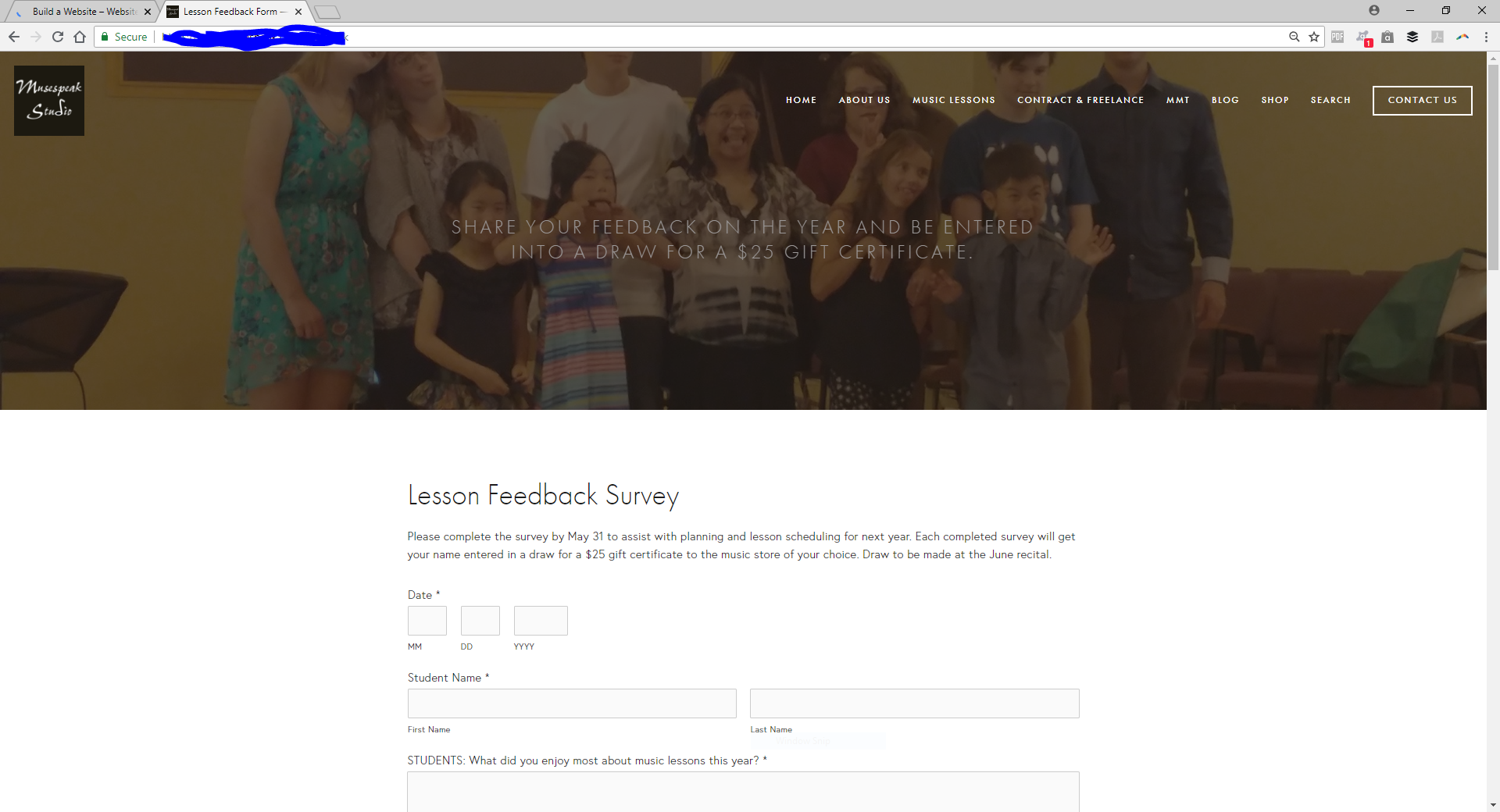
No matter how crazy things are, this is an important time for us music teachers to get feedback from our studio families on what worked well and what areas could be improved upon next year. It will help when it comes time to plan for the upcoming year.
June is a period of music examinations, year-end recitals, year-end reports, parent-student-teacher conferences, and processing fall registrations. It's a busy time - and that's just the music making part of it! For those of us involved in performing, backstage, or front of house duties, it's even busier!
No matter how crazy things are, this is an important time for us music teachers to get feedback from our studio families on what worked well and what areas could be improved upon. It will help when it comes time to plan for the upcoming year.
Why ask for feedback? It doesn't matter that I've been teaching for over 15 years. One can always improve. That applies to every aspect in life.
For the past three years or so, I have sent out a lesson feedback survey to my students and their parents. To encourage participation, students who complete the survey are entered into a draw for a $25 gift certificate to the music store of their choice.
My Lesson Feedback Survey
These are the questions that I ask my students:
What did you enjoy most about music lessons this year?
What did you enjoy the least about music lessons this year?
What would you like to explore more next year? E.g. ensemble music, music theory, jazz, pop, etc.
Any questions, ideas or suggestions? (optional)
Here are the questions I ask my studio parents and adult students:
What do you feel went well this year with your/your child's music lessons this year?
What areas do you feel require more attention and/or assistance from me?
Are you/your child returning next year?
What are your desired piano lesson days and times for next year?
What is your desired group theory class day for next year? (This applies to piano students Grade 7 and above.)
Which Optional Activities are you interested in?
Music festival and/or exam next year?
Any questions, ideas or suggestions? (optional)
Testimonial (for promotional materials) (optional)
The Optional Activities that I listed include: concert field trips, masterclass with a guest teacher, music-related tours (e.g. recording studio, concert halls, music museums, Canadian Music Centre), performing at nursing homes, hospices, and/or children's hospitals, taiko drumming workshop, and piano parties.
Reviewing Lesson Feedback
Not everyone responds to my Lesson Feedback Survey, but a good chunk do. It does help me to see which areas I need to adjust and which areas could use an overhaul. For instance, most of my students dislike theory. Although there is an overall improvement in how my students are doing (consistently earning Honours up to First Class Honours with Distinction), there is still a handful that are struggling. Coming up with new approaches to music theory will be food for thought during the summer
Technique is another area that is gradually improving, but again, there's a handful that are fighting it/struggling with it. How can I make technique more engaging and relevant to my students? Another thing to ponder this summer.
It looks like my students would like to do more ensemble music again. They are also keen to take another taiko drumming workshop and attend concerts. With everyone's busy schedules, this will take careful planning.
It is validating to read that overall, my students and their parents did enjoy the year. They are pretty happy with the progress they have made between last year and this year.
I do make a point of reviewing their survey responses with them at the end of the year. That way, I can get clarification on points and they can rest assured that I'm going work on making any necessary adjustments and improvements.
Fellow music teachers, feel free to use these questions for your own lesson feedback survey. If you have any suggestions for additional questions, please share them.
Repertoire Exploration Project: Conservatory Canada Pre-Grade 1 Repertoire
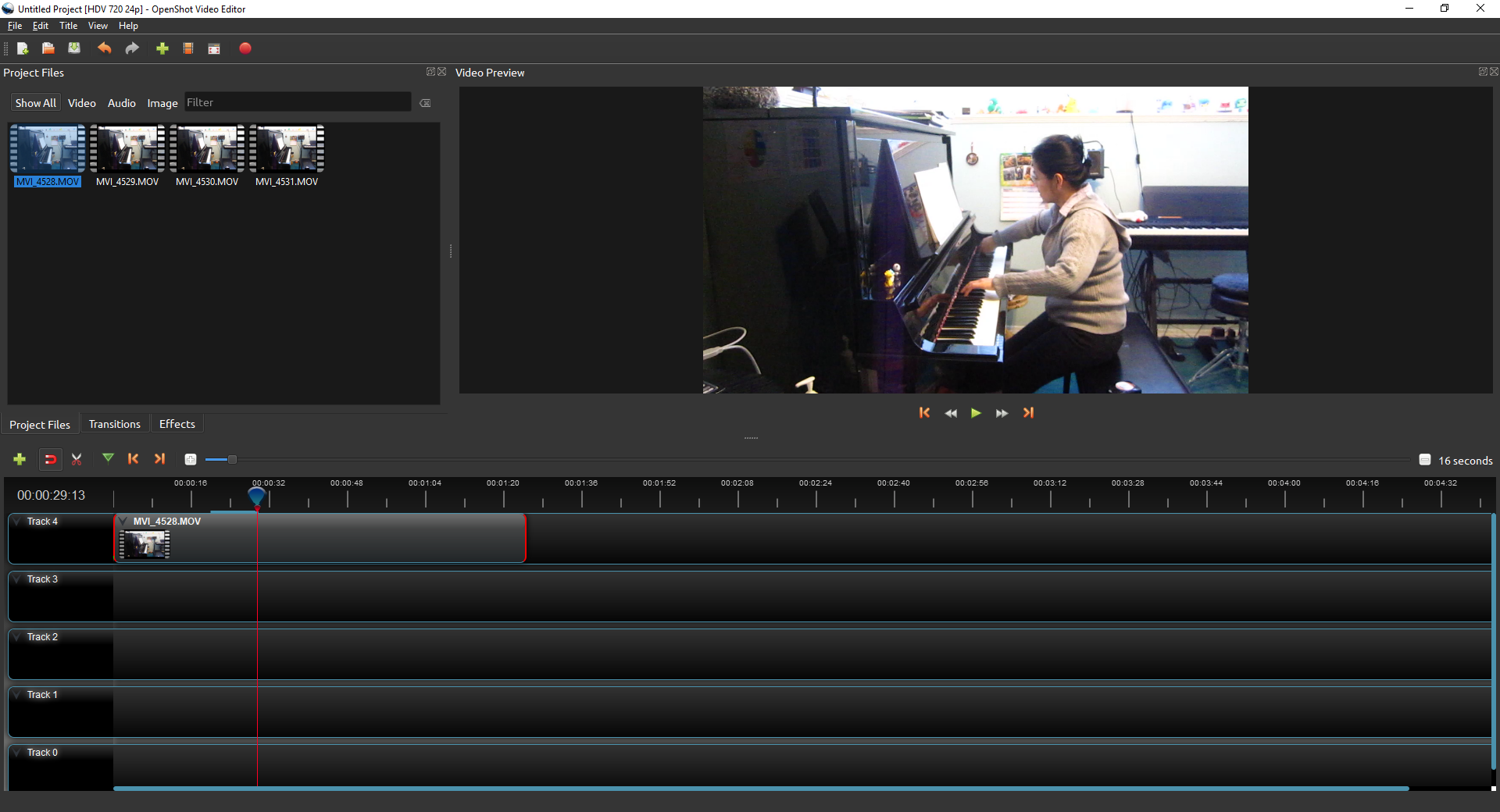
When I was growing up, we had to go to the library to hear various recordings of our pieces. With technology, it is much easier to access various performances of pieces - but only some pieces. I have decided to record my exploration through student repertoire that hasn't received as much screen time (or any at all)...First up: Conservatory Canada's Pre-Grade 1 repertoire.
When I was growing up, we had to go to the library to hear various recordings of our pieces. With technology, it is much easier to access various performances of pieces - but only some pieces. I have decided to record my exploration through student repertoire that hasn't received as much screen time (or any at all). It will take a while, but I hope to playing everything in the Royal Conservatory of Music and Conservatory Canada syllabi.
My students have generally been excited to hear that I'm taking their pieces to the next level by polishing them as well. One of my adult students was so happy to hear the news as it is somewhat disheartening to only see performances of half-pint prodigies playing your piece.
First up: Conservatory Canada's Pre-Grade 1 Repertoire. This was a lot of fun to do, mainly because I didn't have to think too hard about these pieces. I simply had to concentrate on enjoying the music.
There's nothing like playing pieces that show you just how far you've come in your musical journey. And if they help a few piano students and teachers along the way - great.
The playlist is still a work in progress. I've recruited several of my senior students to help me record the duets. I also need to record the songs that were added to the second edition of the Pre-Grade 1 book.
The Conservatory Canada Pre-Grade 1 Book is available at most local music stores. Alternatively, you may order it at Sheetmusicplus via my affiliate link below:
 look inside
|
New Millennium Pre Grade 1 Piano Conservatory Canada NOVUS VIA MUSIC GROUP. 32 pages. Published by Hal Leonard (HL.139032). |
I'll be hopping around in my repertoire review, prioritizing the pieces that my students are currently working on over the rest. Visit the studio's YouTube Channel for updates.
Social Media Links
archives
- #YYCArts 32
- #YYCEvents 39
- Collaborative Music 25
- Community 11
- Composing & Arranging 6
- Entertainment 139
- Entrepreneurship 53
- Freebies 3
- Gardening 1
- Geeking Out 65
- Health & Wellness 120
- Improvisation 25
- Interviews 28
- Learning Music 188
- Martial Arts 13
- Memorization 7
- Music 230
- Music Careers 9
- Music Education 196
- Music Examinations 7
- Music Exploration 55
- Music Gigs 14
- Music Lessons 6
- Music Performance 32
- Music Theory 13
- Musical Instruments 12
- Musician Health 19
- Pets 57
- Piano Technique 12
- Practicing Music 120
- Productivity 20
- Professional Development 11
- Recommendations & Reviews 93
- Recreation 71
- Social Media 6
- Spirituality 10
- Studio Management 33
- Studio Technology 50
- Teaching Music 146
FOLLOW THE STUDIO on Instagram
Affiliate Links
As a Sheetmusicplus and CD Japan affiliate, I earn from qualifying purchases. The earnings help fund the Studio’s blog and YouTube channels. Your support is greatly appreciated.


FOLLOW Budo no Tabi on Instagram