THE MUSICAL MUSE
Blog dedicated to music education, practice tips, health
&
wellness, and geeking out.
Interview with Calgary Omatsuri Talent Show Performers
I have a great chat with Bryan and Colton, who performed at the Calgary Japanese Festival's Anime and Talent Show last month.
Minna-san, gomennasai! All of my sites were down for the week because of a glitch with my WordPress 3.6 upgrade (wasn't playing nicely with WP MU and my primary WP theme). At last, here is my interview with Colton and Bryan from the Calgary Omatsuri:
Calgary Omatsuri 2013 Interview with Dave Rathnow
My Calgary Omatsuri interview with Dave Rathnow sensei of Shin Ken Kai Nobara Iaido Club of Calgary. We talk about the martial art I started to learn - Iaido - and the differences between the two main styles practiced today.
At this year's Calgary Japanese Festival, I had the opportunity to interview Dave Rathnow, an Iaido practitioner and instructor at Shin Ken Kai Nobara Iaido Club. Iaido is referred to as "the art of Japanese swordmanship" or "the art of drawing of the sword". It is the sister art to Kendo. Unlike kendo, iaido is a non-contact martial art.
I must come clean, when I started to watch Bleach, I became interested in weapons-based martial arts. The Agent of the Shinigami arc remains, in my eyes, one of the strongest storylines I've come across in the shounen genre.
However, I digress. I wanted to learn kendo, but the cost of the equipment scared me off. I turned my attention to iaido. After watching videos online of how smooth and fluid the iaido kata are, I was hooked.
See for yourself the rhythm and flow of iai. Here are excerpts from the Iaido demonstration that Dave Rathnow-sensei, Allen Yee-sempai and Brent May-sempai did at the Calgary Omatsuri:
If you want a bit more of an introduction to Iaido, please read my article entitled "An Introduction to Iaido". I also have published a few more articles on Iaido for The Iaido Journal: "Rhythm and Flow", "Tempering Fire" and "A Special Box for a Special Club"
Now, for my interview with Dave-sensei:
Here are some of the websites I checked out when I first researched iaido:
Aoi Budo Gu: where I ordered my iaito
Ka Muso Kai Iaido Club: my dojo
Shin Ken Kai Nobara Iaido Club: Dave-sensei's dojo
SDK Supplies: where I ordered my beginner iaidoka set and my Hyoho Niten Ichi-Ryu (Musashi's two-sword style) bokuto
Sword Store: many of my sempai ordered their iaito from here
I currently have three katana and samurai-related books in my library. The are: The Book of Five Ringsby Miyamoto Musashi,The Life-giving Sword by Yagyu Munenori and the Hagakure by Yamamoto Tsunetomo.
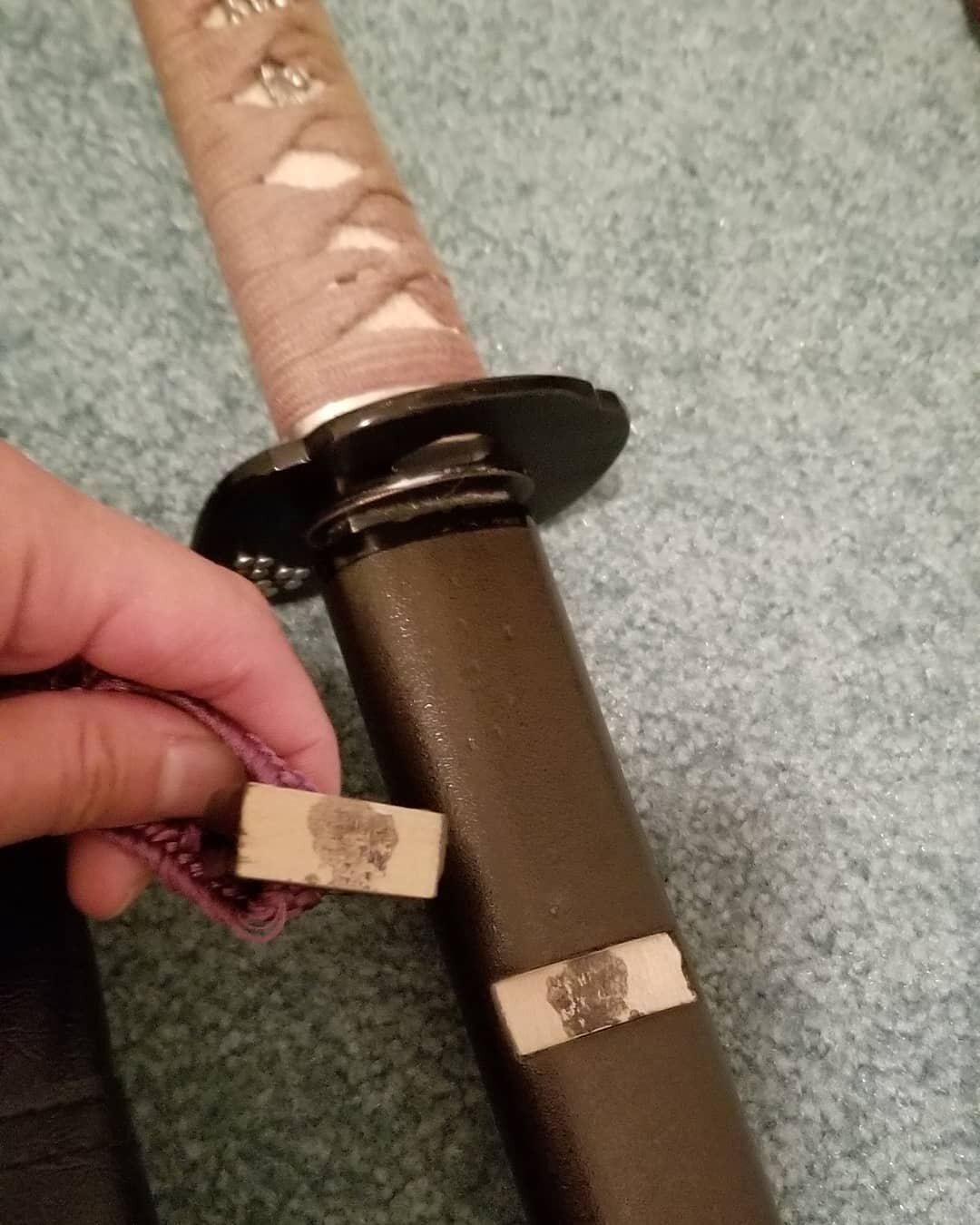
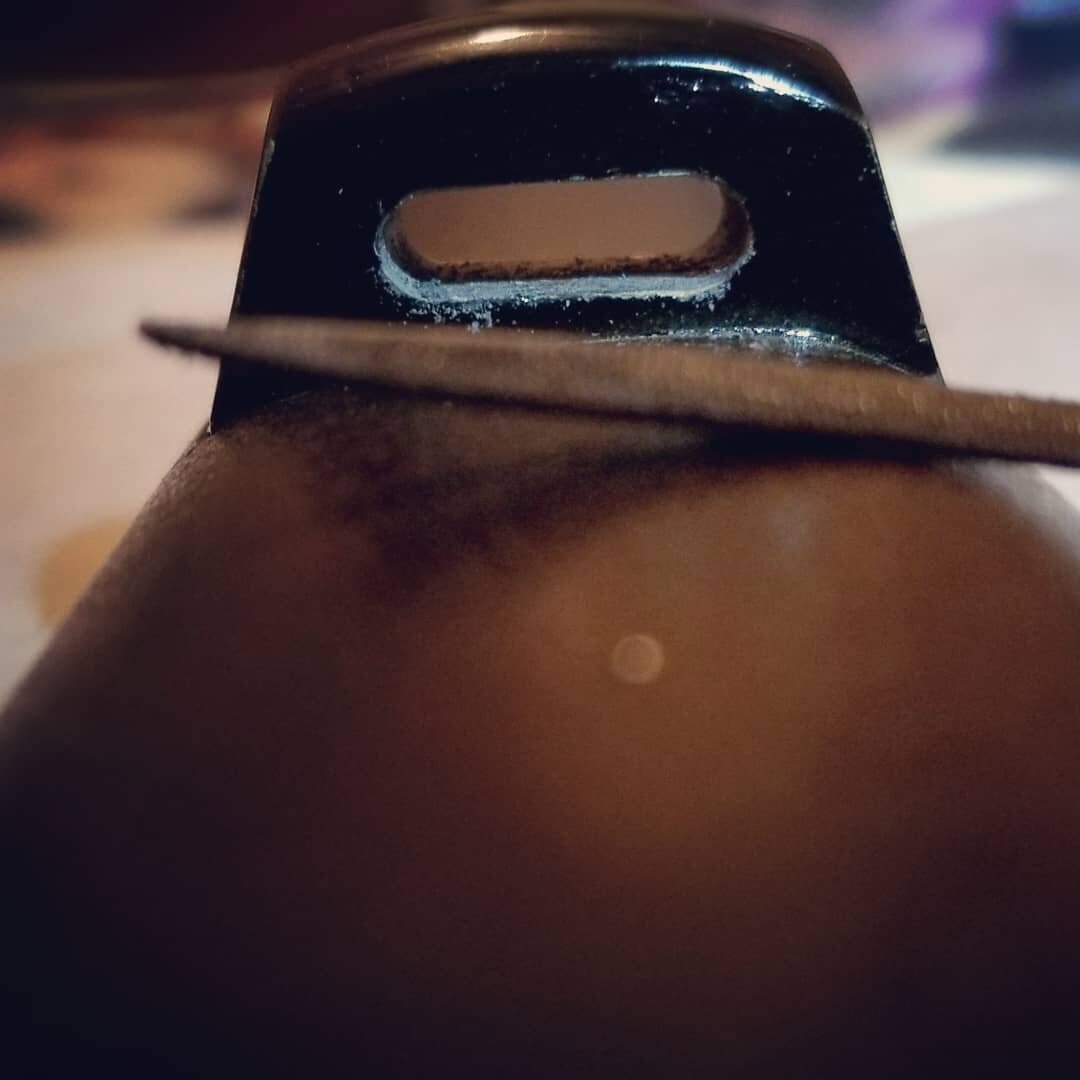
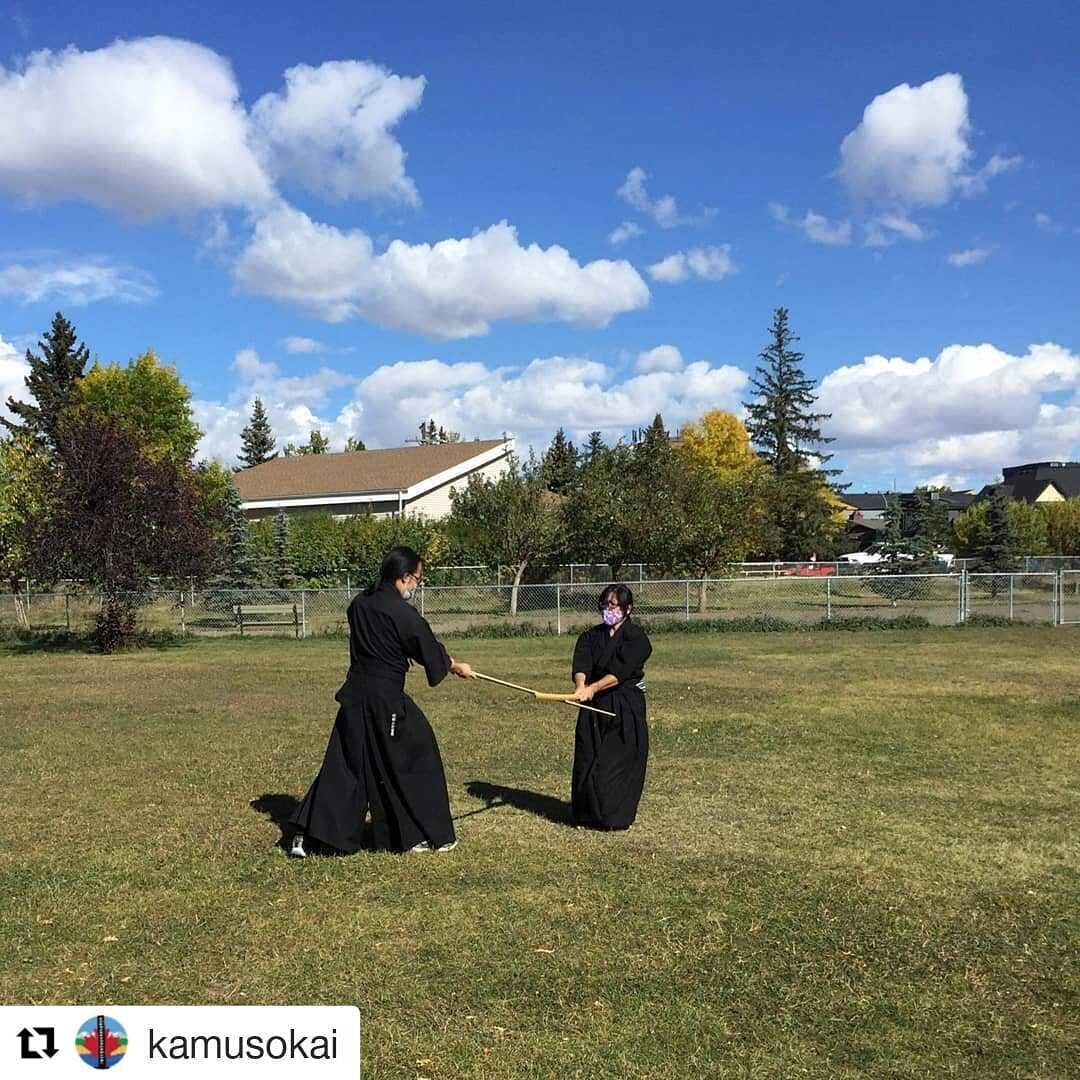
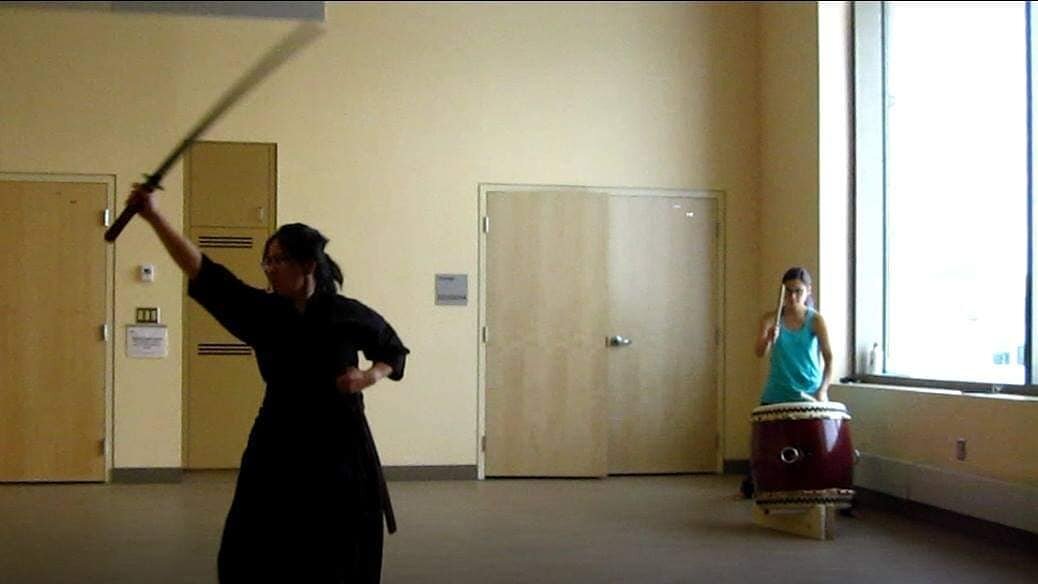
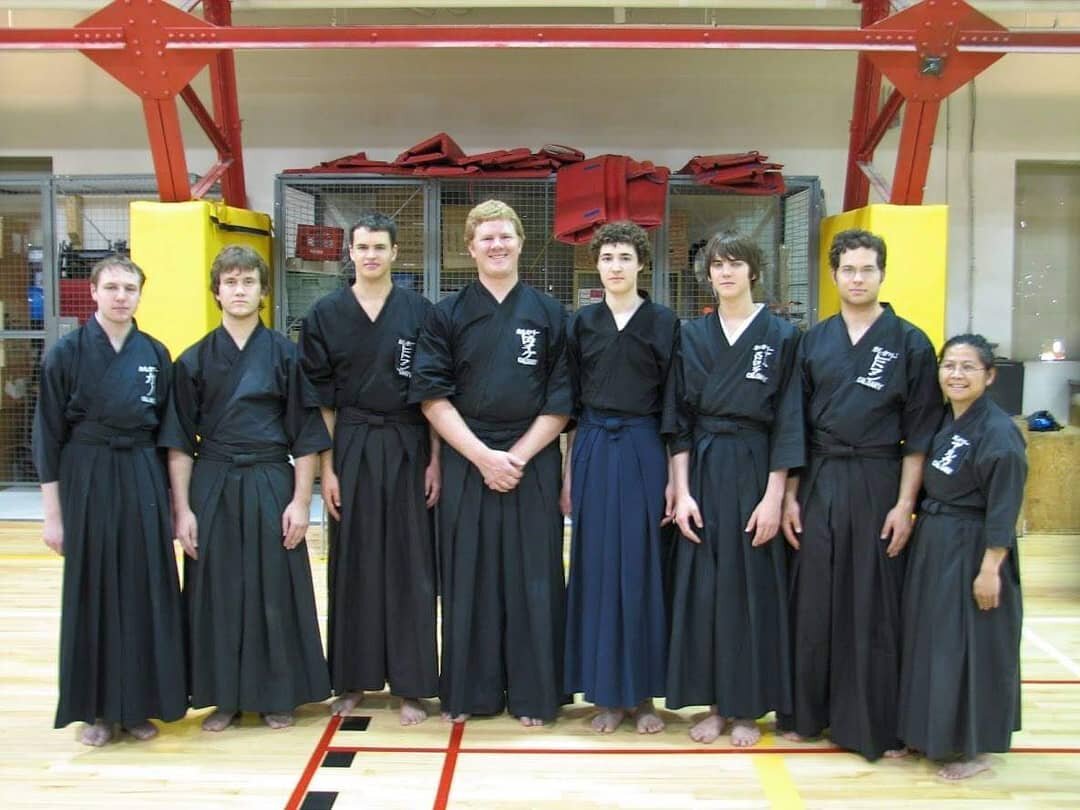
Here's a trip down memory lane for me. These are some photos of when I studied Iaido:
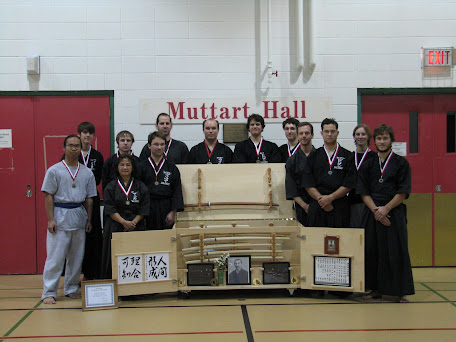
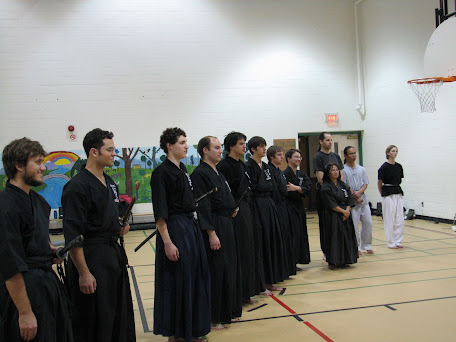
Sadly, training nights moved to prime teaching nights for me a while back, so I had to stop training. I do hope to get back into it someday. For now, I'll just try to keep regular with sword cuts. After all, it's a lot of fun to hear my iaito go "whoosh".
About the featured image: Allen-sempai demonstrates the first Iaido kata from the Seitei Gata Iaido at the Calgary Omatsuri. Photo credit: Christine Kohl. Publisher: Kathleen Boucher.
Calgary Omatsuri 2013 Interview with Kay Toyota
My second interview from the 2013 Calgary Japanese Festival features my chat with Kay Toyota-san of the Kotobuki Seniors group. She explains the dances and shares her experiences of connecting with her Japanese heritage through Odori.
こんにちは みな! Konnichiwa minna-san! At the 2013 Calgary Japanese Festival, I had the honour of speaking with Kay Toyota-san of the Kotobuki Seniors Group. The ladies of the Kotobuki performed two numbers at this year's Omatsuri. Here's a snippet of the first one, called Sumidagawa:
The dance and the Noh play are based on the same story about a woman whose son was stolen by a slave trader. A year passes and she's gone mad, searching the country for her son. A boatman agrees to take her across the Sumida River, where she discovers a crowd holding a memorial service for a young boy was abandoned by a slave trader and died along the shore. She learns that the boy was indeed her son. You can find the lyrics here.
Here is my interview with Kay-san:
Kay-san gives a bit more detail about the Sumidagawa and the second dance they performed, the Tanko Bushi. I took some footage of dancing the Tanko Bushi with my GoPro Hero in my Highlights from the 2013 Calgary Omatsuri video.
She also shares how her mother encouraged her to connect with her Japanese roots through traditional Japanese dance. Finally, she speaks about what the Calgary Omatsuri means to her.

Kay-san is part of the Kotobuki Seniors Group. The Kotobuki Seniors Group is a highly active arm in the Calgary Japanese Language Association. They meet regularly for karaoke, choir, dancing, community work and other activities.
The kanji for "kotobuki" is a combination of two kanji characters. The first means 'praying for a good harvest', while the second means 'old'. One translation reads "blessing to one's longevity." I think this is a pretty apt way to describe this particular group.
About the featured photo: The ladies of the Kotobuki Seniors Group perform the Sumidagawa at the 2013 Calgary Japanese Festival. Photo credit: Christine Kohl. Publisher: Kathleen "Irulanne" Boucher.
Related Reading:


Calgary Omatsuri 2013 Interview with Martial Simard
At the 2013 Calgary Japanese Festival, I interviewed Martial Simard, asking him about what it's like to learn the shakuhachi. This bamboo flute is sometimes referred to as a "Japanese Zen flute". It's got a soft-spoken timbre, much like Martial-san.
The third annual Calgary Japanese Festival - the Calgary Omatsuri - took place on Saturday, August 17, 2013. I had the pleasure of interviewing my classmate from the Calgary Japanese Language School, Martial Simard. Martial Simard plays the shakuhachi, a Japanese bamboo flute. Here is a snippet of Martial-san's performance at the Calgary Omatsuri:
It is sometimes called a "Japanese Zen flute". Chinese immigrants introduced the shakuhachi to Japan in the eighth century. This is a photo of what shakuhachi music looks like:

This musical instrument gets its name from the following kanji: "shaku" (尺) which is an ancient measurement (equivalent to 30.3 cm) and "hachi" ((八) which means "eight". In this case, it refers to another measurement, "sun". "Shakuhachi" thus translates into English as "eight hachi" or eight tenths of a shaku. Come to think of it, my iaito is measured by shaku and sun as well.
Here is my interview with Martial-san. Prior to our chat, Martial-san informed me that the shakuhachi must be kept in the shade, so please don't mind the shadows of the dancing tree branches. Or the taiko drum in the background. It was impossible to find a quiet spot. At least my microphone picked up Martial-san's soft timbre:
If you would like to learn more about the shakuhachi, or if you'd like to learn how to play the shakuhachi, please visit the International Shakuhachi Society website.
Martial Simard was the first performer at the 2013 Calgary Japanese Festival. The Calgary Omatsuri took place at the Bridgeland Community Centre on Saturday, August 17, 2013.
Related materials:
Beginner's Guide to the Shakuhachi - website

Blowing Zen: Finding an Authentic Life, Revised updated edition - book on Amazon
Blowing Zen: Finding an Authentic Life - book on Alibris
Japanese Music Institute of America - website

Shakuhachi Music on Amazon
Eric Whitacre on Creativity and Inspiration
Virtual Choir's Head Geek, Eric Whitacre, gives an inspiring talk on creativity, inspiration and on keeping your nose to the grind in Brussels.
In Eric's words, "Hey gang!" One of my friends from Virtual Choir shared this presentation that Eric Whitacre gave a while back. He has some wise words regarding how to hone our creativity.
He gets into the the Golden Mean (or Golden Ratio) a little bit. As soon as he mentioned it, I could picture a Baroque minuet with 2 + 2 + 4 bar phrases:
I must say that I have to agree with him about the airplane being a great place to be still and then get some work done.
Social Media Links
archives
- #YYCArts 32
- #YYCEvents 39
- Collaborative Music 25
- Community 11
- Composing & Arranging 6
- Entertainment 139
- Entrepreneurship 53
- Freebies 3
- Gardening 1
- Geeking Out 65
- Health & Wellness 120
- Improvisation 25
- Interviews 28
- Learning Music 188
- Martial Arts 13
- Memorization 7
- Music 230
- Music Careers 9
- Music Education 196
- Music Examinations 7
- Music Exploration 55
- Music Gigs 14
- Music Lessons 6
- Music Performance 32
- Music Theory 13
- Musical Instruments 12
- Musician Health 19
- Pets 57
- Piano Technique 12
- Practicing Music 120
- Productivity 20
- Professional Development 11
- Recommendations & Reviews 93
- Recreation 71
- Social Media 6
- Spirituality 10
- Studio Management 33
- Studio Technology 50
- Teaching Music 146
FOLLOW THE STUDIO on Instagram




Affiliate Links
As a Sheetmusicplus and CD Japan affiliate, I earn from qualifying purchases. The earnings help fund the Studio’s blog and YouTube channels. Your support is greatly appreciated.


FOLLOW Budo no Tabi on Instagram