THE MUSICAL MUSE
Blog dedicated to music education, practice tips, health
&
wellness, and geeking out.
Group Class Week Round 3 Reflections - 2013 edition
Reflecting upon what worked and what didn't work so well during this week's music group classes at Musespeak and To the Wind Studios.
Another Group Class Week has come and gone. I must say, I am quite grateful that I had to foresight to throw in group classes just before Spring and Easter Break. It's a great way to transition into the break.
The kids have been enjoying the group classes, for the most part. For us music teachers, we're just glad to be able to spend more time with our students on special areas of interest.
This week, some of my brother's and some of my students attended the following classes:
Creative Composition with Strings
Playing with Patterns - Introductory Improvisation
Music Appreciation 101: Music & Technology
Project – Studio
Introduction to Sound & Technology
Piano Combo Class
In my brother's Creative Composition class, the students wrote short compositions with limitations. Some of the limitations could be: write a short song in two minutes, write a jingle for a radio commercial or a video game loop or write a song for only certain instruments. I hear it went well.
In the introductory improvisation class, I gave the students the skeleton of five patterns to improvise on. In truth, I gave them certain modes to jam on. One student would take care of melody, the other played bass. I had to jump in on percussion to keep everyone in time. The group was pretty quiet, so I was unsure of whether they enjoyed it.
I ran the Music Appreciation: Music & Technology Class twice this week. Our students surprised me with what caught their interest. For instance, they perked up while watching a video where a technician started to pull apart a harpsichord. I had to stop the video several times to field questions. Ditto for the magnetic tape segment ("This recording was made with sticky tape and rust.").
The one area that they really surprised me with was copyright. They asked some really good questions. I think that I will have to write a group class plan for Creating and Copyright.
Project - Studio was lively. This is another class that ran twice this week. The students created a radio commercial, from concept to production in 90-minutes. Although Maestro didn't approve of the music selections or sound effects, I can safely say that the students left with smiles on their faces after completing their project.
Introduction to Sound & Technology has evolved since the first time it was offered in August. Last night, the students explored different types of sound recording technology before recording sound effects to go with a short video game clip. The students worked extremely well together and got a lot accomplished.
This was the first time that the Piano Combo Class ran this year. Three keyboards, three students. Each took a turn at working on melody, comping and playing bass. Depending upon their instrument choices, I had to jump in on melodica and try comping on the chords (emphasis on "try"). The kids worked on Ev'rybody Wants to Be A Cat, Tetris Theme A and Bad Romance. The hardest part for them was to approach their instrument from an ensemble perspective and not a one-person band. For instance, I had to remind them (and myself) to comp with rootless chords.
Now that Round 3 is over, we are getting a better picture of what works and what doesn't. For starters, any of the technology projects need more than one class to complete. They are just begging to be set up as a three or four-class course. The same could be said for the accompanying and conducting classes that ran earlier this school year.
Some projects are really hard to figure out running times for. It really depends upon how well the students work well together and how focused they are at completing their projects.
In some cases, two students are ideal in a class. Five is starting to feel like too much. Three or four is just right. That way, they all get a chance to work on the computer or on all the instruments.
Two more rounds to go. One in May and the final round in July. After which, we'll be able to assess which classes to expand on and which ones to cut completely.
A Look at Chord Helps
A look at four tools that I have come across in my attempt to help my piano students understand chords, key signatures and the Circle of Fifths better.

Most of my students are visual-aural or visual-kinesthetic learners. Needless to say, cracking open their music theory workbook is not their idea of a good time. Therefore, I'm always on the lookout for tools that "speak" more to their learning styles.
The following are four tools that I have come across in my attempt to help my piano students understand chords and the Circle of Fifths better:
Walrus Productions Piano Chords Mini-Chart


This Piano Chord Mini Chart is ideal for the visual learner. There is a piano keyboard on top to help music students with music theory. It's made of bendable plastic. I suppose one could use it as a place-mat or mouse pad if they are so inclined.
Each row contains the major, minor, dominant seventh, augmented and diminished chords starting on a particular note. The red dots show how to build each chord. If a student is still unsure of their note names, the keyboard at the top of the chart can help clear things up for them.
Is it complete? No. It just gives those basic chord types. It would have been nice if it had diminished seventh chords as well. The reverse side could have been utilized to show the Circle of Fifths and perhaps some common chord progressions.
The Piano Chords Mini-Chart runs for approximately $2.68 USD on Amazon. I purchased mine at my local Long & McQuade for $5.08 CAD.
Alfred Publishing Keyboard Chord Chart
With over 100 chords, this Keyboard Chord Chart boasts a more complete collection. What I like about this chart over the previous one is that it gives presents the information in two different ways: first, you see what the chord looks like on the staff. Then, it shows how to build the chord on the piano. However, it goes one step beyond but showing the letter names on the keys. There is a section that covers the inversion of chords as well.
It retails for approximately $3.50 USD and $3.59 CAD. One of my colleagues has a gigantic, wall-sized version of this chart.
The Pocket Idiot's Guide to Piano Chords
This 183-page pocket-book was written by my colleague Karen Berger. We "met" when we freelanced together at Suite101.com.
The Pocket Idiot's Guide to Piano Chords is more expensive than the two options I listed above. However, it offers so much more. There's a section on keyboard geography, note reading 101, building chords, advanced chords and more. It has a user rating of 4/5 stars on Amazon.
It retails for $12.95 USD and approximately $13.24 CAD. I don't have this handy book in my professional library. However, I do mean to pick one up in the near future.
The Chord Wheel
I picked up The Chord Wheel: The Ultimate Tool for All Musicians at the advice of one of the associates at Long & McQuade. It's colourful, I'll grant you that. Between the rainbow colours and the spinning wheel, it captures the attention of most of my students whenever it is out.
When you open it up, you'll see a section on analyzing chord progressions, transposition and composition. It gives some handy tips on figuring out the key signature to a song by looking at the chords listed (provided that you are looking at a fake book or P/V/G book).
It also covers scales, chords, modes and relative minors and gives ideas on what chords to use for songwriting. Sounds good, doesn't it?
However, it's not something I'd recommend for my younger students, or even my tween students who are struggling with music theory to begin with. The explanations go right over their head.
It's not piano-centric, so it is useful for vocalists, guitarists and other instrumentalists. The text is tailored towards the older learner, high school to adult.
The Chord Wheel ranks consistently in the Top 50 of Amazon's Best Seller List for Music Theory aids with a 4/5 star rating. It is the most expensive aid on this list, retailing at $14.99 USD and $15.33 CAD.
Finding Harmony With the Right Music Teacher
Signing up for music lessons involves a long-term commitment. Great care should be taken to find a music teacher that is a good fit for the student.

Signing up for music lessons involves a long-term commitment. Great care should be taken to find a music teacher that is a good fit for the student.
Whether the goal is to develop one’s artistic ability, prepare for a career in music or play for recreation, music lessons can benefit musicians at any age and level. When someone signs up for music lessons, they enter into a long-term relationship with a music teacher that can last several years. For it to be a fruitful relationship, great care should be taken to find a teacher who is a good fit for the student and his or her family.
What Prospective Students Should Think About Before Taking Music Lessons
There are several considerations a student and his or her family should make prior to registering for music lessons:
whether the prospective student is ready for music lessons
which instrument to study
the family's commitment and attitude towards music lessons
Having a clear sense of where one stands with respect to each of these areas will make it easier to determine the best teacher for the student and the family.
Looking for a music teacher is similar to shopping for the perfect hairdresser. At the core, a student will blossom with a teacher they “click” with and who does good work. Parents will appreciate working with a teacher whose teaching philosophies and operating procedures complement their vision for their child's musical education
Types of Music Lessons, Learning Environments and Instructors
Music students may study privately (one-on-one) or in a group class. There are several beginner music class programs available, such as Music for Young Children, the Kodály method, the Suzuki method, Yamaha and Kindermusik.
Lessons are offered on a variety of instruments. The most common instruments people choose when commencing their musical education are the piano, voice, guitar and violin. Lessons in music theory, a specific genre (e.g. jazz), improvisation or music composition are also available.
Music lessons are offered in several venues. Students can study at a music school affiliated with a music store, a music school affiliated with a conservatory, at a private music teacher’s studio or in the comfort of their own home.
There are several types of music instructors, each offering their unique blend of experience, knowledge and teaching approaches:
Certified teachers who have completed their post-secondary education and some have taken pedagogical training and are members of a professional music teachers’ association.
Student teachers who are advanced students in the process of completing their professional accreditation.
Professional musicians who regularly perform and/or have done commercial recordings.
Teachers who lack accreditation; however, their skills, education received and experience are exemplary and enable them to offer quality music instruction.
Tuition varies depending upon the teachers’ educational and performance background, professional affiliations, track record, teaching experience and how their studio is set up. However, good chemistry with the teacher, qualifications, high quality education and complementary vision should rate more highly than cost when making a final decision.
Tips on How to Find a Music Teacher
The easiest way to find a music teacher is to ask around. The benefits of talking to one’s family, friends and colleagues are two-fold: not only can they give names and contact information; one’s contacts can provide details on their first-hand experience with a particular teacher.
Another method to finding a music teacher is to contact a music teacher’s association. Many teaching associations such as the Canadian Federation of Music Teachers’ Associations (CFMTA), the Music Teachers National Association (MTNA), the National Association of Teachers of Singing (NATS) and the European Piano Teachers Association (EPTA) have an online directory.
Checking advertisements is a third option when searching for a music instructor. Some teachers place advertisements in a community newsletter or newspaper, while other teachers put up posters in local stores.
After the audition-interview, the teacher also considers whether the student and family are a good fit for the studio. The music teacher may recommend another teacher if he or she feels that the student's and family's interests best lie with a teacher with a different background or approach.
If there are any special needs, such as a health condition, learning disability or if the student is an adult, these should be addressed when first inquiring about lessons or during the audition-interview. It is acceptable to inquire about the teacher’s experience in an area of special consideration.
Music lessons are a long-term investment. Taking the time in advance to find a teacher that is qualified, has a good track record, “clicks” with the student and shares a complementary vision with the student’s family goes a long way to making the relationship a harmonious one.
Sources:
Alberta Registered Music Teachers’ Association website and Membership Renewal Package (accessed June 30, 2010).
Canadian Federation of Music Teachers’ Associations (accessed June 30, 2010).
Music Teachers National Association (accessed June 30, 2010).
Originally published on Suite101 on June 30, 2010. All rights reserved by Rhona-Mae Arca.
Free Websites to Help With Music Theory or Music Rudiments
A guide to some useful websites available online to help musicians, students and teachers with music theory assignments, exam or college preparation.
A guide to some useful websites available online to help musicians, students and teachers with music theory assignments, exam or college preparation.

Musical theory knowledge gives musicians a deeper understanding of the music they are playing. In his article for the Easy Music Theory website entitled "Why You NEED Music Theory", Gary Ewer, B. Mus. says that music theory allows "you to communicate your musical ideas, and to explore music in ways you have never experienced before."
Once music students reach the intermediate level of their musical studies, music theory is a co-requisite to their music examinations. Recognized music conservatory such as the Royal Conservatory of Music/National Conservatory of Music of America, Conservatory Canada, London College of Music or the Canadian National Conservatory of Music offer theory examinations from Preliminary Rudiments to Advanced Harmony and Analysis. Recognizing the importance of music theory, many of the beginner method books currently on the market incorporate music theory at an early stage of a student's musical development.
The following is a compilation of some websites available on the Internet to help with music theory:
Music Theory Tutorials, Trainers and Music History Websites
Two websites that offer numerous tutorials, trainers and information are Ricci Adams' Musictheory.net and Music Notes' Music Theory.
Software engineer Ricci Adams developed and launched Ricci Adams' Musictheory.net in 2000. The site offers flash presentations under "Lessons", covering various areas of Basic, Intermediate and Advanced Music Rudiments as well as Beginning Music Harmony. Lessons are broken down in the following sections: Staff and Clefs, Note Values, Dots, Ties, Time Signatures, Accidentals, Scales, Key Signatures, Intervals, Diminished Chords, Augmented Chords, major/minor chords, Half Diminished Chords, Seventh Chords and the Circle of Fifths. The covers material in Preliminary Rudiments up to Advanced Music Harmony. It also includes Trainers and manuscript paper. The note reading trainers are good for beginner students.
Music Theory is site offers tutorials on preliminary to advanced rudiments: Note Reading, Pitch, Values, Meter, Intervals & Scales, Key Signatures, Figured Bass, Chords and Symbols and Expression marks. The glossary is helpful to both music students and teachers alike. This site goes one step further than Ricci Adams by including information on musical styles, history, professions, instruments and games.
For visual learners, The Music Theory Minute is extremely useful. It offers free one-minute video tutorials on music theory. This site is ideal for visual learners. It covers the basic core principles as well advanced theory tutorials on Secondary Dominants, Cadences, Suspensions and modulations. Students can even email Dr. Jack a theory question and he will reply.
Free and Subscription Music Theory Resources Online
There are several music websites that offer free and subcription services to music teachers and students. Emusictheory and Teoria are two such sites.
Emusictheory offers 10 theory concepts that students can explore online for free under "Free Resources", including: Note Names, C-Clef Note Names, Piano Keys, Guitar Frets, Violin Fingering, Viola Fingering, Double Bass Fingering, Intervals, Chords and Scales. The creators are working on Key Signatures, chord functions, support for bass and treble clef, just to name a few. Under the "drills" section, students can study key signatures, intervals, scales, chords, chord functions.
Teachers can purchase an account that allows them to register students in Emusictheory, as well as assign, mark and track online theory assignments.
On the web since 1997, Teoria is the 2006 MERLOT Classical Award in music. It offers tutorials on: Reading Music, Intervals, Scales, Chords, Harmonic Functions and Musical Forms. Where this shines is in the interactive exercise section where students can do drills in all areas of music theory, from beginner to advanced, and from classical music theory to jazz music theory. There is also a musical reference section and articles on analysis and theory, analysis by composer, and instruments.
Students and teachers can become a member (there is a cost for teachers) and teachers can assign, mark and track assignments. Purchasing a membership makes all tutorials available.
This list is just a sampling of music theory websites. The websites listed contain a wealth of information to aid in understanding music theory, from preliminary rudiments up to advanced theory subjects such as counterpoint, harmony, history and analysis. These sites are of great benefit to music students studying for a theory examination, applying to a post-secondary music program or recreational music students. They also benefit music teachers by providing supplemental material to use for assignments and music theory lessons.
Originally published on Suite101.com on April 14, 2010. All rights reserved by Rhona-Mae Arca.
On Student Music Reports
To give my students and I a break from music rudiments, I assign them music reports. They are a great way to give students a deeper understanding of the music they are working on and to let them explore areas of special interest. I used to just ask them to research the composers of the pieces they are working on. Now, I've been getting a bit more creative.
To give my students and I a break from music rudiments, I assign them music reports. They are a great way to give students a deeper understanding of the music they are working on and to let them explore areas of special interest. I used to just ask them to research the composers of the pieces they are working on. Now, I've been getting a bit more creative.
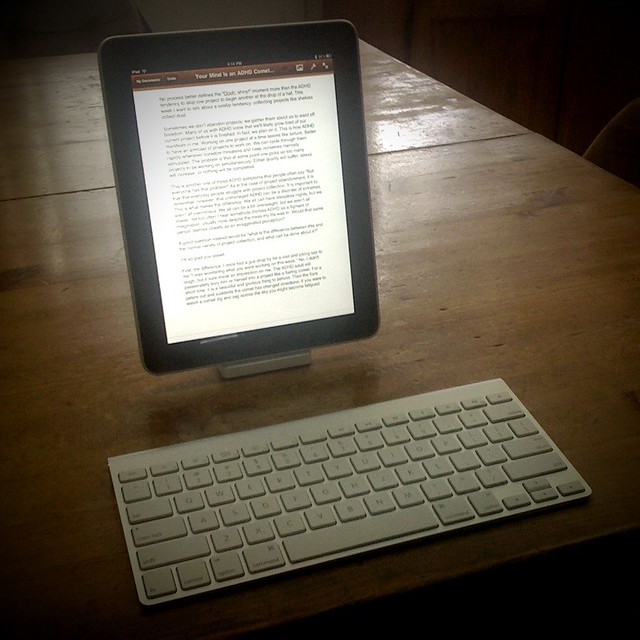
Below are some of the topics my students have been researching:
the story behind a song that they like (this was particularly fun with Christmas songs)
information about the style or form of the music they are studying
composer reports
album reviews
concert reviews
performer reports
music instrument profiles
Some have created some lovely poster boards.
My latest twist has been to tie music to another activity. For instance, two of my students study Aikido. Last week, I asked them to research five points about the samurai Musashi and his concept of rhythm-timing. Another is plays competitive soccer. She's going to research some information about some of the World Cup songs.
I've got a few more ideas up my sleeve. I am thinking of asking them to research music careers, music genres and local musicians.
Social Media Links
archives
- #YYCArts 32
- #YYCEvents 39
- Collaborative Music 25
- Community 11
- Composing & Arranging 6
- Entertainment 139
- Entrepreneurship 53
- Freebies 3
- Gardening 1
- Geeking Out 65
- Health & Wellness 120
- Improvisation 25
- Interviews 28
- Learning Music 188
- Martial Arts 13
- Memorization 7
- Music 230
- Music Careers 9
- Music Education 196
- Music Examinations 7
- Music Exploration 55
- Music Gigs 14
- Music Lessons 6
- Music Performance 32
- Music Theory 13
- Musical Instruments 12
- Musician Health 19
- Pets 57
- Piano Technique 12
- Practicing Music 120
- Productivity 20
- Professional Development 11
- Recommendations & Reviews 93
- Recreation 71
- Social Media 6
- Spirituality 10
- Studio Management 33
- Studio Technology 50
- Teaching Music 146
FOLLOW THE STUDIO on Instagram


Affiliate Links
As a Sheetmusicplus and CD Japan affiliate, I earn from qualifying purchases. The earnings help fund the Studio’s blog and YouTube channels. Your support is greatly appreciated.


FOLLOW Budo no Tabi on Instagram