THE MUSICAL MUSE
Blog dedicated to music education, practice tips, health
&
wellness, and geeking out.
A First Look at the Happy Planner - Teacher Edition
If you’ve been following my blog for a while, you know that I’m a bit of a planner geek. Last year, I used the Private Music Teacher Planner & Agenda by Full Voice. You can find out my first impressions of it here:
It is a wonderful planner. Very well thought out.
It’s just that since a good chunk of my operations is managed online via My Music Staff (affiliate link) and my main bullet journal/planner, it was too much planner for what I need. I probably used only half of the layouts.
This year, I am trying the Teacher Edition of The Happy Planner. What attracted me to it is its simplicity and flexibility. I give my first impressions and take you on a flip through in today’s video:
Fellow teachers, what is your favourite planner for lessons? Analog or digital? Pre-made or custom-made? Share them in the Comments below.

Wordsworth Planner | Unboxing, Flip Through & First Impressions
My ongoing quest to find the perfect planner led me to the Bullet Journal method, which has been, for the most part, the ideal planner. However, my challenge remains as it always has been - time. It just takes so much time to lay out all the spreads.
My ongoing quest to find the perfect planner led me to the Bullet Journal method, which has been, for the most part, the ideal planner. However, my challenge remains as it always has been - time. It just takes so much time to lay out all the spreads.
At the beginning of the school year, I embarked on a quest for the perfect planner with pre-made spreads, but still has the flexibility to work as a Bullet Journal. My journey led me to the Wordsworth Daily Planner, which has various elements of bullet journalling that I love, without spending hours setting up spreads.
The Wordsworth Planner
I purchased a 2020 Non-Dated Daily Planner from Amazon for $24.95 CAD. Specs are:
320 pages, 120 gsm paper
lies 180 degrees flat
back pocket
two page markers
acid-free paper
no bleeding or ghosting
stickers
It comes with a How to Use Your Wordsworth Planner guidebook. There are also various resources available on the Wordsworth Planner website.
Check out my Unboxing, Flip Through & First Impressions video here:
The Runners Up
These are the planners that I almost went with:
The Clever Fox Undated Planner ($26.99 to $49.99 CAD)
Mochi Things 2021 Prism Monthly Planner ($28.95 USD)
Mochi Things 2021 Medium Ardium Planner ($39.95 USD)
DISCLAIMER: This description contains Amazon links. If you click on a product link and make a purchase the Studio will receive a small commission. Thank you for supporting our channel and blog.

My Bullet Journal Adventures
Now, I can’t remember exactly how or when I stumbled upon Ryder Carroll’s Bullet Journal system. For those who are unfamiliar with the BuJo system, it’s an analog, pen and paper planner.
I liked its similarities to Stephen Covey’s 7 Effective Habits daytimers in terms of functionality. I simply loved how I could use up as much or as little space as I need from day to day. I was so excited at the prospect of personalizing my layout from month-to-month, week-to- week, or even day-to-day:
For most of my professional career, I’ve purchased various daytimers and planners, only to find that after a few months (or in some case, weeks), that they simply weren’t functional. The disjunct was even more obvious when I started teaching piano full-time. All day planners with an appointment scheduler at the time were geared towards people who work a 9 - 5, Monday - Friday job. None had sufficient note-taking, planning, and doodling space for my needs.
When I got my first smartphone, I tried to use it for note-taking and planning. I found it way too finicky. I forgot things. Productivity plummeted. The doodler in me was grumpy.
I suppose Evernote would be the closest in meeting my note-taking, planning, and doodling needs but I’ve noticed that I remember more if I write things down by hand, versus typing it in on a computer or mobile device. Plus, I’m more likely to flip through a notebook to review notes than read something I typed up. Not only that, if I have the space to doodle and brainstorm, it’s easier for me to see patterns and themes and come up with a plan.
Now, I can’t remember exactly how or when I stumbled upon Ryder Carroll’s Bullet Journal system. For those who are unfamiliar with the BuJo system, it’s an analog, pen and paper planner.
I liked its similarities to Stephen Covey’s 7 Effective Habits daytimers in terms of functionality. I simply loved how I could use up as much or as little space as I need from day to day. I was so excited at the prospect of personalizing my layout from month-to-month, week-to- week, or even day-to-day:
I started by designing my own pages after researching what other creative professionals have done:
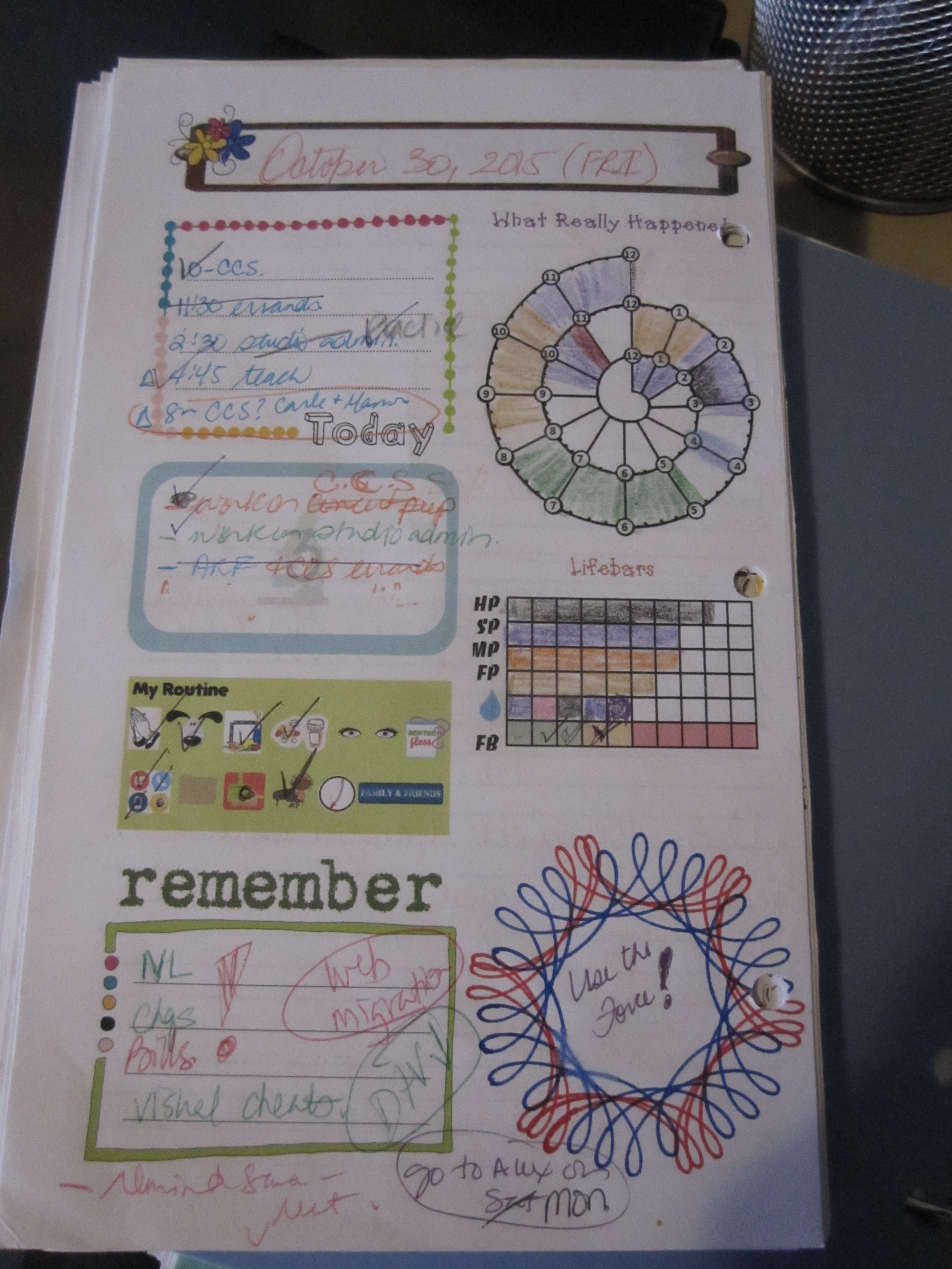
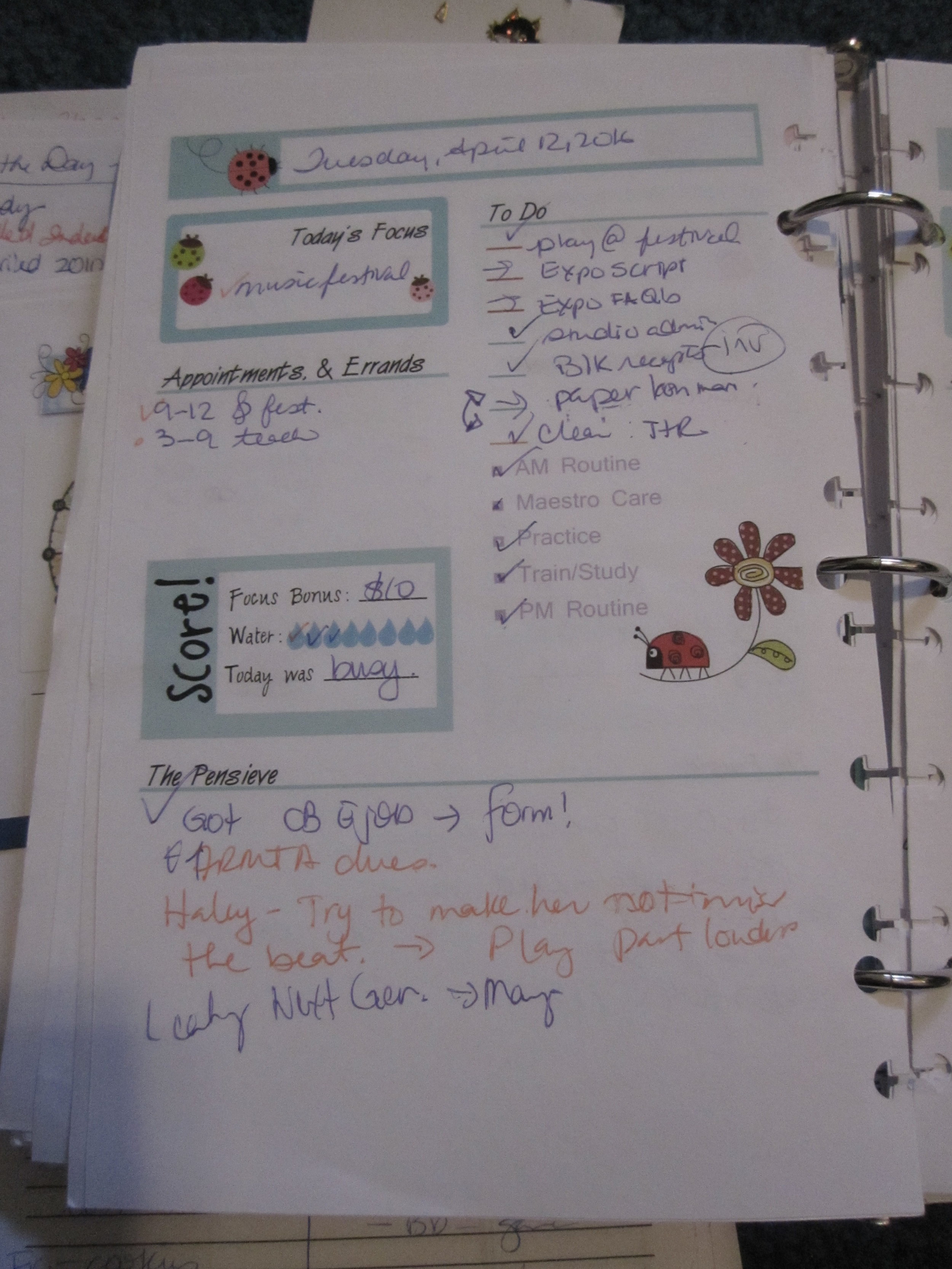
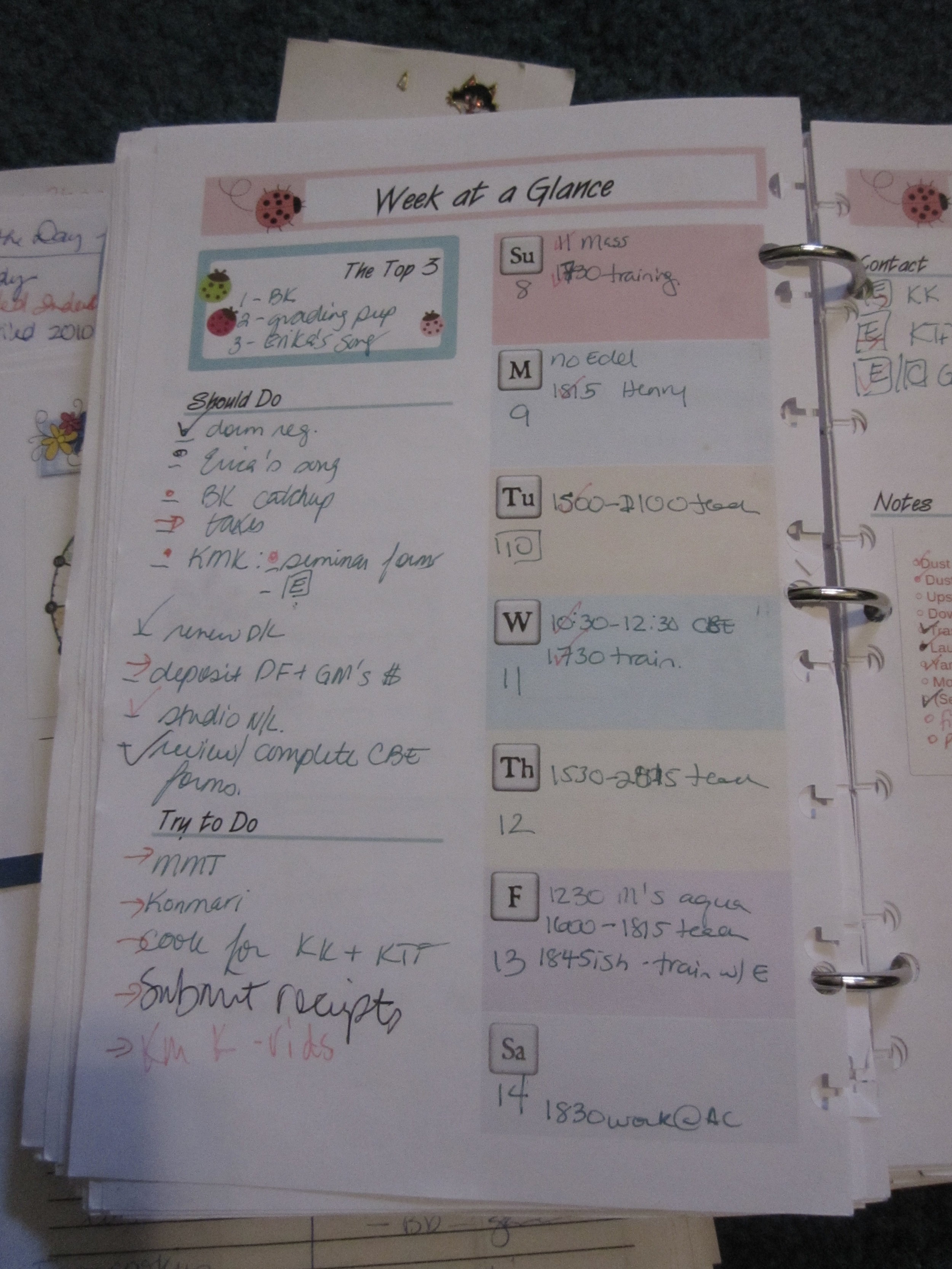
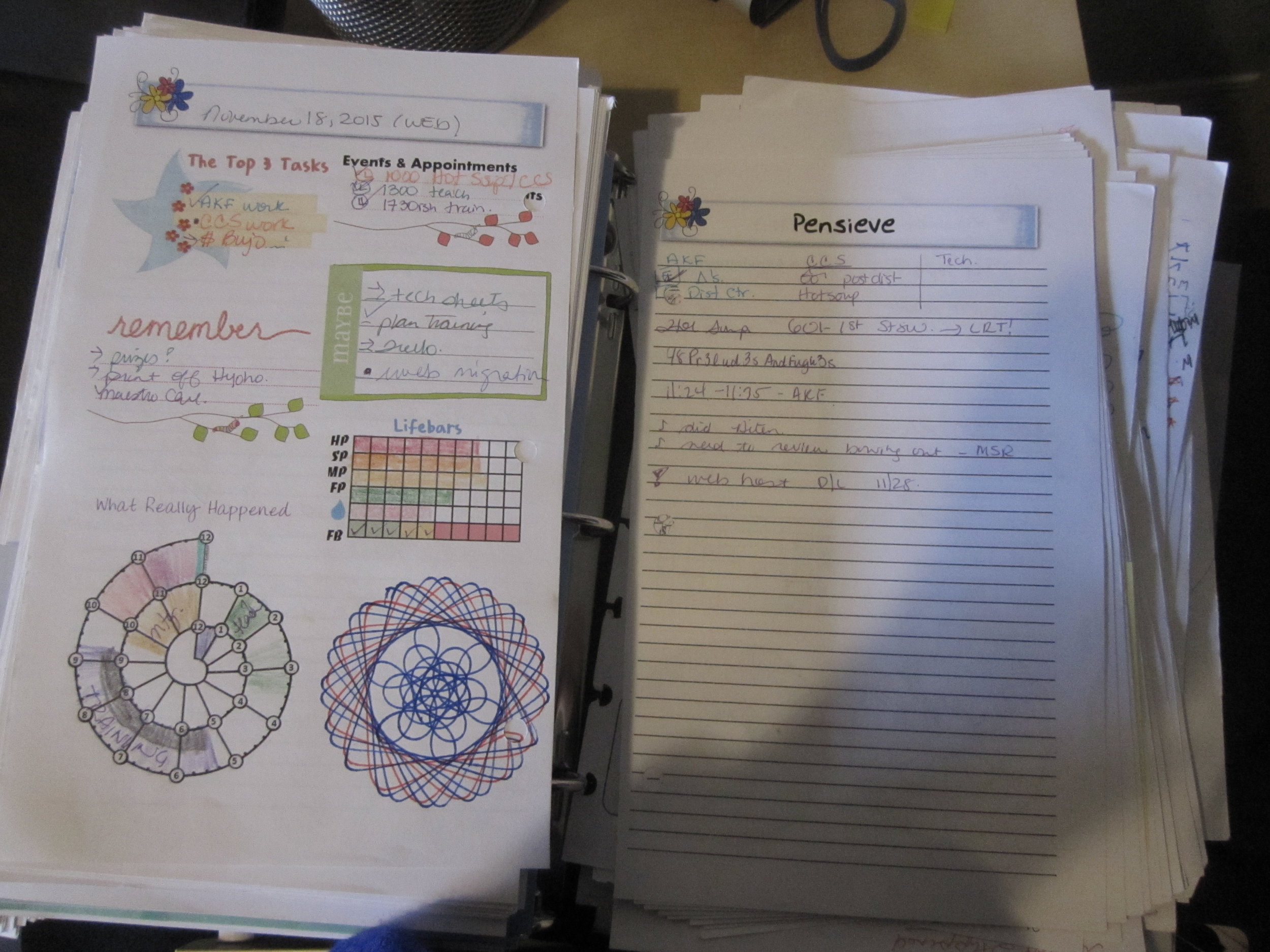
It was a lot of fun at first. Perhaps, too much fun. I was spending too much time designing the layouts than actually getting stuff done. That’s when I tried the Leuchtthurn 1917 dot grid notebook that many BuJo people use.

My pile of Bullet Journals. Credit: R-M Arca.
At first, I tried following Ryder’s format but very quickly, I found myself playing around with timelines. I had it in my head to try seeing where all my time went. It was quite fun too, and since you don’t have every day pre-printed, it was very easy to change my layouts.
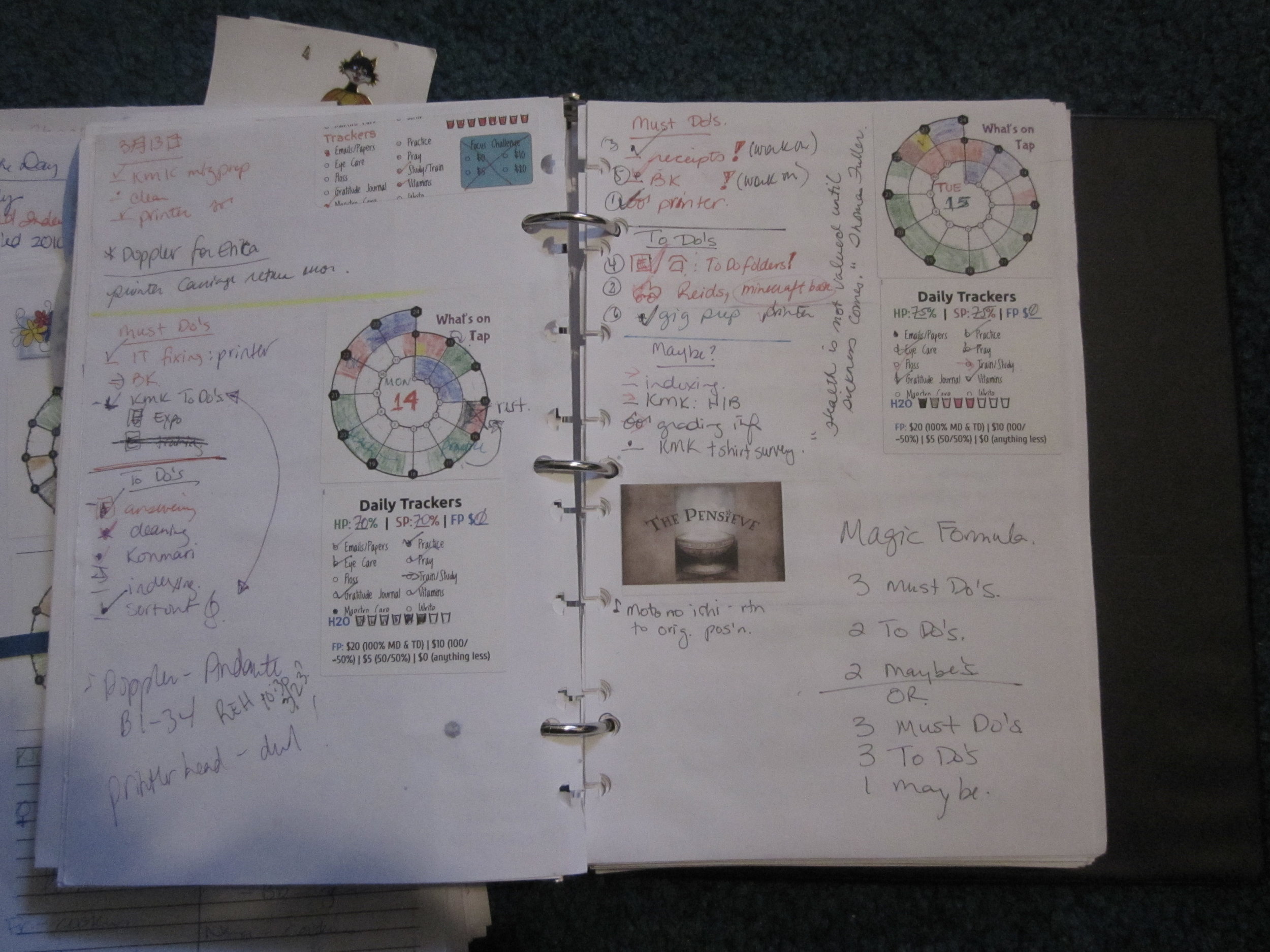
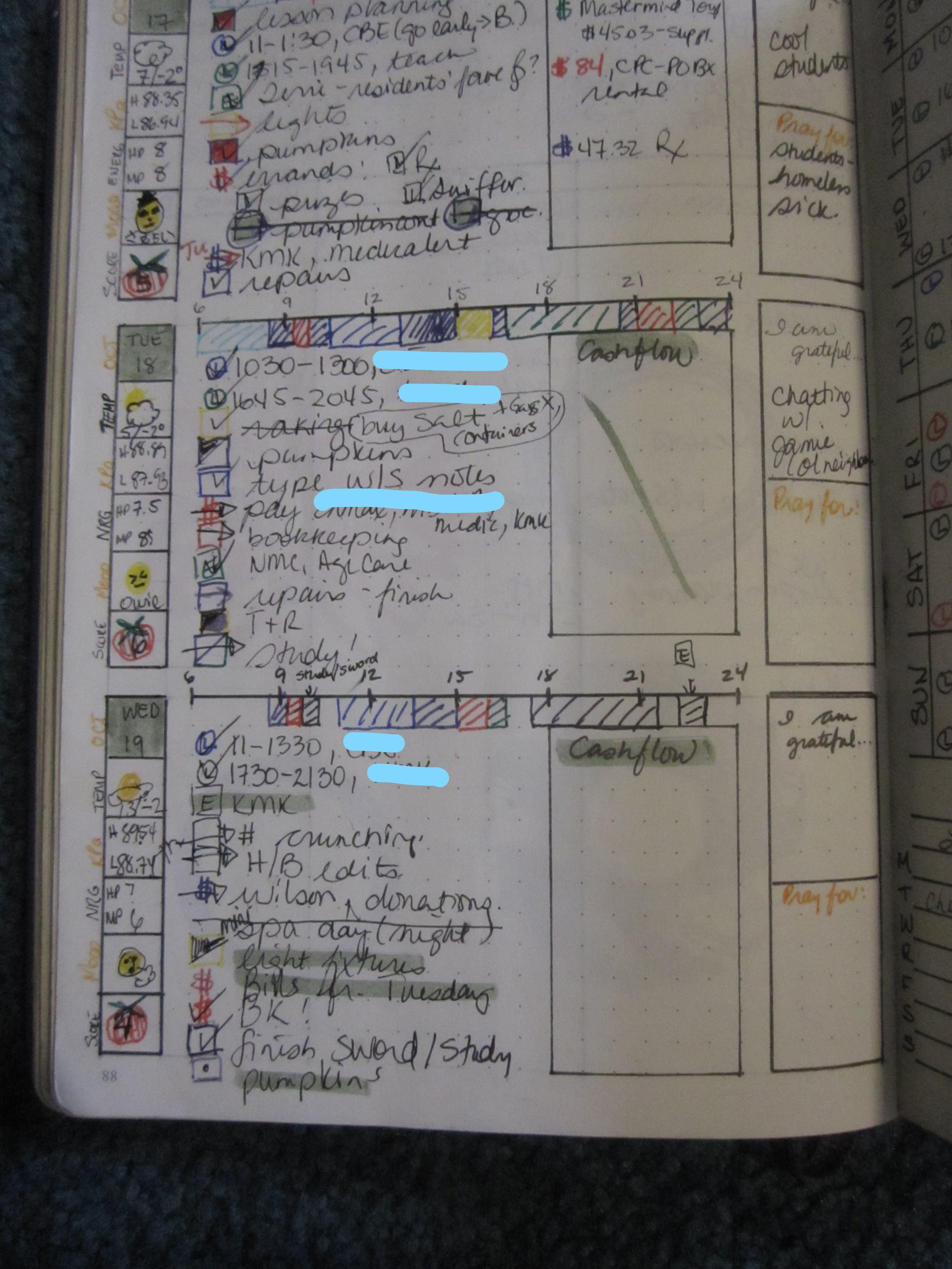
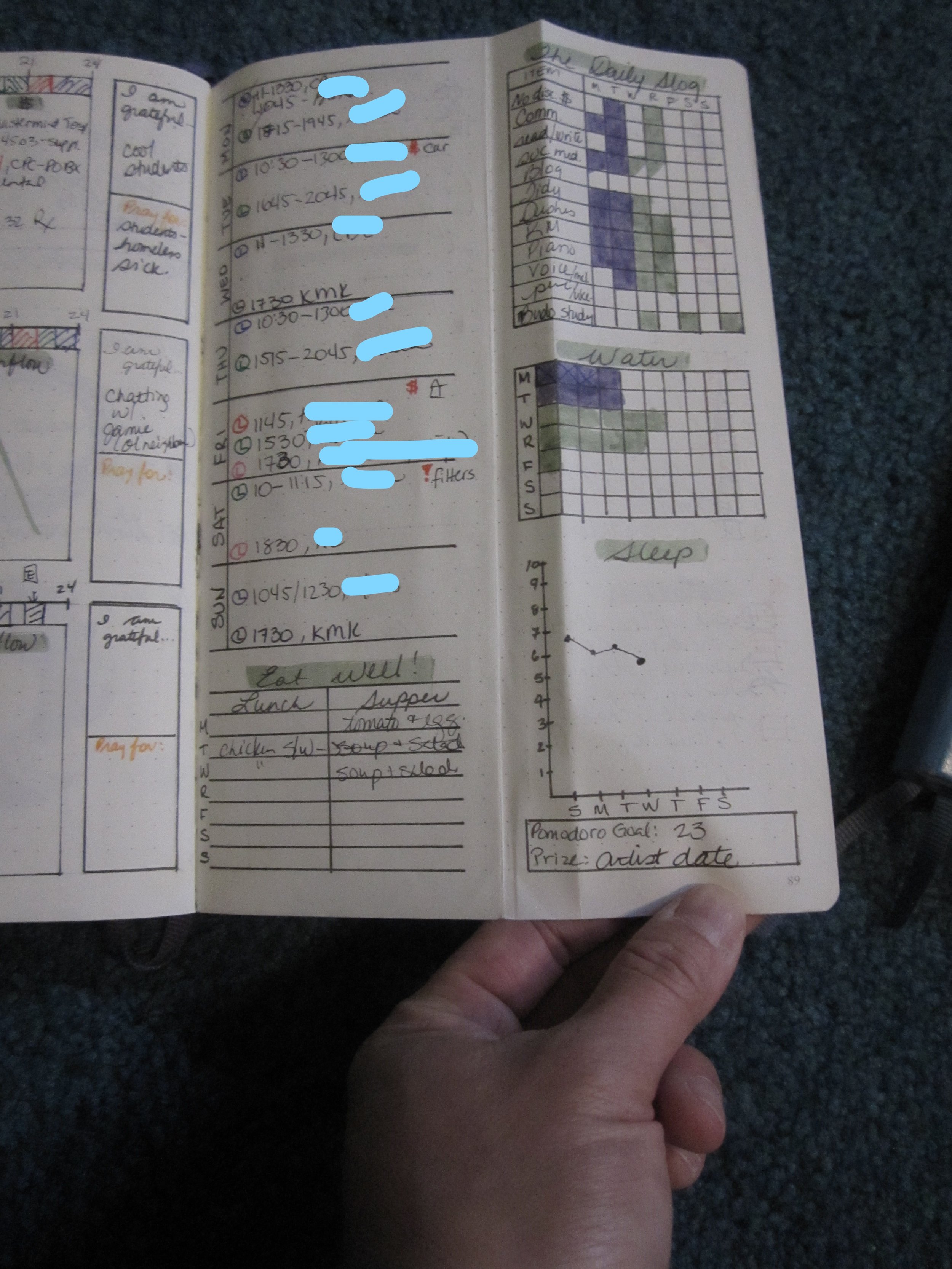
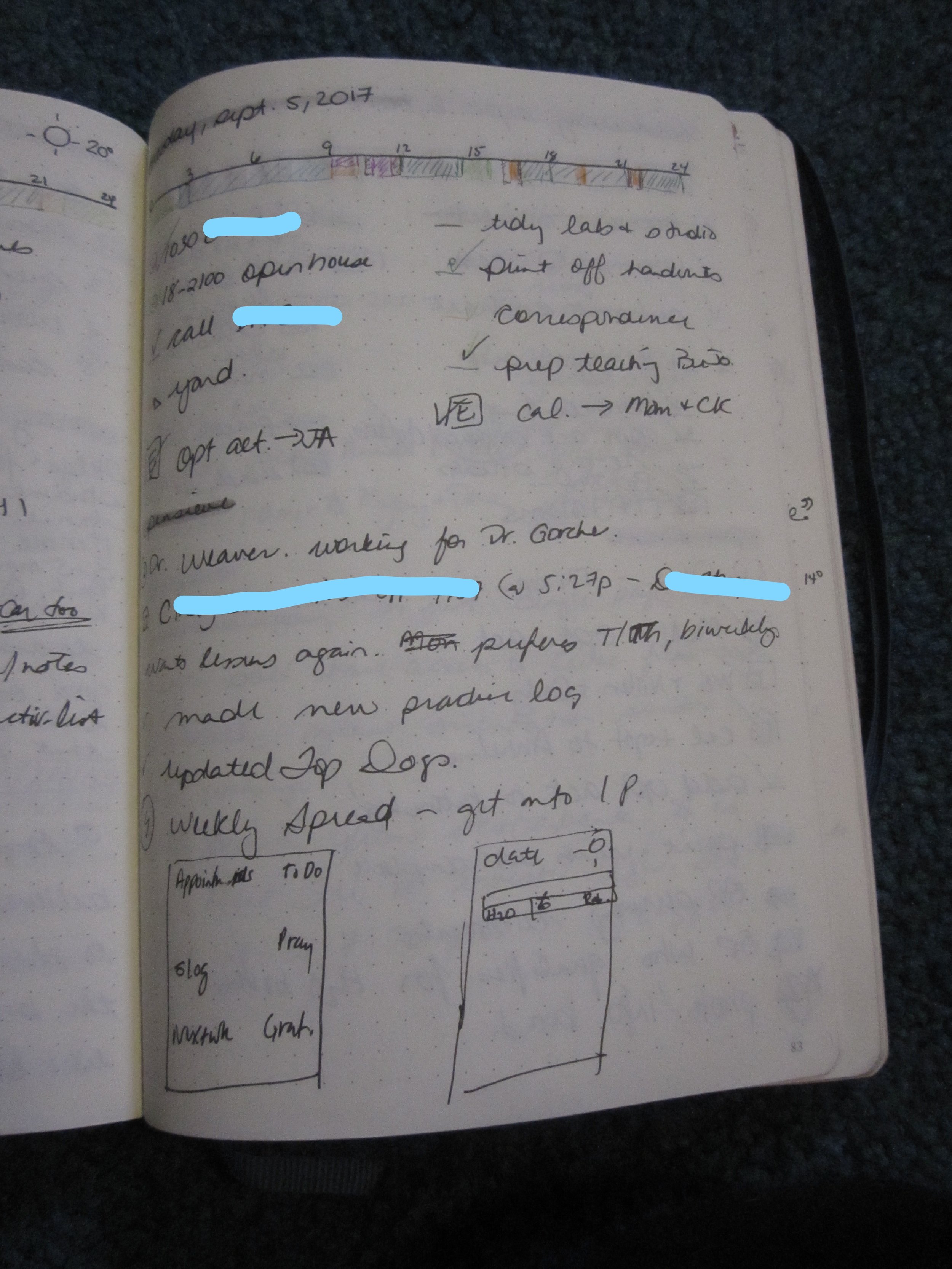

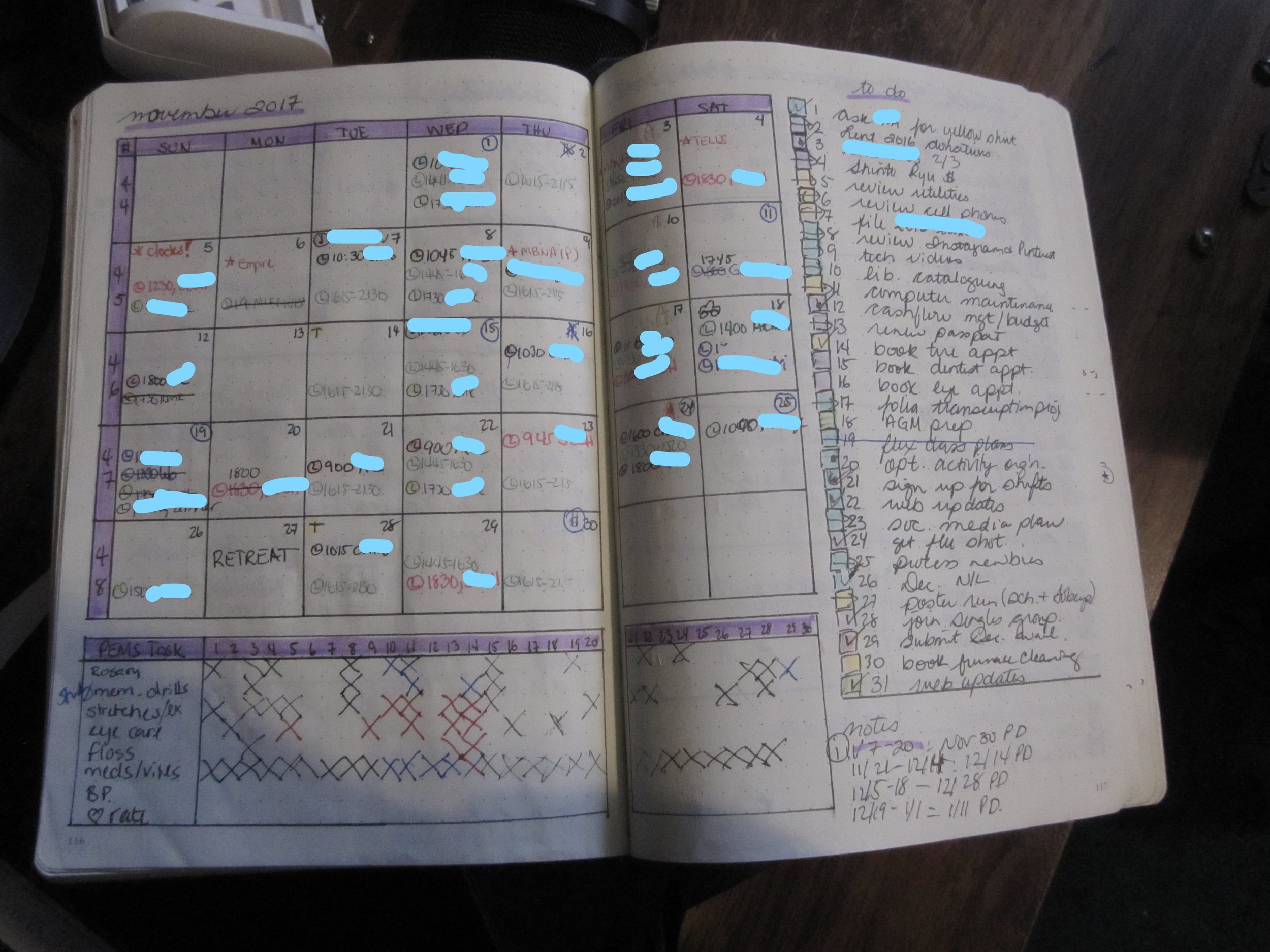
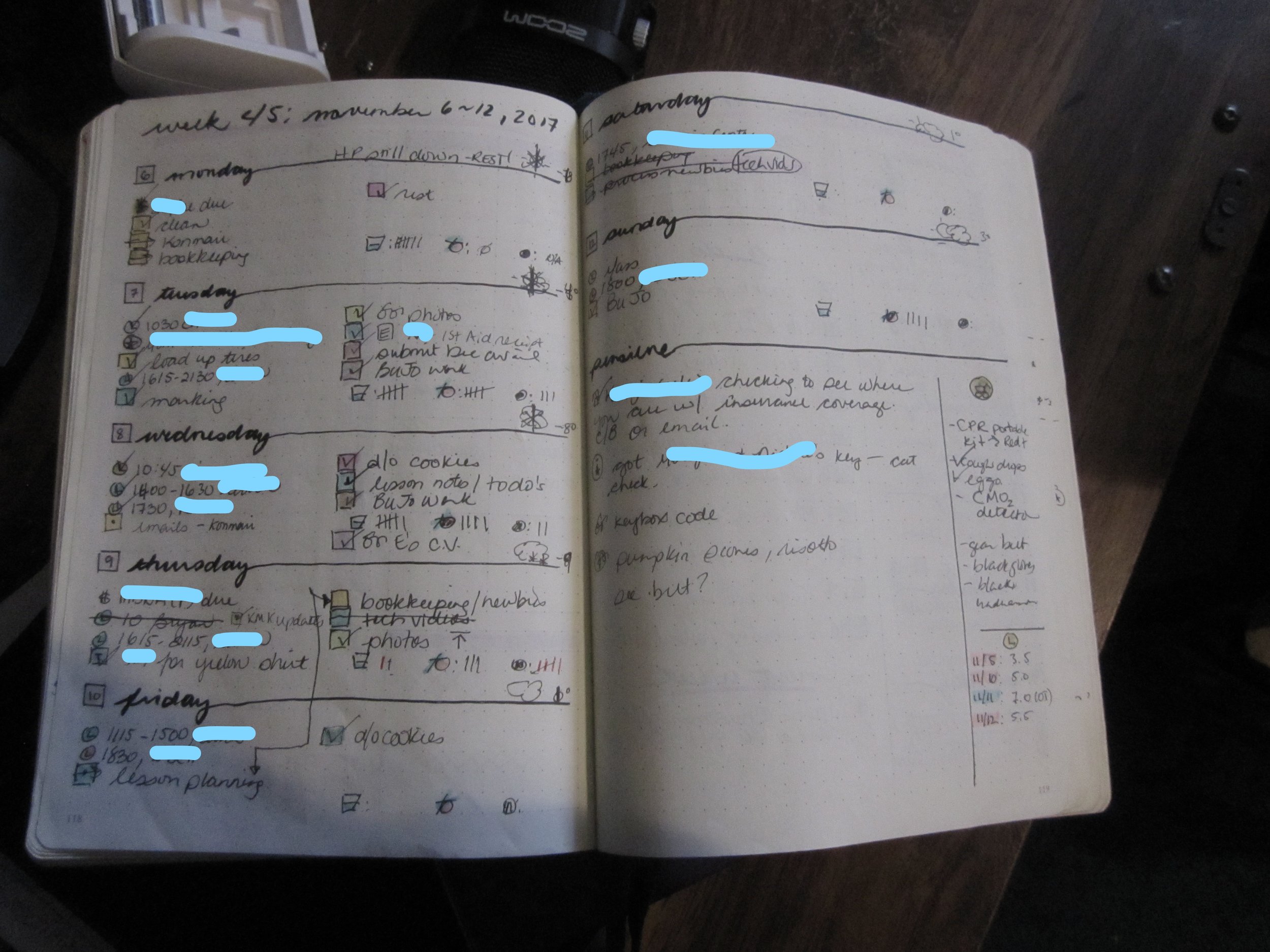
It’s been over three years and my BuJo has evolved numerous times. The layout is far simpler than my earlier days shown above and my layout has remained fairly consistent for at least a year. However, the colour-coding to denote different areas in my life has remained fairly consistent:
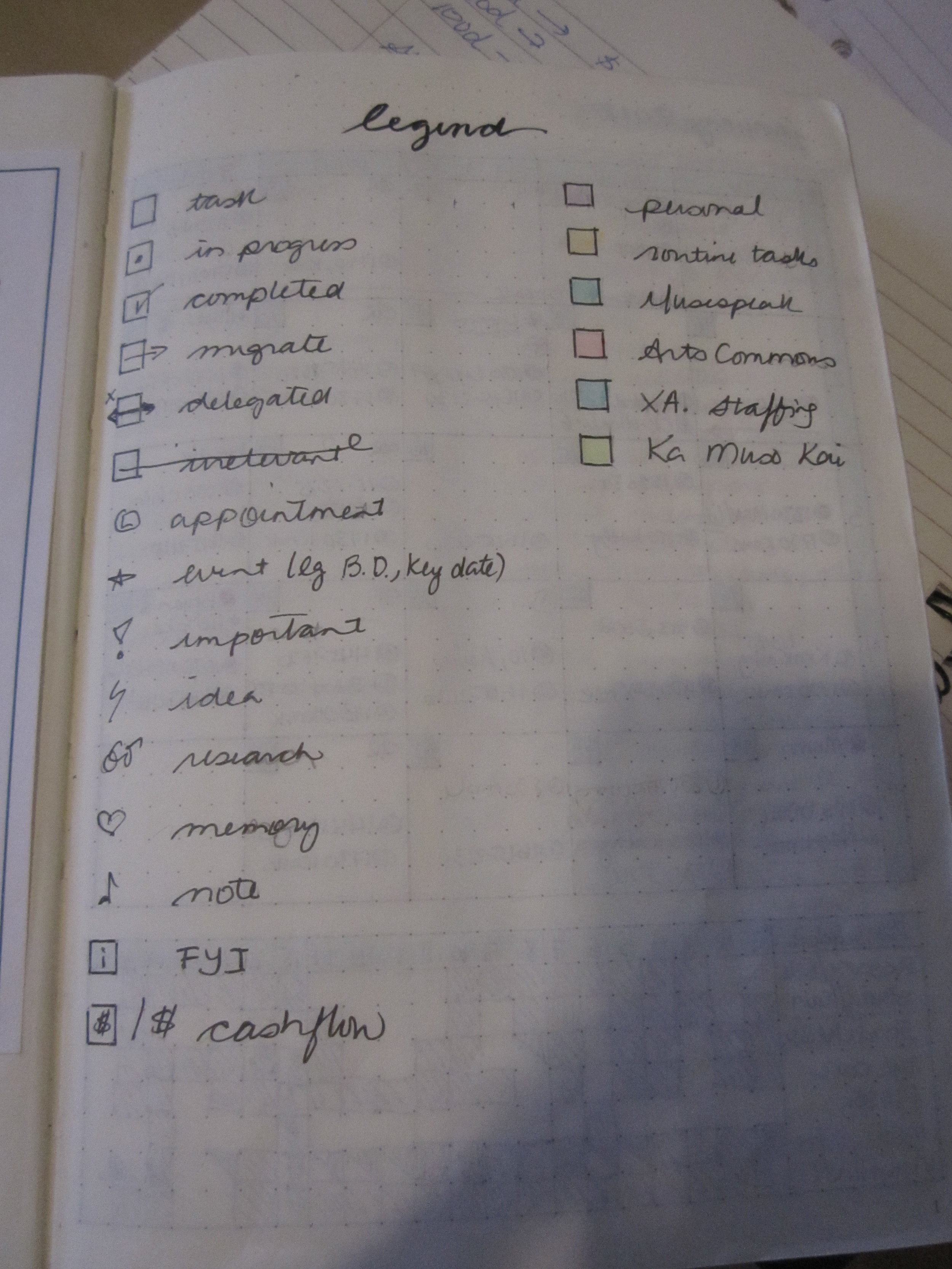
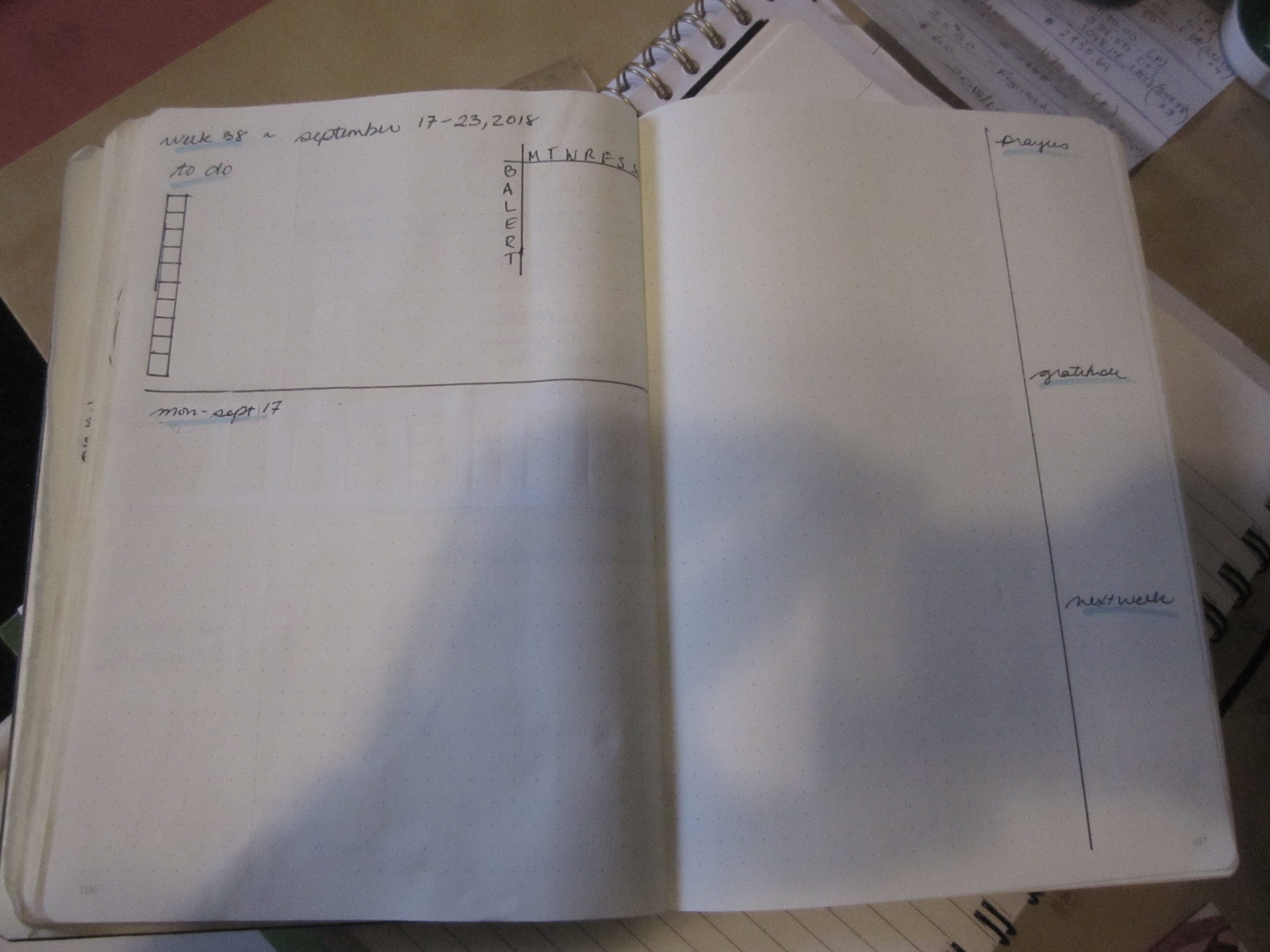
Colour coding is a simple way for me to see what’s going on and what’s on tap in a single glance.
I made a few changes to Ryder’s set-up. I moved my Monthly Spreads to the front. They also serve as my Future Log. I also switched to a graphical calendar layout because my brain likes it better.
The Collections are the pièce de resistance for me. Ryder calls anything else that isn’t part of the Future Log, Monthlies or Dailies a Collection, for instance: shopping lists, wish lists, budgets, etc.
Some of the Collections in my Bullet Journal are:
Borrowed Items
Repertoire to Learn (#workingmusician)
Tech Projects (#techteacher)
Monthly Cashflow
Things Worth Checking Out
Bible Reading Tracker

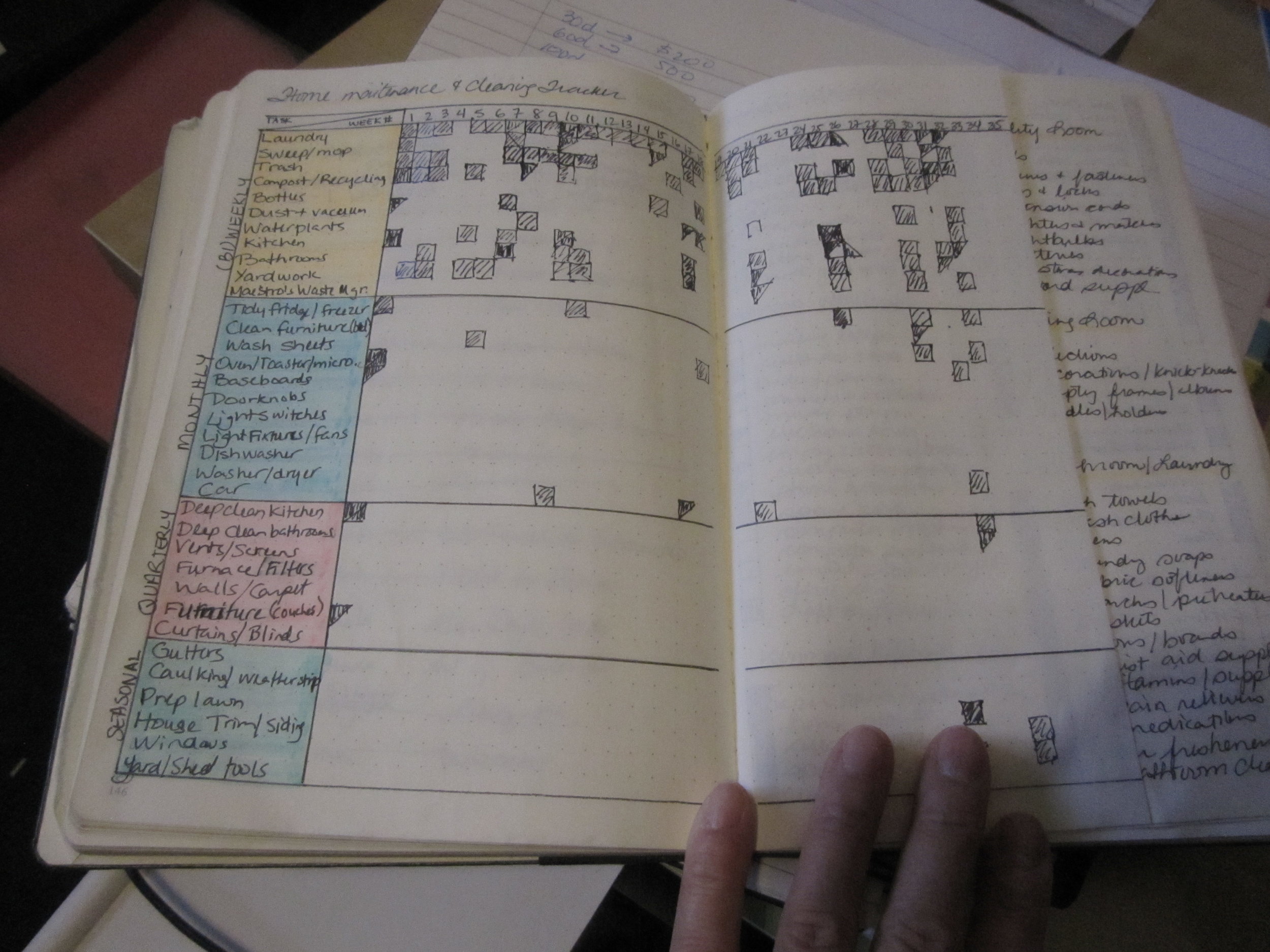
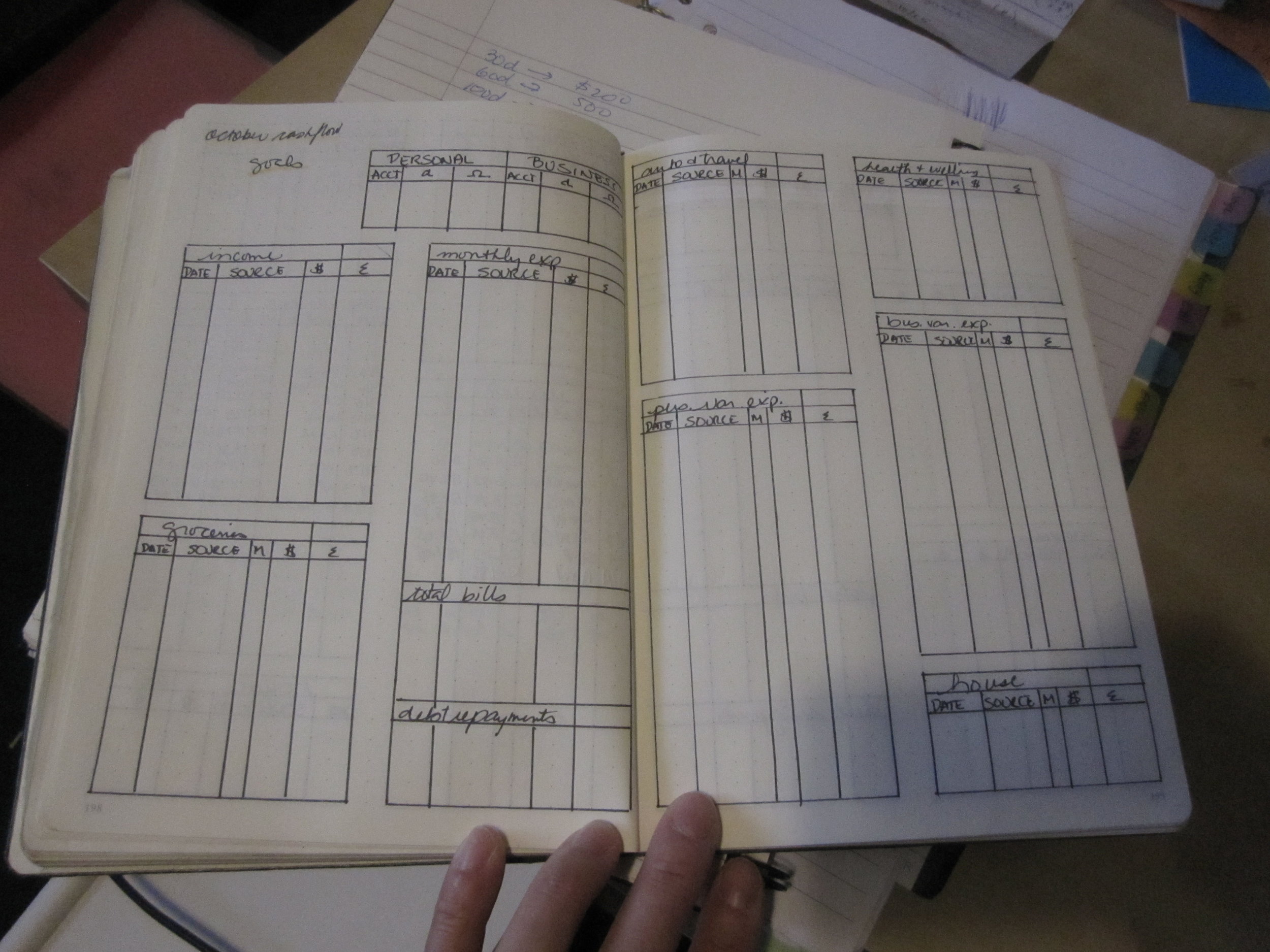
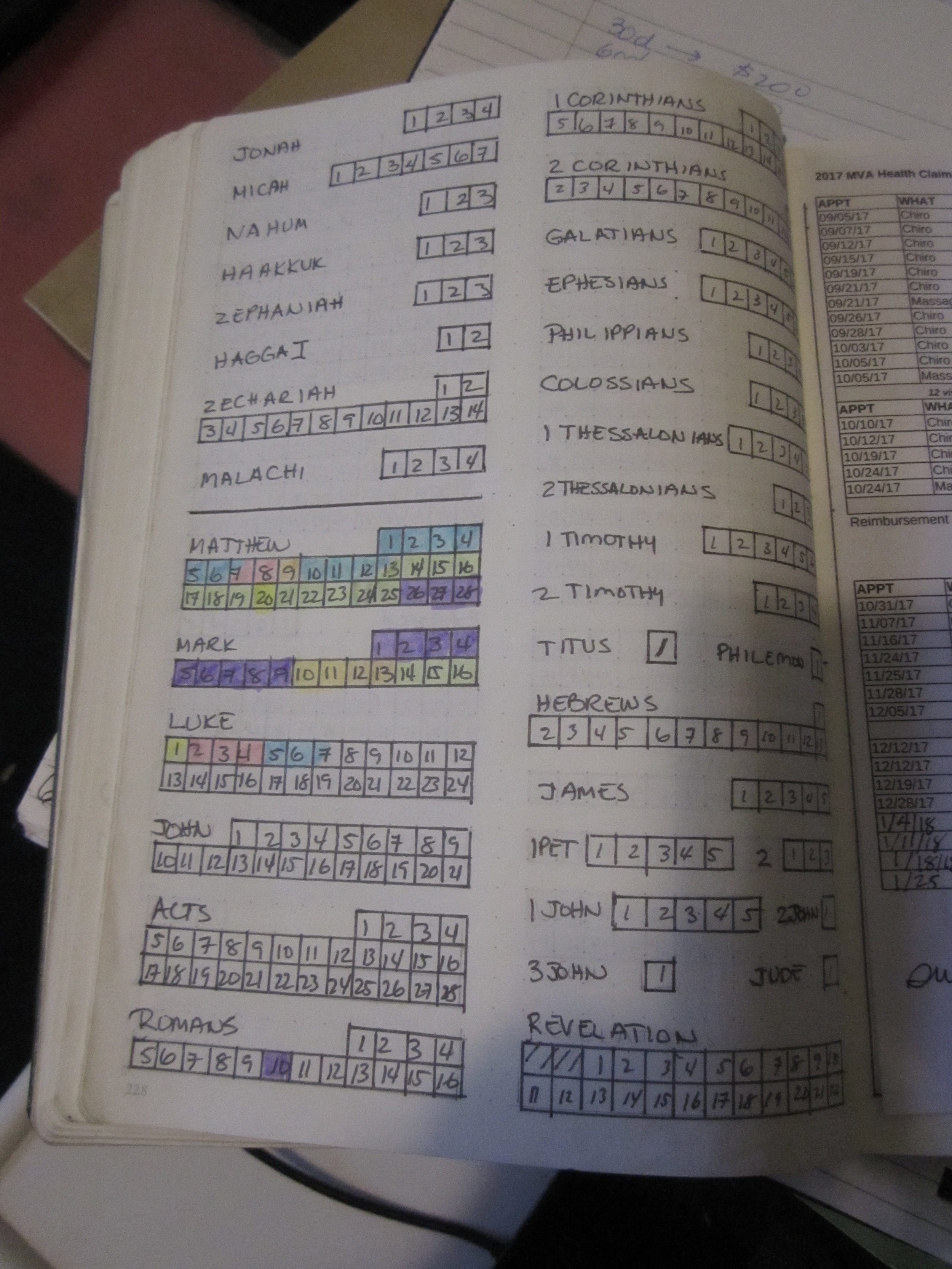
There is only one downside to this level of customization and that is, it does take more time to get your Bullet Journal set up. Each time you move to a new book, you need to migrate your Collections as well. However, there are many more plusses to make it the planner and scheduler for me.
Here we are at the beginning of a new teaching year. My brain is already thinking about next year. I am torn between three options:
Option 1: Continue using a dot-grid notebook
Pros: I already have the kinks worked out and know which collections are getting migrated into the next book.
Cons: The time it takes to set up a new notebook.
Option 2: Use a Traveller’s Notebook
Pros: Collections, Studio, Personal, Dojo, and financial stuff can be housed in separate notebooks that are inserted and removed from the Traveller’s Notebook cover with great ease. Also, they don’t need to be rewritten when the monthlies, weeklies, and/or dailies notebook is full.
I already have my teaching binder separate from my BuJo proper, so it’s just taking the compartmentalizing of my life to the next level.
Cons: Time needed to set up all the notebooks.
Option 3: Get a pre-made planner.
Gasp! What was that? Didn’t I start the Bullet Journal journey because I was looking for flexibility?
With more digging, I found these pre-made planners that still offer me flexibility in my weekly and daily layouts but there’s enough pre-made pages laid out similarly to what I have in my dot-grid Bullet Journals. The ones with the asterisk denote ones that would require a separate notebook for Collections.
I find that I keep better tabs on cashflow if I write things down, so I have bookmarked this cute little book. For studio operations, I still use My Music Staff, but do keep better tabs on my budgeting and spending, I have found that having those spreads in my Bullet Journal has been illuminating.
It has been an interesting few years in my Bullet Journal journey. By far, it’s the best system I have found in terms of planning and organizing my life.
Social Media Links
archives
- #YYCArts 32
- #YYCEvents 39
- Collaborative Music 25
- Community 11
- Composing & Arranging 6
- Entertainment 139
- Entrepreneurship 53
- Freebies 3
- Gardening 1
- Geeking Out 65
- Health & Wellness 120
- Improvisation 25
- Interviews 28
- Learning Music 188
- Martial Arts 13
- Memorization 7
- Music 230
- Music Careers 9
- Music Education 196
- Music Examinations 7
- Music Exploration 55
- Music Gigs 14
- Music Lessons 6
- Music Performance 32
- Music Theory 13
- Musical Instruments 12
- Musician Health 19
- Pets 57
- Piano Technique 12
- Practicing Music 120
- Productivity 20
- Professional Development 11
- Recommendations & Reviews 93
- Recreation 71
- Social Media 6
- Spirituality 10
- Studio Management 33
- Studio Technology 50
- Teaching Music 146
FOLLOW THE STUDIO on Instagram







Affiliate Links
As a Sheetmusicplus and CD Japan affiliate, I earn from qualifying purchases. The earnings help fund the Studio’s blog and YouTube channels. Your support is greatly appreciated.


FOLLOW Budo no Tabi on Instagram