THE MUSICAL MUSE
Blog dedicated to music education, practice tips, health
&
wellness, and geeking out.
Understanding Musician Injuries
The Types, Causes and Prevention of Music-Related Injuries: Musicians are prone to injury from repeating a motion countless times when practicing. A better understanding of music injuries is vital for musicians' health.
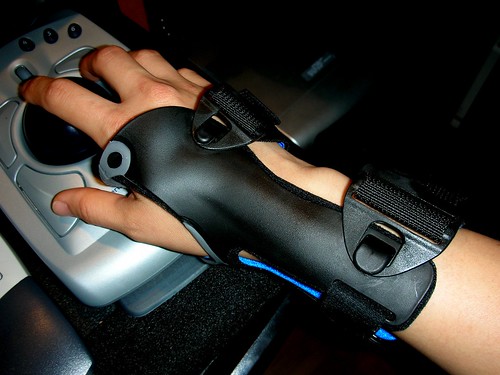
Musicians are prone to injury from repeating a motion countless times when practicing. A better understanding of music injuries is vital for musicians' health.
Common symptoms of a musician repetitive strain injury are similar to computer-related and speech-related injuries:
Numb fingers, arms, wrist, jaw, neck, shoulders and back
Shooting pain up the arms, shoulder and back
Cramping muscles or stiffness
Dull ache experienced in the fingers, arms, back, jaw, throat, wrist, shoulders and back
Hoarseness
If left unchecked, can become chronic conditions. They can potentially lead to long-term disability or end one’s musical career.
Common Types of Music Injuries
Common music-related injuries include:
Bursitis: inflammation of a bursa (fluid-filled sac which lubricates the movements of tendons, muscles and bones at joints)
Carpal Tunnel Syndrome: inflamed or irritated hand flexor tendons
Larynx Contact Ulcers: raw sores on the mucous membranes covering the cartilage attached to the vocal chords
Cubital Tunnel Syndrome: inflamed or irritated tendons affecting the inner side of the forearm and the pinky side of the hand
Laryngitis: inflammation of the larynx
De Quervain's Tenosynovitis: inflammation of the tendons on the side of the wrist beginning at the base of the thumb.
Tendinitis: inflammation of the tendons
Thoracic Outlet Syndrome: compression of the thoracic outlet, the nerve pathway and/or blood vessels between the base of the neck and the armpit
Trigger Finger: inflammation of the index finger tendons
Vocal Nodules & Polyps: small, inflammatory or fibrous growth on the vocal cords of people who strain their voices.
How Music Injuries are Caused
Overuse: Advanced musicians practice between one to ten hours a day.
Repetitive Strain: Musicians repeat a technical exercise or section of music countless times until it comes together.
Improper Posture: Some musicians slouch, sit too close or too far from their instrument and remain in the same position for long periods of time.
Non-Ergonomic Technique: Some musicians hold their body and/or instrument in an uncomfortable position, don’t move their hand and/or body in the direction that their fingers are moving, push their fingers or vocal chords beyond what they can comfortably do.
How to Prevent Music Injuries
Do Your Research: Find out more about the various types of music-related injuries.
Assess Your Instrument: Is your instrument the right size, shape, weight and height for you? Would an adjustable chair, footstool, strap or cushion make you more comfortable?
Know Your Body: Choose pieces that are reasonable for your body to play. If you have small fingers, playing repertoire that requires you to stretch beyond your finger span is a recipe for disaster. However, if you really want to learn a particular piece (or you need to learn it), make adjustments to make it easier to play. If you are a student, let your teacher know right away whether a piece or technical exercise is causing you pain.
Appraise Your Playing Technique: Is your body relaxed? Are your hands, arms, neck, head and core positioned to allow for fluid and comfortable playing or singing? Are you moving with the music? Are you using excess movements? Is your fingering logical and comfortable? Videotaping yourself is a valuable method to assess your playing technique.
Evaluate Your Non-Musical Activities: Desk and computer work, sports, dancing, carrying heavy objects (or dependents) and hobbies can adversely affect your body.
Do Warm-Up Exercises and Stretches: Musicians are sometimes called “small muscle athletes”. Stretching exercises and gentle warm-ups result in increased range of motion, strength, coordination and flexibility.
Take Breaks: One’s muscles, ears and vocal chords need regular breaks to return to their relaxed state. Not doing so tricks the body into thinking that “tense” is the “relaxed state”, resulting in chronic pain and stress.
Engage in Active Sitting: Most musicians remain in a seated position for extended periods of time. Active seating helps ease chronic back pain, promotes correct posture and maintains general health.
Seek Professional Advice: Speak to a doctor, chiropractor, massage therapist, Alexander Technique specialist, music instructor, otolaryngologist or ergonomic specialist for further information or treatment.
Be Proactive in Maintaining Musician Health
With an increased understanding of the types, causes and prevention of music injuries, musicians can be more proactive in maintaining their first instrument: the body. Musicians dedicated to maintaining musician health can look forward to many years of pain and injury-free music-making.
The Rest of My Series on Musician Injuries
Face and Neck Stretches for Musicians | Arm and Hand Stretches for Musicians | Back and Should Stretches for Musicians
Additional References:

The Art of Practicing: A Guide to Making Music from the Heart, Madeline Bruser (New York: Bell Tower, 1999)
Musicians' Injuries: Types and How to Avoid It, Espie Estrella
Musicians and Injuries, UN-L Engineering Electronics Shop, University of Nevada
Originally published on Suite101.com on November 20, 2009. All rights reserved by Rhona-Mae Arca.
On Injuries and Piano Practice - Part II
The unthinkable for musicians happened to me last week - I injured a finger. An attempt to carve some pot roast with Dad's funky new carving knife landed me in Emergency to get stitches on my LH finger 2.
The unthinkable for musicians happened to me last week - I injured a finger. An attempt to carve some pot roast with Dad's funky new carving knife landed me in Emergency to get stitches on my LH finger 2. My finger is healing well but I had to promise the doctor that I wouldn't type or practice piano on that finger for a week. So long as the bandage is large enough, I remember not to type on it (tubular gauze is wonderful). However, practicing is another issue. I can't just skip that finger without learning a brand new set of fingering. Nor can I risk hitting my injured finger on keys while trying to play around it. Ergo, no practicing for my LH.
Piano Camp is less than a week away so I've had to make some modifications to my practicing. You may recall my first article On Injuries and Piano Practice from last year. The following are a few more techniques I've been employing to prepare:
have my uninjured RH play its line while I sing the LH line. Then get my RH to play the LH line while I sing the RH line.
have my RH play its line while my uninjured fingers on my LH tap its rhythm. This hasn't worked too well since the movement jiggles my injured finger too much, so I've resorted to saying silly syllables for the LH rhythm. Then get my RH to play the LH line while I say the rhythm for the RH part. (Aug. 6 update: Having my LH play the rhythm on castanets seems to work).
Score study. I think I have nearly all my modulations and cadences memorized for my Soler sonata.
Listen to recordings of your songs and conduct it how you would shape the music.
Hands separate work. Obviously, my RH has to play my LH part, which really makes me think.
Even if you aren't nursing an injury, these are good practice techniques to try. You may wind up noticing a pattern you overlooked that would simplify memorization. Or notice that you missed the melody's appearance in a different register because of all the other action happening in the bass and soprano lines. Rhythms become a little easier to deal with and so on.
The stitches come out in a few days, giving me the weekend to get my left hand back into shape. Challenging, but not impossible.
(c) 2008 by Musespeak(tm), Calgary, AB, Canada. All rights reserved.
On Injuries and Piano Practice
One of my students showed up with a swollen finger last week. C injured it during a non-musical activity and after several days, the swelling was increasing. I demanded that she go see a doctor to get that finger checked out. C injured the middle finger of her left hand, which has presented us with the challenge of how to structure practices and lessons.
One of my students showed up with a swollen finger last week. C injured it during a non-musical activity and after several days, the swelling was increasing. I demanded that she go see a doctor to get that finger checked out. C injured the middle finger of her left hand, which has presented us with the challenge of how to structure practices and lessons. It will take some time for her hand to heal but she can't take time off from practicing if she is to take her exam in the spring.
I have decided to zoom in on her weak spots. On Monday, I attended a workshop by the Royal Conservatory of Music, unveiling their new technical requirements. Some ideas were new while some I needed the refresher on.
C, like the rest of my students will be drilling their scales, chords and arpeggios at least five times per practice; playing them differently each time. Here are some of the variations:
play legato
play staccato
play portato
vary the dynamics
add a crescendo while ascending and diminuendo when descending
vary the rhythm (straight eighths, jazz triplets, even triplets, dotted half note followed by a quarter note)
vary the accents (accent beat one the first time, beat two the second, etc.)
play a repeated note scale (C-C-C D-D-D E-E-E)
play one octave as quarter notes, two octaves as eighth notes, three octaves as triplets and four octaves as sixteenth notes
play chords up the scale
In C's case, she'll have to just practice her right hand and rest her left. With these exercises, it's imperative to use proper fingering.
Tonight, we focused on phrase shaping, continuation notes and right hand rhythms. Next week, we'll tap practice the left hand rhythms.
C is using this opportunity to work harder on her ear training and theory.
The following are informative articles/discussions on dealing with piano-related injuries:
Please feel free to share your tips on injury prevention or dealing with injuries.
(c) 2007 by Musespeak(tm), Calgary, AB, Canada. All rights reserved.
Social Media Links
archives
- #YYCArts 32
- #YYCEvents 39
- Collaborative Music 25
- Community 11
- Composing & Arranging 6
- Entertainment 139
- Entrepreneurship 53
- Freebies 3
- Gardening 1
- Geeking Out 65
- Health & Wellness 120
- Improvisation 25
- Interviews 28
- Learning Music 188
- Martial Arts 13
- Memorization 7
- Music 230
- Music Careers 9
- Music Education 196
- Music Examinations 7
- Music Exploration 55
- Music Gigs 14
- Music Lessons 6
- Music Performance 32
- Music Theory 13
- Musical Instruments 12
- Musician Health 19
- Pets 57
- Piano Technique 12
- Practicing Music 120
- Productivity 20
- Professional Development 11
- Recommendations & Reviews 93
- Recreation 71
- Social Media 6
- Spirituality 10
- Studio Management 33
- Studio Technology 50
- Teaching Music 146
FOLLOW THE STUDIO on Instagram

Affiliate Links
As a Sheetmusicplus and CD Japan affiliate, I earn from qualifying purchases. The earnings help fund the Studio’s blog and YouTube channels. Your support is greatly appreciated.


FOLLOW Budo no Tabi on Instagram